
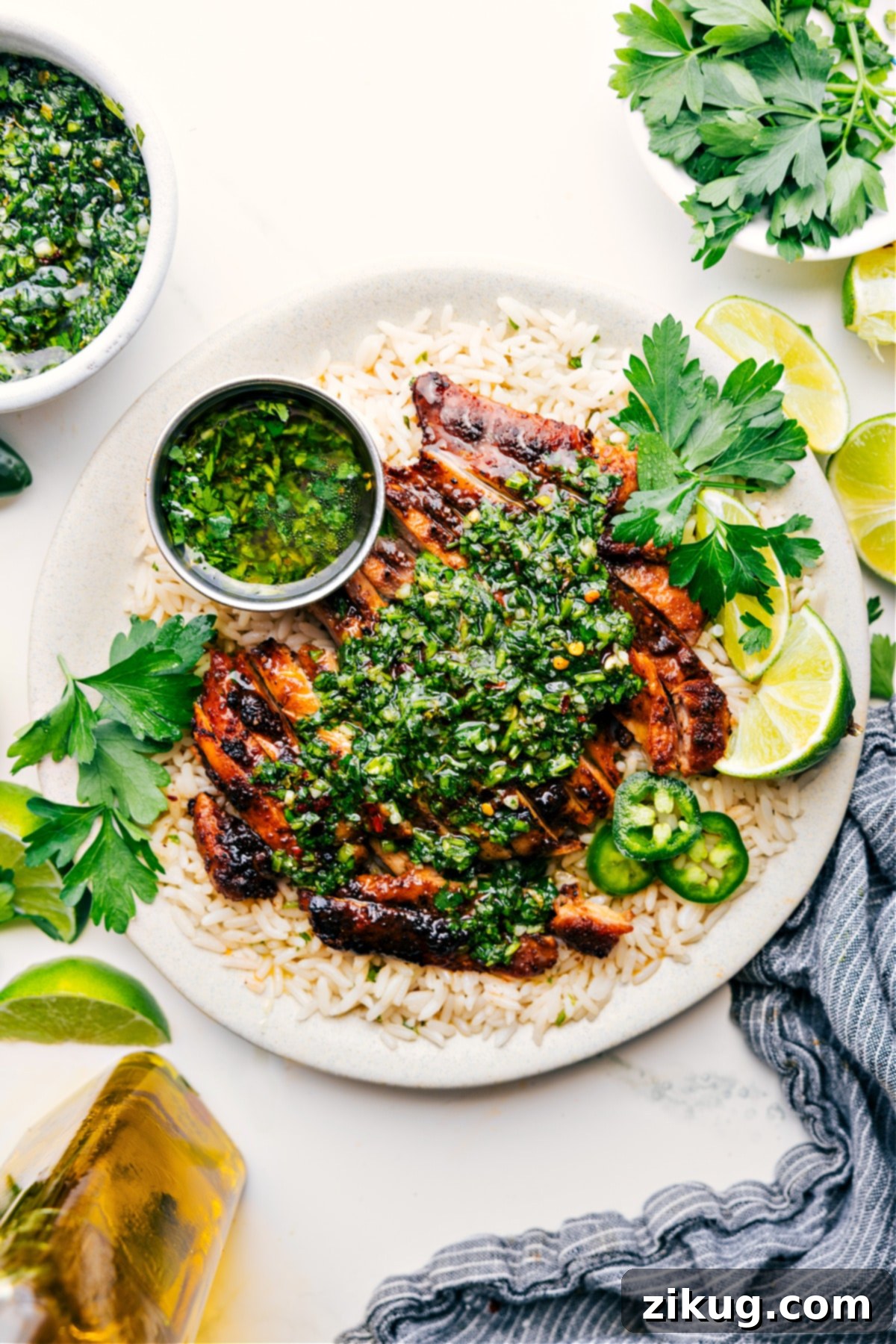
Chimichurri Chicken is the ultimate solution for a delicious and satisfying weeknight dinner. It ticks all the boxes: incredibly fast to prepare, wonderfully simple to cook, and bursting with vibrant, fresh flavors that will excite your palate. This recipe transforms ordinary chicken into an extraordinary meal, making it a staple in any home cook’s repertoire.
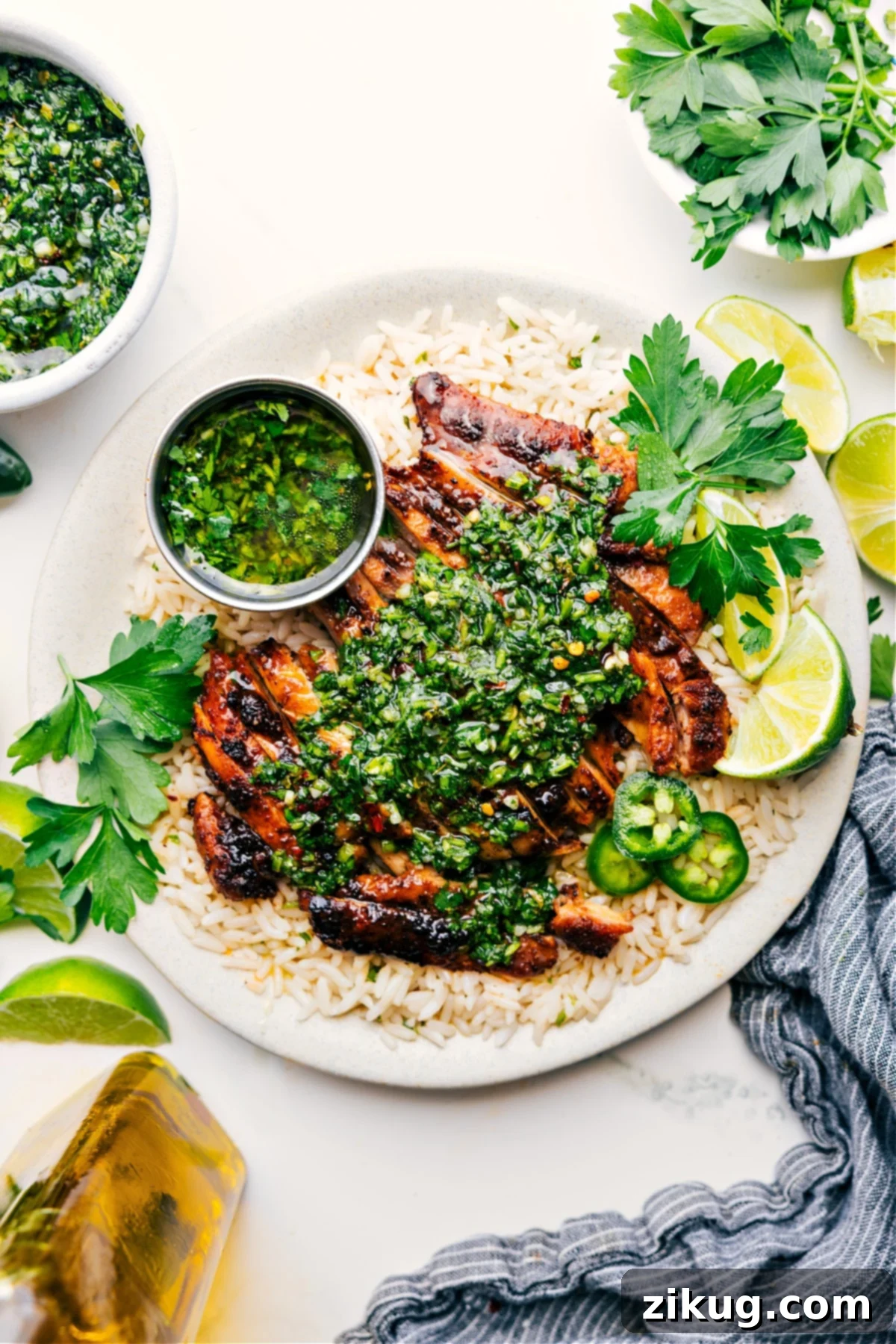

Author’s Notes
Sauce GOALS: The Green Elixir Your Meals Need!
This isn’t just a sauce; it’s the green, zesty magic I want to put on absolutely everything!
As a passionate sauce enthusiast, I’m always looking for ways to elevate a dish with a burst of flavor. After more than a decade of crafting and sharing recipes, I’ve curated a list of go-to favorites, and this homemade chimichurri consistently ranks at the very top. It’s a game-changer that transforms simple ingredients into culinary masterpieces.
While my version of chimichurri isn’t strictly traditional to Argentina’s classic chimichurri verde, it’s my unique interpretation of this iconic herb sauce. I’ve refined it over countless batches, ensuring it’s the one I return to again and again for its incredible depth and freshness. It strikes a perfect balance of herbs, acidity, and a hint of spice that complements almost any protein or side dish.
Few things boost the natural flavor of meat quite like this vibrant sauce. I absolutely love how it enhances my baked chicken thighs, but don’t limit yourself – it’s equally fantastic on lean chicken breasts. The aromatic herbs and tangy vinegar cut through the richness of the chicken, creating a symphony of flavors in every bite.
And when you’re ready for another culinary adventure, please promise me you’ll give it a try on grilled flank steak sometime. The combination is truly SO good, it’s bound to become another one of your favorite meals!
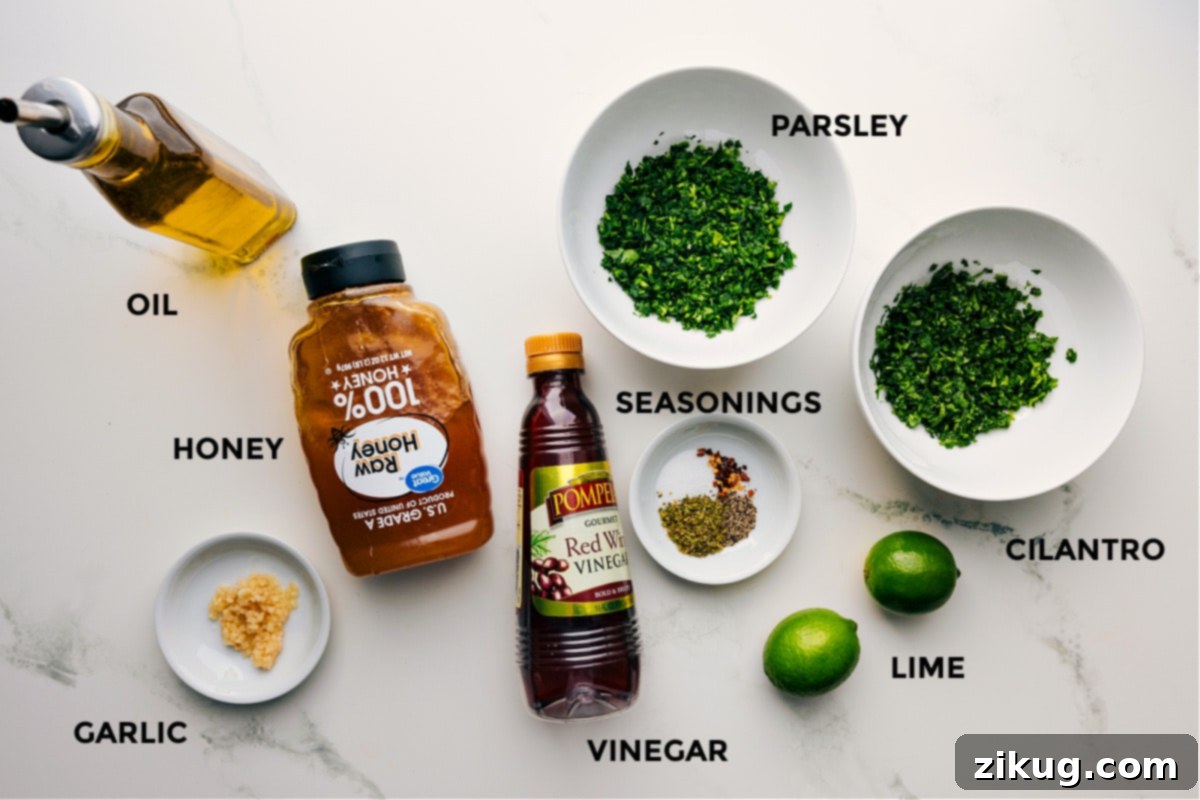
Essential Chimichurri Chicken Ingredients
Crafting the perfect Chimichurri Chicken starts with selecting high-quality ingredients. Each component plays a crucial role in building the layered flavors that make this dish so irresistible.
- Cilantro & Parsley: These fresh herbs form the aromatic backbone of your chimichurri. Always wash them thoroughly, then dry them exceptionally well. Any residual water can dilute the sauce, compromising its vibrant flavor and consistency. Freshness is key here, so choose bright green, crisp bunches.
- Chicken: While the recipe recommends savory chicken thighs for their juicy tenderness and flavor, boneless, skinless chicken breasts are also a fantastic option. Just note that chicken breasts may require a slightly different cooking method to ensure they remain moist and tender (see recipe notes for details).
- Red Wine Vinegar: This ingredient provides the essential tangy acidity that brightens up the chimichurri. If you’re in a pinch, white vinegar can be a substitute, but avoid stronger, more complex vinegars like balsamic, as they can overpower the delicate herb flavors.
- Honey: A touch of honey (or a similar sweetener like agave) is optional but highly recommended. It balances the acidity of the vinegar and lime, adding a subtle sweetness that rounds out the overall flavor profile. Start with a small amount and adjust to your taste preferences.
- Olive Oil: The quality of your olive oil truly makes a difference in chimichurri. Opt for a high-quality extra virgin olive oil to impart a rich, smooth base and enhance the fresh herb flavors.
- Garlic: Freshly minced garlic is indispensable. It provides a pungent, aromatic kick that is central to chimichurri’s character. Use fresh cloves for the best results.
- Lime: Fresh lime juice adds another layer of bright, citrusy acidity. It complements the red wine vinegar beautifully and contributes to the sauce’s overall vibrancy.
- Dried Oregano: This herb adds an earthy, slightly peppery note. While fresh oregano can be used, dried flakes often release their flavor more consistently in oil-based sauces like chimichurri.
- Red Pepper Flakes: For a subtle warmth and a gentle kick, red pepper flakes are preferred over fresh chilies in this recipe. They distribute evenly throughout the sauce and provide a consistent level of heat. Adjust the quantity according to your preferred spice level.
- Salt & Pepper: Essential for seasoning, bringing all the flavors together and enhancing the natural taste of both the chicken and the sauce.
Recommended Equipment
Having the right tools can make preparing Chimichurri Chicken even easier:
- Sharp Chef’s Knife: Essential for finely chopping herbs and garlic.
- Cutting Board: A sturdy surface for all your chopping needs.
- Wide-Mouth Mason Jar with Lid: Perfect for mixing and storing the chimichurri sauce.
- Mixing Spoons/Whisk: For combining ingredients.
- Baking Dish or Grill Pan: Depending on your chosen chicken cooking method.
- Meat Mallet (optional): If using chicken breasts and pounding them to even thickness.
Chimichurri: To Blend or Hand-Chop?
The method you choose for preparing your chimichurri herbs significantly impacts the sauce’s texture and overall character. Both approaches have their merits, depending on your desired outcome and available time.
Hand-Chopped (Traditional & Recommended for this Chimichurri Chicken)
This is my preferred method, especially when the chimichurri is the star condiment for grilled meats or when I want that authentic, rustic feel.
- Texture: Yields a wonderfully chunky, rustic texture, allowing you to appreciate the individual herbs.
- Color: The herbs retain their vibrant, bright green color, contributing to a visually appealing sauce.
- Best For: Ideal for spooning generously over grilled chicken or steak, tossing with grains like couscous, or adding to salads where texture is valued.
Blended or Food Processed
When time is of the essence, or if you prefer a smoother consistency, a blender or food processor can be a convenient alternative.
- Texture: Results in a smooth and uniform sauce.
- Speed: A much faster and easier preparation method.
- Best For: Excellent for marinades, salad dressings, or when you need the flavors to fully infuse a dish.
- Consideration: Be careful not to over-blend, as this can bruise the herbs, leading to a duller green color and potentially a slightly bitter taste. Just a few quick pulses are usually sufficient.
My Take: I personally hand-chop my chimichurri when I plan to serve it as a fresh, vibrant topping for dishes like grilled chicken or steak. The satisfying chunkiness and bright appearance are hard to beat. However, if I’m short on time or intend to use the chimichurri primarily as a marinade where a smoother consistency is acceptable, I’ll opt for a quick blend in the food processor. Remember, it’s about a few swift pulses, not a full puree, to keep those herb flavors lively!
What To Serve With Chimichurri Chicken:
Healthy
Chickpea Salad Recipe
A light and protein-rich salad that offers a refreshing contrast to the bold flavors of chimichurri.
Side Dishes
Cilantro Lime Rice
This zesty rice dish is a natural pairing, echoing the fresh, citrusy notes of the chimichurri sauce.
Healthy
Cucumber Salad
A cool and crunchy salad that provides a refreshing counterpoint to the warm chicken and tangy sauce.
Side Dishes
Roasted Asparagus (Two Ways!)
Simple roasted vegetables are always a good choice, and asparagus brings a touch of elegance and nutrition.

Pin
Chimichurri Chicken
By Chelsea Lords
Chimichurri Chicken is a total flavor upgrade for your dinner routine. The perfectly spiced chicken paired with a fresh, vibrant herb sauce creates a match made in culinary heaven, promising a dynamic and delicious meal every time.
Video
Watch the full recipe video here for a step-by-step visual guide to making perfect Chimichurri Chicken!
Ingredients
For the Chimichurri Sauce
- 4 cloves garlic, finely chopped (approximately 1 tablespoon)
- 2 tablespoons red wine vinegar
- 1 large lime, juiced (yielding about 2 tablespoons juice; or use additional red wine vinegar)
- 1/2 cup finely chopped fresh cilantro (measure after chopping for accuracy)
- 1/2 cup finely chopped flat-leaf parsley (measure after chopping for accuracy)
- 1/2 cup high-quality olive oil
- 3/4 teaspoon dried oregano (or 1 tablespoon tightly packed fresh oregano)
- 1/8 teaspoon red pepper flakes (or more, to taste, for extra heat)
- 1 tablespoon honey (optional, add to taste for a touch of sweetness)
- 1/2 teaspoon salt (use good quality salt)
- 1/4 teaspoon black pepper (freshly ground is best)
For the Chicken and Rice
- 1 batch baked chicken thighs (click link for specific recipe), or substitute with chicken breasts (see Note 1 below for preparation)
- 1 batch cilantro-lime rice (click link for recipe), or plain white rice prepared using your preferred method
Instructions
- Prepare the Chimichurri Sauce: Begin by juicing your lime to obtain 2 tablespoons of fresh juice. In a wide-mouth mason jar or a medium bowl, combine the finely chopped garlic, red wine vinegar, and lime juice. Stir well. Next, add the olive oil, dried oregano, red pepper flakes, and honey (if using). Seal the jar tightly and shake vigorously to thoroughly combine all the liquids and spices.
- Add Fresh Herbs: Finely chop both the fresh flat-leaf parsley and cilantro. Measure out ½ cup of each and stir them directly into the jar with the liquid base. Season the sauce generously with salt and pepper to taste. Seal the jar once more and shake or stir again to fully incorporate the herbs. For best flavor, refrigerate the chimichurri overnight, or let it sit at room temperature for at least an hour while you prepare the rest of your meal to allow the flavors to meld.
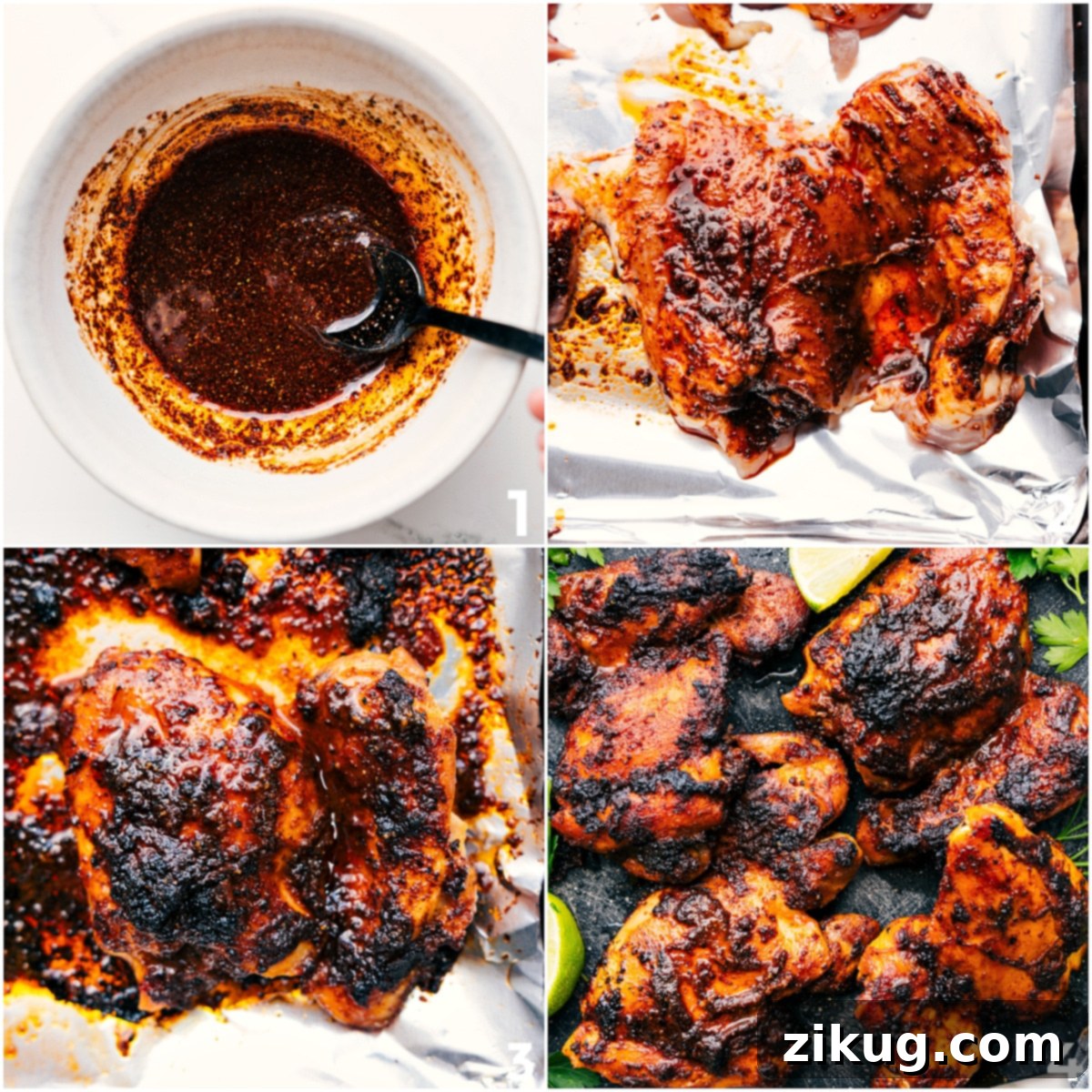
- Cook the Chicken: Prepare your chicken thighs according to the linked baked chicken thighs recipe. Alternatively, you can use your preferred method for seasoned chicken. If opting for chicken breasts, refer to Note 1 below for specific preparation instructions to ensure juicy results. (The linked recipe for chicken thighs calls for 2 pounds; if you desire extra sauce, consider doubling the chimichurri recipe or halving the chicken amount.)
- Prepare the Rice: Cook your preferred rice. You can use one of the linked rice recipes (Cilantro Lime Rice or plain White Rice) above, or simply prepare rice using your usual method.
- Assemble and Serve: Spoon a generous portion of cooked rice into individual serving bowls. If using plain rice, stir in about ⅓ cup of the prepared chimichurri sauce for an extra burst of flavor before adding the chicken. Top the rice with your cooked chimichurri chicken, and then spoon additional fresh chimichurri sauce generously over everything. Serve immediately and enjoy!
Recipe Notes
Note 1: Using Chicken Breasts. If you prefer boneless, skinless chicken breasts, grab about 1 pound (typically 2 breasts). Slice each breast horizontally to create thinner cutlets, then pound them to an even thickness using a meat mallet. This ensures even cooking and tenderness.
In a small bowl, mix together the following seasoning rub:
- 3 tablespoons olive oil
- 2-1/2 teaspoons ground cumin
- 1 teaspoon ground coriander
- 2 teaspoons salt
- 1 teaspoon black pepper
Add this mixture and the prepared chicken breasts to a resealable bag. Knead the bag gently to ensure the chicken is evenly coated. Marinate for at least 30 minutes (or up to 24 hours for deeper flavor), or cook them right away if you’re short on time.
Grill Method for Chicken Breasts: Preheat your grill to medium-high heat. Cook the seasoned chicken breasts for 2 to 4 minutes per side, or until the internal temperature reaches 160–165°F and the juices run clear. Let the chicken rest for 5 to 10 minutes before slicing against the grain to retain moisture.
Pan-Frying Method for Chicken Breasts: Heat 2 tablespoons of olive oil in a large skillet over medium-high heat. Once the oil is hot, add the chicken breasts and cook for 2 to 4 minutes per side. If needed, add another tablespoon of oil after flipping to prevent sticking and ensure a beautiful sear.
Mini Food Processor Method for Chimichurri: For a quicker sauce, add all chimichurri ingredients except the olive oil to a mini food processor. Pulse a few times until the parsley and cilantro are finely chopped but still retain some texture – avoid pureeing. Transfer the mixture to a bowl, then stir in the olive oil by hand to achieve the desired consistency and preserve the vibrant green color.
Storage: To maintain freshness, store the cooked chicken and chimichurri sauce separately. Keep cooked chicken in an airtight container in the refrigerator for up to 5 days. Chimichurri sauce, when stored in a sealed jar in the fridge, will remain fresh and flavorful for up to 3 days. Its flavors deepen over time, making leftovers even better!
Nutrition Information
Serving: 1 serving
Calories: 505 kcal
Carbohydrates: 9g
Protein: 32g
Fat: 38g
Saturated Fat: 6g
Cholesterol: 94mg
Sodium: 182mg
Potassium: 646mg
Fiber: 1g
Sugar: 5g
Vitamin A: 845IU
Vitamin C: 18mg
Calcium: 48mg
Iron: 2mg
Nutrition information is automatically calculated and should only be used as an approximation. Actual values may vary based on specific ingredients and preparation methods.
Like this recipe? We’d love to hear from you!
Leave a comment below!
Creative Ways to Use Leftover Chimichurri
While chimichurri shines as a vibrant condiment for chicken, its versatility extends far beyond. Don’t let any of this delicious green sauce go to waste! It works wonders as a marinade, a flavor enhancer for grains, an invigorating dressing for salads, and much more. Here are some of my favorite creative ways to use up any leftover chimichurri:
- Grain Booster: Toss it generously into cooked couscous (try this shrimp couscous recipe for inspiration!), fluffy cooked quinoa, or simple cooked rice to instantly infuse them with herbaceous, zesty flavor.
- Vegetable Enhancer: Drizzle it over freshly grilled vegetables like zucchini, bell peppers, or asparagus. It’s also phenomenal on roasted vegetables, adding a bright contrast to their caramelized sweetness.
- Salad Dressing: Use it as a vibrant dressing for a simple green salad. It pairs beautifully with avocado, cherry tomatoes, and thinly sliced red onions, creating a light yet incredibly flavorful meal.
- Ultimate Protein Topping: It’s not just for chicken! Spoon it lavishly over every type of grilled protein you can imagine – steaks, fish, shrimp, or even pork chops for an instant flavor upgrade.
- Bean Flavor Infusion: Stir a tablespoon or two into cooked black beans or any other cooked legumes for a significant boost in taste, transforming a simple side into something special.
- Sandwich Spread: Fold it into mayonnaise to create a delicious, herby spread. This makes an incredible addition to sandwiches, wraps, or even as a dip for fries and crudités.
- Creamy Taco Sauce: Mix it into sour cream or Greek yogurt for a fresh, tangy, and herbaceous creamy taco sauce. It’s a game-changer for tacos, burritos, or even as a dollop on chili.
Storage Tips for Chimichurri Sauce
Should Chimichurri Sauce Be Refrigerated?
While chimichurri sauce is often served at room temperature to allow its flavors to fully bloom, it’s best to prepare it and let it sit for at least an hour, or even overnight, in the refrigerator. This resting period allows the various flavors to meld and deepen beautifully. Once made, always store your chimichurri sauce in a sealed, airtight container in the refrigerator. It will maintain its peak freshness and flavor for up to 2-3 days.
Freezing Chimichurri: To extend the life of your chimichurri, especially if you have a larger batch, freezing is an excellent option. Simply pour any leftover sauce into an ice cube tray and freeze until the cubes are solid. Once frozen, transfer these chimichurri cubes to a sealed freezer-safe bag or container. It can be stored in the freezer for up to 3 months. When you’re ready to use it, simply thaw the desired number of cubes in the refrigerator overnight, or pop them directly into a hot pan with your protein or vegetables.
Frequently Asked Questions About Chimichurri Chicken
- What is Chimichurri?
- Chimichurri is a vibrant, uncooked green sauce originating from Argentina, famously used as a condiment for grilled meat. It’s typically made from finely chopped fresh parsley, minced garlic, olive oil, oregano, and red wine vinegar, often with a touch of red pepper flakes for heat.
- Can I make the chimichurri sauce ahead of time?
- Absolutely! In fact, making the chimichurri sauce a few hours or even a day in advance allows the flavors to meld and deepen, resulting in an even more delicious sauce. Store it in a sealed jar in the refrigerator.
- Is Chimichurri Chicken spicy?
- The level of spice in Chimichurri Chicken is entirely customizable. This recipe includes a small amount of red pepper flakes for a subtle warmth. You can easily increase or decrease the amount of red pepper flakes to suit your personal preference, or omit them entirely for a milder sauce.
- Can I use other types of chicken?
- Yes, while chicken thighs are recommended for their juiciness, boneless, skinless chicken breasts work wonderfully with the chimichurri. You can also use bone-in chicken pieces, but adjust cooking times accordingly to ensure they are fully cooked through and juicy.
- How long does Chimichurri Chicken last as leftovers?
- Cooked Chimichurri Chicken can be stored in an airtight container in the refrigerator for up to 3-4 days. The chimichurri sauce itself keeps well for 2-3 days in the fridge. For best results, store the chicken and sauce separately if possible.