

Master the Art of Homemade Toffee: A Holiday Classic with a Gourmet Twist
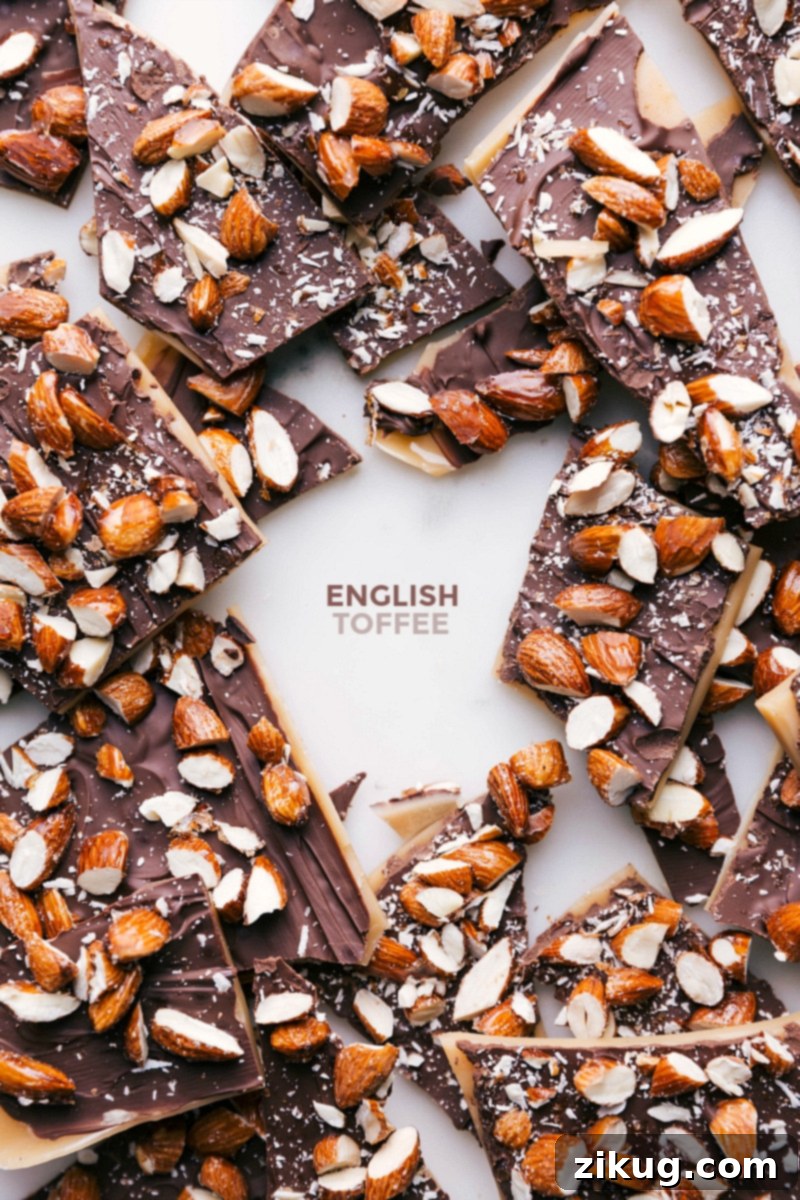
Few treats capture the essence of the holidays quite like a perfectly crafted batch of **toffee**. This easy, foolproof recipe promises a truly irresistible experience: a delightful buttery crunch, generously enrobed in rich chocolate, and crowned with sweet, crunchy sugared almonds. It’s the quintessential confection for festive parties, thoughtful gift-giving, or simply indulging your own sweet cravings. Forget store-bought; homemade toffee offers an unparalleled depth of flavor and a gratifying texture that truly stands out.
Why This Homemade Toffee Recipe is Unbeatable
Toffee has always been a personal favorite, and I seize every opportunity, especially during the festive season, to prepare generous batches to share with loved ones. While many toffee recipes exist, this particular one consistently receives rave reviews, and for good reason. What truly sets it apart is a simple yet transformative step: instead of merely sprinkling plain chopped nuts on top, we create beautifully **candied and toasted almonds** first. This extra effort requires minimal time but makes an enormous difference, elevating the flavor and adding a sophisticated texture that will have everyone asking for the recipe. Paired perfectly with a batch of creamy homemade fudge, it completes any holiday dessert spread.
Crafting your own toffee from scratch offers several advantages over commercial alternatives. You have complete control over the quality of ingredients, ensuring a fresher, richer flavor. The process itself, while requiring precision, is incredibly rewarding, yielding a confection that boasts a deep, complex caramel flavor and a satisfying snap. This isn’t just a dessert; it’s an experience, from the fragrant aroma filling your kitchen to the moment you bite into that buttery, chocolatey, nutty goodness.

Essential Ingredients for Exquisite Toffee
Making exceptional toffee relies on a few key, high-quality ingredients. Each plays a vital role in achieving that perfect balance of sweetness, richness, and crisp texture.
- Sugared Almonds: These are the secret weapon of this recipe! Prepared first and allowed to cool, they add an incredible layer of flavor and crunch. While plain almonds can be used, taking the time to candy them truly transforms the toffee. The process involves lightly coating almonds with sugar and salt, then toasting them until shiny and golden, bringing out a deeper, more aromatic nut flavor.
- Unsalted Butter: This is the heart of your toffee. Using room-temperature, unsalted butter is crucial as it melts evenly and prevents separation of the mixture, leading to a smooth, uniform toffee base. Always opt for high-quality butter for the best flavor; margarine will not yield the same rich results.
- Granulated Sugar: The primary sweetener and structural component of toffee. Sugar caramelizes during cooking, creating the signature golden color and crunchy texture. Precision in cooking the sugar is key to avoid a grainy or overly chewy outcome.
- Water: A small amount of water aids in dissolving the sugar crystals evenly at the start of the cooking process. This helps prevent crystallization and ensures a smooth, glassy toffee texture.
- Fine Sea Salt: A pinch of fine sea salt is a game-changer. It balances the sweetness of the toffee and chocolate, enhancing all the flavors and preventing it from being cloyingly sweet.
- Chopped Chocolate: The final luxurious layer. You can choose semi-sweet, dark, or milk chocolate based on your preference. High-quality chopped chocolate bars melt more smoothly and provide a superior finish compared to chocolate chips, which contain stabilizers that prevent them from spreading as evenly.
Quick Chocolate Tip
For an optimal balance, I often use a delightful mix of semi-sweet, dark, and milk chocolates. However, feel free to use your favorite! If you prefer a less sweet toffee, lean towards dark chocolate. For those who love extra sweetness, milk chocolate is the way to go. Always choose high-quality chocolate bars and chop them coarsely for the best melting and spreading results.
Crafting Your Perfect Toffee: A Step-by-Step Overview
Making homemade toffee is a rewarding process that combines simple ingredients with precise technique. Here’s a brief overview of the steps you’ll take to create this delectable treat, with more detailed instructions available in the recipe card below.
- Candy Almonds: First, coat whole almonds with a mixture of brown sugar, salt, and water. Bake them until they’re shiny and lightly golden, then allow them to cool completely before coarsely chopping. This crucial step adds a unique flavor and texture to the finished toffee.
- Prepare Toffee Base: In a large, light-colored pot, you’ll gently melt unsalted butter with granulated sugar, water, and fine sea salt over low heat. The key here is patience, ensuring the sugar fully dissolves to prevent crystallization and achieve a smooth base.
- Cook to Perfection: Once the sugar is dissolved, increase the heat slightly and continue cooking. Using a reliable candy thermometer is essential here. Stir constantly until the mixture reaches the hard-crack stage (300°F at sea level), which signals it’s ready for its signature brittle texture.
- Pour and Spread: Quickly pour the hot toffee onto a prepared, lined pan. Work swiftly to tilt the pan and spread the molten toffee into an even layer before it begins to set.
- Add Chocolate and Almonds: While the toffee is still hot but firming up, sprinkle generously with chopped chocolate. Allow it to melt, then spread it evenly over the toffee. Finally, press the prepared candied almonds on top for that irresistible finish.

Achieving Toffee Perfection: Expert Tips and Tricks
While the steps are straightforward, a few expert tips can make all the difference between good toffee and truly exceptional toffee. Pay close attention to these details for a flawless result every time.
- Invest in a Quality Candy Thermometer: This is non-negotiable for perfect toffee. A reliable candy thermometer is your best friend in candy making. It’s incredibly challenging to know precisely when toffee has reached the hard-crack stage (300°F or 285-290°F for high altitude) without one. Don’t guess; accuracy ensures the right texture. Ensure it’s not touching the bottom of the pot.
- Patience is Key for Sugar Dissolution: When melting the butter and sugar initially, keep the heat low and stir gently. This “low and slow” approach, taking 10-12 minutes, ensures the sugar completely dissolves. Rushing this step by increasing the heat can lead to crystallization, resulting in grainy toffee rather than smooth, brittle perfection.
- Consistent Stirring is Crucial: Once the sugar is dissolved and the heat is raised, stir constantly at a slow, even speed, always in the same direction. This prevents the mixture from scorching on the bottom of the pan and helps maintain a stable emulsion. Aggressive or inconsistent stirring can cause the butter to separate from the sugar, leading to an oily, uneven toffee.
- Clean Pot Sides: As the sugar dissolves, use a wet pastry brush to gently brush down any sugar crystals clinging to the sides of the pot. These stray crystals can act as “seeds” that promote premature crystallization in the entire batch, leading to grainy toffee. A light-colored pot helps you spot them easily.
- Choose High-Quality Ingredients: With so few ingredients, the quality of each truly matters. Premium unsalted butter, good quality granulated sugar, fine sea salt, and excellent chocolate will yield a vastly superior flavor.
- Consider Your Pan: A wide, light-colored ceramic pot is ideal. The width allows for more even heat distribution, and a light interior helps you monitor the color change of the toffee as it caramelizes, preventing overcooking.
- Nut Alternatives: If almonds aren’t your preference, feel free to experiment! Pecans, walnuts, or even macadamia nuts make fantastic substitutes, offering different flavor profiles. Just make sure to candy and toast them for that extra special touch.
- Timely Chocolate Application: After pouring the hot toffee, allow it to sit for 5-8 minutes until it’s firm to the touch but still very hot. This slight cooling period prevents the chocolate from scorching. Once added, let the chocolate melt for a few minutes before spreading it evenly with an offset spatula. If your toffee cools too much before the chocolate can melt and spread, a hair dryer on a low setting can gently warm it up to aid spreading.
Toffee Storage
To keep your toffee at its best, store it in a sealed, airtight container at room temperature. It will remain fresh and delightfully crunchy for up to 2 weeks. To prevent stickiness, especially in humid climates, ensure it’s kept in a cool, dry place. Avoid refrigeration, as it can introduce moisture and alter the texture.
Frequently Asked Questions About Homemade Toffee
Making candy can sometimes present challenges. Here are answers to some common questions that arise when making homemade toffee:
- Q: Why did my toffee separate and become oily? A: Separation, where butter oozes out, usually happens if the heat is too high initially, if you stir too aggressively or inconsistently, or if the sugar didn’t fully dissolve. Patience with low heat and gentle, constant stirring are crucial for maintaining the emulsion.
- Q: My toffee turned out grainy. What went wrong? A: Grainy toffee is almost always caused by sugar crystallization. This can happen if sugar crystals cling to the sides of the pot and fall back into the mixture, acting as “seeds.” Ensure you brush down the sides of the pan with a wet pastry brush during the initial stages to prevent this.
- Q: Can I double this recipe for a larger batch? A: It’s generally not recommended to double candy recipes, especially for toffee. Larger quantities make it difficult to achieve even heat distribution and precise temperature control, increasing the risk of burning or inconsistent results. It’s better to make two separate batches if you need more.
- Q: How do I clean the sticky pot after making toffee? A: The easiest way is to fill the pot with hot water immediately after pouring the toffee. Let it soak for a while, or even bring the water to a boil on the stove. The hot water will dissolve the hardened sugar, making cleanup much easier.
- Q: Can I use different nuts or toppings? A: Absolutely! While sugared almonds are fantastic, feel free to experiment with other nuts like pecans, walnuts, or even macadamia nuts. You could also sprinkle with sea salt flakes over the chocolate for an extra savory note, or crushed candy canes for a festive twist.
More Delectable Holiday Treats to Try
The holiday season is perfect for indulging in a variety of homemade sweets. If you love this toffee recipe, you’ll surely enjoy these other festive favorites:
- Classic Snickerdoodle Cookies
- Sweet Raspberry Almond Thumbprint Cookies
- Rich Tiger Butter Fudge
- Decadent Turtle Candy
- Easy 3-Ingredient Christmas Cookies

Print Recipe
The Ultimate Homemade Toffee Recipe
Chelsea Lords
20 minutes
30 minutes
8 hours
8 hours 50 minutes
20 servings (one 13 x 18 inch pan of toffee)
Equipment
-
Half sheet pan (13″ x 18″) nonstick
-
Silicone baking mat or parchment paper
-
Candy Thermometer
-
Large pot with a light-colored interior
-
Pastry brush
Ingredients
- 3 tablespoons light brown sugar firmly packed
- 1 teaspoon salt
- 1 tablespoon water
- 1-1/2 cups whole almonds
- 2 cups unsalted butter at room temperature; do not use margarine
- 2 cups granulated sugar
- 1/4 cup water
- 1-1/4 teaspoon fine sea salt reduce to 1 teaspoon if sensitive to salt or greatly reduce if using table salt
- 1-3/4 cups chopped semi-sweet chocolate or dark chocolate or milk chocolate (see recipe notes for recommendations)
Instructions
-
Prepare Sugared Almonds: Preheat your oven to 350°F (175°C) and position a rack in the center. In a large mixing bowl, combine the brown sugar and 1 teaspoon of salt. Add 1 tablespoon of water and stir until a smooth glaze forms. Add the whole almonds and toss until they are evenly coated. Spread the coated almonds in a single layer on a parchment paper-lined baking sheet. Toast for 8–10 minutes, or until they appear shiny and are a light golden color. Remove from the oven and allow them to cool completely. Once cool, coarsely chop the almonds and set them aside. This is also an ideal time to chop and measure your chosen chocolate.
-
Prepare Your Pan: Line a half sheet pan (approximately 13×18 inches) with a silicone baking mat or generously butter the pan. A silicone baking mat is highly recommended for easy removal and effortless cleanup.
-
Start the Toffee Base: Heat a large, 2-quart ceramic pot (preferably one with a light-colored interior to easily monitor color changes) over low heat for about 30 seconds. Rub one stick of unsalted butter over the bottom and sides of the pot to grease it, then add that stick along with the remaining butter to the pot. Carefully add the granulated sugar to the very center of the pot and slowly pour the water on top of the sugar. Add the fine sea salt. It’s important to prevent any sugar crystals from adhering to the sides of the pan at this stage.
-
Melt and Dissolve (Low & Slow): Maintain the mixture over low heat. Using a wooden spoon, stir slowly and gently to melt the butter and completely dissolve the sugar. This crucial step should take 10–12 minutes, emphasizing a “low and slow” approach. As it cooks, use a wet pastry brush to carefully brush down any sugar crystals that may cling to the sides of the pan. A light-colored pot will help you easily spot these crystals. Towards the end of this 10–12 minute period, the mixture will likely begin to gently boil.
-
Cook to Hard-Crack Stage: Increase the heat to just over medium (but avoid medium-high). Attach your candy thermometer to the side of the pan, ensuring it does not touch the bottom. From this point forward, stir constantly at a low and even speed, always in the same direction. After approximately 8–10 minutes, the mixture will come to a rolling boil and slowly begin to take on a beautiful amber color. Continue to cook the toffee until it reaches the hard-crack stage, which is 300°F (149°C) at sea level. (If you are in a high-altitude area, such as Utah, cook to 285–290°F / 140-143°C). Watch it very carefully as the temperature can rise quickly towards the end. Once it reaches the target temperature, immediately remove the pot from the heat.
-
Pour and Spread Toffee: Quickly pour the hot toffee onto your prepared sheet pan. Working with urgency, gently tilt the sheet pan from side to side and up and down to encourage the candy to spread into an even, thin layer, filling most of the pan. It’s perfectly fine if it goes slightly up the sides.
-
Add Chocolate and Almonds: Allow the toffee to sit at room temperature for 5–8 minutes, until it is firm to the touch but still quite hot. Evenly sprinkle the chopped chocolate over the hot toffee. Let the chocolate melt for a few minutes; the residual heat from the toffee will do the work. Once melted, use an offset spatula to gently and evenly spread the chocolate over the entire surface of the toffee. Immediately and gently press the chopped, sugared almonds onto the melted chocolate layer.
-
Set and Break: Let the finished toffee stand undisturbed at room temperature until it is completely firm, which typically takes about 6–8 hours. Once fully set and firm, use your hands to break the toffee into delightful, bite-sized pieces. Store in an airtight container at room temperature.
Recipe Notes
Candy Thermometer Accuracy: Before you begin, it’s wise to test your candy thermometer for accuracy. Place it in boiling water; it should read 212°F (100°C) at sea level. Adjust your target toffee temperature if your thermometer reads slightly off.
High Altitude Adjustments: If you live at a higher altitude, the boiling point of water and the hard-crack stage will be lower. For example, in Utah, 300°F (149°C) is typically reduced to 285-290°F (140-143°C). Always adjust your target temperature based on your altitude.
Storage: Toffee remains delicious when stored in an airtight container at room temperature for up to 2 weeks. Keep it in a cool, dry place to maintain its crispness and prevent it from becoming sticky.
Nutrition
Serving: 20servings
|
Calories: 346kcal
|
Carbohydrates: 30.5g
|
Protein: 2.6g
|
Fat: 25.4g
|
Cholesterol: 48.8mg
|
Sodium: 3.1mg
|
Fiber: 1.7g
|
Sugar: 28.4g
Nutrition information is automatically calculated and should only be used as an approximation.
Like this recipe? Leave a comment below!