
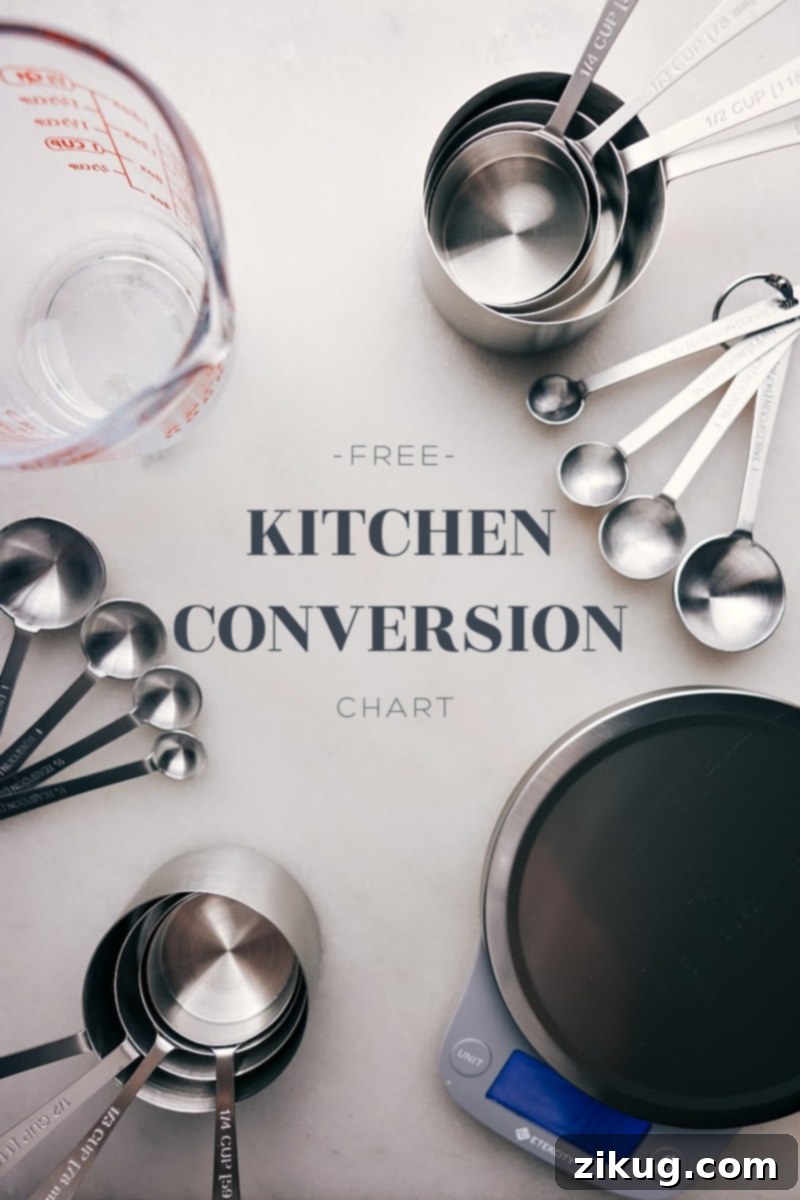
Transform your culinary adventures with unparalleled precision! Our comprehensive guide to measuring ingredients ensures perfect results every time, complete with a complimentary, printable Kitchen Conversion Chart. Download your chart today, laminate it for durability, and place it conveniently inside a cabinet or pantry for effortless, quick reference.
Mastering Measurements: Your Ultimate Kitchen Conversion Chart Guide
Achieving culinary excellence often boils down to one fundamental principle: precision in measurement. Whether you’re a seasoned chef or a budding home cook, accurate ingredient measurements are the secret ingredient to consistent, delicious results. From perfectly risen cakes to exquisitely balanced sauces, the right quantities make all the difference. This comprehensive guide will not only equip you with essential knowledge about measuring ingredients but also provide you with a fantastic, free printable Kitchen Conversion Chart to simplify your cooking and baking experience.
Your Essential Kitchen Conversion Chart
Navigating recipes can sometimes feel like solving a complex puzzle, especially when dealing with unfamiliar measurement units or needing to scale a recipe. Our invaluable Kitchen Conversion Chart is designed to be your steadfast companion in such moments. It effortlessly converts measurements from fluid ounces to milliliters, grams to pounds, teaspoons to tablespoons, and so much more. This indispensable tool is perfect for any home cook eager to elevate their culinary skills, ensuring you can tackle any recipe with confidence and accuracy. Download your free conversion chart today and start cooking and baking like a true professional!
Indispensable Measuring Tools for Every Kitchen
Before we delve deeper into the nuances of accurate measuring and how to best utilize your new Kitchen Conversion Chart, let’s ensure your kitchen is equipped with the fundamental measuring utensils. Having the right tools at your disposal is the first step towards culinary precision.
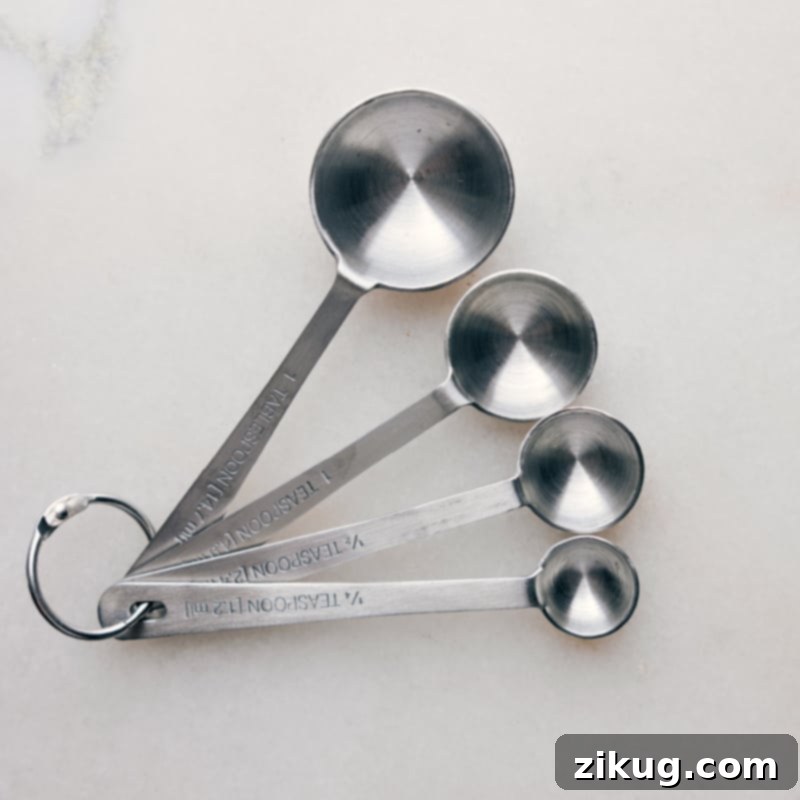
- Measuring Spoon Set – A complete set of measuring spoons is crucial for accurately adding smaller quantities of ingredients like spices, extracts, and leavening agents. Typically, a standard set includes ¼ teaspoon, ½ teaspoon, 1 teaspoon, and 1 tablespoon. More comprehensive sets might also feature ⅛ teaspoon and ½ tablespoon, providing even greater precision for delicate recipes. Ensuring you have these on hand will prevent your dishes from being over- or under-seasoned.
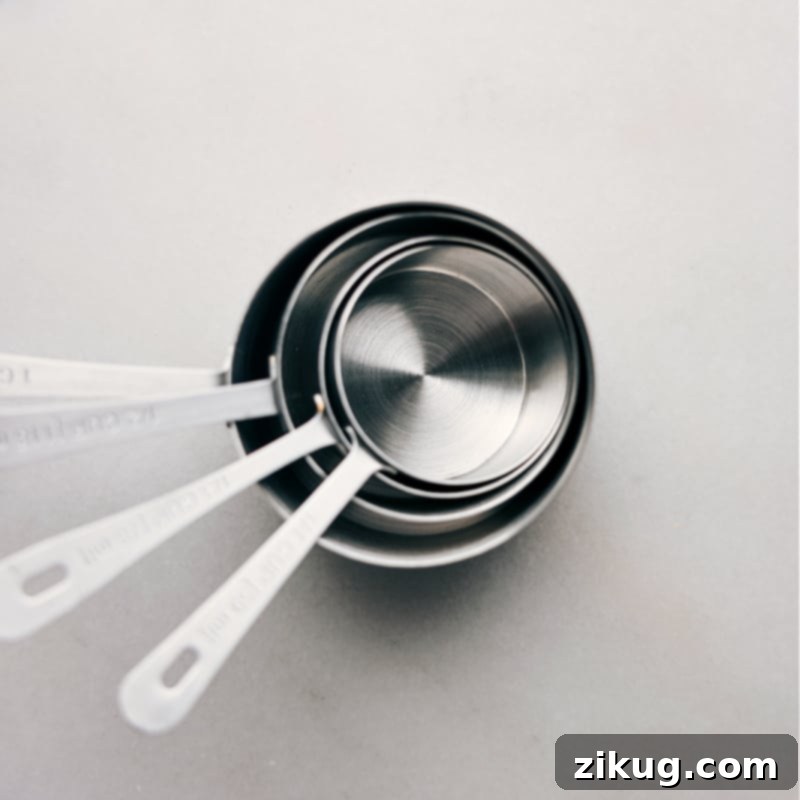
- Dry Measuring Cup Set – Essential for ingredients like flour, sugar, and grains, dry measuring cups are designed for level measurements. A typical set includes ¼ cup, ⅓ cup, ½ cup, and 1 cup. The key to using these accurately is the “spoon and level” technique, where you fill the cup by spooning the ingredient in and then level off the excess with a straight edge, such as the back of a knife. This method ensures consistent density and volume, crucial for baking success.
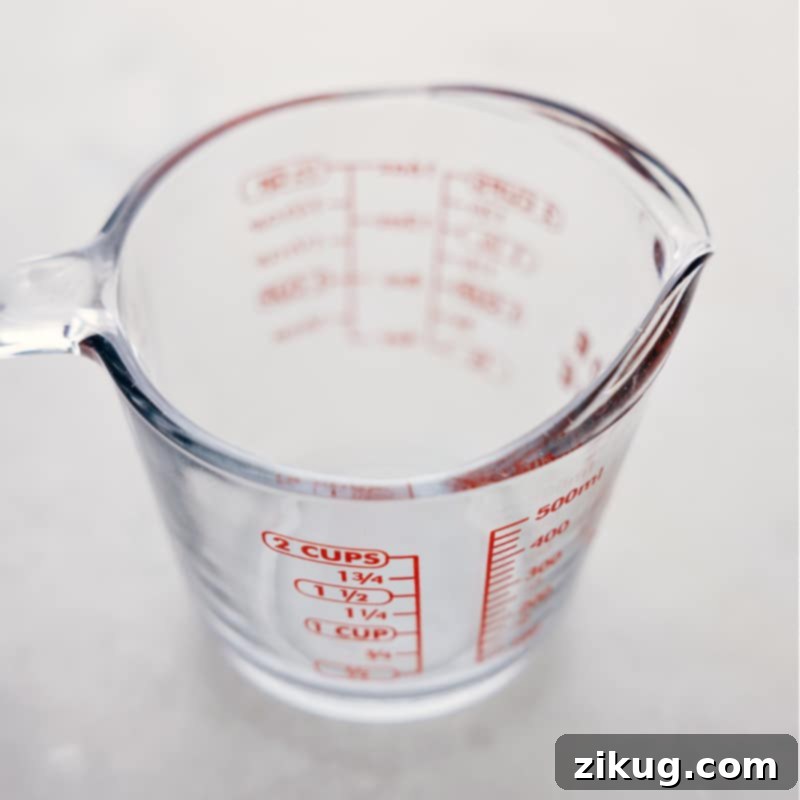
- Liquid Measuring Cups – Distinct from dry measuring cups, liquid measuring cups are typically clear, made of glass or plastic, and feature a spout for easy pouring and markings for various units like ounces, quarts, and milliliters. They commonly come in 1-cup, 2-cup, or 4-cup sizes. For accurate measurement, place the cup on a flat surface and view the liquid level at eye level. This prevents parallax error, where the liquid appears higher or lower depending on your viewing angle.
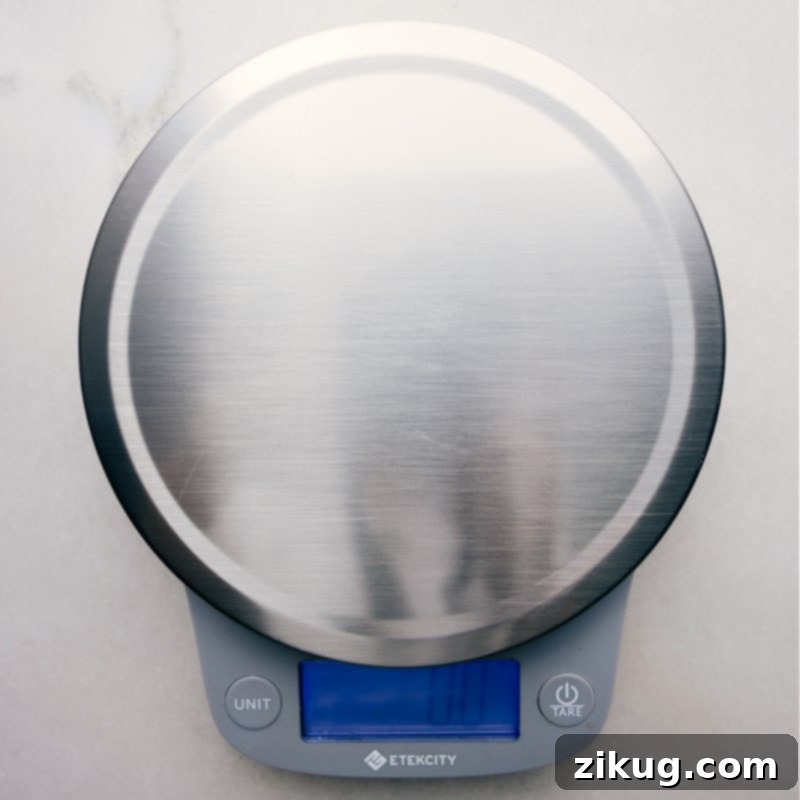
- Food Scale – For unparalleled accuracy, especially in baking, a food scale is an indispensable tool. Measuring ingredients by weight (grams or ounces) eliminates inconsistencies caused by varying densities or packing methods. Recipes for bread, muffins, and other baked goods yield the best, most consistent results when ingredients are weighed precisely. A digital food scale offers the ultimate level of exactness, ensuring your culinary creations turn out perfectly every time.
Beyond the tools, understanding the language of recipes is equally important. Let’s quickly review some common cooking abbreviations you’ll encounter in cookbooks, online recipes, and on our very own Kitchen Conversion Chart:
Demystifying Cooking Abbreviations
Do terms like “tsp” or “Tbsp” leave you feeling a little perplexed? You’re not alone! Recipe abbreviations are a common source of confusion for many cooks. Familiarizing yourself with these shorthand terms will streamline your cooking process and help you avoid common measurement errors. Here’s a rundown of common measurement unit abbreviations:
- tsp – Teaspoon
- Tbsp – Tablespoon (often also seen as tbsp, T, TB, Tbl, Tbs)
- C – Cup
- PT – Pint
- QT – Quart
- ML/mL – Milliliters
- L – Liters
- OZ – Ounce (weight)
- FL OZ – Fluid Ounce (volume)
- G – Grams
- LB – Pounds
With a little practice and repeated exposure, these abbreviations will soon become second nature, allowing you to breeze through recipes with confidence. Knowing them ensures you’re always adding the correct amount of each ingredient, leading to more predictable and delicious outcomes.
Now that we’ve covered the basic measuring utensils and clarified common abbreviations, let’s delve into the specifics of *how* to measure. When dealing with ingredients, precision isn’t just a suggestion—it’s paramount for ensuring the best possible results in both your cooking and baking endeavors.
Is a Cup Really a Cup? Understanding Volume vs. Weight
The simple phrase “a cup is a cup” can be misleading in the kitchen. In reality, measurements can vary significantly, especially when we talk about volume versus weight. To truly ensure you’re getting the correct amount of an ingredient, it’s crucial to understand the distinction between these two measurement types. Let us explain!
Consider this common kitchen conundrum: Which weighs more—16 ounces of marshmallows or 16 ounces of sweet potatoes? Your initial thought might be sweet potatoes, given their density. And if you’re measuring by *volume* (e.g., filling a 2-cup measure), the sweet potatoes would indeed be heavier because they pack more mass into the same space compared to airy marshmallows.
However, if you’re measuring by *weight*, the answer is that *both* the marshmallows and the sweet potatoes weigh 16 ounces. The difference lies in the *volume* they occupy. If you place a bowl on a kitchen scale and measure out 16 ounces of marshmallows, you will have a very full, perhaps overflowing, bowl. Conversely, sweet potatoes will reach 16 ounces much faster, filling a smaller portion of the bowl. This illustrates a fundamental principle: a specific weight (e.g., 16 ounces) is always the same, regardless of the ingredient, but the *volume* that weight occupies can differ dramatically based on the ingredient’s density.
The Nuance of Ounces: Fluid vs. Dry
This distinction leads us to another critical point: “an ounce isn’t always an ounce.” Measuring by weight quantifies the mass or density of an item, telling you *how heavy* it is. Measuring by volume, on the other hand, indicates *how much space* something occupies. This is precisely why most dedicated cooks, especially bakers, prefer a kitchen scale for dry ingredients—it offers a far greater degree of accuracy. The common assumption that “1 cup equals 8 ounces” is often an oversimplification. This equation refers specifically to 8 *fluid* ounces, which is distinctly different from 8 *dry* ounces.
Confused? Let’s clear things up!
Why Measuring Cups Are Not Interchangeable
The crucial insight here is that dry measuring cups and liquid measuring cups serve different purposes and are *not* interchangeable if you seek precision. Liquids should always be measured in cups specifically designed for them. These cups are typically transparent, feature clear markings, and have a spout to prevent spillage. When measuring liquids, always place the cup on a flat surface and bring your eyes down to the level of the liquid to read the measurement accurately. Looking down from above can lead to a misreading due to the meniscus (the curve in the liquid’s surface).
Conversely, dry ingredients like flour, sugar, or oats should never be measured in a liquid measuring cup. Dry measuring cups have a flat top, specifically designed to allow you to level off the ingredient. However, even with dry cups, technique matters. There are two primary methods: “scooping and packing” or “spooning and leveling.” Scooping the measuring cup directly into a bag or canister of flour, for instance, can compress the flour, resulting in a heavier measure than the recipe intends. This excess ingredient can significantly alter the texture and outcome of many recipes. If you’ve ever ended up with dense, dry cookies or bread that resembles a brick, over-packed flour could be the culprit!
Cooking experts overwhelmingly recommend the “spoon and level” method for dry ingredients like flour. Instead of scooping, use a large spoon to gently spoon the flour into the measuring cup until it overflows. Then, use the flat side of a table knife or a straight edge to level off the excess, creating a precise, uncompressed measurement. This method ensures consistent results and is why professional bakers almost exclusively rely on kitchen scales. By weighing dry ingredients, you guarantee the exact amount specified, eliminating variability. Try it for yourself: you’ll be amazed at how much one cup of flour can vary in weight depending on whether it’s scooped, packed, or carefully spooned and leveled.
The Simplicity of Measuring Spoons
Here’s some good news in the world of measurement: measuring spoons are generally reliable and interchangeable, whether you’re measuring a liquid or a solid! The reason for this convenience lies in the small quantities they handle. A tiny bit more or less salt, baking powder, or vanilla extract is unlikely to significantly impact the overall success of most recipes. For these smaller amounts, the slight density variations between dry and liquid ingredients have a negligible effect. However, if a recipe calls for a very critical small amount and extreme precision is desired, such as in highly scientific baking or confectionery, then you already know the ultimate answer: use a scale!
The Bottom Line for Accurate Kitchen Measurements
To consistently achieve outstanding results in your kitchen, integrate these practices into your routine. First, always read your recipe thoroughly from beginning to end for comprehensive guidance, paying close attention to the ingredient list and any specific measuring instructions. Next, identify the type of food you’ll be measuring. If you need 1 cup of milk, always use a liquid measuring cup, placing it on a flat surface and reading at eye level. For 1 cup of flour, opt for a dry measuring cup, employing the recommended “spoon and level” technique to ensure an accurate, uncompressed measurement.
However, for the pinnacle of accuracy in dry ingredients, nothing beats a digital kitchen scale. If the recipe truly matters—whether it’s a delicate dessert, artisan bread, or a complex dish where consistency is key—taking those extra steps to measure by weight will elevate your cooking and baking from good to extraordinary. Embrace these precise methods to unlock a new level of culinary confidence and success.
Measurement Equivalents: Your Kitchen Wizardry Cheat Sheet
Ever found yourself in a bind, needing ⅓ cup of an ingredient but realizing your ⅓ cup measure is mysteriously missing or in the dishwasher? Don’t let a missing measuring cup derail your cooking! This handy list of common measurement equivalents will turn you into a kitchen wizard, allowing you to easily substitute and convert on the fly. These conversions are also a cornerstone of our Kitchen Conversion Chart, providing quick solutions to common dilemmas:
- 1 tablespoon (Tbsp) = 3 teaspoons (tsp) = ½ fluid ounce (fl oz)
- ¼ cup (C) = 4 tablespoons (Tbsp) = 2 fluid ounces (fl oz)
- ⅓ cup (C) = 5 tablespoons (Tbsp) + 1 teaspoon (tsp) = 2 ⅔ fluid ounces (fl oz)
- ½ cup (C) = 8 tablespoons (Tbsp) = 4 fluid ounces (fl oz)
- 1 cup (C) = 16 tablespoons (Tbsp) = 8 fluid ounces (fl oz) = ½ pint (PT)
- 2 cups (C) = 16 fluid ounces (fl oz) = 1 pint (PT)
- 4 cups (C) (or 2 pints) = 32 fluid ounces (fl oz) = 1 quart (QT)
- 4 quarts (QT) = 128 fluid ounces (fl oz) = 1 gallon
Memorizing or having these equivalents readily accessible will not only save you time but also empower you to adapt recipes and troubleshoot measurement challenges with ease, ensuring your cooking process remains smooth and enjoyable.
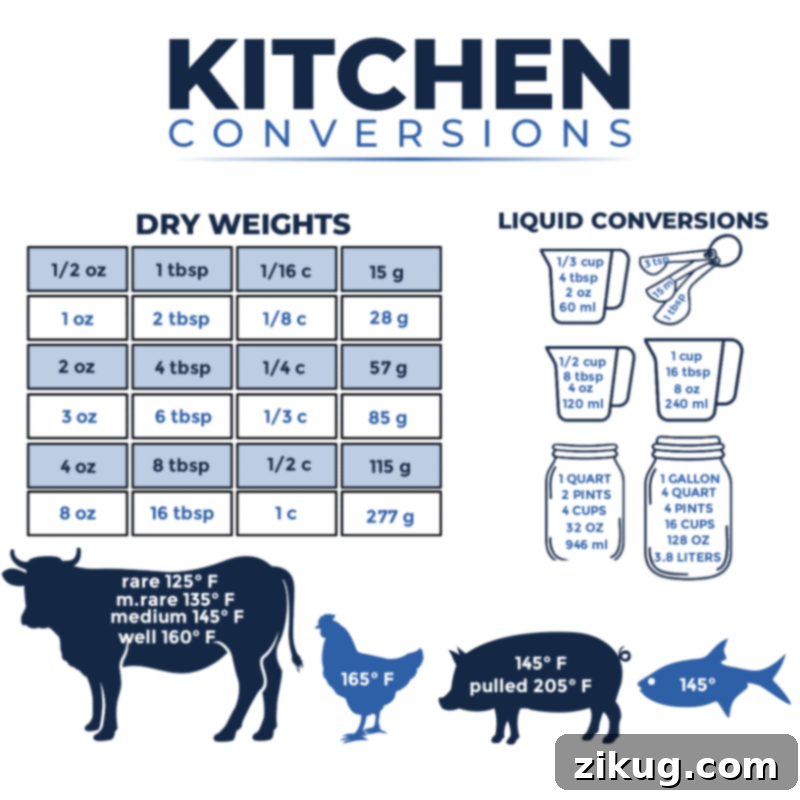
Download Your Free Printable Kitchen Conversion Chart Here!
Maximize Utility: Keep Your Kitchen Conversion Chart Handy!
This Kitchen Conversion Chart is such a practical and indispensable tool, you’ll want it to be consistently visible and easily accessible during your cooking and baking sessions! To ensure its longevity and ease of use, we highly recommend laminating it. This protective layer will shield it from spills, splashes, and general kitchen wear and tear, making it durable for years to come. Once laminated, consider mounting it in a strategic location where it’s effortless to see and reference, even when your hands are covered in flour or butter.
Excellent placement ideas include taping it to the inside of a kitchen cabinet door, affixing it to the side of your pantry, or even placing it on the refrigerator. Alternatively, keep it securely tucked into your recipe binder or alongside your favorite cookbooks, so it’s always within arm’s reach when you’re preparing to whip up a new dish or recreate a beloved classic. Having these crucial conversions memorized or conveniently at hand will save you valuable time, reduce stress, and make following even the most complex recipes an absolute breeze.
Don’t allow the various measurement terms and specific rules to intimidate or discourage you from exploring the wonderful world of cooking and baking. The satisfaction of creating delicious meals and receiving positive feedback is incredibly rewarding—it’s absolutely worth taking the time to understand and implement these accurate measurement practices!
Scale Up Your Favorite Recipes with Our Kitchen Conversion Chart
Planning to host a dinner party or prepare a feast for a larger gathering? Our Kitchen Conversion Chart is your secret weapon for effortlessly scaling recipes to feed any crowd. The following recipes are some of our absolute favorites, perfect for sharing with many guests. Refer to your handy conversion chart to confidently adjust ingredient quantities, ensuring every dish is a resounding success, no matter how many hungry mouths you’re feeding:
- Hearty Shepherd’s Pie
- Classic Baked Ziti
- Delicious Crockpot BBQ Pulled Pork
- Comforting Funeral Potatoes
- Authentic Cafe Rio Sweet Pork Recipe