
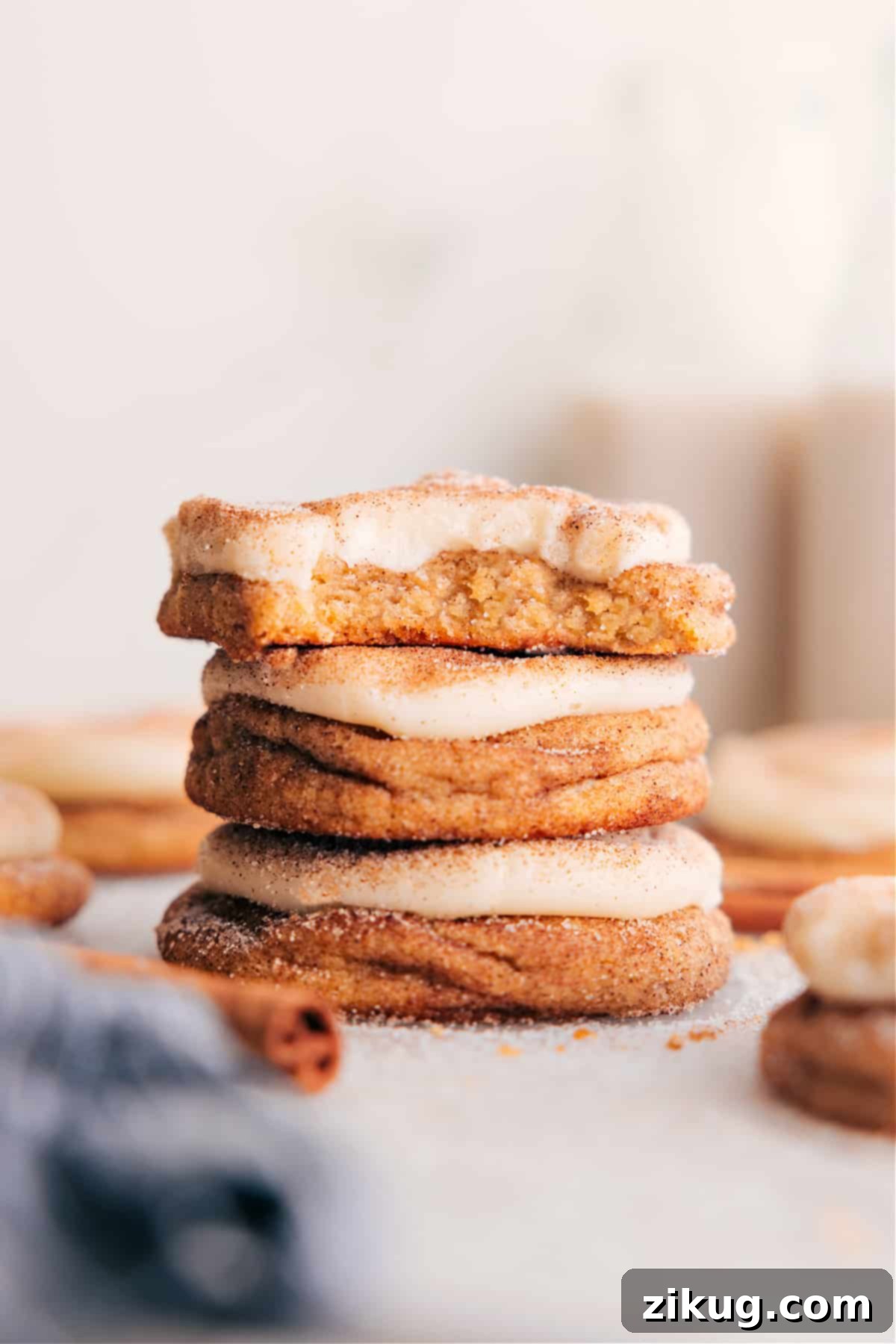
Indulge in the irresistible delight of these **Soft, Thick, and Chewy Cinnamon Roll Cookies**, generously topped with a luscious cream cheese frosting and a sprinkle of aromatic cinnamon sugar. This recipe captures all the beloved flavors of classic cinnamon rolls in an easy-to-make cookie format, perfect for any occasion.

Author’s Note
Same Cinnamon Roll Flavor, Zero Rise Time Cookies!
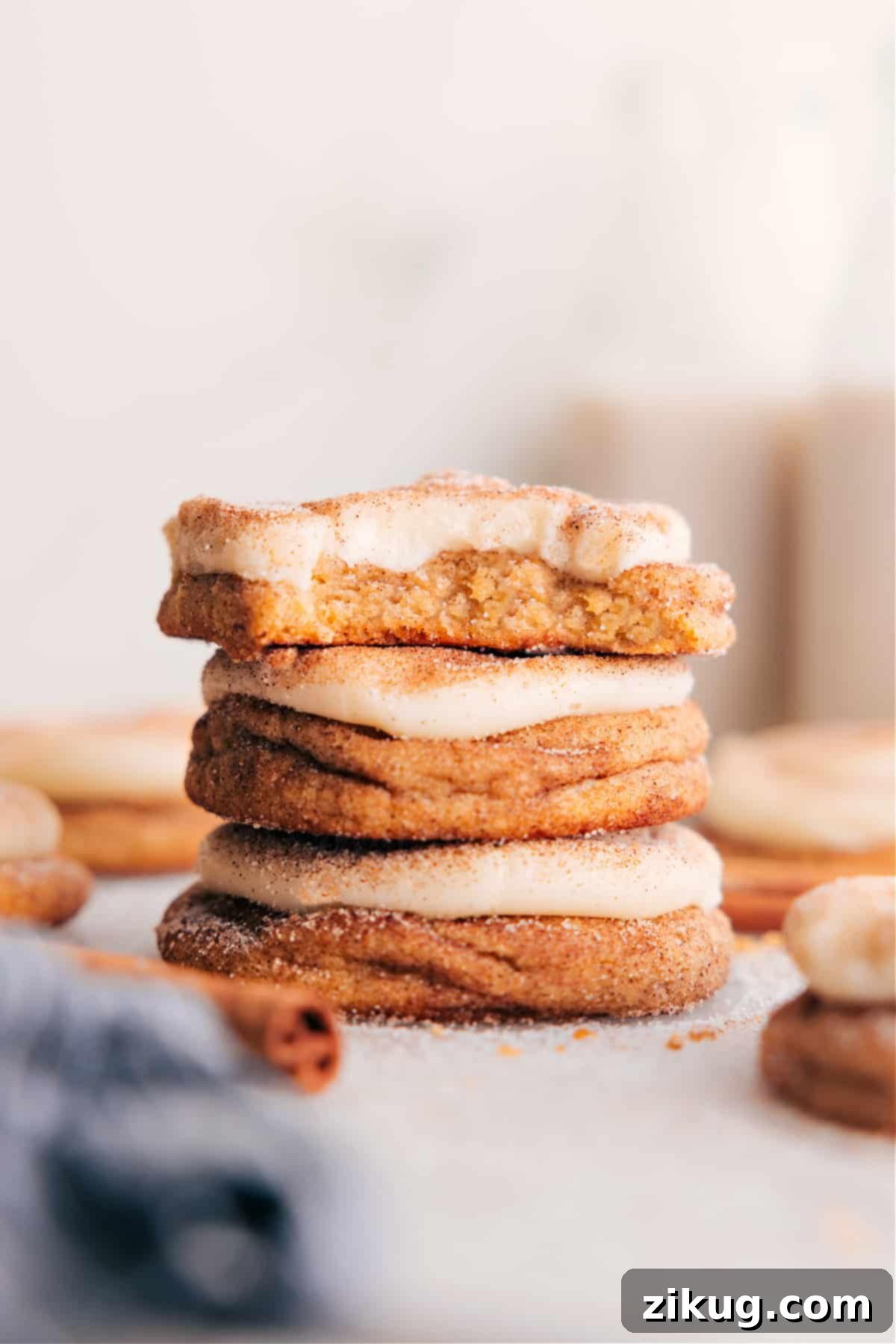
It all started with a leftover batch of heavenly cream cheese frosting from my Pumpkin Cookies. As fate would have it, a tray of freshly baked snickerdoodles I was re-shooting sat invitingly on the counter. A quick swirl of frosting, a tentative bite, and pure magic. The combination was utterly delightful, sparking an immediate idea: what if I could capture that iconic cinnamon roll taste in a cookie?
That initial spark led to extensive testing. My goal was to maintain the comforting cinnamon sugar essence of a snickerdoodle but elevate the base to truly embody the spirit of a cinnamon roll – super soft, wonderfully thick, and rich with cinnamon flavor. The creamy, tangy cream cheese swirl was the perfect finishing touch, binding all the elements together into a harmonious bite. After careful adjustments to the dough’s height and precise bake times, I finally perfected what I believe might be my favorite cookie creation yet. Each bite offers warm spices, a plush, melt-in-your-mouth center, and a vibrant, tangy frosting that complements every note. Simple, yet profoundly satisfying.
If you’re a devoted fan of traditional cinnamon rolls but are often deterred by the lengthy rise times, this recipe is your dream come true. You’ll experience all the beloved flavors and textures, delivered in a fraction of the time. These cinnamon roll cookies are an instant classic, perfect for breakfast, dessert, or a comforting treat any time of day.
Essential Ingredients for Perfect Cinnamon Roll Cookies
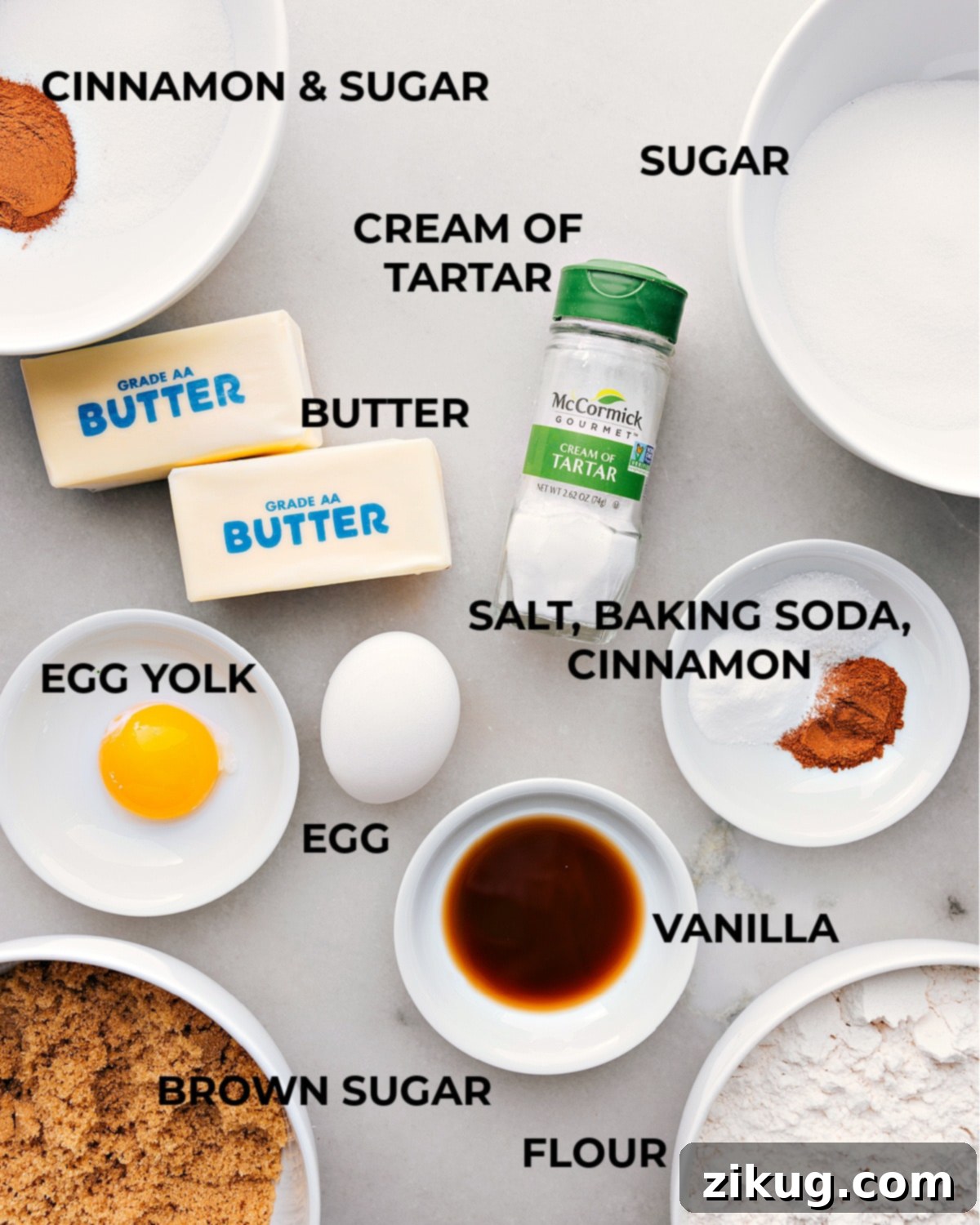
Crafting the perfect cinnamon roll cookie begins with selecting the right ingredients and understanding their unique roles. Here’s a detailed look at what you’ll need and some valuable tips for each:
| Ingredient | Simple Swap or Expert Tip |
|---|---|
| Melted Unsalted Butter | Crucial for a rich, chewy texture. Ensure it cools completely to room temperature before mixing. Using warm butter can melt the sugars prematurely, leading to greasy, flat cookies. For an even deeper, nutty flavor, consider browning the butter first, then cooling it completely. |
| Granulated + Light Brown Sugar | This precise blend is key to achieving the ideal texture – a balance of crisp edges and soft centers. The granulated sugar adds structure, while the brown sugar contributes moisture, chewiness, and a subtle caramel note. Remember to spoon and level granulated sugar, but firmly pack the light brown sugar for accurate measurement. |
| Egg + Yolk | Using one whole large egg and an additional egg yolk dramatically enhances the richness and chewiness of the cookies. The extra yolk adds fat without too much moisture, preventing a cake-like texture. Always use room-temperature eggs for better emulsion with the butter and sugar, resulting in a smoother, more uniform dough. Save those extra whites for fluffy Meringue Cookies! |
| All-Purpose Flour | The structural foundation of our cookies. Always spoon and level your flour into the measuring cup – never scoop directly from the bag, as this can lead to too much flour and dense, dry cookies. If your dough feels excessively sticky after mixing, resist the urge to add more flour; instead, chill it longer. |
| Cream of Tartar | This often-overlooked ingredient is a secret weapon, providing the signature tangy flavor reminiscent of classic snickerdoodles, which perfectly complements the cinnamon roll profile. It also works with baking soda to create a soft, pillowy texture. Don’t skip it unless absolutely necessary. |
| Baking Soda | A crucial leavening agent that helps the cookies rise and spread, contributing to their soft interior. Always check the freshness of your baking soda; old or expired soda will result in flat, heavy cookies. |
| Ground Cinnamon | The star spice of these cookies! Use a fresh jar of high-quality ground cinnamon for the most vibrant and bold flavor. For a delightful twist, you can experiment with pumpkin pie spice or apple pie spice to add another layer of warmth. |
| Cream Cheese (Block-Style) | For the ultimate sturdy and pipeable cream cheese frosting, insist on full-fat, block-style cream cheese. Avoid whipped or low-fat versions, as they contain too much water and won’t yield the desired consistency. Ensure it’s fully softened to room temperature before beating for a smooth, lump-free frosting. |
| Powdered Sugar | The base of our delectable frosting. Sifting powdered sugar is highly recommended, especially if it’s lumpy, to ensure your frosting is silky smooth and easy to pipe. |
How To Master the Cinnamon Roll Cookie Recipe
Creating these delightful cinnamon roll cookies is a straightforward process that yields incredible results. Follow these detailed steps for baking success:
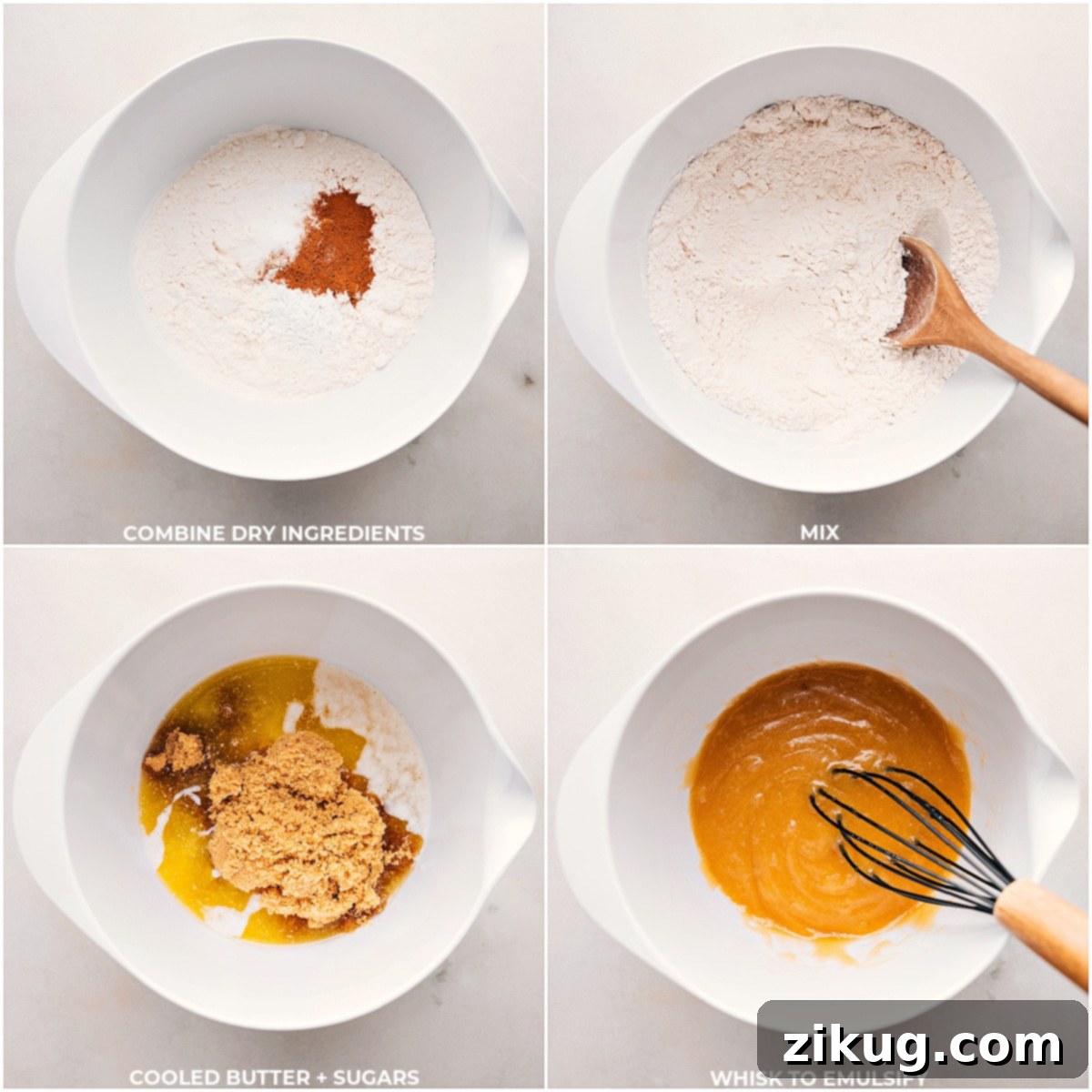
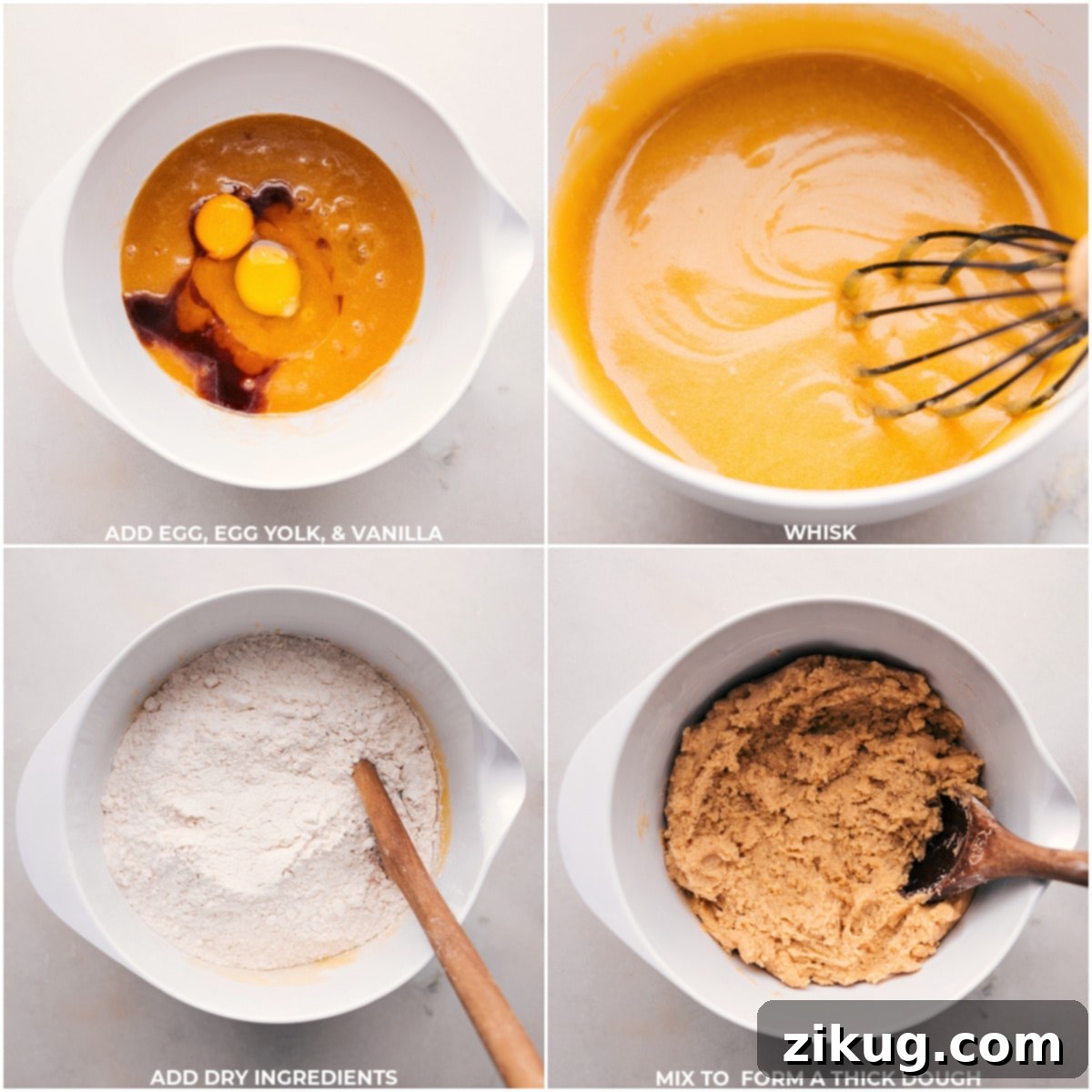
- Prepare the Cookie Dough: Begin by melting your unsalted butter and allowing it to cool completely. In a large bowl, combine the cooled melted butter with both granulated and light brown sugars, whisking until light and creamy. Incorporate the large egg, an additional egg yolk, and vanilla extract, mixing until just combined and smooth. In a separate bowl, whisk together the all-purpose flour, cream of tartar, salt, baking soda, and ground cinnamon. Gradually add the dry ingredients into the wet mixture, mixing with a sturdy wooden spoon until the dough is just combined. Be careful not to overmix, as this can lead to tough cookies.
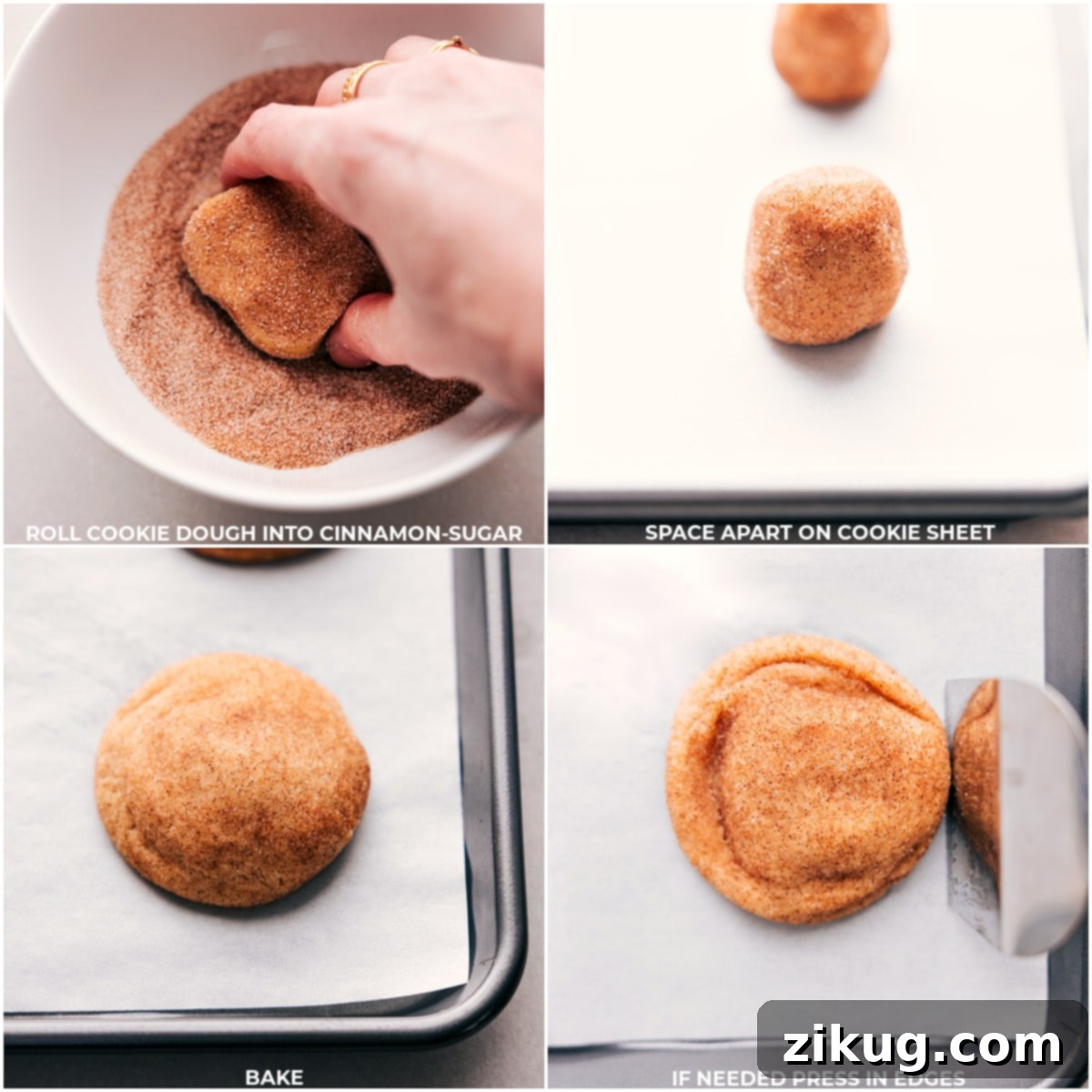
- Shape & Coat the Dough Balls: Divide the dough into individual portions, each approximately 1 1/2 tablespoons (about 45 grams). Crucially, roll these portions into tall, somewhat cylindrical mounds rather than perfectly round balls (this technique helps achieve those coveted thick centers and crisp edges). In a small shallow bowl, combine granulated sugar and ground cinnamon for your coating. Generously roll each dough ball in this cinnamon-sugar mixture, ensuring it’s well-coated. Set aside any remaining cinnamon sugar for later use.
- Chill & Bake to Perfection: Arrange the coated dough balls on a parchment or silicone-lined baking sheet or plate, leaving some space between them. Transfer them to the refrigerator and chill for a minimum of 1 hour. This chilling period is vital for preventing excessive spreading and developing flavor. Preheat your oven to 325°F (162°C). Place about 6 chilled cookie dough balls on a parchment or silicone-lined baking sheet, allowing ample room for spreading. Bake directly from the fridge for 9-11 minutes, or until the edges are lightly golden and the centers are still soft. Gently remove the sheet from the oven and let the cookies rest on the pan for 5 minutes before carefully transferring them to a wire rack to cool completely.
- Whip Up the Cream Cheese Frosting: While the cookies cool, prepare your rich cream cheese frosting. In a large mixing bowl, beat together the softened full-fat cream cheese and room-temperature unsalted butter until the mixture is exceptionally smooth and creamy. Stir in the vanilla extract and a pinch of salt. Gradually add the powdered sugar, beating until the frosting is light, fluffy, and completely smooth. Don’t be discouraged if it seems too thick at first; continue beating, and it will come together beautifully.
- Frost and Finish: Once your cinnamon roll cookies are entirely cool, transfer the prepared cream cheese frosting into a resealable plastic bag or a piping bag. Snip off a small corner of the bag to create an opening. Pipe a beautiful swirl of frosting onto the top of each cooled cookie. For an extra touch of flavor and visual appeal, sprinkle the tops with the reserved cinnamon sugar mixture. Serve immediately and savor every soft, spiced, and creamy bite!
Expert Tips for Unforgettable Cinnamon Roll Cookies
- Measure Flour Accurately: The single most important tip for consistent cookie results! Always spoon your flour into the measuring cup and then level it off with the back of a knife. Scooping flour directly from the bag compacts it, adding too much to your dough, which results in dense, dry, and crumbly cookies instead of soft and chewy ones.
- Shape Dough Tall, Not Round: Instead of rolling perfectly round balls, shape your dough into taller, slightly cylindrical mounds. This unconventional shaping technique ensures that the bottom of the cookie spreads first in the oven, creating those wonderfully chewy centers and perfectly crisp edges. The top retains its height, contributing to a soft, plush texture.
- Coat in Cinnamon Sugar Before Chilling: Don’t wait to roll your dough balls in the cinnamon sugar mixture. Coating them *before* chilling allows the sugar to adhere better and infuse the outer layer of the cookie with more flavor as it rests in the fridge.
- Bake at 325°F (162°C) for Optimal Texture: A slightly lower oven temperature is crucial here. Baking at 325°F (162°C) helps the edges set gently and prevents them from over-browning too quickly, allowing the centers to cook through slowly and remain incredibly soft and tender. Higher temperatures can result in crispy, dry cookies.
- Always Use a Baking Liner: For consistent baking, easy cleanup, and perfect release, always bake your cookies on a baking sheet lined with parchment paper or a silicone mat. This prevents sticking, promotes even browning, and makes transferring the warm cookies much simpler.
- Room Temperature Ingredients for Frosting: Ensure your cream cheese and butter are at proper room temperature (softened but not melted) before making the frosting. This allows them to combine smoothly, creating a light, airy, and lump-free frosting. Cold ingredients will result in a clumpy, difficult-to-spread frosting.
- Don’t Overmix the Dough: After adding the dry ingredients to the wet, mix only until just combined. Overmixing develops the gluten in the flour, leading to tougher cookies. A few streaks of flour are perfectly fine; they’ll disappear during baking.
- Know When Your Cookies Are Done: These cookies are meant to be soft. Look for edges that are lightly golden and set, while the centers still appear slightly puffy and soft. They might even look a little underdone, but they will continue to set as they cool on the baking sheet.
Storage Solutions & Freezing Tips
- Separate Storage for Frosting and Cookies: To maintain optimal freshness and texture, it’s best to store the cream cheese frosting separately in the refrigerator in an airtight container. The unfrosted cinnamon roll cookies should be kept at room temperature in their own airtight container. Frost them just before serving to prevent the cookies from becoming soggy and to keep the frosting perfectly fresh.
- Thawing Frosting for Use: If your frosting has been refrigerated, allow it to come to room temperature for about 30 minutes before using. You might need to give it a quick whisk to restore its smooth, spreadable consistency. Any extra frosting is absolutely delicious on waffles, pancakes, or even spread on toast for a delightful sweet breakfast treat!
- Freeze Dough, Not Baked Cookies: For the freshest results in future baking, freeze unbaked dough balls rather than fully baked cookies. Once you’ve rolled your dough into tall mounds and coated them in cinnamon sugar, place them on a baking sheet and freeze until solid (about 1-2 hours). Then, transfer the frozen dough balls to a freezer-safe bag or airtight container, where they will keep well for up to 3 months. When you’re ready to bake, simply place the frozen dough balls directly onto a lined baking sheet and bake as directed, adding just an extra minute or two to the bake time. This ensures a fresh-from-the-oven taste whenever a craving strikes!
More Irresistible Cookie Recipes:
Desserts
Lemon Cheesecake Cookies (Soft-Baked)
Desserts
Soft Pumpkin Cookies
Cookies
DoubleTree Cookie Recipe
Cookies
White Chocolate Macadamia Nut Cookies
Print Recipe
Cinnamon Roll Cookies
Chelsea Lords
15
10
1
1
25
22
cookies
Equipment
-
Sheet pan (15″ x 10″)
-
Parchment paper
or silicone baking mat
Ingredients
-
16
tablespoons
unsalted butter
, melted and cooled -
2/3
cup
granulated sugar -
2/3
cup
light brown sugar
, firmly packed -
1
large
egg -
1
large
egg yolk
(discard whites or save for another recipe) -
1
teaspoon
vanilla extract
-
2-3/4
cups
all-purpose flour -
1-1/2
teaspoons
cream of tartar -
1/2
teaspoon
salt
-
1
teaspoon
baking soda -
1
teaspoon
ground cinnamon
-
1/3
cup
granulated sugar -
1
tablespoon
ground cinnamon
-
8
ounces
cream cheese
, full-fat, softened -
8
tablespoons
unsalted butter
(1/2 cup), at room temperature -
1
teaspoon
vanilla extract
-
1/8
teaspoon
salt
-
3-1/2
cups
powdered sugar
Instructions
-
Begin by placing the butter in a large microwave-safe bowl and melt it. It is absolutely crucial to set this aside and allow it to cool completely to room temperature. If the butter or the bowl is warm when you proceed, it will melt the sugars, leading to greasy, flat cookies. Once thoroughly cooled, add the granulated sugar and light brown sugar. Whisk these ingredients together briskly until the mixture is creamy and well combined. Next, add the whole large egg, the additional egg yolk (you can reserve the whites for another recipe like meringues or discard them), and the vanilla extract. Whisk again until these wet ingredients are just combined and smooth.
-
In a separate, medium-sized bowl, combine all the dry ingredients: the all-purpose flour, cream of tartar, salt, baking soda, and 1 teaspoon of ground cinnamon. Whisk these together thoroughly to ensure they are evenly distributed, which is important for consistent cookie texture and leavening.
-
Gradually add all of the whisked dry ingredients into the wet ingredients. Using a strong wooden spoon or a sturdy spatula, mix until the dough is *just* combined. Be very careful not to overmix the dough, as this can lead to tough, dry cookies. Once the dough comes together, measure out portions that are approximately 1 1/2 tablespoons (about 45 grams) each. Roll these portions into tall, somewhat skinny mounds rather than perfectly round balls (refer to “Note 1” for more detail on this expert tip). In a small bowl, prepare your cinnamon-sugar coating by stirring together the 1/3 cup granulated sugar and 1 tablespoon ground cinnamon. Generously roll each shaped dough ball into this cinnamon-sugar mixture, ensuring they are thoroughly coated. Set aside any remaining cinnamon-sugar for sprinkling later.
-
Arrange the cinnamon-sugar-coated dough balls on a parchment-paper-lined or silicone-lined sheet pan or plate, ensuring they are not touching. Place this pan in the refrigerator and chill the dough for a minimum of 1 hour. This chilling step is vital for the cookies to hold their shape and develop optimal flavor during baking.
-
Preheat your oven to 325°F (162°C). Arrange no more than 6 chilled cookie dough balls at a time on a parchment or silicone-lined baking sheet, allowing plenty of room between each cookie for spreading. Bake the cookies directly from the refrigerator for 9–11 minutes. The cookies are done when the edges are set and lightly golden, but the centers still appear very soft and slightly puffed. Carefully remove the baking sheet from the oven (avoid jostling them too much to prevent deflation) and allow the cookies to cool on the sheet pan for 5 minutes. After this initial cooling, gently transfer them to a wire rack to cool completely.
-
While your cookies are cooling, it’s time to prepare the star of the show: the cream cheese frosting. In a large mixing bowl, beat together the softened room-temperature butter and full-fat cream cheese until the mixture is incredibly smooth, creamy, and free of any lumps. Next, mix in the vanilla extract and a pinch of salt. Gradually add the powdered sugar, beating on medium speed until the frosting is light, fluffy, and perfectly smooth. You might initially think it needs more liquid, but simply continue beating for a few minutes, and it will miraculously come together into a luscious consistency.
-
Once the cookies have completely cooled, transfer your prepared cream cheese frosting to a resealable plastic bag or a dedicated piping bag. Snip a small corner off the bag to create an opening for piping. Artfully pipe a beautiful swirl of frosting onto the top of each cooled cinnamon roll cookie. For the finishing touch, lightly sprinkle the tops of the frosted cookies with the leftover cinnamon sugar mixture you reserved earlier. Serve these delightful cookies and watch them disappear!
Recipe Notes
Storage for Longevity: For the best experience, store your cream cheese frosting in an airtight container in the refrigerator. The unfrosted cinnamon roll cookies should be stored separately in an airtight container at room temperature. Frost them only just before you plan to serve to maintain their freshest texture and prevent any sogginess. For future cravings, you can easily freeze the *unbaked* dough balls. After rolling and coating them in cinnamon sugar, flash freeze them on a baking sheet until solid. Then, transfer them to a freezer-safe bag or container, where they will keep for up to 3 months. When ready to bake, place them directly from frozen onto a lined baking sheet and add just 1-2 minutes to the original bake time. This ensures you always have warm, fresh cinnamon roll cookies ready to enjoy!
Nutrition Facts (Approximate per Serving)
Serving:
1
cookie
|
Calories:
319
kcal
|
Carbohydrates:
41
g
|
Protein:
2
g
|
Fat:
16
g
|
Cholesterol:
60
mg
|
Sodium:
163
mg
|
Fiber:
0.6
g
|
Sugar:
31.5
g
Nutrition information is automatically calculated and should only be used as an approximation. It is not a substitute for professional nutrition advice.
Frequently Asked Questions (FAQ)
Here are some common questions about making these irresistible Cinnamon Roll Cookies:
- Can I skip the chilling time for the dough? While it might be tempting, skipping the chilling time is not recommended. Chilling the dough is essential for several reasons: it prevents the cookies from spreading too much in the oven, allows the flavors to meld and deepen, and contributes to the signature chewy texture. If you bake unchilled dough, you’ll likely end up with thin, crispy cookies instead of the desired thick and soft ones.
- What if I don’t have cream of tartar? Can I substitute it? Cream of tartar is a key ingredient for both flavor and texture in these cookies, mimicking the tangy note often found in traditional cinnamon rolls and snickerdoodles. If you absolutely must substitute, you can try using 2 teaspoons of baking powder instead of the 1 1/2 teaspoons of cream of tartar and 1 teaspoon of baking soda. However, the unique tanginess might be slightly diminished.
- My cookies spread too much! What went wrong? Several factors can cause cookies to spread excessively: your butter might have been too warm when mixed, you might have added too little flour (make sure to spoon and level!), or the dough wasn’t chilled long enough. Ensure your melted butter is fully cooled, measure flour accurately, and chill the dough for at least the recommended hour. Baking on a cool baking sheet can also help prevent spreading.
- How can I get a perfect swirl with the cream cheese frosting? For a beautiful swirl, ensure your frosting is at a good piping consistency – smooth and not too warm or runny. Use a sturdy piping bag with a round tip (or simply snip a small corner off a sturdy plastic bag). Start piping from the center of the cookie and gently spiral outwards, or start from the edge and spiral inwards. Practice makes perfect!
- Can I make these cookies gluten-free? While this recipe is optimized for all-purpose flour, you might be able to adapt it using a 1:1 gluten-free baking flour blend (one that contains xanthan gum). However, results may vary slightly in texture and spread. It’s best to follow the chilling instructions carefully if you’re experimenting with gluten-free flours.
Love this recipe? Leave a comment and rating below!
Your feedback helps us improve and inspires other bakers.