
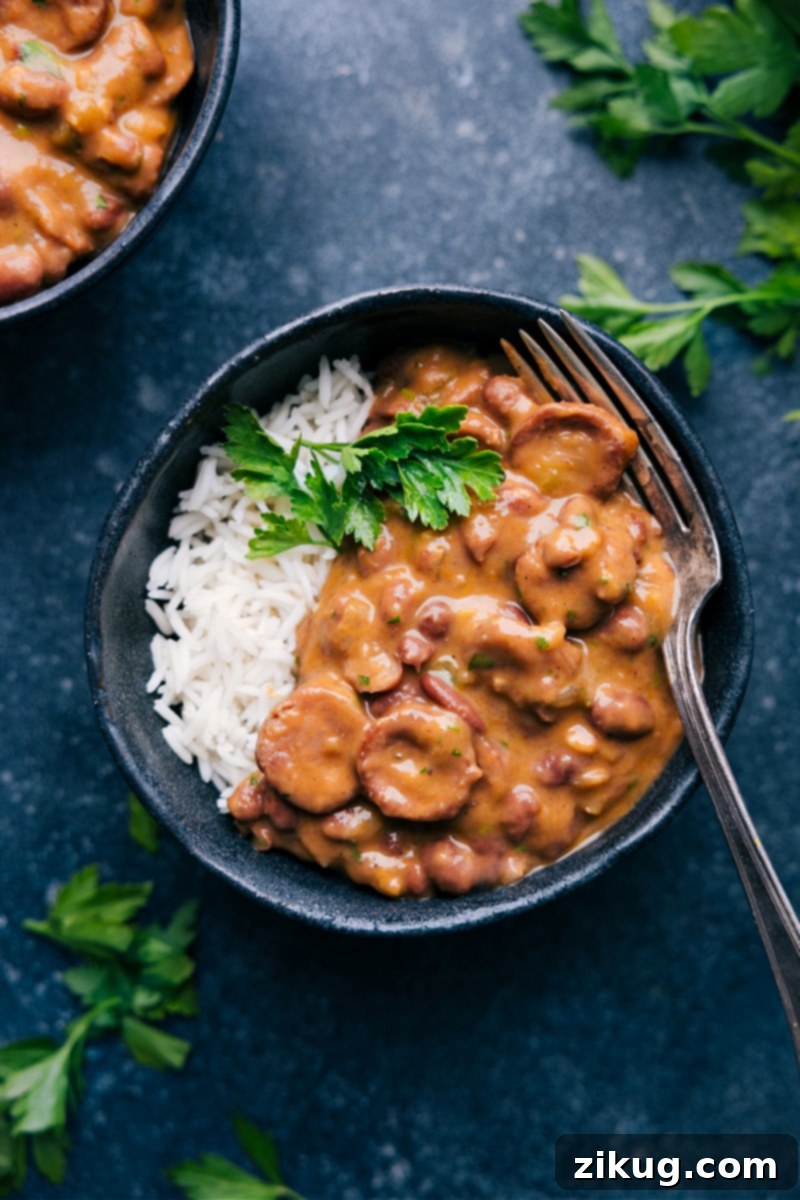
Immerse yourself in the rich, soulful flavors of Louisiana with this incredibly satisfying Red Beans and Rice Recipe. More than just a meal, it’s a culinary hug, a symbol of tradition, and a beloved staple in Southern kitchens. Our rendition brings together tender red beans, robust Andouille sausage, and a vibrant medley of vegetables, all simmered in a luxuriously creamy and deeply flavorful sauce. This hearty, ultra-filling dish is perfect for a comforting weeknight dinner or a special gathering, promising a taste of New Orleans right in your home. It’s the ultimate comfort food experience that truly nourishes the soul, embodying the warmth and hospitality of Creole and Cajun cuisine.
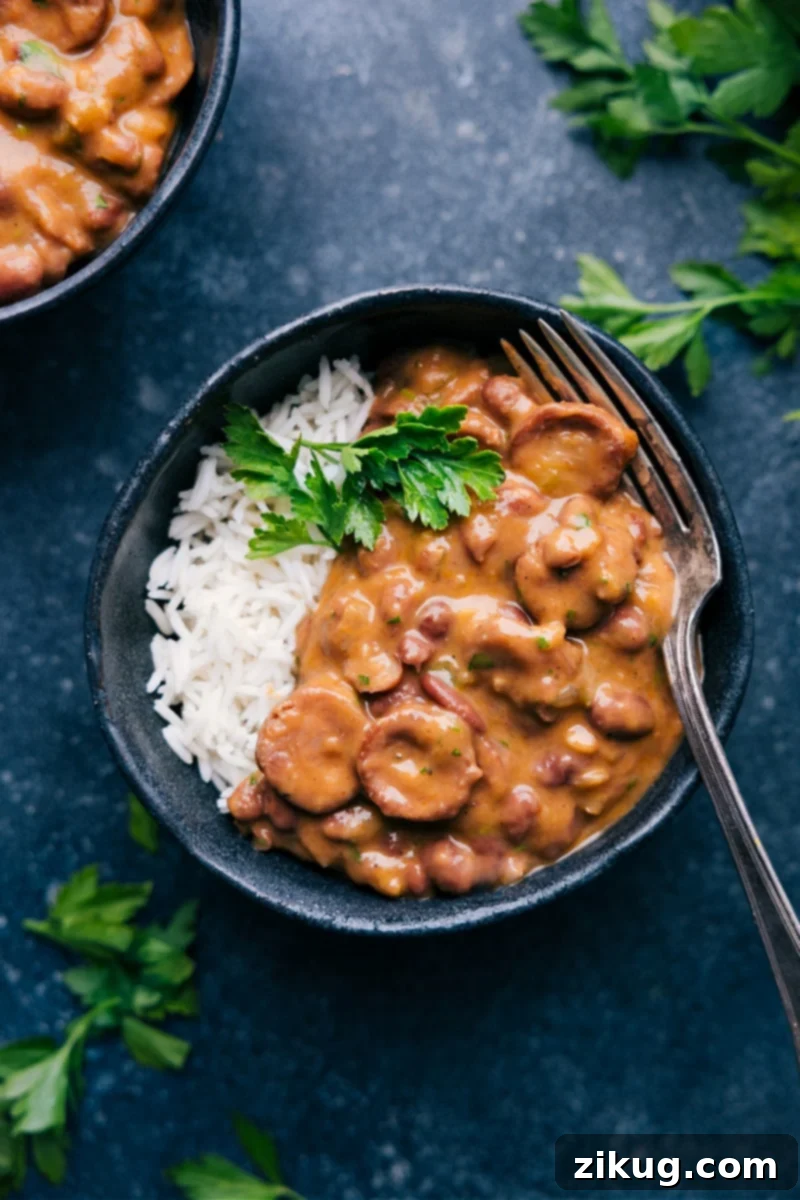

Author’s Note
A Culinary Journey: My New Orleans Inspired Red Beans and Rice!
My passion for Red Beans and Rice deepened during a memorable trip to New Orleans. The city’s vibrant culinary scene left an indelible mark, inspiring me to recreate those incredible flavors. While this recipe isn’t strictly traditional—honoring the hours-long simmer of authentic Creole cuisine—it captures the essence and heartiness of what I experienced, focusing on similar ingredients and that unmistakable flavor profile.
What makes this version special is its remarkable speed and ease, making it ideal for busy weeknights when that classic flavor craving strikes but you don’t have all day. I’ve incorporated a few smart shortcuts, such as using convenient canned red beans instead of dried ones (saving precious hours of soaking and cooking) and a quick boiling method for the rice. Rest assured, these modifications do not compromise on the rich, deep flavors or the luxurious creaminess you expect from a truly great Red Beans and Rice. The goal is to deliver authentic taste with modern efficiency.
Beyond its incredible taste, this dish is packed with protein and fiber, making it a wholesome and incredibly satisfying meal. It’s a complete meal in one pot, minimizing cleanup and maximizing satisfaction. I often prepare a generous batch to enjoy as delicious leftovers for lunch throughout the week, or I freeze half for an effortless dinner on another busy evening. It’s a testament to how traditional comfort food can be adapted for modern life without losing its soul and still providing maximum flavor and nourishment.
Mastering Your Red Beans and Rice: Essential Tips for Success
Crafting the perfect Red Beans and Rice is a delightful culinary journey. While the full, printable recipe with detailed steps is provided below, here are some expert tips to ensure your dish turns out incredibly flavorful and wonderfully creamy every time, just like it came from a New Orleans kitchen:
- Sauté the “Holy Trinity” Well: The foundation of any great Cajun or Creole dish is the “Holy Trinity” – bell pepper, onion, and celery. Don’t rush this step! Sautéing these vegetables until they are truly tender and the onions are translucent (7-10 minutes) caramelizes their natural sugars, unlocking a profound depth of flavor that is crucial for the entire dish. This meticulous step prevents crunchy onions and builds a rich aromatic base, which is key to a truly savory and complex sauce.
- Rinse and Drain Canned Beans Thoroughly: Using canned red beans significantly cuts down on cooking time, but it’s essential to drain and rinse them under cold water. This removes excess sodium and any starchy liquid that could otherwise make your dish overly salty or muddy the flavors. By doing so, you gain better control over the seasoning, allowing the savory chicken stock and spices to shine through clearly. It’s a small step that makes a big difference in the final taste and texture.
- Mash Some of the Beans for Creaminess: Achieving that signature creamy texture without adding heavy cream is simple: mash a portion of the cooked red beans. You can either use the back of a wooden spoon to press some beans against the side of the pot as they simmer, or for an extra smooth consistency, blend about 1 to 1½ cups of the bean mixture (taking care to avoid sausage pieces) with a stick blender directly in the pot, or transfer to a regular blender, then return it to the pot. This releases the beans’ natural starch, naturally thickening the sauce and enhancing its luxurious, velvety feel, creating that authentic, slow-cooked texture in a fraction of the time.
- Don’t Skip the Bay Leaf: Often overlooked, a single bay leaf adds a subtle yet indispensable layer of herbaceous, slightly bitter notes that deepen the complexity of the stew. It infuses the entire dish with a traditional, earthy aroma that really brings out the Southern character. Remember to remove it before serving, as it’s not meant to be eaten.
- Taste and Adjust Seasoning Throughout: This is perhaps the most critical tip for any successful chef. Ingredients like Andouille sausage and chicken stock can vary significantly in their salt and spice levels. Always taste your dish before serving and adjust salt, pepper, and Cajun seasoning as needed. A final touch of hot sauce or cayenne can elevate the flavors and bring the heat to your preferred level. Don’t be afraid to add a little more here and there to achieve perfect balance.
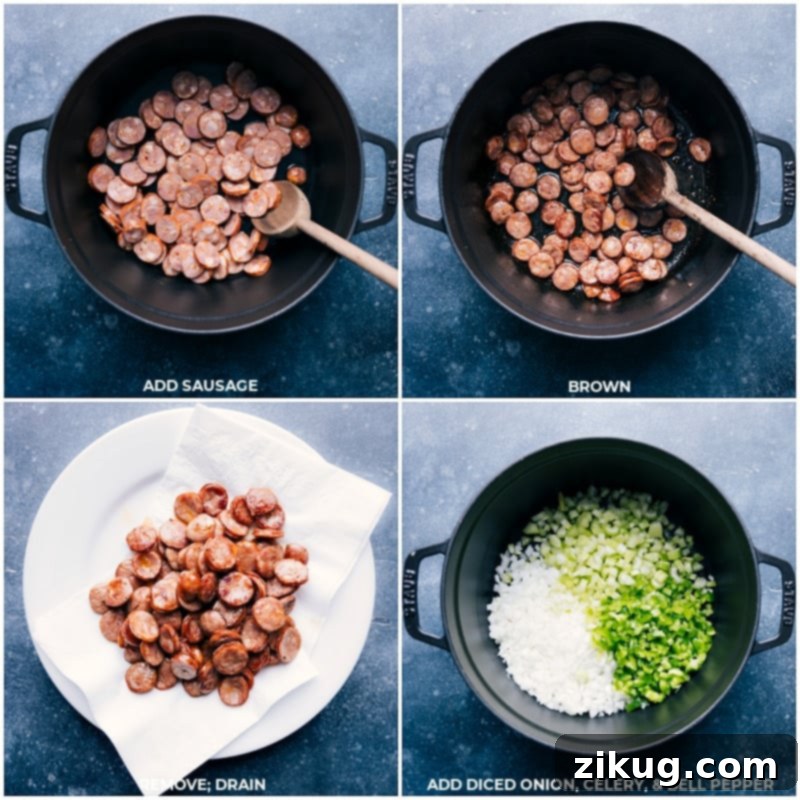
- Brown the Sausage Properly: When searing the Andouille, ensure it’s cooked in a single layer without overcrowding the pan. This allows the sausage to brown beautifully and develop a rich, crusty exterior, rather than steaming. This browning creates a fond (the delicious browned bits at the bottom of the pan) that adds incredible depth to the sauce when deglazed by the vegetables.
Creative Variations to Explore
- Red Beans and Rice for a Crowd: This recipe is already generous, serving six, but it’s incredibly easy to double or even triple for larger gatherings or for extensive meal prepping. When scaling up, especially when browning the sausage, be sure to cook it in separate batches. Overcrowding the pan will cause the sausage to steam rather than sear, preventing that delicious, crispy exterior and rich rendered fat crucial for infusing flavor into the dish. Searing in smaller batches ensures a beautiful crust on every piece of meat, maximizing taste.
- Vegetarian Red Beans and Rice: To transform this into a delightful vegetarian or even vegan meal, simply omit the Andouille sausage. For a similar hearty texture and smoky flavor, you can substitute it with a high-quality vegetarian smoked sausage (many brands offer excellent plant-based options). Alternatively, leave out the sausage entirely and enhance the flavor with extra smoked paprika, a dash of liquid smoke, or by sautéing sliced mushrooms for added umami and a meaty texture. Don’t be afraid to experiment with additional Cajun spices, a pinch of nutritional yeast, and a bit more salt and pepper to ensure the flavors truly “sing” without the meat component.
- Adding Other Proteins: While Andouille is the classic choice, feel free to experiment with other proteins to suit your taste or what you have on hand. Cubed ham hocks or tasso ham can be added at the beginning with the sausage for a deeper, more traditional smoky flavor. Cooked shredded chicken, succulent shrimp (added in the last few minutes of simmering to prevent overcooking), or even crispy crumbled bacon bits can also make delicious additions, each offering a unique twist to the classic.
- Different Rice Varieties: While Basmati rice is suggested for its distinct texture and aroma, you can certainly serve this dish with other types of rice like long-grain white rice for a more traditional Southern feel, brown rice for a healthier, nuttier option, or even cauliflower rice for a low-carb alternative. Just be sure to cook your chosen rice according to its specific package directions, as cooking times and water ratios vary.
Choosing the Perfect Sausage for Authentic Flavor
The choice of sausage is paramount in defining the character of your Red Beans and Rice. Traditionally, this iconic dish features **Andouille sausage**, a distinctively smoky, spicy pork sausage hailing from Louisiana. Authentic Andouille boasts a coarse texture and a potent smoky flavor, often with a good kick of heat, making it irreplaceable for many enthusiasts. Its unique profile is a cornerstone of Cajun and Creole cuisine.
However, if genuine Andouille is elusive in your local market, don’t despair! Any good quality smoked pork or beef sausage can serve as a suitable substitute. Look for options like kielbasa (Polish smoked sausage), mild chorizo (ensure it’s smoked, not fresh raw Mexican chorizo), or even a robust smoked chicken or turkey sausage for a lighter alternative. While these won’t replicate the exact taste of Andouille, they will still contribute a delicious smoky depth.
I’ve experimented with numerous brands and types of smoked sausage, and each batch of Red Beans and Rice reveals subtle differences. This highlights the importance of tasting and adjusting your seasonings throughout the cooking process. For instance, if your chosen sausage is already quite spicy, you might want to reduce or omit additional cayenne pepper or hot sauce. Conversely, if you opt for a milder sausage, feel free to enhance the heat with a generous pinch of cayenne or a few extra dashes of your favorite Louisiana-style hot sauce, like Tabasco or Crystal. Always taste for salt and pepper and adjust as needed, as sausages can vary widely in their sodium content and overall seasoning, ensuring your final dish is perfectly balanced to your palate.

Customizing the Heat: A Guide to Spiciness Levels
One of the beauties of Red Beans and Rice is its adaptability, especially when it comes to heat. The spiciness of your dish can be entirely customized to your preference, with the primary influence coming from the **sausage** you choose. Most sausage packages will indicate a heat level (mild, medium, or hot), which is a great starting point for tailoring your dish.
- For More Heat: If you love a fiery kick that tingles the palate, opt for a medium or spicy Andouille sausage. Additionally, don’t hesitate to incorporate extra cayenne pepper throughout the cooking process. A common approach is to add 1/8 to 1/4 teaspoon of cayenne along with the other spices, and then add a few generous dashes of your favorite Louisiana-style hot sauce (such as Tabasco, Crystal, or Louisiana Hot Sauce) both during simmering and as a table-side condiment. A small amount of crushed red pepper flakes can also amplify the heat for an even bolder experience.
- For Less Heat: If you prefer a milder flavor, allowing the smoky and earthy notes to take center stage, select a mild smoked sausage. Be sure to omit any optional hot sauce or cayenne pepper from the recipe entirely. Focus on the savory and smoky notes, letting the natural flavors of the beans and vegetables shine through without overwhelming spice. You can still enjoy the richness of the dish without the fiery intensity.
Always taste as you go! It’s much easier to add more heat than to reduce it. Start cautiously and build up to your desired level of spice, ensuring your Red Beans and Rice is perfect for your palate.
Storage and Reheating
Making the Most of Leftovers: Storing and Reheating Red Beans and Rice
Red Beans and Rice is one of those magical dishes that often tastes even better the next day as the flavors have more time to meld and deepen. Proper storage ensures you can enjoy this comfort food for days to come, making it an excellent candidate for meal prepping.
For refrigerating leftovers throughout the week, allow the cooked Red Beans and Rice to cool completely to room temperature (ideally within two hours of cooking) to prevent bacterial growth. Then, divide it into several single-portion, airtight containers. Refrigerate promptly for up to 5-7 days. To reheat, simply warm individual portions in the microwave until hot, stirring occasionally, or gently heat on the stovetop over medium-low heat. If the mixture has thickened too much in the fridge, add a splash of chicken stock or water to achieve your desired consistency.
To freeze for longer storage, ensure the leftovers are thoroughly cooled. Portion the dish into freezer-safe containers or heavy-duty freezer bags. If using bags, press out as much air as possible before sealing and flatten them for efficient stacking and storage in your freezer. This dish can be frozen for up to 3 months without compromising quality. When ready to enjoy, thaw frozen portions overnight in the refrigerator. Once thawed, reheat using the microwave or stovetop methods described above, adding a bit of liquid if needed to restore its creamy texture. Freezing this dish makes future meal times incredibly convenient!
Complementary Sides: What Vegetables Go with Red Beans And Rice?
Red Beans and Rice is a robust and satisfying dish on its own, with a good amount of vegetables already incorporated through the “Holy Trinity.” However, pairing it with complementary sides can elevate the meal, add fresh textures, and provide a vibrant contrast to its richness. Here are some fantastic vegetable-focused ideas to complete your Louisiana-inspired feast:
- Fried Green Tomatoes: The tangy crunch of fried green tomatoes offers a delightful textural contrast and a zesty counterpoint to the rich, creamy beans, cutting through the richness beautifully.
- Sautéed Collard Greens: A classic Southern pairing, tender collard greens cooked with a hint of smokiness (perhaps from ham hocks or a touch of liquid smoke) provide earthy flavors and a welcome dose of nutrients, balancing the hearty main.
- Corn on the Cob: Sweet corn, whether boiled, grilled, or roasted, brings a refreshing burst of natural sweetness that complements the savory and spicy notes of the main dish, offering a pleasant pop of texture.
- Brussels Sprouts with Bacon: The slightly bitter and nutty flavor of Brussels sprouts, especially when roasted or sautéed with savory bacon, creates a delicious side that stands up well to the robust flavors of the beans.
- Pan-fried Okra: Lightly fried okra offers a crisp texture and a mild, earthy flavor that beautifully rounds out the meal without being overly heavy or greasy, often served simply seasoned.
- Roasted Brussels Sprouts: Roasting brings out the natural sweetness and caramelization of Brussels sprouts, making them a simple yet elegant accompaniment that adds a charred depth.
- Crusty French Bread or Cornbread: While not strictly a vegetable, a warm slice of crusty French bread, fluffy biscuits, or a square of homemade cornbread is absolutely essential for soaking up every last drop of that incredible, creamy sauce.
Beyond Veggies: Perfect Pairings for Red Beans and Rice
Side Dishes
Creamy Classic Coleslaw
Appetizers
Zesty Mexican Elote (Street Corn)
Salads
Fresh Beet and Goat Cheese Salad

Print Recipe
Quick & Creamy Red Beans And Rice Recipe
Recipe Video Guide
Equipment
-
Large Heavy-Bottomed Pot or Dutch Oven
-
Cutting Board and Sharp Knife
-
Slotted Spoon
-
Measuring Cups and Spoons
-
Optional: Immersion Blender (for extra creamy texture)
Ingredients
Gathering high-quality ingredients is the first step to a truly outstanding Red Beans and Rice. We focus on fresh vegetables, flavorful sausage, and robust seasonings to build a complex taste profile that is both authentic and incredibly delicious.
- 1 tablespoon oil vegetable or canola
- 1 (13-ounce) package smoked andouille sausage sliced into thin coins
- 1 sweet onion diced (1-1/2 cups)
- 1 green bell pepper diced (1 cup)
- 1-1/3 cup diced celery 3 large ribs
- 2 tablespoons tomato paste
- 1 tablespoon finely minced garlic 3 to 4 cloves
- 1-1/2 teaspoons Cajun seasoning
- 1 teaspoon paprika
- 1/2 teaspoon dried oregano
- Salt and pepper
- 3 (15-ounce) cans red beans drained and rinsed, see note 2
- 3 cups chicken stock like Swanson’s
- 1 bay leaf optional
- 1-1/4 cups uncooked basmati rice
- 3 tablespoons finely chopped fresh parsley see note 3
- Hot sauce or cayenne pepper for more heat (optional)
Instructions
-
1. Brown the Sausage: Heat 1 tablespoon of oil in a large, heavy-bottomed pot or Dutch oven over medium heat. Add the thinly sliced Andouille sausage in a single layer, ensuring not to overcrowd the pan. Cook until the sausage is lightly browned and slightly crispy, typically 5–6 minutes, stirring frequently to ensure even cooking. This step develops deep flavor. Remove the browned sausage from the pot with a slotted spoon and transfer it to a paper-towel-lined plate. Tent loosely with foil to keep warm. If more than 2 tablespoons of rendered fat remain, carefully drain the excess, leaving just enough to sauté the vegetables.
-
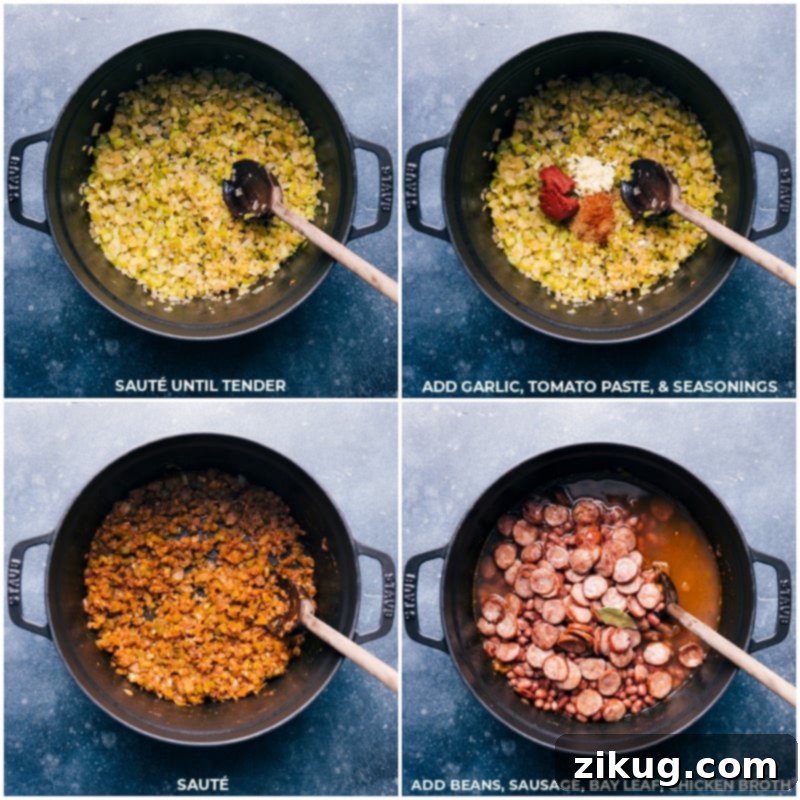
2. Sauté the “Holy Trinity”: To the same pot with the residual sausage fat, add the diced sweet onion, green bell pepper, and celery (the “Holy Trinity” of Cajun/Creole cooking). Cook over medium heat, stirring occasionally, for 7–10 minutes, or until the vegetables are tender and the onion has become translucent. This step is crucial for building a deep, aromatic flavor base for your beans.
-
3. Build the Flavor Base: Stir in the tomato paste, finely minced garlic, Cajun seasoning, paprika, and dried oregano. Cook for 1–2 minutes, stirring constantly, until the mixture is highly fragrant. The tomato paste will darken slightly, intensifying its flavor. Season with initial salt and pepper to taste (a good starting point is 1/2 teaspoon salt and 1/4 teaspoon black pepper, but always taste and adjust based on your sausage and stock).
-
4. Simmer the Beans: Add the thoroughly drained and rinsed red beans, chicken stock, and the optional bay leaf to the pot. Return the browned sausage to the pot. Bring the mixture to a gentle boil, then reduce the heat to low, cover the pot, and let it simmer for 15 minutes. After this initial simmer, uncover the pot and continue to simmer for another 15 minutes, allowing the flavors to deepen and the sauce to thicken slightly. The longer simmer helps the beans absorb all the wonderful spices.
-
5. Cook the Basmati Rice: While the beans are simmering, bring a large pot of generously salted water to a rolling boil. Add the uncooked basmati rice and cook for exactly 6 minutes, or until the grains are tender with a slight bite. Immediately drain the rice thoroughly in a fine-mesh sieve and fluff it with a fork. Set aside, covered, to keep warm. (Note: This quick boiling method is specifically optimized for Basmati rice; for other rice types, use your preferred traditional cooking method according to package directions.)
-
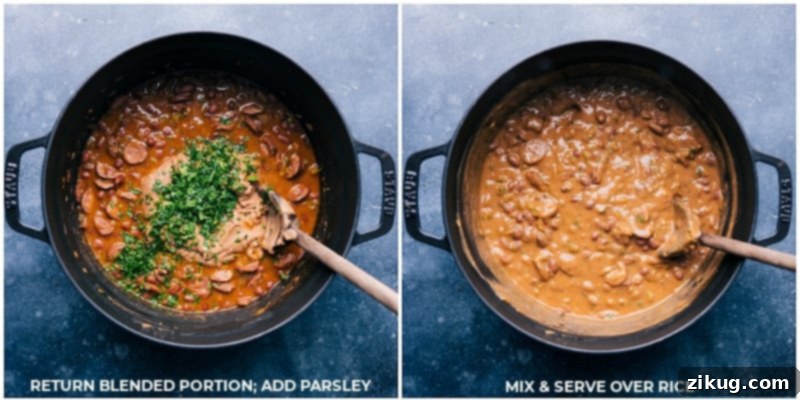
6. Achieve Creamy Consistency & Finish: After the beans have simmered for 30 minutes, it’s time to create that signature creamy texture. You have two excellent options: either vigorously mash some of the beans against the side of the pot with a sturdy wooden spoon until the sauce thickens to your liking and becomes wonderfully velvety, or for an extra smooth result, carefully remove about 1-1/2 cups of the bean and liquid mixture (making sure to avoid sausage pieces) and blend it until smooth using an immersion blender directly in the pot, or transfer to a regular blender, then return it to the pot. Stir in the finely chopped fresh parsley, if desired, for a burst of freshness and color. Taste the entire dish again and adjust seasoning with additional salt, pepper, or a pinch of cayenne until the flavors are perfectly balanced and vibrant to your preference (typically another 1/4 to 1/2 teaspoon of salt is perfect at this stage, but it depends on your ingredients).
-
7. Serve and Enjoy: Ladle generous portions of the hot, creamy Red Beans and Rice over the fluffy cooked basmati rice. Serve immediately with extra hot sauce or a sprinkle of cayenne pepper on the side for those who desire more heat. Garnish with additional fresh parsley, if you like. Enjoy this comforting and flavorful meal that brings a taste of New Orleans straight to your table!
Recipe Notes
Note 2: Red Beans vs. Kidney Beans: It’s crucial to use actual red beans, not kidney beans. Red beans are smaller, paler, and have a creamier texture and more earthy flavor than the larger, darker kidney beans. Always drain and rinse canned beans thoroughly to remove excess sodium and starchy liquid for a cleaner taste.
Note 3: Seasoning Adjustments (Finishing Touches): The final seasoning is key. After mashing beans and adding parsley, taste the dish again. If your sausage was spicy, you might not need extra hot sauce or cayenne. If it was mild, consider adding 1/8 teaspoon of cayenne and 1 teaspoon of hot sauce, then increase gradually. The initial salt added should be adjusted based on your sausage’s saltiness, usually another 1/4 to 1/2 teaspoon of salt is perfect at the end, but always trust your taste buds.
Note 4: Rice Cooking Method: The 6-minute boiling method specified in step 5 is designed for uncooked basmati rice. For best results with long-grain white rice or any other type of rice, please use your traditional or package-recommended cooking method instead of this specific quick-boil technique to ensure perfect rice texture.
Note 5: The Holy Trinity: This refers to the foundational aromatic base of many Cajun and Creole dishes: diced onions, bell peppers (often green), and celery. Sautéing them properly until tender and fragrant is fundamental to developing deep, authentic flavor.
Note 6: Meal Prep & Freezing: Store cooled leftovers in airtight containers in the refrigerator for up to 5-7 days. For longer storage, freeze in single-portion containers or freezer bags for up to 3 months. Thaw in the fridge overnight before reheating on the stovetop or in the microwave. The flavors truly deepen over time, making it an excellent candidate for convenient meal prepping.
Note 7: The Roux Alternative: While this recipe doesn’t use a roux to keep it quicker, traditionally, many Creole and Cajun dishes begin with a dark roux. If you’re looking for an even deeper, nuttier flavor and have the time, you could start by making a roux with flour and fat before adding your vegetables.
Nutrition Information
Nutrition information is automatically calculated and should be considered an approximation. Individual nutritional values may vary based on specific ingredients and preparation methods.
Frequently Asked Questions About Red Beans And Rice
Yes, absolutely! It’s highly recommended to thoroughly drain and rinse canned red beans under cold running water before adding them to the pot. This crucial step helps to remove excess sodium and any starchy, often unpleasant-tasting liquid from the can, giving you better control over the final flavor and seasoning of your dish. It results in a cleaner, more vibrant taste.
Yes, canned beans, including red beans, are indeed pre-cooked as part of the canning process. This means there’s no need for any separate cooking or soaking before you incorporate them into this recipe. They only need to be heated through and simmered to absorb the rich flavors of the sauce, making them a fantastic time-saving ingredient for dishes like Red Beans and Rice!
Despite their similar appearance and occasional confusion, red beans and kidney beans are distinct types of legumes. Kidney beans are generally larger, shaped like a kidney (as the name suggests), and possess a darker, deeper crimson red hue. Red beans, on the other hand, are typically smaller, oval-shaped, and have a lighter, more pinkish-red color. Flavor-wise, red beans often have a slightly milder, earthier, and creamier taste and texture when cooked, which is why they are traditionally preferred for classic Louisiana Red Beans and Rice to achieve that desirable creamy consistency.
While this recipe focuses on a quick method using canned beans, you can certainly use dried red beans for a more traditional approach. You’ll need to sort and rinse them, then soak them overnight (or use a quick-soak method by boiling for 10 minutes then resting for an hour). After soaking, cook them until tender (this can take 1-2 hours) before adding them to the recipe at the “Simmer the Beans” stage. This will significantly increase your prep and cook time, but many find the texture and flavor of dried beans to be superior.
The “Holy Trinity” refers to the foundational aromatic base of many Cajun and Creole dishes: diced onions, bell peppers (often green), and celery. These three vegetables are sautéed together at the beginning of a recipe to build a deep, complex flavor profile that is characteristic of Louisiana cuisine. It’s the starting point for building layers of taste in many traditional dishes.
The best way to achieve an extra creamy texture, as highlighted in our tips, is to mash some of the cooked beans. You can do this directly in the pot with the back of a sturdy wooden spoon, pressing some beans against the side until the sauce thickens. For an even silkier result, remove about 1 to 1½ cups of the bean mixture (taking care to avoid sausage pieces) and blend it until perfectly smooth using an immersion blender directly in the pot, or in a regular blender, then return it to the pot. The starch released from the mashed beans will naturally thicken and creamify your sauce beautifully.
Yes, this recipe can be adapted for a slow cooker or Instant Pot, though cooking times will vary. For a slow cooker, sauté the sausage and vegetables as instructed, then combine all ingredients (except rice and parsley) in the slow cooker and cook on low for 6-8 hours or high for 3-4 hours. For an Instant Pot, follow the sauté steps, then add all ingredients (except rice and parsley), pressure cook for 15-20 minutes with a natural release, then proceed with mashing beans and finishing. Remember to adjust liquid amounts for pressure cooking as less evaporation occurs.