
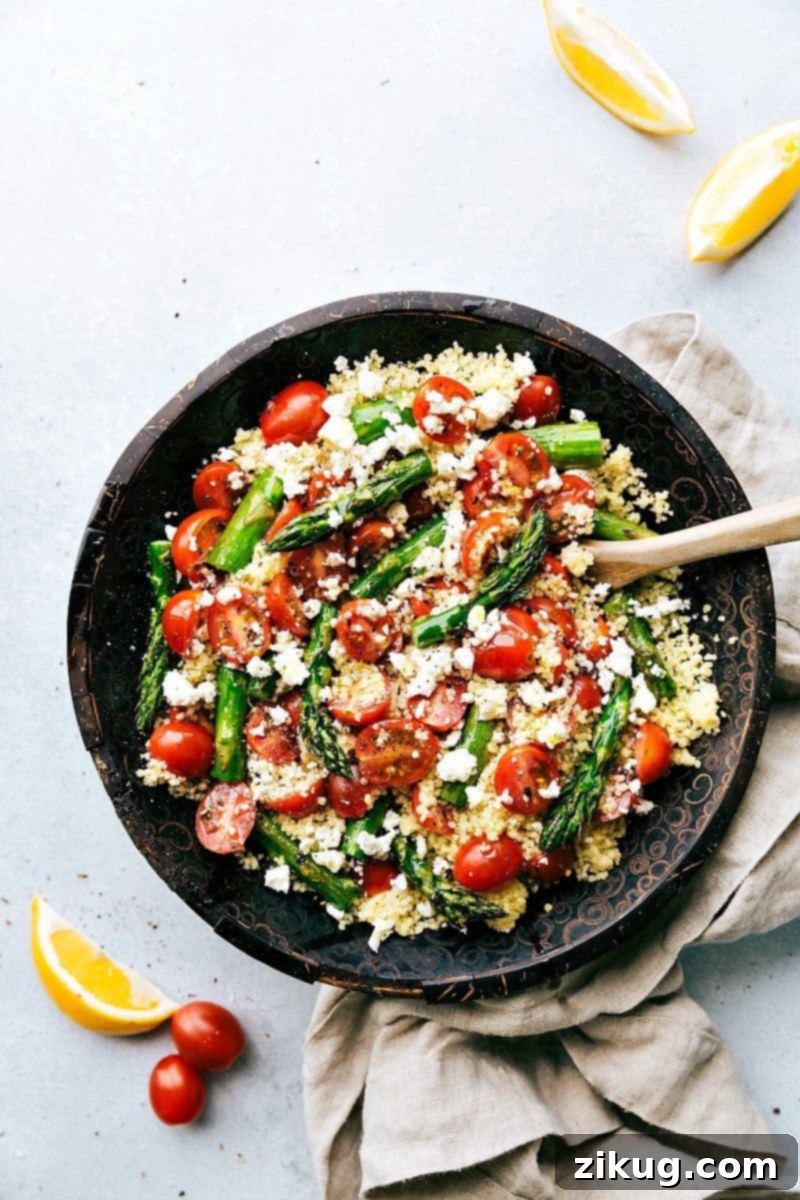
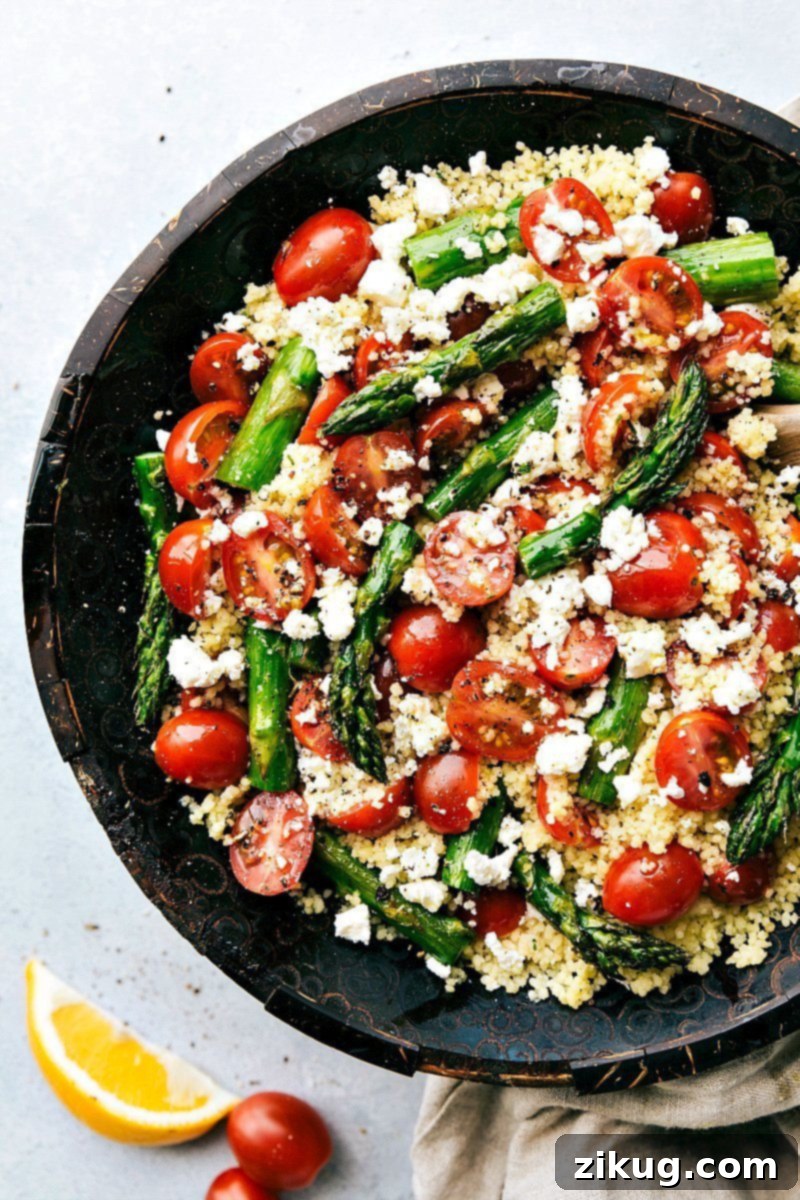
Asparagus Salad is a true celebration of spring, bringing together the crisp, earthy flavor of roasted asparagus, the burst of sweetness from cherry tomatoes, the savory depth of garlicky couscous, and the delightful tang of crumbled feta. All these vibrant ingredients are harmoniously united by a simple yet exquisite balsamic vinaigrette. This fresh, flavorful, and incredibly satisfying salad is guaranteed to be a hit at any gathering, from casual weeknight dinners to festive holiday feasts.
For an unforgettable Easter spread or any spring celebration, pair this delightful Asparagus Salad with complementary dishes such as a refreshing Grape Salad, warm, fluffy Dinner Rolls, and savory Roasted Brussels Sprouts. Its versatility also makes it a fantastic addition to any summer BBQ or a light, healthy lunch.
The Ultimate Asparagus Salad for Spring
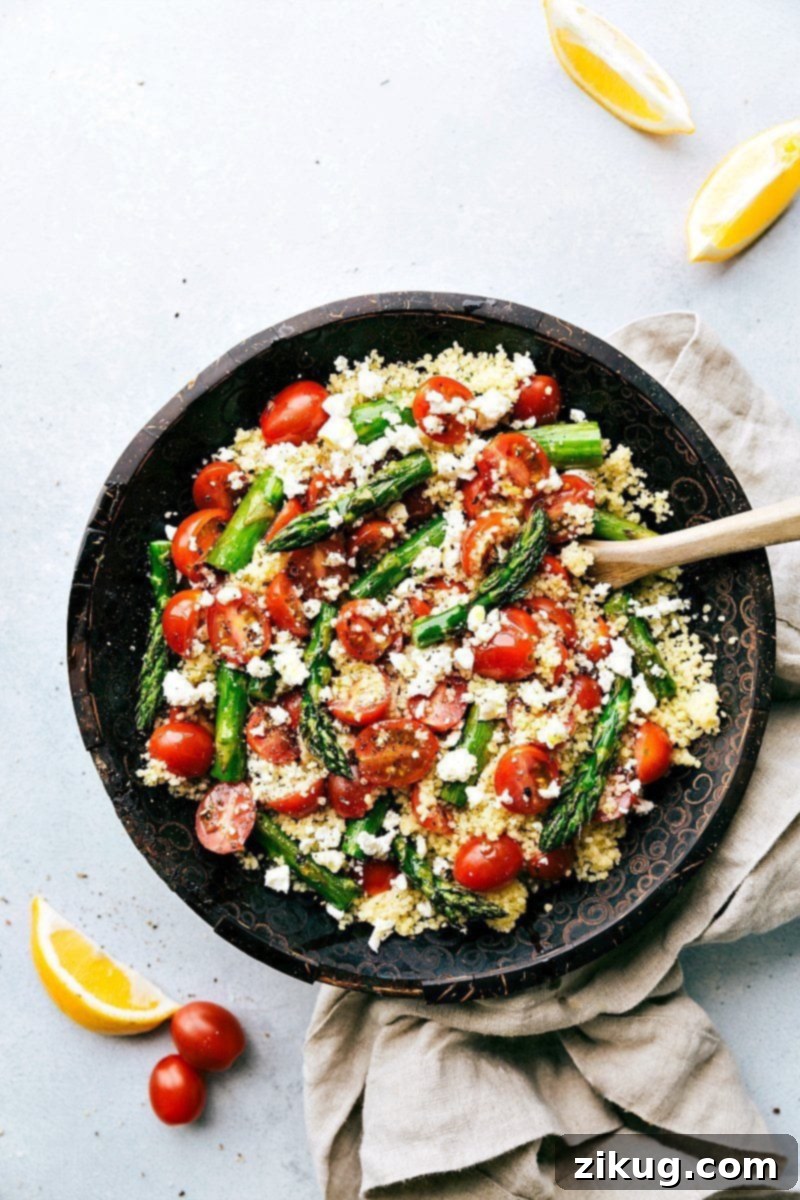
This Asparagus Salad truly stands out as a springtime favorite and an absolute essential for Easter dinner and beyond. What makes it so exceptional? It’s not just its incredible flavor, but also its effortless preparation and stunning presentation. Every element of this salad is carefully chosen to create a symphony of textures and tastes that tantalize the palate. I remember growing up, my mom would prepare a similar salad every Easter, and it was always the first dish to disappear from the table – a testament to its universal appeal. The star of the show, of course, was always the perfectly roasted asparagus. Roasting transforms the asparagus, coaxing out its natural sugars and intensifying its slightly sweet, nutty flavor, especially when seasoned with olive oil and a hint of spices. This process creates a delightful caramelization that you simply can’t achieve with steaming or boiling.
When combined with fluffy, garlicky couscous, the salty bite of crumbled feta, and the bright, juicy sweetness of fresh cherry tomatoes, this salad offers an unparalleled culinary experience. It’s a dish that feels both comforting and gourmet, healthy and indulgent. Beyond its delicious taste, asparagus is packed with nutrients, including vitamins K, A, C, and folate, making this salad a wholesome choice you can feel good about. Its refreshing quality and beautiful colors make it an ideal side dish or a light, satisfying main course for any occasion.
Crafting the Perfect Couscous for Your Salad
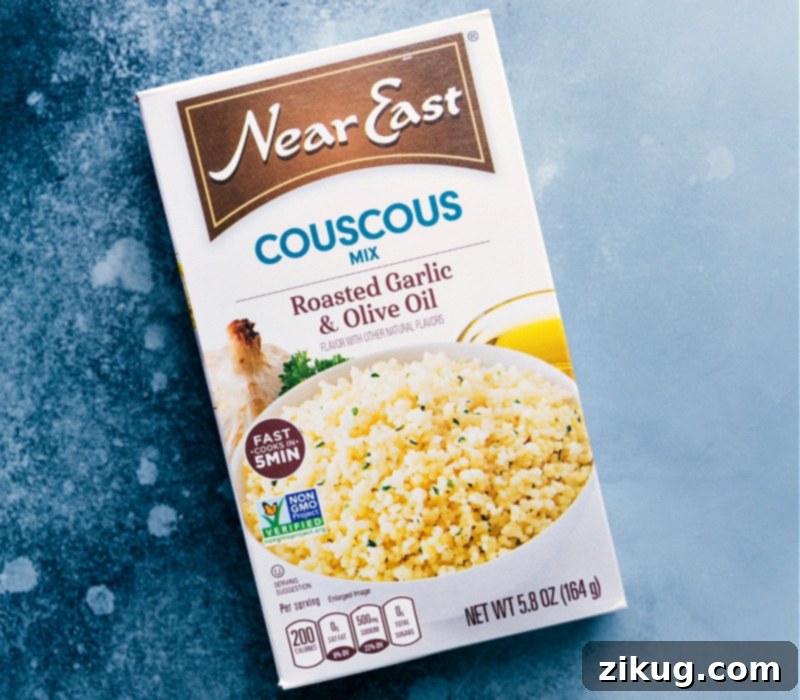
One of the unsung heroes of this Asparagus Salad is couscous, and its primary appeal is how incredibly fast and easy it is to prepare – often ready in 10 minutes or less! This makes it an ideal base for a quick yet elegant salad. For this particular recipe, I highly recommend using a pre-flavored, boxed mix. These mixes are a fantastic shortcut, not only because they’re convenient but also because they infuse the couscous with an incredible depth of flavor without any extra effort. My go-to is the “Roasted Garlic & Olive Oil” couscous (as pictured above). The subtle savory notes of roasted garlic and the richness of olive oil perfectly complement the other ingredients in the salad, adding a layer of complexity that elevates the entire dish.
However, if you prefer a more neutral base or wish to control the seasonings precisely, opting for plain couscous is a wonderful alternative. If you go this route, ensure you use small (Moroccan) couscous. Its fine grain cooks rapidly and integrates seamlessly into the salad, providing a light, fluffy texture that doesn’t overpower the delicate asparagus. Avoid larger, pearl-style Israeli couscous for this recipe, as it has a chewier texture and longer cooking time that isn’t ideal for this particular salad’s profile. When cooking plain couscous, remember to season the cooking water generously with salt and a touch of olive oil, and consider adding a minced garlic clove or a pinch of garlic powder to mimic the flavor of the boxed mix. This simple step ensures your couscous contributes richly to the overall flavor of the salad. For those exploring alternatives, cooked quinoa or even farro can provide a similar hearty base, though they will alter the texture and cooking time.
Mastering the Art of Roasted Asparagus
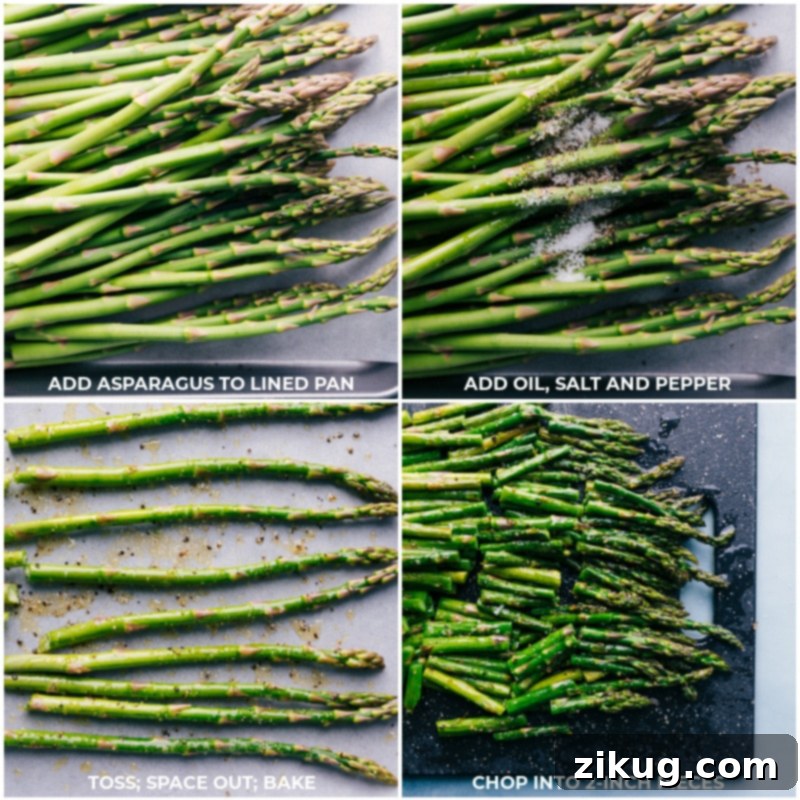
The star ingredient, roasted asparagus, requires a little attention to detail to achieve perfection. Here’s how to ensure your asparagus is tender-crisp and bursting with flavor:
- Buying & Prepping Asparagus: The key to a fantastic asparagus salad starts with selecting the best produce. Look for firm, bright green spears with tight, closed tips. Avoid any that appear dry, cracked, wilted, or feel wet and slimy, as these are signs of spoilage. Asparagus is best used within 1-2 days of purchase to ensure maximum freshness and flavor. Store it upright in a glass with about an inch of water, loosely covered with a plastic bag, in the refrigerator.
- Preparation for Roasting: Before cooking, rinse your asparagus thoroughly under cold water and pat it completely dry. Excess moisture can lead to steaming rather than roasting, preventing that desirable caramelization. The tough, woody ends of asparagus are not palatable. The easiest way to remove them is to gently bend each spear until it naturally snaps. It will break at the point where the tender part begins. Alternatively, you can line up the spears and chop off the bottom inch or two from the entire bunch.
- Roasting for Flavor: To roast, spread the prepped asparagus evenly on a large sheet pan. Drizzle with good quality olive oil, which helps conduct heat and encourages browning. Season generously with salt and pepper, and perhaps a pinch of garlic powder for extra flavor. The crucial step is to ensure the asparagus spears are spaced out on the pan. If the pan is crowded, the asparagus will steam in its own moisture instead of roasting, resulting in a soggy texture. Roast until the spears are tender-crisp and slightly golden-brown, indicating they’ve achieved that delicious caramelized flavor.
Quick Tip: Asparagus Thickness Matters!
The thickness of your asparagus spears significantly impacts their flavor and cooking time. Thinner spears tend to be milder in taste and cook much faster, yielding a softer texture. Thicker spears, on the other hand, boast a stronger, more pronounced asparagus flavor and offer a delightful, slightly chewy bite. Adjust your roasting time accordingly: thinner spears might be ready in 7-10 minutes, while thicker ones could take 12-15 minutes or even a bit longer. Always aim for “al dente” – tender but with a slight bite.
Creating the Perfect Balsamic Vinaigrette
A truly great salad is often defined by its dressing, and this balsamic vinaigrette is no exception. It perfectly balances the richness of the roasted vegetables and the lightness of the couscous. Here are some essential tips for making and using this flavorful dressing:
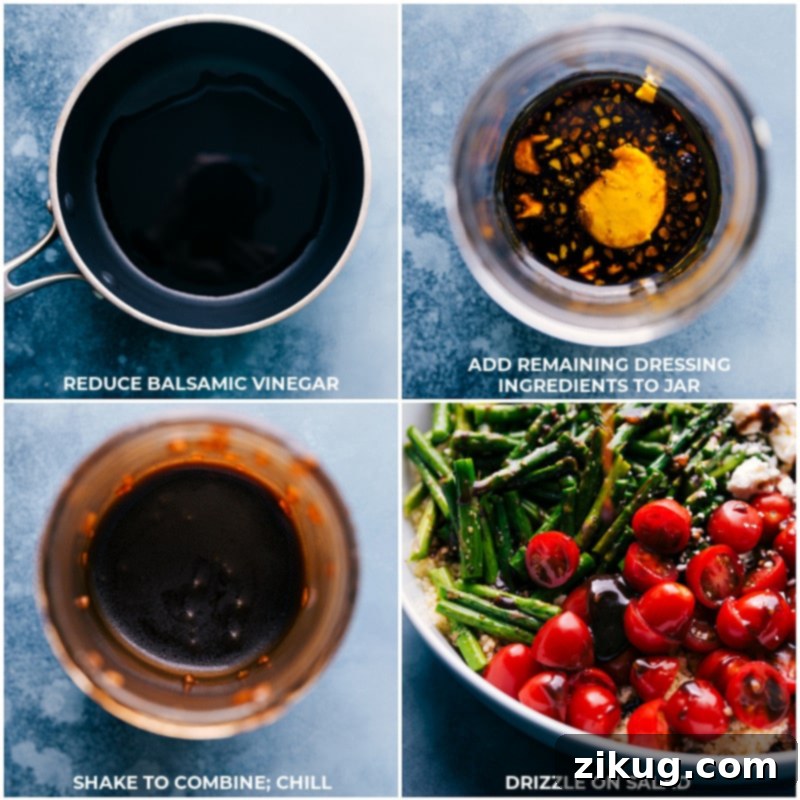
- The Importance of Chilling: Since the balsamic vinegar is gently cooked down to concentrate its flavors and thicken it slightly, it’s crucial to allow the reduced balsamic to cool completely before mixing it with the other dressing ingredients. Chilling also helps the flavors meld beautifully and ensures the dressing is cold when tossed with the salad, preventing any warmth from wilting the fresh ingredients.
- Make Ahead for Convenience: This vinaigrette is an excellent component to prepare 1-2 days in advance. Store it in a sealed jar in the refrigerator. If you notice the ingredients separating (which is natural with oil and vinegar), simply give it a good shake before use. Allowing it to sit for 20-30 minutes at room temperature before shaking can also help recombine any stubborn separation.
- Customizing Garlic Levels: Garlic is a prominent flavor in this salad, present in both the couscous and the dressing. Feel free to adjust the amount of minced garlic in the dressing to your personal preference. If your couscous is already intensely garlicky or you prefer a milder flavor, you might want to reduce the garlic in the vinaigrette or even omit it. Conversely, if you’re a garlic enthusiast, don’t hesitate to add a little extra for an even more robust dressing.
- Mastering Balsamic Reduction: The balsamic reduction is key to the dressing’s rich flavor. Pour the balsamic vinegar into a small pot and simmer it gently over medium heat. Watch it carefully, as it can reduce quickly and burn if left unattended. The goal is to halve its volume, resulting in a slightly thicker, syrupy consistency with an intensified, sweet-tart flavor. This process elevates the dressing from ordinary to extraordinary.
Expert Tips for a Flawless Asparagus Salad
Achieving the perfect Asparagus Salad is easy with a few simple tricks. These tips will help you customize the dish to your liking and ensure every bite is bursting with flavor and optimal texture:
- Exploring Cheese Options: While feta cheese is my absolute favorite for its salty, tangy crumble that beautifully complements the other flavors, there are other fantastic options. Goat cheese, with its creamy texture and distinct tartness, offers a lovely alternative. If you’re not a fan of either, freshly grated Parmesan cheese provides a milder, nutty, and savory note that works wonderfully. You could also experiment with a mild provolone or even a dairy-free feta substitute for different dietary needs.
- Optimal Cheese Addition: For the best texture and presentation, always add the crumbled cheese right before serving. This prevents it from becoming soggy or losing its distinct shape and texture within the salad, ensuring that fresh burst of flavor and visual appeal in every forkful.
- Seasoning to Perfection: This salad tends to be on the saltier side due to several seasoned components: the roasted asparagus, the flavorful dressing, and the inherently salty feta cheese. It’s crucial to taste as you go. Start with a conservative amount of salt and add more gradually until it reaches your desired balance. This approach prevents over-salting and allows you to appreciate the nuanced flavors of each ingredient. Remember, you can always add more salt, but you can’t take it away!
- The Brightness of Fresh Lemon: The recipe already incorporates a squeeze of lemon juice over the roasted asparagus, which brightens its flavor. However, an additional squeeze of fresh lemon juice over the entire salad just before serving can elevate the freshness even further. It adds a zesty pop that cuts through the richness and ties all the flavors together beautifully. Consider serving extra lemon wedges on the side for guests who might enjoy an extra citrus kick.
- Adding More Vegetables & Herbs: Don’t hesitate to add more fresh vegetables to boost color, texture, and nutrition. Diced cucumber, thinly sliced red onion (for a sharper bite), or colorful bell peppers can be excellent additions. Fresh herbs like chopped parsley, dill, or mint can also introduce new aromatic dimensions to the salad, making it even more dynamic.
Storage Best Practices
This Asparagus Salad is truly best when eaten fresh, shortly after it’s assembled. The dressing, while delicious, can soften the couscous and vegetables if they sit together for too long, diminishing the desired crisp textures.
Make Ahead Strategy: To enjoy this salad at its peak freshness, it’s highly recommended to prepare all the individual ingredients in advance and store them separately in the refrigerator. Cook and chop the asparagus, prepare the couscous, halve the cherry tomatoes, and make the balsamic vinaigrette. Keep each component in its own airtight container. When you’re ready to serve, simply combine the ingredients, drizzle with the chilled dressing, toss gently, and top with feta. This ensures a vibrant, perfectly textured salad every time. If you only plan to eat a portion of the salad, only dress the amount you intend to consume immediately.
More Delightful Spring Recipes
If you’re looking for more fresh, vibrant dishes to welcome the spring season, explore these other fantastic recipes that celebrate seasonal produce and light, flavorful ingredients:
- Spring Quinoa Salad with steak for a hearty and healthy meal.
- An entire Easter Dinner cooked conveniently on one sheet pan.
- Fun and festive Confetti Bars with a spring-inspired twist.
- A tropical and refreshing Mango Salad featuring juicy fresh berries.
- An elegant Beet Salad perfectly complemented by a bright orange dressing.
Asparagus Salad
Chelsea Lords
30 minutes
17 minutes
47 minutes
6 servings
Equipment
-
Large sheet pan (15″ x 21″) 15 x 21-inch
-
Small pot
Ingredients
- 1 pound asparagus
- 2 tablespoons olive oil
-
1 teaspoon
salt
-
1/2 teaspoon
pepper
- 1 lemon
-
1 (5.8-ounce) package
roasted garlic and olive oil couscous
see note 1 - 1 cup halved cherry tomatoes
- 1/3 cup crumbled feta cheese
-
3 tablespoons
balsamic vinegar
- 2 tablespoons olive oil
- 1/2 teaspoon minced garlic
-
1 teaspoon
Dijon-style mustard
- 1/2 tablespoon honey
Instructions
-
Preheat oven to 425°F (220°C). Juice the lemon using a citrus juicer to yield 1 tablespoon of fresh lemon juice. Break off the tough, woody ends from the asparagus spears. On a large sheet pan, toss the prepped asparagus with 2 tablespoons of olive oil, 1 teaspoon of salt, and 1/2 teaspoon of pepper. Ensure the asparagus is spread out in a single layer on the sheet pan; overcrowding will cause it to steam rather than roast, preventing it from achieving that desired crisp-tender texture.
-
Bake the asparagus in the preheated oven for 7–15 minutes. The exact cooking time will depend on the thickness of your asparagus spears; thinner stems will cook much more quickly, typically in 7-10 minutes, while thicker ones may require up to 15 minutes. Halfway through the cooking time, flip the spears to ensure even roasting. Once cooked to your desired tenderness, remove the asparagus from the oven and immediately squeeze 1 tablespoon of lemon juice over the hot spears. Allow the asparagus to cool slightly, then chop it into manageable 2-inch pieces.
-
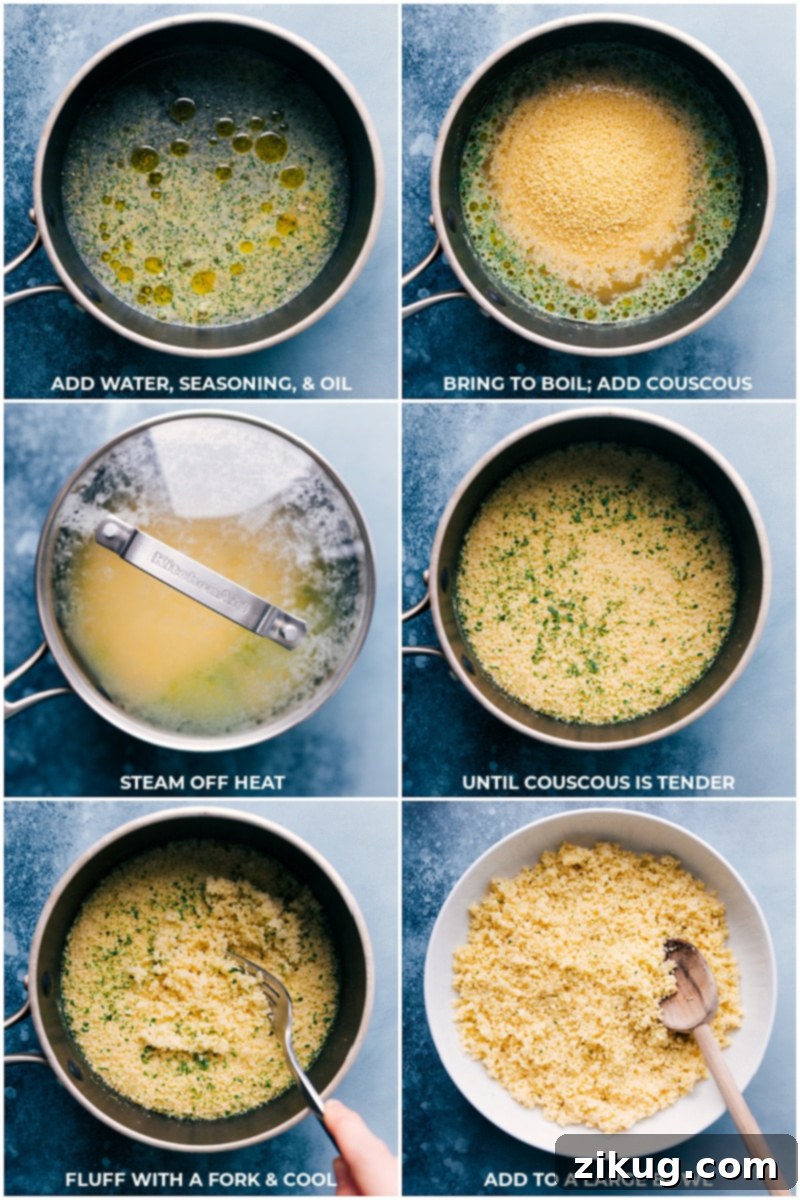
Prepare the packaged couscous according to the directions provided on its packaging. Once cooked, transfer the warm couscous to a large bowl and allow it to cool completely before assembling the salad (see note 1 for couscous type). Cooling prevents the salad from wilting when combined with other ingredients.
-
For the dressing, pour the balsamic vinegar into a small pot and place it over medium heat. Bring the vinegar to a gentle boil, then reduce the heat to a simmer and allow it to reduce until its volume is halved, resulting in approximately 1 1/2 tablespoons of thickened, concentrated vinegar. This reduction happens quite rapidly once boiling begins, so it’s essential to stay vigilant and not leave the pot unattended to prevent burning.
-
Allow the reduced balsamic vinegar to cool slightly, then transfer it to a mason jar or a small bowl. Add the remaining dressing ingredients: 2 tablespoons of olive oil, 1/2 teaspoon of minced garlic, 1 teaspoon of Dijon-style mustard, and 1/2 tablespoon of honey. Season the dressing to taste with salt and pepper. If using a jar, seal it tightly and shake vigorously to combine all ingredients. You may need to stir with a small whisk or spoon to fully incorporate the honey if it settles at the bottom. Place the dressing in the fridge to chill until you are ready to dress the salad. Remember to shake or stir again just before drizzling it over the salad.
-
Halve the cherry tomatoes. Add the cooled chopped asparagus and the halved cherry tomatoes to the large bowl containing the cooled couscous. Gently toss the ingredients together to combine. Shake the chilled dressing well and drizzle it over the salad gradually, to taste. If desired, add another squeeze of fresh lemon juice for an extra burst of brightness. Gently toss the salad again to ensure everything is evenly coated. Finally, top the salad with the crumbled feta cheese. Taste the salad and adjust any seasoning (salt, pepper, or lemon) if needed. Serve and enjoy this fresh and flavorful Asparagus Salad immediately for the best experience.
Recipe Notes
Storage: This salad is at its peak when freshly made. If you anticipate having leftovers or are preparing it for a later meal, it’s best to only dress the portion you plan to eat immediately. The dressing can cause the ingredients to soften over an extended period, so keeping the components separate until serving ensures the best texture and freshness.
Nutrition
Calories: 207kcal |
Carbohydrates: 19g |
Protein: 6g |
Fat: 13g |
Saturated Fat: 3g |
Cholesterol: 12mg |
Sodium: 165mg |
Potassium: 282mg |
Fiber: 3g |
Sugar: 5g |
Vitamin A: 820IU |
Vitamin C: 13mg |
Calcium: 94mg |
Iron: 2mg
Nutrition information is automatically calculated, so should only be used as an approximation.
Like this? Leave a comment below!