
Crafting the Perfect Creamy Lemon Tahini Dressing: A Healthy Homemade Delight
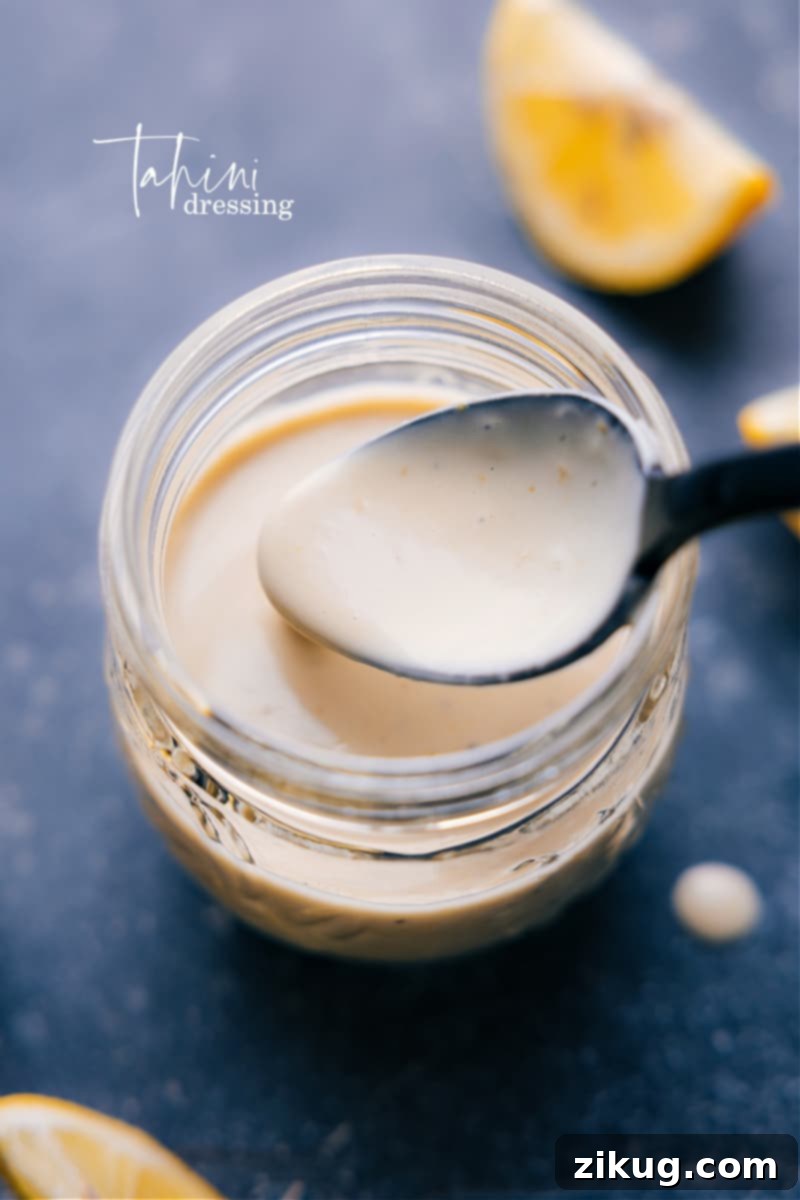
This **Tahini Dressing** is truly a culinary revelation. Luxuriously thick and incredibly creamy, it achieves its rich texture without relying on any mayo, cream, or dairy. Delicately flavored with a bright hint of lemon and a subtle touch of natural sweetness from honey, it’s designed to elevate your favorite salads and dishes. Prepare to transform your meals with a delightful drizzle of this exceptional homemade dressing.
While grocery store shelves are brimming with countless salad dressing options, finding a high-quality Tahini Dressing can be surprisingly challenging. This often leads to disappointment for those seeking its unique flavor profile and health benefits. That’s precisely why mastering the art of making your own at home is not only rewarding but also incredibly practical. You control the ingredients, ensuring freshness, quality, and a flavor that perfectly suits your palate.
The Allure of Creamy Lemon Tahini Dressing
Who doesn’t adore a good creamy dressing? The velvety texture and satisfying richness can transform even the simplest salad into a gourmet experience. However, achieving that creaminess often comes at a cost, typically requiring generous amounts of dairy products like cream, milk, or mayonnaise. Even beloved recipes, such as a fabulous, herb-packed Green Goddess Dressing, traditionally rely on mayo to achieve their classic, luscious consistency.
This is where tahini truly shines as a game-changer. Tahini, a paste made from ground sesame seeds, naturally lends an ultra-thick and incredibly creamy texture to dressings *without* any dairy or mayo. It acts as a natural emulsifier and thickener, creating a smooth, rich consistency that rivals its dairy-based counterparts. Beyond its textural prowess, tahini also offers a bounty of health benefits, making this dressing a genuinely wholesome choice. And when it comes to flavor, few ingredients pair as perfectly with tahini as fresh lemon. The earthy, nutty notes of tahini are beautifully balanced and brightened by the zesty acidity of lemon. These two ingredients are, quite simply, *meant* to be together, creating a harmonious flavor profile that is both complex and refreshing, much like in a stellar Hummus recipe.
Understanding Tahini: Flavor Profile and Benefits
If you’re new to tahini, you might be curious about its unique taste. Tahini is a nutrient-rich paste made from ground sesame seeds, readily available in most grocery stores, often found in the international or baking aisle. Its consistency is similar to natural peanut butter or almond butter, but its flavor profile is distinctively different. On its own, tahini presents an earthy, nutty taste with a hint of bitterness. While some might not find it appealing directly from the jar, its true magic unfolds when combined with other ingredients. It serves as an incredible base, absorbing and complementing various flavors, making it indispensable in Mediterranean and Middle Eastern cuisines. Furthermore, tahini is packed with healthy fats, vitamins (like B1, B2, B3, B5, B6), and minerals (including calcium, magnesium, iron, and phosphorus), offering a significant nutritional boost to any dish.
Mastering the Blend: What to Mix with Tahini for the Perfect Dressing
Creating an exceptional Tahini Dressing is all about balancing flavors and textures. The raw tahini paste provides the creamy foundation, but it truly comes alive when combined with a few key ingredients. To craft this fantastic dressing, you’ll blend tahini with extra virgin olive oil for richness, fresh lemon juice and zest for a vibrant tang, Dijon mustard for a subtle savory kick and emulsification, honey for a hint of sweetness, and, of course, salt and freshly ground black pepper to season it to perfection.
Before you begin, a crucial tip for working with tahini: most tahini pastes, particularly natural ones, tend to separate in the jar, with the oil rising to the top. To ensure a smooth, consistent dressing, it’s essential to **shake the jar or mix the container *really* well** before measuring out your tahini. This reincorporates the oil, preventing a thick, clumpy paste at the bottom. Additionally, always opt for **hulled tahini**. Unhulled or whole seed tahini, while more fibrous, can have a noticeably bitter taste that might overpower the delicate balance of your dressing. Hulled tahini, made from sesame seeds with their outer shells removed, offers a smoother texture and a milder, sweeter flavor profile that is ideal for dressings and sauces.
A Closer Look at Tahini Dressing Ingredients
Every ingredient in this Tahini Dressing plays a vital role in achieving its perfect balance of flavor and texture. Here’s a detailed breakdown of what you’ll need and why each component matters:
- Tahini Paste: As the star of the show, the quality of your tahini truly makes a difference. Not all tahini pastes are created equal; some can be gritty or excessively bitter. For the best results, invest in a high-quality, smooth tahini. My personal favorite, and one that consistently delivers superior flavor and texture, is Soom Foods Sesame Tahini Paste. Its consistency is ideal for dressings, and its flavor is wonderfully balanced (please note: these are affiliate links, but the recommendation is genuinely based on product quality, not sponsorship).
- Extra Virgin Olive Oil: This isn’t just a carrier; it’s a flavor enhancer. We highly recommend using *extra virgin* olive oil for this recipe. Its robust, fruity notes contribute significantly to the overall taste of the dressing and add healthy monounsaturated fats.
- Dijon Mustard: Beyond adding a delightful tangy zing, Dijon mustard acts as an excellent emulsifier, helping to bind the oil and water-based ingredients together, resulting in a smooth, cohesive dressing. We find Grey Poupon® Dijon works best here for its classic, balanced flavor.
- Honey: A small amount of honey introduces a very subtle sweetness that beautifully complements the earthiness of the tahini and the tartness of the lemon. It creates a well-rounded flavor profile without making the dressing overtly sweet. If you prefer a sweeter dressing, you can always add a bit more honey, slowly, and to taste, until you reach your desired level of sweetness.
- Fresh Lemons: The vibrant, fresh flavor of lemon is paramount in this dressing. Bottled lemon juice simply cannot replicate the bright, zesty notes of fresh lemons. You’ll need both the zest and the juice. Zesting the lemon with a microplane extracts essential oils from the peel, adding depth of flavor, while juicing with a good citrus juicer ensures you get every last drop of tangy liquid.
- Salt and Pepper: These foundational seasonings are non-negotiable for any dressing, and this Tahini Dressing is no exception! They enhance all the other flavors, bringing them into harmony. Add them gradually and taste as you go; a mere extra pinch can often be the crucial difference between a *good* and a truly *stellar* dressing. Always prefer freshly ground black pepper for superior aroma and taste.
Making it Vegan-Friendly
Looking to make this delicious Tahini Dressing entirely vegan? It’s incredibly simple! Just replace the honey with an equal amount of pure maple syrup. Maple syrup offers a similar subtle sweetness and blends seamlessly with the other ingredients, maintaining the dressing’s exquisite flavor profile while adhering to a plant-based diet.
Effortless Preparation: How to Make Tahini Dressing
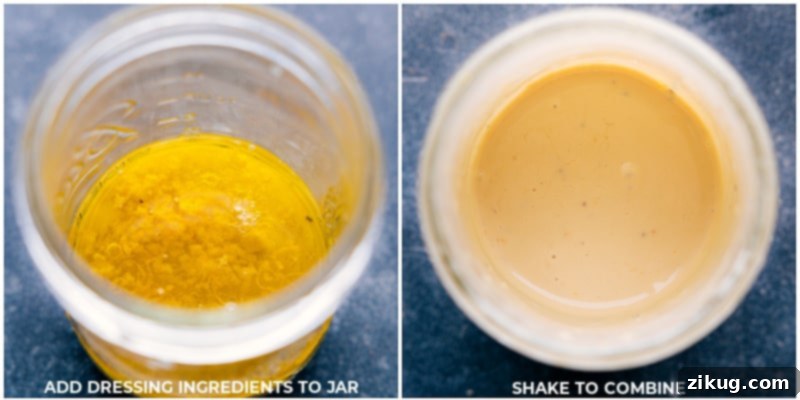
You’ll be astonished by how incredibly easy and quick this dressing is to prepare. Forget complicated techniques or specialized equipment. All you truly need is a simple jar with a tight-fitting lid or, alternatively, a small bowl and a whisk. The process is straightforward: simply combine all the ingredients in your chosen vessel. If using a jar, secure the lid and shake vigorously until everything is thoroughly mixed and emulsified. If using a bowl, whisk continuously until the dressing is smooth and uniform. It’s genuinely that simple!
Unleashing Versatility: What to Put Tahini Dressing On
The beauty of this creamy Lemon Tahini Dressing lies not only in its delightful flavor but also in its incredible versatility. It’s far more than just a salad topping; it can elevate a wide array of dishes, adding a burst of Mediterranean-inspired flavor and a creamy texture without the heaviness of traditional dairy-based sauces. Here are just a few ideas to inspire you:
- A Match Made in Heaven for Falafel: Tahini dressing is the quintessential companion for falafel. Its cool, tangy creaminess perfectly complements the crispy, spiced chickpea patties. Try it with homemade Baked Falafel or for an even quicker meal, these delicious Air Fryer Falafel.
- Spread for Sandwiches and Burgers: Forget plain mayo! Use this dressing as a vibrant and flavorful spread for your favorite sandwiches, wraps, or homemade burgers. It’s particularly fantastic with seafood, like Salmon Burgers or Tuna Patties, adding a gourmet touch.
- Dip for Raw Veggies: Transform your snack time! This creamy dressing makes an irresistible dip for crisp raw vegetables such as carrot sticks, cucumber slices, bell pepper strips, or celery. It’s a healthy and satisfying alternative to store-bought dips.
- Elevate Your Favorite Veggie Salads: Of course, it’s a stellar salad dressing! Drizzle it generously over any green salad, grain bowl, or roasted vegetable medley to add a rich, creamy texture and bright, tangy flavor that ties all the ingredients together.
- Enhance Wraps and Pitas: Take your veggie or protein wraps to the next level. A generous smear of Tahini Dressing inside a pita or tortilla, like with these flavorful Hummus Wraps, adds moisture and an incredible depth of flavor.
- Perfect Pairing for Mediterranean Dishes: Drizzle it over classic Mediterranean-inspired meals. It’s an ideal sauce for Vegetarian Gyros, complementing the savory fillings, or a flavorful addition to Chicken Shawarma Wraps, lending that authentic Middle Eastern taste.
Tahini Dressing FAQs: Your Questions Answered
Can I use tahini straight from the jar?
While you *can* technically use tahini straight from the jar, most tahini pastes, especially natural varieties, will separate significantly during storage, with a thick sediment at the bottom and oil on top. For the best consistency in your dressing, it’s crucial to **shake the jar or mix the container *really* well** before measuring. This ensures the oil and solids are fully re-emulsified, giving you a smooth, pourable, and evenly flavored paste to work with.
Does tahini need to be refrigerated after opening?
No, tahini does not strictly need to be refrigerated after opening. Similar to peanut butter, it can generally be stored in a cool, dry area away from direct sunlight, moisture, or heat. This helps maintain its quality and prevents it from solidifying too much. However, if you prefer a thicker consistency for your tahini or want to extend its shelf life even further, storing it in the refrigerator is an excellent option. Just be aware that it will become much thicker and may require more effort to stir or loosen before use.
Storage Tips for Your Homemade Tahini Dressing
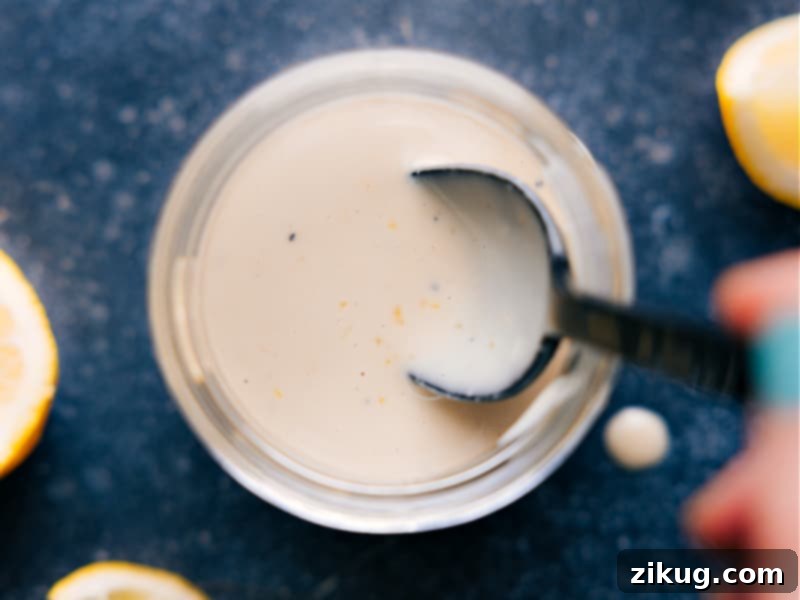
To enjoy your delicious homemade Tahini Dressing for days, store it in an airtight container in the refrigerator for 5-7 days. Before each use, simply give it a good shake or stir to re-combine any ingredients that may have settled.
Heads up: It’s common for leftover dressing to separate and firm up a bit in the fridge, especially due to the olive oil solidifying at colder temperatures. Don’t worry, this is completely normal! To restore its creamy consistency, simply let the dressing sit at room temperature for about 15-20 minutes. Afterward, give it a vigorous shake or stir until it’s smooth and perfectly emulsified again. Then, it’s ready to enhance your next meal!
Explore More Homemade Dressing Recipes: Elevate Your Meals
Once you discover the ease and superior flavor of homemade dressings, you might never go back to store-bought. Here are a few more fantastic recipes to expand your culinary repertoire:
- Poppy Seed Dressing with bright lemon notes – perfect for fruit salads or delicate greens.
- Classic Greek Salad Dressing, infused with aromatic dried oregano, ideal for Mediterranean-inspired dishes.
- Zesty Lemon Vinaigrette, subtly sweetened with honey, a versatile staple for any salad.
- Refreshing Citrus Vinaigrette, featuring a delightful blend of oranges and lemons for a sunny flavor.
- Simple Honey Mustard Salad Dressing, requiring only four essential ingredients for a quick and tasty option!
Print Recipe
Tahini Dressing
Equipment
-
Wide-mouth Mason Jar or small bowl and whisk
Ingredients
- 3 tablespoons olive oil
- 3 tablespoons tahini (see Note 1)
- 1 large lemon (for 1/2 tsp zest and 2 tbsp juice)
- 1-1/2 teaspoon Dijon-style mustard
- 1-1/2 teaspoon honey (or maple syrup for vegan)
- Salt and pepper (to taste)
- 2 tablespoons water (as needed to thin)
Instructions
-
First, zest and juice your lemon to yield approximately 1/2 teaspoon of zest and 2 tablespoons of fresh lemon juice. In a wide-mouth mason jar (for easy shaking) or a small mixing bowl, combine the lemon zest, lemon juice, olive oil, tahini, Dijon mustard, and honey. Season the mixture to taste with salt and pepper; a good starting point is a generous 1/4 teaspoon of salt and 1/8 teaspoon of pepper, but adjust according to your preference.
-
If using a jar, seal it tightly and shake vigorously for about 30-60 seconds until all ingredients are well combined and the dressing is smooth and creamy. If using a bowl, whisk continuously until a uniform, emulsified dressing forms. The dressing will be quite thick at this stage. Gradually thin it out with water, adding 2 tablespoons to start. Continue to whisk or shake until the dressing reaches your desired consistency. Finally, taste and adjust any flavors – you might want a little more lemon, honey, salt, or pepper – to achieve your perfect balance.
Recipe Notes
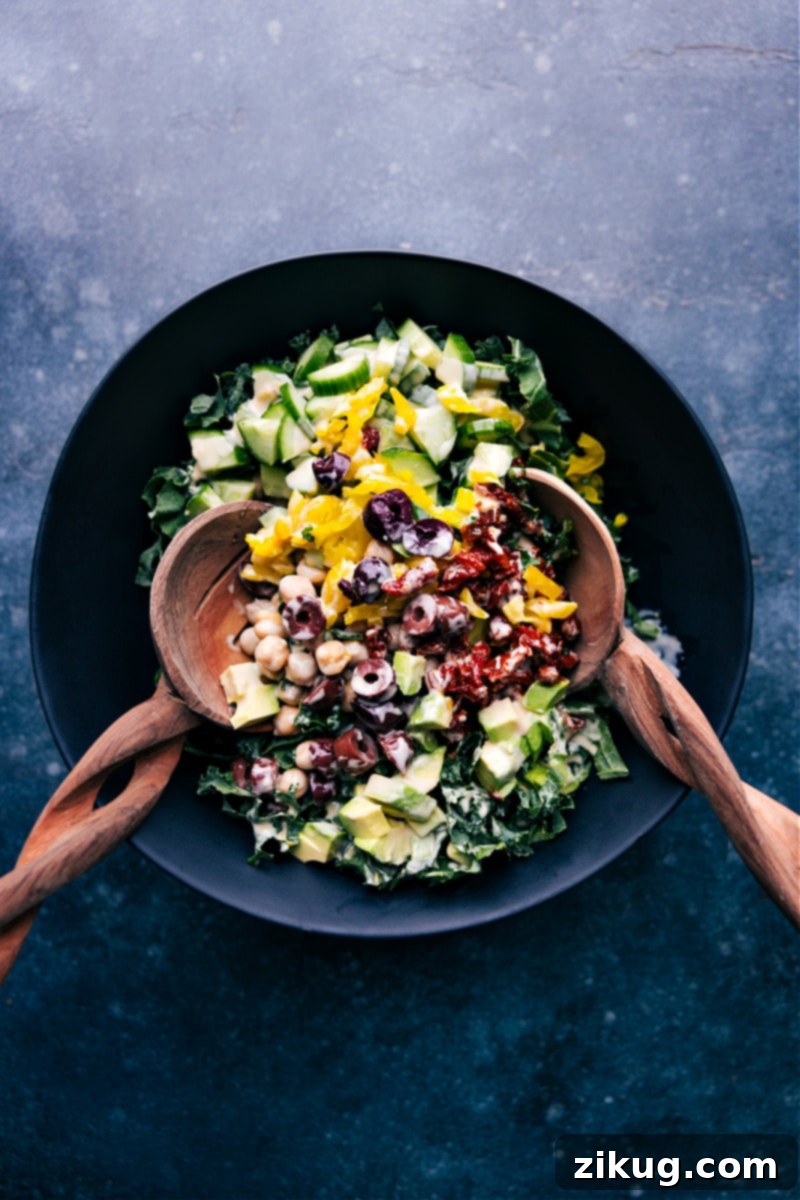
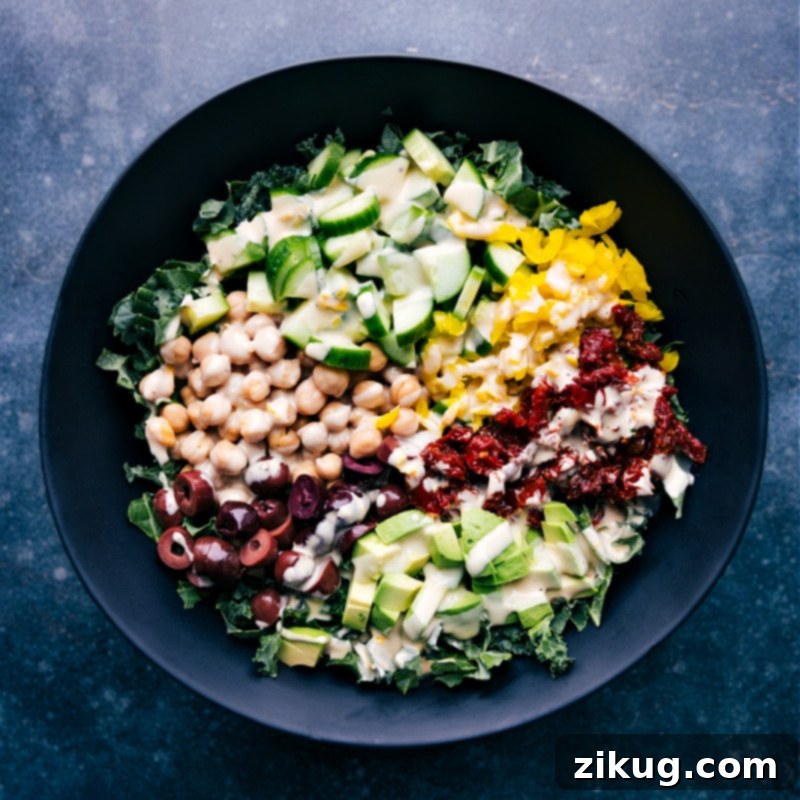
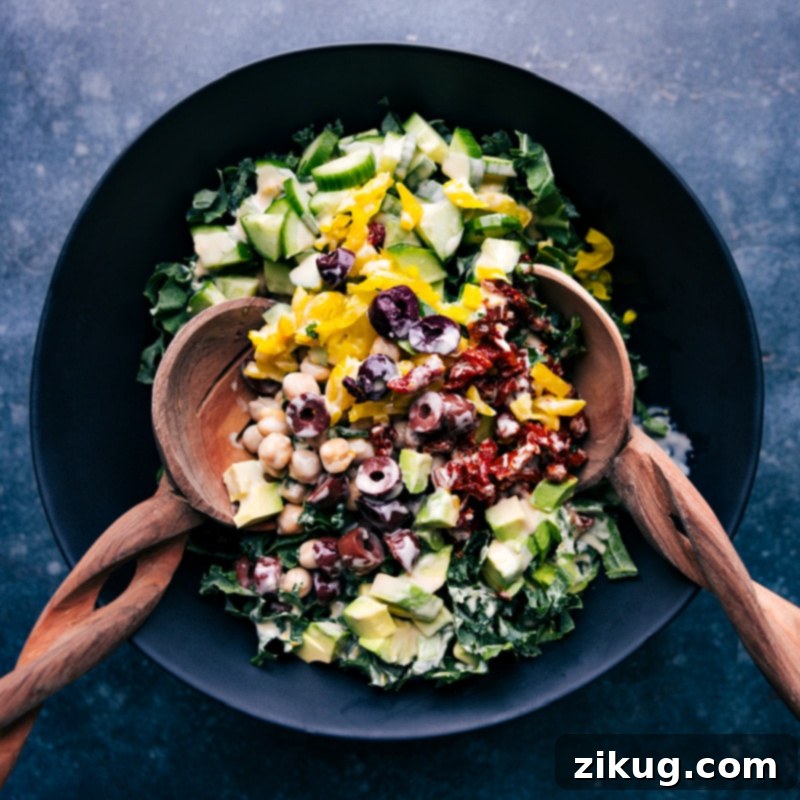
Note 2: Featured Salad Recipe: For those curious about the vibrant salad showcased in these photos, here’s the simple recipe:
- 4 cups massaged kale (Follow preparation directions in this Grapefruit Salad recipe to properly massage the kale for tenderness.)
- 1/2 of 1 (15 oz.) can chickpeas, rinsed and drained
- 3/4 cup English cucumber, thinly sliced
- 1/3 cup Kalamata olives, thinly sliced
- 1/3 cup banana pepper rings, drained and diced
- 1/3 cup oil-packed sun-dried tomatoes, drained and diced
- 1 small avocado, diced
- Optional: feta cheese (to taste), a handful of toasted pine nuts for extra crunch and flavor.
To assemble the salad, toss about 2/3 of the Tahini Dressing with the massaged kale first to ensure every leaf is coated. Then, add the remaining salad ingredients. Drizzle with more dressing (use as much as you’d like – we often use it all!) and toss again gently to combine everything. Serve immediately and enjoy the fresh, creamy flavors!
Storage: Your homemade Tahini Dressing can be stored in an airtight container in the refrigerator for up to 5-7 days. It is advisable to stir or shake it well before each use, as some settling or separation may occur.
Important Tip for Refrigerated Dressing: Leftover dressing may separate and solidify a bit in the refrigerator. This is completely normal and primarily due to the olive oil in the dressing firming up at cold temperatures. To restore its perfect consistency, simply let the dressing stand at room temperature for about 15–20 minutes. After warming slightly, give it a vigorous shake (or stir thoroughly with a whisk) to re-combine all the ingredients and bring it back to its original creamy, pourable state. Then it’s ready to use again!
Nutrition
Calories: 168kcal |
Carbohydrates: 5g |
Protein: 2g |
Fat: 17g |
Saturated Fat: 2g |
Polyunsaturated Fat: 4g |
Monounsaturated Fat: 10g |
Sodium: 19mg |
Potassium: 91mg |
Fiber: 1g |
Sugar: 1g |
Vitamin A: 14IU |
Vitamin C: 15mg |
Calcium: 24mg |
Iron: 1mg
Nutrition information is automatically calculated, so should only be used as an approximation.