
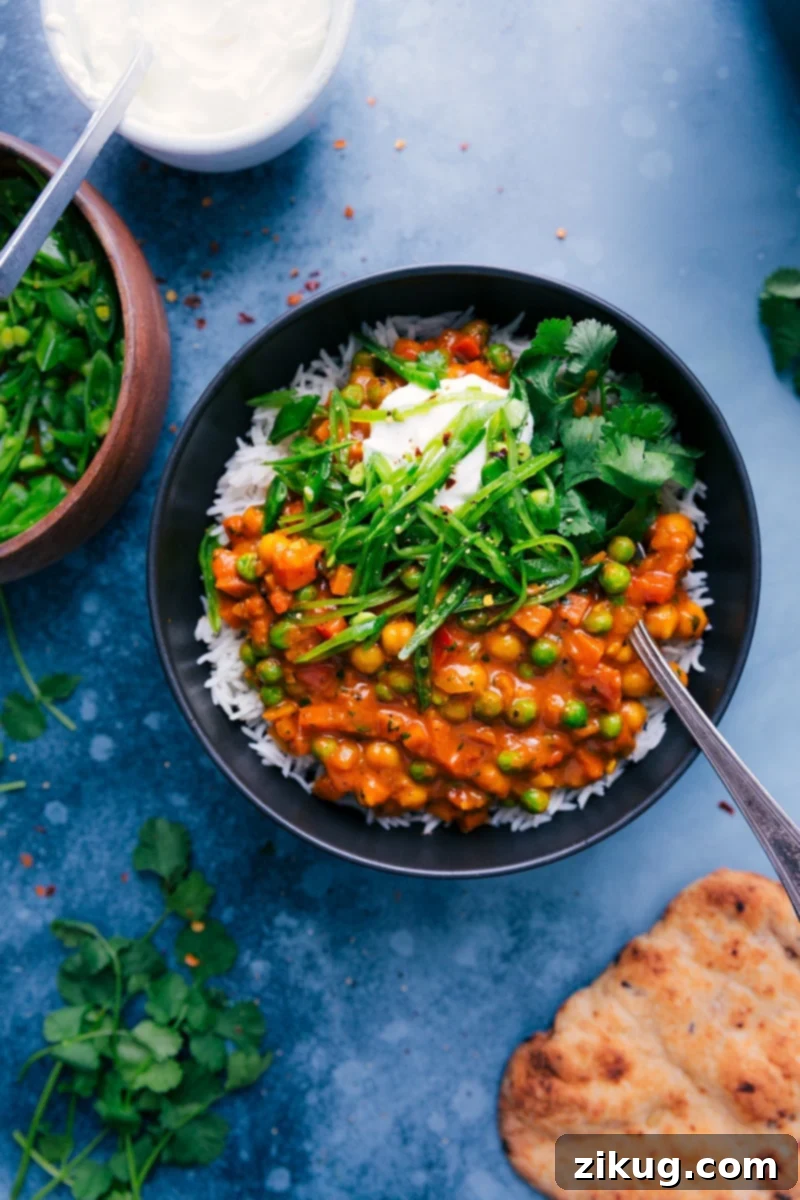
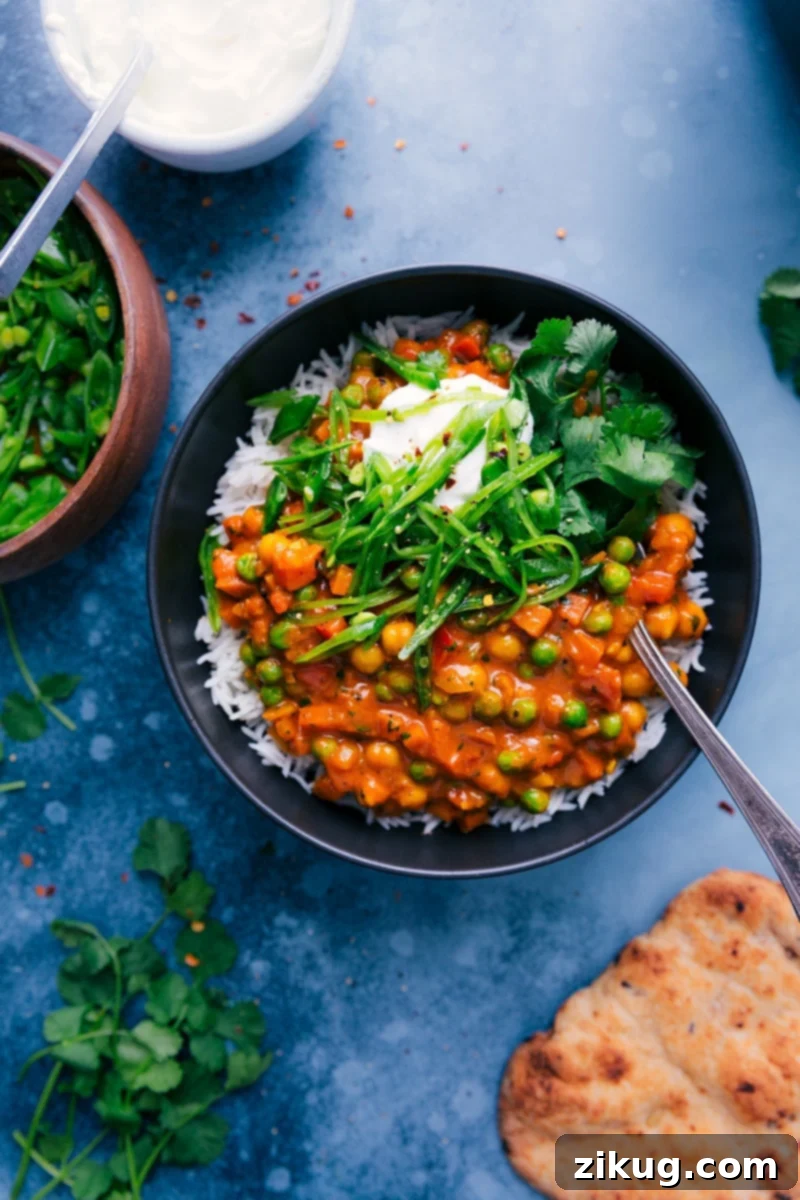
Discover the magic of this incredibly flavorful **Vegetarian Tikka Masala**, a hearty and wholesome dish brimming with vibrant vegetables, protein-rich chickpeas, and an intoxicating blend of aromatic Indian spices. This comforting meal is perfectly served over fluffy rice, crowned with a dollop of cooling Greek yogurt, a sprinkle of fresh snap peas, and accompanied by warm, pillowy naan bread. It’s a delightful journey for your taste buds, proving that meatless meals can be both deeply satisfying and exceptionally delicious.
Looking to explore more delightful meatless options? Be sure to check out our other favorite recipes like hearty chickpea curry, refreshing vegetarian sushi bowls, or our crowd-pleasing vegetarian enchiladas.

author’s note
The Vegetarian Tikka Masala That Becomes a Family Favorite!
As Chicken Tikka Masala has always been a top request in my household, I decided it was time to create an equally irresistible meatless version. To my delight, this vegetarian take was an instant success, perhaps even more beloved by my children! It was truly heartwarming when my seven-year-old requested it as his birthday dinner this year – a testament to its widespread appeal and deliciousness.
This nourishing recipe is generously loaded with an array of fresh vegetables, including sweet onions, tender carrots, colorful bell peppers, and vibrant sweet peas. Chickpeas are incorporated to provide a robust plant-based protein boost, making this dish wonderfully hearty and incredibly filling. It strikes the perfect balance of warmth and flavor, and I’ll guide you on how to effortlessly adjust the spice level to suit everyone’s preference, from mild to boldly spiced. If you’re searching for a veggie-packed meal that the entire family will eagerly enjoy without a single complaint, your quest ends here!
Key Ingredients for Your Perfect Vegetarian Tikka Masala
Crafting an authentic and flavorful Vegetarian Tikka Masala begins with selecting the right ingredients. Here’s a closer look at what you’ll need and why each component is essential for that rich, satisfying taste:
- Coconut Oil: We opt for coconut oil not only for its delicate sweetness but also for its high smoke point, which makes it ideal for sautéing vegetables over medium-high heat without burning. It imparts a subtle tropical hint that complements the Indian spices beautifully.
- Fresh Vegetables (Onion, Carrot, Red Bell Pepper): These form the aromatic foundation of our tikka masala. Cooking them until just tender releases their natural sugars and deepens their flavors, creating a rich base for the sauce. Ensure they are finely diced for even cooking and to meld seamlessly into the creamy sauce.
- Aromatics (Garlic & Ginger): Freshly minced garlic and ginger are non-negotiable for an authentic Indian flavor profile. They infuse the entire dish with vibrant, pungent, and warm notes. While fresh is always best for maximum impact, good quality jarred minced garlic and ginger paste can be used in a pinch.
- Bold Indian Spices (Garam Masala, Turmeric, Cumin, Coriander, Cardamom, Red Pepper Flakes): This carefully curated blend of spices is the heart and soul of our tikka masala. Each spice plays a crucial role: garam masala for its complex warmth, turmeric for earthy notes and golden color, cumin and coriander for depth, cardamom for its distinctive sweet-savory aroma, and red pepper flakes for a customizable kick.
- Tomato Base (Tomato Paste & Fire-Roasted Tomatoes): Tomato paste offers concentrated umami, thickening the sauce and adding richness. Fire-roasted crushed tomatoes bring a smoky depth that elevates the overall flavor profile. If fire-roasted aren’t available, regular crushed tomatoes will work, though you might miss a slight smoky nuance.
- Chickpeas: These versatile legumes are the star plant-based protein of our dish, making it wonderfully filling and nutritious. Canned chickpeas are convenient – simply drain and rinse them thoroughly before adding to remove excess sodium and improve texture.
- Coconut Milk: For that signature creamy texture and subtle sweetness, full-fat canned coconut milk is our choice. It’s a fantastic dairy-free alternative to traditional cream, offering a lighter yet equally luxurious mouthfeel. If you prefer a richer, more decadent sauce, you could experiment with heavy cream.
- Fresh Additions (Sweet Peas & Cilantro): Stirred in at the very end, frozen sweet peas retain their bright color and tender-crisp texture, adding a burst of freshness. Fresh cilantro offers a final flourish of herbaceous, citrusy notes, brightening the entire dish.
Quick Tip: Choosing the Right Coconut Milk
When selecting coconut milk, look for shelf-stable cans, typically found in the international aisle alongside Latin or Asian products. For the creamiest and most flavorful tikka masala, opt for full-fat coconut milk. While many excellent brands are available, Imperial Kitchen® is a reliable and widely available choice that consistently delivers great results. Avoid “light” coconut milk, as it can result in a thinner, less rich sauce.
Mastering Vegetarian Tikka Masala: A Step-by-Step Guide
Creating this delicious Vegetarian Tikka Masala is a straightforward process, built on layering flavors for maximum impact. Follow these steps for a perfect, restaurant-quality dish every time:
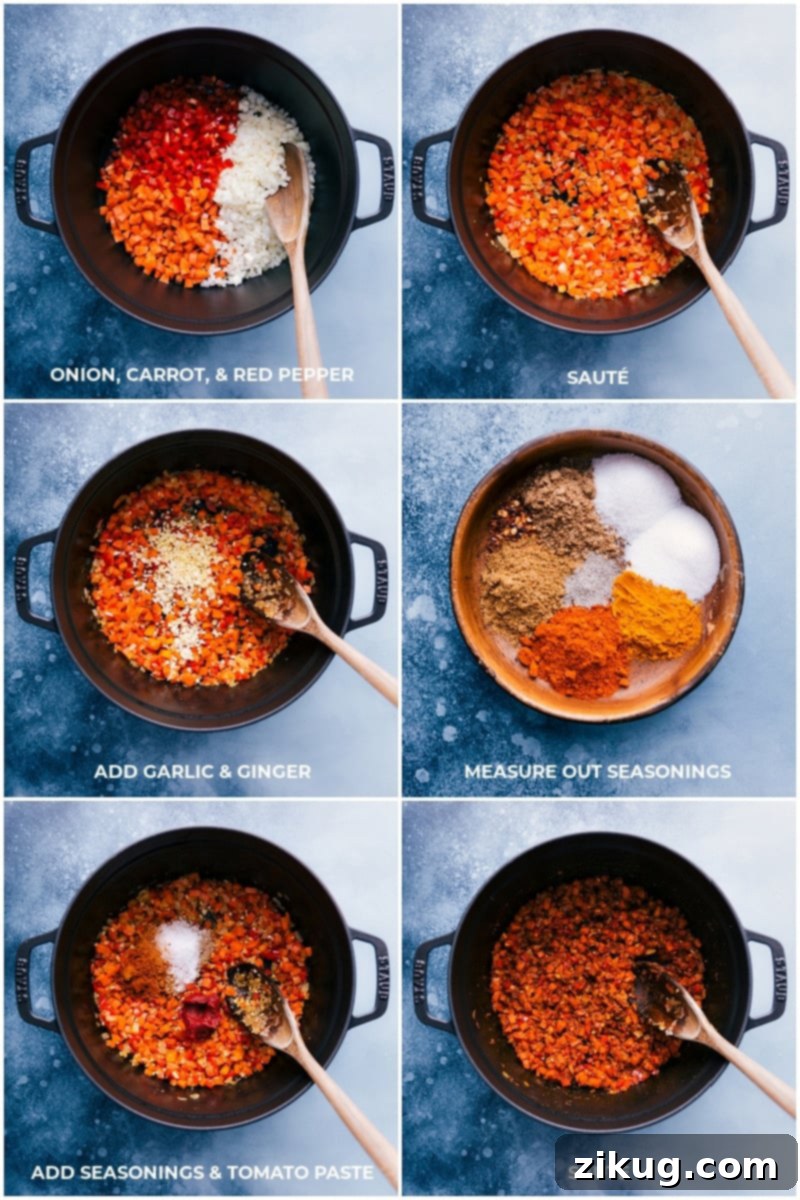
- Sauté the Aromatics and Vegetables: Begin by heating the coconut oil in a large, heavy-bottomed pot or Dutch oven over medium-high heat. Add the finely diced onion, carrot, and red pepper. Sauté these vegetables for 8-10 minutes, stirring occasionally, until they become crisp-tender and slightly softened. This step is crucial for building the flavor foundation.
- Infuse with Garlic, Ginger, and Spices: Once the vegetables are tender, add the finely minced garlic and ginger to the pot. Continue to cook for about 1 minute, stirring constantly, until the aromatics become fragrant. Be careful not to burn them. Next, stir in the garam masala, ground turmeric, granulated sugar, salt, ground cumin, ground coriander, ground cardamom, and crushed red pepper flakes. Cook this mixture for another 3-4 minutes, stirring continuously, allowing the spices to toast and release their full aroma. Reduce the heat if necessary to prevent the spices from burning, as this can make them bitter.
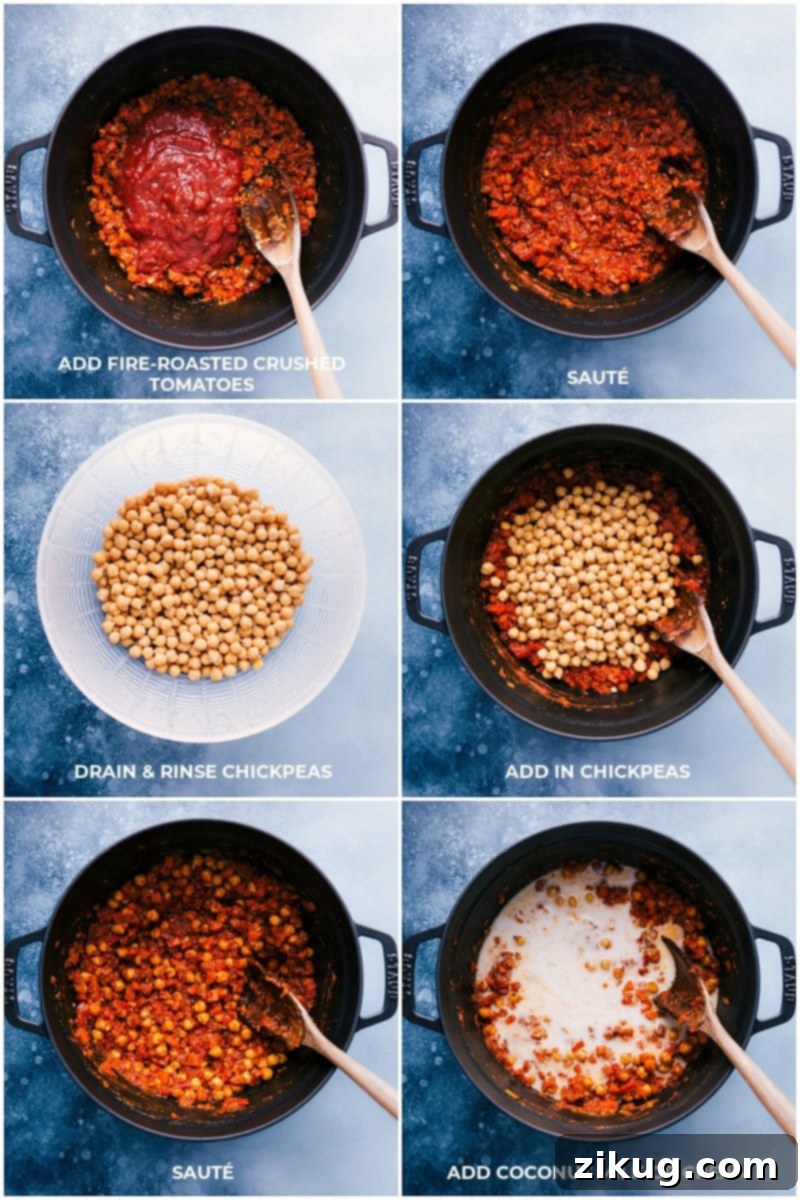
- Build the Rich Tomato Base: Add the tomato paste to the pot and cook for 2 minutes, stirring it into the vegetable and spice mixture. This step deepens the tomato flavor significantly. Then, pour in the fire-roasted crushed tomatoes. Sauté for another minute, actively scraping the bottom of the pot with your spoon to loosen any flavorful browned bits – these contribute immensely to the sauce’s depth.
- Combine and Simmer to Perfection: Introduce the drained and rinsed chickpeas to the pot, stirring well to coat them in the rich sauce. Sauté for one more minute to allow them to absorb some flavor. Finally, pour in the can of coconut milk. Stir everything together until thoroughly combined. Reduce the heat to low, cover the pot partially, and let the tikka masala simmer for 10-20 minutes. This slow simmer allows the flavors to meld beautifully and the sauce to thicken to a luscious consistency. Stir occasionally to prevent sticking.
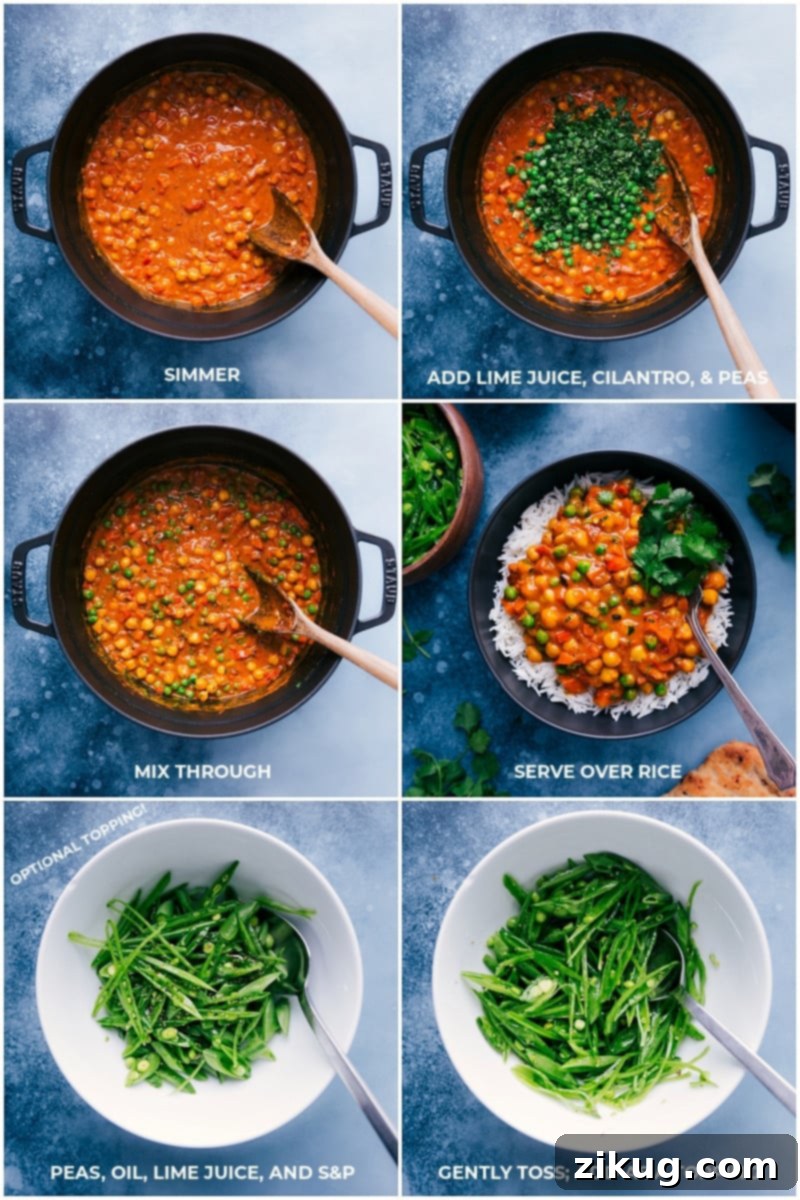
- Add Freshness and Adjust Seasoning: Just before serving, stir in the frozen sweet peas and fresh chopped cilantro. If you desire, a squeeze of lime juice at this stage can brighten the flavors. Taste the sauce and adjust seasonings as needed, adding a pinch more salt, sugar (to balance acidity), or red pepper flakes for extra heat.
- Serve with Classic Accompaniments: While the tikka masala simmers, prepare your side dishes. Fluffy basmati rice is a classic choice, and don’t forget to warm your naan bread. Arrange bowls with a generous serving of the tikka masala over rice, topped with a dollop of cool Greek yogurt, a sprinkle of the optional snap pea topping, and additional fresh cilantro sprigs. Enjoy immediately with warm naan!
Expert Tips for the Best Vegetarian Tikka Masala
Achieve perfection with your homemade Vegetarian Tikka Masala using these helpful tips:
- Meal Prep for Enhanced Flavor: This dish is a fantastic make-ahead option! The flavors deepen and become even more harmonious after a day or two in the fridge. Prepare it in advance, and reheating will be a breeze, making it perfect for busy weeknights or entertaining guests.
- Uniform Veggie Dicing is Key: For consistent cooking and a smooth texture, ensure that your carrot, onion, and bell pepper are diced into small, even pieces. This allows them to soften at the same rate and blend beautifully into the sauce. A food chopper can be a huge time-saver here!
- Customize Your Spice Level: Tikka masala is all about balancing rich flavors with a touch of heat. If you prefer more spice, gradually add a pinch of cayenne pepper or extra crushed red pepper flakes during the spice cooking step. For a milder version, simply reduce the amount of red pepper flakes or omit them entirely. A dollop of Greek yogurt or a splash of coconut milk at the end can also mellow out excessive heat.
- Layer Flavors Strategically: The secret to truly delicious tikka masala lies in building flavors in distinct stages. Sautéing the vegetables, toasting the spices, and cooking the tomato paste separately before combining ensures that each ingredient develops its full potential, resulting in a complex and deeply satisfying sauce. Don’t rush these steps!
- Achieve the Perfect Sauce Consistency: The simmering stage is crucial for thickening the sauce. If your sauce seems too thin, let it simmer uncovered for a few extra minutes, stirring occasionally, until it reaches your desired consistency. If it becomes too thick, you can thin it with a little vegetable broth or water.
- Consider Fresh vs. Dried Spices: While dried spices are convenient, using freshly ground spices (if possible) can significantly elevate the aroma and flavor of your tikka masala. Lightly toasting whole spices before grinding them can also bring out their essential oils and intensify their taste.
Storage & Reheating
- Refrigerator Storage: Allow your Vegetarian Tikka Masala to cool completely before transferring it to an airtight container. It can be stored in the fridge for up to 4 days. As mentioned, the flavors often improve and meld more beautifully on the second day.
- Freezer Instructions: This dish freezes exceptionally well! Once cooled, transfer the tikka masala to a gallon-size freezer bag (removing as much air as possible) or an airtight freezer-safe container. Freeze for up to 2 months.
- Reheating: To enjoy frozen tikka masala, thaw it overnight in the refrigerator. Reheat gently on the stovetop over low heat, stirring frequently, until warmed through. You might need to add a splash of water or coconut milk to achieve the desired consistency. Avoid high heat, which can cause the coconut milk to separate.
Explore More Vegetarian Delights
Dinner
Vegetarian Shepherd’s Pie
Tacos
Pinto Bean Tacos
Dinner
Vegetable Curry
Dinner
Black Bean Bowls
Vegetarian Tikka Masala
Chelsea Lords
35 minutes
30 minutes
1 hour
5 minutes
4
servings
Equipment
-
Large cast-iron pot
Ingredients
-
2
tablespoons
coconut oil -
1-1/2
cups
finely diced yellow onion
(1 large onion) -
1-1/2
cups
diced carrot
(4 large carrots) -
1
cup
diced red pepper
(1 pepper) -
2
tablespoons
finely minced garlic
(4 to 5 cloves) -
2
tablespoons
finely minced ginger
(peeled, 1-1/2 inch piece) -
2-1/2
teaspoons
garam masala -
1-1/2
teaspoons
ground turmeric -
1-1/2
teaspoons
granulated sugar -
1-1/2
teaspoon
salt -
2
teaspoons
ground cumin -
2
teaspoons
ground coriander -
1/4
teaspoon
ground cardamom -
1/4
teaspoon
crushed red pepper flakes -
2
tablespoons
tomato paste -
1
(14.5-ounce) can
fire-roasted crushed tomatoes -
2
(15.5-ounce) cans
chickpeas
(also called garbanzo beans, drained and rinsed) -
1
(13.66-ounce) can
coconut milk -
1
cup
frozen sweet peas -
1/4
cup
finely chopped cilantro -
Serving suggestions
(see Note 1 below for ideas)
-
1
cup
snap peas
(thinly sliced) -
1
teaspoon
olive oil -
1
teaspoon
lime juice -
Salt and pepper
Instructions
-
In a large cast-iron pot or Dutch oven, heat the coconut oil over medium-high heat. Add the finely diced onion, carrot, and red pepper, and sauté for 8–10 minutes, stirring occasionally, until the vegetables are crisp-tender and slightly softened. Add the minced ginger and garlic and cook for about 1 minute until fragrant, being careful not to burn them. Stir in all the seasonings (garam masala, turmeric, sugar, salt, cumin, coriander, cardamom, and crushed red pepper flakes) and the tomato paste. Cook for 4 minutes, stirring constantly, to toast the spices and deepen the flavors. Reduce heat if necessary to prevent burning.
-
Add the fire-roasted crushed tomatoes to the pot and sauté for 1 minute, actively scraping the bottom of the pot to incorporate any flavorful browned bits. Stir in the drained and rinsed chickpeas and sauté for another minute, ensuring they are well coated in the fragrant sauce. Pour in the full-fat coconut milk and stir until everything is thoroughly combined.
-
Reduce the heat to low, cover the pot partially, and let the tikka masala simmer gently for 10–20 minutes, stirring occasionally. This allows the flavors to meld and the sauce to thicken to a rich, creamy consistency. Once the sauce has thickened, stir in the frozen sweet peas, fresh cilantro, and a squeeze of lime juice (if using) for a burst of freshness. Taste the sauce and adjust the seasoning as needed, adding more salt, sugar to balance acidity, or red pepper flakes for extra heat.
-
While the tikka masala is simmering, prepare your desired sides. For the optional snap pea topping, combine the thinly sliced snap peas, olive oil, lime juice, and a pinch of salt and pepper in a small bowl; toss gently and set aside. Warm your naan bread (refer to Note 2 below for options) and cook your basmati rice (refer to Note 3 below for my preferred method). Have plain Greek yogurt ready for serving.
-
Serve generous portions of the hot Vegetarian Tikka Masala over a bed of fluffy rice. Garnish each serving with a dollop of Greek yogurt, a sprinkle of the refreshing snap pea topping, and a few extra sprigs of fresh cilantro. Enjoy immediately with warm, soft naan bread.
Recipe Notes
Note 2: Warming Naan Bread: Warming naan before serving enhances its texture and flavor significantly. Here are a few easy methods:
- Stovetop Charring: Lightly spray both sides of the naan with olive oil. Grill it directly over a low stovetop flame (or in a hot, dry skillet) for 30-60 seconds per side, until slightly puffed and lightly charred in spots. Cover with a kitchen towel to keep it warm and soft.
- Microwave Method: Wrap individual pieces of naan in a damp paper towel and microwave for 10–15 seconds until warm and pliable. Cover with a kitchen towel immediately.
- Toaster Oven: For convenience, you can also purchase toaster-sized mini naan (like Stonefire®) and warm them according to package directions.
Note 3: Cooking Perfect Basmati Rice: For perfectly fluffy basmati rice that’s never sticky, I recommend this method:
- Rinse Thoroughly: Place the basmati rice in a fine-mesh sieve and rinse under cold running water until the water runs clear. This removes excess starch, preventing stickiness.
- Short Soak: Transfer the rinsed rice to a bowl and cover with fresh water. Let it soak for 5–10 minutes. This helps the grains cook evenly.
- Boil & Cook: Bring a large pot of salted water to a rolling boil. Drain the soaked rice and add it to the boiling water. Cook for exactly 5 minutes without reducing the heat, allowing the grains to cook quickly and separately.
- Drain & Fluff: Immediately drain the rice through a fine-mesh sieve. Return the rice to the empty pot, cover, and let it steam for 5 minutes. Then, fluff with a fork before serving.
- Important: This specific method is best suited for basmati rice. Other rice types may require different cooking techniques.
Nutrition Note: The provided nutritional information is calculated specifically for the Vegetarian Tikka Masala itself, and does not include the calories or macros from optional additions like basmati rice or the snap pea topping.
Storage & Freezing: Once the Vegetarian Tikka Masala has cooled completely, store it in an airtight container in the refrigerator for up to 4 days. The flavors often deepen beautifully overnight. For longer storage, transfer the cooled tikka masala to a gallon-size freezer bag or an airtight freezer-safe container and freeze for up to 2 months. To enjoy again, thaw it in the fridge, then warm it up slowly on the stovetop, adding a splash of water or coconut milk if needed to restore its creamy consistency.
Nutrition
Calories: 372kcal |
Carbohydrates: 26g |
Protein: 7g |
Fat: 29g |
Saturated Fat: 25g |
Sodium: 101mg |
Potassium: 763mg |
Fiber: 6g |
Sugar: 10g |
Vitamin A: 7360IU |
Vitamin C: 108mg |
Calcium: 71mg |
Iron: 5mg
Nutrition information is automatically calculated and should only be used as an approximation.
Enjoyed this recipe? Share your thoughts below!
Your feedback helps others discover delicious meals.
Perfect Pairings: What to Serve with Vegetarian Tikka Masala
This Vegetarian Tikka Masala is a complete meal on its own, but traditional accompaniments truly elevate the experience. I love serving it with perfectly warmed naan bread, a generous dollop of creamy Greek yogurt, fluffy basmati rice, and a vibrant, quick snap pea topping for added texture.
- Creamy Greek Yogurt: A spoonful of cool, tangy Greek yogurt provides a wonderful contrast to the warm, spiced flavors of the tikka masala. I recommend using full-fat plain Greek yogurt for the best creamy texture and rich taste. It also helps to balance any heat from the spices.
- Fluffy Basmati Rice: Basmati rice is my ultimate go-to for its fragrant aroma and long, separate grains that absorb the sauce beautifully. However, any type of rice you prefer will work, including brown rice for extra fiber or cauliflower rice for a low-carb alternative. You can find my preferred method for cooking basmati rice in the recipe notes above.
- Warm Naan Bread: Soft, chewy naan bread is essential for soaking up every last bit of that rich, flavorful sauce. I always make sure to warm it up just before serving. Whether you prefer charring it on the stovetop for a smoky flavor, crisping it in the toaster oven, or simply microwaving it for a few seconds, warm naan makes all the difference.
- Refreshing Snap Pea Topping: This optional but highly recommended topping adds a delightful fresh crunch and a bright, slightly sweet flavor. To make it, thinly slice fresh snap peas and toss them with a little olive oil, a squeeze of fresh lime juice, and a pinch of salt and pepper. It’s a simple addition that adds a lovely burst of garden-fresh goodness.
- Fresh Cilantro: A final sprinkle of fresh chopped cilantro not only adds vibrant color but also a burst of herbaceous, citrusy flavor that ties all the elements of the dish together.
Frequently Asked Questions About Vegetarian Tikka Masala
Here are some common questions you might have about making and enjoying this delicious vegetarian dish:
- Can I make this recipe vegan? Absolutely! This recipe is very easy to adapt for a fully vegan diet. Simply ensure you use full-fat canned coconut milk (which is naturally dairy-free) and omit the Greek yogurt when serving, or replace it with a plant-based yogurt alternative.
- What if I don’t have garam masala? Garam masala is a key spice blend for tikka masala, contributing unique warmth and complexity. If you don’t have it, a decent substitute can be made by combining equal parts ground cumin, ground coriander, and a pinch of cinnamon and cardamom. However, for the most authentic flavor, I highly recommend sourcing garam masala.
- Can I add other vegetables? Yes, this recipe is incredibly versatile! Feel free to add other quick-cooking vegetables like spinach (stir in at the very end), cauliflower florets (add with carrots and bell peppers to soften), or zucchini. Adjust cooking times as needed to ensure vegetables are tender but not mushy.
- How can I make the sauce even creamier? For an even richer, more luxurious sauce, you can add a tablespoon or two of cashew cream (soaked and blended cashews with a little water) or a swirl of plant-based heavy cream substitute along with the coconut milk.
- Is this dish naturally gluten-free? Yes, this Vegetarian Tikka Masala is naturally gluten-free! All the ingredients used in the recipe are typically gluten-free. Just ensure any store-bought spices or canned goods do not contain hidden gluten if you have severe sensitivities.
- Can I prepare the spices in advance? You can certainly measure and mix all the dried spices (garam masala, turmeric, cumin, coriander, cardamom, red pepper flakes) in a small bowl ahead of time. This “mise en place” makes the cooking process quicker and smoother. However, for best flavor, I recommend mincing ginger and garlic just before cooking.
Why You’ll Love This Vegetarian Tikka Masala
This Vegetarian Tikka Masala is more than just a meal; it’s a culinary experience that consistently earns rave reviews. Here’s why it’s poised to become a staple in your kitchen:
- Incredible Flavor Depth: With its harmonious blend of fragrant Indian spices, rich tomatoes, and creamy coconut milk, every spoonful is bursting with complex, comforting flavors that will transport your taste buds.
- Packed with Nutrients: Loaded with a colorful array of vegetables like carrots, bell peppers, and peas, alongside protein-packed chickpeas, this dish is a nutritional powerhouse. It’s a fantastic way to boost your daily vegetable intake.
- Hearty and Satisfying: Despite being meatless, this tikka masala is incredibly filling and substantial. The chickpeas provide ample plant-based protein, ensuring you feel satisfied and energized.
- Family-Friendly Appeal: As proven by my own children’s love for it, this recipe is a hit with all ages. The ability to adjust the spice level means everyone can enjoy it, from the youngest palate to the most adventurous.
- Easy to Prepare: While it boasts restaurant-quality flavor, the steps to create this tikka masala are straightforward and manageable, even for weeknight cooking. Layering flavors is key, but it’s not complicated!
- Excellent for Meal Prep: This dish tastes even better the next day, making it perfect for meal prepping. The flavors have more time to meld and deepen, providing you with delicious, ready-to-eat meals throughout the week.
- Versatile and Customizable: Whether you want to add more vegetables, make it vegan, or adjust the spice, this recipe is highly adaptable to your preferences and what you have on hand.
So go ahead, gather your ingredients, and prepare to fall in love with this wholesome, flavorful, and truly satisfying Vegetarian Tikka Masala!