
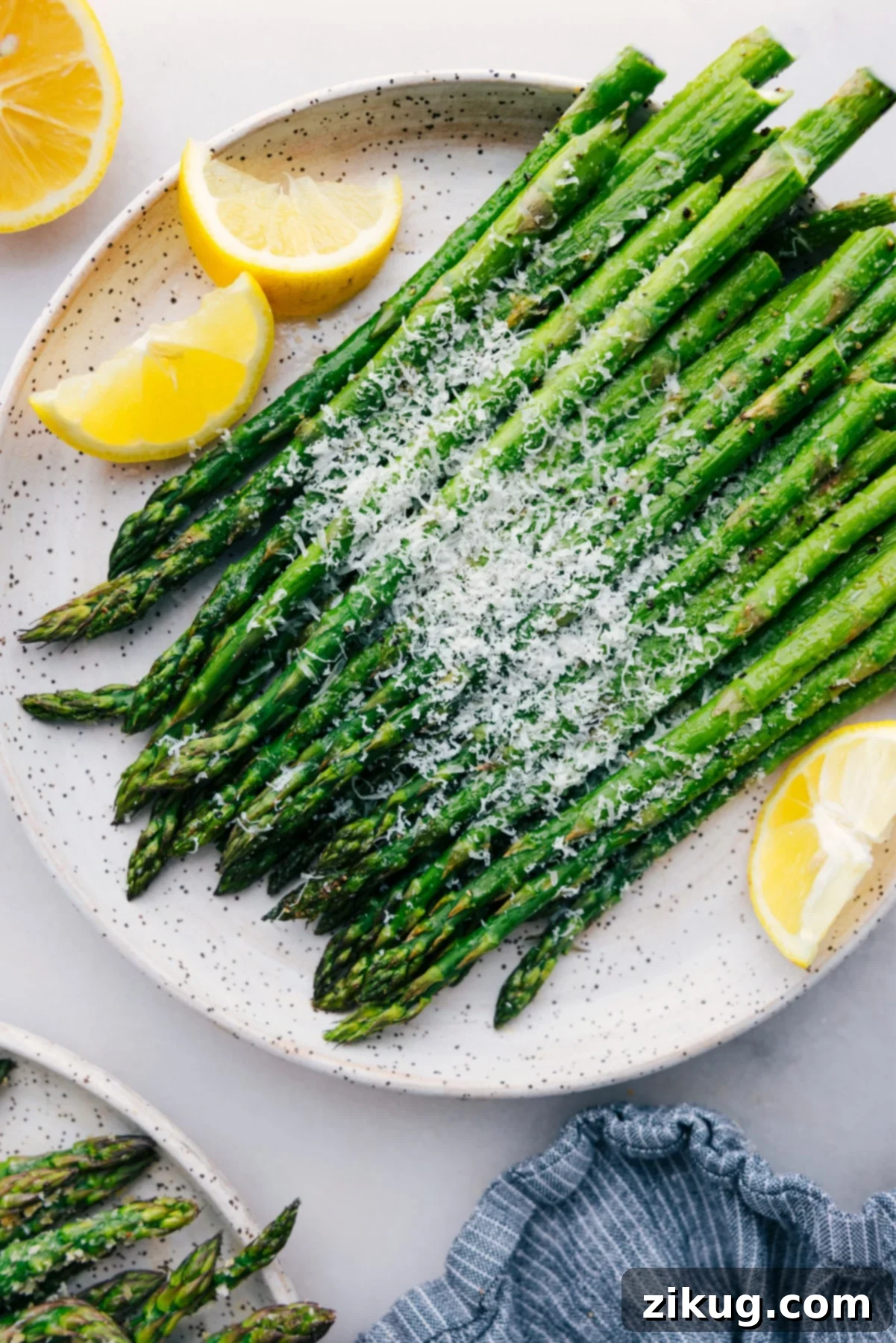
Roasted Asparagus is an incredibly quick, vibrant, and flavorful side dish that elevates any meal. This comprehensive guide will show you how to prepare perfectly tender-crisp asparagus, whether you prefer the classic preparation or a delightful crispy version with a satisfying crunch.
Elevate your dinner table by serving this delicious asparagus alongside refreshing Citrus Salad, rich and creamy Mashed Potatoes, or sweet and savory Roasted Carrots for an unforgettable side dish ensemble.
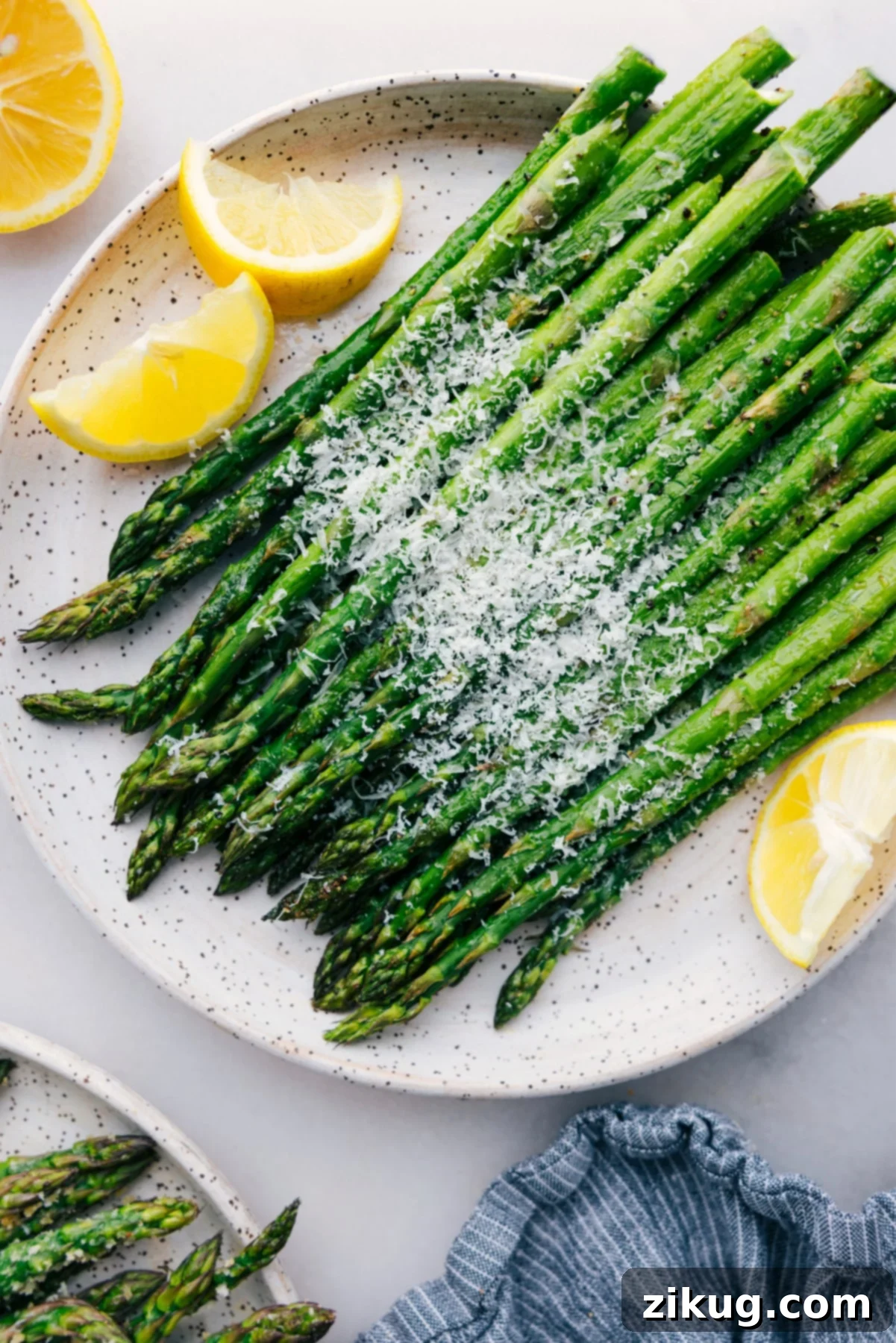
The Best Roasted Asparagus Recipe: A Culinary Delight
Asparagus holds a special place in my heart as one of the most versatile and delicious vegetables. Its distinct flavor and delightful texture make it a fantastic addition to countless meals, transforming a simple dish into something extraordinary. Beyond being a wonderful ingredient, roasted asparagus truly shines as a standalone side, particularly for festive occasions like Easter dinner or any holiday feast. When you’re serving a hearty, meat-centric meal, the addition of vibrant, oven-roasted asparagus provides a refreshing and balanced contrast that brightens the entire plate.
Some of my personal favorite ways to incorporate this beloved veggie include this hearty One-Pan Sausage and Veggies, a light and refreshing Asparagus Salad, or this vibrant One-Pan Lemon Chicken with Asparagus. The incredible taste is just one reason to love this recipe; another major perk is how unbelievably fast it cooks! In less than 15 minutes, you can have a gourmet-quality side dish ready to impress.
Why Roasting is the Ultimate Method for Asparagus
While asparagus can be steamed, boiled, or grilled, roasting stands out as the superior cooking method. When you roast asparagus at a high temperature, it undergoes a magical transformation. The dry heat caramelizes its natural sugars, intensifying its earthy flavor and creating a beautifully crisp exterior while maintaining a tender, succulent interior. This process not only brings out the best in the asparagus but also prevents it from becoming soggy or bland, a common pitfall with other cooking techniques. The result is a vibrant green vegetable bursting with flavor and an irresistible texture that’s simply unmatched.
Key Ingredients for Perfect Oven Roasted Asparagus
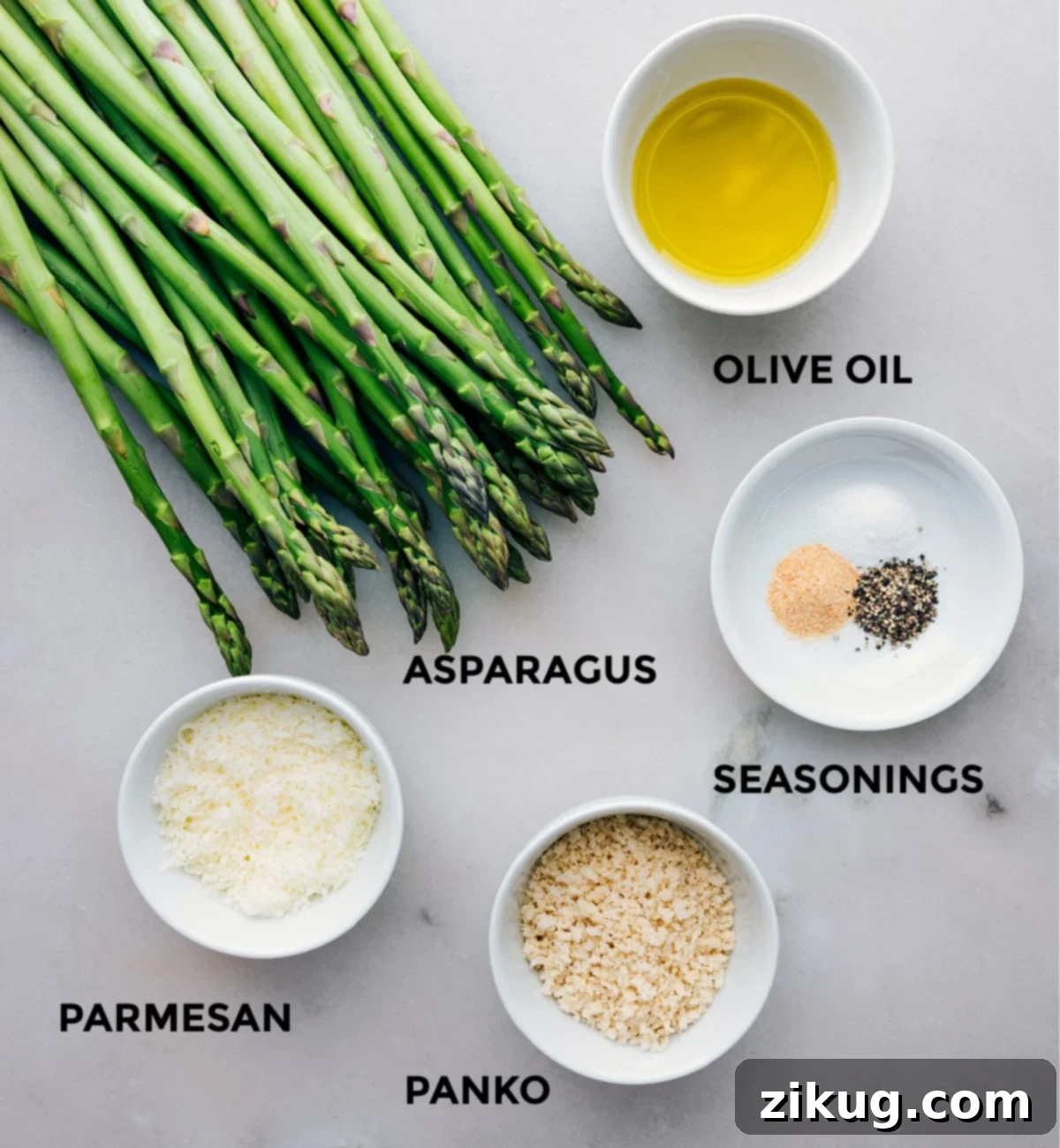
Achieving perfectly roasted asparagus requires just a few simple, high-quality ingredients. Here’s what you’ll need and how to select the best of each:
- Asparagus: The star of the show! When selecting asparagus, look for firm, straight spears with closed, vibrant green tips. Avoid any with wilted or dull-looking ends. Thinner stems tend to be sweeter and more delicate, while thicker spears offer a meatier bite. Both work wonderfully for roasting, just note that thicker spears might require an extra minute or two of cooking. Aim for consistency in thickness for even cooking.
- Olive Oil: A good quality olive oil is essential here. It not only helps the seasonings adhere to the asparagus but also facilitates even roasting, promoting that desired crispness and golden-brown finish. Extra virgin olive oil adds a lovely peppery note. You can also use avocado oil for a neutral flavor and high smoke point.
- Seasonings: We keep it simple yet impactful with salt, black pepper, and garlic powder. This trio enhances the natural flavors of the asparagus without overpowering it. Feel free to experiment with other additions like onion powder, a pinch of red pepper flakes for a subtle kick, or dried herbs like oregano or thyme.
- Breadcrumbs (optional): For that extra layer of crispiness and a golden-brown texture, breadcrumbs are a fantastic addition. Panko breadcrumbs, in particular, provide an incredibly light and airy crunch. Any type of breadcrumb will work, however, if you’re looking for that signature crispy coating.
- Parmesan Cheese (optional): Freshly grated Parmesan cheese melts beautifully, creating a rich, salty, and savory crust on the asparagus. For the best flavor and texture, always choose a block of Parmesan and grate it yourself, rather than using pre-grated varieties which often contain anti-caking agents.
Quick Tip for Asparagus Storage
To keep fresh asparagus at its prime, trim about an inch off the bottom of the spears. Then, stand them upright in a glass or jar with about an inch of water at the bottom. Cover the tips loosely with a plastic bag and refrigerate for up to 6 days. This method helps maintain their freshness and crispness, ensuring they’re ready for roasting.
Mastering Asparagus Prep for Optimal Roasting
Proper preparation is key to achieving perfectly roasted asparagus. Follow these simple steps for the best results:
- Rinse and Dry Thoroughly: Begin by rinsing the asparagus spears under cold running water to remove any dirt. The most crucial step for crispy roasted asparagus is to dry it completely. Roll the spears vigorously between clean kitchen towels or use a salad spinner to ensure every drop of moisture is removed. Wet asparagus will steam instead of roast, leading to a soggy texture.
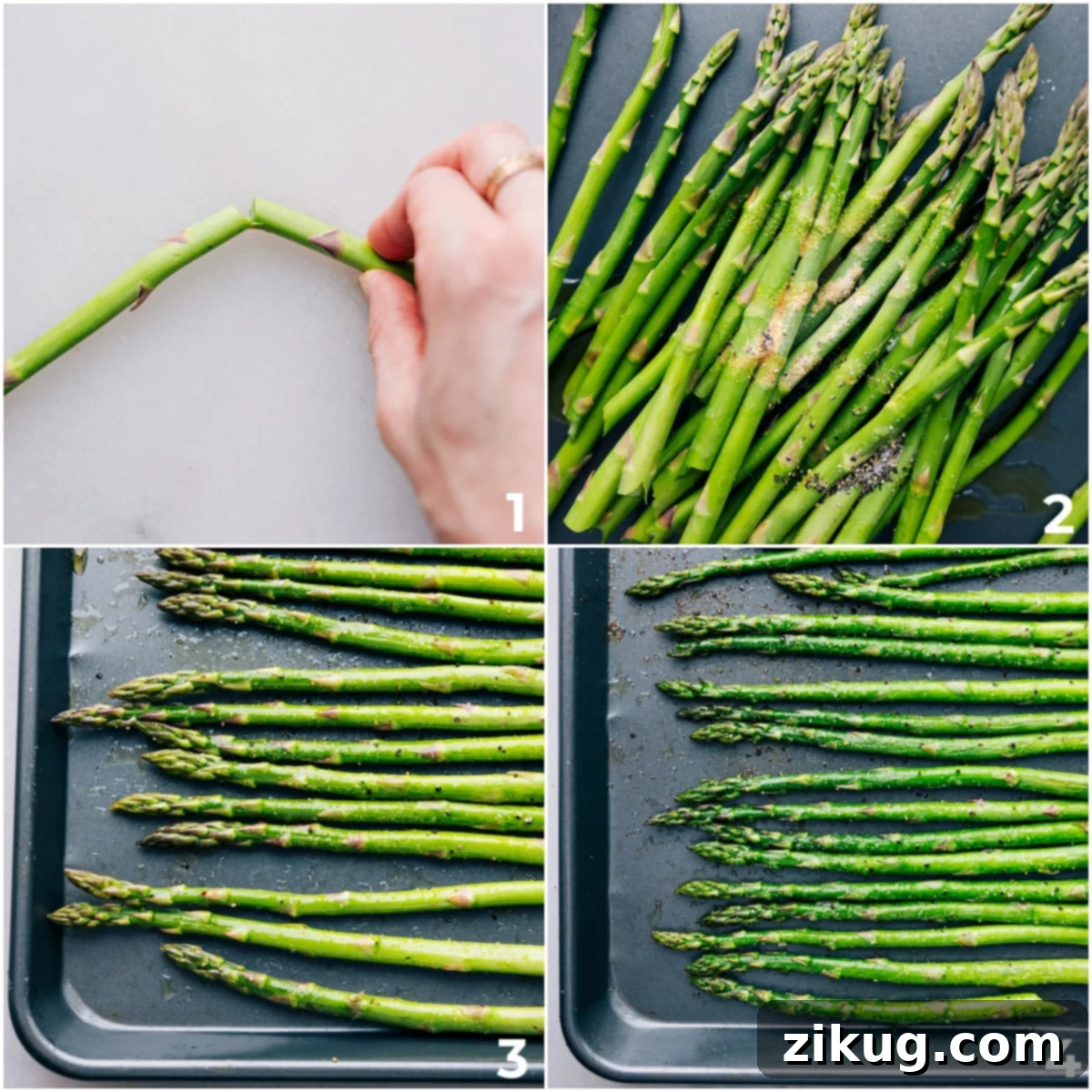
- Trim the Woody Ends: Asparagus spears naturally have tough, woody ends that are unpleasant to eat. To find the natural breaking point, hold a single spear with one hand near the bottom and the other hand near the middle.
- Bend and Snap: Gently bend the spear until it snaps. It will naturally break at the point where the tender green stalk meets the tougher, woody end. This method is usually more effective than cutting, as it ensures you only remove the inedible portion.
- Discard Tough Ends: Discard the snapped-off woody ends and keep the tender green tops for cooking. If you have very long spears, you might consider cutting them into smaller, more manageable pieces (e.g., 2-inch segments) after trimming, especially if serving as part of a stir-fry or salad. However, for a classic side, whole spears are ideal.
Quick Tip: Asparagus Size Matters
Since asparagus spears can vary significantly in thickness, rely less on strict timing and more on visual cues and tenderness when checking for doneness. Thinner spears will cook faster than thicker ones. Keep an eye on them throughout the roasting process to prevent overcooking.
Step-by-Step Guide: How to Roast Asparagus Perfectly
Roasting asparagus is incredibly straightforward and yields fantastic results every time. Here’s how to do it:
- Preheat Your Oven: Start by preheating your oven to 425°F (220°C). A hot oven is essential for achieving that desirable crisp-tender texture and caramelization. Place a large sheet pan in the oven while it preheats to get it nice and hot; this helps create a sear on the asparagus as soon as it touches the pan.
- Prepare the Asparagus: Rinse your asparagus under cold water and ensure it’s completely dry. Snap off the woody ends as described in the prepping section above.
- Season Generously: Once prepped, arrange the dry asparagus spears on the hot baking sheet. Drizzle them generously with olive oil, then sprinkle evenly with salt, black pepper, and garlic powder. Use your hands to toss everything together, ensuring each spear is thoroughly coated in oil and seasonings.
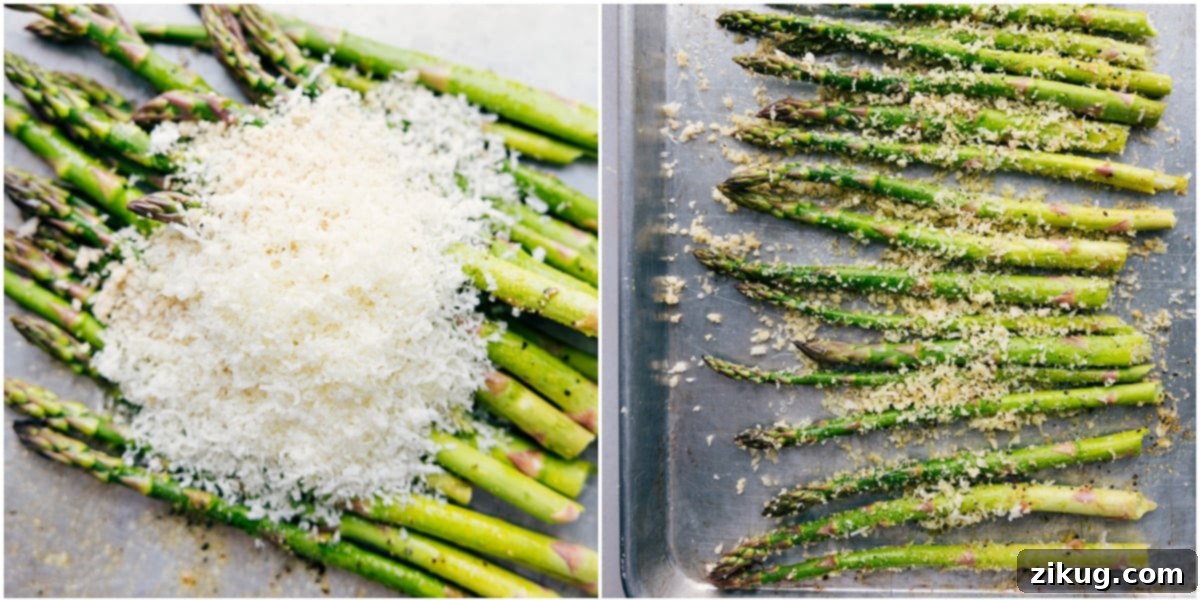
- Add Toppings (Optional, for crispy version): If you’re opting for the extra crispy version, now is the time to add your breadcrumbs and grated Parmesan cheese. Sprinkle them over the asparagus and toss gently again, making sure the toppings adhere. It’s okay if some of the breadcrumb mixture falls onto the pan; it will toast up nicely and can be scattered over the cooked asparagus later.
- Arrange in a Single Layer: Spread the seasoned asparagus in a single layer across the baking sheet. It’s crucial that the spears do not overlap or overcrowd the pan. Overcrowding causes the asparagus to steam instead of roast, resulting in a soggy texture. If you have a large batch, use two baking sheets.
- Roast to Perfection: Bake for 7-11 minutes. The cooking time will vary depending on the thickness of your asparagus spears and your oven’s calibration. Thinner spears will be ready closer to 7 minutes, while thicker ones might need up to 11 minutes. Roast until the asparagus is tender when pierced with a fork, lightly browned, and the cheese (if using) has melted and is slightly golden.
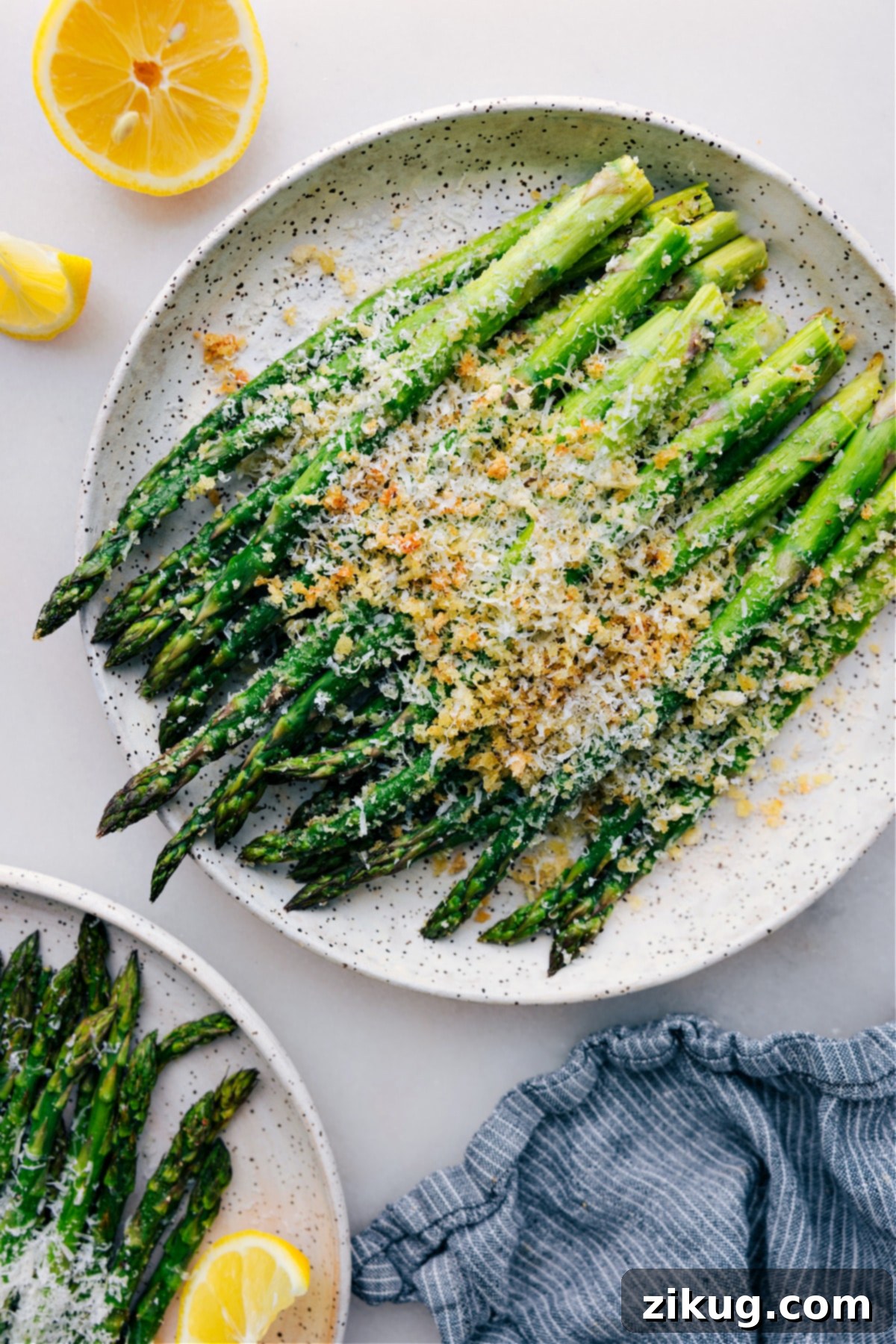
- Serve Immediately: As soon as the asparagus is done, remove it from the oven. Transfer the roasted spears to a serving plate. If you used breadcrumbs and Parmesan, scrape any toasted bits from the baking sheet and scatter them over the asparagus for extra flavor and crunch. If you opted for the classic preparation, a final squeeze of fresh lemon juice brightens the flavors beautifully. A sprinkle of fresh Parmesan also pairs wonderfully with lemon. Enjoy your perfectly roasted asparagus hot from the oven!
Roasted Asparagus Troubleshooting & FAQs
How to Tell When Asparagus is Perfectly Cooked?
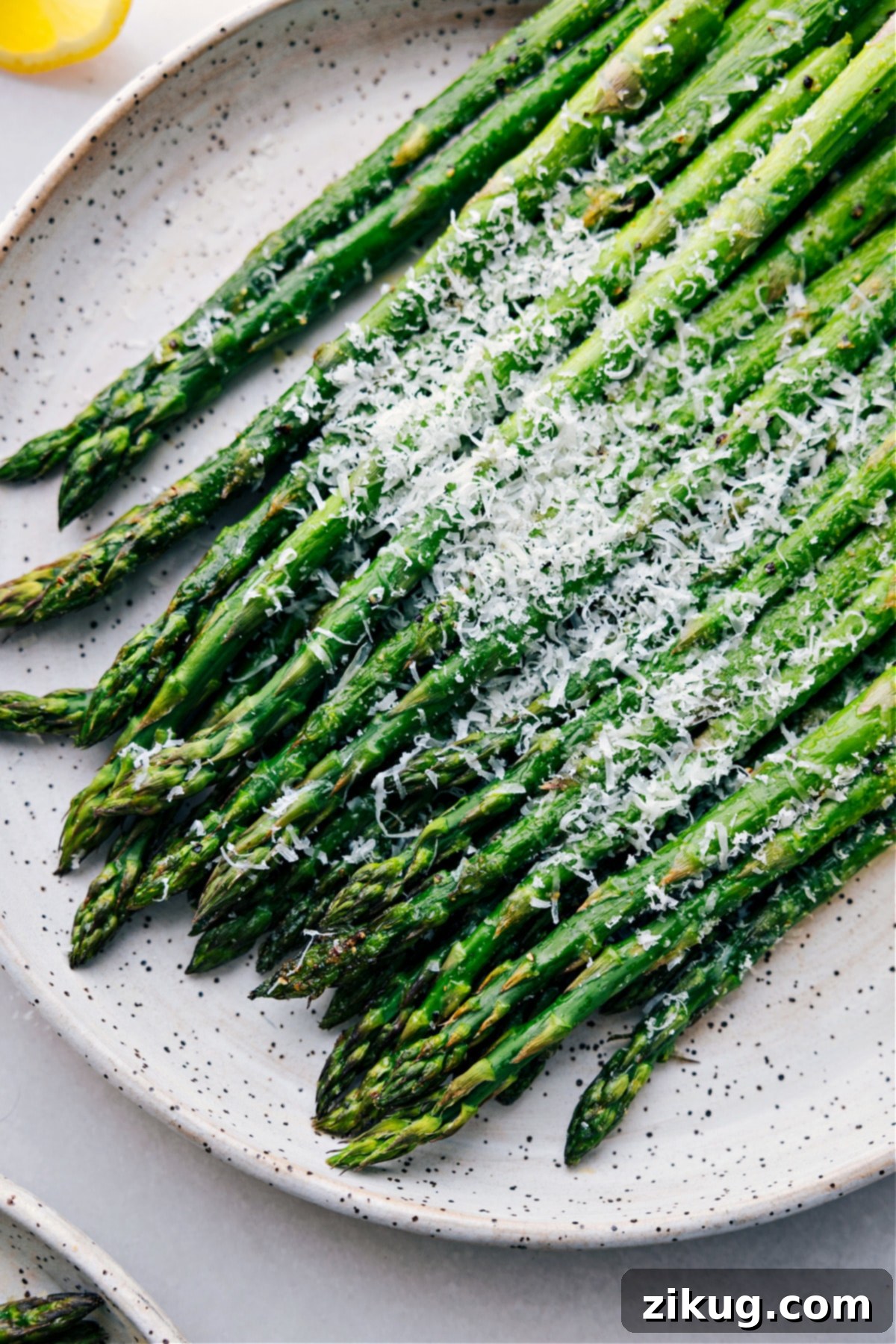
Perfectly roasted asparagus should be bright green, slightly crisp on the outside, and tender-crisp on the inside. You can check for doneness by gently poking a spear with a fork; it should yield with a slight resistance but not be mushy. Alternatively, taste a spear! If it’s too hard or crunchy, it needs more time. If it’s limp and soft, it’s likely overcooked. The ideal texture is a pleasant bite with a tender interior.
Why is My Oven Roasted Asparagus Soggy?
Soggy asparagus is a common issue, but it’s easily preventable. Here are the main culprits and how to avoid them:
- Overcrowding the Pan: This is the most frequent reason. If asparagus spears are too close together, they release moisture, which turns into steam instead of roasting. Always spread them in a single layer with enough space between each spear. Use two baking sheets if necessary.
- Too Much Oil: While oil helps with browning, excessive oil can lead to a greasy, limp result. Drizzle just enough to lightly coat the spears.
- Wet Asparagus: Any residual moisture on the asparagus will cause it to steam. Always dry the spears thoroughly after rinsing.
- Overcooking: Even perfectly spaced and dry asparagus can become soggy if left in the oven for too long. Keep an eye on the cooking time and test for doneness frequently.
- Low Heat: Roasting at too low a temperature won’t provide the intense heat needed for proper caramelization and crisping. Ensure your oven is fully preheated to 425°F (220°C).
Essential Tips for Perfectly Roasted Asparagus Every Time
Follow these expert tips to ensure your roasted asparagus turns out perfectly delicious and tender-crisp:
- Preheat Thoroughly: Always allow your oven to fully preheat to 425°F (220°C) before adding the asparagus. For an even better sear, place your baking sheet in the oven during preheating.
- Don’t Overcrowd the Pan: This is paramount for roasting, not steaming. Use a large sheet pan (15″ x 21″ is ideal) and spread the asparagus in a single layer with space between each spear. If preparing a large quantity, use two pans.
- Freshly Grated Parmesan: If using Parmesan, grate it yourself from a block with a small grater or microplane. This yields a finer texture that melts more evenly and creates a superior crust compared to pre-shredded cheese.
- Even Coating is Key: Ensure every asparagus spear is uniformly coated with olive oil and seasonings. This promotes even cooking and consistent flavor distribution.
- Monitor Cooking Time: Asparagus spears vary in thickness, so cooking times are approximate. Watch closely, especially towards the end of the cooking process. Test for doneness by piercing with a fork or tasting a spear.
- Add a Splash of Acid: A squeeze of fresh lemon juice after roasting instantly brightens the flavor of the asparagus, adding a lovely zesty finish. This is especially recommended for the classic preparation without breadcrumbs.
- Consider a Convection Oven: If your oven has a convection setting, use it! Convection baking circulates hot air, resulting in even crispier and more uniformly cooked asparagus in slightly less time.
Storage and Reheating
What to do with Leftover Roasted Asparagus?
While roasted asparagus is undoubtedly best enjoyed fresh, hot from the oven, you can store leftovers if necessary. Be aware that it will soften considerably upon storage, losing much of its crispness. If you need to store it:
- Allow the roasted asparagus to cool completely to room temperature.
- Transfer it to an airtight container.
- Refrigerate for up to 3 days.
- To reheat, gently warm in a dry skillet over medium heat for a few minutes, or in the oven at 350°F (175°C) until just warmed through. Avoid microwaving, as this can make it even softer. Leftovers are also great chopped and added to salads, omelets, or pasta dishes.
Delicious Pairings: What To Serve With Roasted Asparagus
Roasted asparagus is a versatile side dish that complements a wide array of main courses. Its fresh, earthy flavor and tender-crisp texture make it a perfect companion for both light and hearty meals. Here are some fantastic ideas for what to serve alongside your perfectly roasted asparagus:
- Shepherd’s Pie: A comforting, savory meat and vegetable pie that beautifully contrasts with the fresh asparagus.
- Crock Pot Roast: The rich, slow-cooked flavors of pot roast are perfectly balanced by the vibrant green of roasted asparagus.
- Bruschetta Chicken: A delightful spring meal featuring fresh basil and tomatoes, made even better with a side of asparagus.
- Baked Ziti with Chicken: A hearty, cheesy comfort food classic that welcomes a fresh vegetable accompaniment.
- Stuffed Shells: Simple to make and incredibly satisfying, these pasta shells are enhanced by the addition of roasted asparagus.
- Grilled Salmon or White Fish: The delicate flavors of fish pair wonderfully with the bright taste of asparagus, creating a healthy and light meal.
- Lemon Herb Roasted Chicken: Complementing the asparagus with similar flavor profiles like lemon and herbs creates a cohesive and delicious dinner.
- Steak or Lamb Chops: For a more indulgent meal, asparagus cuts through the richness of red meat, offering a refreshing counterpoint.
- Quiches or Frittatas: Add roasted asparagus to your breakfast or brunch spread for a touch of elegance and extra nutrition.

Roasted Asparagus Recipe
Video
Video instructions available for this recipe.
Equipment
-
Large sheet pan (15″ x 21″) for roasting
Ingredients
- 1 pound asparagus
- 1-1/2 tablespoons olive oil
- 1/4 teaspoon salt
- 1/4 teaspoon pepper
- 1/4 teaspoon garlic powder
- Toppings as desired see note 1
Instructions
-
Preheat oven to 425°F (220°C). Set out a large sheet pan.
-
Rinse asparagus under cold water and dry completely (you can quickly dry them by rolling the spears between two kitchen towels). Break off the woody ends by bending each spear until it snaps naturally.
-
Arrange asparagus on the sheet pan. Drizzle with olive oil, then add salt, pepper, and garlic powder. Toss with hands to coat evenly.
-
If using, evenly sprinkle the panko (see note 2) and Parmesan (see note 3) over the asparagus, then toss gently to coat.
-
Spread the asparagus in a single layer on the sheet, ensuring they are not overlapping. It’s okay if some of the panko/Parmesan mixture falls onto the pan.
-
Bake for 7-11 minutes, or until asparagus is tender, lightly browned, and cheese has melted. Cooking time may vary based on the thickness of the spears.
-
Transfer asparagus to a serving plate. Scatter any toasted breadcrumb bits from the tray over the spears. If not using the panko mixture, drizzle freshly squeezed lemon juice over the asparagus before serving. A sprinkle of Parmesan also goes nicely with lemon.
-
Enjoy immediately while hot.
Recipe Notes
- Option 1: 1 large lemon (2 tbsp juice) plus freshly grated Parmesan cheese (2–4 tbsps)
- Option 2: 1/4 cup of each: panko breadcrumbs and freshly grated Parmesan cheese
Note 2: Panko breadcrumbs add an amazing crispy texture, but regular breadcrumbs can also be used. Panko can typically be found in the Japanese cuisine section or near regular breadcrumbs in grocery stores.
Note 3: If using, grab Parmesan from the block and grate it with a fine grater for the best texture.
Storage: Keep cooled asparagus in an airtight container in the fridge for up to 3 days, though it’s best enjoyed right away!
Nutrition
Nutrition information is automatically calculated, so should only be used as an approximation.