
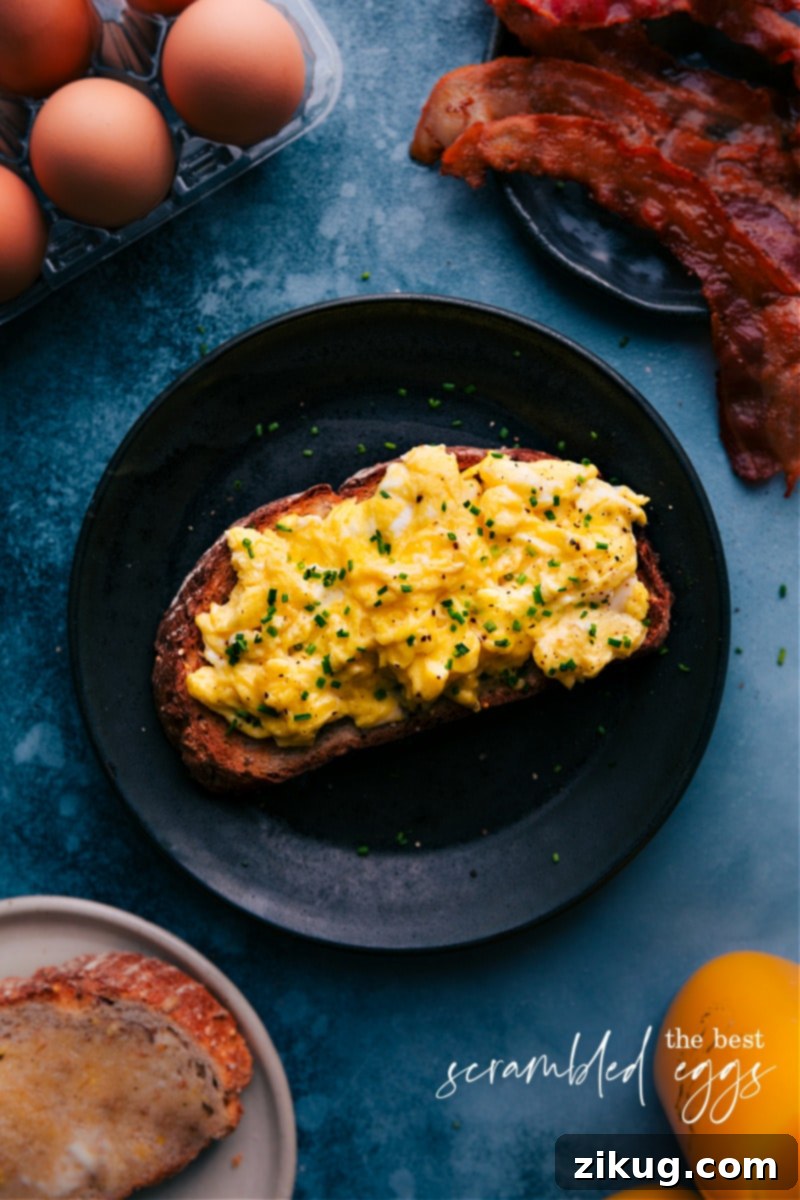
Master the art of perfect **Scrambled Eggs** with this foolproof recipe. Elevate your breakfast with a simple technique that guarantees creamy, custardy eggs every single time. Get ready for a morning meal that will have everyone reaching for seconds!
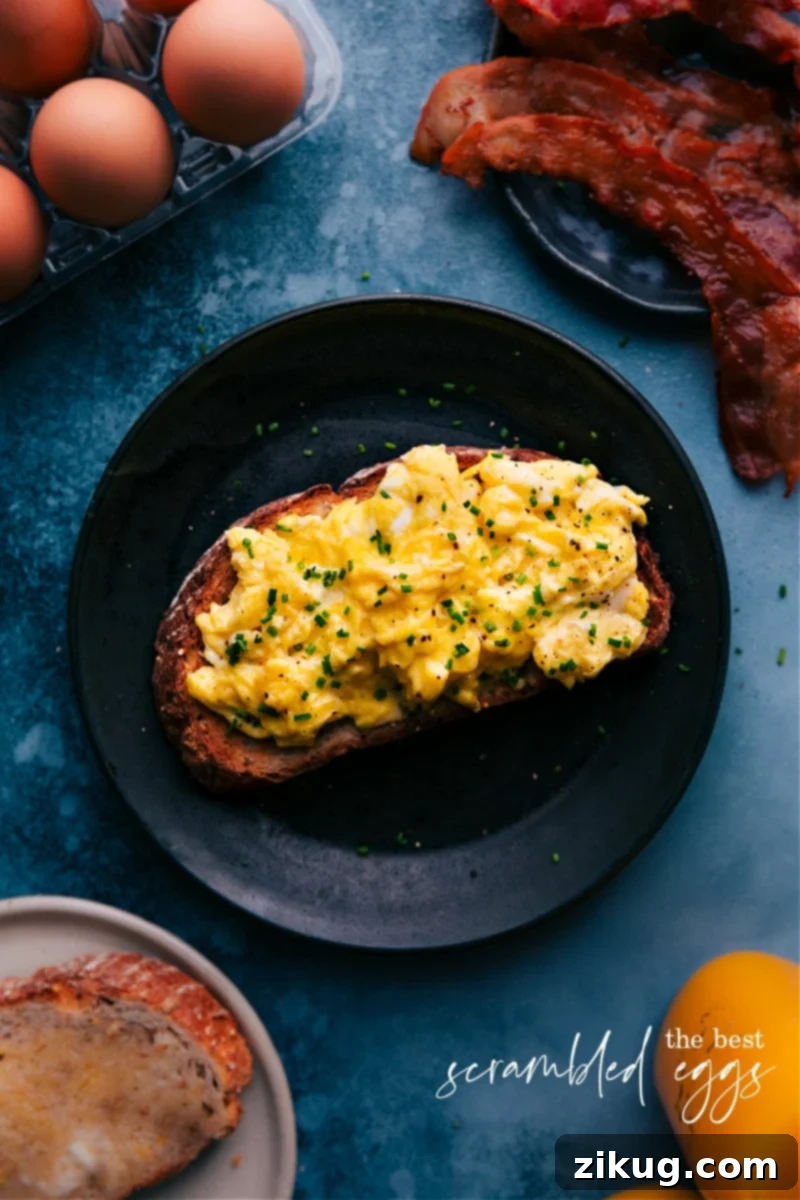

author’s note
Fluffy, Custardy Eggs: A Breakfast Worth Waking Up For!
In our home, scrambled eggs, often paired with fluffy pancakes, are the undisputed champions of breakfast. I prepare them almost daily for my children, and while eggs can sometimes fall flat, this recipe is a complete game-changer. It’s not just about the ingredients; it’s the transformative technique that elevates them from ordinary to extraordinary.
My secret? A simple silicone spatula and a patient, gentle cooking method. I slowly push and fold the eggs as they set, allowing the uncooked liquid to flow underneath and cook gradually. This creates exquisite, soft curds that are incredibly creamy, light, yet surprisingly rich. The result is a pile of eggs so delightful, they’re practically custardy.
My kids can’t get enough of these, and I love knowing they’re starting their day with a wholesome, satisfying, and utterly delicious meal. Whether it’s a frantic weekday morning or a leisurely weekend brunch, these perfect scrambled eggs consistently hit the spot, bringing smiles to everyone at the table.
The Secret to Perfectly Creamy Scrambled Eggs
Achieving consistently creamy, custardy scrambled eggs might seem like a culinary enigma, but the truth lies in a few simple, yet crucial, techniques. This isn’t just about mixing eggs and tossing them into a hot pan; it’s about understanding how heat and movement interact to create that coveted delicate texture. Many recipes focus solely on ingredients, but here, the method takes center stage. By mastering the art of gentle cooking, you can transform humble eggs into a luxurious breakfast delight.
The key principle is slow cooking over medium-low heat. High heat causes eggs to set too quickly, resulting in rubbery, dry curds. Instead, a lower temperature allows for a gradual coagulation, creating smaller, softer curds that retain moisture. Coupled with constant, gentle agitation using a silicone spatula, this process ensures every bite is rich and tender. We’ll delve deeper into this technique in the instructions, but remember: patience and a soft touch are your best allies for achieving scrambled egg perfection.
Essential Ingredients for the Best Scrambled Eggs
Crafting the perfect plate of scrambled eggs begins with quality ingredients. While the technique is paramount, selecting fresh components will enhance flavor and texture. Here’s a detailed look at what you’ll need:
| Ingredient | Tips for Flavor & Texture |
|---|---|
| Eggs | For superior taste and a vibrant yolk color, opt for free-range or organic large eggs. Their richness significantly contributes to the final custardy texture. However, any large eggs you have on hand will work wonderfully. Aim for freshness for the best results. |
| Milk | Whole milk is my preferred choice as it adds a remarkable richness and helps achieve that incredibly creamy texture. For an even more indulgent experience, you can swap it with heavy cream – just a tablespoon or so will make a noticeable difference. If you’re looking for lighter alternatives, feel free to use 2% milk, almond milk, or even a splash of water, though these may slightly alter the final texture. |
| Salt & Pepper | These are non-negotiable for seasoning. Always season your eggs to taste. I recommend adding a pinch of salt and pepper to the egg mixture before cooking, then adjusting with additional seasoning once cooked if needed. Freshly ground black pepper offers a superior aroma and flavor. |
| Unsalted Butter | Butter is crucial for both flavor and preventing sticking. Unsalted butter allows you to control the overall sodium content of your dish. If unsalted isn’t available, reduce the amount of salt you add to the eggs. For those who prefer alternatives, ghee or a high-quality olive oil can be used, but butter truly lends that classic rich flavor. |
| Fresh Chives | While optional, a sprinkle of finely chopped fresh chives after cooking adds a lovely pop of color and a delicate, oniony freshness that brightens the dish. If chives aren’t available, fresh parsley or thinly sliced green onions make excellent substitutes. |
| Hot Sauce | Completely optional, but if you enjoy a little heat, a dash of your favorite hot sauce is a fantastic way to add a zesty kick to your finished scrambled eggs. Serve it on the side so everyone can customize their plate. |
Quick Tip: Why Whisk Your Egg Mixture Thoroughly?
Whisking the egg mixture vigorously before it hits the pan is a vital step for achieving consistent texture and flavor. This process ensures that the milk, salt, and pepper are evenly distributed throughout the eggs, preventing bland spots. More importantly, whisking incorporates air, which contributes significantly to a fluffier, lighter, and more voluminous scramble. Don’t just stir; whisk until the mixture is uniform in color and slightly frothy.
How To Make The Best Scrambled Eggs: Essential Tips for Success
Beyond the ingredients, it’s the technique that transforms simple eggs into a creamy, custardy masterpiece. Follow these expert tips to ensure your scrambled eggs are perfect every time:
- Choose the Right Pan: A high-quality nonstick pan is your best friend for scrambled eggs, preventing sticking and ensuring easy cleanup. A well-seasoned cast iron skillet can also work wonders. For fewer eggs (like 2-4), a smaller 8-inch pan is ideal, while a larger 10 or 12-inch pan is better for cooking more eggs simultaneously. Using the correct size ensures even cooking without overcrowding.
- Master Heat Control: This is arguably the most crucial tip. Always cook your scrambled eggs over medium-low heat. High heat will cook the eggs too quickly, making them dry, rubbery, and potentially browned. Low and slow is the mantra for soft, tender, and custardy curds. Patience is key here.
- Whisk Eggs Thoroughly: Before hitting the pan, whisk your eggs, milk, salt, and pepper vigorously until the mixture is uniformly yellow and slightly frothy. This incorporates air, which contributes to a lighter texture, and ensures the seasonings are evenly distributed throughout. Don’t be shy with the whisking!
- Utilize a Silicone Spatula: A flexible silicone spatula is the ideal tool. Its soft edge won’t scratch your nonstick pan, and it’s perfect for the gentle pushing and folding technique. Avoid harsh stirring or scrambling aggressively in circles; instead, use long, deliberate strokes to push the cooked egg from the edges towards the center, allowing the raw egg to flow underneath. This creates those beautiful, soft folds.
- Remove from Heat Early: Scrambled eggs continue to cook even after they’re removed from the heat due to residual warmth in the pan. To prevent overcooking, take them off the stove when they still appear slightly underdone and moist, with a little shine. A few extra gentle folds in the warm pan will finish them off perfectly, leaving them wonderfully creamy.
- Serve Immediately: For the absolute best texture and flavor, scrambled eggs should be enjoyed moments after they’re cooked. Their delicate structure and creaminess diminish quickly upon sitting, so have your plates, garnishes, and accompanying breakfast items ready to go!
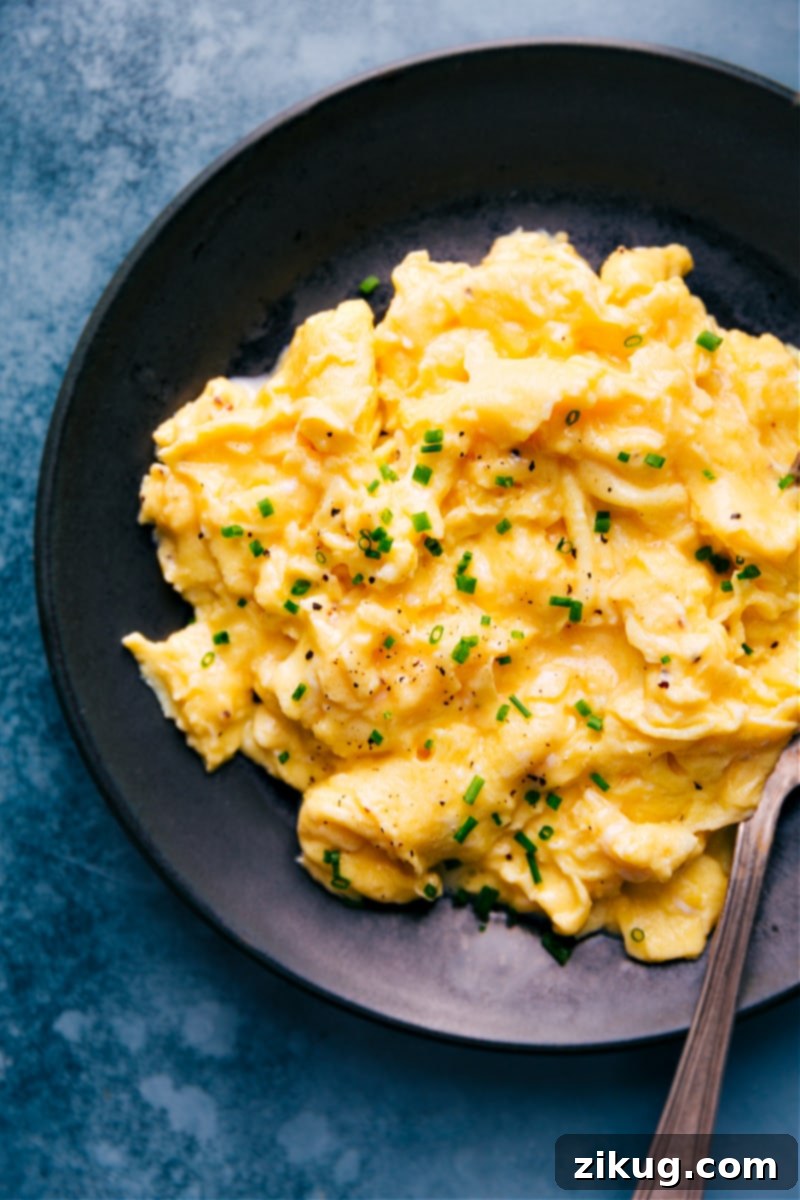
How To Know When Scrambled Eggs Are Perfectly Done
Scrambled eggs cook surprisingly fast, so vigilance is vital! The goal is a soft, creamy, and custardy texture, not a dry or rubbery one. Pay close attention to these visual cues to ensure perfection:
- Hold Their Shape: Your eggs are done when they begin to pile up and hold their shape in the pan, forming soft, moist curds. They shouldn’t be runny or overly stiff.
- No Raw Egg Leaking: Critically, there shouldn’t be any liquid raw egg seeping around the edges of the cooked curds. All the egg should appear set, even if still very tender.
- Slightly Shiny Surface: The surface of the eggs should maintain a subtle sheen, indicating they are still beautifully moist and haven’t dried out. Avoid cooking until they look completely matte or dull. This slight gloss is a hallmark of perfectly cooked, creamy scrambled eggs.
Storage and Reheating Tips
Scrambled eggs are undeniably at their peak when served immediately after cooking, offering the most delightful creamy and moist texture. Unfortunately, they tend to dry out and lose their luxurious consistency if stored for extended periods. The best practice is always to cook them fresh.
However, if you find yourself with leftovers, you can store them in an airtight container in the refrigerator for up to 1-2 days. For reheating, gently warm them in a nonstick skillet over very low heat, adding a tiny splash of milk or butter to help revive some moisture. Stir gently, but be aware that they will not regain their original custardy texture.
Make A Whole Breakfast Spread!
While these scrambled eggs are fantastic on their own, they truly shine when part of a larger breakfast or brunch spread. Here are some delicious ideas to complement your perfect scramble:
- Crispy Toast or Bagels: Serve your eggs alongside or on top of toasted whole wheat, sourdough, or rye bread. A toasted bagel with cream cheese and eggs is also a fantastic combination.
- Salty Meats: Enhance your meal with classic breakfast meats. Add crispy baked bacon, savory sausage links, or flavorful ham for extra protein and a contrasting texture.
- Hearty Vegetables: Incorporate some greens and colors into your plate. Sautéed or roasted bell peppers, mushrooms, zucchini, or fresh spinach are wonderful additions. You can even fold them into the eggs during the last minute of cooking.
- Creamy Avocado: A slice of ripe avocado or a dollop of fresh guacamole adds healthy fats and a smooth texture. Consider making avocado toast and topping it with your fluffy scrambled eggs for a gourmet touch.
- Golden Potatoes: For a truly filling breakfast, pair your eggs with crispy home fries, hash browns, or flavorful skillet breakfast potatoes.
- Cheese & Herbs: Fold in a sprinkle of shredded cheddar, Monterey Jack, or Gruyere cheese during the last stage of cooking for extra creaminess. Fresh herbs like dill, cilantro, or a touch of oregano can also add depth.
- Salsa or Ketchup: For those who love a tangy or spicy kick, a spoonful of fresh salsa or a drizzle of ketchup can complete the dish.
More Delicious Breakfast Recipes:
Breakfast
The BEST Crepes Recipe
Pancakes And Waffles
Banana Waffle Recipe
Breakfast
Hearty Oatmeal Breakfast Bars
Dinner
Sausage and Potatoes Skillet Meal

Print Recipe
The Ultimate Creamy Scrambled Eggs
Video
Learn visually how to make these incredible scrambled eggs! This video demonstrates the easy-to-follow steps, simple ingredients, and the unique technique that guarantees a delicious, creamy, and custardy mound of eggs every time. Get ready for a breakfast that will have everyone at the table asking for seconds!
Watch the Scrambled Eggs Recipe Video Here
Equipment
- Large nonstick pan (or a well-seasoned cast-iron pan; see Note 1 below for details on choosing the right size)
Ingredients
- 4 large eggs (for best flavor, consider free-range organic eggs; see Note 2)
- 2 tablespoons milk (whole milk is recommended for texture, or use 1½ tablespoons heavy cream for extra richness!)
- Salt and freshly ground pepper, to taste
- 1 tablespoon unsalted butter
- Fresh chives for garnishing (optional, but adds a lovely freshness and color)
- Hot sauce (optional, for a delightful kick!)
Instructions
-
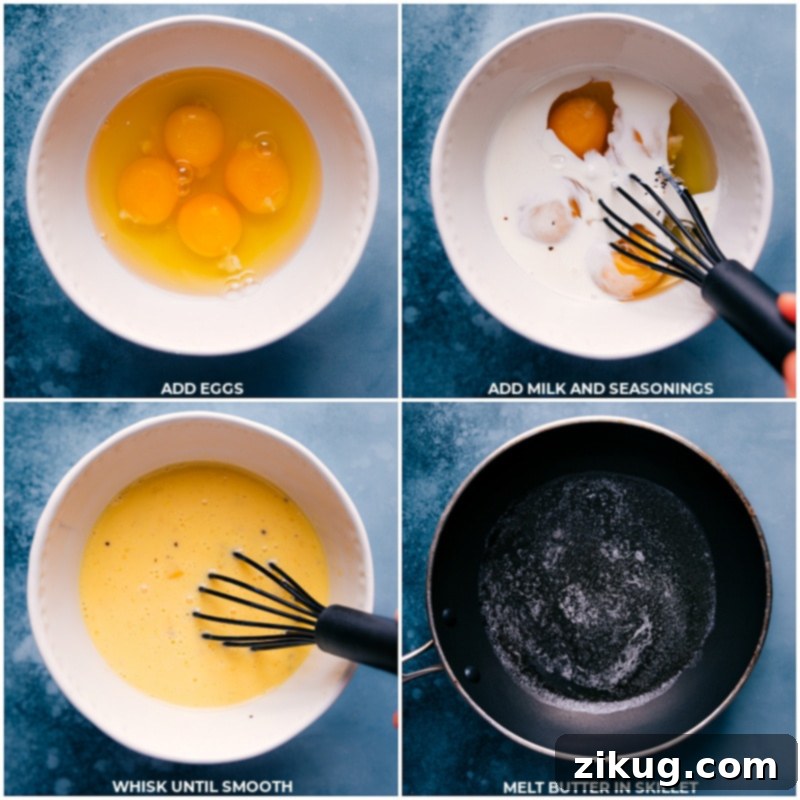
In a medium bowl, combine the eggs and milk. Season with salt and pepper to taste (I typically start with 1/4 teaspoon of salt and a tiny pinch of pepper). Briskly whisk the mixture until it appears uniform in color and slightly frothy, ensuring all ingredients are well combined and air is incorporated.
-
Place a nonstick pan over medium heat. Add the unsalted butter and allow it to melt completely, swirling the pan to ensure the entire surface is coated. Once the butter is melted and slightly foamy, reduce the heat to medium-low. This controlled heat is critical for creamy eggs.
-
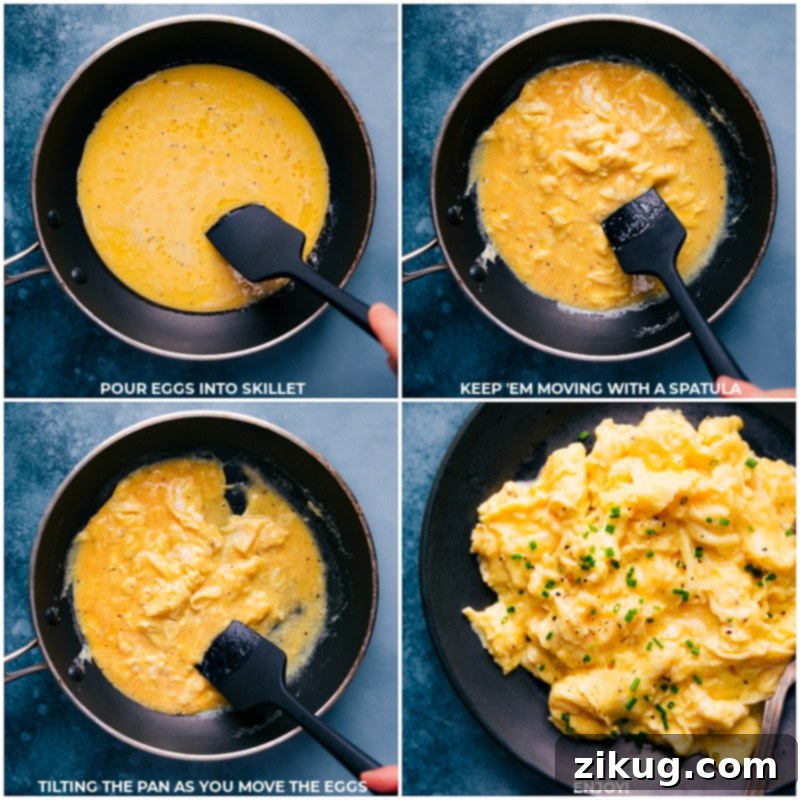
Pour the whisked egg mixture into the warmed pan. Let it sit undisturbed for about 5–10 seconds, allowing the edges to just begin setting. Using a silicone spatula, gently push the cooked edges of the eggs from one side of the skillet to the other, allowing the uncooked liquid egg to flow underneath the forming curds. Continue this gentle pushing and folding motion, pressing the developing curds to one side and swirling the pan to bring more uncooked egg into contact with the hot surface. Repeat these gentle strokes until the eggs appear beautifully custardy, soft, and moist.
Remove the pan from the heat while the eggs still look slightly underdone and visibly moist. Continue to gently fold the eggs in the warm pan for another 10 seconds. The residual heat will finish cooking them to perfect creaminess. You’ll know they are fully cooked when they form a soft pile that stays together, with no raw, runny egg leaking around the edges, and the surface still looks slightly shiny, indicating moisture.
-
Immediately transfer the creamy scrambled eggs to serving plates. Garnish with fresh chives, if desired, for a burst of color and herbaceous flavor. Serve and savor this ultimate breakfast delight!
Recipe Notes
Note 2: Egg Quality: While any eggs will work, for the finest flavor and richer yolk color, I highly recommend using free-range or organic large eggs. Their superior quality significantly enhances the overall taste and texture of the scrambled eggs.
Storage & Reheating: For the best culinary experience, scrambled eggs should be enjoyed immediately after preparation. Their delicate texture tends to dry out and becomes less appealing upon storage and reheating. If necessary, store leftovers in an airtight container in the fridge for up to 1-2 days and reheat gently on low heat with a tiny splash of milk.
Nutrition Facts
Nutrition information is automatically calculated and should be used as an approximation.
Scrambled Eggs FAQs
For the best possible taste and texture, scrambled eggs are truly at their peak when enjoyed fresh off the pan. Their creamy consistency starts to diminish quickly. While you *can* prepare them a little ahead, they won’t be as good as freshly made. If you absolutely must, keep them covered in the fridge for a short period and reheat gently on low heat in a skillet with a tiny pat of butter or splash of milk to restore some moisture. Avoid microwaving, as it tends to make them rubbery.
Preventing sticky scrambled eggs involves two main factors: your pan and your fat. Always use a high-quality nonstick skillet or a very well-seasoned cast iron pan. Secondly, ensure you add enough butter (or oil) to generously coat the cooking surface, and make sure it’s properly heated before adding your egg mixture. Reduce the heat to medium-low immediately after adding the eggs to prevent scorching.
Scrambled eggs are incredibly versatile! You can easily boost their flavor and nutritional value by adding a variety of ingredients. Try finely diced bell peppers, sautéed onions, mushrooms, or fresh spinach folded in during the last minute of cooking. For a cheesy delight, sprinkle in some shredded cheddar, Gruyère, or feta cheese. Fresh herbs like dill, cilantro, or parsley also add a wonderful aromatic touch. You can also mix in cooked meats such as crumbled bacon or sausage. For extra richness, a tiny bit of cream cheese or crème fraîche can be folded in. Don’t forget toppings like salsa, hot sauce, or a dollop of sour cream for an extra layer of flavor!
Rubbery or dry scrambled eggs are usually a result of overcooking or cooking at too high a temperature. Eggs cook very quickly, and high heat causes the proteins to seize up, squeezing out moisture and creating a tough texture. To avoid this, always cook your eggs over medium-low heat, use a gentle pushing and folding motion, and remove them from the heat when they still look slightly underdone and moist. The residual heat will finish the cooking process to perfection.
Yes, you can use water instead of milk in scrambled eggs, and some chefs even prefer it. A small splash of water (about 1 teaspoon per egg) will create steam during cooking, which can make the eggs slightly fluffier. However, it won’t add the same richness or creamy texture that milk or cream provides. If you’re looking for extra creaminess, dairy is usually the better choice. If you prefer dairy-free, water or a plain plant-based milk substitute (like unsweetened almond milk) can work well.