
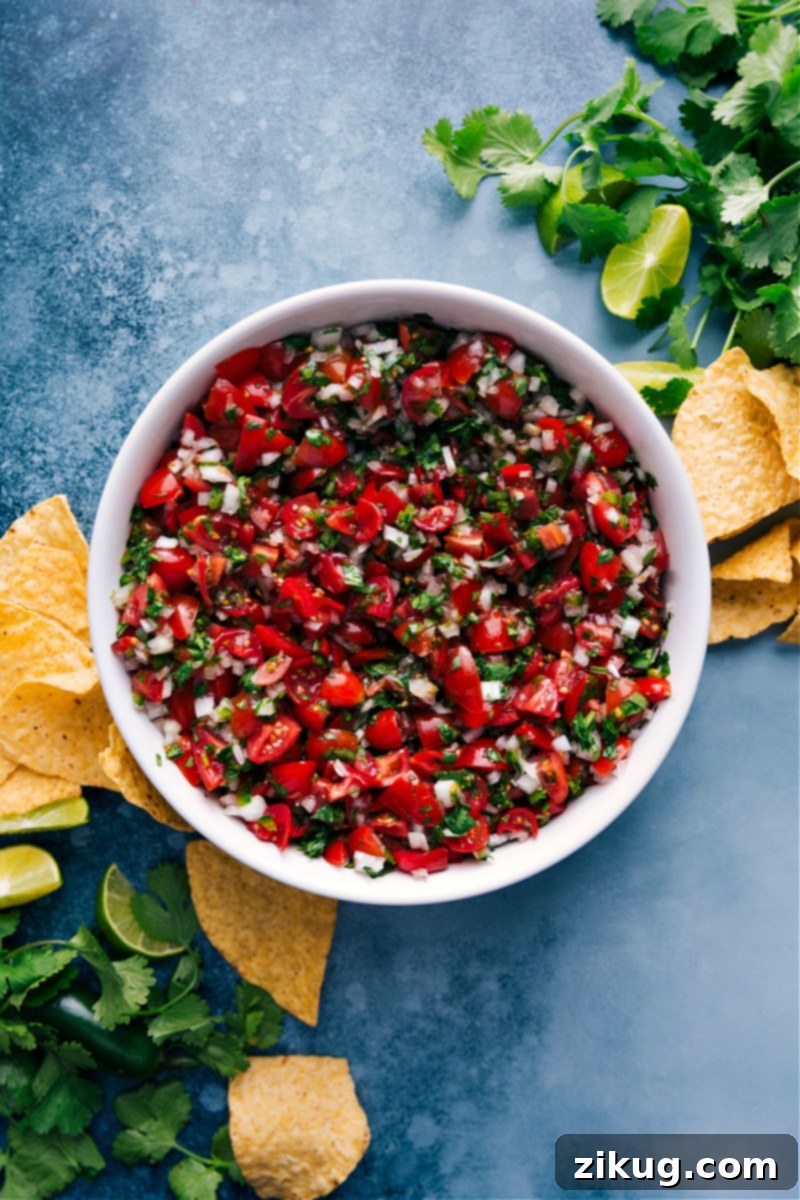
Embark on a culinary journey to create the most authentic and incredibly flavorful Pico de Gallo right in your own kitchen. This vibrant, fresh salsa, also known as Salsa Fresca or Salsa Cruda, is an absolute cornerstone of Mexican cuisine, celebrated for its simplicity and explosive taste. Combining the freshest tomatoes, crisp onions, spicy peppers, aromatic cilantro, and a zesty squeeze of lime, this chunky salsa is guaranteed to elevate any meal or stand proudly as a delightful dip on its own.
Quick Tip
For perfect pronunciation, say it like this: PEE-koh theh GAH-yoh.
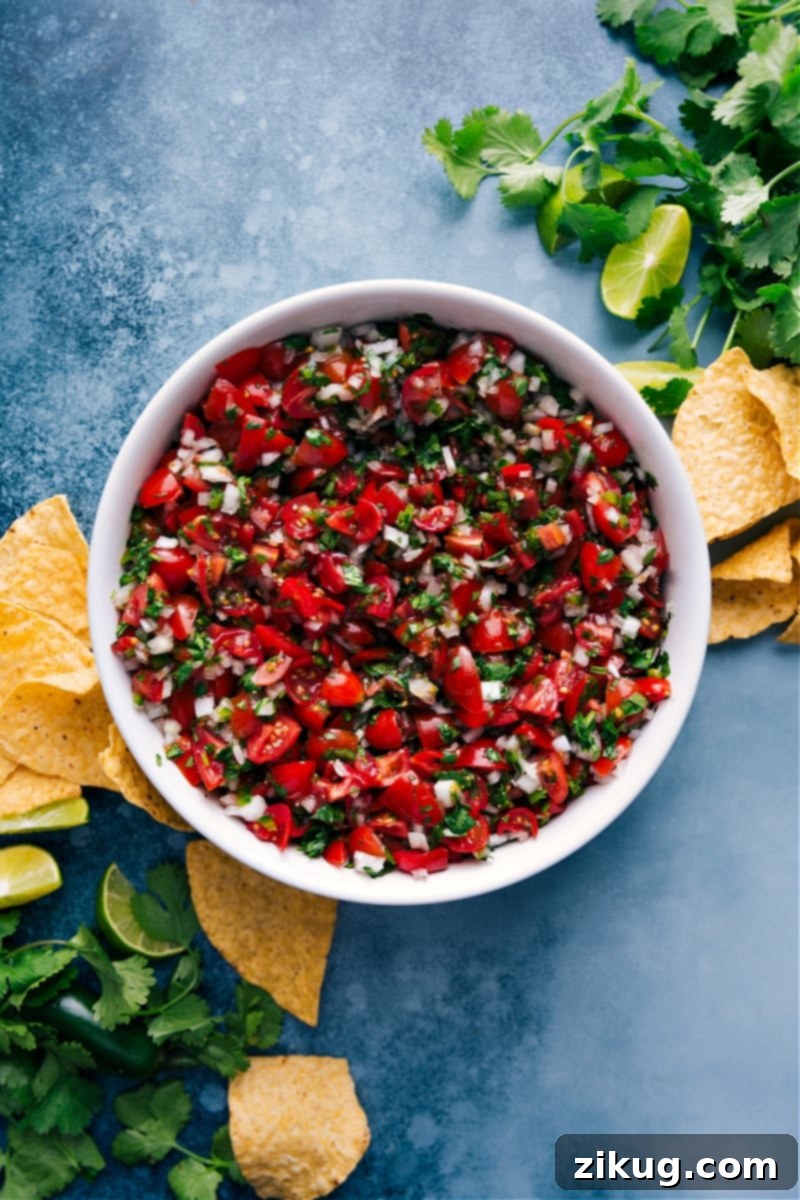
Pico de Gallo vs. Traditional Salsa: Understanding the Difference
While often used interchangeably, Pico de Gallo and traditional salsa (like a blended red salsa) possess distinct characteristics that set them apart. Both share many core ingredients, but their preparation methods and resulting textures are remarkably different, leading to varied culinary applications.
- Pico de Gallo is characterized by its reliance on raw, finely diced ingredients. The components are chopped into small, uniform pieces and then lightly tossed together, creating a substantial, chunky texture. It’s designed to be a fresh, uncooked mixture where each ingredient retains its individual integrity, offering a bright, crisp bite. This makes it an ideal topping or side dish where you want a noticeable texture and bursting fresh flavor.
- Traditional Salsa, on the other hand, typically involves ingredients that are often roasted, stewed, or cooked before being blended or mashed. This process results in a smoother, more liquid consistency, ranging from a slightly chunky puree to a very smooth sauce. The cooking process deepens and melds the flavors, creating a rich, often spicier, and more homogeneous experience. Traditional salsas are excellent for dipping chips, drenching enchiladas, or as a base for other sauces.
Understanding this fundamental difference helps appreciate the unique role each plays in Mexican cuisine. Pico de Gallo, with its garden-fresh appeal, offers a delightful contrast in texture and a burst of raw, vibrant flavor.
Is Pico de Gallo a Type of Salsa? Absolutely!
Yes, Pico de Gallo is indeed a variety of salsa, specifically categorized as a “salsa fresca” or “salsa cruda” – meaning “fresh salsa” or “raw salsa.” It stands as a testament to the beauty of uncooked ingredients, combining fresh vegetables and herbs into an unbelievably tasty, invigorating mixture. Its simplicity and natural flavors make it the perfect accompaniment to an endless array of Mexican meals, offering a refreshing counterpoint to richer dishes.
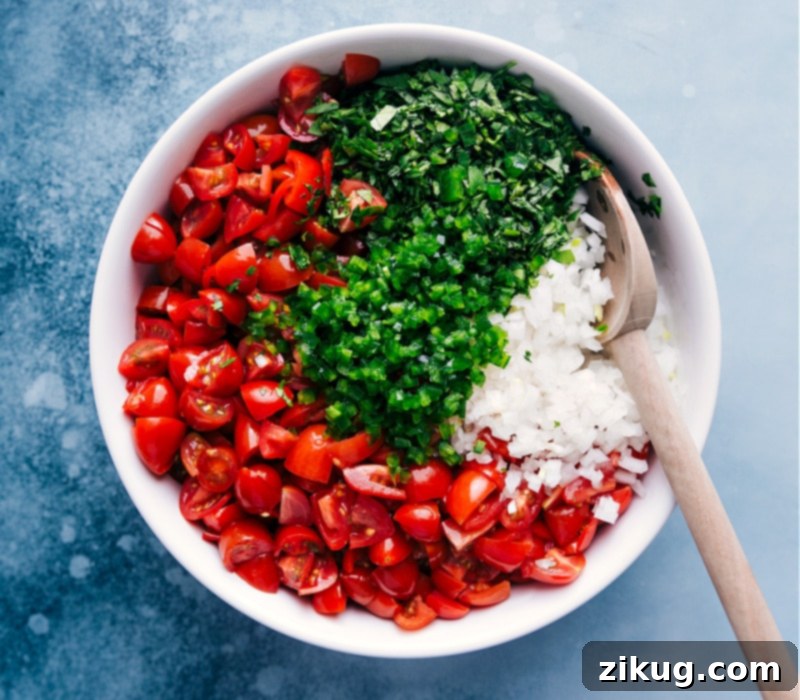
Crafting the Perfect Pico de Gallo: An Easy Guide
Creating homemade Pico de Gallo is a rewarding experience. While it requires a bit of time for chopping, the process itself is straightforward and the results are incredibly fresh and superior to any store-bought alternative. With a few key techniques and tips, you’ll be making restaurant-quality salsa fresca in no time.
Essential Tips for the Best Pico de Gallo:
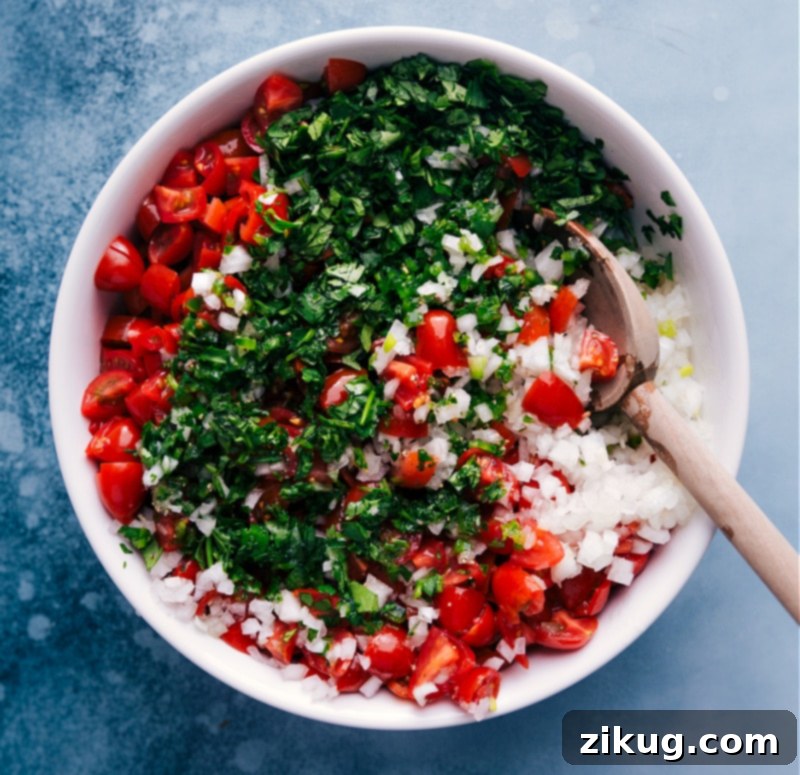
- Uniform Chopping is Key: To achieve the ideal texture and ensure a balanced flavor in every bite, aim to cut all your ingredients into similar, small dice. The finer the chop, the better the flavors will meld together and the more delightful the mouthfeel. This also helps with distribution of ingredients.
- Select Ripe Tomatoes: The heart of any great Pico de Gallo lies in its tomatoes. Choose the ripest, reddest, and most fragrant tomatoes you can find. Unripe or pale pink tomatoes will yield a watery, less flavorful salsa. During winter months when fresh garden tomatoes are scarce, robust cherry or grape tomatoes are an excellent alternative, offering consistent sweetness and flavor year-round. If using larger tomatoes, cutting them in half and scooping out the seeds and watery core before dicing will prevent your pico from becoming excessively watery.
- Allow Flavors to Meld: After mixing all your ingredients, resist the urge to serve immediately. Let the Pico de Gallo rest in the refrigerator for at least 10-15 minutes. This brief marination period allows the flavors to truly meld and deepen, transforming individual ingredients into a harmonious and more complex taste profile.
- Handle Jalapeños with Care: Jalapeños add a wonderful kick, but their oils (capsaicin) can cause a burning sensation on skin. It’s highly recommended to wear plastic gloves, or even a plastic bag over your hands, when dicing jalapeños. Always wash your hands thoroughly with soap and water immediately after handling them, and avoid touching your face, especially your eyes. For a milder pico, remove all seeds and white membranes; for more heat, leave some in. Consider tasting a tiny piece first to gauge its spice level before adding to the entire batch.
- Soak Your Onions: If you’re sensitive to the pungent bite of raw onion, a quick trick is to finely dice the onion and then soak it in a bowl of cold water for about 5-10 minutes. Drain it very well afterward. This simple step helps to mellow the raw onion flavor without sacrificing its crisp texture.
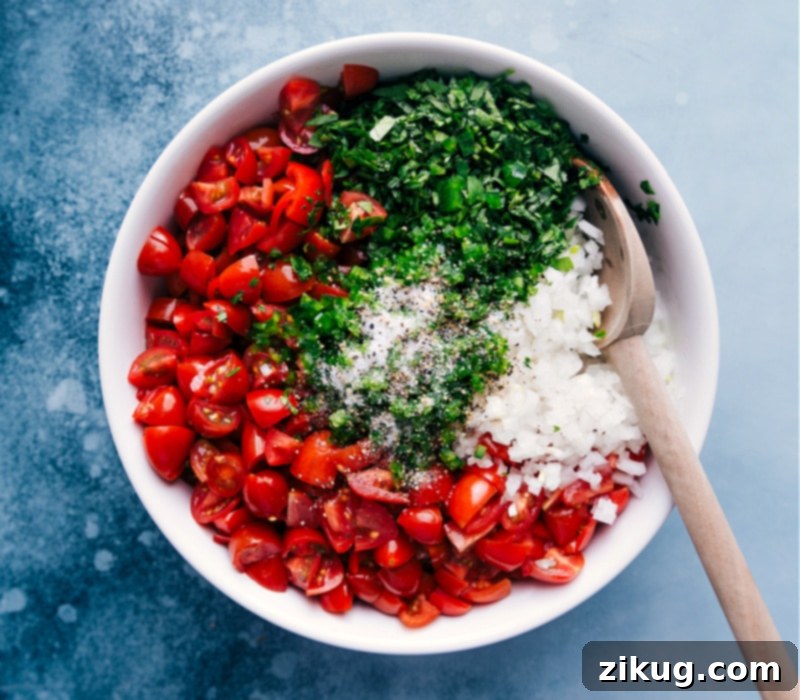
Serving Suggestions: Unleash the Versatility of Pico de Gallo
The beauty of Pico de Gallo lies in its incredible versatility. It’s not just a dip; it’s a vibrant condiment that brightens and freshens almost any dish. Of course, it’s absolutely delicious on its own, scooped up with a generous handful of your favorite tortilla chips. But its potential extends far beyond that!
Here are some of our favorite ways to enjoy a generous scoop of fresh pico:
- Elevate Mexican Classics: It’s a perfect topping for Ground Beef Quesadillas, French Bread Taco Pizza, Loaded Taco Fries, or Totchos (and classic Nachos!).
- Taco Tuesday Essential: No taco night is complete without Pico de Gallo! It pairs wonderfully with Beef Tacos, Baked Chicken Tacos, Pinto Bean Tacos, or even fish tacos.
- Beyond Tacos: Spoon it over grilled chicken, fish, or steak for a light, flavorful meal. Add it to scrambled eggs or omelets for a breakfast with a kick. It’s also fantastic with Cafe Rio Sweet Pork.
- Simple Appetizer: A bowl of fresh pico with crisp tortilla chips is an instant crowd-pleaser for parties, game days, or casual get-togethers.
Serving Smart
Regardless of how you serve it, always present your bowl of Pico de Gallo with a slotted spoon. Tomatoes naturally release a significant amount of liquid, especially once salted, which will pool at the bottom of the bowl. A slotted spoon ensures you scoop up all the delicious, chunky ingredients, leaving behind any excess moisture for the perfect bite.
Creative Variations to Explore
Unlock New Flavors with These Pico de Gallo Variations
While the classic Pico de Gallo is perfect as is, it also serves as an excellent canvas for culinary creativity. Don’t be afraid to experiment and tailor it to your personal preferences or what’s fresh in season!
- Pico de Gallo with Avocado: For a creamy, rich twist, simply add one large, ripe avocado, diced to the same size as your tomatoes. Gently fold it in right before serving to prevent browning. This addition makes the pico even more substantial and satisfying. Alternatively, explore a dedicated Avocado Salsa recipe.
- Pico de Gallo without Lime: If you don’t have lime on hand or prefer a different acidic note, you can absolutely make Pico de Gallo without it. A splash of fresh lemon juice or even a touch of red wine vinegar can provide a similar tangy brightness, though the flavor profile will subtly change.
- Fruity Pico de Gallo: Remember, tomatoes are botanically fruits! This makes Pico de Gallo wonderfully adaptable to other fruit bases. Keeping the chopping principle the same, you can replace all or part of the tomatoes with other diced fruits for a sweet and savory salsa that’s perfect for grilling or lighter meals. Consider options like pineapple, mango, peaches, or even watermelon for a refreshing summer twist.
- Add More Veggies: Enhance the nutritional value and crunch by adding finely diced cucumber, bell peppers (red, yellow, or orange for color), or even corn kernels (fresh or roasted) to the mix.
- Spice It Up: For those who crave more heat, experiment with different chili peppers. Serrano peppers will provide a sharper, hotter kick, while a touch of finely minced habanero could deliver an intense, fruity heat.
Storage and Make-Ahead Tips
Keeping Your Pico de Gallo Fresh
Proper storage is essential to maintain the freshness and flavor of your homemade Pico de Gallo. While it’s always best enjoyed fresh, you can certainly prepare it in advance or store leftovers efficiently.
To Make Ahead: If you’re preparing Pico de Gallo several hours or even a day before serving, there’s a clever trick to keep it at its peak. Do not add the lime juice, olive oil (if using), and salt until just before you’re ready to serve. This is because salt, in particular, draws out moisture from the tomatoes, making the pico watery over time. Store the diced vegetables in an airtight container in the refrigerator. When it’s time to serve, drain off any excess liquid that might have accumulated, then mix in the fresh lime juice, olive oil, and salt. This method ensures maximum freshness and vibrant flavor.
Leftovers: Any leftover Pico de Gallo can be stored in an airtight container in the refrigerator for up to 3 days. It’s important to note that as it sits, the acidity of the lime juice will mellow, and the tomatoes will continue to release liquid. Therefore, before enjoying leftovers, you may want to drain off any accumulated excess liquid and add a fresh squeeze of lime juice and a touch more salt to revitalize the flavors. While safe to eat, the texture might become slightly softer, and the overall vibrancy less intense than when freshly made.
Explore More Fresh Salsa Recipes:
If you’ve enjoyed the fresh flavors of Pico de Gallo, you’ll love diving into these other fantastic salsa creations:
- Salsa Verde: Our go-to recipe for a bright, tangy, and versatile green salsa.
- Corn Salsa Recipe: A delightful blend with sweet corn and aromatic fresh herbs.
- Avocado-Orange Salsa: A simple yet sophisticated salsa featuring creamy avocado and segments of fresh orange.
- White Bean Salsa: A hearty and unique salsa enriched with sun-dried tomatoes.
- Easy Fruit Salsa Recipe: A sweet and refreshing salsa, perfectly paired with cinnamon sugar chips for a dessert-like experience.
Pico De Gallo: The Essential Fresh Salsa
Chelsea Lords
25 minutes
25 minutes
8 servings, as a side/topping
Video Overview
Watch a quick video guide to see how simple it is to prepare this delicious Pico de Gallo!
Equipment Needed
-
Medium-sized mixing bowl
-
Sharp Knife and Cutting Board
Ingredients
- 3/4 cup finely diced white onion (see note 1)
- 4-1/2 cups ripe tomatoes, diced (see note 2)
- 3 tablespoons finely diced jalapeño (seeds removed for less heat, see note 3)
- Juice of 2 fresh limes
- 1/2 cup finely chopped fresh cilantro
- Salt and freshly ground black pepper, to taste
- 1 tablespoon extra virgin olive oil (optional, adds richness)
Instructions
-
Prepare the Onion: If you are sensitive to raw onion, soak the finely diced white onion in a bowl of cold water for 5 minutes. This helps to mellow its sharp flavor. Drain thoroughly and add the onion to a medium mixing bowl.
-
Dice Remaining Ingredients: Prepare the tomatoes and jalapeños according to notes 2 and 3 below. Finely chop the cilantro. The key to excellent Pico de Gallo is cutting all ingredients into similar, small sizes for uniformity in texture and for optimal flavor blending.
-
Combine and Season: Add the diced tomatoes, jalapeño, and chopped cilantro to the bowl with the onion. Squeeze in the juice from 2 fresh limes (approximately 3 tablespoons). If using, add the optional tablespoon of olive oil. Season generously with salt and freshly ground black pepper. A good starting point is 3/4 teaspoon of salt and 1/4 teaspoon of pepper, but adjust to your personal preference.
-
Toss and Rest: Gently toss all the ingredients together until well combined. Taste and adjust seasonings as needed, adding more salt, pepper, or lime juice until the flavors sing! For best results, cover the bowl and chill in the refrigerator for 10-15 minutes before serving. This short rest allows the flavors to meld beautifully.
Pro Tip for Chips: If you plan to serve your Pico de Gallo with tortilla chips, test the salsa with a chip to determine if more salt is needed. Since many chips are already salted, you might find you need less salt in the pico itself.
-
Serve: Serve your fresh Pico de Gallo with a slotted spoon to leave behind any excess liquid. Enjoy it as a topping for your favorite Mexican dishes, as a vibrant side, or simply with a bag of crispy tortilla chips!
Recipe Notes
Note 2: Choosing and Preparing Tomatoes: The quality of your tomatoes is paramount for outstanding Pico de Gallo. Always select the ripest, reddest, and most fragrant tomatoes available. If cooking during the winter, opt for cherry or grape tomatoes, which tend to have a more consistent good flavor profile year-round. If using larger tomatoes (like Roma or Beefsteak), cut them in half and gently scoop out the watery seeds and pulp before dicing. This step prevents your pico from becoming too watery. If using cherry tomatoes, simply chop them into small, uniform pieces.
Note 3: Handling Jalapeños: Jalapeños contain oils that can irritate skin. It’s highly recommended to wear gloves (or even a plastic bag over your fingers) when dicing them. Always wash your hands thoroughly after handling. To prepare, cut the jalapeño in half lengthwise and remove the seeds and white membrane for a milder salsa. Coarsely chop the pepper to measure the desired amount. You can add more jalapeño for a spicier salsa, or introduce it slowly if you prefer less heat. A fun fact: wrinkly jalapeños often indicate more heat than smooth, firm ones!
Storage: Leftovers can be stored in an airtight container in the fridge for up to 3 days. Keep in mind that the longer it sits, the more the acidity will mellow and it will become more watery. Before serving leftovers, drain off any excess liquid and consider adding a fresh squeeze of lime juice and a touch more salt to revive the flavors.
Make Ahead: To prepare Pico de Gallo in advance, chop all vegetables but withhold the lime juice, olive oil, and salt. Store the diced mix in an airtight container in the fridge. This prevents excessive liquid from leaching out of the tomatoes. When you’re ready to serve, drain any accumulated liquid, then mix in the fresh lime juice, olive oil, and salt. This ensures maximum freshness and crispness.
Nutrition Information
Serving: 1 serving | Calories: 38kcal | Carbohydrates: 5.3g | Protein: 1g | Fat: 1.9g | Sodium: 296.1mg | Fiber: 1.4g | Sugar: 3g
Nutrition information is automatically calculated and should only be used as an approximation.
Enjoyed this recipe? Leave a comment below!
Share your thoughts and ratings – we’d love to hear from you!