
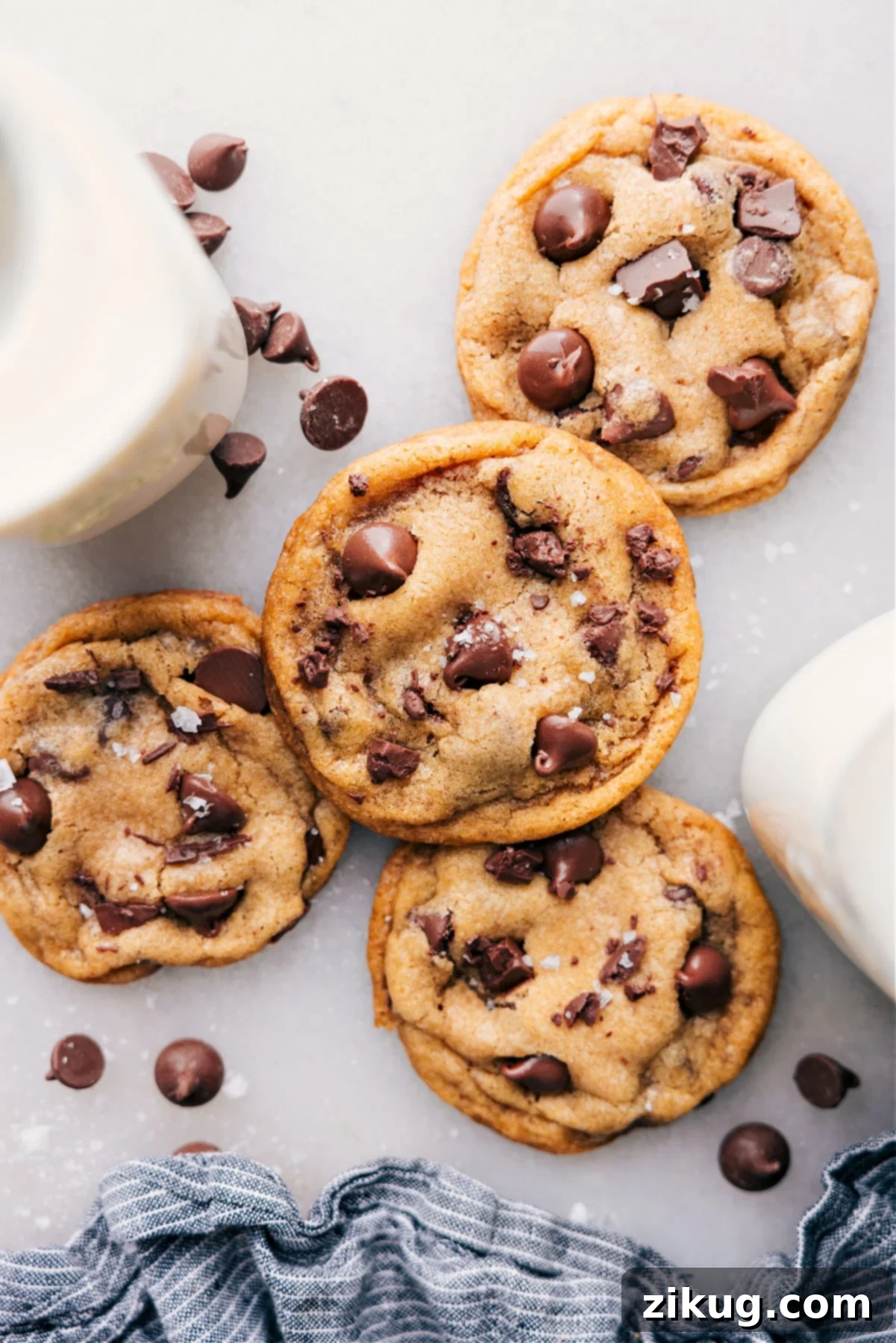
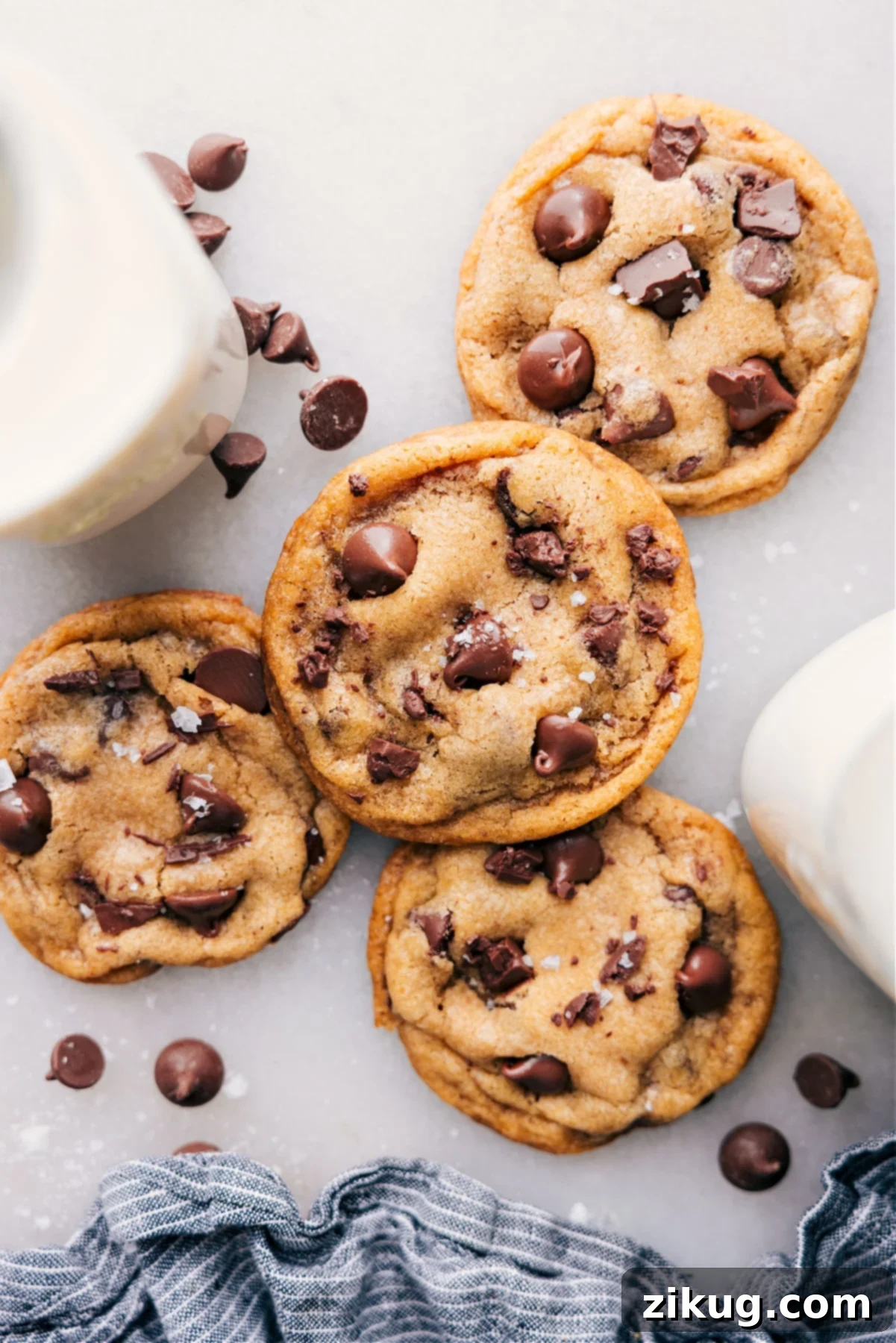
Coconut Oil Chocolate Chip Cookies are a true revelation, delivering that coveted combination of perfectly crunchy edges and an incredibly soft, wonderfully chewy center. If you’re searching for your new favorite chocolate chip cookie recipe, look no further – these will captivate your taste buds and leave you craving more.

author’s note
Coconut Oil Is The Secret Ingredient You’ve Been Missing!
For years, I’ve received countless inquiries about alternative fats for my classic chewy chocolate chip cookies. Among the most popular requests was using coconut oil. After extensive testing and delightful experimentation, I can confidently say that these coconut oil chocolate chip cookies are not just a substitution; they are a masterpiece deserving of their own spotlight!
If you’ve never ventured into baking with coconut oil, prepare for a truly delicious surprise. The subtle tropical notes and unique texture it imparts make these cookies stand out. Coconut oil doesn’t just contribute a rich flavor profile; it fundamentally transforms the cookie’s texture, giving it a chewiness that’s simply irresistible. Its distinct properties create that sought-after balance of crispy edges and a remarkably soft, melt-in-your-mouth interior.
Through countless batches, I’ve uncovered several key baking “secrets” and tips that ensure your coconut oil chocolate chip cookies turn out absolutely perfect every single time. Get ready to elevate your cookie game!
Essential Ingredients for Perfect Coconut Oil Chocolate Chip Cookies
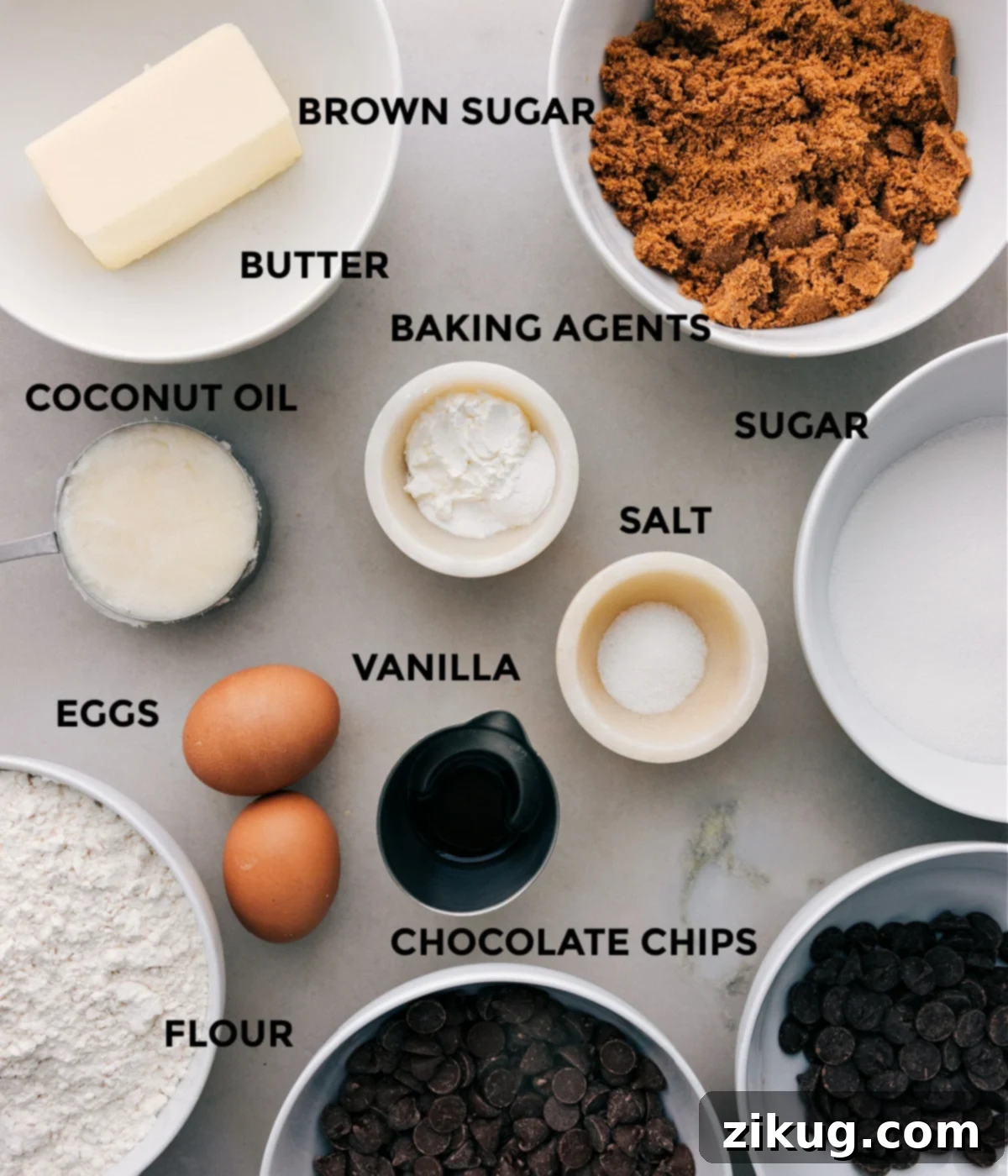
Crafting the perfect batch of coconut oil chocolate chip cookies starts with understanding each ingredient’s role. Here’s a detailed look at what makes these cookies so special:
| Ingredient | Why it matters for this recipe |
|---|---|
| Coconut Oil | The star of the show! Measure while solid for accuracy, then melt. It imparts a subtle, rich flavor and contributes to the cookies’ unique chewy texture. Use virgin coconut oil for a more pronounced coconut flavor, or refined for a neutral taste. |
| Unsalted Butter | Using unsalted butter gives you complete control over the salt content in your cookies. It adds richness and a traditional buttery flavor that beautifully complements the coconut oil. Ensure it’s melted and then cooled for optimal results. |
| Brown Sugar (Dark or Light) | Both light and dark brown sugars work, but I personally prefer dark brown sugar for its deeper molasses flavor and higher moisture content. This moisture is crucial for achieving that wonderfully chewy cookie texture. |
| Granulated Sugar | Paired with brown sugar, granulated sugar contributes to the crispness of the cookie edges, creating a delightful textural contrast. |
| Cornstarch | This unassuming ingredient is a game-changer! Cornstarch is the secret weapon for preventing cookies from spreading too thin and ensures a remarkably soft, tender, and chewy center. Don’t skip it! |
| Chocolate Chips | The ultimate customizable element! Feel free to use your favorite variety or, even better, combine different types. A mix of milk chocolate and dark chocolate chips offers a complex and satisfying chocolate experience. Semi-sweet or even white chocolate can also be delightful additions. |
| Eggs | Essential for binding the ingredients, providing structure, and adding richness. Using room temperature eggs helps them emulsify better with the fats and sugars, leading to a smoother, more uniform dough. |
| Vanilla Extract | A classic flavor enhancer that deepens the overall taste of the cookies, complementing both the coconut and chocolate notes. |
| Baking Soda & Baking Powder | These leavening agents work in harmony to give the cookies their lift and spread, contributing to the desired texture. Ensure they are fresh for maximum effectiveness. |
| Salt | Crucial for balancing sweetness and enhancing all the other flavors, particularly the chocolate. |
| All-Purpose Flour | The structural foundation of our cookies. Proper measurement and gentle mixing are key to avoiding tough cookies. |
Step-by-Step Guide: How to Make Irresistible Coconut Oil Chocolate Chip Cookies
While the full detailed instructions are available in the recipe card below, these expert tips and insights will ensure your baking journey is a success, resulting in truly spectacular coconut oil chocolate chip cookies every time!
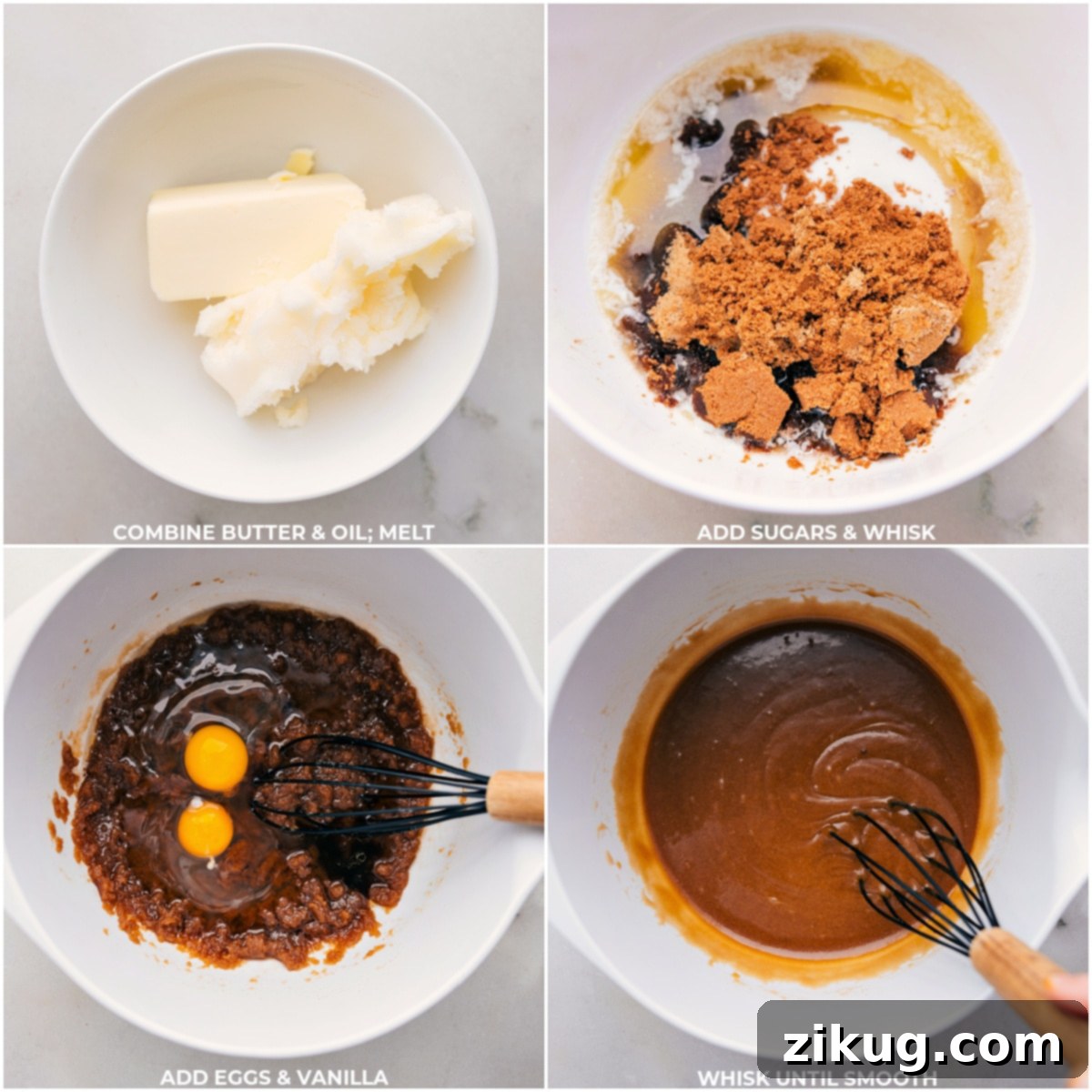
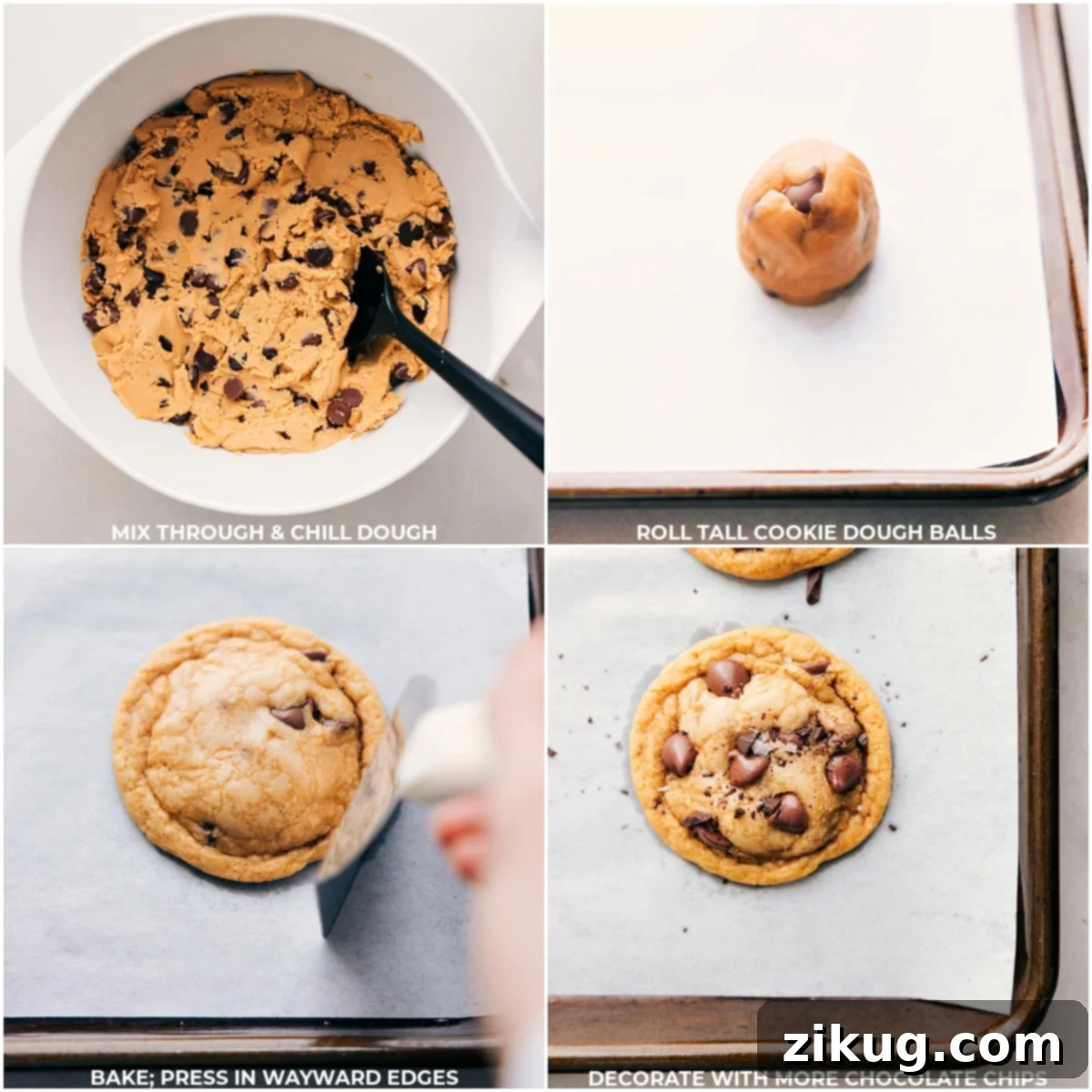
- Perfecting the Wet Ingredients: Begin by melting your coconut oil and butter together. It’s absolutely crucial to let this mixture cool to room temperature before combining it with the sugars and eggs. Adding hot fats can cook the eggs and lead to a greasy, flat cookie. Once cooled, vigorously whisk the melted fats with brown and granulated sugars until light and fluffy. This aeration process is key for texture. Finally, incorporate the vanilla extract and room-temperature eggs, whisking until the mixture is fully emulsified and smooth, with no visible oil separation.
- Integrating Dry Ingredients for Optimal Texture: Sift your baking soda, baking powder, and cornstarch directly into the wet ingredients along with the salt. Sifting helps prevent lumps and ensures even distribution, which is vital for a consistent rise and chewiness. Always check that your baking agents are fresh and active for the best results.
- The Art of Mixing in Flour: Once the dry leavening agents are mixed, gradually add the all-purpose flour. Switch to a wooden spoon or a low-speed mixer. The goal here is to mix *just until* there are no visible dry streaks of flour. Overmixing the flour develops too much gluten, which can lead to tough, dense cookies rather than the soft, chewy texture we’re aiming for. Gently fold in your chosen chocolate chips until they are evenly distributed throughout the dough.
- The Importance of Chilling the Dough: This step is non-negotiable for superior cookies. Chilling the dough for at least an hour (or even overnight) allows the fats to solidify, preventing excessive spreading during baking. More importantly, it gives the flour time to fully hydrate, resulting in a more tender crumb, and allows the flavors to meld and deepen, enhancing the overall taste. A chilled dough also makes for much easier handling and shaping.
- Baking to Golden Perfection: Preheat your oven to 350°F (175°C) and line your baking sheets. Scoop generous portions of the chilled dough into tall balls – roughly 2 heaping tablespoons or 45 grams each – and arrange them with ample space between on the baking sheet. Bake until the edges are lightly golden brown and the centers are just set but still look slightly soft and not glossy. Immediately after removing from the oven, if any cookies have irregular shapes, use the back of a metal spatula or a round cookie cutter larger than your cookie to gently push the edges inward, creating perfectly round cookies. For that bakery-style finish, press a few extra chocolate chips onto the warm tops of the cookies. Allow them to cool on the baking sheet for a few minutes before transferring to a wire rack to cool completely.
Coconut Oil Alternatives: Understanding the Impact
While this recipe specifically shines with coconut oil, you might be wondering about substitutions. Here are a few common alternatives and what to expect:
- Vegetable Oil: A neutral-flavored oil that can be used in equal parts. However, it typically results in a less chewy cookie, often with a slightly flatter profile and a different crumb structure due to its liquid state at room temperature.
- Canola Oil: Similar to vegetable oil, canola oil is also a neutral option. It will yield results comparable to vegetable oil, focusing more on crispness than the unique chewiness provided by coconut oil.
- Additional Butter: You can certainly replace the coconut oil with an equal amount of unsalted butter. This will bring a richer, more traditional buttery flavor. Keep in mind that all-butter cookies tend to spread more and might lack the specific chewy-crisp dynamic that the coconut oil provides, as butter has a different melting point and water content.
It’s generally possible to substitute these fats in equal parts by volume or weight. However, it’s crucial to remember that different fats possess varying flavor profiles, melting points, and water content. These differences will undoubtedly alter the texture and taste of your final cookies. For the very best and most authentic rendition of this recipe, tailored to achieve that perfect chew and crispness, we strongly recommend sticking to coconut oil as specified. It’s truly what makes these cookies exceptional!
Storage Tips for Freshness
Ensuring Your Cookies Stay Delicious!
- Room Temperature Storage: For optimal freshness and that coveted soft, chewy texture, these cookies are best enjoyed on the day they are baked. However, they will remain wonderfully fresh and flavorful for up to 3 days when stored in an airtight container at room temperature. After this period, they may begin to lose some of their signature softness and flavor.
- Freezing Coconut Oil Chocolate Chip Cookies (Dough): To enjoy freshly baked cookies anytime, prepare the dough and scoop it into individual balls. Place these dough balls on a baking sheet and freeze for approximately 1 hour, or until firm. Once frozen solid, transfer the dough balls to a freezer-safe bag or airtight container. They can be stored in the freezer for up to 3 months. When you’re ready to bake, simply arrange the frozen dough balls on a parchment-lined baking sheet and bake directly from frozen, adding an extra 2-4 minutes to the recommended baking time. This method ensures warm, homemade cookies whenever the craving strikes!
Explore More Delicious Cookie Creations:
Desserts
Hearty Oatmeal Chocolate Chip Cookies
Desserts
Refreshing Mint Chocolate Chip Cookies
Desserts
Classic Almond Joy Cookies Recipe
Desserts
Irresistible Caramel Snickerdoodles
Print Recipe
Coconut Oil Chocolate Chip Cookies
Chelsea Lords
15
minutes
9
minutes
1
hour
1
hour
24
minutes
35
cookies
Recipe Video
Watch how to make these delicious Coconut Oil Chocolate Chip Cookies:
Click to play video
Equipment
-
Sheet Pan (15″ x 10″)
-
Parchment Paper
or silicone baking mat -
Large Mixing Bowls
-
Whisk
-
Wooden Spoon or Spatula
-
Measuring Cups and Spoons
-
Wire Cooling Rack
Ingredients
Note: For precise measurements, especially with fats, consider using a kitchen scale.
-
1/2
cup
coconut oil
(measure in solid form, then melt) -
1/2
cup
unsalted butter
(melted) -
1
cup
dark brown sugar
(or light brown sugar) -
1
cup
granulated sugar -
1/2
tablespoon
vanilla extract -
2
large
eggs
(at room temperature) -
1
teaspoon
baking soda -
1
teaspoon
baking powder -
2
teaspoons
cornstarch -
1
teaspoon
salt -
3
cups
all-purpose flour -
1-1/4
cup
milk chocolate chips
(or your favorite: semi-sweet, milk, additional dark, etc.) -
1/2
cup
dark chocolate chips
(or use your favorite: semi-sweet, dark, additional milk, etc.)
Instructions
-
Preparation Tip: For total accuracy in baking, consider using a kitchen scale set to grams. This method is incredibly precise and can simplify the measuring process by adding ingredients directly into your mixing bowl on the scale.
-
Combine the coconut oil and butter in a microwave-safe bowl and melt thoroughly. It is crucial to allow this mixture to cool completely to room temperature before proceeding. This step is key to preventing greasy cookies.
-
Transfer all of the cooled oil and butter mixture into a large mixing bowl. Add both the dark brown sugar and granulated sugar. Using a whisk, mix thoroughly until the sugars are well incorporated and the mixture is light. Stir in the vanilla extract and then add the eggs, whisking vigorously until the mixture is smooth, creamy, and fully emulsified with no separation of the fats.
-
Sift the baking soda, baking powder, and cornstarch directly into the wet ingredients in the bowl. Add the salt. Whisk these dry agents into the wet mixture until they are fully integrated and no clumps remain. Switch to a wooden spoon. Gradually mix in the all-purpose flour until there are just no visible dry streaks of flour remaining. Be careful not to overmix. Finally, gently fold in the milk and dark chocolate chips until they are evenly distributed throughout the cookie dough.
-
Cover the bowl tightly with plastic wrap and refrigerate the cookie dough for a minimum of 1 hour. For best results and enhanced flavor, you can chill the dough for up to overnight. This chilling process helps the dough firm up, which is essential for better cookie shape and texture, and allows the flavors to deepen.
-
If your dough was chilled overnight, allow it to sit at room temperature for approximately 1 hour before you begin shaping. Form the dough into tall, round balls using about 2 heaping tablespoons of dough per cookie (approximately 45 grams if using a kitchen scale). Arrange no more than 6 dough balls at a time on a sheet pan lined with parchment paper or a silicone baking mat, ensuring at least 3 inches of space between each cookie to allow for spreading.
-
Preheat your oven to 350°F (175°C).
-
Bake the cookies for 8–11 minutes. They are ready when the edges are lightly browned and set, but the centers still appear slightly soft and not glossy. This ensures that wonderfully chewy interior.
-
Remove the cookies from the oven. If any cookies have spread unevenly or have ragged edges, gently tidy them up by pressing inward with a metal spatula to create a perfect round shape. For an extra touch of indulgence and visual appeal, press a few additional chocolate chips into the tops of the warm cookies immediately after baking. Let the cookies rest on the hot sheet pan for 3–4 minutes to set before carefully transferring them to a wire cooling rack to cool completely.
Recipe Notes
To accurately measure the coconut oil, ensure it is in its solid state. Scoop the solid coconut oil into a 1/2 cup measuring cup, packing it down gently and leveling off the top. Then, transfer the measured solid coconut oil from the measuring cup to a microwave-safe bowl for melting.
Note 2: Storage Guidelines
These coconut oil chocolate chip cookies are truly best enjoyed on the same day they are baked for peak freshness, crunch, and chewiness. However, they will store well for up to 3 days in an airtight container at room temperature before they begin to lose their ideal softness and flavor profile.
Note 3: Freezing Dough for Future Enjoyment
For convenient, freshly baked cookies whenever a craving strikes, you can freeze the cookie dough. Roll the dough into individual balls (as if ready to bake), then place them on a tray and freeze for about 1 hour until they are firm. Once frozen, transfer the dough balls to a freezer-safe bag or an airtight container, where they can be stored for up to 3 months. To bake from frozen, simply place the frozen dough balls on a prepared baking sheet and add a few extra minutes (typically 2-4 minutes) to the standard bake time.
Nutrition Information
Serving:
1
serving
|
Calories:
154
kcal
|
Carbohydrates:
22
g
|
Protein:
2
g
|
Fat:
7
g
|
Saturated Fat:
5
g
|
Trans Fat:
1
g
|
Cholesterol:
18
mg
|
Sodium:
53
mg
|
Potassium:
41
mg
|
Fiber:
1
g
|
Sugar:
13
g
|
Vitamin A:
97
IU
|
Vitamin C:
1
mg
|
Calcium:
24
mg
|
Iron:
1
mg
Nutrition information is automatically calculated and should only be used as an approximation.
Love this recipe? Share your thoughts below!