
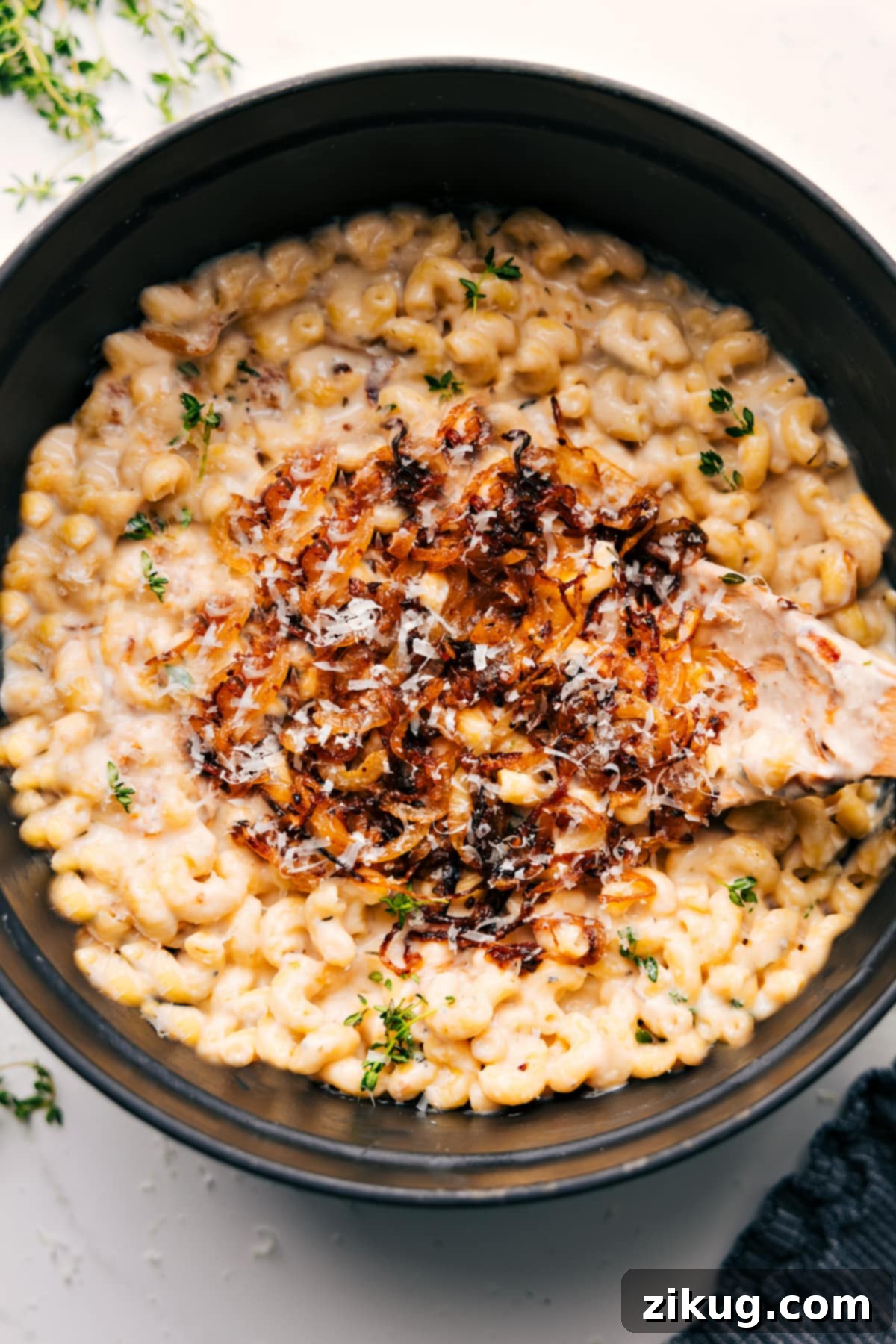
French Onion Mac and Cheese is the ultimate comfort food fusion, seamlessly blending the rich, savory depth of classic French onion soup with the irresistible creaminess of homemade macaroni and cheese. This dish takes everything you adore about both culinary staples and elevates them into an unforgettable experience. Imagine tender pasta enveloped in a luscious, cheesy sauce, infused with the sweet, caramelized essence of onions and a hint of robust broth. It’s a truly indulgent and utterly delicious meal, perfect for a cozy night in or impressing guests with a unique twist on a beloved classic.
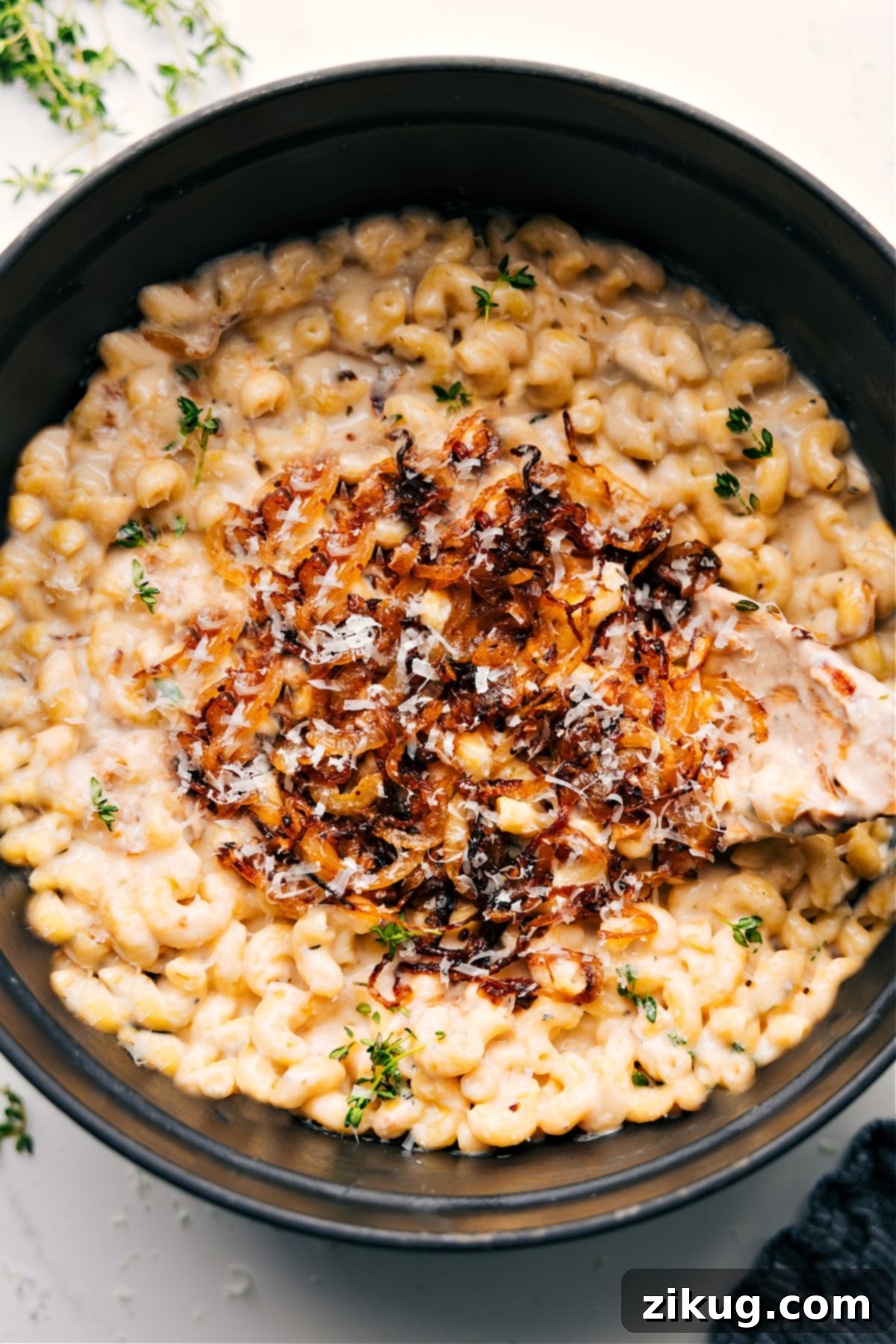

Author’s Notes
Even My Onion-Hating Husband Loved This Dish
As a seasoned recipe developer, I’ve encountered my fair share of picky eaters, but none quite like my husband when it comes to onions. He’s usually the least fussy person I know, yet raw onions are an absolute no-go, and even cooked ones need to be meticulously diced and rendered incredibly soft to pass his inspection. Naturally, a dish like French onion soup, with its generous amount of prominent onions, is completely off his menu.
So, when I first created this French Onion Mac and Cheese recipe, I honestly prepared myself for him to politely pick around the onions. To my genuine surprise, not only did he eat it, but he started raving about how incredibly rich and flavorful it was! While he still avoided the larger onion pieces (a habit I’ve come to expect), he couldn’t stop complimenting the depth of flavor, the velvety creaminess of the sauce, and the perfect cheesiness of the pasta. If I can win over a lifelong onion-hater with this recipe, you know it’s truly something special. This dish proves that even the most discerning palates can be converted when flavors are perfectly balanced and beautifully melded.
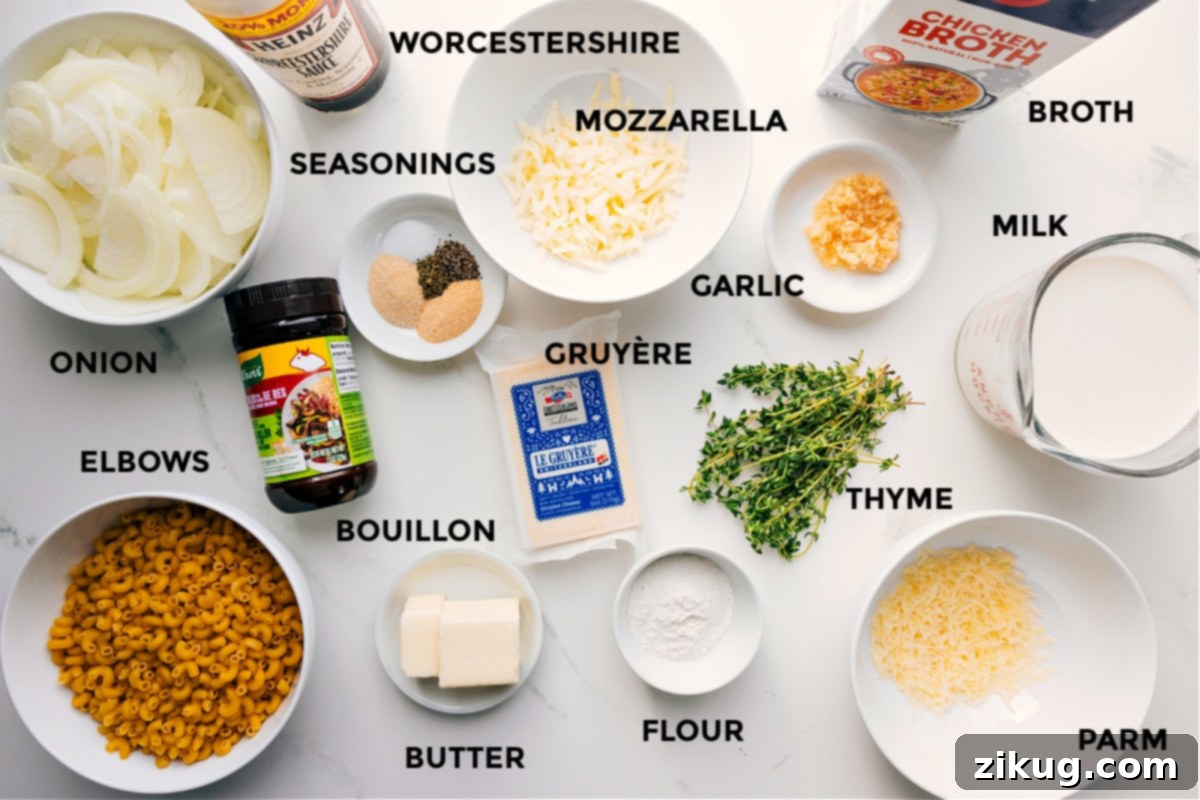
Essential French Onion Mac and Cheese Ingredients
Crafting the perfect French Onion Mac and Cheese relies on a thoughtful selection of ingredients, each playing a crucial role in building its signature flavor profile. Here’s a detailed look at what you’ll need and why:
| Ingredient | Expert Tip for Best Results |
|---|---|
| Onions, Garlic, Butter, Thyme, Worcestershire, Bouillon | The star of the show! Slice your onions incredibly thin (a mandoline works wonders here) to ensure they caramelize uniformly and melt into the sauce. Low and slow cooking, with frequent stirring, is key to achieving that deep, golden-brown hue and intensely sweet, savory flavor profile characteristic of French onion soup. The garlic adds aromatic depth, while fresh thyme, Worcestershire sauce, and beef bouillon powder amplify the rich, umami notes. |
| Butter, Flour, Milk, Chicken Broth | These form the foundation of your creamy cheese sauce. A classic roux (melted butter and flour) is essential for thickening. Whisking continuously as you gradually add the milk and chicken broth prevents lumps, ensuring a silky-smooth béchamel-like base that will perfectly cradle your pasta and cheese. Using whole milk contributes to a richer, more luxurious sauce. |
| Macaroni (Elbow or Small Pasta) | Small pasta shapes like elbow macaroni are ideal as they cook quickly and have plenty of nooks and crannies to capture the luscious cheese sauce. Stir often during cooking to prevent sticking and ensure even doneness. Don’t overcook it; al dente pasta is crucial for the best texture. |
| Gruyère, Mozzarella, Parmesan | The cheese blend is paramount. Freshly grate your cheeses; pre-shredded varieties often contain anti-caking agents that can make your sauce gritty. Gruyère is non-negotiable for that authentic French onion flavor. Mozzarella adds stringy meltiness, and Parmesan brings a salty, sharp complexity. Add them one at a time, stirring gently until each batch is fully melted and incorporated for the smoothest, creamiest finish. |
| Garlic Powder, Onion Powder, Salt, Pepper | These seasonings enhance the overall flavor without overpowering the delicate onion and cheese notes. Taste and adjust your seasoning at the end to ensure the perfect balance, making the flavors truly pop. |
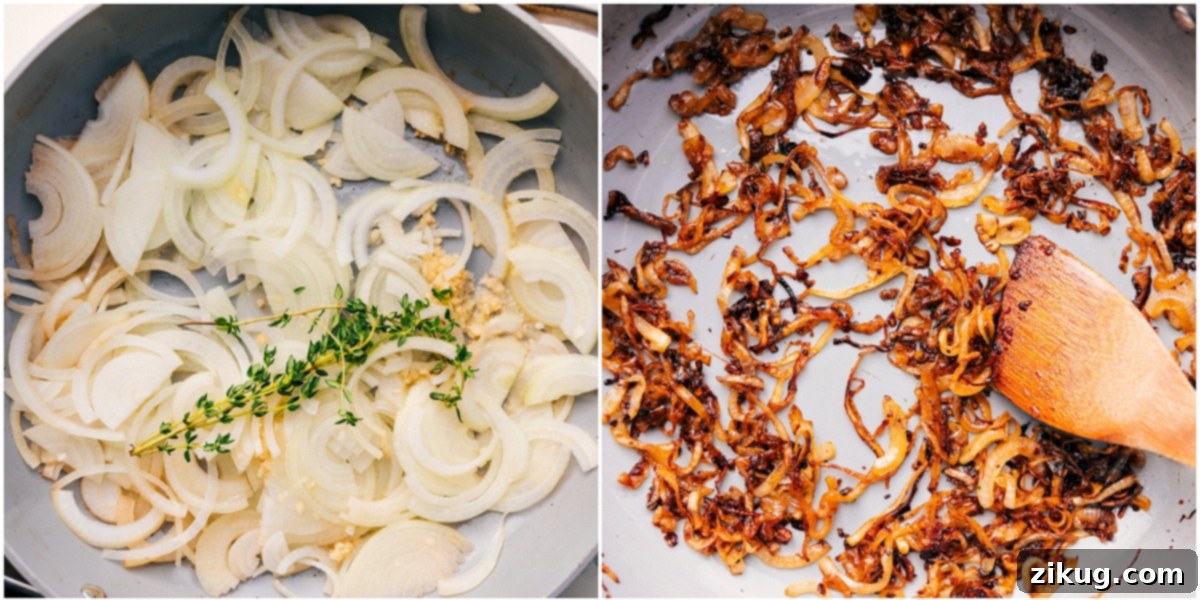
Mastering French Onion Mac and Cheese: A Step-by-Step Guide
Creating this gourmet mac and cheese is simpler than you might think, breaking down into a few key stages. Follow these steps for a dish that’s rich in flavor and perfectly creamy:
- Caramelize the Onions to Perfection: Begin by melting 3 tablespoons of unsalted butter in a wide skillet over a low to medium-low heat. Add your very thinly sliced yellow onions, minced garlic, and fresh thyme sprigs along with a small pinch of salt. Cook patiently, stirring occasionally, for about 35 minutes until the onions are deeply golden brown and beautifully caramelized. This slow cooking process is crucial for developing their rich, sweet, and savory depth. Once done, remove from heat, discard the thyme sprigs, and set the onions aside.
- Craft the Silky Roux: In a large nonstick pot, melt 4 tablespoons of unsalted butter over medium heat. Once melted, whisk in the all-purpose flour and cook for 1 minute, ensuring a smooth paste. Stir in the garlic powder, onion powder, salt, and pepper to season your roux.
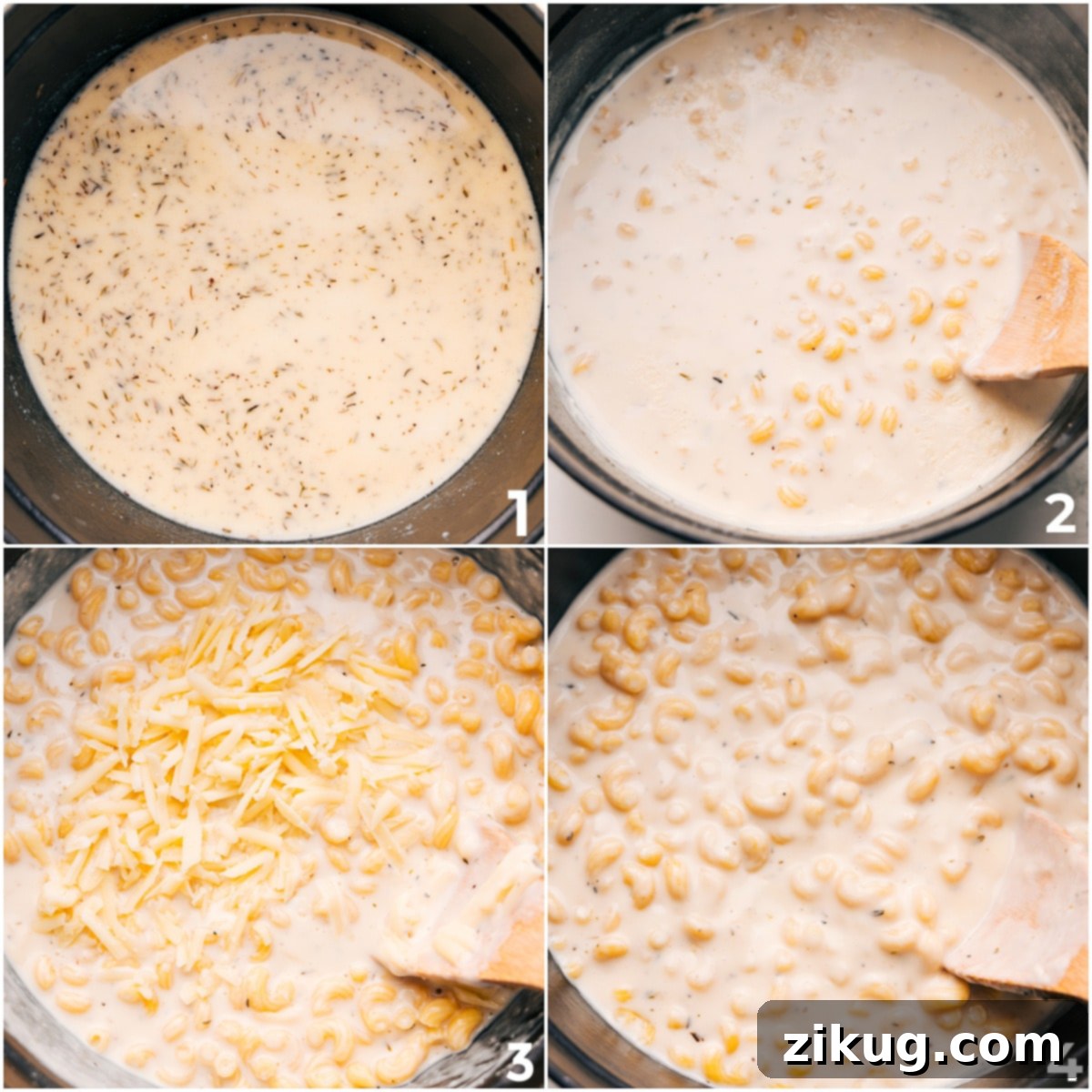
- Build the Velvety Sauce: Gradually pour in the whole milk, whisking constantly to prevent any lumps from forming. Continue whisking until the mixture thickens slightly, which should take 1-2 minutes. Next, slowly add the chicken broth while still whisking. Bring the sauce to a gentle boil.
- Cook the Macaroni in the Sauce: Once the sauce is gently boiling, add the uncooked elbow macaroni directly to the pot. Stir well with a wooden spoon to ensure the pasta is fully submerged and doesn’t stick. Reduce the heat to medium-low, maintaining a gentle bubble across the top when you’re not stirring. Cook for 7-11 minutes, stirring often and scraping the bottom of the pot, until the pasta is just cooked through (al dente) and the sauce has thickened. Don’t worry if it still looks a bit saucy; it will continue to thicken significantly once the cheese is added.
- Fold in the Cheeses and Onions: Remove the pot from the heat. Begin adding your freshly shredded mozzarella, Gruyère, and Parmesan cheeses a handful at a time, stirring gently until each addition is completely melted and incorporated into the creamy sauce before adding the next. This method ensures a smooth, lump-free cheese sauce. Taste and adjust the seasoning as needed. Finally, gently stir in the caramelized onions, or for a more striking presentation, spoon them over individual servings. Serve immediately and savor every delicious bite!
Storage & Reheating
This French Onion Mac and Cheese is undeniably at its best when enjoyed straight off the stovetop, while it’s luxuriously creamy and the pasta is perfectly tender. As it cools and sits, the pasta continues to absorb the rich sauce, leading to a thicker, slightly less delicate texture, and the macaroni can become a bit bloated. While leftovers are still incredibly flavorful, they tend to become a tad heavy. To reheat, gently warm the mac and cheese on the stove over low heat. Add a splash of milk or chicken broth (a tablespoon or two) and stir frequently to help bring back that coveted creamy consistency and prevent it from drying out.
More Amazing Pasta Recipes You’ll Love:
Dinner
Bruschetta Pasta
Dinner
BBQ Mac and Cheese
Dinner
Creamy Tuna Pasta
Dinner
Creamy Sausage Pasta
Print Recipe
French Onion Mac And Cheese
Chelsea Lords
French Onion Mac and Cheese beautifully marries the rich, savory, and aromatic essence of classic French onion soup with the ultimate comfort of creamy, cheesy pasta. This unique dish is incredibly satisfying and packed with complex flavors.
15 minutes
35 minutes
50 minutes
6 servings
Equipment
-
Large skillet
-
Large pot
Ingredients
- 3 tablespoons unsalted butter
- 2 small yellow onions, peeled & very thinly sliced
- 1 tablespoon minced garlic
- 3 sprigs fresh thyme (optional)
- 1 teaspoon beef bouillon powder
- 1 teaspoon Worcestershire sauce
- 4 tablespoons unsalted butter
- 3 tablespoons all-purpose flour
- 1 teaspoon garlic powder
- 1/2 teaspoon onion powder
- 1/4 teaspoon salt
- 1/4 teaspoon pepper
- 2 cups whole milk
- 2-1/2 cups chicken broth (Swanson recommended)
- 2-1/2 cups uncooked elbow macaroni
- 1/2 cup freshly shredded mozzarella cheese
- 1-1/2 cups freshly shredded Gruyère cheese (see note 1)
- 1/4 cup freshly grated Parmesan cheese (see note 2)
Instructions
-
Melt 3 tablespoons butter in a wide skillet over low to medium-low heat (adjust based on your stovetop’s strength). Add the thinly sliced onions, minced garlic, thyme sprigs, and a small pinch of salt. Cook, stirring occasionally, until the onions are deeply golden brown and beautifully caramelized, which typically takes about 35 minutes. This slow process is key to their rich flavor. Once caramelized, remove from heat, discard the thyme sprigs, and set the onions aside.
-
In a separate large nonstick pot, melt 4 tablespoons butter over medium heat. Whisk in the all-purpose flour and cook for 1 minute until a smooth paste forms. Whisk in garlic powder, onion powder, salt, and pepper. Gradually add the whole milk, whisking constantly until the sauce is slightly thickened (this usually takes 1-2 minutes). Slowly add the chicken broth while continuing to whisk, then bring the mixture to a gentle boil.
-
Once the sauce is boiling, add the uncooked macaroni. Stir well with a wooden spoon to ensure the pasta is submerged and to prevent sticking to the bottom. Reduce the heat to medium-low, allowing for a gentle bubble across the top when not stirring. Stir often, scraping the bottom of the pot, for 7-11 minutes, until the pasta is just cooked (al dente, but still a bit firm) and the sauce has thickened slightly. If the sauce appears too thin at this stage, don’t worry—it will continue to thicken considerably once the cheese is added. Refer to note 3 for troubleshooting tips.
-
Remove the pot from the heat. Add the shredded cheeses (mozzarella, Gruyère, and Parmesan) a handful at a time, allowing each addition to melt completely before stirring in the next. This ensures a smooth, homogeneous, and lump-free cheese sauce. Taste the mac and cheese and adjust the seasoning (salt and pepper) as needed. Gently stir in the caramelized onions, or for a more attractive presentation, spoon them over individual servings just before serving. Enjoy this luxurious dish immediately!
Recipe Notes
Note 1: Gruyère Cheese is Key. While Gruyère can be a bit pricier, its distinct nutty and earthy flavor is truly the secret to achieving the authentic French onion taste in this pasta. It’s highly recommended for the best results. If you absolutely must, you can swap it for extra-sharp white Cheddar, but be aware that the final flavor profile will differ significantly and won’t capture the classic French onion essence as closely. When measuring, gently pack the shredded cheese into the measuring cup for an accurate amount.
Note 2: Freshly Grated Parmesan. For optimal flavor and melt, use a block of high-quality Parmesan cheese and grate it yourself using the small holes of a box grater. Pre-grated Parmesan often contains anti-caking agents that can affect the texture of your sauce. Gently pack it into the measuring cup for precision.
Note 3 (Troubleshooting Pasta): It’s crucial to remove the pasta from the heat as soon as it reaches an al dente stage—meaning it’s firm to the bite but not hard. The pasta will continue to cook and absorb liquid as you integrate the cheeses. Slightly undercooking is always preferable to overcooking, as mushy pasta cannot be remedied. If, after adding the cheese, your sauce seems too thick, a splash of milk (a tablespoon or two) can help thin it to your desired consistency. If it’s too thin or the pasta isn’t quite done, simmer on low heat for another minute or two, stirring continuously.
Storage: As mentioned above, this dish is truly best enjoyed fresh, right off the stovetop. The sauce naturally thickens as it cools, and the pasta continues to absorb the liquid, altering its texture. While delicious as leftovers, they are best reheated gently with a little added liquid.
Nutrition
|
Calories: 549 kcal
|
Carbohydrates: 47g
|
Protein: 23g
|
Fat: 29g
|
Saturated Fat: 17g
|
Polyunsaturated Fat: 1g
|
Monounsaturated Fat: 7g
|
Trans Fat: 0.8g
|
Cholesterol: 88mg
|
Sodium: 845mg
|
Potassium: 365mg
|
Fiber: 2g
|
Sugar: 7g
|
Vitamin A: 1049 IU
|
Vitamin C: 5mg
|
Calcium: 529mg
|
Iron: 2mg
Nutrition information is automatically calculated, so should only be used as an approximation and is not a substitute for professional nutrition advice.
Love this recipe? Leave a comment below!
What to Serve with French Onion Mac and Cheese
This French Onion Mac and Cheese is incredibly rich, creamy, and satisfying on its own, but pairing it with the right side dishes can elevate the meal even further. Here are some excellent choices to complement its decadent flavor:
- Garlic Bread: A classic for a reason! Its crispy texture and savory garlic flavor make it perfect for soaking up every last drop of the creamy, cheesy sauce.
- Quick Garden Salad: A fresh, crisp green salad with a light vinaigrette provides a wonderful contrast to the richness of the mac and cheese. The acidity helps to cut through the creaminess.
- Roasted Broccoli: For a simple yet nutritious green side, roasted broccoli offers a slight char and earthy flavor that pairs beautifully with the cheesy pasta.
- Caesar Salad: The crunchy croutons, tangy dressing, and fresh romaine in a Caesar salad offer a delightful textural and flavor balance to the indulgent mac and cheese.
- Fall Fruit Salad: If you prefer something light and sweet, a refreshing fruit salad can provide a palate cleanser, balancing the richness with its natural sweetness and juicy texture.
Expert Tips for the Best French Onion Mac and Cheese
To ensure your French Onion Mac and Cheese turns out perfectly every time, keep these essential tips in mind:
- Choose the Right Pan for Onions: Using a wide skillet or Dutch oven for caramelizing your onions provides a larger surface area. This allows the onions to spread out more, promoting faster and more even browning and ultimately deeper flavor development.
- Patience is a Virtue with Onions: Caramelizing onions properly takes time and cannot be rushed. If you notice them browning too quickly, immediately lower the heat. If any bits start to stick to the bottom of the pan, add a splash of water or broth and scrape them up – this deglazes the pan and incorporates those flavorful browned bits back into the onions. This process is crucial for achieving that signature sweet, umami flavor.
- Incorporate Cheese Gradually: For a flawlessly smooth and lump-free cheese sauce, always add your freshly grated cheeses slowly, one handful at a time. Stir gently but continuously until each addition has completely melted and is fully incorporated into the sauce before adding the next batch. This technique ensures a velvety, luscious sauce without any grainy texture.
- Freshly Grate Your Cheese: Avoid pre-shredded cheeses, as they often contain anti-caking agents like cellulose or potato starch. These agents can prevent the cheese from melting smoothly, resulting in a gritty or clumpy sauce. Freshly grated cheese melts beautifully, giving you that desirable creamy consistency.
- Al Dente Pasta is Key: Cook your elbow macaroni to just al dente, meaning it’s firm to the bite. Remember that the pasta will continue to cook and absorb liquid from the hot cheese sauce even after it’s off the heat. Slightly undercooked pasta is always better than mushy, overcooked pasta, which cannot be fixed.
Frequently Asked Questions About French Onion Mac and Cheese
Here are answers to some common questions about making and enjoying this delicious French Onion Mac and Cheese:
Can I prepare French Onion Mac and Cheese ahead of time?
While this dish is undeniably best served fresh, right off the stovetop, you can prepare components in advance. The caramelized onions can be made up to 2-3 days ahead and stored in an airtight container in the refrigerator. When you’re ready to make the mac and cheese, simply reheat the onions gently before adding them. As for the complete dish, it tends to thicken considerably as it sits due to the pasta absorbing the sauce. If you must make it ahead, store it in the refrigerator and gently reheat with a splash of milk or broth to restore creaminess.
What if my cheese sauce is lumpy?
A lumpy cheese sauce often occurs when the cheese is added too quickly, the heat is too high, or pre-shredded cheeses with anti-caking agents are used. To prevent this, ensure your heat is low when adding cheese, add it gradually (a handful at a time), and stir constantly until each portion is fully melted before adding more. Always use freshly grated cheese for the smoothest results. If you do end up with a slightly lumpy sauce, you can try whisking it vigorously off the heat, or carefully blend a small portion of the sauce with an immersion blender to smooth it out (then stir it back in), but be cautious not to over-process.
Can I substitute the cheeses?
Gruyère is a foundational flavor for this French Onion Mac and Cheese, giving it that distinct authentic taste. Substituting it will alter the profile significantly. However, if Gruyère is unavailable, you could experiment with other semi-hard, nutty cheeses like Emmentaler or even a very sharp white cheddar for a different but still delicious result. For mozzarella, feel free to use provolone for a similar melty texture. Always use freshly grated cheese for the best melt and texture.
Is this dish suitable for vegetarians?
Yes, with a small modification. The recipe calls for beef bouillon powder and chicken broth. To make it vegetarian, simply substitute the beef bouillon powder with vegetable bouillon powder and use vegetable broth instead of chicken broth. The rest of the ingredients are vegetarian-friendly.
Why are caramelized onions so important?
Caramelized onions are the heart and soul of French onion soup, and thus, of this mac and cheese. The slow cooking process transforms their sharp, pungent flavor into a deeply sweet, savory, and complex umami profile. This rich, sweet foundation is what gives the mac and cheese its distinctive depth and gourmet appeal, setting it apart from traditional recipes.