
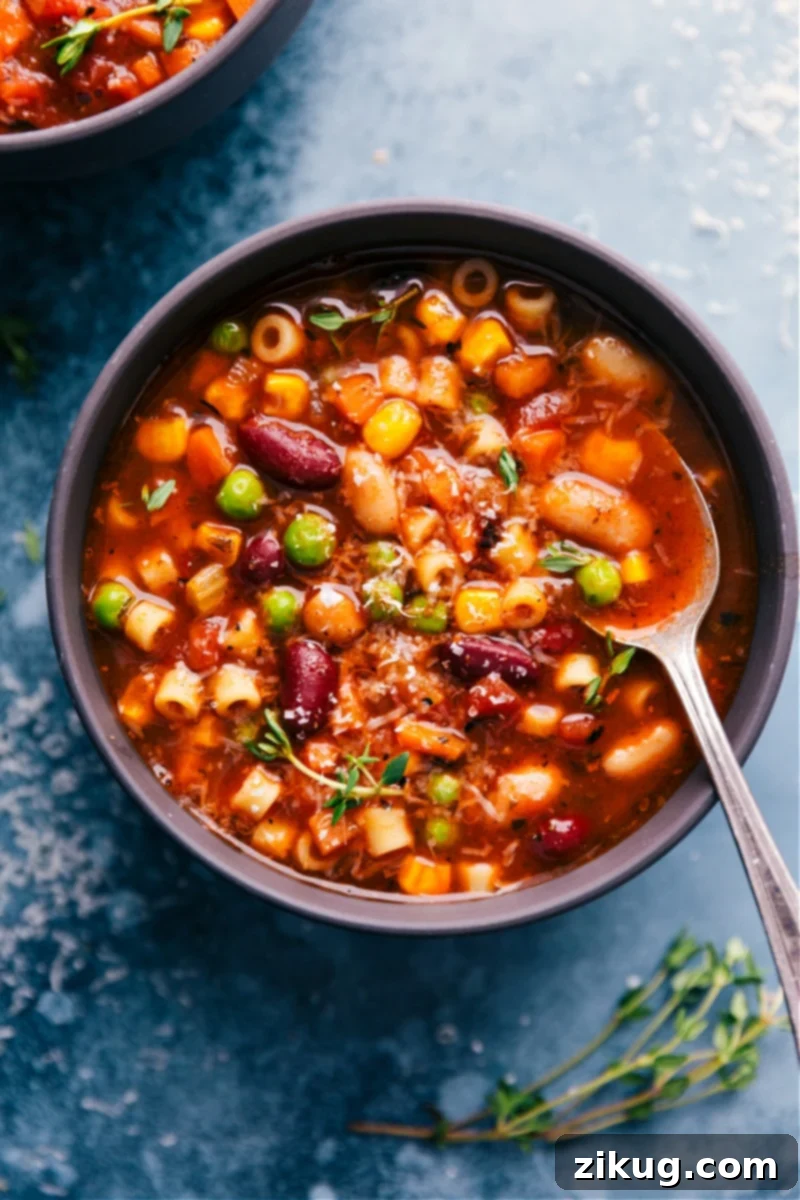
Craving the warmth and rich flavor of Olive Garden’s iconic Minestrone Soup? Look no further! This comprehensive guide provides the ultimate **Olive Garden Minestrone Soup Recipe** – a thick, incredibly hearty vegetable soup brimming with ditalini pasta in a robust, savory tomato broth. It’s the quintessential comfort food, perfect for any season, and remarkably simple to recreate in your own kitchen.

Author’s Note
Skip the Drive, This Homemade Minestrone is Even Better!
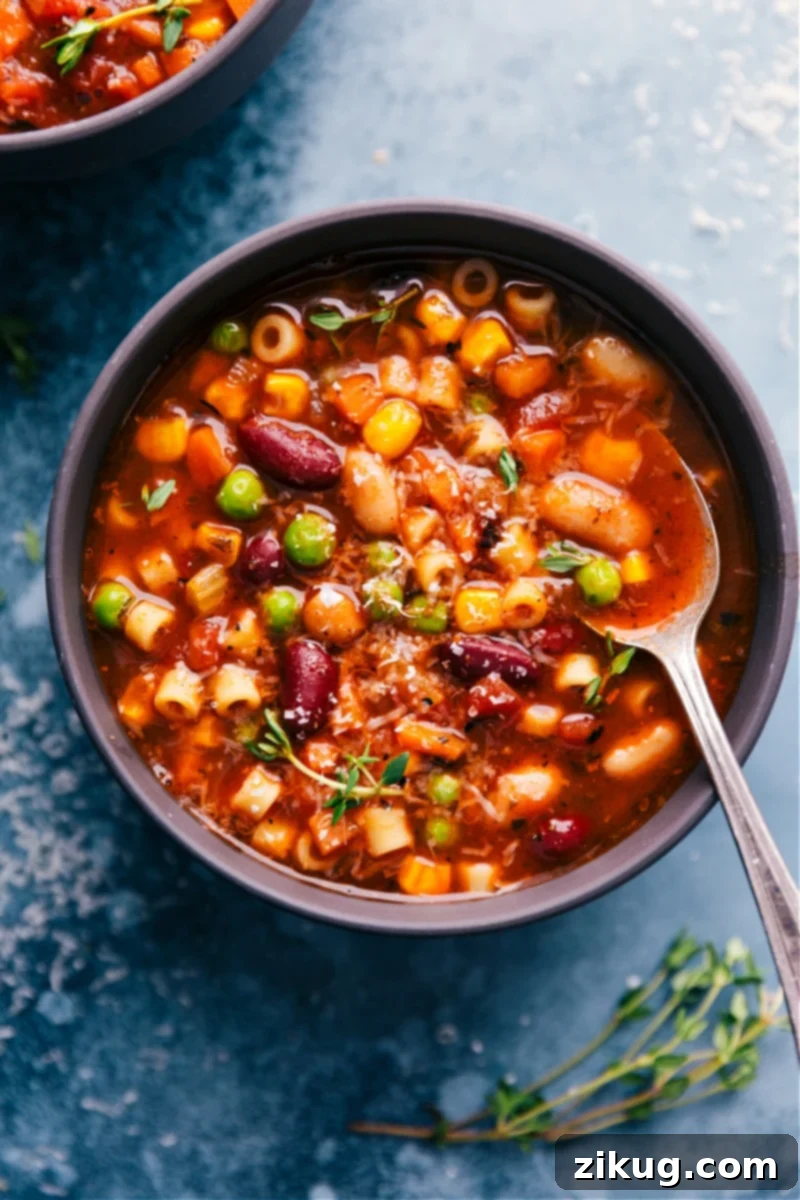
My love affair with Olive Garden’s minestrone began years ago. Every visit would see me happily filling up on their famous breadsticks, crisp salad, and, of course, that irresistible minestrone. More often than not, I never even made it to the main course because the soup alone was so satisfying. That’s how truly good it was!
Naturally, I was determined to develop my own version at home. To my delight, even my kids – who usually protest against veggie-packed dishes – consistently ask for second helpings of this minestrone. I’m convinced it’s the perfect harmony of tender pasta nestled in that rich, deeply flavored tomato broth. Whatever the secret, this homemade Olive Garden Minestrone has become a cherished staple in our dinner rotation. Its versatility even inspired me to create a lighter, healthier quinoa twist, proving just how adaptable and universally loved this soup can be.
Why Make This Homemade Olive Garden Minestrone Soup?
There are countless reasons to swap your restaurant visit for a cozy kitchen session and whip up this homemade Olive Garden Minestrone:
- **Unbeatable Flavor:** This recipe captures the authentic, rich taste you adore from Olive Garden, often surpassing it with the freshness of home-cooked ingredients.
- **Healthier Choice:** You control every ingredient, ensuring a wholesome meal free from unnecessary additives or excessive sodium. Pack it with even more vegetables for an extra nutrient boost!
- **Budget-Friendly:** Enjoy generous portions of this comforting soup for a fraction of the cost of dining out.
- **Customization at Your Fingertips:** Easily adjust ingredients to suit your family’s preferences, dietary needs, or whatever fresh produce you have on hand.
- **Pure Comfort:** A steaming bowl of this hearty minestrone offers unparalleled warmth and satisfaction, making it the perfect antidote to chilly evenings or a long day.
Essential Ingredients for Your Copycat Minestrone
Crafting the perfect Olive Garden Minestrone Soup at home starts with quality ingredients. This recipe focuses on fresh vegetables, flavorful broth, and tender pasta to achieve that classic taste and texture. Here’s what you’ll need, along with some handy substitution tips:
| Ingredient | Swap or Tip for Best Results |
|---|---|
| Ditalini Pasta | This small, tubular pasta is traditional for Olive Garden minestrone. If unavailable, any small pasta shape like elbow macaroni, small shells, or orzo works beautifully. |
| Zucchini | Fresh zucchini adds a lovely mild flavor and tender texture. Feel free to swap with yellow squash or diced fresh green beans for a similar effect. |
| Canned Beans | A mix of cannellini (white kidney beans) and dark red kidney beans adds heartiness and protein. Garbanzo beans (chickpeas) are also a great addition. Remember to rinse them thoroughly before adding to remove excess sodium and improve flavor. |
| Fire-Roasted Tomatoes | This is a secret weapon for depth! Fire-roasted diced tomatoes are charred for a smoky, sweeter flavor profile that elevates the soup. Regular diced tomatoes can be used, but fire-roasted truly makes a difference. |
| Vegetable Stock | A high-quality vegetable stock is crucial for a rich vegetarian base. If you don’t need the soup to be strictly vegetarian, chicken stock can be used for added savory notes. |
| Tomato Paste | Don’t skip cooking the tomato paste! Sautéing it until it darkens intensifies its flavor, adding a crucial layer of umami to the broth. |
| Aromatics (Onion, Celery, Carrots) | These form the traditional “mirepoix,” the flavorful foundation of many soups. Dice them uniformly for even cooking. |
| Garlic & Herbs (Rosemary, Oregano, Thyme) | Freshly minced garlic and a blend of classic Italian dried herbs contribute to the signature taste. Don’t be shy with the garlic! |
| Peas & Corn | Frozen peas and corn are added at the end for a pop of color and sweetness. They cook quickly and retain their texture. |
How To Make This Delicious Olive Garden Minestrone Soup Recipe
Creating this copycat Olive Garden Minestrone at home is a straightforward process. Follow these steps to achieve a rich, flavorful, and satisfying soup:
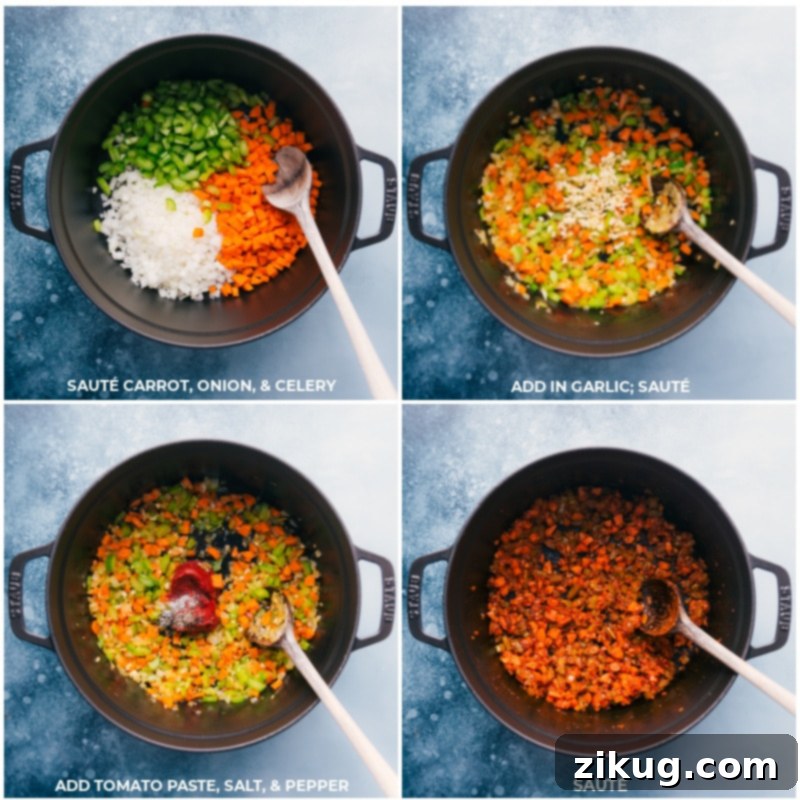
- Sauté the Aromatic Base: Begin by heating olive oil in a large pot over medium heat. Add finely diced onion, celery, and carrots. Cook, stirring frequently, for 8-10 minutes until the onion is golden and the vegetables are softened. This step is crucial for building foundational flavor.
- Build Deep Flavors: Stir in minced garlic and cook for just 30 seconds until fragrant. Then, add the tomato paste, along with a generous pinch of salt and pepper. Continue to cook and stir frequently for about 8 minutes. The tomato paste should deepen in color and become very thick – this caramelization greatly enhances the broth’s richness.
- Introduce Liquids and Beans: Pour in the vegetable stock and the two cans of fire-roasted diced tomatoes (undrained). Add the drained and rinsed cannellini and kidney beans, along with the diced zucchini and bay leaves (if using). Stir everything together.
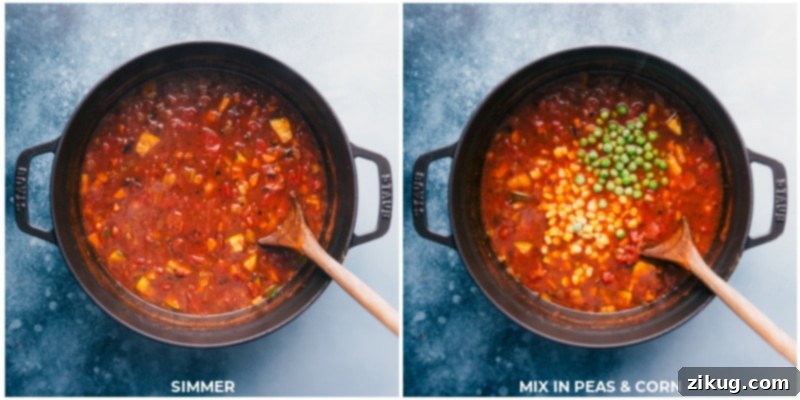
- Simmer to Perfection: Increase the heat to bring the soup to a gentle boil, then reduce it to a low simmer. Cover the pot partially, leaving a small gap for steam, and let it simmer for 10-15 minutes, or until all the vegetables are tender.
- Cook the Pasta Separately: While the soup simmers, cook the ditalini pasta in a separate pot of salted boiling water according to package directions until al dente. Drain well and set aside. (Cooking pasta separately prevents it from becoming mushy and absorbing too much broth, especially if you plan for leftovers.)
- Final Touches & Serve: Turn off the heat from the soup. Stir in the frozen peas and corn. Taste and adjust seasonings, adding more salt and pepper as needed until the flavors are perfectly balanced and rich. If desired, stir in a splash of lemon juice and a drizzle of olive oil for brightness. Remove and discard the bay leaves. Ladle the hearty soup into bowls, adding a few spoonfuls of the cooked ditalini pasta to each individual serving. Top generously with freshly grated Parmesan cheese and fresh herbs like basil or parsley. Serve immediately with crusty bread for dipping!
Slow Cooker Minestrone Instructions
For an even more hands-off approach to this delicious Olive Garden Minestrone Soup, utilize your slow cooker!
- Sauté First (Optional but Recommended): If your slow cooker has a sauté function or you prefer to use a separate pot, complete steps 1-2 from the main instructions to build the flavor base with the aromatics, garlic, and tomato paste. This step significantly deepens the final flavor.
- Combine Ingredients: Transfer the sautéed mixture (or simply add fresh aromatics, garlic, and tomato paste directly if skipping the sauté) to the slow cooker insert. Add the fire-roasted diced tomatoes, vegetable stock, drained and rinsed cannellini beans, kidney beans, diced zucchini, and bay leaves. Stir well to combine.
- Cook Low and Slow: Cover and cook on LOW for 3-4 hours, or on HIGH for 1-2 hours, or until all vegetables are tender and the flavors have fully melded together.
- Finish and Serve: Stir in the frozen peas and corn. Taste the soup and adjust seasonings as needed, adding more salt, pepper, lemon juice, or olive oil to brighten the flavors. Remove and discard the bay leaves. Cook the ditalini pasta separately on the stovetop about 20 minutes before serving. Add the cooked pasta to individual serving bowls, then ladle in the hot minestrone. Garnish with freshly grated Parmesan cheese and fresh herbs, and serve with crusty bread.
Featured Comment
“We are a family of 6. I have four children (ages 2-12). This meal is a hit with everyone! They even ask for seconds. Most weeknights I rely on crock pot meals because of activities after school and getting in at dinner time. This is an absolute keeper. Thank you so much!”
– Katie
Expert Tips for the Best Homemade Minestrone
Achieving restaurant-quality Olive Garden Minestrone at home is easier than you think with these expert tips:
- Properly Cook the Tomato Paste: This is a game-changer! Sauté the tomato paste for a full 8 minutes, stirring frequently, until it darkens in color. This process caramelizes its sugars and deepens its flavor, adding an incredible richness to your Olive Garden Minestrone Soup recipe.
- Season as You Go: Different brands of vegetable stock and canned beans can vary significantly in their sodium content. Taste your soup at various stages and adjust seasonings (salt, pepper, and herbs) as needed. The final seasoning should be robust and balanced.
- Finish with Fresh Herbs: While dried herbs build the base flavor, stirring in fresh basil or parsley right before serving adds a vibrant aroma and bright, fresh taste that elevates the entire dish.
- A Splash of Acid Brightens: A little acidity can make all the difference. A squeeze of fresh lemon juice or a dash of red wine vinegar just before serving can cut through the richness and brighten all the flavors, making them pop.
- Don’t Overcook Vegetables: Aim for tender-crisp vegetables, not mushy ones. Zucchini and other quick-cooking veggies should be added later in the simmering process.
- Serve Pasta Separately: For the absolute best texture, cook your ditalini pasta in a separate pot and add it directly to individual serving bowls. This prevents the pasta from getting soggy or absorbing too much broth, ensuring perfect leftovers.
Storage Solutions
Enjoying Olive Garden Minestrone Soup Leftovers
This hearty minestrone is often even better the next day as the flavors deepen. Here’s how to store and reheat it:
- Fridge: Store leftover Olive Garden Minestrone Soup in an airtight container in the refrigerator for 3-5 days.
- Reheat: Gently warm the soup on the stovetop over medium-low heat, stirring occasionally. If the soup has thickened significantly (which it often does), add an extra splash of vegetable stock or water to reach your desired consistency.
- Pasta Note for Leftovers: As mentioned, cooking pasta separately is key for optimal leftovers. If you combined the pasta directly into the main pot of soup, the pasta will absorb more liquid and soften over time. For the best texture, always store cooked pasta separately from the soup broth and add it to individual bowls when serving.
- Freezer: Minestrone Soup, particularly with pasta and delicate vegetables like zucchini, is generally not the best candidate for freezing as these ingredients can become mushy upon thawing. If you absolutely wish to freeze, prepare the soup without the pasta and zucchini. Add fresh, cooked pasta and zucchini (or other quick-cooking veggies) when reheating.
Variations & Customizations for Your Minestrone
This Olive Garden Minestrone Soup recipe is incredibly versatile. Feel free to adapt it to your taste, dietary needs, or whatever ingredients you have:
- Adjust Thickness: If you prefer a thinner soup, simply add more vegetable stock until it reaches your desired consistency. For a heartier, stew-like texture, keep the liquid as is.
- Boost the Protein: For a non-vegetarian option, stir in shredded rotisserie chicken, browned ground Italian sausage, or lean ground turkey during the simmering stage. Lentils or extra beans can boost protein for a vegetarian version.
- Veggie Swaps & Additions: Use any seasonal vegetables you love! Spinach or kale can be stirred in during the last 5 minutes of cooking. Diced potatoes, green beans, or bell peppers are also excellent additions.
- Add a Spicy Kick: For those who enjoy a bit of heat, add a pinch or two of red pepper flakes when sautéing the garlic and tomato paste.
- Make it Gluten-Free: Easily make this a gluten-free Olive Garden Minestrone by using your favorite gluten-free ditalini or other small gluten-free pasta.
- Vegan-Friendly: This recipe is already vegetarian. To make it strictly vegan, simply omit the Parmesan cheese or use a vegan Parmesan alternative.
Smart Shortcuts for Busy Cooks
Short on time? These clever shortcuts will help you get this delicious Olive Garden Minestrone Soup on the table faster without sacrificing flavor:
- Pre-Cut Mirepoix: Skip the chopping by grabbing pre-cut or frozen onion, celery, and carrot blends (often labeled “mirepoix”) from your grocery store. You’ll need about 3 cups.
- Ready Garlic: Use jarred minced garlic or a garlic press for instant chopped garlic.
- Fire-Roasted Tomatoes: Opt for fire-roasted diced tomatoes. They infuse your Olive Garden Minestrone Soup recipe with extra sweetness and a smoky depth without any additional effort.
- Pre-Cooked Protein: If adding meat, use pre-cooked rotisserie chicken or fully cooked Italian sausage to save time on browning.
Frequently Asked Questions (FAQs)
- Can I use chicken broth instead of vegetable stock?
- Yes, if you don’t need the soup to be vegetarian, chicken broth or stock is an excellent substitute and will add another layer of savory flavor.
- What if I don’t have ditalini pasta?
- Any small pasta shape works well! Elbow macaroni, small shells, orzo, or even broken spaghetti pieces are great alternatives.
- Is this recipe vegetarian/vegan?
- Yes, this recipe is naturally vegetarian if you use vegetable stock. To make it vegan, simply omit the Parmesan cheese or use a dairy-free alternative.
- Can I add other vegetables?
- Absolutely! Minestrone is incredibly adaptable. Feel free to add green beans, kale, spinach, potatoes, or bell peppers. Just consider cooking times: add quick-cooking greens at the end, and root vegetables earlier to ensure they soften properly.
- Why cook the pasta separately?
- Cooking pasta separately prevents it from absorbing too much broth and becoming mushy, especially if you have leftovers. It also keeps the broth from becoming too thick and starchy.
More Hearty & Veggie-Packed Soup Recipes:
Soups And Stews
Chicken Corn Soup Recipe
One Pan / One Pot
White Bean Soup
Soups And Stews
Easy Zuppa Toscana
Soups And Stews
Tomato Basil Soup Recipe

Print Recipe
Olive Garden Minestrone Soup Recipe
Chelsea Lords
30
30
1
6 servings
Video
Watch a video on how to make this Minestrone Soup: Minestrone Soup Video

Equipment
-
Large pot
-
Medium pot
Ingredients
(Measurements for 6 servings)
- 3 tablespoons olive oil
- 1 cup carrots diced, 2 large carrots
- 1 cup yellow onion diced, 1 small onion
- 1 cup celery diced, 3 stalks
- 1 heaping tablespoon minced garlic 4 cloves
- 1/4 cup tomato paste
- Salt and pepper (to taste)
- 2 (14.5-ounce) cans fire-roasted diced tomatoes undrained, see note 1
- 1/4 teaspoon dried crushed rosemary
- 1/8 teaspoon red pepper flakes optional
- 3/4 teaspoon dried oregano
- 3/4 teaspoon dried thyme
- 1 (32-ounce) container vegetable stock 4 cups, see note 2
- 1 (15.5-ounce) can cannellini beans drained and rinsed
- 1 (15.5-ounce) can dark red kidney beans drained and rinsed
- 1/2 cup diced zucchini
- 2 bay leaves optional
- 1 cup uncooked ditalini pasta see note 3
- 1/2 cup frozen peas
- 1/2 cup frozen corn or use just 1 cup peas or corn combined
- Serving suggestions see note 4 (Parmesan cheese, fresh herbs, crusty bread)
Instructions
-
Add olive oil to a large pot or Dutch oven over medium heat. Once hot, add the diced onion, carrot, and celery. Cook, stirring frequently, for 8–10 minutes or until the onion is golden and all vegetables are significantly softened. Add the minced garlic and cook, stirring constantly, for just 30 seconds until it becomes fragrant. Be careful not to burn the garlic.
-
Stir in the tomato paste and season with about 1/2 teaspoon each of salt and pepper (adjust to your taste). Mix thoroughly and cook, stirring frequently, for 8 minutes. This step is crucial: the tomato paste should become very thick and visibly darken in color. This caramelization develops deep, rich flavors and ensures the vegetables are perfectly tender, not crunchy. Add the undrained fire-roasted diced tomatoes and all the dried seasonings: rosemary, oregano, thyme, and red pepper flakes (if using). Stir frequently and cook for another 2 minutes, making sure to scrape the bottom of the pot to release any flavorful browned bits.
-
Pour in the vegetable stock, along with the drained and rinsed cannellini beans and kidney beans, and the diced zucchini. Add the bay leaves if you are using them. Stir all ingredients well to combine. Increase the heat to bring the soup to a boil, then immediately reduce the heat to low until the soup is gently simmering (you should see just small bubbles at the edges). Simmer, with the lid partially covering the pot (leave about a 1-inch gap for steam), for 10–15 minutes, or until all the vegetables are tender.
-
Meanwhile, in a separate medium-sized pot, bring a generous amount of water to a rolling boil. Season the water with salt. Add the ditalini pasta and cook according to the package directions until it is al dente (firm to the bite). Drain the pasta thoroughly and set it aside.
-
Turn off the heat from the simmering soup. Stir in the frozen peas and frozen corn. Taste the soup and thoroughly adjust the seasonings as needed; you may find it needs another 1/2 teaspoon of salt and 1/4 teaspoon of pepper, or more – the flavors should be rich and pronounced! If desired, add a squeeze of fresh lemon juice (about 1 tablespoon) and drizzle in a little extra virgin olive oil for brightness and a smooth finish. Carefully remove and discard the bay leaves if they were used.
-
Ladle the hot minestrone soup into individual serving bowls. Add a few spoonfuls of the cooked ditalini pasta into each bowl. Serve the bowls topped generously with freshly grated Parmesan cheese and any fresh herbs you prefer (such as basil or parsley). Don’t forget to serve with crusty artisan bread for dipping!
-
Slow Cooker Method: If using a slow cooker, follow steps 1–2 in either a large pot on the stovetop or directly in the base of your slow cooker if it has a sautéing function. Transfer everything from the pot to the slow cooker insert, along with the drained and rinsed beans, diced zucchini, and bay leaves. Stir to combine. Cook on LOW for 3–4 hours or on HIGH for 1–2 hours, or until the flavors are well melded and the vegetables are tender. Stir in the frozen peas and corn. Taste and adjust seasonings, adding more salt, pepper, lemon juice, or olive oil as needed (about 1 tablespoon of each). Remove and discard bay leaves. Approximately 20 minutes before you plan to serve, cook the ditalini pasta separately according to package directions. Serve the soup by ladling it into bowls and stirring in the cooked pasta. Top with Parmesan cheese, fresh herbs, and crusty bread for dipping!
Recipe Notes
Note 2: Vegetable Stock Quality is crucial for a flavorful soup base. Use a high-quality, flavorful vegetable stock. I highly recommend Swanson’s® vegetable stock for its rich taste (not sponsored). If you prefer a thinner soup, feel free to add more stock and adjust seasonings accordingly.
Note 3: Cooking Pasta Separately is recommended for this soup to prevent it from absorbing too much liquid and becoming overly soft or mushy, especially in leftovers. For easy meal prep and better texture, store the cooked pasta and the soup separately. If you prefer a one-pot meal and plan to consume the soup immediately, you can add the ditalini pasta along with the beans and zucchini, simmering for 15–20 minutes until al dente. In this case, you may need to use an additional 2 cups (total of 6 cups) of vegetable stock as the pasta will absorb more liquid.
Note 4: Serving Suggestions for the ultimate Olive Garden Minestrone experience: A drizzle of high-quality extra virgin olive oil, 1 tablespoon of fresh lemon juice for brightness, a sprinkle of fresh parsley or thyme, a generous amount of freshly grated Parmesan cheese, and, of course, plenty of crusty artisan bread for dunking.
Storage: Store any leftover Minestrone Soup in an airtight container in the refrigerator for 3–5 days. As noted, it does not freeze exceptionally well, particularly due to the texture of the vegetables and pasta. When reheating, warm gently over medium-low heat, stirring often, and add a splash of vegetable stock or water if the soup has thickened too much.
Nutrition
Calories: 339kcal |
Carbohydrates: 56g |
Protein: 14g |
Fat: 8g |
Saturated Fat: 1g |
Polyunsaturated Fat: 1g |
Monounsaturated Fat: 5g |
Sodium: 654mg |
Potassium: 563mg |
Fiber: 11g |
Sugar: 8g |
Vitamin A: 5339IU |
Vitamin C: 12mg |
Calcium: 129mg |
Iron: 4mg
Nutrition information is automatically calculated, so should only be used as an approximation.
Love this recipe? Leave a comment below!