
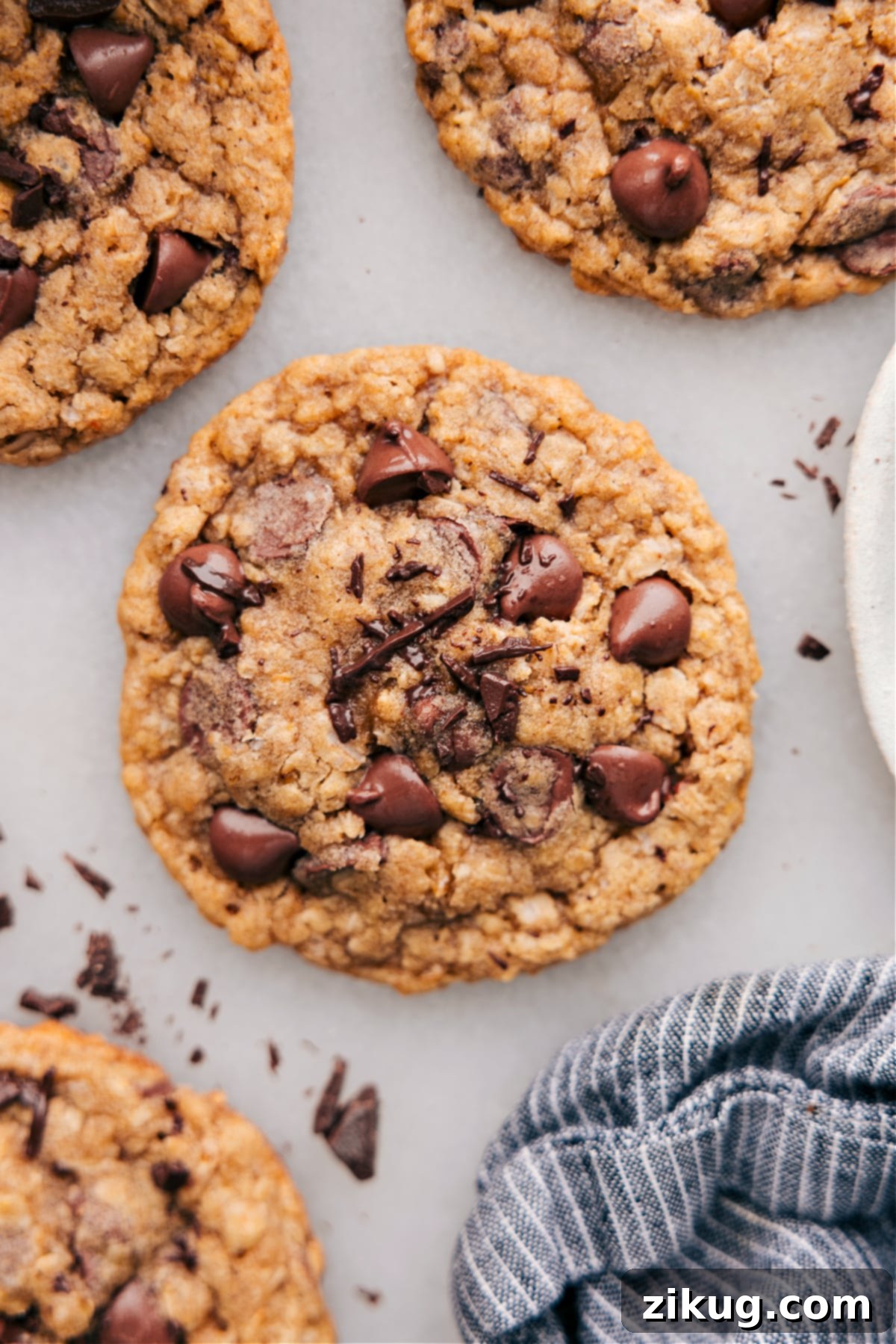
Experience a delightful twist on a classic with these incredibly satisfying Coconut Oil Oatmeal Cookies. Each bite offers a harmonious blend of soft, chewy centers and delightfully crisp edges, generously studded with wholesome oats, rich, melty chocolate chips, and a distinctive nutty aroma from the coconut oil. This recipe promises a unique flavor profile and an unforgettable texture that will quickly become a household favorite.
For those who prefer a delicious oat-free indulgence, be sure to explore our popular Coconut Oil Chocolate Chip Cookies!
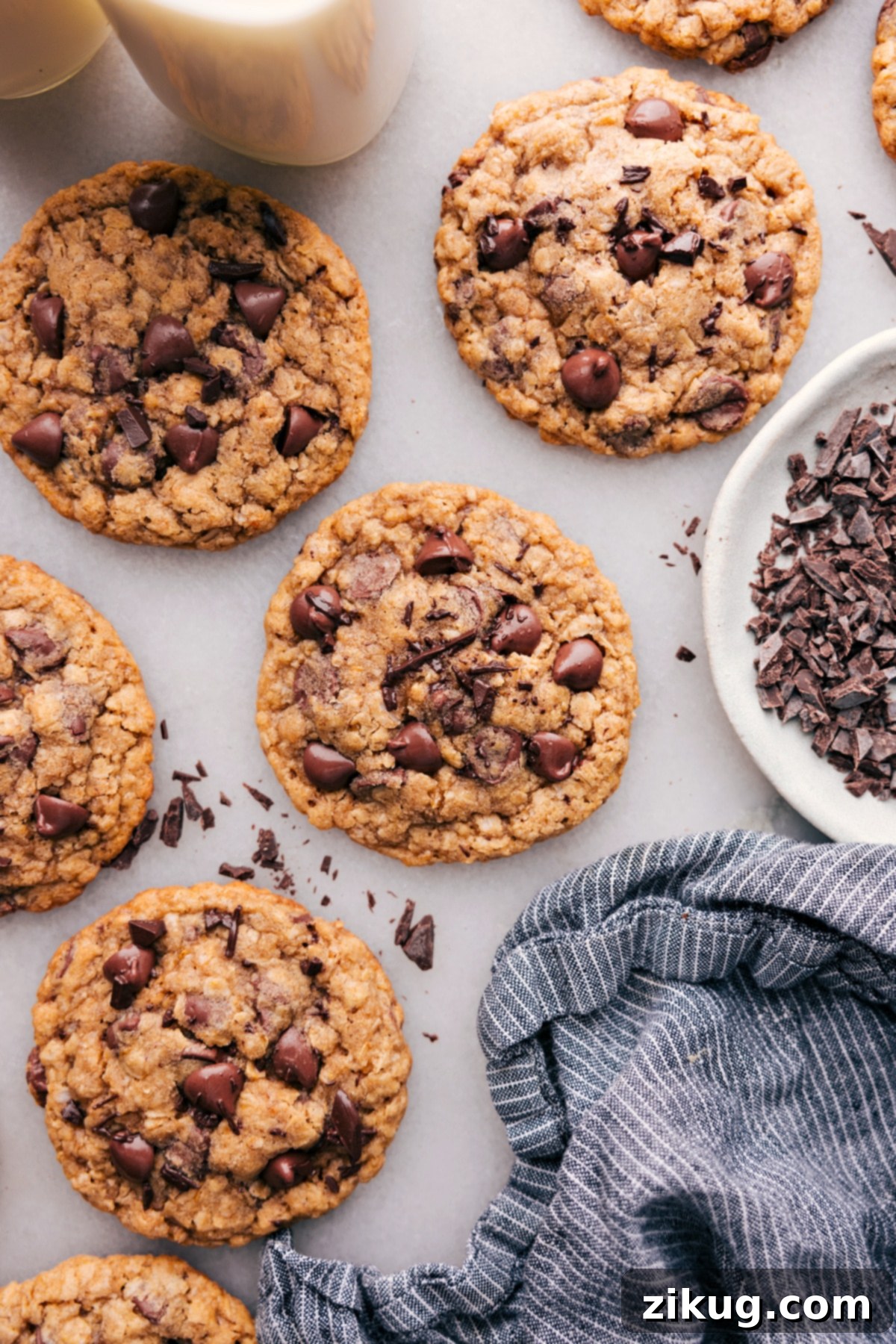
The Ultimate Coconut Oil Oatmeal Cookies Recipe
Are you ready to elevate your cookie-baking experience and introduce an exciting new flavor to your repertoire? Look no further than these fantastic Coconut Oil Oatmeal Cookies! This recipe reimagines the beloved oatmeal cookie by replacing traditional butter with coconut oil, creating a cookie that’s both familiar in its comforting appeal and uniquely distinct in its taste and texture.
The magic of using coconut oil lies in its ability to impart a subtle, tropical essence while also contributing to an unparalleled crispy-chewy dynamic. The edges bake up perfectly golden and crisp, contrasting beautifully with a soft, delightfully chewy interior. Once you try this delightful swap, you’ll wonder why you didn’t experiment with coconut oil in your cookies sooner!
Why Bake with Coconut Oil? A Flavor & Texture Revolution
Coconut oil is a versatile ingredient that offers more than just a tropical hint. When incorporated into baking, especially in cookies, it brings several advantages:
- Unique Flavor Profile: Depending on whether you use refined or unrefined coconut oil, the coconut flavor can range from very mild to slightly more pronounced. Unrefined (virgin) coconut oil retains more of its natural coconut aroma, while refined coconut oil is more neutral. This subtle flavor perfectly complements the earthy notes of oats and the sweetness of chocolate, creating a cookie that’s both comforting and exotic.
- Perfect Texture: Coconut oil, when used in its solid state (as specified in this recipe), contributes to a wonderfully chewy interior while ensuring the edges crisp up beautifully. Its fat composition behaves differently from butter, leading to a slight structural variation that many find incredibly appealing.
- Dairy-Free Option (with adjustments): While this specific recipe includes butter, coconut oil forms a fantastic base for those looking to explore dairy-free baking alternatives. With a few simple substitutions for butter and eggs (e.g., plant-based butter and flax eggs), these cookies can easily be adapted for vegan diets.
The result is a batch of cookies that feels both innovative and unique, yet still delivers the comforting, familiar warmth we all crave from a classic oatmeal cookie.
Can You Taste The Coconut Oil in These Cookies?
This is a common question, and the answer is usually: subtly! The coconut taste is generally mild, acting as a background note that enhances the overall flavor profile rather than dominating it. The intensity of the coconut flavor can vary depending on the type of coconut oil you choose:
- Unrefined (Virgin) Coconut Oil: If you use unrefined coconut oil, you’ll notice a more distinct, aromatic coconut flavor. This is perfect if you love coconut and want that tropical essence to shine through.
- Refined Coconut Oil: For those who prefer a very faint coconut taste or are unsure, refined coconut oil is your best bet. It undergoes a process that removes most of its natural flavor and aroma, making it a more neutral fat substitute in baking.
Combined with the robust flavor of old-fashioned oats and the sweetness of chocolate chips, the coconut oil adds a lovely depth that is both surprising and delicious, without being overpowering.
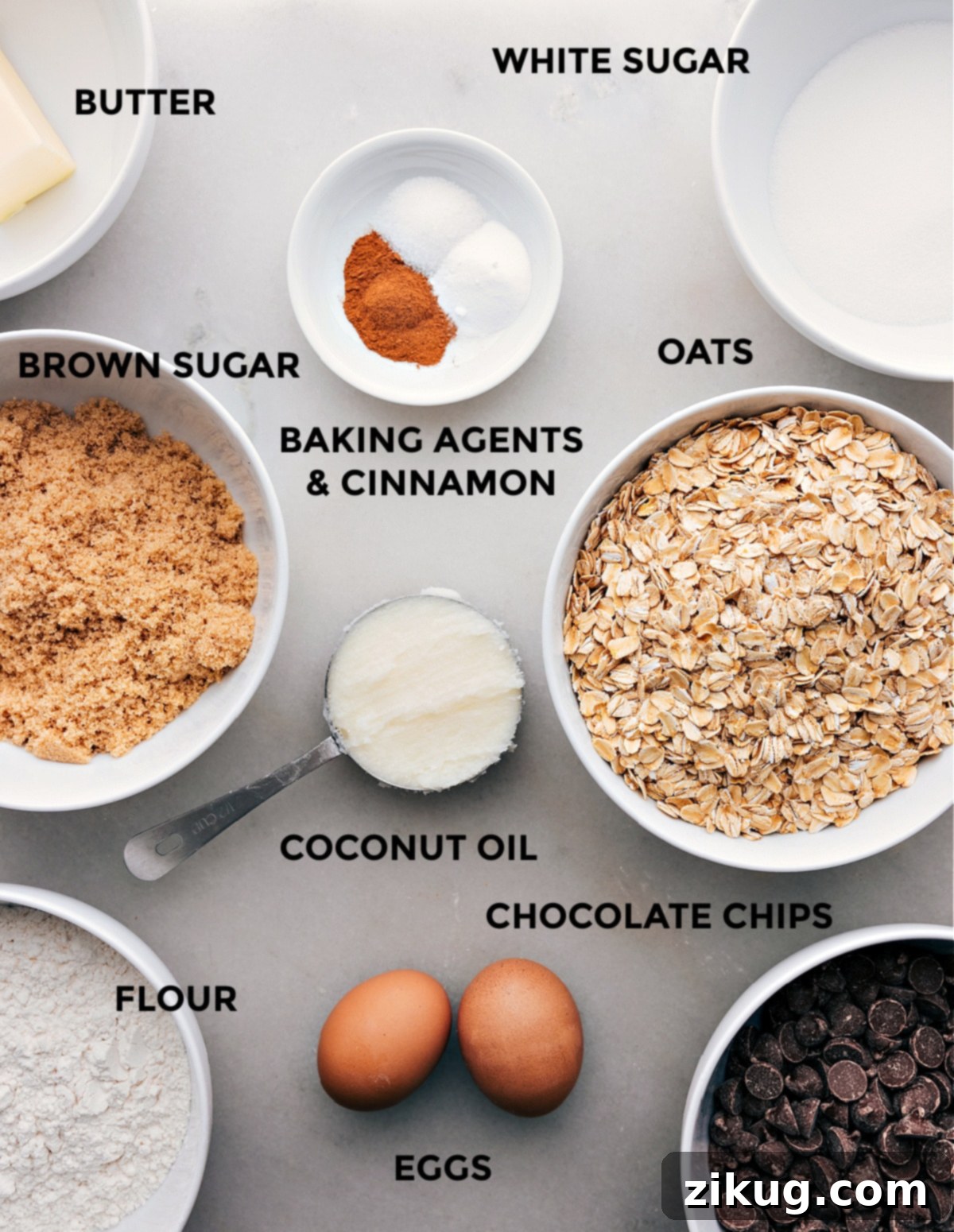
Coconut Oil Oatmeal Cookies: Essential Ingredients
Crafting the perfect cookie starts with understanding the role of each ingredient. Here’s a detailed look at what makes these Coconut Oil Oatmeal Cookies so special:
- Solid Coconut Oil: This is the star of our recipe! It’s crucial to use coconut oil in its solid form, similar to softened butter, for the proper emulsification and texture. Melting it will drastically change the outcome, leading to a different consistency.
- Unsalted Butter: Working in tandem with coconut oil, room temperature unsalted butter contributes to the rich flavor and tender crumb. Ensure it’s truly at room temperature for the best blend.
- Brown Sugar: Not just for sweetness, brown sugar is essential for adding moisture, depth of flavor (with its molasses content), and a lovely caramel-like chewiness to your cookies. You can use either light or dark brown sugar depending on your preference for a richer flavor.
- White Granulated Sugar: This provides foundational sweetness and plays a key role in developing those irresistible crisp edges that perfectly complement the chewy interior.
- Eggs: Room temperature eggs are vital for a smoother, more homogenous dough. They act as a binder, provide structure, and add richness.
- Vanilla Extract: Use pure vanilla extract to significantly amplify and enhance all the sweet flavors in your cookies. It’s a non-negotiable flavor booster.
- Baking Soda: This is your leavening agent, responsible for the perfect rise and spread, giving you those wonderfully puffed cookies with slightly crinkled tops.
- Salt: A pinch of salt is crucial. It doesn’t just add seasoning; it balances the sweetness and brings out the nuanced flavors of the chocolate and oats. Don’t ever skip it!
- Cinnamon: While optional, a dash of ground cinnamon adds a warm, comforting spice note that beautifully complements the oats and chocolate, making the cookies even more aromatic and inviting.
- Old-Fashioned Oats: For the quintessential chewy oatmeal cookie texture, old-fashioned (rolled) oats are paramount. Their larger, flatter flakes provide a heartier bite and absorb moisture differently than quick oats, preventing a dry or mushy cookie.
- All-Purpose Flour: The structural backbone of your cookies. It binds all the ingredients together, providing the necessary body and preventing the cookies from spreading too much.
- Chocolate Chips: The ultimate indulgence! Whether you prefer milk, dark, semi-sweet, or a delightful mix, choose your favorite. The melty pockets of chocolate are what make these oatmeal cookies truly irresistible. Consider using a good quality chocolate for the best flavor.
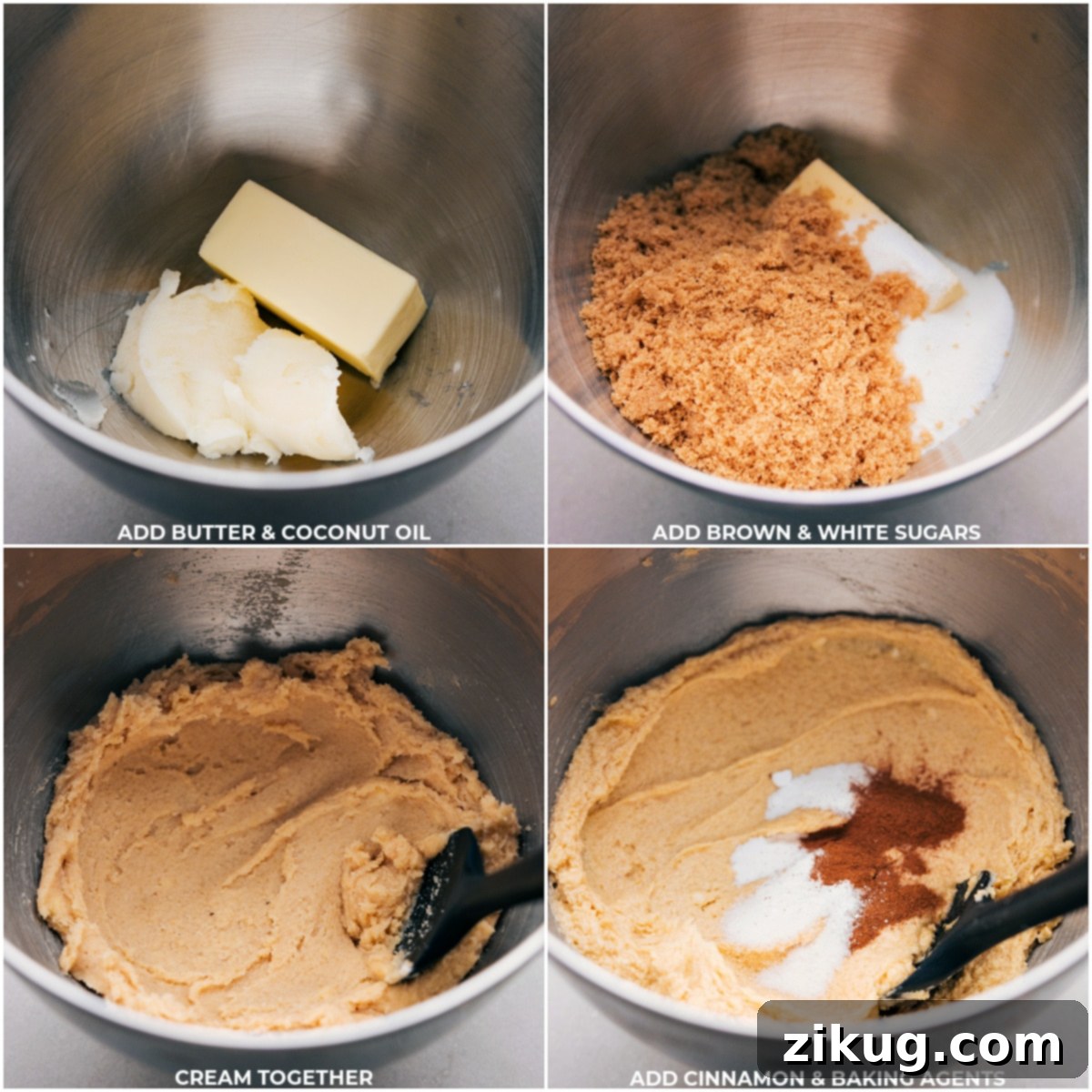
How To Bake The Best Coconut Oil Oatmeal Cookies
Follow these straightforward steps to create a batch of perfectly textured and flavorful coconut oil oatmeal cookies:
- Cream Fats and Sugars: In a large mixing bowl, using a stand mixer with the whisk attachment (or a hand mixer), combine the solid coconut oil, softened unsalted butter, brown sugar, and granulated sugar. Beat on medium speed until the mixture is light, fluffy, and well combined – this can take 2-3 minutes.
- Add Wet Ingredients: Incorporate the room temperature eggs one at a time, beating well after each addition. Stir in the pure vanilla extract until fully blended. Scrape down the sides of the bowl as needed to ensure everything is evenly mixed.
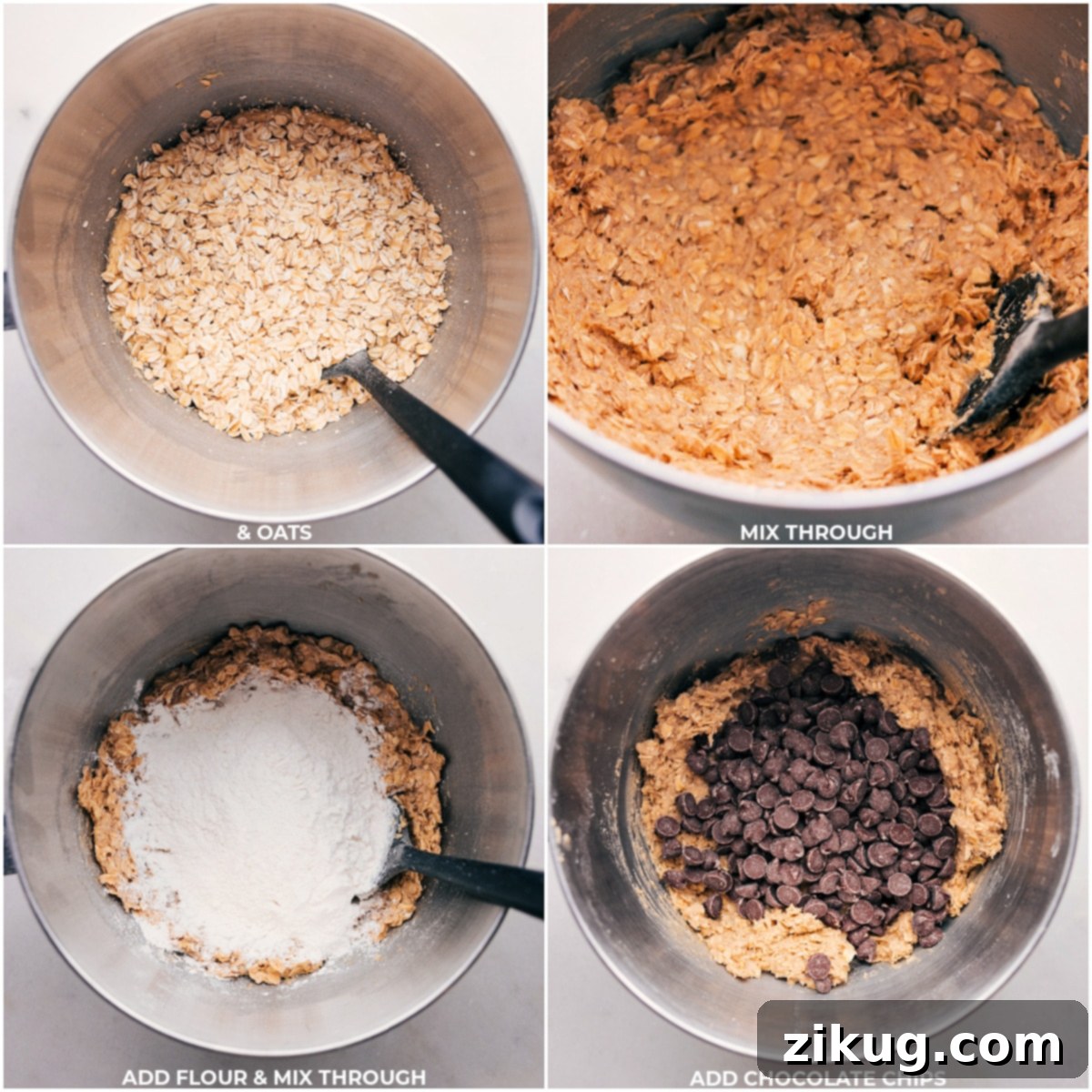
- Introduce Dry Ingredients (Except Flour): Directly add the baking soda, salt, ground cinnamon (if you’re using it for that extra warmth), and the old-fashioned oats to the wet mixture. Beat on low speed just until these dry ingredients are incorporated and no dry streaks remain. Be careful not to overmix.
- Gently Fold in Flour: Gradually add the all-purpose flour to the dough, mixing on the lowest speed until the flour is just combined. Overmixing at this stage can lead to tough cookies, so stop as soon as you no longer see dry flour.
- Fold in Chocolate Chips: Reserve about 1/4 cup of your chocolate chips for pressing on top of the baked cookies. Gently fold the remaining chocolate chips into the dough using a spatula until they are evenly distributed throughout.
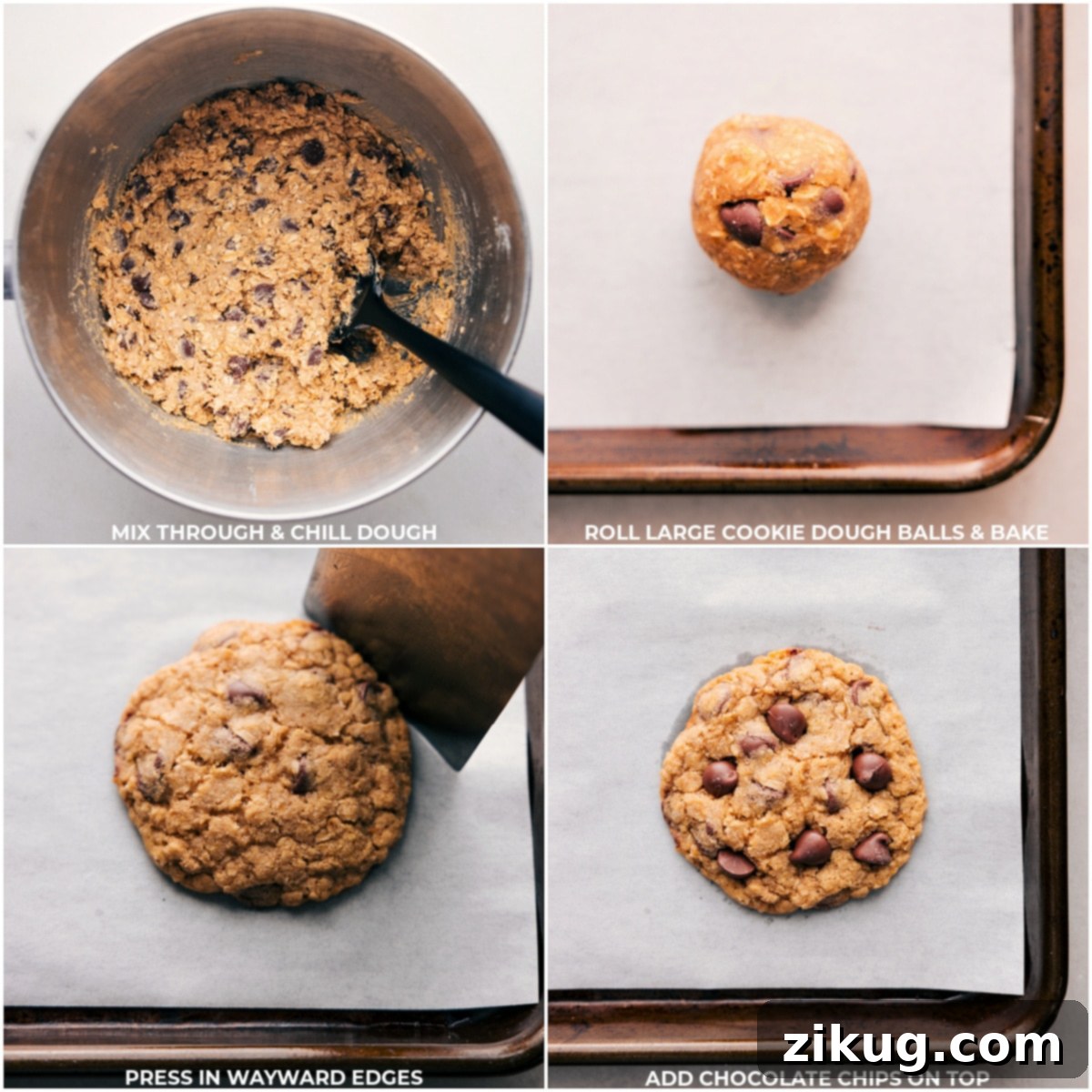
- Chill the Dough: Cover the bowl tightly with plastic wrap and refrigerate the cookie dough for a minimum of 1 hour. Chilling is a crucial step that helps prevent the cookies from spreading too much during baking and allows the flavors to meld beautifully. You can chill the dough for up to 3-4 hours, but avoid longer to prevent it from drying out.
- Preheat Oven & Roll Dough: Once your dough is sufficiently chilled, preheat your oven to 350°F (175°C). Scoop out approximately 3 leveled tablespoons (about 70 grams) of dough for each cookie. Roll the dough into smooth, uniform balls. This recipe should yield about 20 cookies.
- Second Chill (Quick): After rolling, place the dough balls back into the fridge for another quick chill of 5-10 minutes. This firms them up again before baking.
- Bake to Perfection: Arrange 6 chilled dough balls on a baking sheet lined with silicone mats or parchment paper, ensuring they are spaced at least 3 inches apart to allow for proper spreading. Bake for 13-15 minutes. Look for the cookies to lose their glossy appearance on top and for the edges to be set and lightly golden. The centers should still look slightly soft – this indicates a perfectly chewy cookie.
- Garnish & Cool: As soon as you remove the baking sheet from the oven, quickly press the reserved chocolate chips onto the tops of the warm cookies. If any cookies have spread unevenly, use a metal spatula to gently press their edges inward to reshape them into perfect circles. Let the cookies cool on the baking sheet for 3-4 minutes before carefully transferring them to a wire rack to cool completely. This resting period allows them to set and prevents them from breaking.
Expert Recipe Tips for Flawless Coconut Oil Oatmeal Cookies
Achieving cookie perfection is all about the details. Here are some invaluable tips to ensure your Coconut Oil Oatmeal Cookies turn out absolutely fantastic every time:
- Consistency is Key: For uniformly baked cookies, make sure each dough ball is the same size. Using a kitchen scale to measure out exactly 3 tablespoons (approximately 70 grams) of dough per cookie is highly recommended. This ensures consistent baking times and even results.
- Don’t Skip the Chill: Chilling the dough for at least an hour is non-negotiable. This step is vital for two main reasons: it solidifies the fats, preventing the cookies from spreading too thinly during baking, and it allows the flavors to deepen and meld, resulting in a more complex and delicious cookie.
- Coconut Oil: Solid, Not Melted: For the desired texture and structure, the coconut oil should be solid and at room temperature, similar to softened butter. Do not melt it, as this will drastically alter the dough’s consistency and lead to flat, greasy cookies.
- Room Temperature Ingredients: Always use room temperature eggs and butter. Ingredients that are at a similar temperature emulsify more easily, creating a smooth, consistent dough without lumps or separation. This leads to a superior cookie texture.
- Avoid Over-Mixing Flour: Once you add the flour, mix the dough just until you no longer see dry streaks. Over-mixing develops the gluten in the flour, which can lead to tough, dense cookies instead of soft and chewy ones.
- Bake Until Just Set: Keep a close eye on your cookies in the oven. They can go from perfectly baked to overdone very quickly. Look for edges that are lightly golden and centers that appear set but still slightly soft and glossy. Slight underbaking often results in the chewiest cookies.
- The Chocolate Chip Press: Pressing extra chocolate chips onto the warm cookies immediately after baking is a fantastic trick. It ensures beautiful, melty pools of chocolate on top, enhancing both their appearance and deliciousness.
- Tidy Up Edges: If your cookies spread a bit unevenly, use a metal spatula or the back of a spoon to gently push the edges inward as soon as they come out of the oven. This creates perfectly round, aesthetically pleasing cookies.
Quick Oat Tip: Old-Fashioned vs. Quick Oats
Never substitute old-fashioned oats with quick oats in this recipe. Quick oats are pre-cooked, rolled thinner, and absorb liquids much faster. Using them will result in a drier cookie with a mushier, less desirable texture. Stick to old-fashioned (rolled) oats for that signature hearty chewiness that defines a great oatmeal cookie.
Storage & Freezing Instructions
To enjoy your Coconut Oil Oatmeal Cookies fresh for longer, or to prepare them ahead of time, proper storage is key:
Storing Baked Cookies
Allow baked cookies to cool completely on a wire rack before storing. Once cool, transfer them to an airtight container. They will stay fresh and delightfully chewy at room temperature for up to 3-4 days. For optimal freshness, you can also store them in the refrigerator, which may extend their life by a couple of days, though they might firm up slightly.
Freezing Cookie Dough for Later
Freezing cookie dough is a fantastic way to have fresh, warm cookies ready at a moment’s notice. To do this:
- Scoop and roll the dough into individual balls as per the recipe instructions.
- Place the dough balls on a baking sheet lined with parchment paper, ensuring they don’t touch.
- Freeze for about 1 hour, or until solid.
- Once solid, transfer the frozen dough balls to a freezer-safe zip-top bag or airtight container. They can be stored in the freezer for up to 3 months.
- To bake from frozen: Simply place the frozen dough balls on a prepared baking sheet and add 1-3 minutes to the original bake time. You can also thaw them in the refrigerator overnight before baking as usual.
Note on Freezing Baked Cookies: While you can freeze baked cookies, their texture can sometimes change upon thawing, often becoming a bit drier or less appealing than freshly baked ones. For the best experience, we highly recommend freezing the dough instead.
More Irresistible Desserts with Oats You’ll Love:
If you’re a fan of the wholesome goodness of oats in your desserts, don’t stop here! Explore these other delightful oat-centric recipes:
- Decadent Caramel Oatmeal Cookies
- Wholesome Soft-Baked Oatmeal Bars
- Classic Coconut Oatmeal Cookies (Butter-Based)
- Nostalgic Oatmeal Creme Pies
- Hearty & Flavorful Cowboy Cookies
Print Recipe
Coconut Oil Oatmeal Cookies
Chelsea Lords
25 minutes
15 minutes
1 hour
10 minutes
1 hour
50 minutes
20
cookies
Equipment
-
Sheet pan (15″ x 10″)
-
Silicone baking mat or parchment paper
-
Kitchen Scale
Ingredients
- 1/2 cup coconut oil (solid, do not melt! See Note 1)
- 1/2 cup unsalted butter (at room temperature)
- 1 packed cup brown sugar (light or dark)
- 1/2 cup granulated sugar
- 2 large eggs (at room temperature)
- 1-1/2 teaspoons vanilla extract
- 1 teaspoon baking soda
- 1 teaspoon salt
- 3/4 teaspoon ground cinnamon (optional, but recommended)
- 3 cups old-fashioned oats
- 1-1/2 cups all-purpose flour
- 2 cups milk chocolate chips (divided, or use semi-sweet/dark or a combo!)
Instructions
-
Pro Tip for Accuracy: For the most precise measurements, especially with baking, consider using a kitchen scale set to grams. While this recipe provides US customary measurements, converting to metric (by toggling a metric option if available, or manually converting) and weighing ingredients directly into your mixing bowl on the scale can greatly improve consistency and results. This eliminates potential errors from inconsistent measuring cup packing.
-
Cream Fats & Sugars: In the bowl of a stand mixer fitted with the whisk attachment (or using a hand mixer in a large bowl), combine the solid coconut oil, softened unsalted butter, packed brown sugar, and granulated white sugar. Beat on medium speed for 2-3 minutes until the mixture is light, fluffy, and thoroughly combined. Scrape down the sides of the bowl as needed to ensure even mixing.
-
Add Wet Ingredients: Add the room temperature eggs one at a time, beating well after each addition until fully incorporated. Mix in the vanilla extract until just combined. The mixture should be smooth.
-
Incorporate Dry Ingredients (Excluding Flour): Directly add the baking soda, salt, ground cinnamon (if using), and old-fashioned oats into the wet ingredients. Mix on low speed until everything is just incorporated. Be careful not to overmix, as this can develop gluten too early and affect the cookie’s texture.
-
Fold in Flour & Chocolate Chips: Gently mix in the all-purpose flour until no dry streaks remain in the dough. Immediately stop mixing once the flour is incorporated. Then, reserve approximately 1/4 cup of the chocolate chips for later, and fold the remaining 1-3/4 cups of chocolate chips into the dough using a spatula until evenly distributed.
-
Chill the Dough (First Round): Cover the bowl tightly with plastic wrap and refrigerate the cookie dough for at least 1 hour. This chilling period is crucial; it solidifies the fats, which helps prevent the cookies from spreading too much during baking, and it allows the flavors to deepen. Do not chill for longer than 3-4 hours to prevent the dough from drying out excessively.
-
Scoop & Roll: Once the dough is chilled, scoop out 3 leveled tablespoons (about 70g) of dough for each cookie. Roll the portions into uniform balls. You should get approximately 20 cookies from this recipe.
-
Preheat Oven & Chill Again (Briefly): Preheat your oven to 350°F (175°C). While the oven preheats, place the rolled dough balls back into the fridge for an additional 5-10 minutes. This quick secondary chill helps them hold their shape even better.
-
Bake: Place 6 chilled dough balls at a time on a sheet pan lined with silicone mats or parchment paper, ensuring they are spaced at least 3 inches apart to allow for proper spread. Bake for 13-15 minutes. The cookies are done when their tops lose their glossy appearance and the edges are lightly golden, while the centers still appear slightly soft. This yields a cookie with soft, chewy centers and crisp edges.
-
Garnish & Cool: As soon as you remove the cookies from the oven, immediately press the reserved 1/4 cup chocolate chips onto the tops of the warm cookies. If desired, use a metal spatula to gently press any ragged edges inward to create perfectly round cookies. Allow the cookies to cool on the baking sheet for 3-4 minutes before carefully transferring them to a wire rack to cool completely. This resting period helps them set and prevents breakage.
Recipe Notes
Storage: Store cooled, baked cookies in an airtight container at room temperature for up to 3-4 days. For longer storage, freeze rolled dough balls as described in the “Storage & Freezing Instructions” section above. Baked cookies can be frozen, but are best when dough is frozen and baked fresh.
Nutrition Information
|
Calories: 176kcal
|
Carbohydrates: 25g
|
Protein: 3g
|
Fat: 7g
|
Saturated Fat: 5g
|
Trans Fat: 1g
|
Cholesterol: 12mg
|
Sodium: 77mg
|
Potassium: 86mg
|
Fiber: 2g
|
Sugar: 10g
|
Vitamin A: 20IU
|
Vitamin C: 1mg
|
Calcium: 18mg
|
Iron: 1mg
Nutrition information is automatically calculated and should only be used as an approximation.
Loved this recipe? Leave a comment below and share your thoughts!