
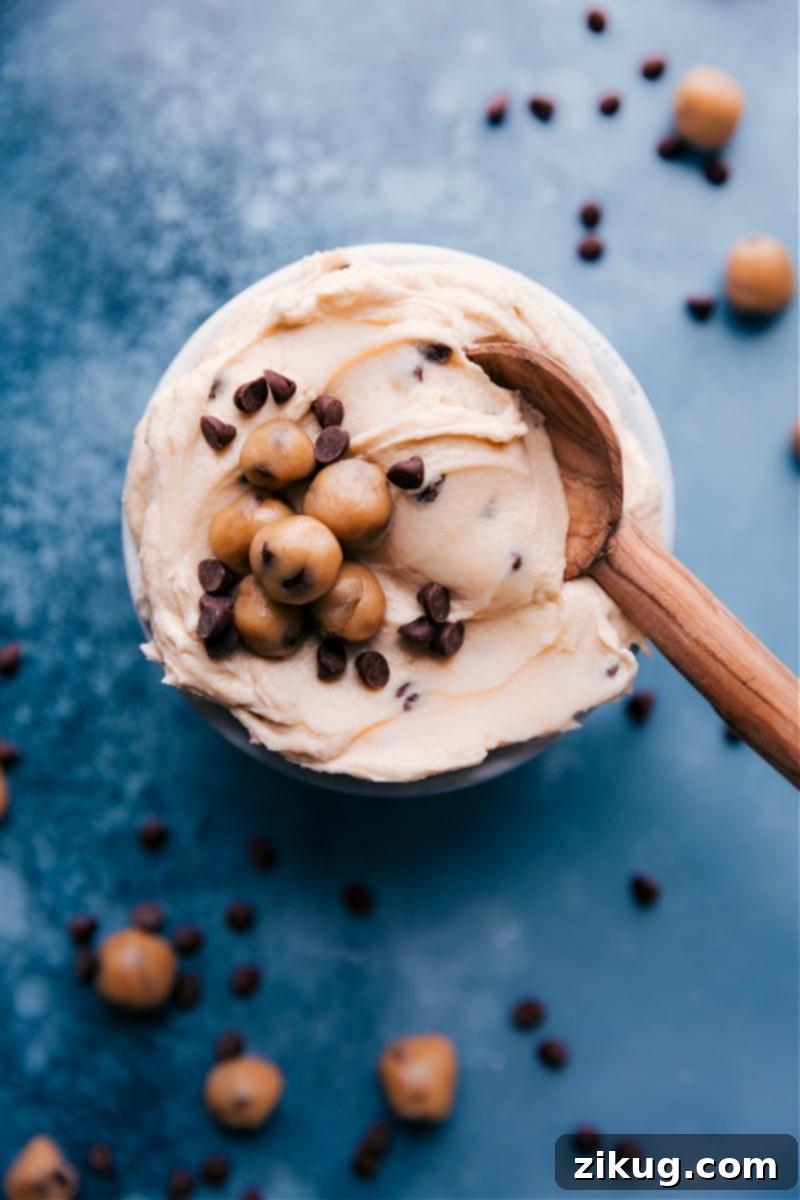
Indulge in the ultimate dessert experience with our irresistible Cookie Dough Frosting. This recipe masterfully combines a luxuriously rich vanilla buttercream with perfectly crafted, safe-to-eat cookie dough, resulting in a frosting that’s incredibly light, fluffy, and bursting with authentic cookie dough flavor. Prepare to elevate your desserts to a whole new level!
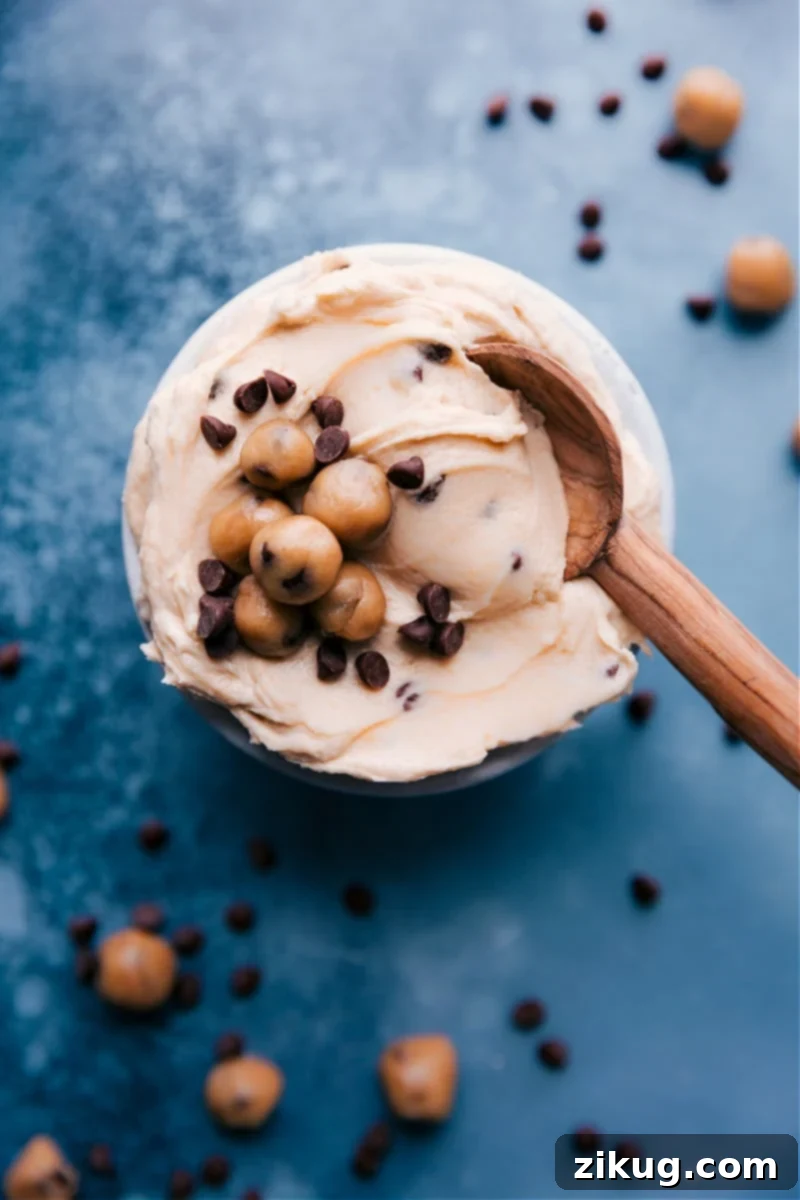
Decadent Cookie Dough Frosting: The Ultimate Dessert Topping
If you’re anything like us, you adore the flavor of cookie dough. And once you discover the secret to making truly amazing edible cookie dough, the possibilities are endless! Why confine such a delicious creation to just a spoon? We believe in finding every excuse to incorporate it into more delightful treats. This exact philosophy led us to combine our favorite edible cookie dough with a luscious vanilla buttercream frosting. Yes, we absolutely went there, and you’ll be so glad we did!
This Cookie Dough Frosting isn’t just sweet; it’s a revelation. It boasts a perfectly smooth, light, and airy texture that makes it an ideal accompaniment for an array of desserts, from humble cupcakes to elaborate cakes. What truly sets this recipe apart from many other cookie dough frostings is its complete lack of grittiness or graininess. Our unique method involves preparing the edible cookie dough and the vanilla buttercream separately before gently combining them. This careful approach ensures a consistently smooth and delightful texture in every single bite.
Why You’ll Fall in Love with This Cookie Dough Frosting
- Unmatched Flavor: Delivers an intense and authentic cookie dough taste that satisfies every craving.
- Perfect Texture: Light, fluffy, and exceptionally smooth, without any unpleasant graininess often found in similar recipes.
- Versatile Application: Ideal for frosting cakes and cupcakes, serving as a delicious dip, or even enhancing your morning oatmeal.
- Food Safety Focused: Specially formulated edible cookie dough ensures a worry-free indulgence, addressing common concerns about raw flour and eggs.
- Easy to Make: With clear, step-by-step instructions, even novice bakers can achieve professional-quality results.
- Make-Ahead Friendly: Both the edible cookie dough and the frosting can be prepared in advance, saving you time for entertaining or busy days.
Key Ingredients for the Best Cookie Dough Frosting
Crafting this incredible frosting requires two main components: the edible cookie dough and the rich vanilla buttercream. Here’s a closer look at what you’ll need for each:
- Edible Cookie Dough Dry Ingredients:
- All-Purpose Flour: Essential for the dough’s structure. Remember, heat-treating the flour is crucial for food safety.
- Brown Sugar: Adds moisture, chewiness, and that classic deep molasses flavor. We recommend firmly packed dark brown sugar for a richer taste.
- Granulated Sugar: Contributes to sweetness and helps achieve the desired texture.
- Fine Sea Salt: Balances the sweetness and enhances all the other flavors.
- Miniature Chocolate Chips: The stars of the show! Mini chips are preferred as they integrate smoothly into the frosting and are easy to pipe.
- Edible Cookie Dough Wet Ingredients:
- Unsalted Butter: Melted and then cooled to room temperature. This is vital to prevent a greasy or grainy texture in your cookie dough.
- Pure Vanilla Extract: Provides the warm, classic vanilla aroma and taste.
- Whole Milk or Heavy Cream: Adds moisture and helps bind the dough ingredients together for a perfectly smooth consistency.
- Vanilla Buttercream Frosting Ingredients:
- Unsalted Butter: Crucially, it must be at room temperature for optimal whipping and a truly fluffy frosting.
- Pure Vanilla Extract: Enhances the classic buttercream flavor.
- Heavy Cream: Contributes to the frosting’s richness and light, airy texture.
- Fine Sea Salt: A pinch helps to cut through the sweetness and highlight the vanilla and butter flavors.
- Powdered Sugar (Confectioners’ Sugar): Provides sweetness and fine texture, ensuring a smooth frosting.
Quick Tip: Understanding Buttercream Frosting
What exactly is buttercream? Buttercream is a fundamental type of frosting, renowned for its rich, smooth, and decadent qualities. As its name suggests, it’s primarily crafted from butter and sugar, often enhanced with liquids like milk or cream and flavorings. When you see a professionally frosted cake, there’s a good chance it’s adorned with either buttercream or a lighter whipped cream frosting. Buttercream offers a silkier mouthfeel, while whipped cream frostings tend to be fluffier and less dense. Other popular frosting types include glazes, ganaches, royal icing, and cooked frostings, each offering a unique texture and flavor profile.
Mastering Edible Cookie Dough for Your Frosting
The foundation of this exceptional frosting begins with our meticulously developed edible cookie dough. But what does “edible” truly signify in this context? Traditional raw cookie dough, the kind you might find in a batch destined for chewy chocolate chip cookies, is not considered safe for consumption due to potential food safety risks.
These concerns primarily revolve around two ingredients: uncooked flour and raw eggs. To create a cookie dough that is not only delicious but also completely safe to eat, our recipe is specially formulated. We eliminate raw eggs entirely and, most importantly, we heat treat the flour. This ensures that all components meet stringent safety standards for direct consumption, allowing you to enjoy the delightful taste of raw cookie dough without any worries.
Understanding and Implementing Heat-Treating Flour for Safety
Many home bakers are surprised to learn that raw flour can be a source of foodborne illness in unbaked goods. While it doesn’t appear “raw” in the conventional sense, flour is an unprocessed agricultural product that may harbor harmful bacteria like E. coli. When you bake with flour, the high temperatures of your oven effectively sterilize it, eliminating any potential pathogens. However, when making uncooked recipes like edible cookie dough, this crucial heat step is missing. Therefore, we must actively cook or “heat treat” the flour before use to ensure its safety.
Fortunately, heat-treating flour is a simple and quick process. You have several convenient options:
- Purchase Pre-Heat-Treated Flour: Some specialty stores and online retailers offer flour that has already undergone this safety process. This is the quickest option if available.
- Heat Treat in the Microwave: A fast and efficient method for smaller quantities of flour.
- Heat Treat in the Oven: Ideal for larger batches and ensures even heating.
The full, detailed instructions for each heat-treating method are provided in the recipe card below. However, here are some essential tips to ensure success:
- Cool Completely: After heat-treating, allow the flour to cool down entirely to room temperature before incorporating it into your recipe. You can expedite this by spreading it on a tray and placing it in the refrigerator or freezer for a short period.
- Check for Clumps and Discoloration: Break apart any flour clumps that may form during heating. Critically, discard any discolored (browned or burnt) sections, as these will impart an “off” or bitter flavor to your cookie dough.
- Heat Treat Extra Flour: It’s wise to heat treat a slightly larger amount of flour than what the recipe calls for. This accounts for any potential loss if some portions get accidentally burnt or clumped beyond use.
- Appearance Matters: Properly heat-treated flour should look identical to regular raw flour – light, fluffy, and white. There should be no noticeable change in color or texture, only the assurance of safety.
Endless Ways to Enjoy Your Delicious Cookie Dough Frosting
While we wholeheartedly agree that eating this frosting straight from the bowl is a legitimate and highly enjoyable activity, its versatility means it can enhance countless other treats. Get creative with these delightful serving suggestions:
- Frost Cupcakes: Transform simple cupcakes into extraordinary desserts. This frosting is divine on chocolate cake mix cupcakes.
- An Irresistible Dip: Serve it as a decadent dip for various dippables. We love it with honey graham crackers, classic Oreo® cookies, fresh strawberries, apple slices, or banana chunks.
- Frost a Cake: Elevate any cake into a showstopper. Imagine this luscious Cookie Dough Frosting gracing a rich chocolate cake—pure bliss!
- Top Sugar Cookies: Double down on cookie delight! Frost your favorite soft sugar cookies with this cookie dough frosting for an ultimate sweet experience.
- Graham Cracker Sandwiches: Spread a generous layer between two graham crackers for a simple yet satisfying treat. For extra indulgence, dip the entire sandwich in melted chocolate.
- Stuffed Strawberries: Pipe it into hulled fresh strawberries for an elegant and delicious bite-sized dessert.
- Milkshake Booster: Blend a few spoonfuls into your favorite milkshake for an instant flavor upgrade and an extra creamy texture.
- Brownie Topper: Spread over a cooled pan of your go-to brownie recipe for an unforgettable dessert bar.
- Jazz Up Breakfast: Add a dollop to a bowl of oatmeal for a fun and surprisingly delicious breakfast treat.
Expert Tips for Flawless Cookie Dough Frosting
Achieving the perfect texture and flavor for your cookie dough frosting is easy with these insider tips:
- Room Temperature Butter is Non-Negotiable: For both the edible cookie dough (after melting, then cooling) and the buttercream, ensure your butter is at true room temperature. If it’s too cold, it won’t cream properly, resulting in a lumpy or dense frosting. If it’s too warm or melted (for the frosting), it will separate and create a greasy mess. If you’re short on time, here are some quick tips to bring butter to temperature.
- Opt for Miniature Chocolate Chips: Size matters! Larger chocolate chips can be overwhelming in the smooth frosting and will clog smaller piping tips. Miniature chocolate chips, however, distribute evenly and provide just the right amount of chocolatey goodness in every bite.
- Chill Your Edible Cookie Dough: After preparing the edible cookie dough, take a moment to chill it in the refrigerator while you work on the frosting. This chilling period allows the dough to firm up slightly, helps the sugar granules to dissolve further for an even smoother texture, and allows the flavors to meld and intensify beautifully.
- Make Edible Cookie Dough Ahead: For ultimate convenience, the edible cookie dough can be prepared up to several days in advance. Store it in an airtight container in the fridge. If you’re making it ahead, remember that it will become quite firm when chilled. Let it sit out at room temperature for about 30 minutes before adding it to the frosting to soften slightly, making it easier to incorporate.
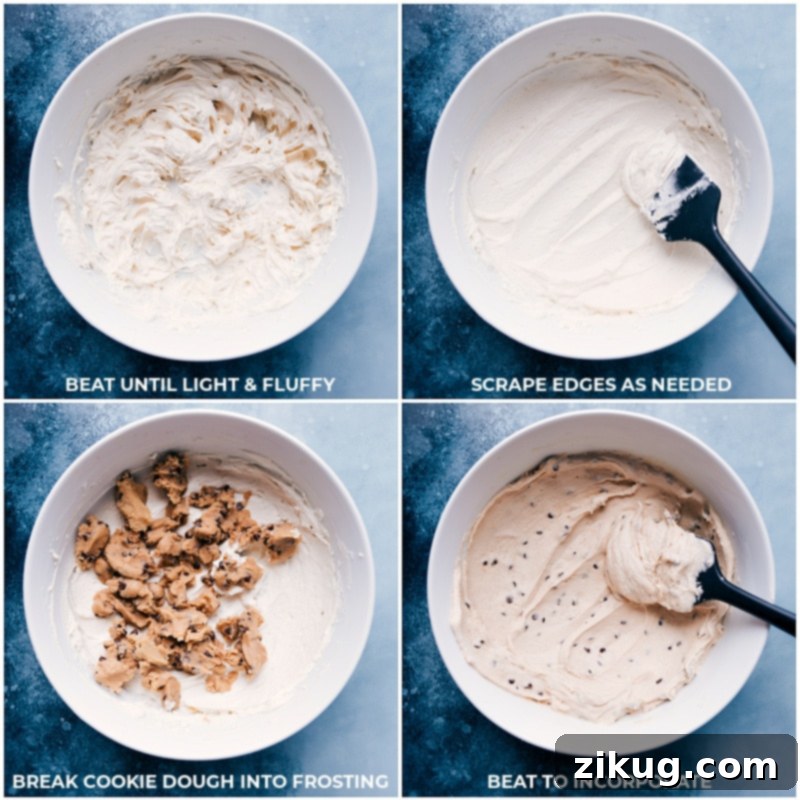
- Mixing the Cookie Dough into Frosting: When combining the cookie dough with the prepared buttercream, mix on low speed just until incorporated. It’s perfectly fine, and even desirable, to have small rippled chunks of cookie dough throughout the frosting – this adds to the unique texture and visual appeal. If you plan to pipe the frosting through a very small or intricate tip, you may wish to beat it slightly longer until all chunks are broken down and evenly distributed.
More Irresistible Dessert Recipes to Explore
If you love this Cookie Dough Frosting, you’ll surely enjoy these other delectable dessert creations:
- Brownie Batter Dessert Cheese Ball: A creamy, rich, and fun dessert perfect for sharing.
- Coconut Macaroons with Chocolate Drizzle: Chewy, sweet, and topped with a luscious chocolate finish.
- Edible Cake Batter with Sprinkles: All the joy of raw cake batter, made completely safe and extra festive.
- Salted Caramel Cookies with Cream Cheese Frosting: A delightful combination of sweet and salty, topped with a rich frosting and caramel drizzle.
- No-Bake Peanut Butter Cheesecake: A heavenly, easy-to-make dessert featuring an Oreo cookie crust.

Cookie Dough Frosting Recipe
This Cookie Dough Frosting masterfully blends rich vanilla buttercream with safe-to-eat edible cookie dough for a light, fluffy, and irresistibly cookie-dough-flavored treat!
Video
For a visual guide on how to make this delicious Cookie Dough Frosting, watch our video tutorial:
Equipment
- Stand mixer
- Large sheet pan (for heat-treating flour)
- Microwave-safe bowl (for heat-treating flour)
- Rubber spatula
- Whisk
- Measuring cups and spoons
Ingredients
Edible Cookie Dough
- 3/4 cup all-purpose flour (spoon and level to measure)
- 1/3 cup unsalted butter, melted and cooled to room temperature
- 1/3 cup brown sugar, firmly packed (light or dark, dark preferred)
- 3 tablespoons granulated sugar
- 1/4 teaspoon fine sea salt
- 1 teaspoon pure vanilla extract
- 1 tablespoon whole milk or heavy cream
- 1/3 cup mini chocolate chips
Frosting
- 8 tablespoons unsalted butter (1/2 cup), at room temperature
- 1-1/2 teaspoons pure vanilla extract
- 1 tablespoon heavy cream
- 1/4 teaspoon fine sea salt
- 1-1/2 cups powdered sugar
Instructions
- Heat Treat Flour: Begin by heat-treating your flour to ensure it’s safe for consumption. You can use either the microwave or oven method (see Note 1 below for detailed instructions). Use a food thermometer to confirm the flour has reached a safe internal temperature of 165°F (74°C). Allow the flour to cool completely to room temperature before proceeding. Discard any burnt or discolored flour, as it will impart an unpleasant taste. Once cooled, spoon the flour into a measuring cup and level off the top with the back of a knife. Set aside in a clean bowl.
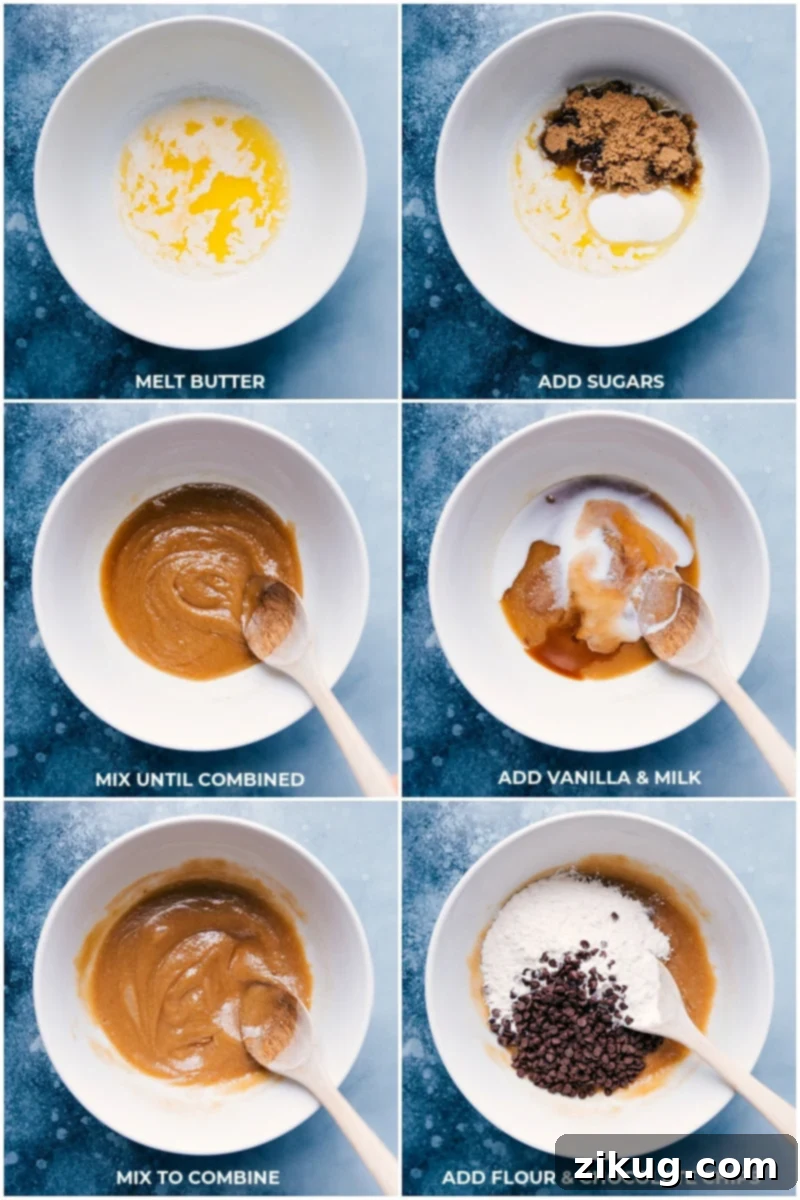
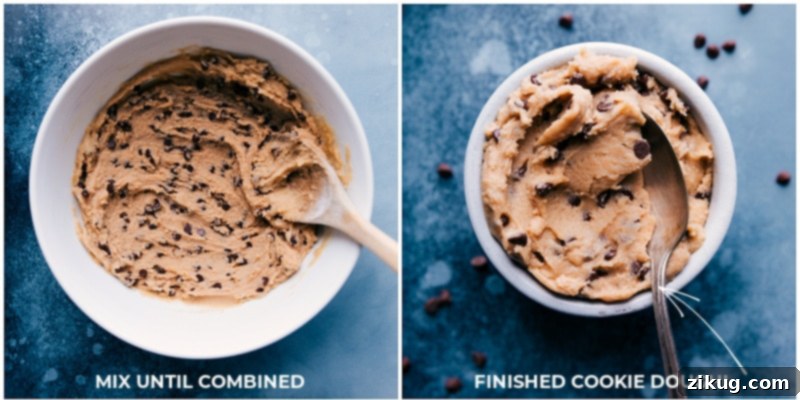
- Prepare Edible Cookie Dough: While the flour cools, melt the butter and set it aside to cool back down to room temperature. It’s crucial that the butter isn’t hot, as hot butter can melt the sugars and result in a greasy or grainy cookie dough. In a medium bowl, combine the cooled melted butter, brown sugar, and granulated sugar. Stir briskly or whisk for 1-2 minutes until the mixture is smooth and fully integrated, with no butter separating. Next, stir in the salt, vanilla extract, and milk (or cream) until well combined. Finally, fold in the cooled, heat-treated flour and mini chocolate chips. Mix until everything is just combined and smooth. Transfer the cookie dough to the fridge to chill while you prepare the frosting.
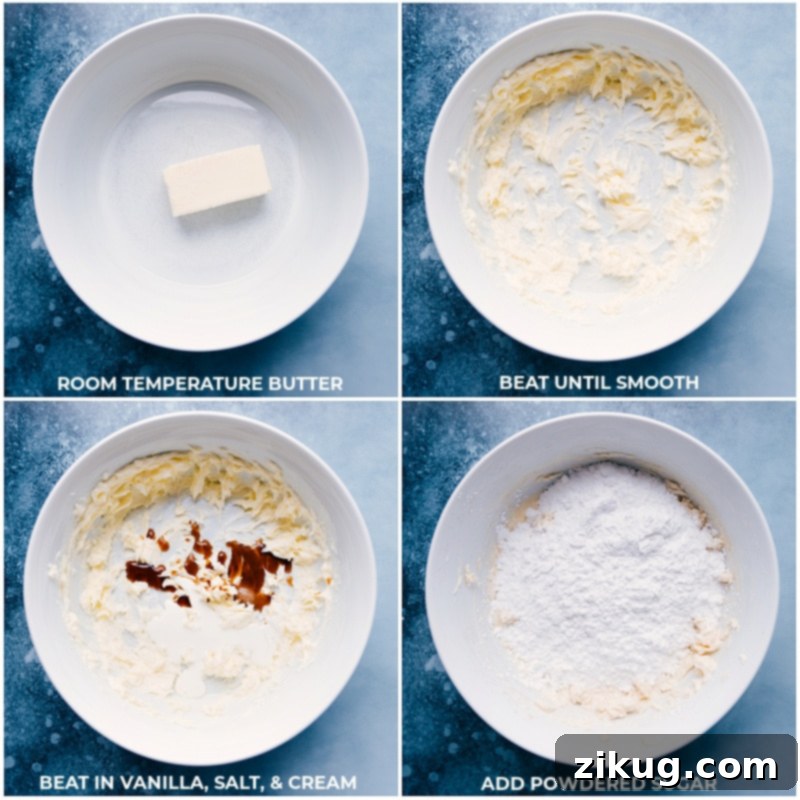
- Make the Vanilla Buttercream Frosting: In the bowl of a stand mixer fitted with the paddle attachment, add the room-temperature unsalted butter. Beat on medium speed for 3 minutes until the butter is completely smooth, light, and fluffy, scraping down the sides of the bowl with a spatula as needed. Add the vanilla extract, heavy cream, and salt, then beat on low speed to combine. Gradually add the powdered sugar to the mixture on low speed until fully incorporated. Once combined, increase the mixer speed to medium-high and beat for another 3-4 minutes until the frosting becomes very light, airy, and noticeably whiter in color.
- Combine Cookie Dough and Frosting: Remove the chilled cookie dough from the fridge. Break or crumble it over the prepared vanilla buttercream in the stand mixer. Beat on low speed for approximately 15-20 seconds, just enough to incorporate the cookie dough into the frosting. It’s perfectly desirable to have small, delightful ripples or chunks of cookie dough throughout – this creates a wonderful texture! If you plan to pipe the frosting through a very small tip, you might beat it slightly longer to ensure all chunks are finely broken down.
- Serve and Store: Your delicious Cookie Dough Frosting is now ready to enjoy! Use it as a dip for graham crackers or Oreo cookies, or frost your favorite cake or cupcakes. It’s especially fantastic in Cookie Dough Oreos. Any leftover frosting can be stored in an airtight container in the refrigerator for up to one week.
Recipe Notes
Note 1: Detailed Flour Heat-Treating Methods:
- Heat treat extra flour: Always heat treat about 1/2 cup more flour than your recipe requires to account for potential burning or clumping.
- Microwave Method: Place the desired amount of flour in a microwave-safe bowl. Microwave in 30-second intervals, stirring thoroughly between each burst, to prevent uneven cooking or burning. After each interval, check the temperature with a food thermometer. Continue until the flour consistently reaches 165°F (74°C).
- Oven Method: Preheat your oven to 300°F (150°C). Line a large baking sheet with a non-stick liner or parchment paper. Spread the flour evenly across the prepared pan. Bake for approximately 3-6 minutes, stirring and checking the temperature every 2 minutes, until the flour reaches an internal temperature of 165°F (74°C).
Storage: Store this delightful cookie dough frosting in an airtight container in the refrigerator for up to 1 week. For best results, allow it to come to room temperature for about 15-30 minutes before serving or using to frost if it has firmed up too much.
Nutrition
Serving: 1 serving | Calories: 434kcal | Carbohydrates: 54g | Protein: 3g | Fat: 23g | Saturated Fat: 15g | Trans Fat: 1g | Cholesterol: 57mg | Sodium: 160mg | Potassium: 48mg | Fiber: 1g | Sugar: 36g | Vitamin A: 668IU | Vitamin C: 1mg | Calcium: 33mg | Iron: 1mg
Nutrition information is automatically calculated and should be used as an approximation.
Love this recipe? Leave a comment below and share your thoughts!