
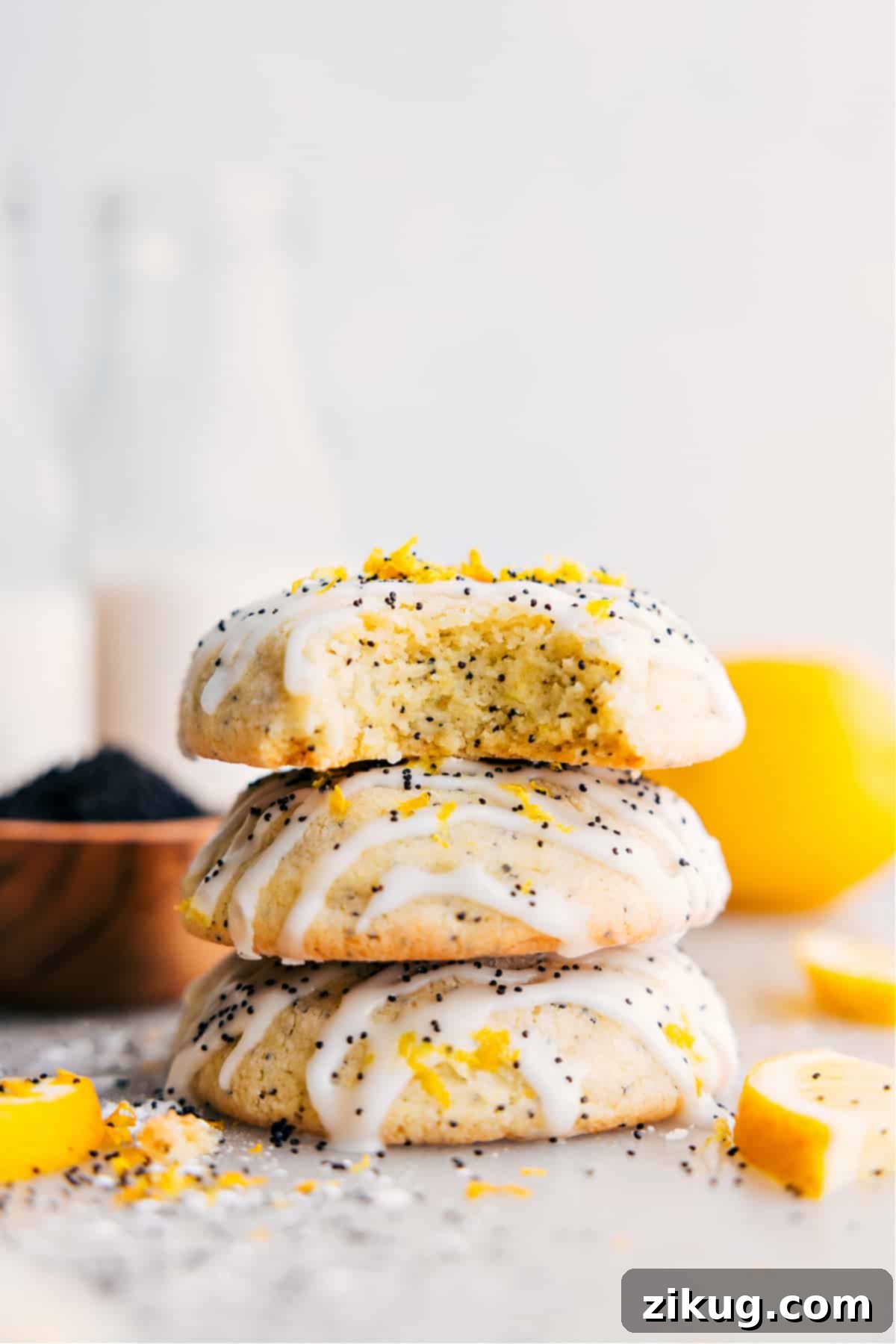
Lemon Poppy Seed Cookies deliver an exquisite burst of vibrant, intense lemon flavor, beautifully balanced with a subtle crackle and delightful crunch from the poppy seeds. These truly exceptional, bakery-style cookies are generously coated in a shimmering, sweet, and tangy lemon glaze that gracefully melts into the cookie, creating an irresistible treat that’s perfect for any occasion.
For those who adore classic citrus delights, you might also enjoy our original sugar-cookie-esque Lemon Cookies. If you’re looking to expand your baking repertoire, explore our extensive collection of cookie recipes for more delicious inspiration.
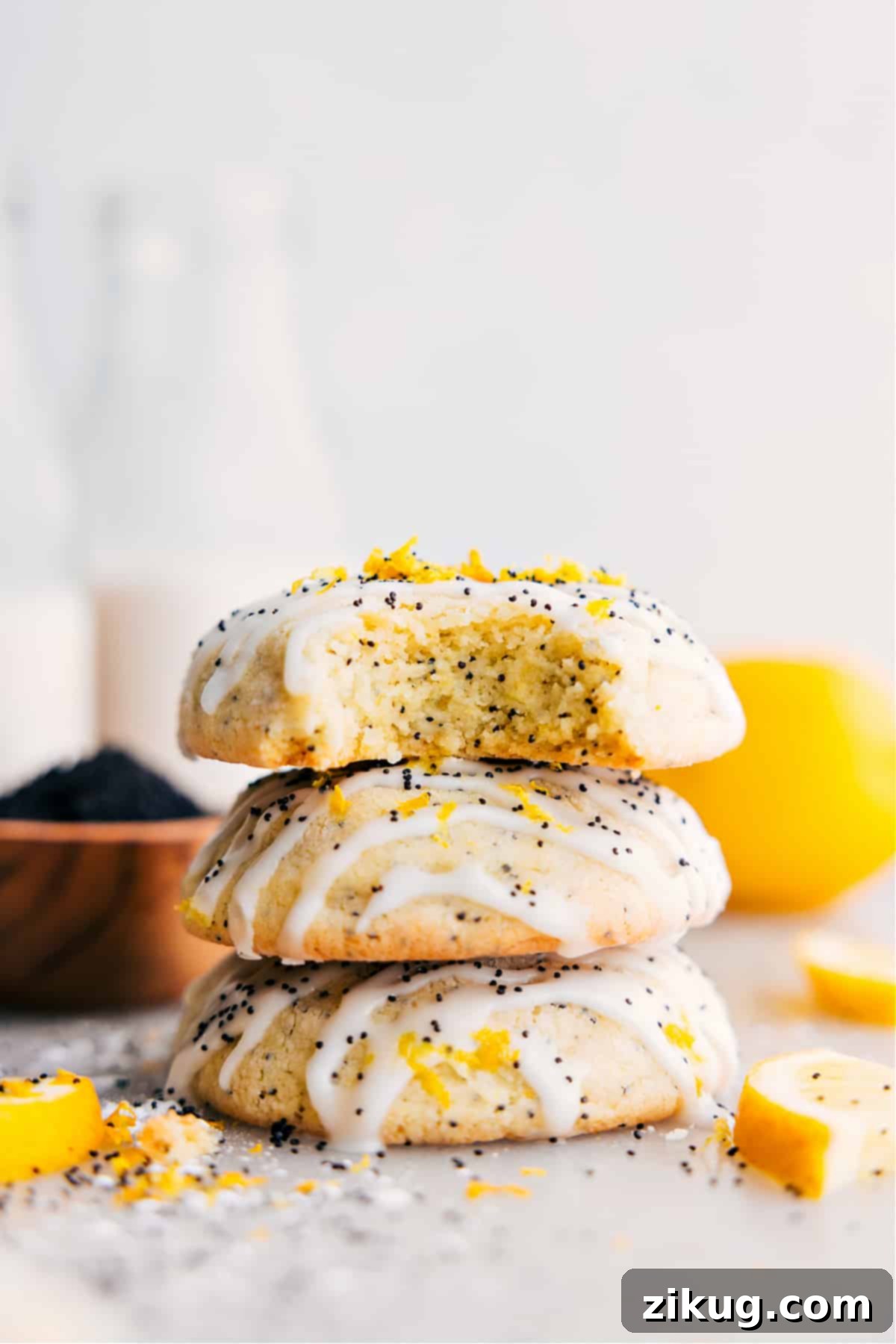
The Ultimate Lemon Poppy Seed Cookie Recipe: A Bakery-Style Delight for Citrus Lovers
The enchanting combination of bright lemon and subtly crunchy poppy seeds has long been a culinary favorite, celebrated for its unique ability to bring freshness and textural intrigue to countless dishes. This dynamic duo is a personal obsession, prompting me to explore its versatility across various recipes. I’ve previously highlighted this beloved pairing in fluffy Lemon Poppy Seed Muffins, wholesome Lemon Poppy Seed Bread, and even an unexpectedly refreshing Lemon Poppy Seed Broccoli Salad. Given my profound love for this flavor profile, it was only a matter of time before these two star ingredients found their way into my absolute favorite type of dessert: a chewy, tender, and utterly satisfying cookie. And let me tell you, these Lemon Poppy Seed Cookies are truly unbeatable!
These sugar cookies are the very essence of summer captured in a bite – fresh, vibrant, and tangy, with just the right amount of lemon zest to make your taste buds tingle. Each mouthful offers a delightful, subtle crunch from the perfectly scattered poppy seeds, while a sweet, glistening lemon glaze provides the perfect finish. They are an ideal treat for warm-weather gatherings, cozy afternoon tea, or simply a delightful indulgence when you crave something bright and comforting. These cookies don’t just taste good; they transport you to a sunny day, embodying pure joy in every single morsel.
Why This Lemon Poppy Seed Cookie Recipe Truly Shines
What sets our Lemon Poppy Seed Cookies apart from others? It’s a carefully orchestrated balance of robust flavor and an exquisite texture that makes them truly exceptional. Many lemon cookie recipes often fall short, resulting in cookies that are either too thin, overly dry, or lack that intense, mouth-puckering lemon punch. Our recipe, however, is meticulously crafted to deliver a consistently thick, soft, and wonderfully chewy cookie every single time, absolutely bursting with an invigorating lemon aroma and taste. These aren’t just good cookies; they are an experience in bakery-quality perfection, engineered to impress even the most discerning palate.
We’ve fine-tuned every element to ensure a satisfyingly substantial bite without any hint of excessive density. The lemon flavor is bright and prominent, without being overwhelmingly tart, achieving that perfect sweet-tart equilibrium. The subtle, earthy notes of the poppy seeds introduce a delightful textural contrast and an additional layer of complexity, preventing the cookie from being one-dimensional. The final touch, a luscious, vibrant lemon glaze, not only enhances the visual appeal with its glossy finish but also locks in moisture and adds an extra dimension of sweetness and tang that flawlessly complements the tender cookie base. Prepare to elevate your cookie game with this outstanding recipe!
Mastering Lemon Poppy Seed Cookies: Achieving Perfect Chewy Texture and Intense Citrus Flavor
Crafting Lemon Poppy Seed Cookies that boast both an impeccable, thick, and wonderfully chewy texture, along with a powerfully strong and vibrant lemon flavor, can be a challenging endeavor. Many bakers face a common hurdle: introducing extra liquid, such as lemon juice, into cookie dough often results in thin, crisp cookies. While a crispy cookie has its place, it’s certainly not the desired outcome for the plush, bakery-style treat we’re aiming for with this particular recipe.
Through careful experimentation and dedication, we’ve perfected the technique, uncovering two crucial secrets to infuse a strong, authentic lemon flavor while simultaneously ensuring your cookies remain wonderfully thick and delightfully chewy. These methods allow us to maximize the citrus impact without compromising the structural integrity, delightful chewiness, or overall appeal of the cookie. Embrace these tips for an unparalleled lemon cookie experience:
- Embrace Lemon Zest: The Concentrated Powerhouse. Unlike many recipes that call for both the zest and juice of lemons, our method focuses predominantly on the zest. Why this emphasis? Lemon zest is where the majority of the lemon’s essential oils—and thus, its most potent and aromatic flavor—are concentrated. It delivers an enormous punch of bright, fresh flavor without introducing any additional liquid that could thin out your dough and alter the cookie’s intended texture. This recipe specifically calls for a generous amount of zest, and every bit of it is absolutely essential for achieving that vibrant, unmistakable lemon aroma and taste. For optimal results and to avoid any bitterness, please refer to our “Quick Tip” below on proper zesting technique, ensuring you only capture the yellow outer layer.
- Leverage Pure Lemon Extract: The Flavor Amplifier. It is paramount not to confuse lemon extract with lemon juice! Lemon extract is a highly concentrated flavor enhancer, much akin to vanilla extract, specifically formulated to impart an intense, citrusy lemon flavor without adding any unnecessary moisture. By utilizing pure lemon extract in conjunction with zest, we can effectively pack in as much lemon flavor as possible, guaranteeing that every single bite is bursting with bright citrus. This strategic ingredient choice ensures the robust lemon profile without altering the perfect, chewy consistency of these cookies, which lemon juice would inevitably do. You can typically find pure lemon extract (always opt for a pure variety for the most authentic and potent flavor) alongside other baking extracts and spices in your local grocery store.
By carefully incorporating these two powerful lemon flavor agents – zest for its natural oils and extract for concentrated intensity – we ensure that your Lemon Poppy Seed Cookies will be exquisitely rich in citrus taste while maintaining their desired thick, soft, and wonderfully chewy texture. This dual approach is the key to an unparalleled and truly memorable lemon cookie experience.
Quick Tip: Mastering Lemon Zesting for Maximum Flavor
When you’re zesting lemons for this recipe, or any recipe, it is critically important to **avoid the white pith of the lemon**. This underlying white layer is notoriously bitter and can quickly detract from the bright, fresh lemon flavor we are so carefully trying to achieve. To extract only the flavorful outer layer, use a fine microplane grater (like this highly recommended one). Gently grate only the very outside yellow part of the lemon, rotating the fruit as you go. Stop immediately as soon as you begin to see any white pith appearing. This meticulous technique ensures you capture all the aromatic oils without introducing any unwanted bitterness, leading to a superior lemon flavor in your cookies.
Baking with Poppy Seeds: Simple Integration for Perfect Texture
Poppy seeds are an integral and delightful component of these cookies, providing not only a distinctive visual appeal with their tiny black specks but also that wonderful, subtle textural crunch that makes each bite interesting. While you might encounter some recipes that suggest grinding or soaking poppy seeds beforehand – often to enhance their flavor, soften their texture, or release their oils – neither of these preliminary steps is necessary for our Lemon Poppy Seed Cookie recipe. We’ve specifically designed this recipe for ease, allowing you to achieve optimal results without any added fuss or complicated prep.
For these particular cookies, the process couldn’t be simpler. Just retrieve your poppy seeds from their spice container, accurately measure the required amount, and mix them directly into the cookie dough as instructed. No special preparation is needed! The natural texture and mild, nutty flavor of the whole poppy seeds integrate beautifully into the cookie, creating that signature delicate crackle and earthy undertone that makes these cookies so delightful. This straightforward approach saves valuable time in the kitchen and ensures a consistent, delicious outcome every time you bake a batch.
Quick Tip: Where to Find Poppy Seeds in Your Grocery Store
Poppy seeds are a common ingredient found in a variety of cuisines and are widely used in both baking and savory dishes. You’ll typically find them conveniently located in the spice aisle of most well-stocked grocery stores, often alongside other dried herbs and spices. If they’re not immediately apparent there, another excellent place to check is the baking aisle, especially near other specialty baking ingredients like various extracts, sprinkles, or decorative sugars. They are usually sold in small containers or resealable bags.
Expert Tips for Consistently Perfect Lemon Poppy Seed Cookies
Achieving bakery-quality Lemon Poppy Seed Cookies right in your own kitchen is entirely within reach, especially when you follow these critical expert techniques. These tips are designed to ensure your cookies are consistently soft, wonderfully chewy, and absolutely bursting with vibrant lemon flavor every single time:
- Always Use Room-Temperature Ingredients: The Foundation of Good Baking. This tip is absolutely paramount for baking success, particularly when creaming butter and sugar. Room-temperature butter is softer and more pliable, allowing it to cream more smoothly and efficiently with sugar. This process incorporates more air into the mixture, which is crucial for creating a lighter, more tender cookie texture. Similarly, room-temperature eggs emulsify much better with the butter mixture, leading to a more homogenous and stable dough. If your butter and eggs are cold, plan ahead by leaving them out on the counter for 45 minutes to an hour before you begin baking. For those times you forget or are short on time, you can explore some handy tricks to bring them to room temperature quicker.
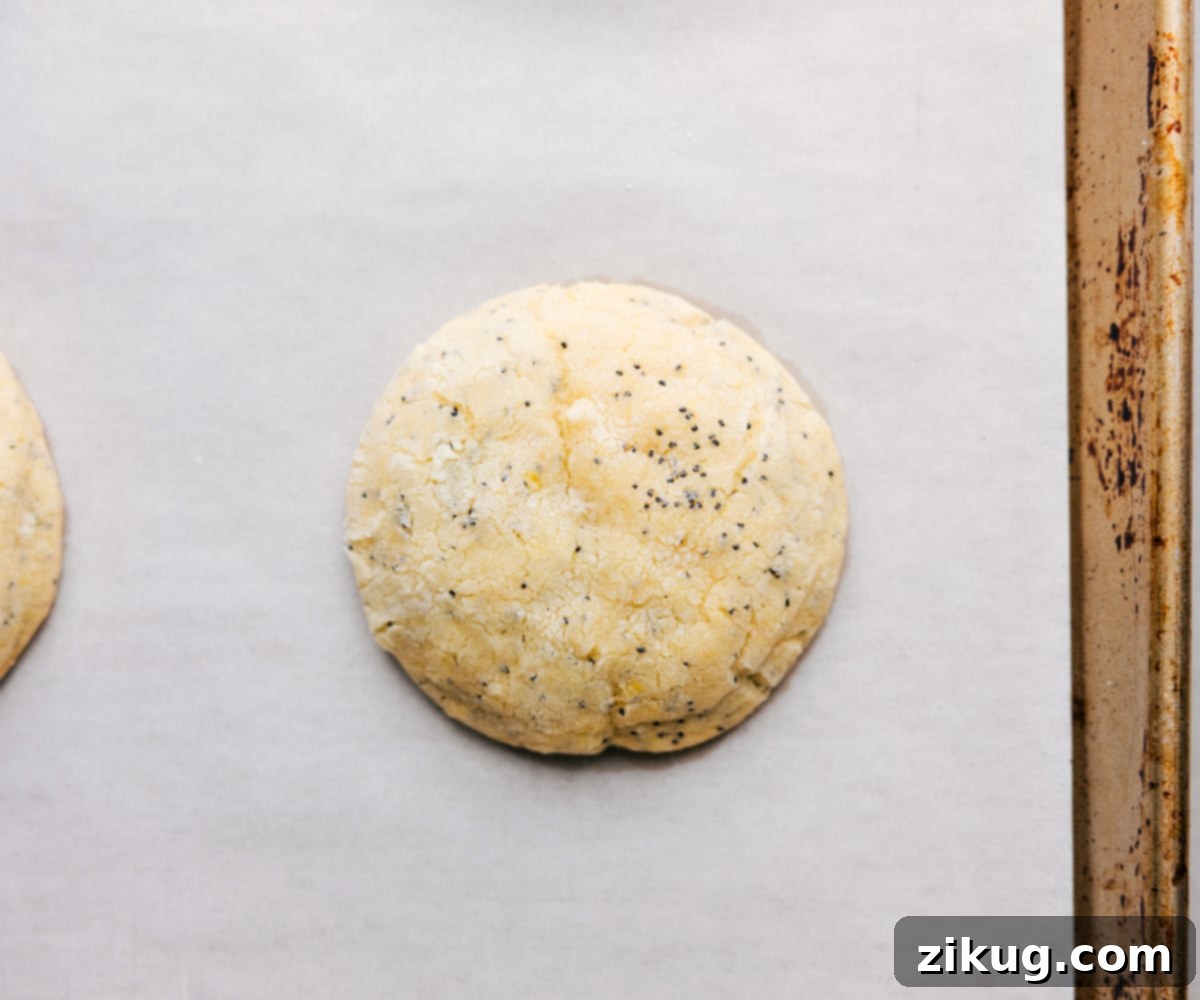
- Slightly Underbake for Optimal Texture and Flavor: The Secret to Chewy Perfection. The true secret to achieving genuinely soft and chewy cookies lies in precise timing in the oven. For these Lemon Poppy Seed Cookies, aim to slightly underbake them. When you remove them from the oven, the edges should appear lightly set and just barely beginning to turn golden, while the center might still look just a tad soft and no longer glossy or gooey. Crucially, the residual heat from the hot baking sheet will continue to cook the cookies gently as they cool. This carry-over cooking is what sets the perfect soft, chewy texture. Overbaking, conversely, is the enemy of chewiness, leading to dry, crumbly cookies and significantly diminishing their vibrant lemon flavor.
- Allow Cookies to Cool Completely Before Glazing: Patience is a Virtue. While many cookies are at their peak when enjoyed warm from the oven, these Lemon Poppy Seed Cookies are a notable exception. For the absolute best flavor and texture, and especially to ensure a perfect, smooth glaze application, it is essential to allow them to cool completely on a wire rack. This step is vital for the cookie’s structure to fully set and prevents the glaze from melting, becoming too thin, or creating a messy finish. We’ve found these cookies are often even more delightful at room temperature or slightly chilled, as this allows the complex lemon and poppy seed flavors to fully meld and deepen.
- Prioritize Precision with a Food Scale: For Consistent, Professional Results. Baking is often as much a science as it is an art, and precise measurements are the cornerstone of consistent, successful results. Measuring flour by volume (using cups) can lead to significant variations depending on how it’s scooped and packed, frequently resulting in too much flour and consequently, dry, dense, or crumbly cookies. If you own a food scale, now is the ideal time to utilize it! For this Lemon Poppy Seed Cookies recipe, 400 grams of all-purpose flour is the exact, ideal amount for perfect texture. A food scale is also incredibly helpful for portioning out cookie dough balls, ensuring that each one is the exact same size. This not only makes your cookies look more professional and uniform but also guarantees even baking across the entire batch, so every cookie comes out perfectly delightful.
Optimal Baking Time and Cookie Size for Unmatched Perfection
The ideal baking time for these delectable Lemon Poppy Seed Cookies typically falls within a precise range of 12-16 minutes. Through extensive testing in various ovens, we’ve consistently found that 14-15 minutes often represents the “sweet spot” for most home ovens. This timing yields cookies that are perfectly cooked through, yet retain their signature chewiness and soft interior. When assessing doneness, pay close attention to visual cues: the cookies should be lightly puffed, the edges just barely set and starting to turn a very light golden brown, and the tops should no longer appear wet or glossy in the center. Remember, slightly underbaked is key to a chewy cookie!
You might find yourself tempted to make smaller cookies to yield more from the batch, but it is critically important to understand that the generous, specific size of these cookies is entirely intentional and non-negotiable for achieving the desired outcome. This recipe is meticulously engineered for a larger cookie, as this dimension is absolutely crucial for attaining that signature thick, wonderfully chewy, and tender texture. Smaller cookies, by their very nature, will bake differently; they will lose moisture faster and simply will not possess the same delightful mouthfeel or retain moisture as effectively, resulting in a different and less satisfying texture. The “sweet spot” for each cookie dough portion is precisely 1/4 cup, or about 60 grams of dough. Yes, they are substantial, but this exact size is what guarantees consistently thick, incredibly chewy, and perfectly tender Lemon Poppy Seed Cookies every single time. Trust the process and the recommended size for an unparalleled cookie experience!
Extending Freshness: Storage and Freezing Your Lemon Poppy Seed Cookies
Comprehensive Guide to Storing and Freezing Lemon Poppy Seed Cookies
These delightful cookies are designed to maintain their exquisite flavor and texture exceptionally well. Baked and fully glazed cookies can be stored in an airtight container at room temperature for an impressive **3-4 days**. This method preserves their soft texture and vibrant lemon flavor, making them a convenient treat to have on hand. While baked, unglazed cookies can be frozen with reasonable success, for the absolute best results, supreme convenience, and to maintain peak freshness, we wholeheartedly recommend freezing the raw cookie dough instead.
To Freeze Cookie Dough for Future Baking:
First, prepare your cookie dough exactly as instructed in the recipe. Next, portion out the cookie dough into uniform 1/4 cup (60 grams) balls, just as you would if you were preparing to bake them immediately. Arrange these individual dough balls on a large sheet pan lined with parchment paper, ensuring there is ample space between each ball to prevent them from sticking together. Transfer the sheet pan to your freezer and freeze the dough balls until they are completely solid, which typically takes a couple of hours. Once they are firm and frozen through, transfer the frozen cookie dough balls from the sheet pan to an airtight, freezer-safe container or a heavy-duty freezer bag. Label the container with the date. The dough can be safely stored in the freezer for up to 3 months, ready for whenever a cookie craving strikes.
To Bake Cookies Directly From Frozen Dough:
The beauty of freezing the dough is its unparalleled convenience: you can bake these Lemon Poppy Seed Cookies straight from the freezer! There is absolutely no need to thaw the dough beforehand. Simply preheat your oven and place the frozen dough balls on a prepared baking sheet, giving them enough space to spread. Because the dough is starting from a colder temperature, you will need to adjust the baking time slightly. Expect to add a few extra minutes (typically an additional 2-4 minutes) to the regular baking time. Bake until the edges are lightly golden brown and set, but the center still appears soft and slightly underbaked, ensuring a wonderfully chewy interior. Once baked and completely cooled, prepare the fresh lemon glaze and drizzle it over the cookies. It’s important to note that the glaze does not freeze and thaw well, so always make a fresh batch just before serving for the best texture and shine.

Explore More Zesty & Fruit-Filled Dessert Recipes:
If you’ve enjoyed the bright, refreshing flavors of these Lemon Poppy Seed Cookies and love incorporating fruit into your sweet treats, you’re in for a delightful journey! Here are some more of our cherished recipes that celebrate the natural sweetness and invigorating tang of fresh fruits, perfect for adding a touch of sunshine to any meal or gathering:
- Our incredibly satisfying Classic Lemon Pie, featuring a rich, buttery graham cracker crust – a timeless favorite that never disappoints.
- Adorable and versatile Mini Fruit Tarts, each nestled in a crisp sugar cookie crust and bursting with an array of colorful, fresh seasonal fruits.
- An elegant and sophisticated Strawberry Lemon Tart, encased in a delicate shortbread crust, offering a perfect balance of sweet strawberries and zesty lemon.
- Fluffy, tender Cherry Scones, exquisitely elevated with aromatic orange zest, making them an ideal accompaniment for breakfast, brunch, or an afternoon tea.
- Our incredibly quick and simple Four-Ingredient Fruit Dip, a delightful and healthy way to enjoy your favorite fresh fruits with minimal effort.

Print Recipe
5 from 1 vote
Lemon Poppy Seed Cookies
Chelsea Lords
Lemon Poppy Seed Cookies have a vibrant, intense lemon flavor with a subtle crackle and crunch from the poppy seeds. These bakery-style cookies are coated in a sweet lemon glaze that melts beautifully into the cookie.
Video Tutorial

A helpful video tutorial is available to guide you through each step of baking these delicious Lemon Poppy Seed Cookies.
Ingredients
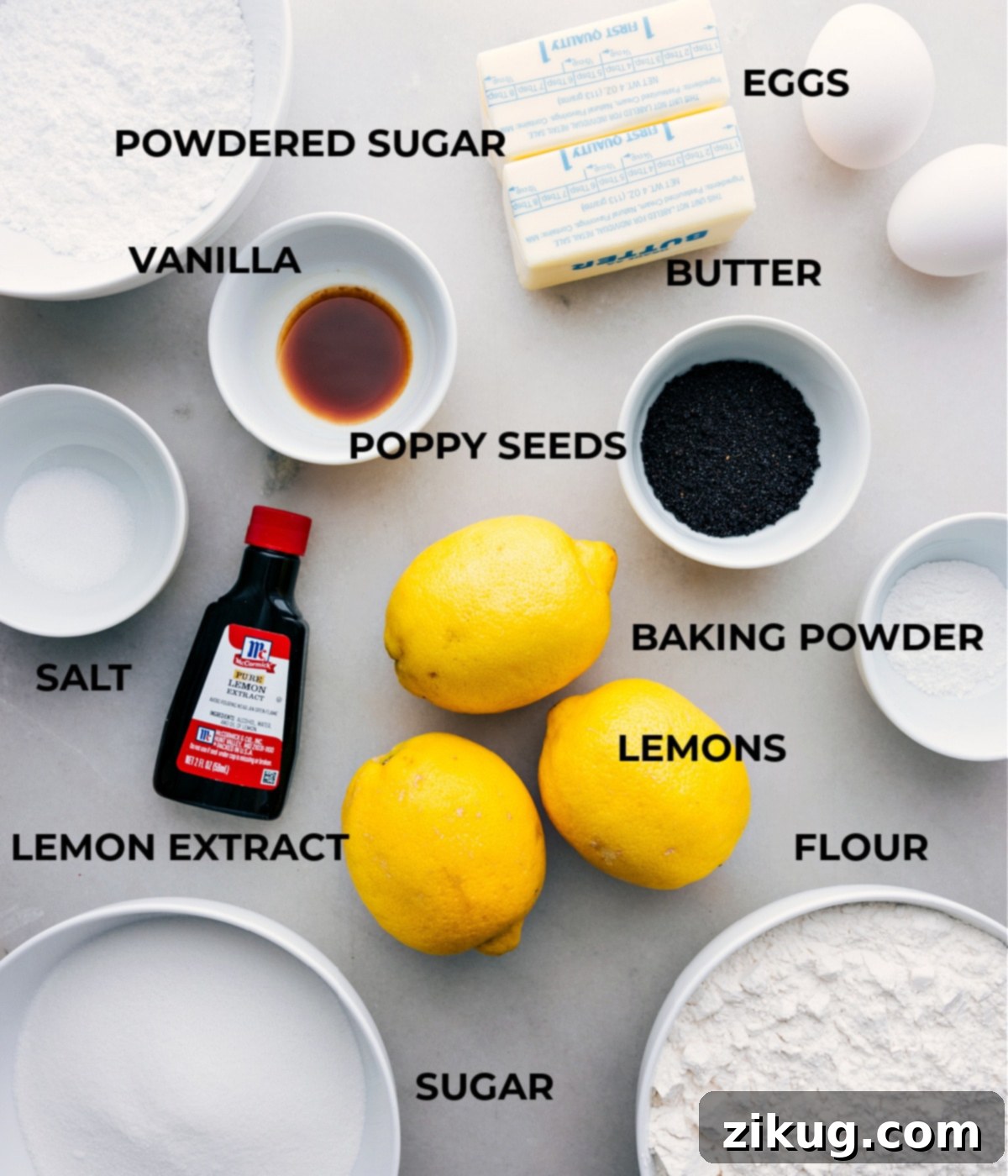
- 1 cup (16 tbsp) unsalted butter, room temperature (do not melt!)
- 1-1/2 cup granulated sugar
- 3 lemons (for 3 tablespoons zest – See Note 1)
- 2 large eggs
- 1 teaspoon vanilla extract (See Note 2)
- 2 teaspoons lemon extract (See Note 3)
- 2 teaspoons baking powder
- 2 tablespoons poppy seeds
- 1 teaspoon fine sea salt
- 3 cups all-purpose flour (See Note 4)
- 1/2 cup granulated sugar (or coarse sugar for a little more crunch!)
Glaze Ingredients
- 1-1/2 cups powdered sugar
- 2 tablespoons fresh lemon juice
- 1 tablespoon heavy cream
- 1/4 teaspoon poppy seeds
- 1/8 teaspoon salt
Instructions
- Prepare Wet Ingredients: In the bowl of a stand mixer fitted with a paddle attachment (or a large bowl with a hand mixer), add 1 cup of room-temperature unsalted butter, 1-1/2 cups of granulated sugar, and 3 tablespoons of fresh lemon zest. Beat on medium speed for about 2-3 minutes, until the mixture is light, fluffy, and creamy. Stop to scrape down the sides of the bowl with a spatula. Next, add the 2 large eggs, 1 teaspoon of vanilla extract, and 2 teaspoons of pure lemon extract. Beat again until all these wet ingredients are fully combined and thoroughly incorporated, ensuring a smooth base for your cookies.
- Combine Dry Ingredients: Scrape down the sides of the bowl one more time to ensure everything is well mixed. Add 2 teaspoons of baking powder, 2 tablespoons of poppy seeds, and 1 teaspoon of fine sea salt to the wet mixture. Mix on low speed just until these dry ingredients are combined. Finally, gradually add the 3 cups of all-purpose flour to the bowl, beating only until the flour is just incorporated and no visible streaks of dry flour remain in the dough. Be careful not to overmix, as this can lead to tough cookies.
- First Chill for Firmness: Once the dough is mixed, cover the bowl tightly with plastic wrap to prevent it from drying out. Transfer the covered dough to the refrigerator and chill for at least 20 minutes. This initial chilling period helps the butter firm up, making the dough easier to handle and preventing excessive spreading during baking. While the dough chills, prepare a large plate or a small baking sheet by lining it with parchment paper.
- Form Cookie Dough Balls: After the first chilling, remove the dough from the refrigerator. For the best texture and the signature thick, chewy cookie, it is crucial to measure each portion of dough precisely. Each cookie dough ball should be exactly 1/4 cup (60 grams) of dough (refer to Note 5 regarding optimal cookie size). Roll the portioned dough into smooth, uniform balls between your palms. Repeat this process with the remaining dough until you have approximately 16-18 cookie dough balls. Once formed, take each dough ball and roll it generously in the reserved 1/2 cup of white granulated sugar (or coarse sugar for an added crunch and sparkle). Place the sugar-coated dough balls on the parchment-lined plate, ensuring they are not touching.
- Second Chill and Oven Preheat: Return the sugar-coated cookie dough balls to the refrigerator for another 30 minutes, or for a quicker option, place them in the freezer for 20 minutes. This second chill is vital for solidifying the butter and ensuring minimal spread, leading to a perfectly thick cookie. While the dough is chilling, preheat your oven to 325 degrees F (162 degrees C). Line a large baking sheet with parchment paper or a silicone baking mat (Silpat liner).
- Bake and Cool Appropriately: Arrange the chilled cookie dough balls on the prepared baking pan, ensuring to leave ample space between each cookie (about 2-3 inches apart), as they will spread significantly. To prevent overcrowding, bake only 6 cookies at a time per standard baking sheet. Keep the remaining dough balls refrigerated or frozen until you are ready to bake subsequent batches. Bake for 12-16 minutes, or until the cookies have puffed up, the edges are just barely turning golden, and the tops appear set without looking glossy or wet. Crucially, avoid overbaking, as this will result in a dry cookie and diminish both its vibrant lemon flavor and its desirable chewy texture. Remove the pan from the oven and let the cookies stand on the hot baking sheet for 5 minutes; this allows them to finish setting up. Then, carefully transfer them to a wire cooling rack to cool completely. Do not attempt to glaze the cookies until they are fully cooled to prevent the glaze from melting. Repeat the baking process for all remaining dough, or save some for later (refer to Instruction #8 for freezing dough).
- Prepare and Apply the Zesty Glaze: While the baked cookies are cooling, prepare the lemon glaze. In a medium-sized bowl, combine all the glaze ingredients: 1-1/2 cups powdered sugar, 2 tablespoons fresh lemon juice, 1 tablespoon heavy cream, 1/4 teaspoon poppy seeds, and 1/8 teaspoon salt. Whisk vigorously until the glaze is completely smooth, lump-free, and has a pourable consistency. Transfer the prepared glaze to a small zip-top bag and seal it tightly, pressing out any excess air. Snip a tiny corner off the bag to create a small piping hole. Drizzle the lemon glaze evenly and decoratively over all of the completely cooled cookies. If desired, you can add a touch more fresh lemon zest over the wet glaze for an extra pop of color and aroma. These delectable cookies are best enjoyed at room temperature or slightly chilled.
- Storage and Freezing Instructions: For optimal freshness and convenience, we highly recommend freezing the cookie dough rather than freezing already baked cookies. To do this, portion out the cookie dough balls (1/4 cup or 60g each) onto a large parchment-lined sheet pan and freeze them until they are solid. Once frozen, transfer the solid dough balls to an airtight container or a heavy-duty freezer bag and store them in the freezer for up to 3 months. To bake from frozen: You can bake these lemon cookies straight from the freezer without thawing. Simply place them on a prepared baking sheet and add a few extra minutes (typically 2-4 minutes) to the regular baking time, baking until the edges are lightly browned and the center remains soft. The lemon glaze, unfortunately, does not freeze and thaw well, so it is always best to prepare a fresh batch of glaze just before serving your freshly baked-from-frozen cookies.
Recipe Notes for Success
- Note 1: Maximizing Lemon Zest: The generous amount of lemon zest in this recipe is crucial for providing a huge flavor punch without introducing excess liquid. When zesting, always use a microplane grater (like this one) to remove only the yellow outer layer, avoiding the bitter white pith.
- Note 2: Vanilla Options for Enhanced Flavor: While vanilla extract works perfectly, for an even deeper, more complex vanilla flavor, consider substituting 3/4 teaspoon of vanilla bean paste. This is an optional substitution, but it adds wonderful depth and visible vanilla flecks.
- Note 3: The Indispensable Lemon Extract: Pure lemon extract is a concentrated flavor enhancer, not to be confused with lemon juice. It’s vital for achieving an intense citrusy flavor without adding extra liquid that would negatively alter the cookie’s thick, chewy texture. Always use a pure lemon extract, typically found in the baking aisle.
- Note 4: Accurate Flour Measurement with a Food Scale: Precise flour measurement is critical for cookie texture. Measuring by volume (cups) can be inconsistent. For best results, use a food scale; 400 grams of all-purpose flour is ideal for this recipe. A food scale also helps ensure uniform cookie dough ball sizes for even baking.
- Note 5: Importance of Cookie Size: The specified cookie size of 1/4 cup (60 grams) of dough is intentional and crucial. This larger size is essential for achieving the desired thick, chewy, and tender bakery-style texture. Smaller cookies will bake differently, losing moisture faster and resulting in a less satisfying consistency. Stick to the recommended size for the best outcome.
Nutrition Information (Approximate)
Serving: 1 cookie | Calories: 308kcal | Carbohydrates: 49.3g | Protein: 3.2g | Fat: 11.5g | Cholesterol: 48.2mg | Sodium: 140.8mg | Fiber: 0.9g | Sugar: 32.2g
Please note that nutrition information is automatically calculated and should be used as an approximation.
Enjoyed baking these delightful Lemon Poppy Seed Cookies? Your feedback is incredibly valuable to us! Leave a comment below and share your experience, tips, or any creative twists you added. We love hearing from our community of bakers!