
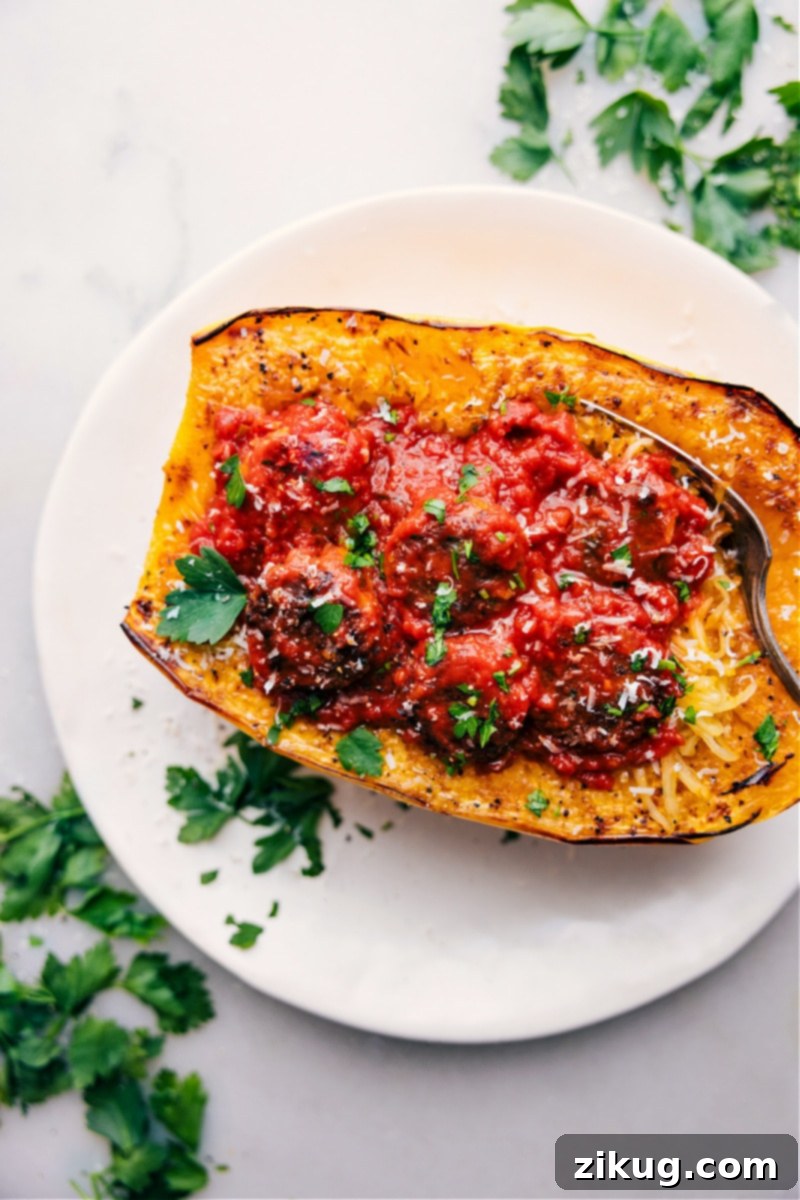
Mastering Spaghetti Squash with Flavorful Meatballs: Your Ultimate Low-Carb Dinner Guide
Are you searching for a delicious, satisfying meal that doesn’t weigh you down with heavy carbs? Look no further than Spaghetti Squash with Meatballs! This incredible dish is bursting with savory flavor, incredibly easy to prepare, and offers a fantastic, wholesome alternative to traditional pasta. Whether you’re aiming for a healthier lifestyle or simply love a hearty meal, this recipe allows for complete customization with your favorite marinara and toppings, making it a perfect fit for any palate.
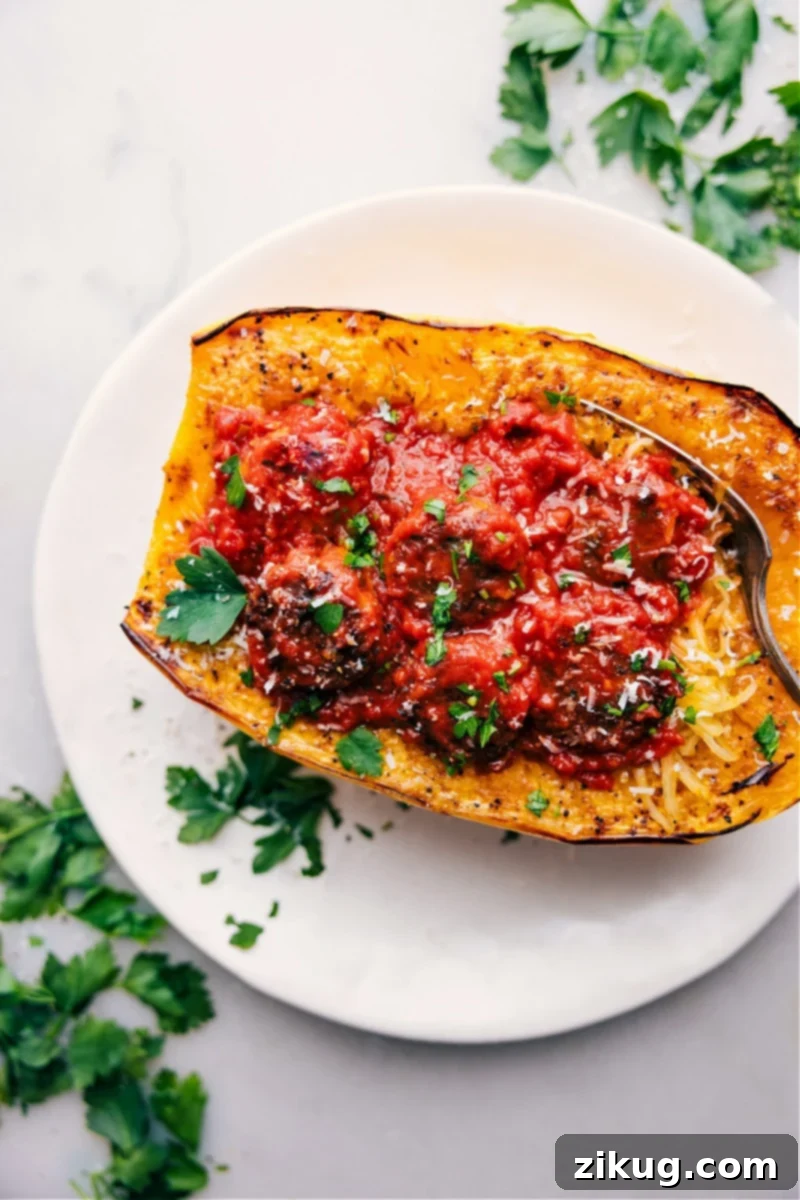
After perfecting the art of cooking spaghetti squash in record time – thanks to the brilliant hack of cutting it in half and roasting it cut-side down – I knew I had to transform it into a complete, show-stopping meal. Since meatballs hold a special place in my culinary heart (hello, Swedish Meatballs and Greek Meatballs!), I leveraged my go-to meatball recipe to craft what has quickly become my new favorite low-carb dinner sensation. This recipe is an ingenious way to significantly reduce your carb intake without sacrificing an ounce of flavor or satisfaction. If that sounds like exactly what you’re craving, then you’ve found your next go-to recipe!
Unlocking the Potential of Spaghetti Squash: Selection & Benefits
Spaghetti squash is a winter squash known for its unique ability to transform into pasta-like strands when cooked. It’s a fantastic low-calorie, low-carb, and nutrient-dense alternative to traditional pasta, packed with vitamins A and C, fiber, and manganese. To ensure you get the best possible foundation for your Spaghetti Squash With Meatballs, here are essential tips for selecting a perfect squash:
- Firm & Heavy: The Foundation of Freshness
When choosing your squash, always pick one that feels notably solid and a little heavy for its size. This indicates a good moisture content and ripeness, ensuring a more flavorful and tender result once cooked. Avoid squashes that feel light or hollow, as they might be dried out or underripe. - Bright Color: A Visual Cue for Ripeness
Look for a spaghetti squash with a vibrant, consistent yellow or orange hue. This bright color is a clear sign of ripeness and proper sugar development. Steer clear of any squash with dull patches, soft spots, or uneven coloring, as these can be indicators that the squash is past its prime or wasn’t harvested at peak freshness. - Check the Stem: Nature’s Seal of Quality
The stem of a spaghetti squash can tell you a lot about its journey from vine to table. A dry, firm stem, ideally 1-2 inches long, suggests that the squash was picked at the optimal time and has been stored correctly. A soft, moldy, or missing stem can mean the squash is not fresh and may spoil quickly. - Good Size: Finding the Sweet Spot
Medium-sized spaghetti squashes (typically 2-3 pounds) tend to work best for most recipes, including this one. They offer the ideal balance of flavor and texture, yielding tender, easily shredded strands. Larger squashes can sometimes be tough or stringy, while very small ones might not provide enough “noodles” for a satisfying meal.
Effortless Spaghetti Squash Preparation: A Step-by-Step Guide
Preparing spaghetti squash is surprisingly simple, and with this method, you’ll achieve perfectly soft, slightly sweet, and distinct strands that mimic traditional pasta. This streamlined approach guarantees a delicious base for your meatballs every time.
- Preheat Your Oven & Prep Baking Sheet: Begin by preheating your oven to 400°F (200°C). Line a large baking sheet with parchment paper. This step is crucial for easy cleanup and prevents the squash from sticking, ensuring a hassle-free roasting process.
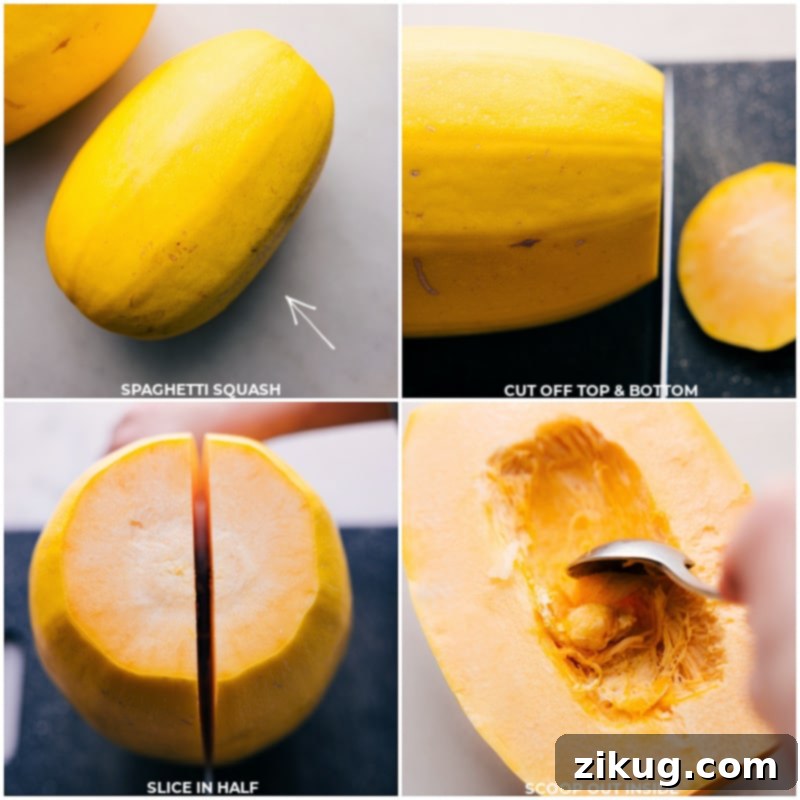
- Safely Prep Your Squash: Carefully trim off both ends of the spaghetti squash to create stable surfaces. Then, using a sharp, sturdy chef’s knife, slice the squash in half lengthwise. This can sometimes be challenging, so if you encounter difficulty, microwave the whole squash for 3-5 minutes to soften it slightly before cutting. Once halved, use a spoon to scoop out the seeds and any stringy pulp from the center. You can discard them, or for an extra treat, clean and roast the seeds for a crunchy snack!
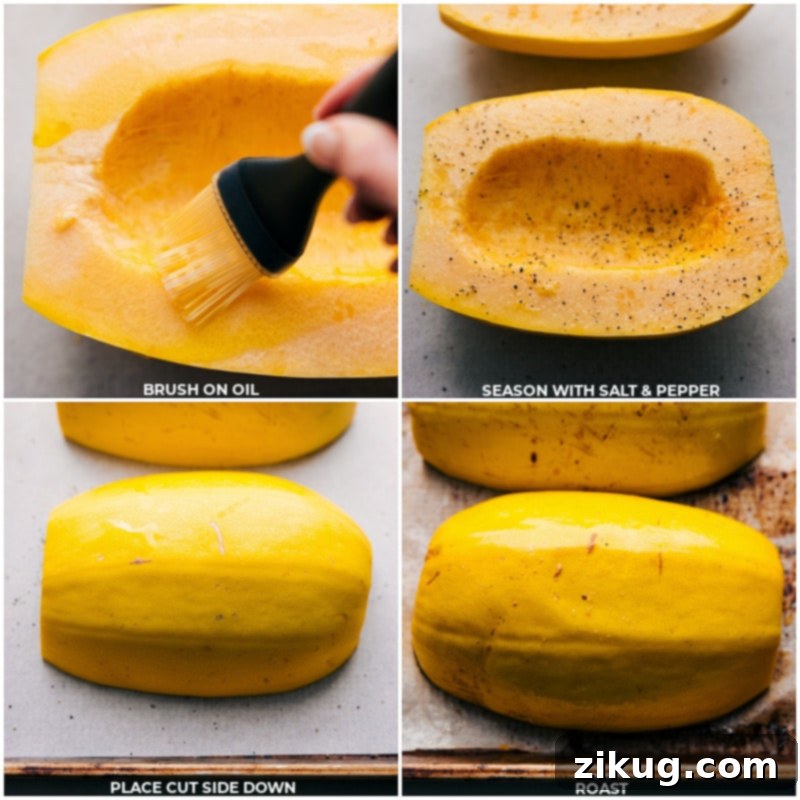
- Season & Arrange for Roasting: Drizzle a generous amount of olive oil over the cut surfaces of each squash half. Use your hands or a brush to ensure it’s evenly coated. Then, sprinkle generously with salt and freshly ground black pepper. These simple seasonings enhance the squash’s natural sweetness. Place the seasoned squash halves cut-side down on your prepared baking sheet. Roasting cut-side down helps steam the squash, creating a more tender interior and slightly caramelized exterior.
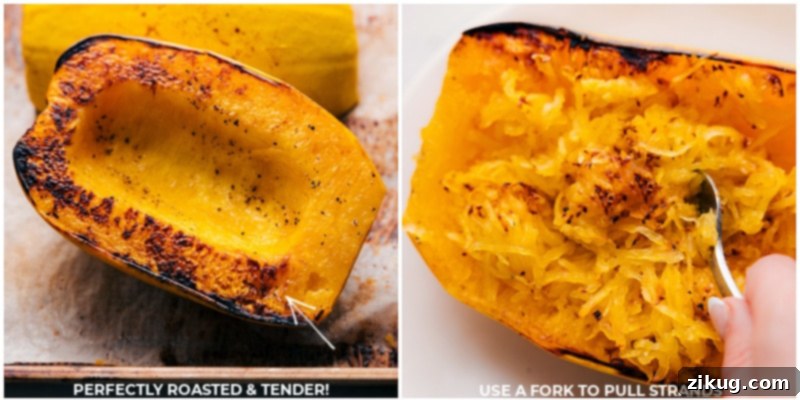
- Bake Until Tender: Transfer the baking sheet to the preheated oven. Bake for approximately 40-60 minutes. The exact cooking time will vary depending on the size of your squash, so it’s essential to check for doneness. The squash is ready when a fork can easily pierce through the skin and effortlessly slide into the flesh. The goal is tender, not mushy, so keep an eye on it!
- Fluff & Prepare to Serve: Once cooked, carefully remove the squash from the oven. Using a fork, gently scrape the cooked flesh from the sides of the squash towards the center. You’ll observe beautiful, pasta-like strands forming – these are your spaghetti squash “noodles.” They look incredibly similar to traditional pasta and are absolutely perfect for pairing with your flavorful meatballs and marinara!
Quick Tip for Safe Cutting
To prevent injury when cutting the squash, always use a sharp chef’s knife and a sturdy cutting board. If the squash feels too hard to cut safely, microwave it for 3-5 minutes beforehand to soften the skin, making it much easier and safer to slice.
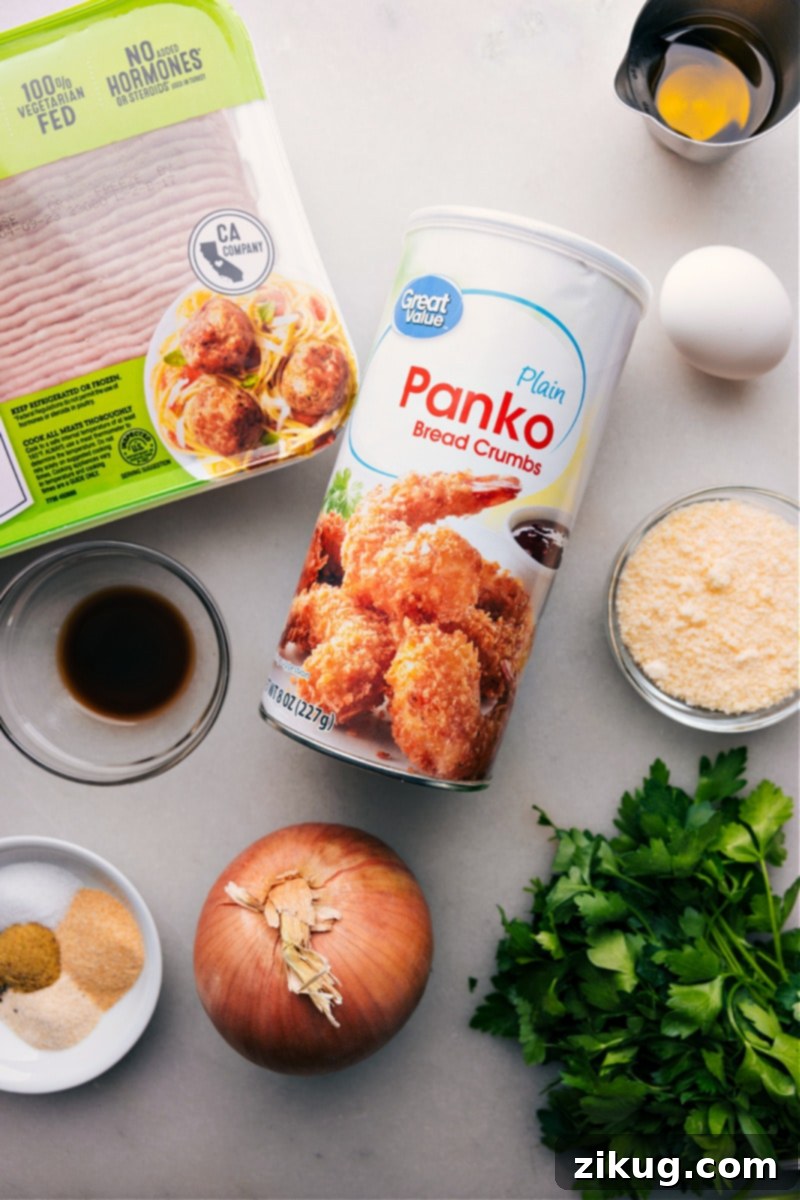
Crafting the Perfect Meatballs: Tips for an Unforgettable Meal
These meatballs are the heart of this dish, providing rich flavor and a satisfying texture. Using a combination of simple yet strategic techniques ensures they turn out tender, juicy, and packed with taste. While the recipe primarily features turkey, these tips are versatile enough for ground beef, pork, or a combination!
- Keep it Cold: The Secret to Shaping
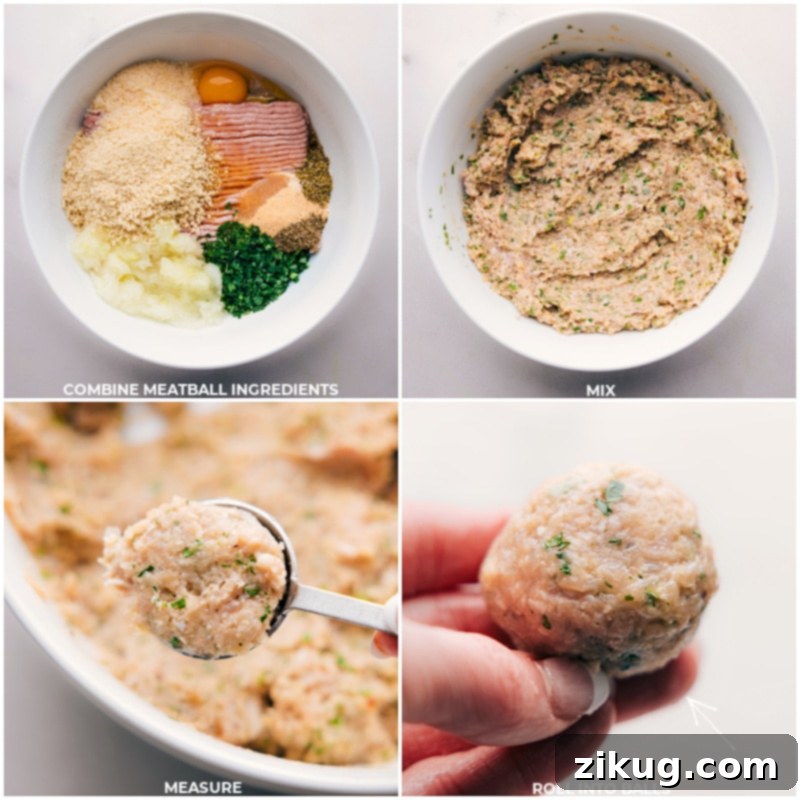
When you’re ready to mix and shape your meatballs, ensure all your meatball ingredients, especially the ground turkey, are well-chilled, straight from the refrigerator. Cold meat is firmer and much easier to handle, preventing it from becoming sticky or mushy during shaping. This also helps the meatballs hold their form better during cooking. - Grate the Onion: Flavor Dispersion & Smooth Texture
Instead of finely dicing your onion, grating it using the large holes of a grater is a game-changer. This method ensures that the onion’s flavor is evenly distributed throughout the meatball mixture, preventing large, crunchy pieces of uncooked onion. The grated onion also adds a subtle moisture, contributing to the meatballs’ tender texture. - Use Panko Breadcrumbs: For Unmatched Lightness and Crispness
Panko breadcrumbs are not just any breadcrumbs; they are a superior choice for meatballs. Their flaky, airy texture is distinctly different from traditional fine breadcrumbs. Using panko results in meatballs that are wonderfully soft and tender on the inside, with a delightful, subtle crunch on the exterior, adding an extra layer of culinary pleasure. - Grease Your Hands: A Non-Stick Solution
Working with ground meat can often be a sticky affair. To make the shaping process smooth and mess-free, lightly spray your hands with cooking oil (or lightly dampen them with water) before rolling the meatballs. This simple trick prevents the meat mixture from sticking to your hands, allowing you to form perfectly smooth and uniform balls with ease. - Season Everything: Taste as You Go for Balanced Flavor
Achieving the perfect flavor balance is key. Don’t be afraid to taste and adjust! While you can’t taste raw meat, you can taste your marinara sauce and even a small, cooked test meatball. Try the cooked squash, sauce, and a meatball together before final serving, and add more salt, pepper, or other seasonings as needed to ensure every component contributes to a harmonious, delicious bite.
Perfect Pairings: Elevating Your Spaghetti Squash and Meatballs Experience
Once your savory meatballs are cooked and your spaghetti squash strands are ready, it’s time to bring everything together for an unforgettable meal. The beauty of this dish lies not only in its core components but also in the thoughtful additions and side dishes that can elevate the entire dining experience.
Serve your Spaghetti Squash with Meatballs generously coated in your favorite marinara sauce. For convenience, a high-quality store-bought sauce like Rao’s can be excellent. However, if you have time, a homemade marinara will truly make this dish sing, allowing you to control the depth of flavor and freshness. After plating, finish your dish with a flourish: a sprinkle of freshly grated Parmesan cheese (the real stuff makes a huge difference!), a scattering of fresh parsley or basil for vibrant color and aroma, and a delicate drizzle of good quality extra virgin olive oil for richness and sheen.
As far as side dishes go, consider these perfect complements:
- Fresh Salads: A Refreshing Contrast
A crisp, refreshing side salad provides a wonderful textural and flavorful contrast to the rich meatballs and tender squash. Options like a classic Caesar salad, a simple garden salad with a light vinaigrette, or an elegant Caprese salad featuring ripe tomatoes, fresh mozzarella, and basil, are all excellent choices. - Roasted or Steamed Vegetables: Boost Your Nutrients
Increase the nutritional value and vibrant colors of your meal with a side of perfectly prepared vegetables. Steamed options like tender green beans or vibrant broccoli offer a light touch. For deeper flavor and a slight crispness, consider roasted vegetables such as earthy broccoli florets, sweet carrots, or crisp-tender green beans. These sides are easy to make and round out the meal beautifully.
Storage and Meal Prep Made Easy
Smart Meal Prepping: Enjoy Your Spaghetti Squash & Meatballs All Week
This Spaghetti Squash with Meatballs recipe is not only delicious but also incredibly versatile for meal prepping. Planning ahead means you can enjoy this wholesome and satisfying meal throughout the week with minimal effort. Here’s how to efficiently store and prepare components of your meal:
- Keep Fresh: Refrigeration Guidelines
For optimal freshness, store cooked meatballs and spaghetti squash separately in airtight containers in the refrigerator. When stored properly, they will maintain their quality and flavor for up to 4 days. Keeping them separate helps preserve the distinct textures and prevents the squash from becoming soggy. - Make Ahead: Prep Components for Quick Assembly
To streamline weeknight dinners, cook both the spaghetti squash and the meatballs in advance. Once cooled, store them separately in the fridge. When you’re ready to eat, simply reheat the components, toss the meatballs with your warmed marinara sauce, and combine with the spaghetti squash. This method significantly cuts down on active cooking time on busy evenings. - Freezing Meatballs: A Future-Proof Solution
Meatballs are excellent candidates for freezing, making them perfect for batch cooking. Cooked meatballs can be frozen in an airtight container or freezer bag for several months. For best results and detailed instructions on how to freeze and reheat, refer to specific guidance on freezing turkey meatballs here. - Reheating Instructions: Keeping it Moist and Delicious
To reheat individual portions, you can use either a microwave or the stovetop. When reheating, it’s always a good idea to add a little extra marinara sauce. This helps keep the meatballs and squash moist and prevents them from drying out, ensuring every bite is as delicious as the first.
More Low-Carb Favorites:
Dinner
One Pan Lemon Parmesan Chicken and Asparagus
Dinner
Unstuffed Peppers Recipe
Dinner
One Pan Italian Sausage and Veggies
Dinner
Burger Bowl Recipe
Rated 5 stars by 2 users
Spaghetti Squash with Meatballs Recipe
By Chelsea Lords
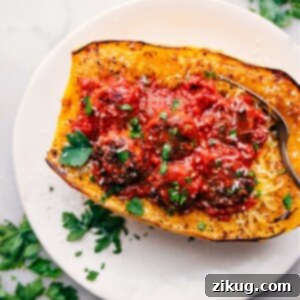
Spaghetti Squash with Meatballs is a flavor-packed, low-carb alternative to traditional pasta. Nutritious squash pairs perfectly with tender meatballs and your favorite marinara—an easy, customizable meal for any night!
Prep Time: 40 minutes
Cook Time: 1 hour
Total Time: 1 hour 40 minutes
Servings: 4 large servings
Pin Recipe |
Print Recipe
Equipment
- 2 Large sheet pan (15″ x 21″)
- Small pot
- Parchment paper
- Chef’s Knife
- Sturdy Cutting Board
- Grater (with large holes)
Ingredients
Meatballs
- Cooking spray
- 1 large yellow onion, peeled and grated on large holes of grater (see Note 1)
- 1 pound ground turkey (93/7)
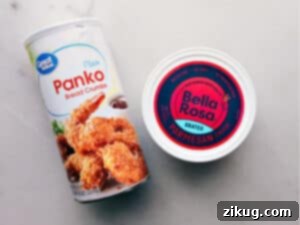
- 1/2 cup panko breadcrumbs (see Note 2)
- 1/3 cup grated Parmesan cheese (see Note 3)
- 2 tablespoons olive oil
- 1/4 cup finely chopped fresh parsley
- 1/2 teaspoon salt
- 1/2 teaspoon pepper
- 1 teaspoon beef bouillon powder (see Note 4)
- 1 teaspoon onion powder
- 1 teaspoon garlic powder
- 1 teaspoon Italian seasoning
- 1 large egg
- 2 teaspoons Worcestershire sauce
Spaghetti Squash
- 2 medium-sized spaghetti squash
- Olive oil
- Salt and pepper
- 3 cups marinara sauce (homemade or good store-bought)
- Fresh flat-leaf parsley (optional topping)
- Freshly grated Parmesan cheese (optional topping)
Instructions
- Preheat oven to 400°F (200°C). Line an extra-large (15×21-inches) sheet pan with parchment paper and set aside. Using a very sharp knife, carefully cut off the stem and base of each spaghetti squash. Slice each squash in half lengthwise. Scoop out the seeds and stringy pulp and discard.
- Drizzle each cut side of the squash with olive oil (approximately 1 teaspoon per squash half) and sprinkle evenly with salt (about 1/4 teaspoon per half) and pepper (about 1/16 teaspoon per half). Place the squash halves cut-side down on the prepared baking sheet. Roast for 40–60 minutes, or until the flesh is fork-tender (easily pierced with a fork).
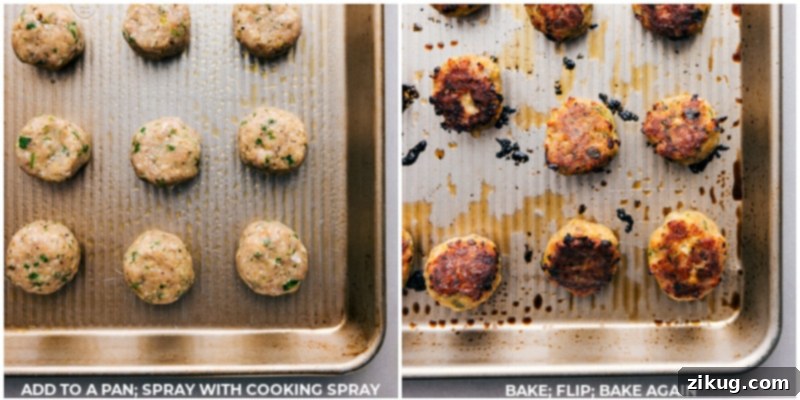
- While the squash is roasting, prepare the meatballs. Keep the oven at 400°F (200°C). Generously grease a separate large (unlined) sheet pan with cooking spray and set aside. Grate the yellow onion using the large holes on a grater until you have a full 1/2 cup of grated onion. Add this to a very large mixing bowl. Add all remaining meatball ingredients (ground turkey, panko breadcrumbs, Parmesan cheese, olive oil, parsley, salt, pepper, beef bouillon powder, onion powder, garlic powder, Italian seasoning, egg, and Worcestershire sauce) to the bowl. Gently knead all meatball ingredients together until they are just integrated, being careful not to overwork the meat, which can lead to tough meatballs.
- Use a tablespoon measuring spoon to scoop a heaping tablespoon of the meat mixture. Roll it into a compact ball in your hands. Repeat this process with all the meat, aiming to create approximately 30 evenly-sized meatballs. (Tip: lightly greasing your hands with cooking spray can make rolling the balls significantly easier and prevent sticking).
- Arrange the formed meatballs on the prepared sheet pan, ensuring they are spaced evenly apart to allow for proper cooking and browning. Generously spray the meatballs with cooking spray. Bake for 18 minutes. Then, using a spatula and your fingers (be cautious, as they will be hot), gently flip each meatball to brown the other side. Continue baking for another 5–10 minutes, or until the meatballs are nicely golden brown and cooked through to an internal temperature of 165°F (74°C).
- Meanwhile, warm your chosen marinara sauce in a small pot on the stovetop over low heat. Once the meatballs are finished baking, carefully transfer them directly into the pot with the warmed marinara sauce and toss gently to coat thoroughly. To the roasted squash halves, use a fork to fluff and scrape out the interior flesh, creating spaghetti-like strands. Divide the squash spaghetti among serving plates or bowls. Top the squash with the sauced meatballs. If desired, garnish with fresh flat-leaf parsley and freshly grated Parmesan cheese. Add additional pepper and a drizzle of olive oil according to your preference. Serve promptly and enjoy!
Recipe Notes
Note 1: Grating the Onion for Superior Flavor and Texture
Grating the onion rather than dicing it is a critical step that significantly improves the taste and texture of these meatballs. This technique ensures that the intense onion flavor is perfectly dispersed throughout the meat mixture, eliminating any large, unpleasant chunks of uncooked onion. It also adds moisture, contributing to a more tender meatball.

Note 2: The Magic of Panko Breadcrumbs
Panko breadcrumbs are a Japanese-style breadcrumb known for their larger, flakier, and lighter texture compared to traditional breadcrumbs. This unique quality makes them ideal for meatballs, as they absorb less oil and create a lighter, softer interior with a subtle, delightful crispness on the outside, elevating the overall mouthfeel.
Note 3: Choosing the Right Parmesan Cheese
The type of Parmesan cheese you use can greatly impact the final flavor. For the best results, avoid using shelf-stable, pre-grated Parmesan, which often lacks the authentic, rich flavor and creamy texture of fresh cheese. Instead, opt for freshly grated Parmesan from a block (like BelGioioso Parmesan Wedge) or fresh (refrigerated) grated Parmesan cheese. Grating it yourself using a fine grater will unlock its full aromatic and savory potential.
Note 4: Don’t Skip the “Secret” Ingredients
While beef bouillon powder and Worcestershire sauce might seem like unconventional additions to a meatball recipe, they are the secret weapons that truly elevate these meatballs to the next level. Beef bouillon powder infuses a deep, umami-rich, and intensely meaty flavor, while Worcestershire sauce adds a complex, tangy, and savory depth that binds all the flavors beautifully. Don’t omit them – they make a significant difference!
Storage: Store leftover meatballs separately from spaghetti squash in airtight containers in the fridge for up to 4 days. Leftover cooked meatballs can also be frozen for longer storage (refer to this guide for detailed freezing instructions).
Nutrition
Serving: 1 serving | Calories: 485kcal | Carbohydrates: 37.9g | Protein: 32.4g | Fat: 23.5g | Cholesterol: 133.6mg | Sodium: 1738.2mg | Fiber: 6.8g | Sugar: 16.2g
Nutrition information is automatically calculated and should only be used as an approximation.
Love this recipe? Leave a comment below and share your experience!