
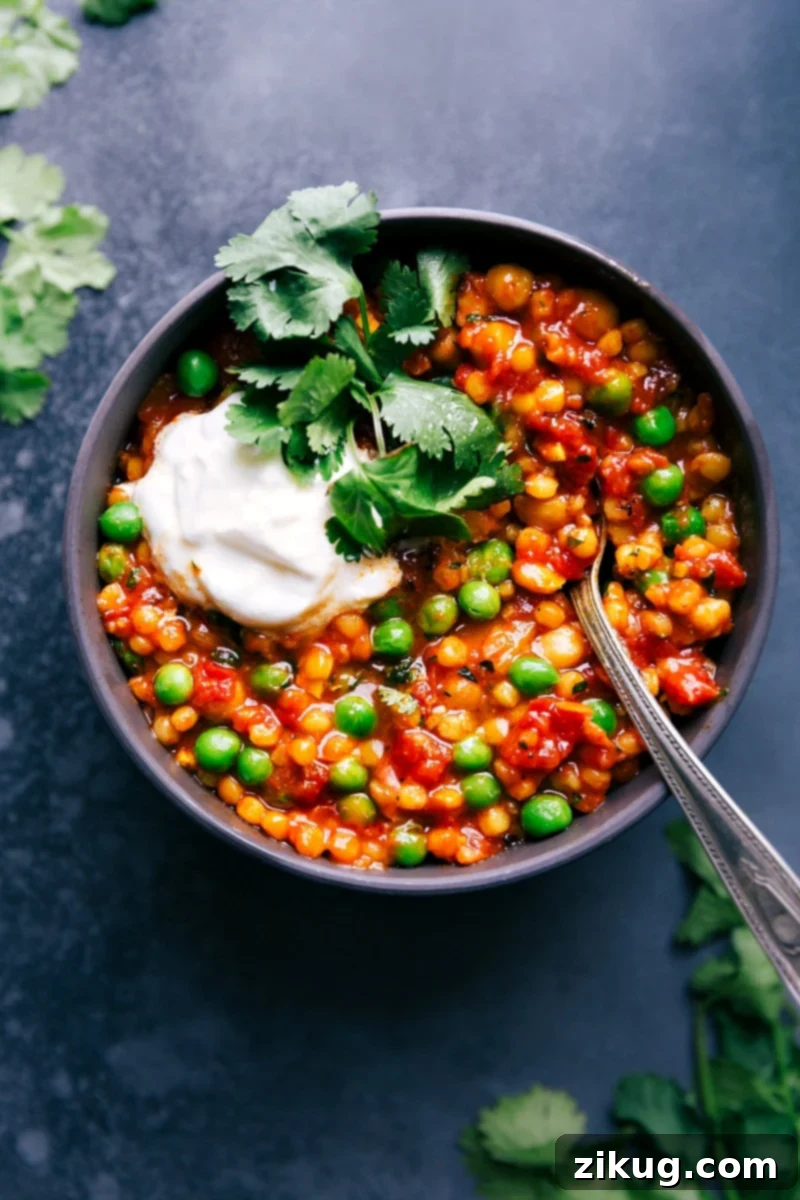
Moroccan Stew is a wonderfully warming and incredibly flavorful one-pot meal that promises to delight your senses. This hearty dish is generously loaded with wholesome vegetables, protein-rich chickpeas, tender Israeli couscous, and an aromatic blend of fresh herbs and exotic spices. Perfect for a cozy family dinner, this easy-to-make stew is a vegetarian delight that brings the vibrant tastes of North Africa right into your kitchen.
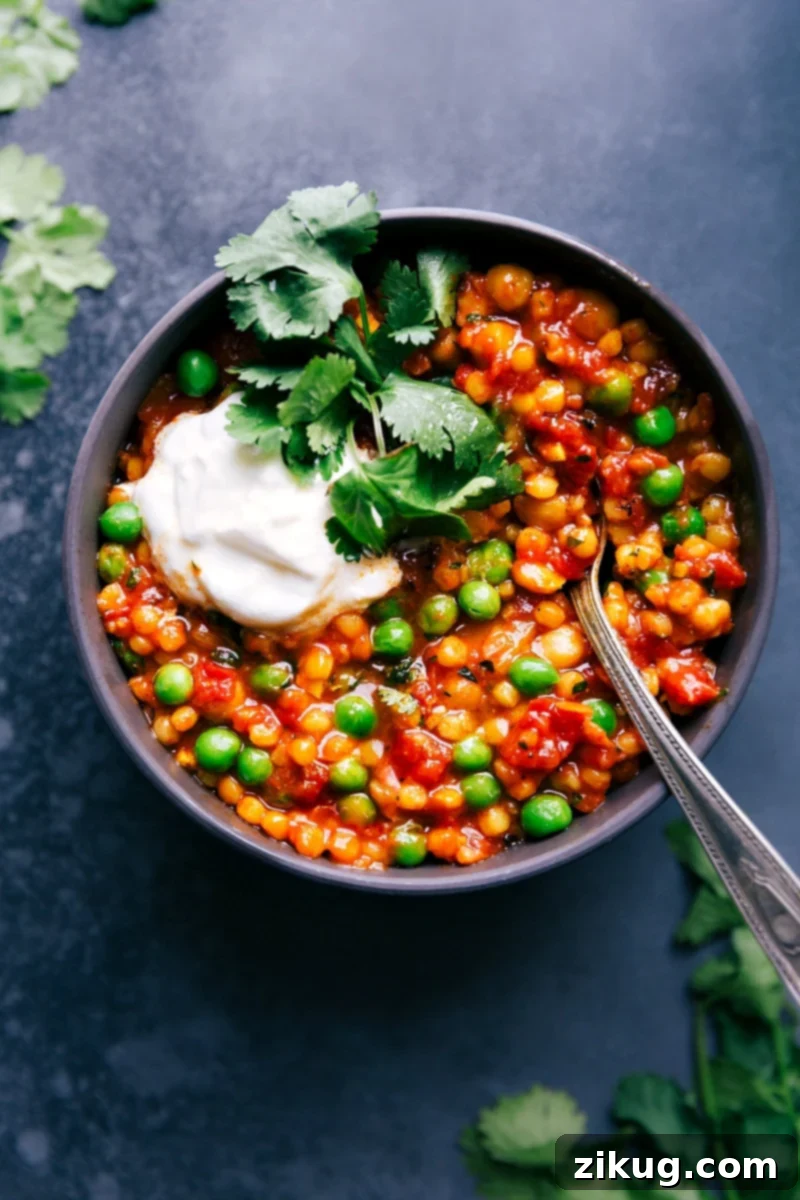

Author’s Note
The Moroccan Stew I Crave Daily!
My travels through Africa were an unforgettable adventure, and truthfully, the incredible food was a huge part of what drew me there. Among all the culinary masterpieces I savored, one dish stood out remarkably: a vibrant Moroccan stew. Its rich, bold, and incredibly warm flavors captivated me instantly. I was so smitten that I couldn’t resist asking the chef for the recipe details right on the spot. Recreating that authentic taste was the first thing on my mind when I returned home.
I wanted to capture the essence of that traditional Moroccan stew while making it approachable and easy for everyday cooking. My goal was a simple, one-pot meal that delivered all the deep, complex flavors of a dish simmered for hours, but without the lengthy prep. And I’m thrilled to say, I’ve done it! This simplified version tastes like it has been lovingly slow-cooked all day, yet it’s surprisingly quick and straightforward to prepare. It has quickly become a beloved family favorite, a testament to its irresistible charm and wholesome goodness.
This Moroccan stew recipe is a celebration of textures and tastes, featuring the sweetness of butternut squash, the earthiness of chickpeas, and the delightful chewiness of Israeli couscous. Each spoonful offers a harmonious blend of spices that dance on your palate, creating a truly satisfying and comforting experience. It’s not just a meal; it’s an adventure for your taste buds, perfect for those seeking a healthy, flavorful, and easy vegetarian dinner option.
Mastering Butternut Squash for Your Moroccan Stew
Butternut squash is a star ingredient in this Moroccan stew, lending its natural sweetness and creamy texture. Proper preparation ensures it cooks evenly and integrates perfectly into the dish. Here are our top tips for preparing butternut squash:
- Essential Tools: Always use a sharp chef’s knife and a sturdy cutting board. A sharp knife is safer and makes the task much easier.
- Selecting the Best Squash: When choosing a butternut squash, look for one with smooth, uniform tan skin that feels surprisingly heavy for its size. These indicators typically mean it’s ripe and full of flavor. Avoid squashes with soft spots or blemishes.
- Step-by-Step Preparation: To begin, carefully cut off both ends of the squash. Then, using a vegetable peeler or your sharp knife, peel the tough outer skin completely. Next, slice the squash where its long neck meets the round bottom. This separates the seed cavity from the solid neck.
- Achieving Uniform Cubes: For consistent cooking, cut the squash into ½-inch thick circles, then proceed to chop those circles into small, ½-inch cubes. Uniformly sized pieces are crucial as they will cook faster and more evenly within the stew, preventing some pieces from becoming mushy while others remain undercooked.
- Visual Guide: If you’re new to cutting butternut squash or prefer a visual demonstration, many online videos can walk you through the process. A quick search for “how to cut butternut squash” will provide helpful tutorials.
Quick Time-Saving Tip
For those busy weeknights or whenever you need to save time, don’t hesitate to use pre-cut butternut squash. You can usually find bags of pre-chopped squash in the refrigerated produce section of most grocery stores. This convenient option significantly reduces prep time without compromising on flavor, making your Moroccan stew even easier to get on the table.
All About Couscous: Why Israeli Couscous is Best for This Stew
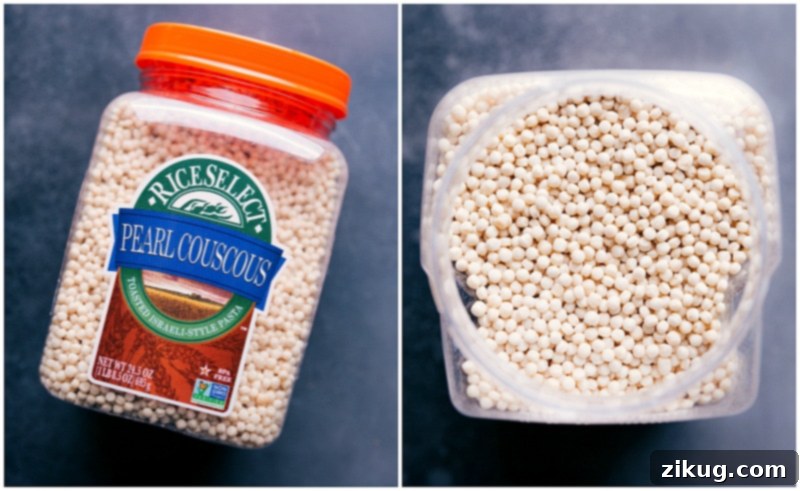
While often grouped together, Israeli couscous and regular couscous have distinct differences that significantly impact the final texture of your Moroccan stew. Both are pasta products made from semolina flour, but that’s where their similarities largely end.
Regular couscous, often seen as tiny granules, is a much smaller grain that cooks very quickly and can become quite soft. In contrast, Israeli couscous, also known as pearl couscous, consists of larger, spherical pearls. These larger pearls boast a delightful, chewy texture that stands up beautifully in a hearty stew. Their size and resilience prevent them from dissolving or becoming mushy during the simmering process, ensuring they add a satisfying bite to every spoonful.
For this specific Moroccan stew recipe, it is crucial to use Israeli couscous (pearl couscous). The larger balls of couscous are essential to achieve the ideal cooking time and texture designed for this rich and flavorful stew. They absorb the aromatic broth while maintaining their shape, contributing to the stew’s comforting body and mouthfeel. Using regular, finer couscous would result in a different, likely less desirable, consistency. Look for packages labeled “Israeli Couscous” or “Pearl Couscous” in the pasta or international foods aisle of your grocery store.
Essential Tips for a Perfect Moroccan Stew
Crafting a truly exceptional Moroccan stew involves a few key techniques and considerations. Follow these tips to ensure your dish is packed with flavor and boasts the perfect texture every time:
- Seasoning is Key: Don’t be afraid to taste and adjust the seasoning throughout the cooking process. If the stew seems to lack depth, a little more salt or freshly ground pepper can make a world of difference. You can also brighten the flavors with an extra squeeze of lemon juice, a pinch of fresh lemon zest, or additional chopped fresh herbs like cilantro or mint.
- Uniform Squash Cubes: As mentioned earlier, cutting the butternut squash into small, uniform ½-inch pieces is vital. This ensures that every piece cooks at the same rate, resulting in a perfectly tender squash throughout the stew, without any hard or overly soft chunks.
- Enhance Flavor with Fire-Roasted Tomatoes: For an added layer of smoky depth and richer flavor, opt for fire-roasted crushed tomatoes. These tomatoes bring a subtle complexity that elevates the entire dish. Brands like Muir Glen® or Cento® are excellent choices known for their quality.
- Prevent Sticking and Mushiness: While the stew simmers, particularly after adding the couscous, it’s important to stir it often, approximately every 3-4 minutes. This prevents the Israeli couscous from sticking to the bottom of the pot and helps distribute the heat, ensuring it cooks thoroughly without becoming mushy.
- Adjusting Heat for Perfect Doneness: Pay attention to the simmer. If the couscous isn’t cooking or the squash isn’t softening in the given time, slightly increase the heat. Conversely, if it’s boiling too vigorously, reduce the heat to a gentle simmer to prevent overcooking and maintain the stew’s integrity.
- Crush Some Chickpeas: Don’t skip the step of slightly crushing some of the chickpeas with the back of a spoon. This releases their natural starch, which naturally thickens the stew and adds a lovely creaminess and texture without needing extra thickeners.
Storage and Reheating
This Moroccan stew makes for fantastic leftovers! Store any remaining portions in an airtight container in the fridge for up to 4 days. To reheat, gently warm on the stove over medium-low heat or in the microwave. If the stew has thickened considerably in the fridge, add a splash of vegetable broth or water to loosen it to your desired consistency.
More Delicious One-Pot Dinners to Explore:
Dinner
Creamy Pesto Orzo (30 Minutes; ONE Pot!)
Dinner
Sausage Penne Pasta (One Pot!)
Dinner
One Pot Burrito Bowls
Pasta And Pizza
One Pot Mac And Cheese
Pin
Moroccan Chickpea Stew
Chelsea Lords
Moroccan Stew is a cozy, flavor-packed dish with warming spices, tender vegetables, chickpeas, Israeli couscous, and fresh herbs—hearty, satisfying, and truly delicious!
25 minutes
40 minutes
1 hour 5 minutes
4 servings
Equipment
- Large cast-iron pot (or a high-quality non-stick pot)
Ingredients
- 3 tablespoons coconut oil (measured when solid)
- 1 cup finely diced yellow onion
- 2 tablespoons finely minced garlic (about 5 to 6 cloves)
- 1 (15.5-ounce) can chickpeas (also called Garbanzo beans, drained and rinsed)
- 4 cups butternut squash (approximately 1.3 pounds, peeled and cubed into ½-inch pieces)
- 2 tablespoons tomato paste
- 1 tablespoon ground cumin
- 1 tablespoon ground chili powder (use McCormick for less heat, or a spicier variety for more kick)
- 1 teaspoon ground turmeric
- 1 teaspoon garam masala
- 1 teaspoon salt (fine sea salt works well)
- ⅛ teaspoon ground cinnamon
- ⅛ teaspoon cayenne pepper (optional; omit if you prefer no heat)
- ¼ teaspoon black pepper
- 2 (14.5-ounce) cans fire-roasted crushed tomatoes
- 2 ½ cups vegetable stock (Swanson’s is a good choice)
- 1 cup Israeli couscous (see Note 1 below for details)
- 1 lemon
- ½ cup fresh cilantro (loosely measured, chopped)
- 1 cup frozen sweet peas
- Optional Toppings as desired (see Note 2 below)
Instructions
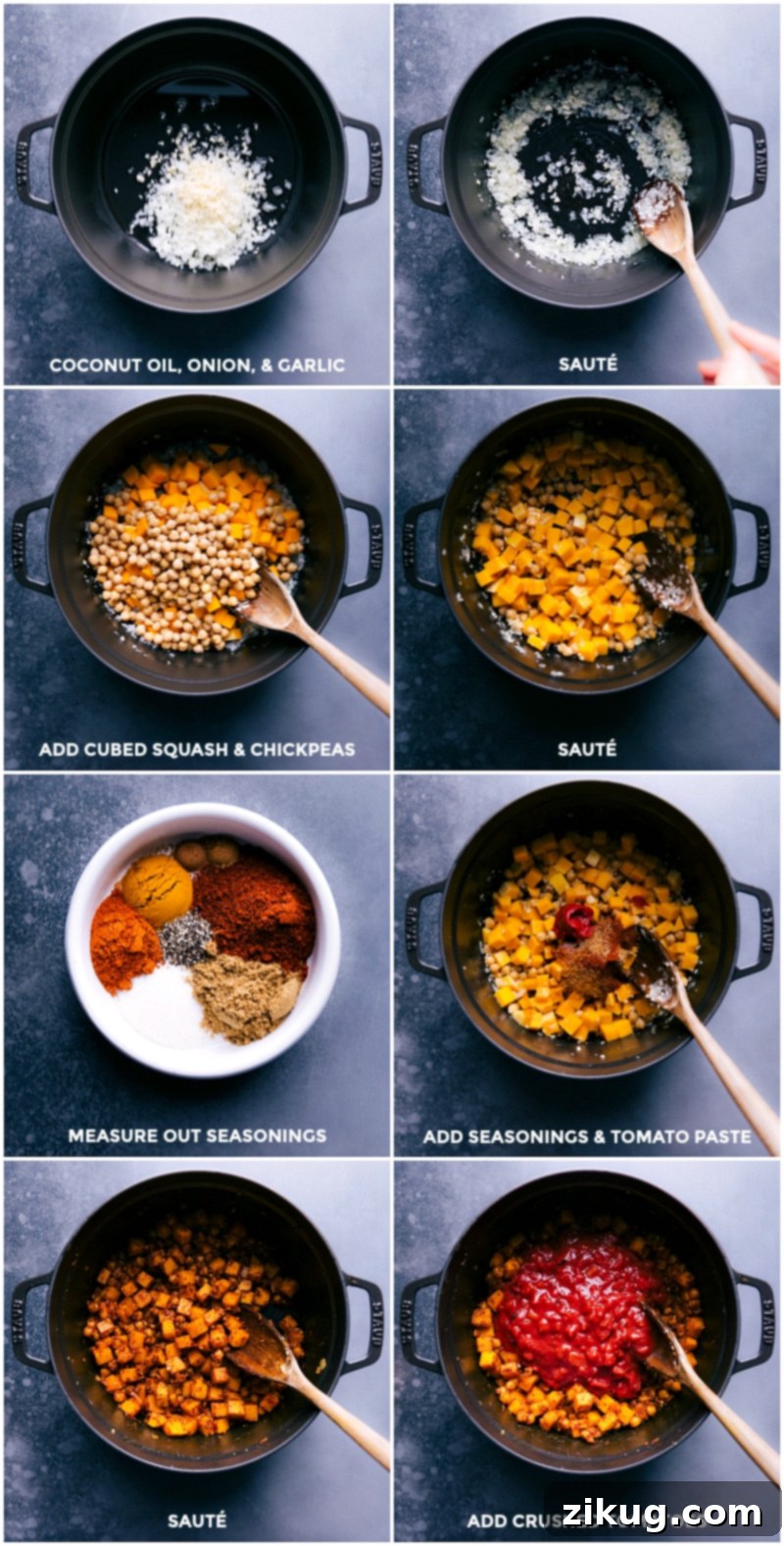
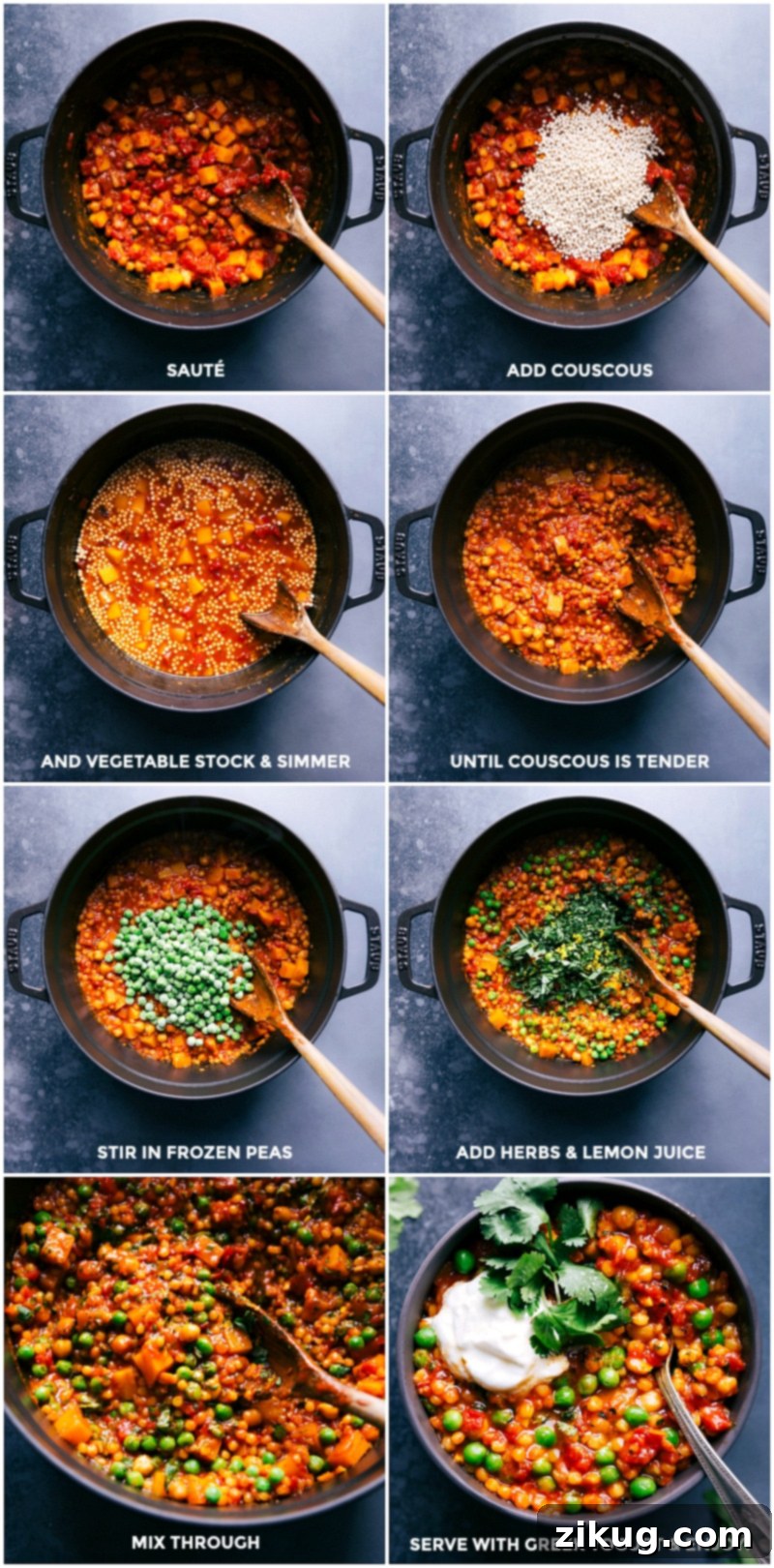
- Heat the coconut oil in a large, heavy-bottomed pot, ideally a cast-iron pot (a good quality nonstick pot will also work, though cook times might be slightly longer as it doesn’t retain heat as well), over medium-high heat. Once the coconut oil has melted, add the finely diced onion and minced garlic. Sauté for 5 minutes, stirring occasionally, until the onion has softened and turned translucent.
- Add the drained and rinsed chickpeas and the cubed butternut squash (refer to Note 3 for squash cutting tips). Continue to cook over medium heat, stirring frequently for 7–9 minutes, until the squash begins to become tender. Using the back of a wooden spoon, gently crush a portion of the chickpeas against the side of the pot. This crucial step releases starch, which helps to naturally thicken the stew and adds a wonderful creamy texture.
- Stir in the tomato paste, ground cumin, chili powder, turmeric, garam masala, salt, cinnamon, cayenne pepper (if using, remember it adds heat), and black pepper. Cook, stirring constantly for 2 minutes, allowing the spices to become fragrant and toast slightly, enhancing their flavor.
- Pour in both cans of undrained fire-roasted crushed tomatoes. Cook, stirring continuously for 1 minute, ensuring everything is well combined and heated through.
- Add the vegetable stock and the Israeli couscous to the pot. Bring the mixture to a boil, then immediately reduce the heat to medium-low. Cover the pot and simmer for 15–22 minutes. The stew is ready when the butternut squash is crisp-tender (it should still have a slight bite, not be mushy) and the couscous is cooked through. Remember to stir the stew every 3–4 minutes to prevent the couscous from sticking to the bottom of the pot. Adjust the heat slightly if needed: increase if the couscous isn’t cooking or squash isn’t softening, decrease if it’s boiling too heavily.
- Finally, stir in the frozen sweet peas, allowing them to warm through for just a minute or two. Add ½ teaspoon of fresh lemon zest and 1–2 tablespoons of fresh lemon juice (add the juice gradually to taste, you might prefer less). Stir in the fresh herbs (cilantro and any optional basil or mint). Taste the stew and season again with additional salt and pepper as needed; we often add another ¼ teaspoon of salt and ⅛ teaspoon of pepper for optimal flavor balance. Ladle the hot stew into bowls and serve immediately, ideally with a dollop of creamy Greek yogurt on top if desired.
Recipe Notes
Note 1: Israeli couscous is also widely known as pearled couscous. It is essential for this recipe due to its larger size and chewy texture, which holds up well during the stew’s cooking time. Regular couscous is much smaller and will cook differently, potentially becoming mushy in the stew. Ensure you use the larger, pearl-shaped couscous for the best results.
Note 2: Optional toppings to elevate your Moroccan stew include: 2 ½ tablespoons of finely chopped fresh basil leaves or fresh mint for an added layer of aroma; additional lemon wedges for an extra burst of citrus; extra fresh cilantro for garnish; and a generous dollop of plain Greek yogurt for a creamy, cooling contrast that balances the rich spices.
Note 3: The cooking time for this recipe is calibrated for butternut squash cut into small, ½-inch cubes. If your squash pieces are larger, they will require a longer cooking time to become tender, which could alter the texture of the couscous. For consistent results, adhere to the recommended cube size.
Storage: Store any leftover Moroccan Chickpea Stew in an airtight container in the refrigerator for up to 4 days. Reheat on the stovetop over low heat or in the microwave. If the stew appears too thick after refrigeration, simply add a splash of vegetable broth or water to reach your preferred consistency.
Nutrition Information
Calories: 519kcal | Carbohydrates: 94g | Protein: 15g | Fat: 12g | Saturated Fat: 9g | Sodium: 690mg | Potassium: 1413mg | Fiber: 13g | Sugar: 14g | Vitamin A: 28034IU | Vitamin C: 90mg | Calcium: 186mg | Iron: 4mg
Nutrition information is automatically calculated and should only be used as an approximation.
Loved this recipe? Share your thoughts below!
Moroccan Stew Serving Suggestions
While delicious on its own, a few simple additions can elevate your Moroccan stew experience, adding layers of flavor, freshness, and texture. Consider these serving suggestions to make your meal even more delightful:
- Fresh Herbs for Brightness: A generous sprinkle of freshly chopped cilantro is almost a requirement for this dish. Its bright, citrusy notes perfectly complement the warming spices. For an extra touch, thinly sliced basil or fresh mint can also add a wonderfully aromatic and refreshing element.
- The Zest and Zing of Lemon: Don’t underestimate the power of lemon! A squeeze of fresh lemon juice at the end adds a crucial touch of acidity, brightening all the flavors and cutting through the richness. A little lemon zest also boosts the aroma and helps to balance the complex spice profile.
- Cooling Greek Yogurt: A dollop of plain Greek yogurt served on top of each bowl offers a delightful coolness and a creamy texture that contrasts beautifully with the warm stew. It also adds a nice boost of protein. We particularly enjoy using Greek Gods® plain yogurt for its rich, tangy flavor. For an aesthetically pleasing touch, you can lightly sprinkle the yogurt with a tiny pinch of turmeric.
- Crusty Bread for Dipping: For a truly comforting meal, serve your Moroccan stew with some crusty bread. Freshly baked French bread or a warm pita is perfect for soaking up every last drop of the flavorful broth, turning a delicious meal into an indulgent experience.
- Aromatic Toasted Nuts: For an added crunch and a touch of richness, consider sprinkling some toasted slivered almonds or pine nuts over your stew just before serving.