
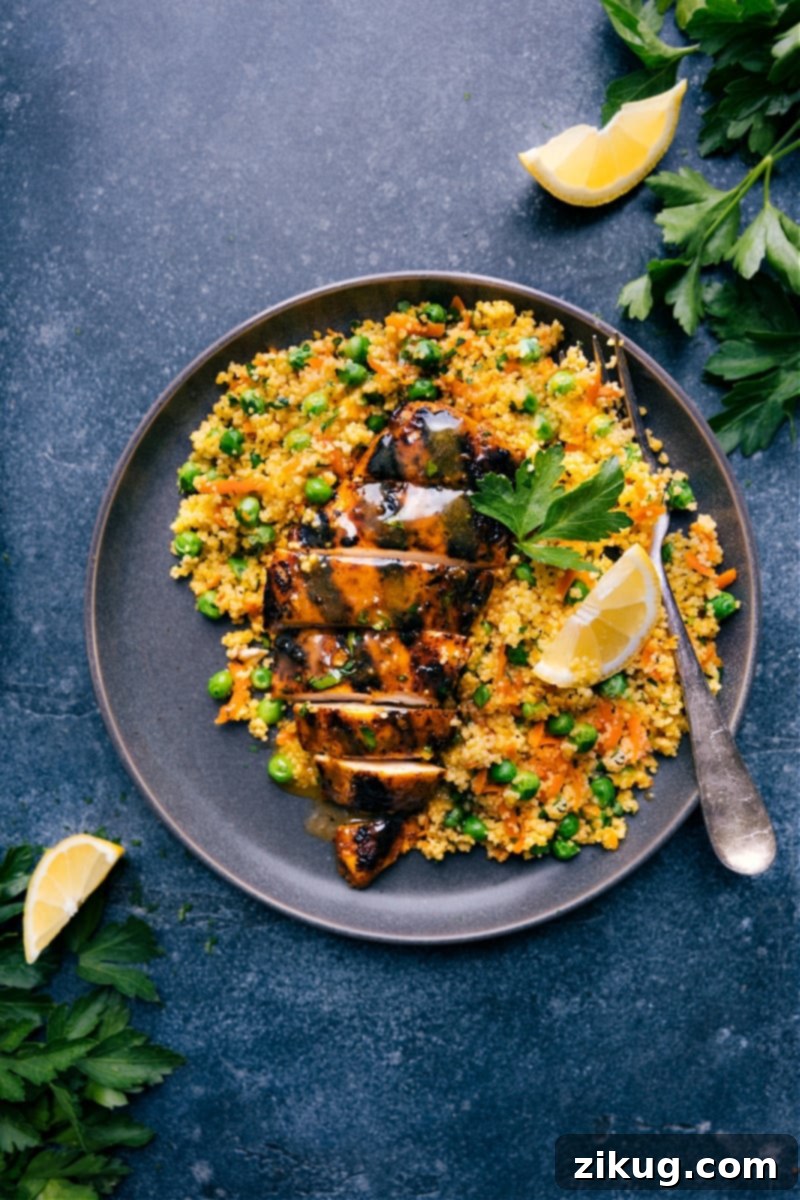
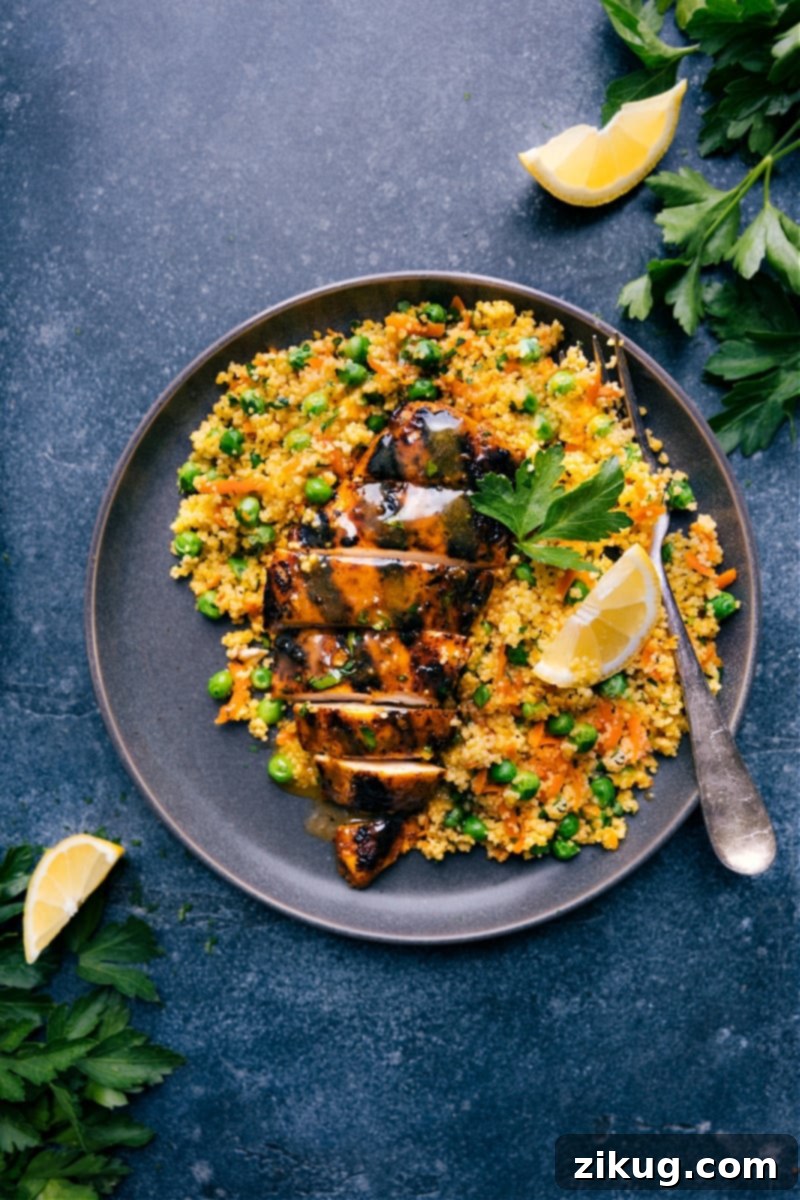
This Moroccan Chicken Recipe delivers an explosion of authentic North African flavors, featuring robustly seasoned chicken served exquisitely on a bed of fluffy, veggie-packed couscous, all brought together with a vibrant, sweet-savory apricot finishing sauce. It’s a culinary journey in every bite, perfect for an elevated weeknight dinner or impressive entertaining.

Author’s Culinary Journey
Sweet, Savory, and Spiced Just Right: My Moroccan Inspiration
My culinary adventures often lead me to fascinating places, but a trip to Morocco left an indelible mark on my palate. The vibrant markets, the intoxicating aroma of exotic spices, and the profound depth of flavor in every dish were simply unforgettable. I found myself particularly captivated by the harmonious blend of sweet and savory notes, a hallmark of traditional Moroccan cuisine. Among all the delightful experiences, the apricot chicken served in a charming, hidden alley restaurant stood out. Its warm spices, incredibly juicy chicken, and that delicate touch of sweetness created a taste sensation I knew I had to recreate.
Upon returning home, that unforgettable apricot chicken became my ultimate inspiration. I embarked on a mission to develop a version that captured the true essence of my Moroccan experience, yet was simple and accessible for home cooks of all skill levels. After numerous attempts and refinements, experimenting with different spice blends and cooking techniques, this Moroccan Chicken Recipe is the triumphant result. It’s more than just a chicken dish; it’s a complete, wholesome meal that truly brings the magic of Morocco directly to your dining table. With perfectly seasoned chicken, a vibrant couscous base loaded with fresh vegetables, and a quick-to-prepare yet incredibly flavorful apricot sauce, this recipe proves that an impressive meal doesn’t have to be complicated. It’s designed to be both stunning in presentation and surprisingly fast to prepare, making it an ideal choice for busy weeknights, effortless entertaining, or even efficient meal prep.
Essential Ingredients for Your Authentic Moroccan Chicken Recipe
Crafting an authentic Moroccan Chicken dish begins with selecting the right ingredients. Each component plays a vital role in building the complex, layered flavors that define this rich cuisine. Below is a detailed breakdown of what you’ll need and why each element is important, ensuring your dish is nothing short of spectacular and truly captures the spirit of North Africa.
| Ingredient | Details & Tips for Best Results |
|---|---|
| Chicken thighs or breasts | For unparalleled flavor, moisture, and tenderness, boneless, skinless chicken thighs are highly recommended. Their slightly higher fat content ensures a juicy result that stands up well to grilling. If using chicken breasts, be mindful not to overcook them to avoid dryness; pounding them to an even 1/2-inch thickness helps with uniform cooking. |
| Moroccan Spices: Cumin, Coriander, Cinnamon, Paprika, Turmeric, Red Pepper Flakes | This aromatic blend forms the intricate heart of our Moroccan seasoning. Cumin offers warmth and earthiness, coriander adds a distinctive citrusy and slightly sweet note, cinnamon introduces a delicate, exotic sweetness and complexity, paprika provides a vibrant color and mild, smoky heat, while turmeric lends its signature golden hue and subtle earthy undertones. A pinch of red pepper flakes adds just enough kick. Consider preparing a larger batch of this specific spice mix to store for future Moroccan-inspired meals. |
| Fresh Ginger & Garlic | The pungent, fresh flavors of minced ginger and garlic are indispensable for any robust marinade. They provide a foundational aromatic layer that complements the dried spices beautifully. While freshly minced is always superior, time-saving alternatives like frozen Dorot® cubes or quality garlic and ginger paste work wonderfully without significantly compromising on flavor. |
| Apricot Preserves | This is the cornerstone of our delightful sweet-and-savory finishing sauce. The quality of your apricot preserves will directly impact the depth and natural sweetness of the sauce. Opt for a good-quality brand with a high fruit content for the best sweet and tangy profile, ensuring a richer flavor. |
| Small-Grain Moroccan Couscous | For the perfect, fluffy base, use small-grain couscous, often explicitly labeled as “Moroccan-Style Pasta.” Its fine texture absorbs flavors beautifully and cooks incredibly quickly (in just minutes), making it an ideal choice for this fast-paced recipe and a delightful canvas for the chicken and sauce. |
| Carrots & Peas | These readily available vegetables are stirred into the couscous, adding vibrant color, a delightful tender-crisp texture, and an extra boost of nutritional goodness. Their natural sweetness perfectly complements the rich flavors of the chicken and the tang of the apricot sauce. |
| Honey | A touch of honey in the chicken marinade serves multiple purposes: it helps to balance the robust spices, contributes to a beautiful caramelization on the chicken’s surface during grilling, and adds a subtle, natural sweetness that is characteristic of Moroccan flavor profiles. |
| White Wine Vinegar & Dijon Mustard | Crucial components for the apricot sauce, white wine vinegar provides a gentle yet effective acidity that brightens the sweetness of the preserves and cuts through the richness, while Dijon mustard adds a subtle savory tang, a hint of spice, and acts as an emulsifier, helping to create a smooth, unified glaze. It’s important to use white wine vinegar, which is softer than distilled white vinegar, and genuine Dijon, not yellow mustard. |
| Extra Virgin Olive Oil | Used generously in the marinade, during couscous preparation, and within the finishing sauce, a good quality extra virgin olive oil binds all the disparate flavors together and adds a luxurious richness. Its characteristic fruity and sometimes peppery notes enhance the overall profile of the entire dish significantly. |
| Chicken Broth | The secret to supremely flavorful couscous lies in cooking it in chicken broth instead of plain water. This simple substitution infuses the couscous with savory depth right from the start, making it a more integral and delicious part of the meal. Low-sodium broth is often preferred for better control over seasoning. |
| Fresh Flat-Leaf Parsley & Lemon | For garnishing, fresh flat-leaf parsley adds a burst of herbaceous freshness, a vibrant green color, and a pleasant textural contrast. A final squeeze of fresh lemon juice from lemon wedges at the end can elevate all the flavors with its bright, zesty acidity, bringing a wonderful balance to the dish. These are optional but highly recommended for an authentic finish. |
Mastering the Moroccan Chicken Recipe: A Step-by-Step Guide for Culinary Success
Creating this intensely flavorful Moroccan Chicken dish is simpler than you might imagine, despite its gourmet appeal. Follow these detailed steps to achieve a mouth-watering meal that tastes like it came straight from a bustling Moroccan kitchen. Each stage is carefully designed to maximize flavor, ensure optimal texture, and guarantee a perfect outcome for your culinary masterpiece.
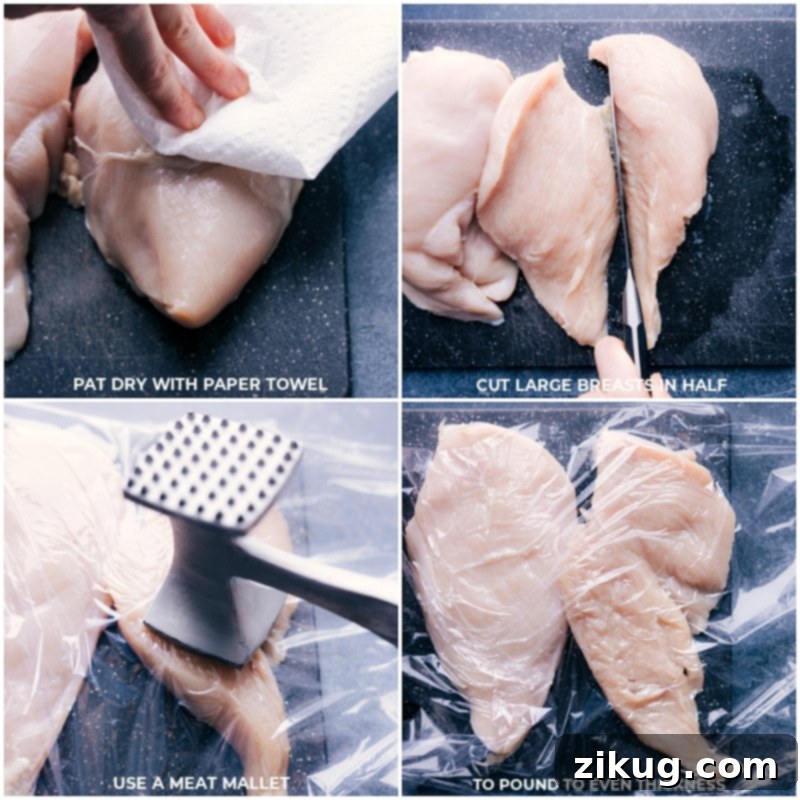
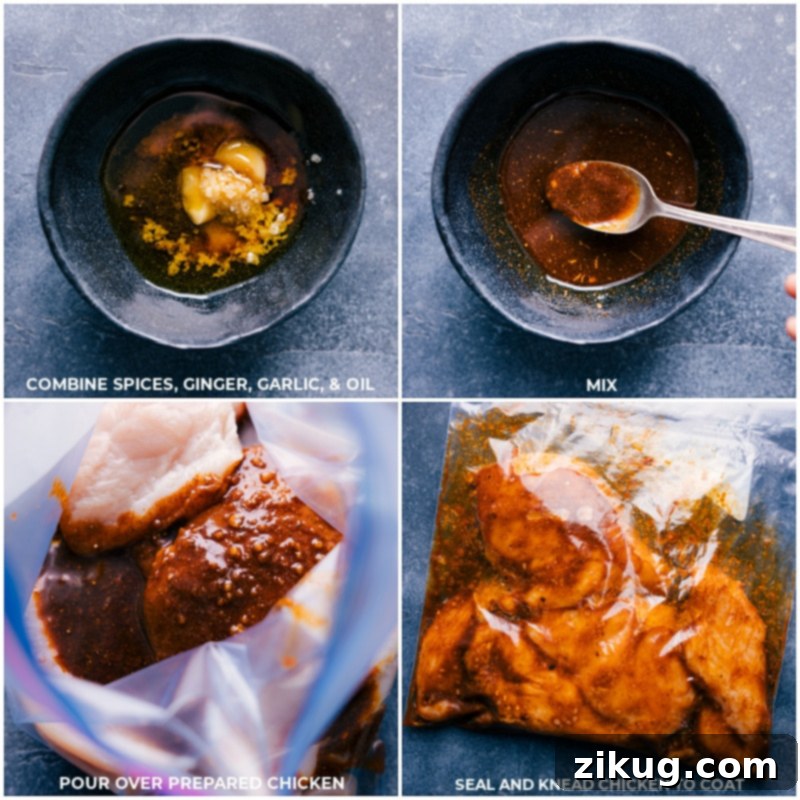
- Prepare and Marinate the Chicken for Deep Flavor: Begin by preparing your chicken. If utilizing boneless, skinless chicken breasts, slice them in half widthwise to create thinner cutlets, then place them between two sheets of plastic wrap. Using a meat mallet, gently pound the chicken to a uniform 1/2-inch thickness. This not only ensures even cooking but also significantly helps the marinade penetrate more effectively, infusing flavor throughout. For chicken thighs, no pounding is typically necessary. Carefully place the prepared chicken into a gallon-sized resealable bag; this handy trick helps contain any potential turmeric stains. In a separate small bowl, combine 1/4 cup of the extra virgin olive oil, the honey, minced garlic, ginger paste, paprika, ground cumin, ground coriander, ground turmeric, ground cinnamon, red pepper flakes, and a generous 1 teaspoon of salt (or to taste). Whisk these ingredients vigorously until they are thoroughly combined and smooth. Pour this vibrant, aromatic marinade over the chicken in the bag, seal the bag tightly (expelling as much air as possible), and gently massage the bag to ensure every piece of chicken is thoroughly coated. Transfer the bag to the refrigerator and allow the chicken to marinate for a minimum of 30 minutes, or for up to 8 hours for the most profound flavor infusion. Remember to flip the bag occasionally to redistribute the marinade evenly.
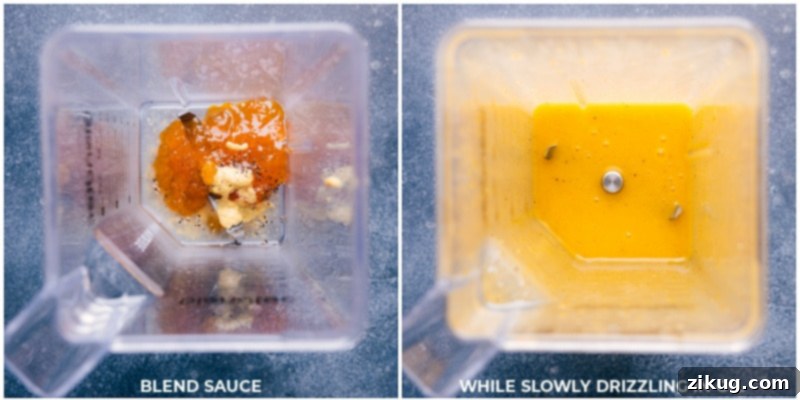
- Whip Up the Luscious Apricot Finishing Sauce: While your chicken is busy marinating and soaking up all those wonderful flavors, it’s the perfect time to prepare the star of the dish – the sweet and savory apricot finishing sauce. In a small blender or a food processor, combine the apricot preserves, Dijon mustard, white wine vinegar, 1/4 teaspoon of salt, and 1/8 teaspoon of freshly ground black pepper. Blend these ingredients on high for approximately 45 seconds until they are thoroughly combined and achieve a wonderfully smooth consistency. With the blender still running on a low setting, slowly and steadily drizzle in another 1/4 cup of extra virgin olive oil. Continue blending for an additional 25 seconds until the sauce becomes beautifully emulsified, glossy, and perfectly uniform. Pour this luscious sauce into a covered jar or an airtight container and refrigerate it until it’s time to serve, allowing the flavors to meld and deepen further.
- Grill the Chicken to Juicy Perfection: Begin by preheating your grill to a medium-high temperature, aiming for approximately 400-450°F (200-230°C). It’s crucial to ensure your grill grates are both clean and well-oiled to prevent the chicken from sticking and to ensure those desirable, crisp grill marks. Once the grill is hot, carefully place the marinated chicken pieces directly onto the grates. Spoon any leftover marinade from the bag over the chicken as it cooks for an extra burst of flavor and moisture. Close the grill lid and cook the chicken for approximately 2–5 minutes per side. The exact cooking time will naturally vary depending on the thickness of your chicken and the actual heat of your grill. For safety and perfect doneness without drying out, use a reliable digital meat thermometer to ensure the internal temperature of the chicken reaches 160°F (71°C). Once cooked, transfer the chicken to a clean cutting board, cover it loosely with aluminum foil, and let it rest for 5–10 minutes. This resting period is absolutely crucial for the juices to redistribute throughout the meat, resulting in incredibly tender and moist chicken.
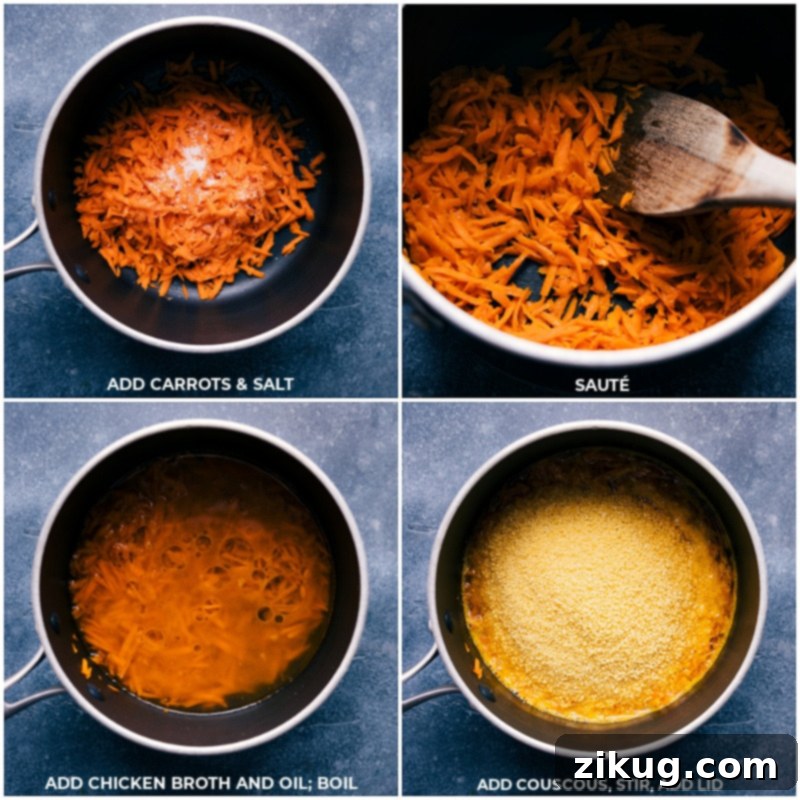
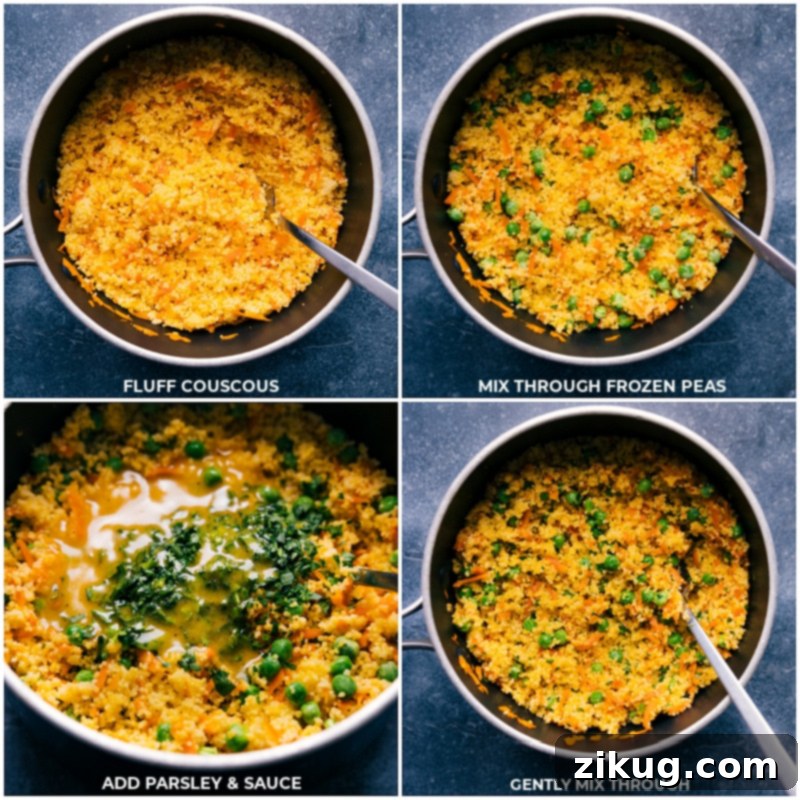
- Cook the Flavorful Veggie Couscous Base: While the chicken is resting, prepare the vibrant and aromatic couscous base. In a medium-sized pot, heat 1 tablespoon of extra virgin olive oil over high heat. Add the grated carrots (prepared in step 1) and sauté them for approximately 3 minutes until they begin to soften slightly and become fragrant. Pour in 1-1/2 cups of chicken broth (low sodium is often best for seasoning control), an additional 1 tablespoon of olive oil, and 1/2 teaspoon of salt. Bring this mixture to a rapid, rolling boil. Once boiling vigorously, remove the pot from the heat immediately. Stir in the 1-1/2 cups of small-grain couscous, ensuring it is fully submerged in the liquid. Cover the pot tightly with a lid and let it stand undisturbed for precisely 5 minutes. During this time, the couscous will absorb all the flavorful liquid and become perfectly fluffy. While the couscous is resting, finely dice enough fresh flat-leaf parsley to yield 1/4 cup. After 5 minutes, uncover the couscous, fluff it thoroughly with a fork, and then gently stir in the 1 cup of thawed frozen peas and the 1/4 cup of diced parsley. Finally, incorporate 1/4 cup of your prepared apricot sauce into the couscous mixture, mixing until all components are evenly combined. Taste and adjust seasoning with additional salt and freshly ground black pepper if desired.
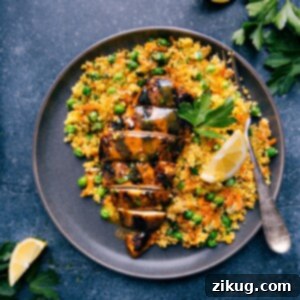
- Artfully Assemble and Serve Your Moroccan Feast: To present your exquisite Moroccan Chicken, arrange generous portions of the fluffy, flavorful veggie couscous on individual plates or in shallow bowls. Artfully slice the rested grilled chicken into appealing strips or serve the chicken pieces whole, placing them beautifully atop the couscous. For the crowning glory, generously drizzle the remaining apricot finishing sauce over both the chicken and the couscous. For an extra touch of freshness, vibrant color, and an authentic Moroccan presentation, garnish with additional fresh parsley and a few bright lemon wedges. Serve immediately and savor the rich, aromatic, sweet, savory, and perfectly spiced flavors of your homemade Moroccan Chicken! Enjoy every delightful bite!
Chef’s Essential Tips for a Flawless Moroccan Chicken Experience
Achieving restaurant-quality results at home is all about paying attention to the details and understanding the nuances of each step. Here are some expert tips to ensure your Moroccan Chicken turns out perfectly every single time, from the initial marination to the final succulent bite, making your cooking process smoother and your meal even more delicious.
- Optimize Marination Time for Maximum Flavor: While a longer marination period (ideally 5-8 hours) yields the deepest, most complex flavor, don’t despair if you’re short on time. Even a brief 20-30 minute marinade is remarkably effective, especially for thinner cuts of chicken like pounded breasts. For quicker flavor infusion, you can gently poke the chicken all over with a fork before adding the marinade; this creates tiny channels for the spices and liquids to penetrate the meat faster. However, avoid piercing if you plan to marinate for longer than 30 minutes, as it can sometimes lead to a slightly tougher texture over extended periods. Always remember to flip the chicken halfway through its marinating time to ensure every surface is evenly coated and absorbing those magnificent flavors.
- Mastering Proper Grill Preparation: To prevent your perfectly marinated chicken from stubbornly sticking to the grates and to ensure you achieve those beautiful, appetizing grill marks, always oil your grill grates thoroughly and correctly before cooking. The most effective way to do this is to fold a paper towel several times, soak it generously in a little extra virgin olive oil, and then, using a pair of long-handled tongs, carefully rub it over the hot, preheated grates. This creates a non-stick surface, allowing the chicken to release easily and preserving its delicious, crusty exterior without tearing.
- Precision Cooking with a Digital Thermometer is Key: Overcooked chicken is synonymous with dry, unappealing chicken, and nobody wants that! The most reliable and foolproof way to ensure your chicken is both perfectly juicy and safely cooked is to use a digital meat thermometer. Grill the chicken until its internal temperature, measured at the thickest part, reaches precisely 160°F (71°C). It’s important to remember that chicken will continue to cook slightly even after it’s removed from the heat (a phenomenon known as carryover cooking), so aiming for 160°F will typically bring it to the safe final temperature of 165°F (74°C) after resting.
- Embrace the Importance of Resting Your Meat: This critical step is often overlooked by eager home cooks but is absolutely essential for achieving succulent, tender chicken. Once the chicken is removed from the grill, immediately transfer it to a clean cutting board and cover it loosely with aluminum foil. Let it rest undisturbed for a minimum of 5 to 10 minutes before slicing or serving. This allows the muscle fibers, which contract during cooking, to relax and reabsorb all the precious juices that have migrated to the center of the meat. Skipping this step means those delicious juices will simply run out onto your cutting board when you cut into the chicken, leaving you with dry meat. The result of proper resting is consistently moist, tender, and flavorful chicken every time.
The Irresistible Apricot Sauce: A Flavor Catalyst for Your Moroccan Chicken
The apricot finishing sauce is far from just an accompaniment in this Moroccan Chicken recipe; it’s a transformative element, a true flavor catalyst that elevates the entire dish from simply delicious to absolutely extraordinary. Its unique and masterfully balanced blend of sweet, tangy, and subtly savory notes is nothing short of addicting, leaving a delightful impression with every bite. Perhaps the most appealing aspect is how incredibly quick and effortlessly easy it is to whip together, requiring minimal effort for maximum impact. This versatile sauce serves a dual, equally important purpose in our Moroccan culinary creation:
- Firstly, a carefully measured portion of this magnificent sauce is gently folded into the couscous base. This crucial step infuses every delicate grain of couscous with a burst of bright, fruity, and savory flavor, ensuring the couscous is not merely a textural element but a deeply integrated and harmonious part of the overall flavor profile of the meal.
- Secondly, and perhaps most dramatically, the remaining rich sauce is generously drizzled over the perfectly grilled Moroccan Chicken, delivering the ideal, glistening, and flavorful finishing touch. This final layer of taste provides a wonderful sweet and tangy contrast to the robustly spiced chicken, creating a beautifully balanced and utterly unforgettable taste experience that will have everyone asking for seconds.
Let’s take a closer look at the key ingredients that make this apricot sauce so special, effective, and indispensable to this recipe:
- Apricot Preserves: This is undoubtedly the sweet, fruity heart of the sauce. The quality of your apricot preserves truly matters here, as it forms the dominant flavor foundation. I highly recommend investing in a premium brand like Bonne Maman® for its rich fruit content, authentic taste, and superior texture, though Smucker’s® also offers an excellent, widely available option. Don’t let any glorious leftovers go to waste; they’re fantastic in Mini Fruit Tarts, as a glaze for other meats, or simply spread on warm toast.
- White Wine Vinegar: This ingredient is absolutely critical for balancing the inherent sweetness of the apricot preserves with a subtle, sophisticated tang. White wine vinegar is notably softer and significantly less sharp than standard distilled white vinegar, offering a more nuanced and delicate acidity that complements rather than overpowers the fruitiness. It is important not to swap these two types of vinegar, as the desired flavor profile of the sauce would be significantly altered.
- Dijon Mustard: Far from merely adding a “mustard” flavor, Dijon mustard plays a crucial, multi-faceted role in this sauce. It provides a savory, slightly pungent depth that enhances the overall complexity, and critically, it acts as a powerful emulsifier. This emulsifying quality helps to bind the oil and other liquids together, creating that wonderfully silky-smooth, cohesive texture that makes the sauce so appealing. Its flavor is distinct from plain yellow mustard, so ensure you use genuine Dijon for the intended sophisticated complexity.
- Extra Virgin Olive Oil: Given its generous presence in the chicken marinade, the couscous preparation, and now this apricot sauce, investing in a high-quality extra virgin olive oil truly makes a noticeable difference in the final taste of the entire dish. Its robust, often peppery, grassy, or fruity notes contribute significantly to the overall richness, luxurious mouthfeel, and aromatic depth of the sauce, beautifully enhancing the entire Moroccan Chicken experience.
- Salt & Freshly Ground Black Pepper: These fundamental seasonings are vital for sharpening, enhancing, and harmonizing all the other flavors within the sauce. While the Moroccan Chicken itself is well-seasoned with a blend of spices, the apricot sauce benefits immensely from its own careful calibration of salt and freshly ground black pepper. This precise seasoning helps to achieve a perfect balance of sweet, savory, and tangy notes, ensuring the sauce is well-rounded and deeply satisfying.
Storage and Reheating Recommendations for Your Leftovers
Proper storage is essential to ensure you can enjoy the delightful and complex flavors of this Moroccan Chicken recipe for several days to come, maintaining its quality and taste. Store any leftover chicken, couscous, and sauce in separate, airtight containers in the refrigerator for up to 3-4 days. This separation is highly recommended for optimal texture and flavor preservation when reheating, as it prevents the couscous from becoming soggy and allows the chicken to reheat without drying out.
Reheat individual portions gently to maintain the integrity of the dish. For the chicken, you can use a microwave on a lower power setting, or for best results, warm it briefly in a lightly oiled skillet on the stovetop over medium-low heat until heated through. This method helps to retain its moisture and tenderness. The couscous can be reheated effectively in the microwave; if it appears a bit dry, add a small splash of chicken broth or water before microwaving to restore its fluffy texture. Always reheat the apricot sauce separately and drizzle it fresh over the warmed chicken and couscous just before serving for the best possible experience. Avoid overheating any component to prevent the flavors from diminishing and the textures from becoming undesirable.
Frequently Asked Questions About Making Moroccan Chicken
To help you perfect this delicious Moroccan Chicken recipe, here are answers to some of the most common questions you might have:
- Can I use chicken breasts instead of thighs? Yes, absolutely! Boneless, skinless chicken breasts work wonderfully in this recipe. Just be sure to pound them to an even 1/2-inch thickness as instructed to ensure uniform cooking and prevent them from drying out, as breasts tend to cook faster and have less fat than thighs.
- What if I don’t have an outdoor grill? Can I still make this recipe? No problem at all! You can easily cook this Moroccan Chicken using an indoor grill pan on your stovetop for similar char marks and flavor. Alternatively, you can bake the chicken in the oven. To do so, preheat your oven to 400°F (200°C) and bake the marinated chicken for approximately 20-25 minutes, or until its internal temperature reaches 160°F (71°C).
- Can I make the marinade and sauce ahead of time? Yes, you certainly can! Both the chicken marinade and the apricot finishing sauce are excellent for meal prep. The marinade can be prepared and stored in an airtight container in the refrigerator for up to 3 days, making cooking day much quicker. The apricot sauce can also be made in advance and kept refrigerated in a covered jar for up to a week.
- Is the apricot sauce spicy? The recipe includes 1/8 teaspoon of red pepper flakes in the chicken marinade, which provides a very subtle hint of warmth rather than overt spice. The apricot sauce itself is primarily characterized by its sweet and tangy profile. If you prefer a dish with more heat, feel free to increase the amount of red pepper flakes in the chicken marinade to your liking.
- What kind of couscous should I specifically use for this recipe? For the best results and the authentic texture of this dish, we highly recommend using small-grain Moroccan couscous. It is often labeled as “Moroccan-Style Pasta” or simply “Couscous” in grocery stores. This variety cooks very quickly and achieves a delicate, fluffy texture that perfectly complements the spiced chicken and rich sauce. Please avoid using Israeli (pearl) couscous, which has a much larger grain and requires a different, longer cooking method.
- Can I add other vegetables to the couscous besides carrots and peas? Definitely! This recipe is quite adaptable, and you can certainly customize the couscous with other quick-cooking vegetables. Feel free to stir in finely diced bell peppers (any color), chopped fresh spinach (stir in at the very end to wilt), or even blanched small broccoli florets or zucchini for added nutrition, color, and texture.
- Can I substitute the chicken thighs with boneless, skinless turkey cutlets? Yes, turkey cutlets can be a good lean alternative! They will cook similarly to chicken breasts, so be sure to pound them to an even thickness and watch carefully to prevent them from drying out. The Moroccan spices and apricot sauce pair wonderfully with turkey.
Explore More Delicious & Easy Grilled Chicken Recipes:
Chicken
Irresistible Chicken Fajitas
Dinner
Exotic Grilled Curry Chicken
Dinner
Sweet & Savory Teriyaki Chicken Skewers
Dinner
The Best Grilled Chicken Marinade {With Video}
Print Recipe
Moroccan Chicken
Chelsea Lords
30 minutes
10 minutes
40 minutes
4
servings
Recipe Video Guide
Essential Kitchen Equipment
-
Small blender
or food processor for the sauce -
Grill
or a sturdy grill pan -
Digital Meat Thermometer
(for accurate doneness) -
Meat Mallet
(optional, but recommended for pounding chicken breasts)
Ingredients
-
1-1/2
pounds
boneless, skinless chicken breasts
or thighs (thighs are highly recommended for optimal juiciness) -
10
tablespoons
extra virgin olive oil
divided (for marinade, couscous, and apricot sauce) -
2
teaspoons
honey -
2
teaspoons
minced garlic
(freshly minced or quality paste) -
2
teaspoons
ginger paste
(freshly grated or quality paste) -
2
teaspoons
paprika -
1
teaspoon
ground cumin -
1/2
teaspoon
ground coriander
-
1/4
teaspoon
ground turmeric
-
1/4
teaspoon
ground cinnamon -
1/8
teaspoon
red pepper flakes
-
Salt
and
freshly ground black pepper
-
1/4
cup
apricot preserves
-
1/2
teaspoon
Dijon-style mustard
-
2
tablespoons
white wine vinegar
-
1-1/2
cups
grated carrot
peeled; approximately 3 medium carrots -
1-1/2
cups
chicken broth
(low sodium preferred for best flavor control) -
1-1/2
cups
small-grain couscous
(look for “Moroccan-Style Pasta” for quick cooking) -
1
cup
frozen peas
(thawed before mixing) -
1/4
cup
Fresh flat-leaf parsley
chopped, plus extra sprigs for garnish (optional) -
1
lemon
cut into wedges, for serving (optional, but highly recommended for brightness)
Detailed Preparation Instructions
-
Step 1: Prepare the Chicken for Marination. If utilizing boneless, skinless chicken breasts, begin by slicing each breast in half horizontally to create thinner cutlets. Place these cutlets between two sheets of plastic wrap. Using a meat mallet or the flat side of a heavy pan, gently pound the chicken to an even 1/2-inch thickness. This essential step ensures uniform cooking and allows the marinade to penetrate more deeply and quickly. For chicken thighs, this pounding step is typically not necessary. Carefully place the prepared chicken pieces into a gallon-sized resealable plastic bag. This method helps to minimize potential turmeric stains on your kitchen surfaces or hands. While you’re at it, peel and grate the carrots using the large holes of a grater, and set them aside for later use in the couscous.
-
Step 2: Marinate the Chicken for Deep Flavor Infusion. In a small mixing bowl, combine 1/4 cup of the extra virgin olive oil, the honey, minced garlic, ginger paste, paprika, ground cumin, ground coriander, ground turmeric, ground cinnamon, red pepper flakes, and 1 teaspoon of salt (adjust to your preference). Whisk all these ingredients vigorously until they are thoroughly combined and form a smooth, fragrant mixture. Pour this vibrant, aromatic spice blend over the chicken pieces inside the resealable bag. Seal the bag tightly, ensuring to press out as much air as possible, then gently massage the bag to ensure every piece of chicken is thoroughly coated with the marinade. Transfer the sealed bag to the refrigerator and allow the chicken to marinate for a minimum of 30 minutes. For the most profound and authentic flavor infusion, an ideal marination time is 5–8 hours, or even overnight. For shorter marinating times (under 30 minutes), you can lightly pierce the chicken all over with a fork before adding the marinade; this creates tiny channels that help the spices penetrate the meat more quickly. For longer marination periods, avoid piercing the chicken, as it might lead to a slightly tougher texture over time.
-
Step 3: Prepare the Luscious Apricot Finishing Sauce. While your chicken is marinating and its flavors are deepening, take this opportunity to prepare the star of the dish – the sweet, tangy, and subtly savory apricot finishing sauce. In a small blender or a food processor, combine the apricot preserves, Dijon mustard, white wine vinegar, 1/4 teaspoon of salt, and 1/8 teaspoon of freshly ground black pepper. Blend these ingredients on high for approximately 45 seconds until they are thoroughly combined and achieve a wonderfully smooth, cohesive consistency. With the blender still running on a low setting, slowly and steadily drizzle in the remaining 1/4 cup of extra virgin olive oil. Continue blending for an additional 25 seconds until the sauce is beautifully emulsified, glossy, and perfectly uniform in texture. Pour this luscious sauce into a covered jar or an airtight container and refrigerate it until it’s time to serve. This allows the flavors to meld and deepen further, enhancing its overall impact on the finished dish.
-
Step 4: Cook the Flavorful Veggie Couscous Base. Begin by preheating your grill according to the instructions in “Note 3” (medium-high, 400-450°F, with cleaned and oiled grates). While the grill is heating, start on the vibrant and aromatic couscous base. In a medium-sized pot with a tight-fitting lid, heat 1 tablespoon of extra virgin olive oil over high heat. Add the grated carrots (prepared in Step 1) and sauté them for approximately 3 minutes until they begin to soften slightly and become fragrant. Pour in 1-1/2 cups of chicken broth (preferably low sodium), an additional 1 tablespoon of olive oil, and 1/2 teaspoon of salt. Bring this liquid mixture to a rapid, rolling boil. Once boiling vigorously, remove the pot from the heat immediately. Stir in the 1-1/2 cups of small-grain couscous, making sure it’s fully submerged in the liquid. Cover the pot tightly with its lid and let it stand undisturbed for precisely 5 minutes. During this crucial time, the couscous will absorb all the flavorful liquid and steam to a perfectly fluffy texture. While the couscous is resting, finely dice enough fresh flat-leaf parsley to yield 1/4 cup. After 5 minutes, uncover the couscous, fluff it thoroughly with a fork, and then gently stir in the 1 cup of thawed frozen peas and the 1/4 cup of diced parsley. Finally, incorporate 1/4 cup of your prepared apricot sauce into the couscous mixture, mixing until all components are evenly combined. Taste the couscous and adjust seasoning with extra salt and freshly ground black pepper if needed.
-
Step 5: Grill the Chicken to Juicy Perfection. Once your grill is preheated and oiled, carefully place the marinated chicken breasts or thighs directly onto the hot grates. If there’s any remaining marinade in the bag, spoon it over the chicken as it grills; this adds an extra layer of flavor and helps keep the chicken moist. Close the grill lid and cook the chicken for approximately 2–5 minutes per side. The exact cooking time will depend on the thickness of your chicken pieces and the actual temperature of your grill. Use a sturdy metal spatula to carefully flip the chicken to ensure even cooking. To ensure the chicken is safely cooked yet perfectly juicy, use a reliable digital meat thermometer to check the internal temperature at the thickest part, aiming for 160°F (71°C). Once cooked, remove the chicken from the grill, transfer it to a clean cutting board, and cover it loosely with aluminum foil. Let it rest for 5–10 minutes before slicing or serving. This resting period is absolutely critical for the juices to redistribute throughout the meat, ensuring maximum tenderness and flavor in every bite.
-
Step 6: Artfully Assemble and Serve Your Moroccan Feast. To present your exquisite Moroccan Chicken, arrange generous portions of the fluffy, flavorful veggie couscous on individual plates or in shallow bowls. Artfully slice the rested grilled chicken into appealing strips or serve the chicken pieces whole, placing them beautifully atop the couscous. For the crowning glory, generously drizzle the remaining apricot sauce over both the chicken and the couscous; this adds a final layer of vibrant flavor and a beautiful sheen. For an extra touch of freshness, vibrant color, and an authentic Moroccan presentation, garnish with additional fresh parsley and a few bright lemon wedges. Serve immediately and relish this truly vibrant, sweet, savory, and perfectly spiced Moroccan culinary masterpiece! Enjoy every delightful bite!
Important Recipe Notes for Success
Note 2: Expert Marination Tips. Marinating the chicken for a full 5-8 hours will undoubtedly yield the most intensely flavored and deeply infused results. However, if you’re working with limited time, even a quick 30-minute marinade is quite effective due to the powerful and aromatic spices used. For shorter marination periods (under 30 minutes), you can gently poke the chicken all over with a fork before adding the marinade. This action creates tiny channels that help the spices and liquid penetrate the meat more quickly, accelerating flavor infusion. For longer marination periods, it’s generally best to avoid piercing the chicken, as it might lead to a slightly tougher texture over an extended soak.
Note 3: Meticulous Grill Preparation. Before placing your marinated chicken on the grill, ensure your grill is preheated to a medium-high temperature, ideally ranging between 400–450°F (200-230°C). Furthermore, it is absolutely crucial to clean the grill grates thoroughly and then grease them well with oil. The easiest and most effective way to do this is by soaking a folded paper towel in a little extra virgin olive oil, holding it securely with tongs, and carefully rubbing it over the hot grates. This vital step prevents the chicken from sticking, ensuring a clean release and those beautiful, appetizing grill marks without tearing the meat.
Storage: To keep your leftovers fresh and delicious, store them in separate, airtight containers in the refrigerator for up to 3 days. This separation is particularly beneficial for maintaining optimal texture when reheating, preventing the couscous from becoming soggy and ensuring the chicken stays tender.
Reheating: Gently reheat individual portions in the microwave until warmed through. For the chicken, reheating briefly in a skillet on low heat can help retain its moisture and prevent it from drying out. If the couscous seems a bit dry, add a small splash of broth or water before microwaving to restore its fluffy texture. Always drizzle the apricot sauce fresh over the reheated chicken and couscous just before serving for the best possible experience.
Nutritional Information (Approximate)
Serving:
1
serving
|
Calories:
554
kcal
|
Carbohydrates:
56.1
g
|
Protein:
33.8
g
|
Fat:
21.2
g
|
Cholesterol:
84
mg
|
Sodium:
369.1
mg
|
Fiber:
4.9
g
|
Sugar:
13.2
g
Nutrition information is automatically calculated and is an approximation. Values may vary based on specific brands and preparation methods. Please consult a nutritionist or dietary professional for precise dietary information tailored to your needs.
Loved this recipe? Share your thoughts below!