
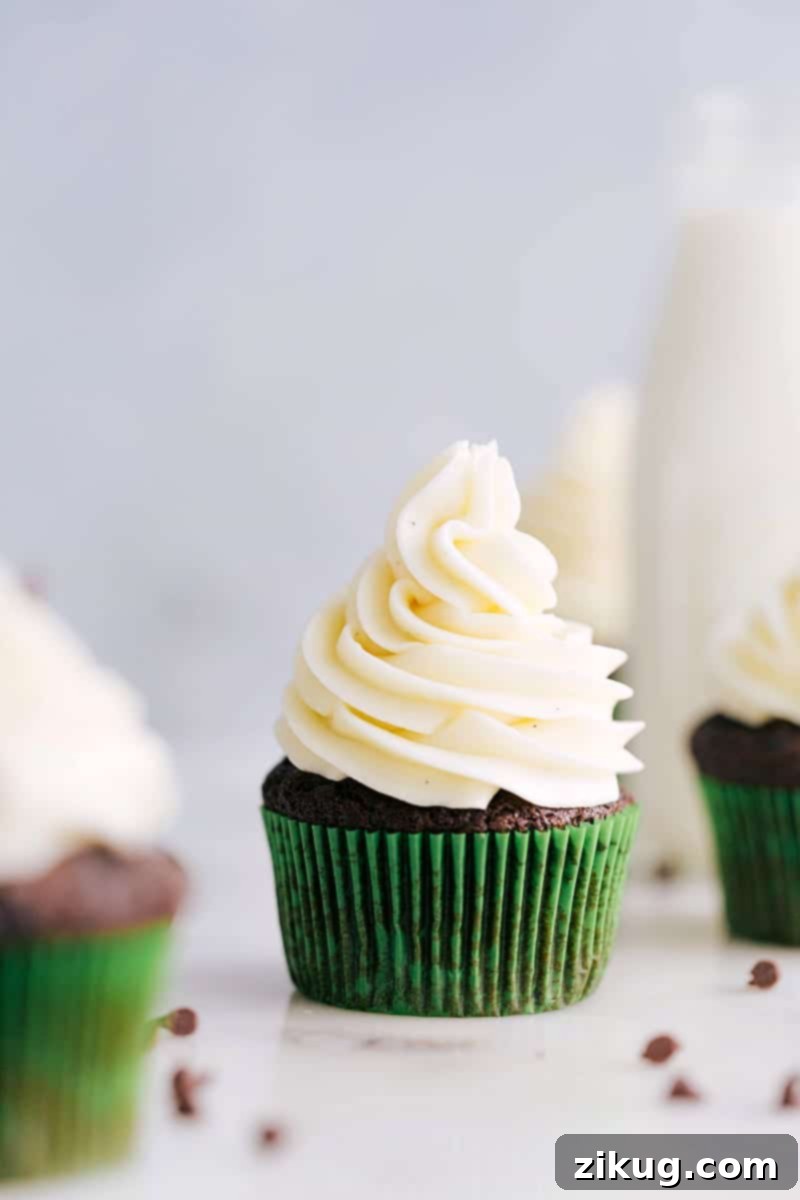
Indulge in the unparalleled delight of a truly smooth, velvety, and irresistibly flavorful Cream Cheese Frosting. This classic confectionery masterpiece is the perfect companion to an array of desserts, elevating every bite with its signature tangy sweetness.
Imagine this luscious frosting generously slathered atop moist Carrot Cake Cupcakes, rich Banana Cupcakes, or delightfully chewy Sugar Cookies! Its versatility makes it a must-have recipe in any baker’s repertoire.
Mastering the Art of Cream Cheese Frosting: Your Go-To Recipe
Every baker needs a reliable, tried-and-true recipe that consistently delivers perfection, and for me, this homemade cream cheese frosting is precisely that. This isn’t just any recipe; it’s a cherished family staple, passed down from my mom, and one I’ve enjoyed making (and eating!) countless times throughout my life. It’s a testament to simple ingredients yielding extraordinary results – a truly classic, incredibly easy, and undeniably delicious frosting that stands above the rest.
This comprehensive guide will walk you through every step of creating this magnificent frosting. We’ll delve into the essential techniques, share my top tips for achieving that coveted smooth and fluffy texture, and explore how you can effortlessly adapt this versatile recipe to perfectly complement various desserts and cater to different preferences. Get ready to transform your baked goods with the ultimate cream cheese frosting!
How to Achieve the Perfect Cream Cheese Frosting: Step-by-Step Guide
Creating a truly exceptional cream cheese frosting is simpler than you might think, provided you follow a few key steps. The magic lies in the details, particularly with ingredient preparation and mixing technique. Here’s how to whip up a batch of this heavenly frosting:
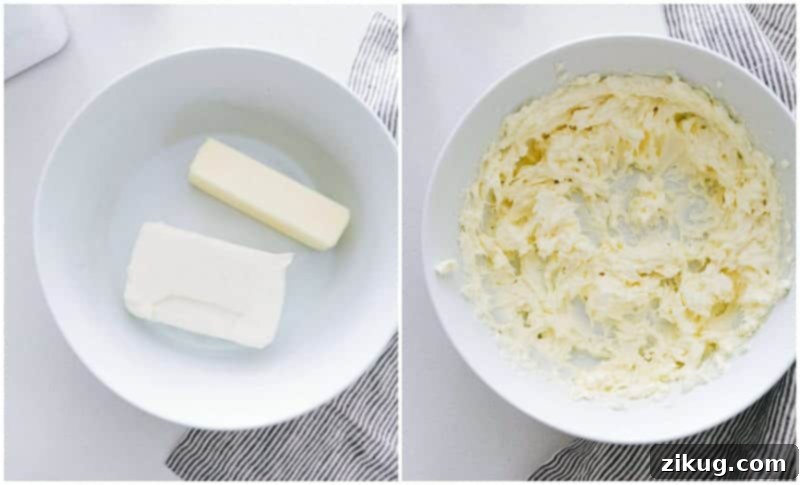
- Ensure Butter and Cream Cheese are at Room Temperature: This crucial first step cannot be overstated. For an impeccably smooth and fluffy frosting, your butter and cream cheese must be genuinely softened to room temperature. This typically means setting them out on your counter about an hour before you plan to bake. If your ingredients are too cold, they will not emulsify properly, leading to a lumpy, inconsistent texture rather than the desired light and airy fluffiness. For quick softening tips, refer to this helpful resource.
- Cream Together Butter and Cream Cheese Until Completely Smooth: Once your butter and full-fat cream cheese are perfectly softened, it’s time to combine them. Using an electric mixer – whether a reliable hand mixer or a powerful stand mixer fitted with the paddle attachment – beat them together on medium-high speed. Continue mixing until the mixture is utterly smooth, light, and uniform, with no visible lumps of butter or cream cheese remaining. This can take a few minutes, so be patient and let the mixer do its work.
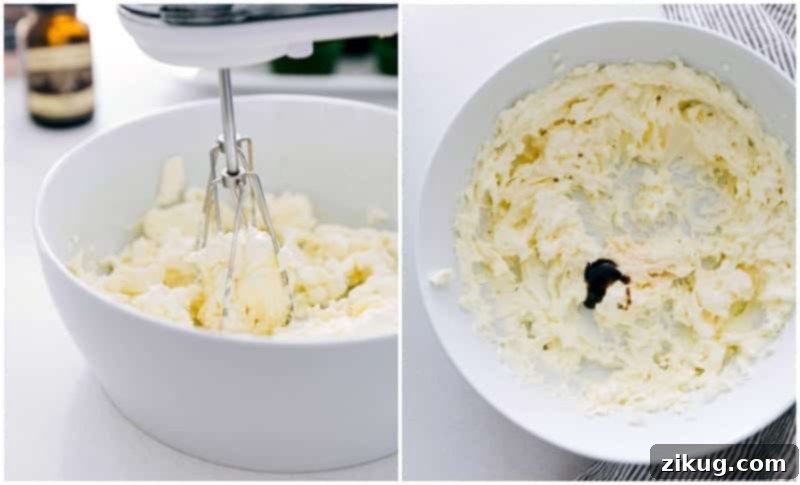
- Infuse Flavor with Vanilla, Cinnamon, and Salt: Now, introduce the flavor enhancers. Add the vanilla extract (or vanilla bean paste for an even richer depth), a pinch of salt, and a touch of ground cinnamon. The cinnamon is truly the “secret ingredient” that elevates this recipe from great to extraordinary. You won’t distinctly taste cinnamon in the final product; instead, it works harmoniously to deepen and round out the overall flavor profile of the frosting, adding a subtle warmth that complements the tangy cream cheese beautifully.
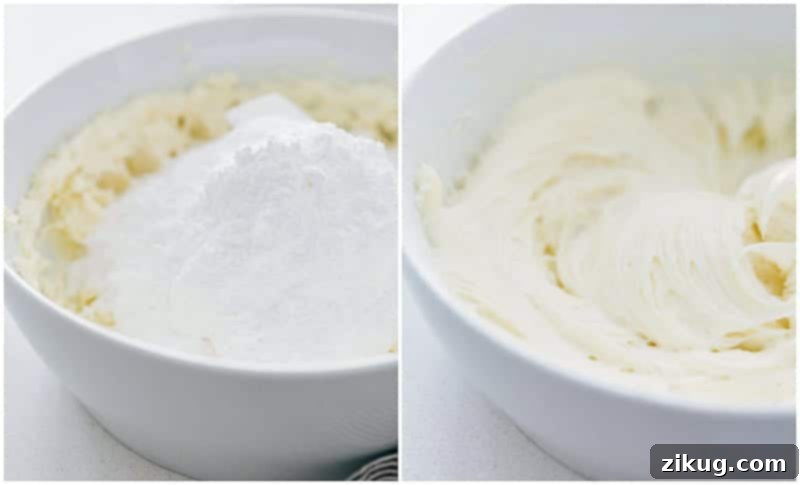
- Gradually Incorporate Powdered Sugar: This step requires a bit of finesse. With your electric mixer running on a low speed, slowly add the powdered sugar (also known as confectioners’ sugar) one cup at a time, or even in smaller increments. This gradual addition is essential for two main reasons: it prevents a cloud of sugar dust from engulfing your kitchen, and it allows you to control the frosting’s consistency and sweetness. You can adjust the amount of powdered sugar according to your personal taste and desired firmness. Adding more sugar will result in a sweeter, firmer frosting, which is ideal for piping intricate designs. Conversely, using less sugar will yield a tangier, slightly softer frosting that’s perfect for spreading.
Quick Tip for Adding Powdered Sugar
If you’re new to making frosting, remember this golden rule: resist the urge to dump all the powdered sugar in at once! A slow, steady addition at low speed will save you from a messy kitchen covered in sugar clouds and ensure a perfectly smooth frosting.
Versatile Delights: What to Pair with Cream Cheese Frosting
The beauty of this easy-to-make cream cheese frosting lies in its incredible versatility. It’s a sublime topping that can transform a simple baked good into a gourmet treat. While this recipe is undeniably delicious on almost anything sweet, it truly shines on a variety of desserts. Think beyond the classic carrot cake!
This luscious frosting is absolutely divine on:
- Moist Cakes: From classic Carrot Cake and Pumpkin Cake to Red Velvet, Hummingbird Cake, Spice Cake, or even a simple vanilla or chocolate layer cake.
- Tender Cupcakes: Elevate your Carrot Cake Cupcakes, Banana Cupcakes, or any flavor of cupcake with a generous swirl.
- Chewy Cookies: Spread it on Sugar Cookies, gingerbread cookies, or even oatmeal cookies for a delightful twist.
- Rich Brownies and Bars: A layer of this creamy frosting takes brownies, blondies, and various dessert bars to a whole new level of indulgence.
- Sweet Breads and Muffins: Dollop it on top of banana bread, zucchini bread, or pumpkin muffins for an extra special breakfast or brunch treat.
Below, we’ll explore how you can fine-tune this recipe to achieve the perfect consistency and flavor profile for the specific dessert you’re topping.

Customizing Your Cream Cheese Frosting for Any Dessert
One of the best features of this cream cheese frosting recipe is its adaptability. With a few minor tweaks, you can achieve the ideal consistency and sweetness level for virtually any dessert you have in mind. Here’s how to customize your frosting for various applications:
Crafting the Ideal Cream Cheese Frosting for Carrot Cake and Pumpkin Cake
When preparing this delightful frosting specifically for spiced cakes like Carrot Cake or Pumpkin Cake, I highly recommend opting for less powdered sugar than the full amount listed in the recipe. These cakes often boast their own sweetness and rich flavors, and a slightly tangier frosting provides a wonderful balance. Since you’re typically spreading this frosting rather than piping it onto these larger cakes, a super firm consistency isn’t necessary. The reduced sugar content allows the natural tang of the cream cheese to shine through, creating a more sophisticated and less overtly sweet finish that perfectly complements the warm spices of the cake.
Achieving Stiff Cream Cheese Frosting for Piped Cupcakes
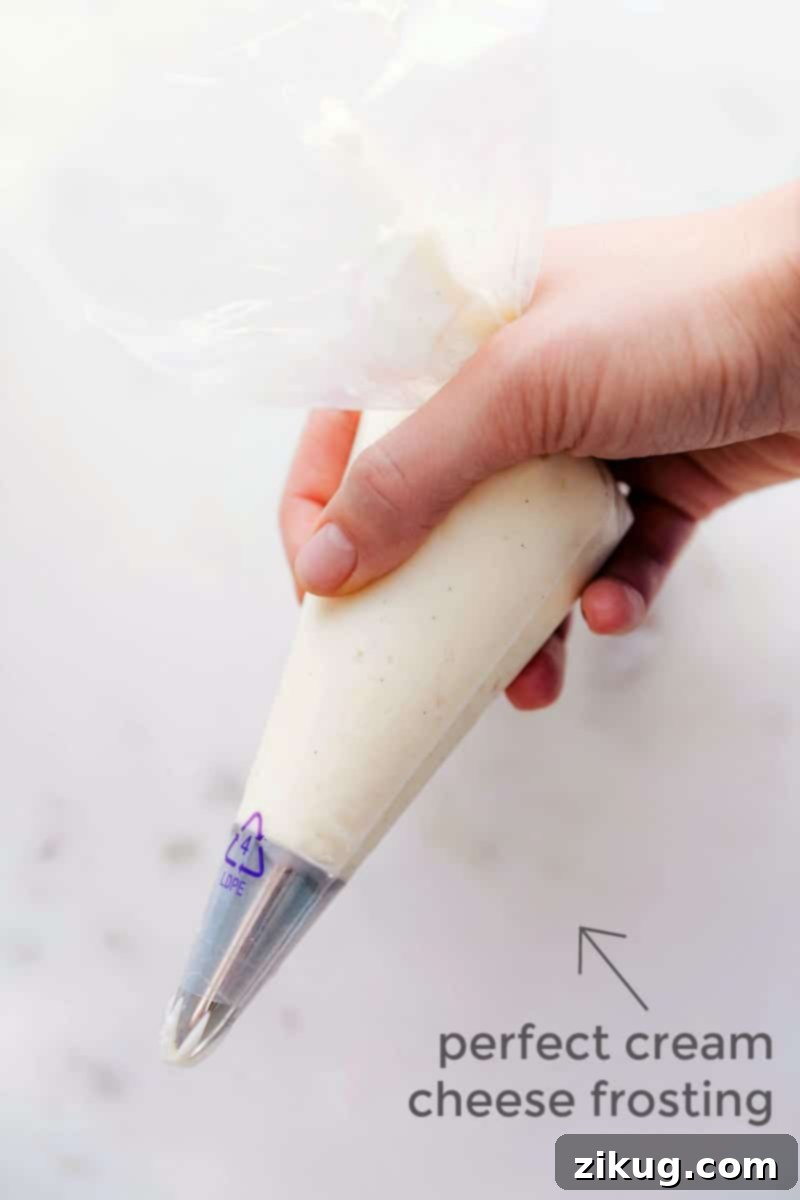
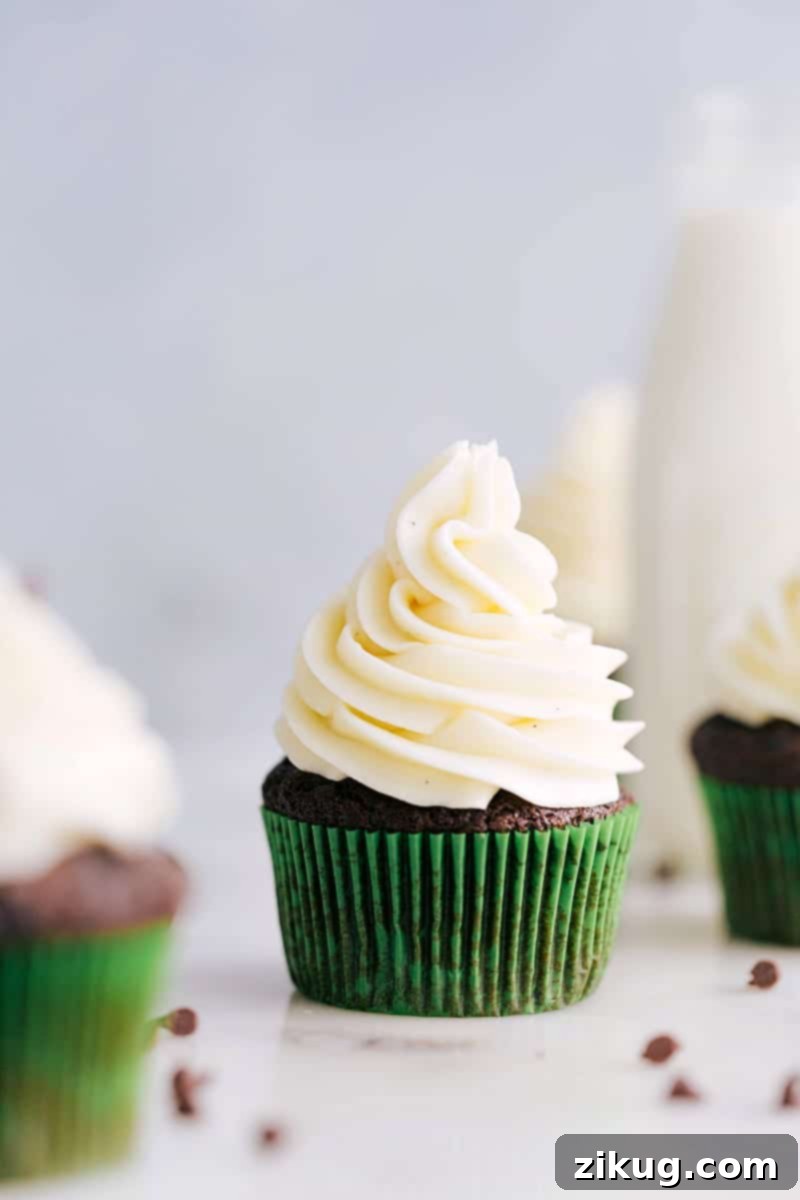
If your goal is to create beautifully piped, picture-perfect swirls of frosting on cupcakes, then firmness is absolutely key. For excellent piping stability, I strongly advise using the full 3 cups of powdered sugar, and in some cases, you might even consider adding an extra 1/2 cup. This additional sugar will create a sturdier frosting that holds its shape impeccably, allowing for clean lines and defined details. For stunning cupcake decorations, I find these piping tips to be the most effective and versatile: the 1M Tip for classic swirls, the #2A Round Piping Tip for smooth domes, and the #2D Drop Flower Piping Tip for elegant rosette designs.
Transforming into Decadent Chocolate Cream Cheese Frosting
For all the chocolate lovers out there, adapting this recipe into a rich chocolate cream cheese frosting is wonderfully simple. Just add ½ cup of unsweetened cocoa powder to the mixture along with the vanilla, cinnamon, and salt. Sift the cocoa powder first to avoid lumps. This dark and dreamy variation is absolutely perfect draped over classic chocolate brownies, a decadent chocolate layer cake, or any dessert that benefits from an extra hit of cocoa. It also makes an especially delicious and unexpected topping for banana cakes, creating a delightful flavor pairing.
Your Cream Cheese Frosting Questions Answered: FAQs
What is the Best Cream Cheese for Frosting?
For a truly exceptional cream cheese frosting, always opt for high-quality, full-fat block cream cheese. The higher fat content contributes significantly to the frosting’s luxurious creamy texture and overall stability. I strongly advise against using low-fat or whipped cream cheese varieties, as they tend to be too watery and will result in a runny, less flavorful frosting that won’t hold its shape.
Can I Use Salted Butter in Cream Cheese Frosting?
- While you can technically use salted butter in this frosting, I highly recommend sticking with unsalted butter. Using unsalted butter gives you complete control over the saltiness of your frosting, allowing you to fine-tune the flavor balance.
- If you only have salted butter on hand and aren’t overly particular about the precise salt level, feel free to use it. In this case, omit the 1/8 teaspoon of salt called for in the recipe. After preparing the frosting, taste it and, if desired, add a tiny pinch more salt until it meets your preference.
What’s the Culinary Distinction Between Icing and Frosting?
- Generally, icing is characterized by a thinner, glaze-like consistency and a higher sugar content, often poured or drizzled over desserts.
- Frosting, on the other hand, is typically much thicker, fluffier, and boasts a richer, more substantial texture, making it ideal for spreading or piping.
- Icing is often used for intricate decorative work or to create a thin, protective coating, whereas frosting is primarily applied to generously cover cakes and cupcakes, adding significant flavor, richness, and moisture.
Is it Possible to Thin Cream Cheese Frosting with Milk?
Absolutely. If your cream cheese frosting becomes too thick – which often happens if a bit too much powdered sugar has been added – you can easily remedy it. Incorporate a tablespoon or two of milk or, even better, heavy cream into the mixture. I personally prefer using heavy cream as it adds a touch more richness without diluting the flavor, helping to achieve the desired thinner, more spreadable consistency.
Storing Cream Cheese Frosting: Freshness and Safety Tips
Proper storage of cream cheese frosting is crucial for both food safety and maintaining its delicious flavor and texture. Follow these guidelines to keep your frosting fresh:
Is Refrigeration Necessary for Cakes Topped with Cream Cheese Frosting?
Yes, absolutely. Because cream cheese is a dairy product, this frosting requires refrigeration. Therefore, any cake or dessert that has been frosted with cream cheese frosting must also be stored in the refrigerator. To ensure optimal serving temperature and texture, simply remove the frosted dessert from the fridge about one to two hours before you plan to serve it, allowing it to come back to room temperature for the best eating experience.
How Long Can Cream Cheese and Cream Cheese Frosting Safely Remain at Room Temperature?
For food safety reasons, both plain cream cheese and prepared cream cheese frosting should not be left at room temperature for more than 2 hours. Beyond this timeframe, harmful bacteria can begin to multiply, making the product unsafe to consume.
Can You Freeze Cream Cheese Frosting for Later Use?
Yes, absolutely! Thanks to its high fat content, this cream cheese frosting freezes remarkably well, making it an excellent option for meal prep or saving leftovers. To freeze, transfer the frosting to an airtight container and it can be stored in the freezer for up to 3 months. When you’re ready to use it, the frosting should be thawed safely in the refrigerator. I recommend moving it from the freezer to the fridge the day before you intend to use it. Once thawed, you might want to give it a quick re-whip with an electric mixer to restore its fluffy texture. Many cakes and desserts also freeze beautifully, so you can often freeze this frosting along with the dessert it’s topping! Again, always ensure the dessert thaws completely in the fridge before serving.
Creative Ways to Utilize This Versatile Frosting
Beyond the classic pairings, this homemade cream cheese frosting opens up a world of culinary possibilities. Here are some more inspiring ways to incorporate this delightful frosting into your baking:
- Carrot Pumpkin Cake (A READER FAVORITE! The perfect blend of two beloved fall flavors with a tangy topping.)
- Pumpkin Cupcakes (A seasonal treat made even better with a generous swirl of this creamy delight.)
- Strawberry Cream Cake (A light and fruity cake that finds its perfect partner in the sweet and tangy notes of this frosting.)
- Gingerbread Loaf or Muffins
- Banana Sheet Cake
- Red Velvet Cookies
This cream cheese frosting is more than just a topping; it’s a celebration of flavor and texture that enhances nearly any sweet creation. Enjoy experimenting with this recipe and delighting your family and friends with your delicious creations!
Pin
Cream Cheese Frosting
Equipment
-
Hand mixer
Ingredients
- 1/2 cup unsalted butter at room temperature
- 1 (8-ounce) package cream cheese full-fat, at room temperature (do not use low fat)
- 1/2 teaspoon vanilla bean paste or use 1 teaspoon vanilla extract
- 1/8 teaspoon salt
- 1/4 teaspoon ground cinnamon optional, but heightens the flavor
- 3 cups powdered sugar
Instructions
-
Using a hand mixer or stand mixer, cream together the room-temperature unsalted butter and full-fat cream cheese on medium-high speed until the mixture is completely smooth, light, and airy, with no lumps. Scrape down the sides of the bowl as needed.
-
Reduce the mixer speed to low. Add the vanilla extract (or paste), salt, and ground cinnamon (if using). Continue to mix until just combined. Slowly add the powdered sugar, about 1/2 to 1 cup at a time, allowing it to fully incorporate before adding more. Mix until well blended and smooth. Adjust powdered sugar to your preference: less sugar will yield a tangier, less sweet, and softer frosting, while more sugar will result in a thicker, sweeter, and firmer frosting that’s easier to pipe.
-
For easier handling and piping, you may optionally chill the frosting for 15–25 minutes before frosting your cake, cupcakes, or cookies. Alternatively, store the finished frosting in an airtight container in the fridge until ready to use. If refrigerated for more than a few hours, allow it to sit out at room temperature for 10–15 minutes, or re-whip briefly with a mixer, before frosting.
Recipe Notes
Nutrition Note: Nutritional information provided is an approximation based on frosting 10 cupcakes.
Storage: Store any leftover cream cheese frosting in a tightly sealed airtight container in the refrigerator for up to one week. Before using, let it sit at room temperature for a few minutes or re-whip briefly with an electric mixer for a fluffy texture. This frosting also freezes exceptionally well for up to 3 months; thaw it in the fridge overnight before re-whipping and using.
Nutrition
Nutrition information is automatically calculated, so should only be used as an approximation.