
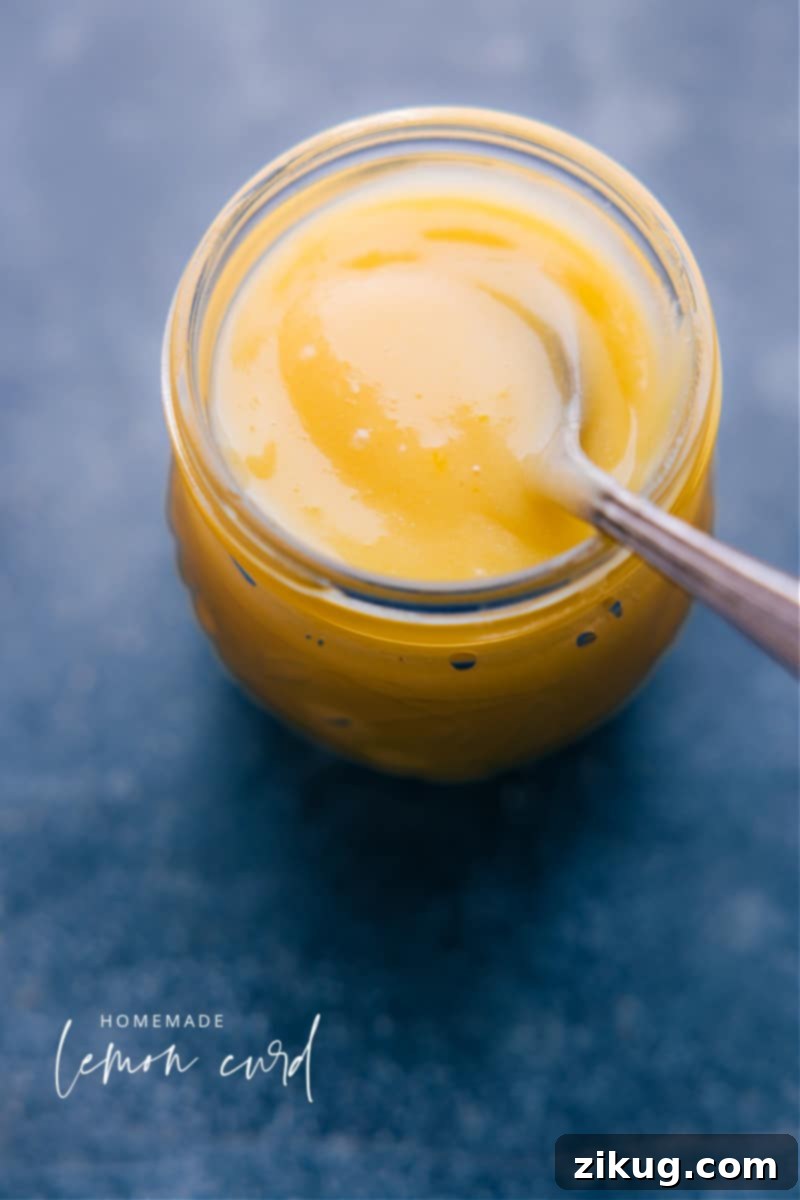
Lemon Curd is a culinary masterpiece—a vibrant, tangy, and incredibly smooth spread that captivates the palate with its intense citrus flavor. Crafted from a simple combination of fresh lemons, rich butter, granulated sugar, and eggs, it offers a luxurious texture and a zesty punch that transforms any dish. Whether you’re enhancing breakfast pastries, elevating elegant desserts, or simply enjoying it by the spoonful, homemade lemon curd is truly in a league of its own. Its unparalleled freshness and bright, balanced taste make it far superior to any store-bought alternative, promising a delightful experience with every bite.
The Ultimate Homemade Lemon Curd Recipe
Among the countless dessert recipes I’ve shared and savored, this homemade lemon curd consistently holds the top spot in my kitchen. It’s more than just a spread; it’s a culinary secret weapon that effortlessly elevates the simplest of dishes into something extraordinary. Imagine transforming ordinary biscuits, pancakes, or a plain slice of cake into a gourmet delight with just a spoonful of this luscious, golden goodness. I frequently keep a batch readily available in my refrigerator, perfect for drizzling over warm waffles or enhancing a quick sweet treat.
This lemon curd is also an indispensable component for special occasions. It’s the star of our holiday brunches and a perennial favorite at baby or wedding shower crepe bars. Its bright, refreshing flavor cuts through the richness of other dishes, adding a delightful zest that leaves a lasting impression. Without fail, every person who tries this lemon curd inevitably asks for the recipe, testament to its irresistible charm and perfect balance of tartness and sweetness. This isn’t just a recipe; it’s an invitation to experience the magic of fresh, homemade flavor.
Delightful Ways to Enjoy Your Lemon Curd
The versatility of lemon curd is one of its most appealing qualities. Its bright, tangy profile makes it a fantastic accompaniment to a wide array of sweet dishes. Here are some of my favorite ways to incorporate this sunny spread into your meals and desserts:
- Elevate Your Breakfast & Brunch: Spoon generous dollops onto freshly made crepes, fluffy pancakes, golden waffles, or rich French toast. The tartness of the curd provides a wonderful contrast to the sweetness of these breakfast staples.
- A Perfect Pairing for Baked Goods: It’s an absolute dream spread for warm, flaky homemade biscuits or tender scones. The creamy texture of the curd melts slightly into the warm crumb, creating an irresistible bite.
- Drizzle Over Vanilla Cheesecake: Transform a classic dessert by adding a vibrant layer of lemon curd. Whether you opt for store-bought or homemade cheesecake bars, a spoonful of curd on top introduces a delightful tartness that balances the richness.
- Infuse It into Cookies and Tarts: Introduce a burst of citrus into your baked treats. I adore incorporating this curd into lemon curd cookies. Alternatively, create charming sugar cookie cups (using the directions from this fruit tart recipe) and fill them with the creamy curd for an elegant mini-dessert.
- Craft Lemon Whipped Cream: For a simple yet sophisticated twist, gently fold a few spoonfuls of lemon curd into freshly whipped cream. This creates an ethereal, tangy topping that’s perfect for fruits, pies, or as a stand-alone treat.
- Add a Zesty Layer to Cake: Drawing inspiration from a renowned lemon carrot cake at a restaurant where I once worked, consider spreading a layer of lemon curd in the center of your favorite carrot cake, perhaps between layers of cream cheese frosting. It adds an unexpected and refreshing element that will surprise and delight.
Essential Ingredients for Perfect Lemon Curd
Creating truly spectacular lemon curd requires only five fundamental ingredients, but their quality and proper handling are paramount. Each plays a crucial role in achieving that coveted balance of tartness, sweetness, richness, and silky texture.
- Unsalted Butter: The foundation of our curd’s richness and smooth mouthfeel. Using unsalted butter gives you precise control over the overall saltiness of the final product. It’s absolutely essential that your butter is at **room temperature** – not melted, but soft enough to easily indent with a finger. This ensures it creams properly with the sugar, creating a stable emulsion that contributes to the curd’s luxurious texture. Cold butter will result in a lumpy, grainy curd, while melted butter won’t emulsify correctly.
- Fresh Lemons: The star of the show! There is simply no substitute for fresh lemons. Bottled lemon juice lacks the vibrant, complex flavor and the essential oils found in the zest. You’ll need both the bright yellow zest (where most of the lemon’s aromatic oils reside) and the freshly squeezed juice. To get the most juice, firmly roll your lemons on the counter before slicing and juicing, or microwave them for 10-20 seconds. Always avoid the white pith when zesting, as it carries a bitter taste.
- Eggs: Whole large eggs are crucial for thickening the curd to its ideal, spoonable consistency. Unlike some recipes that rely solely on egg yolks for richness, using whole eggs provides a more balanced structure and helps achieve that characteristic pudding-like thickness. Like butter, eggs should be at **room temperature** to ensure they incorporate smoothly into the butter-sugar mixture without curdling or creating a grainy texture.
- Salt: A small but mighty ingredient! Just a pinch of salt plays a critical role in enhancing and balancing all the flavors in the curd. It subtly sharpens the lemon’s tang and deepens the sweetness of the sugar, preventing the curd from tasting flat or overly sweet. Don’t skip it!
- Granulated Sugar: Standard white granulated sugar is the ideal choice for this recipe. It dissolves beautifully, contributing to the curd’s smooth texture and providing the necessary sweetness to balance the intense tartness of the lemons. Sugar also plays a role in the curd’s structure and acts as a preservative.
Pro Tip: Knowing When Your Curd is Ready
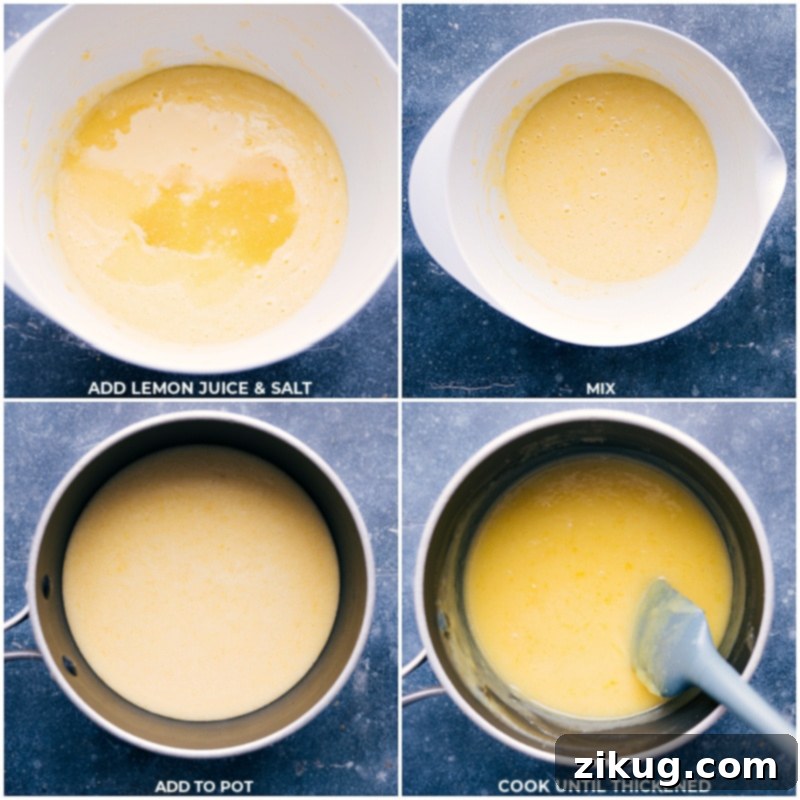
Achieving the perfect consistency for lemon curd can feel like a delicate dance, but there are clear indicators. When hot, the curd should be thick enough to generously coat the back of a spoon. To test, lift the spoon and immediately draw a line across its back with your finger. If the line holds and creates a clear separation, your curd is ready. Before removing it from the heat, it should resemble a pourable, yet thick, pudding. Once fully chilled, it will firm up to the luscious, creamy texture of a snack pudding cup.
Crafting Homemade Lemon Curd: A Step-by-Step Guide
Making lemon curd from scratch is a rewarding process that yields a superior product. Follow these detailed steps to achieve a perfectly smooth, tangy, and rich curd every time:
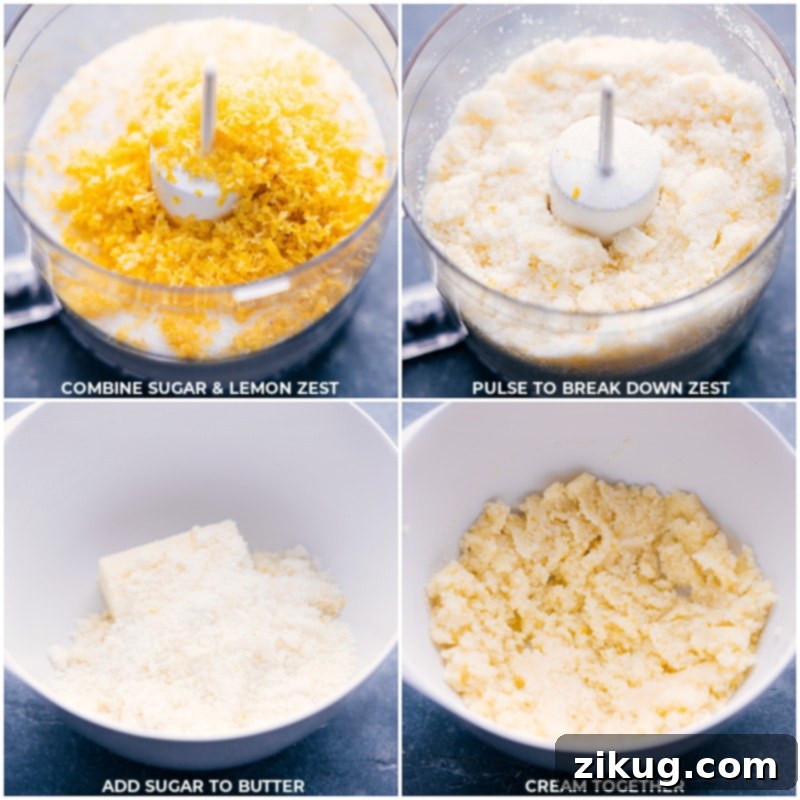
- Prepare Ingredients & Create Lemon Sugar: Begin by ensuring your eggs and butter are at perfect room temperature. This is crucial for a smooth curd. Using a zester, carefully remove 3 tablespoons of the bright yellow zest from your lemons, being mindful to avoid the bitter white pith beneath. Then, juice the lemons using a citrus juicer until you have 1/2 cup of fresh juice. Next, combine the granulated sugar and lemon zest in a food processor. Pulse this mixture 15-20 times, or until the zest is finely broken down and thoroughly incorporated into the sugar. This vital step creates a “lemon sugar” that infuses deep citrus flavor throughout the curd. Transfer this aromatic sugar to a large mixing bowl or the bowl of a stand mixer.
- Cream the Butter and Lemon Sugar: Add the room-temperature unsalted butter (it should be soft, but not melted) to the lemon sugar mixture. Using a hand mixer or the whisk attachment of a stand mixer, beat the mixture on medium speed for 2 to 4 minutes. Continue mixing until the butter and sugar are light, fluffy, and pale in color. Scrape down the sides of the bowl frequently to ensure even creaming. This process creates a light, aerated base for your curd.
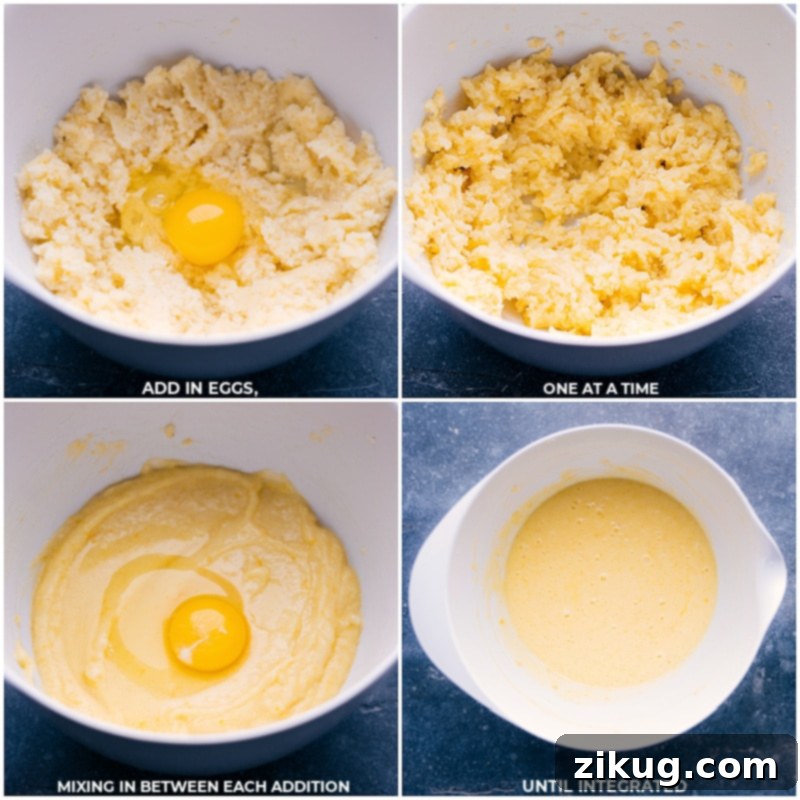
- Incorporate Remaining Ingredients: Begin adding the room-temperature eggs, one at a time, beating briefly after each addition until just incorporated. Adding eggs slowly and individually helps prevent the mixture from curdling. Once all eggs are mixed in, add the salt and the 1/2 cup of freshly squeezed lemon juice. Mix briefly, just until everything is combined and the mixture is smooth.
- Cook to Perfection: Pour the entire mixture into a medium-sized saucepan. Place the saucepan over low heat. This is a critical step where patience is key. Stir the curd constantly with a heat-proof rubber spatula, making sure to scrape the bottom and sides of the pan. Continue stirring for about 10-15 minutes, or until the curd visibly thickens. For absolute precision and food safety, the curd should reach 170°F (77°C) on a candy thermometer. If it doesn’t reach this temperature, it won’t properly set. Once it achieves a pourable pudding consistency and coats the back of a spoon (as described in the pro tip above), immediately remove it from the heat.
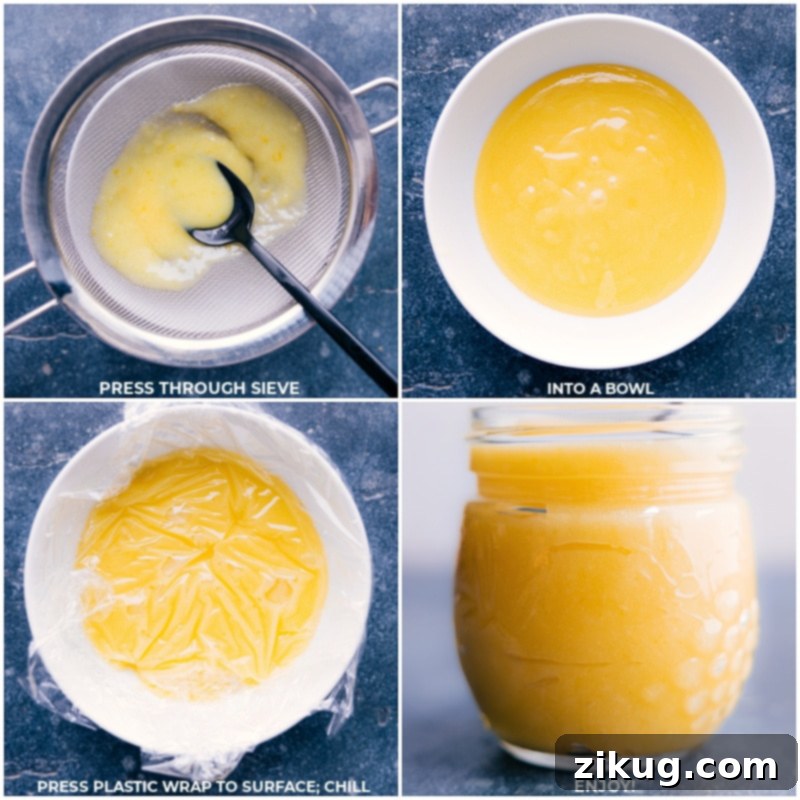
- Strain and Chill: To achieve an exceptionally smooth, silky texture free from any bits of zest or cooked egg, pour the hot curd through a fine-mesh sieve into a clean, airtight container or bowl. Use your spatula to gently press the curd through the sieve. Once transferred, press a piece of plastic wrap directly onto the surface of the lemon curd. This essential step prevents a “skin” from forming as it cools. Place the covered container in the refrigerator and chill for at least one hour, though preferably 8 hours, before serving. This chilling time allows the curd to fully thicken and for its flavors to meld beautifully.
Storage Solutions for Lemon Curd
How To Store Leftover Lemon Curd?
Proper storage is key to preserving the fresh flavor and silky texture of your homemade lemon curd. Here’s how to keep it at its best:
- Refrigerate: After the curd has completely cooled, transfer it to an airtight container or a clean glass jar with a tight-fitting lid. Stored in the refrigerator, homemade lemon curd will maintain its quality and freshness for up to 2 weeks. Always ensure the container is sealed to prevent absorption of refrigerator odors.
- Freeze: For extended storage, lemon curd freezes beautifully. Transfer the cooled curd to a freezer-safe container or a heavy-duty zip-top bag. If using a bag, press out as much air as possible before sealing. You can freeze lemon curd for up to 3 months. Freezing in smaller portions can be convenient for future single-serving uses.
- Thaw: When you’re ready to enjoy frozen lemon curd, simply transfer it from the freezer to the refrigerator and let it thaw overnight. Once thawed, give it a good stir to restore its smooth consistency before serving.
Unlock Precision with a Candy Thermometer
Remove all the guesswork from your lemon curd-making process by using a candy thermometer! This simple tool ensures your curd reaches the exact temperature required for perfect thickening and food safety, guaranteeing a consistent result every time. The one I personally use and highly recommend adding to your kitchen arsenal is available here. Once you own one, you’ll find it indispensable for other delightful confections like buttercrunch candy, classic toffee, and whimsical honeycomb candy!
Explore More Zesty Lemon Treats:
Desserts
The BEST Lemon Bars Recipe
Desserts
Lemon Pie Recipe
Beverages
Peach Lemonade
Breakfast
Lemon Blueberry Sweet Rolls
Pin
Lemon Curd
Video
Equipment
-
Candy Thermometer see note 1
-
Food processor
-
Hand mixer or stand mixer
Ingredients
- 1-1/2 cups granulated sugar
- 4 large lemons
- 8 tablespoons unsalted butter 1/2 cup, at room temperature
- 4 large eggs at room temperature, see note 2
- 1/8 teaspoon salt
Instructions
-
Pull out eggs and butter to get to room temperature. Use a zester to get 3 tablespoons zest of just the very outer yellow part of the lemon (avoid the white pith below—it is very bitter!), then juice lemons with a citrus juicer to get 1/2 cup juice.
-
Combine the sugar and lemon zest in a food processor. Pulse 15–20 times or until zest is broken down and incorporated in sugar. Pour into a large bowl or a bowl attached to a stand mixer.
-
Add in the room temperature (not softened or melted!) butter, and using a hand mixer, (or the whisk attachment for a stand mixer), beat until light and creamy, about 2–4 minutes. Scrape sides of the bowl as needed.
-
Beat in the eggs, one at a time, mixing just briefly to incorporate each egg. Finally, add the salt and 1/2 cup freshly squeezed lemon juice. Mix briefly just to combine.
-
Pour the mixture into a medium saucepan and place over low heat. Stir constantly with a rubber spatula for about 10–15 minutes or until nicely thickened. The curd should reach 170°F on a candy thermometer. (If it doesn’t reach this heat, it won’t properly set up—see note 3.) Pour curd through a fine mesh sieve and use a spatula to press through the sieve into an airtight container/bowl.
-
Cover container with plastic wrap so the plastic wrap is touching the top of the lemon curd and store in the fridge for at least an hour and preferably 8 hours before serving.
Recipe Notes
Note 2: It’s really important the butter, lemon juice, and eggs are all at the same room temperature. Otherwise, the butter won’t properly cream with the sugar. And the mixture can turn grainy/curdled-looking if cold eggs get added to room temperature butter.
Note 3: While the curd is hot, it should be thick enough to coat the back of a spoon. (Quick test: Lift the spoon and immediately trace a line across the back of the spoon with your fingertip. We’re looking for the line to retain a clear track.) While it does thicken more as it cools, it should be quite thick (like a pourable pudding) before removing from the heat. When it’s chilled, it should thicken up to a snack pudding cup consistency.
Nutrition Note: Nutrition information is for a 2-tablespoon sized serving.
Storage: Store leftover lemon curd in an airtight container in the fridge for up to a week.
Nutrition
Nutrition information is automatically calculated, so should only be used as an approximation.