
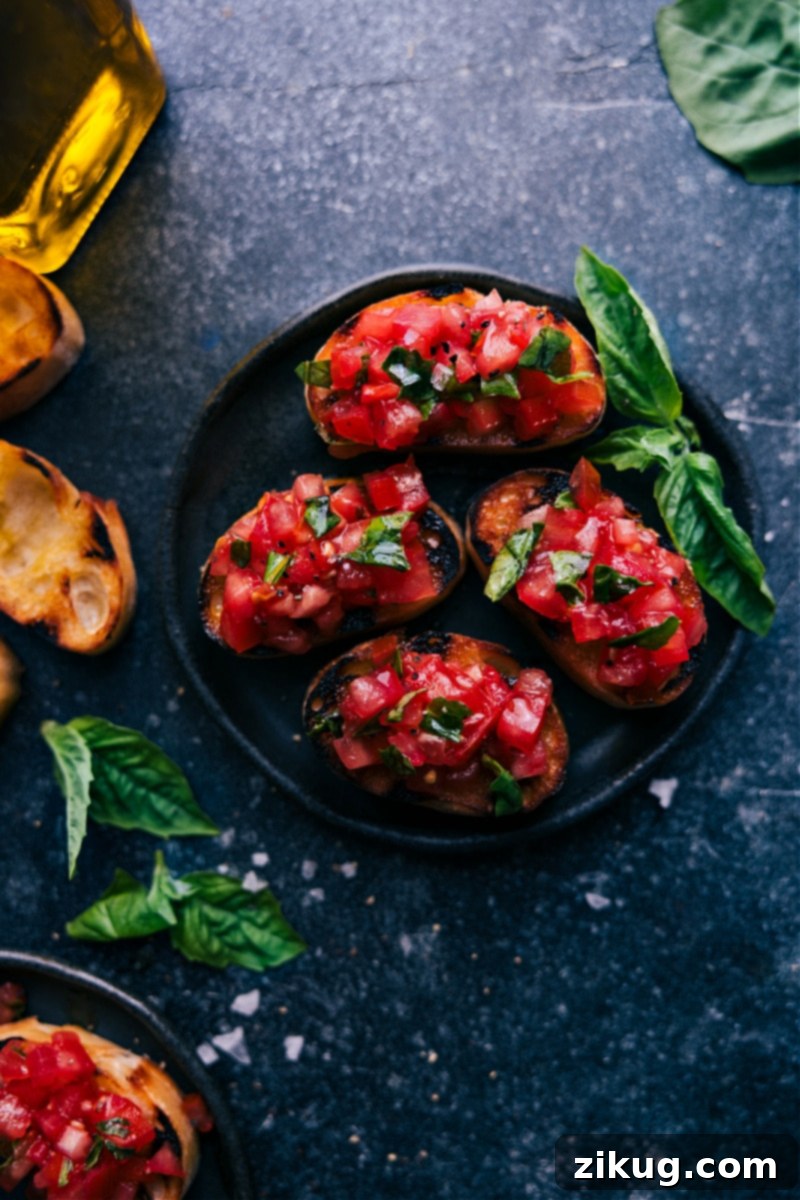
Experience the true taste of Italy with this authentic Bruschetta Recipe, passed down through generations and perfected with insider tips straight from Italian kitchens. This simple yet incredibly flavorful appetizer is a testament to the beauty of fresh, quality ingredients, making it a perfect starter for any meal or gathering.
While exploring the culinary heart of Italy, I was fortunate enough to gather a collection of treasured recipes and invaluable cooking techniques. Be sure to check out other authentic Italian delights that I’ve shared, including this creamy Gelato, the timeless Tiramisu, a refreshing Apple Fennel Salad, and a hearty Beef Ragu. Each recipe brings a piece of Italy right into your home kitchen.
Mastering the Bruschetta Pronunciation
One of the first things many people wonder about this delightful Italian dish is how to pronounce its name correctly. It’s a common culinary query, as the ‘ch’ combination in Italian often confuses English speakers. The authentic Italian pronunciation for Bruschetta is “broo-SKEH-tuh.” The ‘ch’ makes a hard ‘k’ sound, not a soft ‘sh’ sound as it does in English. Practicing the pronunciation “broo·skeh·tuh” will not only help you order confidently in an Italian restaurant but also impress your guests with your culinary knowledge! (This helpful guide can assist with your pronunciation practice).
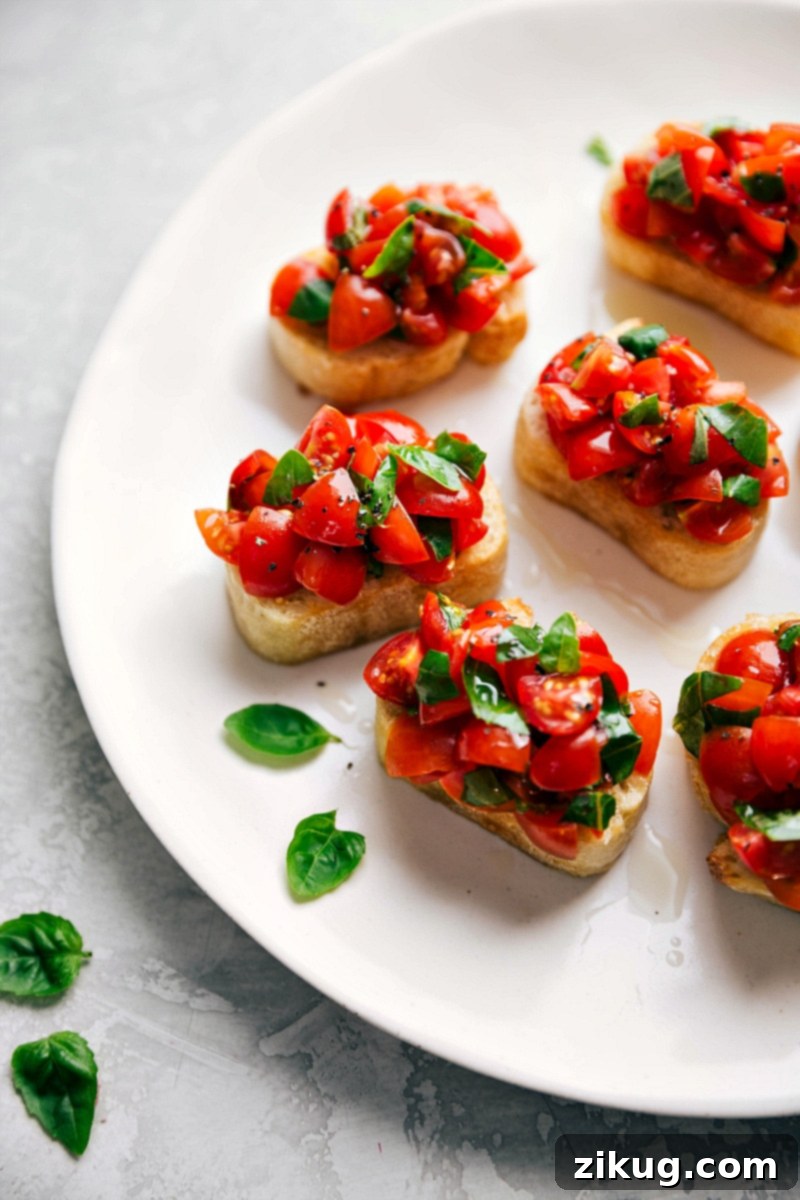
The Journey to This Authentic Bruschetta Recipe
My culinary adventure through Italy was nothing short of magical and truly transformative. If you’ve been following my journey on Instagram, you might have caught glimpses of our incredible trip, where every turn revealed breathtaking scenery and unforgettable flavors. We traversed the romantic canals of Venice, marveled at the ancient wonders of Rome, explored the vibrant, bustling streets of Naples, soaked in the breathtaking beauty of the Amalfi Coast, admired the iconic Leaning Tower of Pisa, delved into the medieval charm of Siena, unearthed the historic ruins of Pompeii, and concluded our unforgettable journey in the artistic and gastronomic heart of Florence. It was a journey that profoundly deepened my appreciation for Italian culture and, especially, its food.
During our travels, a highlight that stood out was participating in several local cooking classes. These immersive experiences allowed us to delve deep into the art of making countless traditional Italian dishes and delectable desserts, learning directly from the locals. Among them, one particular cooking class became my absolute favorite – an experience that cemented my understanding of authentic Italian cooking. This memorable session took place in the serene countryside near Siena, at a charming farmhouse called Le Pietre Vive. The farm was a picturesque haven, surrounded by lush fields, friendly livestock, and an abundance of ancient olive trees. What made this experience truly special was the farm-to-table philosophy; most of the ingredients we used were grown and harvested right there on the farm, emphasizing the Italian commitment to using hyper-local, peak-season produce.
Our cooking instructor, the incredibly endearing Nonna Ciana, was the epitome of a warm and wise Italian grandmother. Despite speaking very little English, her passion for food and teaching shone through, wonderfully conveyed by a lively and entertaining translator who helped bridge any language gaps. It was in Nonna Ciana’s rustic kitchen that I not only learned but also savored what I still consider the best meal of my entire trip to Italy. For our appetizer course, we learned to craft three distinct types of easy bruschetta, each offering a unique burst of flavor that perfectly illustrated the power of simple, high-quality ingredients. This experience truly deepened my appreciation for the simplicity, profound deliciousness, and rich history embedded in Italian cuisine, particularly in a humble dish like bruschetta.
What Exactly Is Authentic Italian Bruschetta?
Bruschetta is a cornerstone of Italian culinary tradition, a beloved classic Italian appetizer known as an “antipasto.” The term “antipasto” literally translates to “before the meal,” signifying its role as an introductory course designed to awaken the palate. At its heart, bruschetta is beautifully simple yet sophisticated: it begins with slices of rustic bread, typically a country-style Italian loaf, which are grilled or toasted until they achieve a perfect crispness. These warm, golden-brown slices are then traditionally rubbed vigorously with a fresh clove of garlic, infusing the bread with a subtle, aromatic warmth.
The most classic and universally adored topping, and the star of this particular recipe, is bruschetta al pomodoro (bruschetta with tomatoes). This vibrant topping features a fresh mixture of perfectly ripe tomatoes, fragrant fresh basil leaves, and a generous drizzle of the finest extra virgin olive oil. This combination highlights the purity and intensity of each ingredient, creating a symphony of flavors and textures that is both refreshing and deeply satisfying. Historically, bruschetta originated as a way for olive growers to sample their freshly pressed olive oil, often served on grilled bread. Over time, it evolved, with various regions adding their own local toppings. During my unforgettable cooking class with Nonna Ciana, we explored more than just the classic tomato version. We crafted three delightful variations: fett’unta, which is bruschetta simply adorned with olive oil and a pinch of salt, showcasing the unadulterated flavor of quality oil; bruschetta with savory pecorino cheese complemented by a drizzle of chili honey, offering a fascinating sweet and spicy contrast; and of course, the universally adored bruschetta al pomodoro. While all three were undeniably delicious, the classic tomato bruschetta al pomodoro captured my heart as the ultimate favorite, proving that sometimes, the traditional way, with its emphasis on fresh, simple ingredients, is truly the best.
Bruschetta Variations & Creative Topping Ideas
While the classic tomato and basil topping remains a timeless favorite, bruschetta serves as an incredibly versatile canvas for a myriad of delicious flavors. The fundamental base for any bruschetta variation is always the same: slices of rustic, robust bread, expertly grilled or broiled to golden perfection, then lovingly rubbed with a cut garlic clove to infuse them with a subtle yet potent aromatic warmth. Beyond this foundational step, your creativity can truly shine with an array of topping possibilities.
- For a truly minimalist yet exquisitely flavorful experience, try Fett’unta (Bruschetta with Olive Oil). This simple preparation perfectly highlights the quality of your ingredients. Simply drizzle your warm, garlic-rubbed toast with a high-quality extra virgin olive oil. A delicate sprinkle of flaky sea salt elevates the flavors, bringing out the inherent peppery notes of the oil and the richness of the bread. For an added layer of subtle aroma, consider a tiny sprig of fresh thyme or a touch of rosemary.
- To tantalize your taste buds with a fascinating sweet and savory fusion, prepare Bruschetta with Pecorino Cheese and Chili Honey. Top the warm, garlicky bread with a thin slice of a firm, flavorful cheese like Pecorino Romano or even Parmesan. The residual heat from the toast will slightly soften the cheese, releasing its savory notes. Finish this unique combination with a delicate drizzle of honey. For an adventurous twist, explore specialty honeys like saffron honey for an exotic floral touch, chili-infused honey for an intriguing kick, or truffle honey for an earthy decadence that pairs surprisingly well with the cheese.
- Beyond these traditional variations, a popular and incredibly delicious option is Bruschetta with Mozzarella and Balsamic Glaze. This variation adds a creamy dimension to the classic. You can easily make your own balsamic glaze by simmering balsamic vinegar until it reduces and thickens into a syrup, or opt for a high-quality store-bought version for convenience. Simply add fresh mozzarella pearls or small cubes directly to your prepared tomato mixture, and once spooned generously onto the garlic-infused bread, finish with that luscious, tangy balsamic drizzle. The creamy mozzarella adds a delightful texture contrast to the crisp bread and juicy tomatoes, while the glaze provides a perfect balance of sweetness and acidity.
- Other popular ideas include toppings like sautéed mushrooms, creamy ricotta with herbs, tapenade, or even various cured meats for a more substantial bite.
My profound love for this versatile appetizer runs so deep that it has inspired some fantastic main courses! If you enjoy these fresh flavors, be sure to try my Bruschetta Chicken, a flavorful and easy weeknight meal that incorporates the essence of bruschetta into a protein-rich dish. Also, don’t miss my incredibly popular Bruschetta Pasta, which ingeniously transforms the fresh, vibrant flavors of bruschetta into a satisfying and complete pasta dish, perfect for a hearty dinner.
Essential Bruschetta Ingredients: Quality Over Quantity
One of the most profound and impactful lessons I absorbed during my immersive cooking classes in Italy, particularly from the wise and passionate Nonna Ciana, was the immense power and unparalleled importance of using just a few, truly high-quality ingredients. This philosophy is not merely a preference but a foundational pillar at the very heart of authentic Italian cuisine: you absolutely do not need a lengthy ingredient list or overly complex, convoluted steps to create extraordinary, deeply delicious food. The unwavering focus is always, always on the inherent, natural flavors and peak freshness of each individual component.
This principle holds especially true and becomes critically evident for a seemingly simple dish like Bruschetta. Given its minimalist nature and straightforward preparation, the quality of each ingredient directly and profoundly impacts the final taste experience. For the most vibrant, authentic, and truly unforgettable flavor profile, prioritize these key elements when shopping and preparing:
- Garden Fresh and Perfectly Ripe Tomatoes: These succulent gems are unequivocally the star of bruschetta al pomodoro, providing both the sweetness and acidity. Seek out tomatoes that are gloriously heavy for their size, possess a brilliantly vibrant color, and yield slightly when gently squeezed – signs of optimal ripeness. Summer-ripe, in-season tomatoes offer an unparalleled sweetness and perfectly balanced acidity that no other tomato can match. If you find yourself making bruschetta during the colder winter months when fresh garden tomatoes are scarce, opt for smaller, sweeter varieties like cherry or grape tomatoes, as they tend to retain more flavor and sweetness off-season compared to their larger counterparts.
- Good Quality Extra-Virgin Olive Oil: This isn’t merely a cooking fat; it’s a vital flavor enhancer and a foundational element of the topping. A robust, fruity, and truly extra-virgin olive oil will impart a beautiful, nuanced aroma and a slightly peppery, grassy finish that perfectly complements the bright acidity of the tomatoes. Do not be shy about drizzling generously – it is absolutely crucial for both moisture and the overall depth of taste.
- Real Garlic Cloves: For authentic bruschetta, unequivocally forget the pre-minced jarred garlic. Fresh garlic is absolutely, utterly essential for that pungent, aromatic kick that defines this dish. The magic happens when you rub the raw, cut clove directly onto the warm, toasted bread, infusing it with a delicate, yet distinct, savory garlic essence that elevates every single bite.
- Garden Grown Fresh Basil: The aromatic sweetness and slightly peppery notes of fresh basil are utterly irreplaceable and fundamental to the classic flavor profile. Tearing the leaves by hand, rather than haphazardly cutting them with a knife, is a deliberate technique that helps to preserve their delicate essential oils and prevents bruising, thereby ensuring a more vibrant flavor and an appealing, bright green color that lasts longer.
- Superior Bread Selection: The very foundation of any truly great bruschetta is the bread. We enthusiastically recommend a rustic Italian loaf, such as a traditional ciabatta, or a good quality, crusty French baguette. Sourdough is another consistently excellent choice that offers fantastic texture and a subtle tang. The ideal bread should possess a sturdy, open crumb to beautifully hold the substantial toppings without succumbing to sogginess, and a good, slightly chewy crust that crisps up perfectly when grilled or broiled.
Investing thoughtfully in these quality ingredients ensures that your homemade bruschetta will taste just as incredibly authentic and satisfying as if you were leisurely enjoying it on a sun-drenched terrace in the Italian countryside. This commitment to quality transforms simple elements into an extraordinary culinary experience.
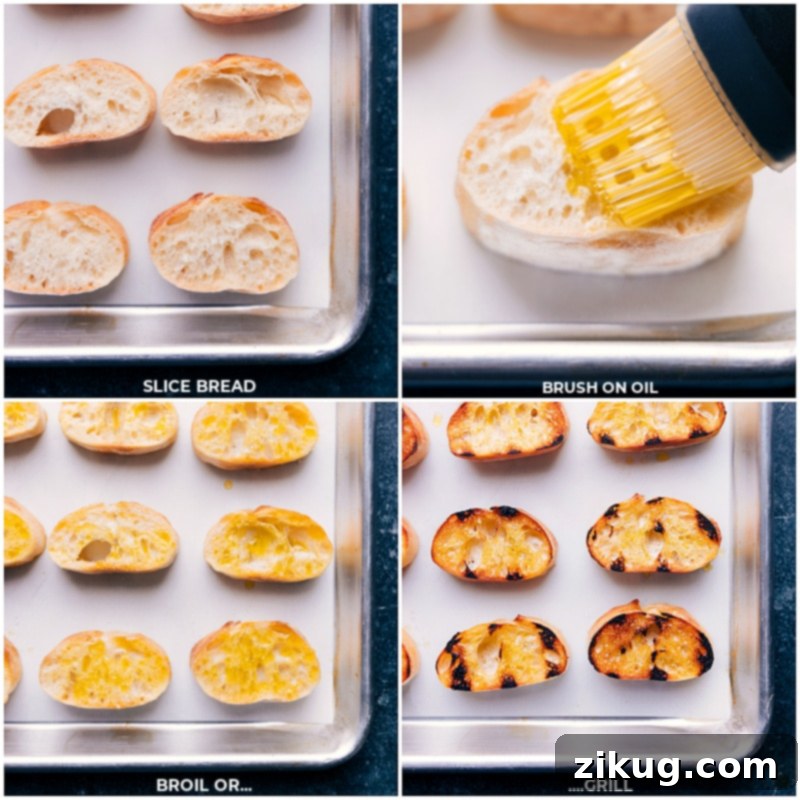
Here are all the top tips and precise techniques gleaned directly from our authentic Italian cooking class with Nonna Ciana, ensuring your homemade bruschetta is nothing short of absolute perfection and tastes just like it came from the heart of Italy:
Mastering the Art: How to Make Perfect Authentic Bruschetta
Crafting the perfect bruschetta is a simple yet refined art form. These specific techniques, meticulously taught by experienced Italian nonnas, are what truly make all the difference, transforming good bruschetta into extraordinary bruschetta. Follow these detailed steps for an appetizer that tastes like it came straight from a charming Tuscan kitchen:
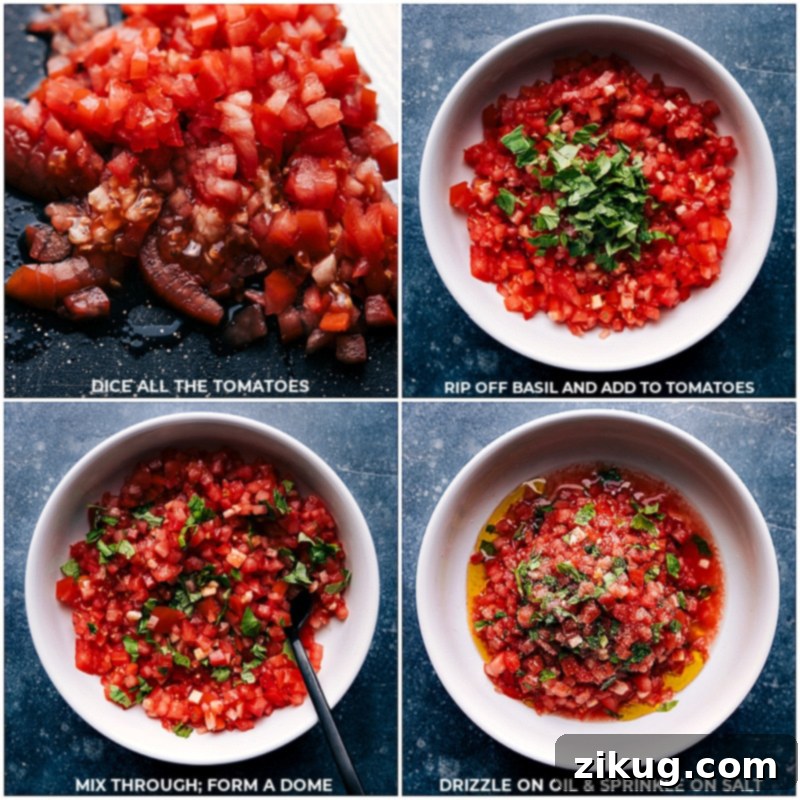
- Prepare the Tomato Mixture in Advance for Flavor Development: This is a critically important step for unlocking the deepest flavors. Begin by dicing your perfectly ripe tomatoes into very small, uniform pieces. This ensures an even distribution of flavor and a pleasant, consistent texture in every single bite. Once diced, transfer them to a medium-sized mixing bowl. Next, tear the fresh basil leaves into small pieces by hand instead of using a knife. Tearing is a deliberate technique that helps to gently release the basil’s delicate aromatic oils more effectively and prevents the herb from bruising, thereby keeping it fresher and more vibrant in both color and taste for a significantly longer period.
- Layer and Marinate Without Stirring: The Secret to Flavor Fusion: After combining the precisely chopped tomatoes and hand-torn basil in the bowl, gently arrange them into a slight dome shape in the center. Drizzle a generous amount of good quality extra virgin olive oil evenly over this carefully constructed dome, followed by a delicate sprinkle of flaky sea salt. The absolute key here is to resist the urge to stir the mixture. Allowing the oil and salt to gradually penetrate the tomatoes and basil, completely undisturbed, permits the flavors to develop more deeply and complexly. Crucially, this method also encourages any excess tomato juice to naturally drain to the bottom of the bowl, preventing your perfectly toasted bread from becoming soggy later on. Let this exquisite mixture marinate at comfortable room temperature for at least an hour, or even longer if time permits, for an even more enhanced and robust flavor profile.
- Achieve the Perfect Toast for the Ideal Foundation: The bread is the foundational stage for your bruschetta. Select your rustic bread loaf and slice it into approximately 1-inch thick pieces. Whether you opt for grilling or broiling, the ultimate goal is to achieve a perfectly crisp, golden-brown exterior that still retains a delightful, slight chewiness inside. Toast or grill the bread until it’s beautifully crisp but critically, not overly browned or burnt. A light, appealing golden color is the ideal indicator of perfection.
- Infuse with Fresh Garlic for Authentic Aroma: This step is absolutely non-negotiable for achieving truly authentic bruschetta. As soon as you remove the warm, perfectly toasted bread from the grill or oven, immediately take a raw garlic clove (which you’ve pre-sliced in half) and vigorously rub the cut edge of the garlic on BOTH sides of each piece of bread. The inherent heat of the toasted bread will lightly cook the garlic, initiating the release of its potent, intoxicating aroma and infusing every bite with a foundational layer of savory, pungent flavor that is quintessential to bruschetta.
- Drain, Assemble, and Serve Immediately for Optimal Enjoyment: Before you spoon the exquisite tomato mixture onto your garlic-rubbed bread, use a slotted spoon or gently tilt the bowl to carefully drain off any accumulated juices from the bottom. While these juices are undeniably flavorful, they are the primary culprit for soggy bread. Therefore, it’s vital to leave them behind. Spoon the chopped tomatoes and basil generously on top of the warm, garlicky bread right before serving. This critical timing ensures maximum crispness of the bread and guarantees the freshest, most vibrant taste of the topping. If desired, you can add a final flourish with a drizzle of extra olive oil, a swirl of balsamic glaze, or a delicate sprinkle of flaky sea salt. Enjoy immediately while the bread is still warm and crisp for the absolute best experience.

Frequently Asked Questions About Authentic Bruschetta
Here are some of the most common questions about making, serving, and perfecting this classic Italian appetizer, providing you with all the insights you need for a flawless experience:
What delightful dishes pair wonderfully with this Bruschetta recipe?
Bruschetta is an incredibly versatile appetizer and makes a wonderful, fresh addition to almost any meal. It can gracefully serve as a light and refreshing starter or a complementary side dish. Its bright flavors and delightful crunch mean it pairs beautifully with a wide array of other dishes. Here are some excellent pairing ideas to inspire your next meal:
- A Classic Soup and Salad Duo: For a light, wholesome, and truly satisfying meal, serve your homemade bruschetta alongside a comforting bowl of Broccoli Soup or a hearty minestrone, complemented by a crisp, vibrant salad. Our Healthy Italian Salad, bursting with Mediterranean flavors, or a simple, fresh Garden Salad would be perfect choices to create a balanced, flavorful, and incredibly satisfying lunch or dinner.
- Elevated Antipasto Platter or Gourmet Cheese Board: Bruschetta is an absolute must-have and a shining star on any impressive antipasto platter or thoughtfully curated gourmet cheese board. Its fresh flavors and delightful textural crunch add a perfect, much-needed contrast to rich cured meats, a variety of artisanal cheeses, briny olives, and marinated vegetables. Consider enhancing your spread by adding a small bowl of homemade pesto, a selection of high-quality Italian olives, or a dish of roasted red peppers on the side for guests to customize their bites and explore different flavor combinations.
- Hearty Pasta Salad Companion: Pair your fresh bruschetta with a substantial and flavorful Mediterranean Pasta Salad for a complete and incredibly satisfying meal, especially during warmer months. The fresh, zesty, and herbaceous notes of bruschetta beautifully complement the robust and often savory flavors of a well-prepared pasta salad, creating a harmonious culinary experience.
- Elegant Starter Before a Simple Pasta Dish: Serve bruschetta as an elegant and immensely flavorful starter before a classic Italian main course. It’s particularly fantastic when preceding a simple one-pot spaghetti dish, a classic lasagna, or any of your favorite pasta preparations. It sets the perfect, authentic Italian tone for a memorable dinner, easing your guests into the meal with a burst of fresh flavors.
What type of bread truly shines as the best choice for Bruschetta?
The choice of bread is absolutely paramount to creating truly excellent bruschetta. Any kind of rustic, artisanal bread with a good, sturdy structure works wonderfully. When selecting your loaf, look for one that boasts a relatively neutral flavor profile; this allows the vibrant, fresh toppings to be the undisputed star of the show without competition from an overly strong bread flavor. Crucially, the ideal bread needs to have a substantial, sturdy crust that can crisp up beautifully when grilled or broiled, and a dense enough crumb structure to hold up without becoming soggy or falling apart under the juicy tomato mixture. Traditional Italian loaves like ciabatta, with its open texture and chewy crust, or a classic French baguette, known for its crisp exterior and soft interior, are top choices. Sourdough bread also offers a fantastic texture and a subtle, appealing tang that complements the fresh ingredients exceptionally well. Avoid any soft, flimsy sandwich-style breads, as they simply won’t hold up to the moisture and texture demands of authentic bruschetta.
Is Bruschetta best enjoyed hot or cold?
The inherent beauty of bruschetta lies in its delightful temperature contrast, which makes it incredibly enjoyable whether served predominantly hot or perfectly chilled. However, to truly maximize the experience, I personally find the ideal serving temperature to be with the bread still wonderfully warm and crisp from the grill or oven. This provides a lovely warmth and maintains its structural integrity, offering a satisfying crunch. The tomato topping, on the other hand, is best when it’s at a refreshing room temperature. This combination creates a dynamic texture and temperature experience that is truly exquisite and invigorates the palate. If you prepare the tomato mixture in advance and store it in the refrigerator, simply allow it to come to room temperature for about 30 minutes before you plan to serve, and always toast your bread fresh just before assembly.
Explore More Fresh Tomato Recipes
Soups And Stews
Easy Homemade Tomato Soup Recipe
Dinner
Classic Italian Hoagies
Dressings
Quick & Easy Pico De Gallo
Salads
Delightful Caprese Quinoa Salad

★
★
★
★
Authentic Italian Bruschetta al Pomodoro
Equipment Needed
-
Grill or oven with broiler function
Ingredients
- 2-1/2 cups diced tomatoes (approximately 3 medium tomatoes, see Note 1 for selection)
- 5 tablespoons extra virgin olive oil (divided)
- 1 rustic Italian loaf (such as ciabatta or baguette, sliced into thick 1-inch coins, see Note 2)
- 1 large clove fresh garlic (peeled and sliced in half)
- 8 large fresh basil leaves (hand-ripped into small pieces)
- 1/2 teaspoon sea salt (or to taste)
- Balsamic reduction (optional, for topping)
- Flaky sea salt (optional, for finishing)
Step-by-Step Instructions
-
1. Prepare Tomato Mixture: Dice your ripe tomatoes into small, even pieces and place them in a medium bowl. Tear the fresh basil leaves into small pieces by hand. Gently combine the tomatoes and basil, then form a slight dome with the mixture in the center of the bowl.
-
2. Marinate: Drizzle 2 tablespoons of extra virgin olive oil over the tomato and basil dome. Sprinkle with 1/2 teaspoon of sea salt (or to your preference). Do not stir. Allow the mixture to marinate uncovered at room temperature for 45 minutes to an hour. This allows the flavors to meld and excess liquid to drain.
-
3. Toast the Bread: Slice your rustic Italian loaf into 1-inch thick pieces. Brush one side of each slice with the remaining 2-3 tablespoons of olive oil.
To Grill: Place the oiled side down on a preheated, clean charcoal grill. Grill for about 30 seconds at 450°F, or until golden brown with distinct grill lines.
To Broil: Position an oven rack 6 inches from the heat source and preheat your broiler to high. Arrange the bread slices, oiled side up, on a baking sheet. Broil for 1–2 minutes, watching continuously to prevent burning, until lightly golden and crisp. Remove from oven immediately.
-
4. Garlic Infusion: Take the peeled garlic clove, sliced in half, and with the cut edge, vigorously rub both sides of each warm, toasted bread slice. The heat of the bread will help release the garlic’s aromatic oils, infusing a delicious savory base.
-
5. Assemble and Serve: Taste the marinated tomato mixture and adjust salt if necessary. Using a slotted spoon, carefully top each slice of garlic-rubbed bread with the tomato and basil mixture, ensuring to leave behind any excess liquid in the bowl (see Note 3). If desired, drizzle with a little extra olive oil, balsamic glaze, or a sprinkle of flaky sea salt. Serve immediately while the bread is still warm and crisp for the best experience.
Chef’s Notes for Perfect Bruschetta
Note 2: Choosing Your Bread: Any rustic, artisanal bread works exceptionally well for bruschetta. The ideal bread should possess a neutral flavor, a robust crust that crisps beautifully, and a dense enough crumb to absorb flavors without becoming soggy under the toppings. Top recommendations include traditional ciabatta, a classic French baguette, or a hearty sourdough loaf. Avoid soft, sandwich-style bread, as it won’t hold up to the moisture.
Note 3: Preventing Soggy Bruschetta: To ensure your bruschetta remains delightfully crisp, only top the bread slices you plan to serve and eat immediately. For larger gatherings or if preparing in advance, it’s best to keep the toasted bread separate from the tomato mixture. Guests can then assemble their own bruschetta as they wish, guaranteeing a fresh and perfectly textured appetizer every time.
Storage: Store the prepared tomato mixture in an airtight container in the refrigerator for up to 2 days. The toasted bread can be stored separately at room temperature in an airtight bag to prevent it from absorbing moisture and becoming soggy. Assemble your bruschetta just before serving for the optimal taste and texture experience.
Nutrition Facts (Approximate)
Nutrition information is automatically calculated and should be considered an approximation. Individual results may vary based on exact ingredients and preparation methods.