
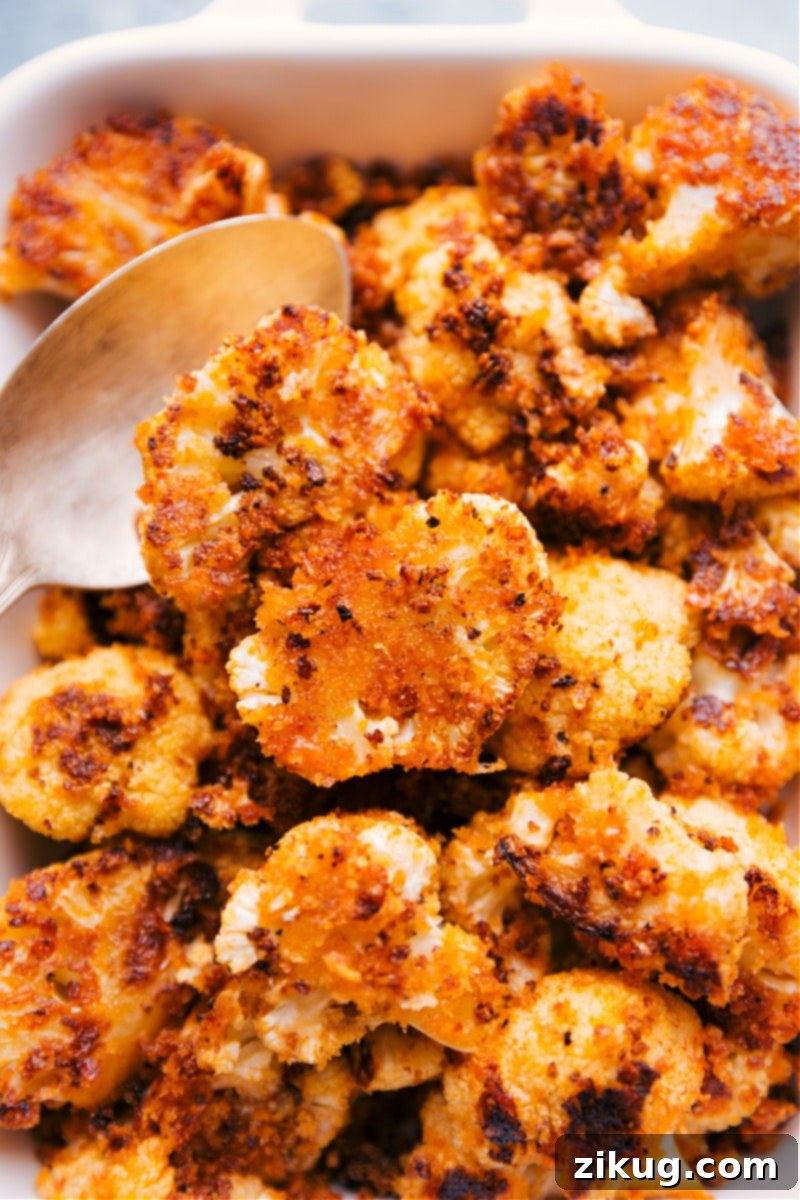
Roasted Cauliflower is a culinary delight, transforming this humble vegetable into a dish that’s crisp on the edges, wonderfully tender inside, and bursting with rich flavor from the intense heat of a hot oven. Whether you prefer a classic, simply seasoned preparation or a show-stopping version crowned with a golden Parmesan breadcrumb topping, this guide will help you achieve perfectly roasted cauliflower every time. It’s an incredibly versatile and healthy side dish that promises to impress even the most skeptical vegetable eaters.
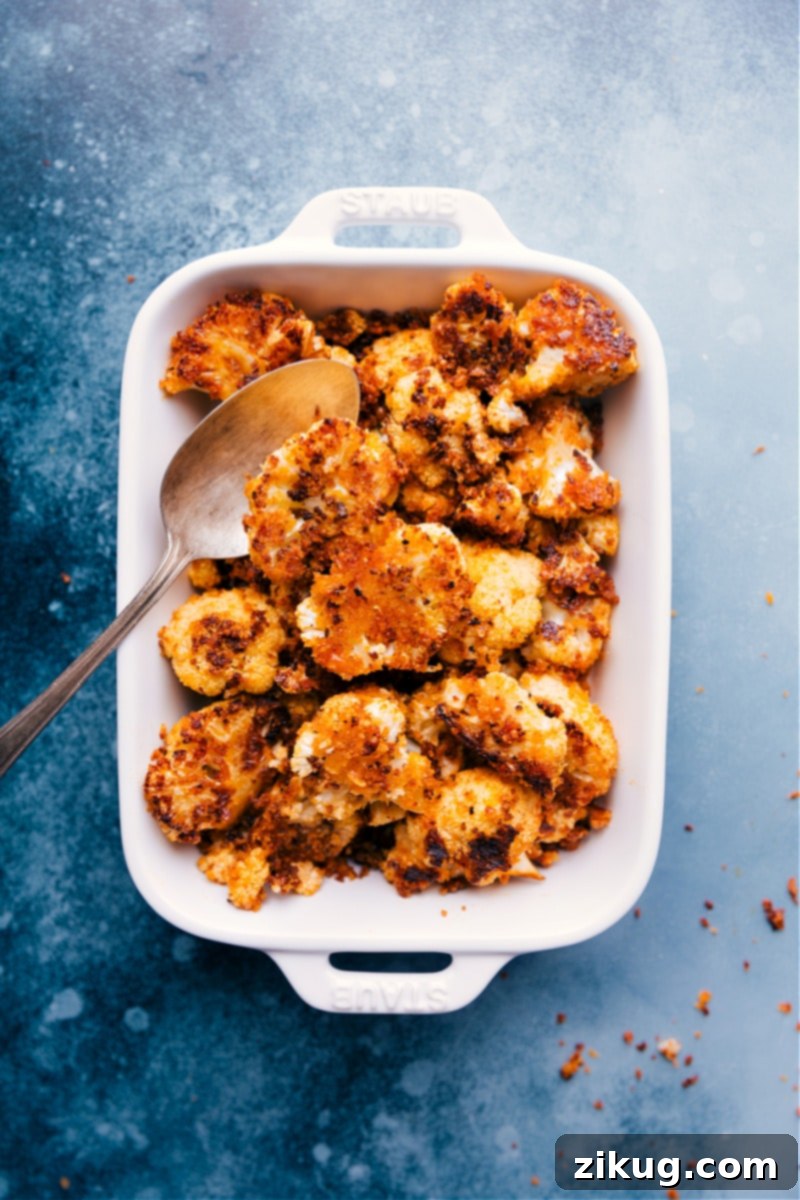
Roasted Cauliflower: A Simple Side with Extraordinary Flavor!
Cauliflower stands out as one of the most remarkably versatile vegetables available. Its adaptability shines through in countless dishes, from acting as a low-carb alternative for pizza crusts and rice to even making an unexpected, yet delicious, appearance in a cauliflower smoothie (yes, it’s surprisingly amazing!). While many cauliflower recipes are delightful, such as a hearty Cauliflower Soup, the two oven-roasted cauliflower recipes we’re about to share offer serious competition for your new favorite preparation method.
Roasting cauliflower isn’t just about cooking; it’s about a magical transformation. The high heat of the oven unlocks incredible depth of flavor in this otherwise modest vegetable, yielding a truly satisfying experience. The process is not only straightforward, making it an incredibly easy side dish to prepare, but the results are also consistently spectacular. You’ll find that the florets emerge with beautifully caramelized edges and a tender interior that makes them almost impossible to resist. In fact, it’s often a challenge to get them from the baking sheet to the serving platter before hungry hands (mine included!) snatch them all up. This method truly highlights cauliflower’s potential, turning it into a dish that’s both healthy and utterly delicious.
Essential Tips for Selecting the Best Cauliflower
To ensure you prepare the most delicious Roasted Cauliflower possible, selecting a fresh, high-quality head is paramount. Here’s a quick guide to help you pick the perfect cauliflower:
What to Look For:
- Color: Opt for a head with an even, creamy white color. Any yellowing or brown spots indicate it’s past its prime.
- Florets: The florets should be densely packed, firm, and tightly closed. Avoid any that appear loose or crumbly.
- Leaves: The outer leaves should be vibrant green and crisp, not wilted or discolored. Fresh leaves are a strong indicator of a recently harvested cauliflower.
- Weight: Pick up the cauliflower. It should feel heavy for its size, suggesting good moisture content and freshness.
What to Avoid:
- Soft Spots: Any signs of softness, mushiness, or dark blemishes suggest spoilage.
- Strong Odor: Give the cauliflower a sniff. If it has a strong, pungent, or sulfurous smell, it is definitely past its prime and will likely have an unpleasant taste when cooked. A fresh head should have a very subtle, earthy scent.
Optimal Storage:
Many grocery stores wrap cauliflower tightly in cellophane, which unfortunately traps moisture and accelerates spoilage. To prolong its freshness:
- Unwrap Immediately: As soon as you bring it home, unwrap the cauliflower.
- Airtight Storage with Absorbent: Transfer the head to a loose plastic bag (or a reusable produce bag) with a paper towel tucked inside. The paper towel will absorb excess moisture, preventing mold and rot.
- Refrigerate: Store it in the crisper drawer of your refrigerator.
How long does cauliflower last? A whole head of cauliflower can be kept in the fridge for 4-7 days if stored correctly. Once you cut it into florets, it’s best to use them within 3-4 days to maintain optimal freshness and texture.
Preparing Cauliflower for Perfect Roasting
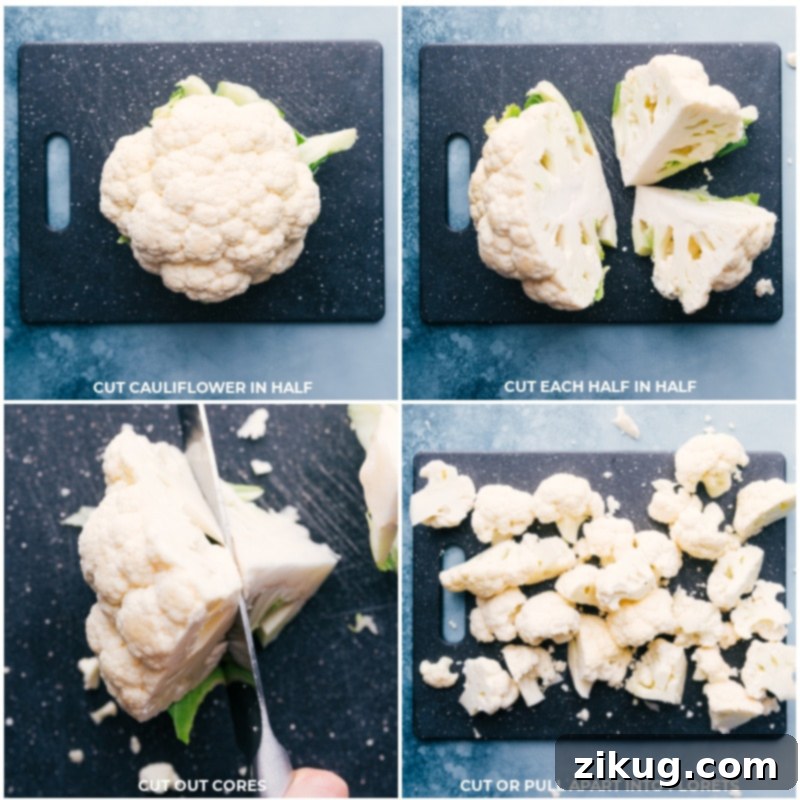
Once you’ve successfully chosen the ideal head of cauliflower, proper cleaning and preparation are crucial steps for achieving that coveted crisp-tender texture and deep flavor. Here’s how to get your cauliflower ready for roasting:
Step-by-Step Preparation:
- Cut into Quarters: Begin by cutting the cauliflower in half through the stem, and then cut each half in half again, yielding four quarters.
- Remove the Core: From each quarter, slice diagonally to carefully remove the tough inner core. This makes the florets easier to separate and ensures even cooking.
- Create Bite-Sized Florets: Break or cut the cauliflower into bite-sized florets. The key here is to optimize for as many flat edges as possible. Flat edges maximize direct contact with the hot baking sheet, which significantly increases caramelization and, consequently, enhances the flavor. Aim for pieces that are roughly uniform in size for even roasting.
- Rinse Thoroughly: Place the cut florets in a colander and rinse them under cold running water. This helps to remove any dirt or small insects that might be hidden within the crevices.
- Dry Completely: This is arguably the most critical step for achieving truly roasted, not steamed, cauliflower. After rinsing, spread the florets on a clean kitchen towel or several layers of paper towels. Pat them thoroughly dry. You can even let them air dry for 10-15 minutes or use a salad spinner for extra efficiency.
Quick Tip for Maximum Crispiness
If your cauliflower florets are even slightly wet when they go into the oven, the moisture will turn into steam, causing the cauliflower to steam rather than roast. This prevents the Maillard reaction (the browning and flavor development) and results in a soft, mushy texture instead of the delicious caramelization and crisp edges we’re after. Investing a few extra minutes to thoroughly dry your cauliflower before roasting is the secret to achieving the best Roasted Cauliflower possible!
Mastering the Art of Roasting Cauliflower
Achieving perfectly roasted cauliflower is simpler than you might think, but a few key techniques can elevate your results from good to outstanding. Follow these steps for golden, flavorful florets:
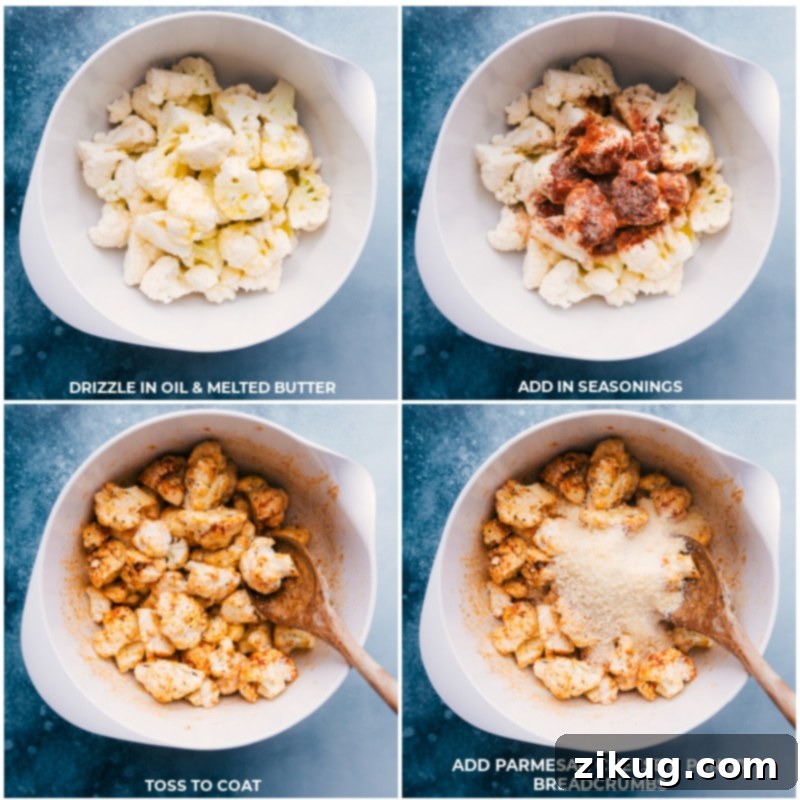
- Combine in a Bowl for Even Coating: Instead of seasoning directly on the baking sheet, toss your prepared and thoroughly dried cauliflower florets in a large bowl with olive oil, melted butter (if using), and your chosen seasonings. Mixing in a bowl ensures every floret is evenly coated, leading to consistent flavor and browning across all pieces. This also prevents seasoning from concentrating in one area or burning directly on the hot pan.
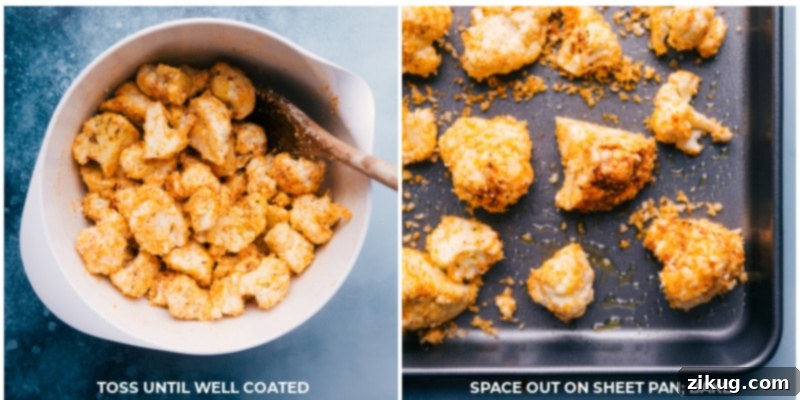
- Prevent Overcrowding the Pan: This is a golden rule for roasting any vegetable, especially cauliflower. Spread the seasoned florets across the baking tray in a single layer, ensuring they have plenty of space between each piece. When vegetables are too close together or overlapping, they release moisture, which then steams in the confined space instead of roasting. This steaming effect prevents caramelization and results in soft, rather than crispy, cauliflower. If you have a large amount of cauliflower, use two smaller sheet pans or an extra-large one (like a 15×21-inch pan) to give everything ample room. Remember, the more space each floret has, the better it will roast and caramelize!
- Opt for Fresh Cauliflower: While frozen cauliflower is convenient for some applications, it contains more water, making it challenging to achieve the desired crispiness and deep flavor during roasting. For the best, most caramelized, and truly flavorful results, always choose fresh cauliflower. Its lower water content allows for better browning and a superior texture.
- High Oven Temperature is Key: The intense heat of a preheated oven (typically 400-425°F or 200-220°C) is vital for perfect roasted cauliflower. This high temperature rapidly heats the florets, causing their natural sugars to caramelize and creating those beautiful golden-brown, crispy edges. It also ensures the interior becomes tender without turning mushy. Don’t be afraid to crank up the heat – it’s the secret to that irresistible texture and flavor profile.
Achieving the Ideal Roast Time for Cauliflower
The perfect roasting time for cauliflower can vary based on several factors, ensuring a tender interior and beautifully caramelized exterior. It’s more of an art than an exact science, but these guidelines will help you achieve perfection:
- Size of Florets: Smaller, more uniformly cut pieces will naturally roast faster and more evenly.
- Oven Temperature Accuracy: Ensure your oven is fully preheated to the specified temperature. An oven thermometer can help verify accuracy.
- Pan Crowding: As discussed, a less crowded pan allows for quicker, more efficient roasting and better caramelization.
- Number of Trays: Roasting multiple trays at once can extend cooking time and affect evenness, as it reduces airflow and drops oven temperature.
- Personal Preference: Some prefer their cauliflower just tender, while others enjoy a deeper caramelization and crispier texture.
Generally, at a high temperature (around 425°F/220°C):
- Smaller pieces will typically roast anywhere from 15-20 minutes.
- Larger pieces may take a bit longer, usually between 20-25 minutes.
How do I know when cauliflower is done roasting?
The best way to determine doneness is through a combination of visual cues and a simple test:
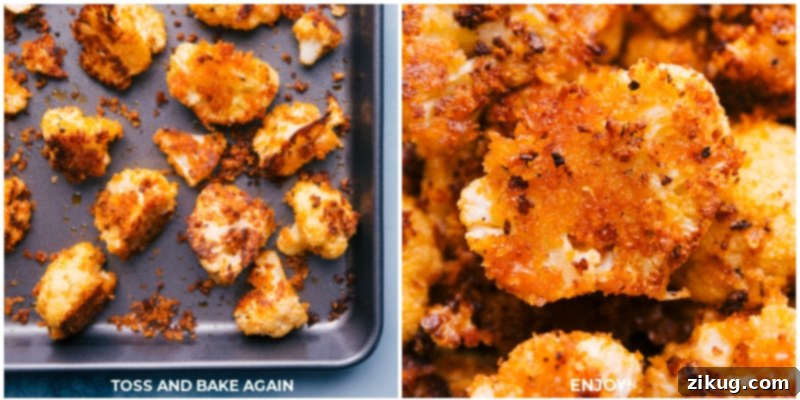
- Visual Check: Look for a rich, golden-brown, caramelized exterior. The edges should appear slightly crispy and browned.
- Fork Test: Gently pierce a floret with a fork. It should slide through easily, indicating a tender interior. If there’s resistance, continue roasting for a few more minutes.
For a quicker roast time and optimal results:
- Always make sure your oven is fully preheated before placing the cauliflower inside.
- Only roast one tray in the oven at a time, if possible, to maintain consistent temperature and airflow.
- Space out the cauliflower florets generously on the baking sheet, ensuring no pieces are overlapping.
- Consider tossing the cauliflower once or twice during roasting to promote even browning on all sides.
Exciting Roasted Cauliflower Variations
Elevate Your Roasted Cauliflower: Creative Recipe Twists
Once you’ve mastered the basic roasted cauliflower, the possibilities for flavor variations are endless. Here are a few popular ideas to inspire your culinary creativity:
- Roasted Broccoli and Cauliflower Medley: For a vibrant and healthy mixed vegetable side, simply replace half of the cauliflower with broccoli florets. The roasting time remains consistent, yielding a delightful combination of textures and flavors.
- Whole Roasted Cauliflower (Cauliflower Head): Impress your guests with a stunning centerpiece! Roasting a whole cauliflower head creates a dramatic presentation and a wonderfully tender interior. Check out this recipe for specific instructions on how to prepare and roast it to perfection.
- Roasted Cauliflower Curry Addition: Prepare the “basic” roasted cauliflower recipe and then incorporate it into a flavorful Vegetable Curry towards the end of cooking. Roasting the cauliflower beforehand adds a fantastic depth of flavor and texture that simmering in liquid alone can’t achieve.
- Roasted Cauliflower and Carrots: Add a touch of sweetness and color by combining cauliflower with carrots. Replace half of the cauliflower with sliced carrots (reference this roasted carrots post for optimal cutting techniques!). The roasting time will remain similar for both vegetables.
- Spicy Roasted Cauliflower Kick: For those who enjoy a bit of heat, transform your roasted cauliflower into a fiery delight. Sprinkle some red pepper flakes over either the basic or Parmesan recipe immediately after removing it from the oven. Alternatively, for a more infused spice, mix 1/4 teaspoon of ground cayenne pepper directly with the other spices before tossing with the florets.
- Lemon Herb Roasted Cauliflower: A squeeze of fresh lemon juice and a sprinkle of chopped fresh herbs like parsley, dill, or chives added right after roasting can brighten up the flavors beautifully.
- Smoked Paprika & Cumin Cauliflower: For a warm, earthy profile, swap out regular paprika for smoked paprika and add a pinch of ground cumin to your seasoning blend.
Frequently Asked Questions About Roasted Cauliflower
Here are answers to some common questions about preparing and enjoying roasted cauliflower:
Why isn’t my roasted cauliflower crispy?
The most common reason for non-crispy cauliflower is overcrowding the baking pan. Cauliflower has a relatively high water content. If florets are packed too tightly on the pan, the moisture they release creates steam instead of allowing them to roast and caramelize. To achieve crispy results, ensure each piece has ample room to breathe on the baking sheet. Use multiple pans if necessary, and don’t skip the crucial step of thoroughly drying the florets before tossing them with oil and seasonings.
What main dish pairs well with roasted cauliflower?
Roasted cauliflower’s versatile flavor profile makes it an excellent companion to a wide array of main dishes. Its slightly nutty and sweet notes complement both rich and lighter meals. We love preparing extra roasted cauliflower not only as a delicious side dish but also to enjoy the leftovers as part of the main course the following day. Think about dicing up any leftover florets and incorporating them into a savory quiche, filling flavorful tacos or quesadillas, stuffing them into pitas, adding them to a fresh salad, stirring them into a creamy risotto, or even baking them into a casserole for an extra layer of texture and taste.
Some of our favorite main dishes that pair wonderfully with roasted cauliflower include:
- Hearty Ground Beef Stroganoff
- Effortless One-Pan Italian Sausage and Veggies
- Classic Baked Ziti
- Comforting Chicken Orzo
- Grilled Salmon or Chicken Breast
- Lamb Chops with Rosemary
Does roasted cauliflower reheat well?
Roasted cauliflower is undeniably best enjoyed fresh, right out of the oven, when its edges are at their crispiest. However, if you have leftovers, you can certainly reheat it. Microwaving is an option, but it will inevitably make the cauliflower less crisp and potentially a bit softer. For crispy reheated cauliflower that retains more of its original texture, the oven is your best friend. Simply spread the cooled cauliflower florets on a baking sheet (without adding extra oil) and reheat in a preheated oven at 350°F (175°C) for 5-10 minutes, or until thoroughly heated through and crisp to your liking. Keep an eye on it to prevent over-browning.
Elevate Your Meal: Pair Roasted Cauliflower With Another Roasted Veggie
Creating a diverse and colorful vegetable spread is easy when you combine roasted cauliflower with other delicious roasted vegetables. Each brings its own unique flavor and texture profile, creating a symphony of tastes on your plate:
- Roasted Sweet Potatoes: With both sweet and savory seasoning options, sweet potatoes offer a delightful contrast in flavor and color.
- Roasted Green Beans: Crisp-tender green beans, often with a crunchy topping, provide a fresh and vibrant addition to any meal.
- Sheet Pan Sausage and Veggies: A complete meal in itself, featuring a medley of hearty roasted vegetables alongside savory sausage.
- Roasted Potatoes: Classic and comforting, especially when tossed with Parmesan cheese for an extra layer of savory goodness.
- Smashed Potatoes: Crispy on the outside and fluffy on the inside, often seasoned with a kick of paprika, these are a fun and satisfying alternative.

Roasted Cauliflower (2 Ways!)
Equipment
-
Large sheet pan (15″ x 21″) or 2 smaller ones
Ingredients
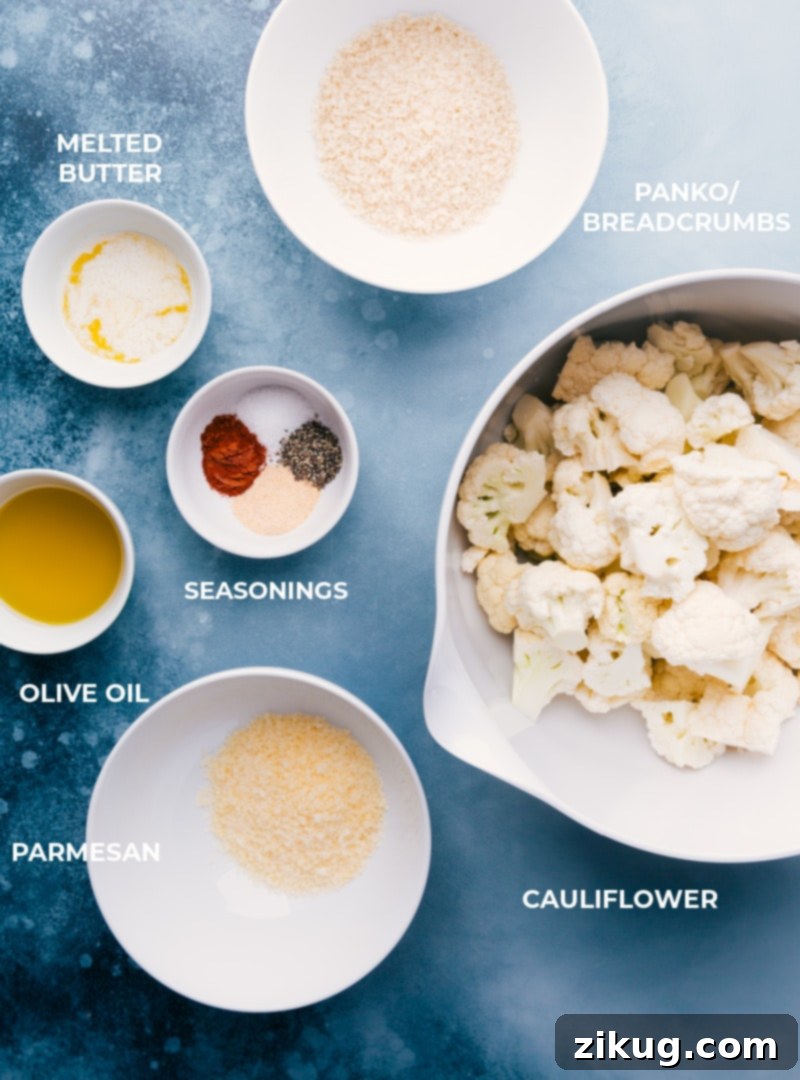
- 2 pounds (8 cups) cauliflower about 2 heads, cut into florets
- 3 tablespoons olive oil
- 3/4 teaspoon salt
- 1/2 teaspoon pepper
- 1 teaspoon garlic powder
- 1 teaspoon paprika optional
- 2 pounds (8 cups) cauliflower about 2 heads, cut into florets
- 3 tablespoons olive oil
- 2 tablespoons butter melted
- 3/4 teaspoon salt
- 3/4 teaspoon garlic powder
- 3/4 teaspoon paprika
- 1/2 teaspoon pepper
- 1/2 cup panko breadcrumbs
- 1/3 cup grated Parmesan cheese
Instructions
-
Preheat oven to 220°C/425°F. Prepare an extra-large sheet pan (15×21-inches) or use 2 smaller sheet pans to ensure ample space. Cut the cauliflower in half, then half again to get 4 quarters. Slice diagonally to remove the inner cores from each quarter. Cut the cauliflower into uniform, bite-sized florets, focusing on creating flat edges. This maximizes surface contact with the pan, significantly increasing caramelization and enhancing flavor!
-
Basic Roasted Cauliflower: In a large bowl, toss the prepared cauliflower florets with olive oil, salt, pepper, garlic powder, and optional paprika until thoroughly coated. (While you can do this directly on the tray, using a bowl ensures a more even coating and better results.) Spread the florets evenly across the baking tray, making sure not to overcrowd the pan (see Recipe Notes for more on this). Roast for 17–20 minutes, then use a spatula to flip the cauliflower, and continue roasting for another 5 minutes until beautifully caramelized and tender. Serve immediately for best texture and flavor.
-
Parmesan Roasted Cauliflower: Generously grease a sheet pan with cooking spray or oil. In a large bowl, toss the cauliflower florets with olive oil and melted butter. Add salt, garlic powder, paprika, and pepper, tossing gently to coat all the florets. Next, add the panko breadcrumbs and grated Parmesan cheese, tossing again until the cauliflower is well coated. Carefully use your hands to transfer the cauliflower from the bowl to the prepared baking tray, spacing the florets evenly. Sprinkle any remaining panko/Parmesan mixture left in the bowl over the cauliflower on the tray. Roast for 15 minutes. Flip the cauliflower with a spatula, then roast for an additional 5–10 minutes, or until the edges are golden brown and the florets are tender. Serve hot and enjoy!
Recipe Notes
- Smaller pieces will typically roast within 15–20 minutes.
- Larger pieces may require 20–25 minutes to become tender.
To test doneness, pierce a floret with a fork – it should glide through easily. Also, look for a vibrant golden, caramelized exterior. For optimal results, ensure your oven is fully preheated, space florets generously, and roast only one tray at a time if possible.
Nutrition Note: The nutrition information provided pertains to the basic roasted cauliflower recipe version only.
Storage: Allow cooled roasted cauliflower to reach room temperature before transferring it to an airtight container. Store in the refrigerator for up to 3 days. While it’s still delicious, note that the texture is best when enjoyed fresh immediately after roasting.
Nutrition
Calories: 75kcal |
Carbohydrates: 6g |
Protein: 2g |
Fat: 6g |
Saturated Fat: 1g |
Polyunsaturated Fat: 1g |
Monounsaturated Fat: 4g |
Sodium: 34mg |
Potassium: 339mg |
Fiber: 2g |
Sugar: 2g |
Vitamin C: 55mg |
Calcium: 25mg |
Iron: 1mg
Nutrition information is automatically calculated, so should only be used as an approximation.