
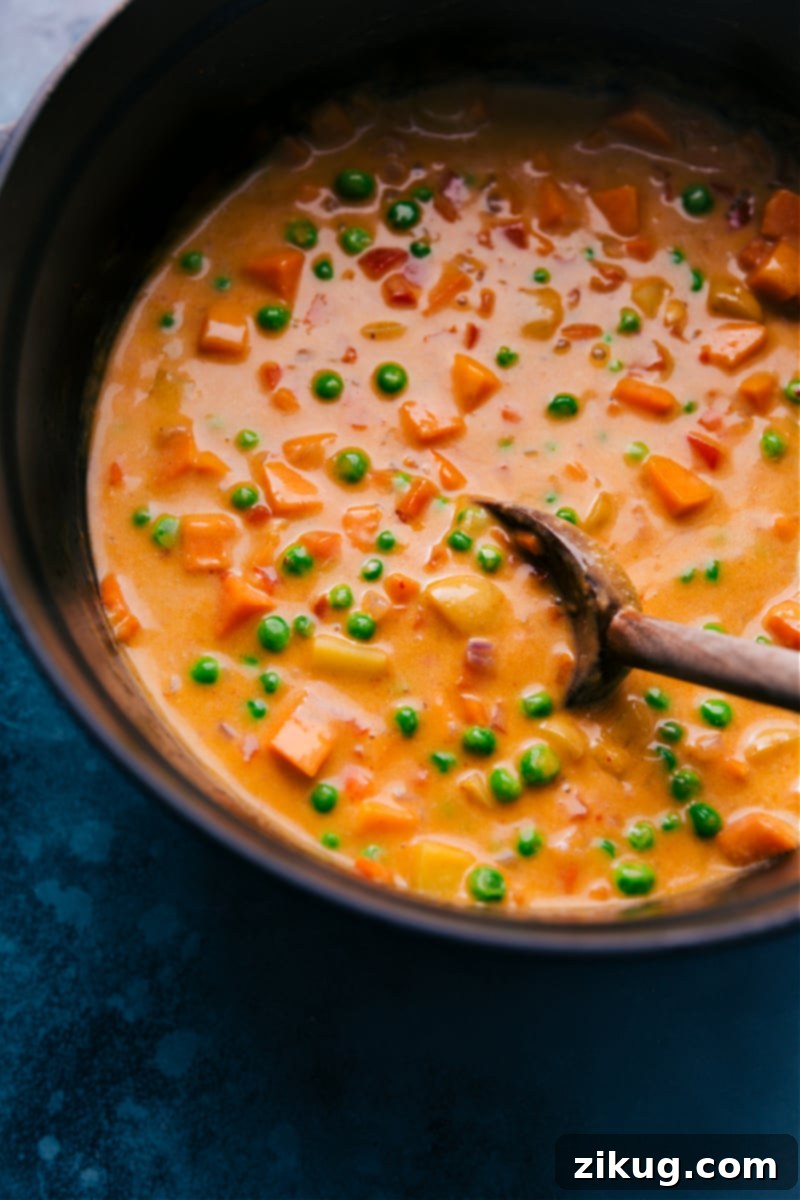
Mastering the Art of Homemade Panang Curry: A Rich and Creamy Delight
Embark on a delightful culinary journey with this easy-to-follow Panang Curry Recipe, expertly crafted to bring the rich, creamy, and subtly sweet flavors of Thailand right into your home kitchen. This vibrant and satisfying dish perfectly blends aromatic vegetables and premium Panang curry paste with a hearty combination of tender sweet and golden potatoes, all simmered in a luxurious coconut milk base. Get ready to create a truly comforting meal that’s both simple to prepare and bursting with authentic taste – a perfect choice for family dinners or entertaining friends.

From the Chef’s Kitchen
My Personal Quest to Recreate and Perfect Panang Curry at Home
Years ago, my husband and I embarked on a memorable trip, during which we discovered a tiny, unassuming restaurant nestled in a quiet corner. It was one of those truly special, hole-in-the-wall establishments that often harbor the most incredible culinary secrets – and this one certainly did. There, we experienced a Panang Curry that left an indelible mark on my palate and memory. It was exceptionally rich, featuring a sauce that was beautifully balanced with subtle sweetness and an underlying nutty depth. Every spoonful was laden with perfectly cooked, tender vegetables and a generous mix of both sweet and golden potatoes, creating a harmony of textures and flavors I had never encountered before.
That single, unforgettable dish ignited a passion within me, inspiring a multi-year quest to meticulously recreate its exquisite flavor profile. My culinary journey involved countless experiments, adjustments to spice levels, ingredient ratios, and countless tastings. I was determined to capture that precise blend of creamy coconut, the distinctive aroma of authentic Panang curry paste, and the satisfying heartiness imparted by the unique combination of sweet and golden potatoes. It was a true labor of love, driven by a desire to bring that cherished dining experience into my own home.
Finally, after much dedication and refinement, I genuinely feel that this Panang Curry recipe perfectly replicates the magical one we savored all those years ago. It’s more than just a meal; it’s a hearty and deeply satisfying experience that has earned a permanent spot in my family’s dinner rotation. What’s even better? Even my children, who are typically quite sensitive to spicy foods, absolutely adore it! The subtle warmth of the curry is beautifully mellowed by the natural sweetness of the full-fat coconut milk, creating a balanced and approachable flavor that appeals to all ages. Underlying notes of roasted peanuts (whether naturally present in the paste or added as a garnish) provide a wonderful depth, while a generous squeeze of fresh lime juice introduces a bright, complementary freshness that truly elevates the entire dish. This recipe isn’t just about combining ingredients; it’s about crafting an experience, a memory, and a flavorful connection to Thai cuisine. I am thrilled to share this perfected version with you, hoping it brings as much joy to your table as it does to mine. Whether you’re a seasoned curry enthusiast or new to the world of Thai flavors, this homemade Panang Curry promises an authentic and delightful dining adventure.
What Exactly is Panang Curry? Understanding its Unique Charm
Panang Curry, often hailed as one of Thailand’s most exquisite and approachable curries, is a distinctive variety of Thai cuisine renowned for its rich, thick, and creamy texture. Originating from the central region of Thailand, its flavor profile sets it apart from its spicier counterparts like red or green curry. Panang curry is characterized by a beautiful harmony of sweet, salty, and subtly spicy notes, frequently accompanied by an underlying nutty flavor. The name “Panang” is believed to derive from the ancient Khmer word “Panh” meaning “to cross,” possibly referring to the way chicken was traditionally prepared in a cross-legged manner within this curry. Today, it primarily signifies the unique blend of spices and aromatics in its curry paste.
The core of Panang curry lies in its paste, which typically includes dried red chilies, galangal, lemongrass, kaffir lime zest, coriander root and seeds, cumin, and often a touch of roasted peanuts or shrimp paste. This specific combination yields a milder heat than other Thai curries, making it incredibly appealing to a broader audience. Unlike brothier curries, Panang is celebrated for its condensed, almost caramelized sauce, achieved by simmering full-fat coconut milk until it reaches a luscious, velvety consistency. This depth of flavor, coupled with its comforting richness, makes Panang curry a universally beloved dish, perfect for those seeking an aromatic and deeply satisfying culinary experience without overwhelming spice.
Essential Ingredients for a Restaurant-Quality Panang Curry
Creating a truly authentic and delicious Panang Curry starts with selecting the right ingredients and understanding their role in the overall flavor profile. Each component contributes to the layered richness and vibrant taste that makes this Thai dish so special. Here’s a detailed guide to what you’ll need, along with expert tips for substitutions and preparation:
| Ingredient | Swaps & Expert Tips for Best Results |
|---|---|
| Panang Curry Paste | This is the undisputed star of your curry, providing its signature flavor. Begin with 2 tablespoons for a milder, family-friendly heat level, especially if serving to children. For those who prefer a more robust spice, feel free to add a 3rd tablespoon. I highly recommend Maesri brand due to its consistent quality and excellent balance of flavor. Authentic Panang paste might be found in the international section of larger grocery stores, but an Asian grocery store is your best bet for a wider selection and higher quality. Remember to always check the label, especially if aiming for a vegetarian or vegan version, as some pastes contain shrimp paste. |
| Full-fat Coconut Milk | To achieve the coveted thick, rich, and creamy sauce characteristic of restaurant-style Panang Curry, using two 13.5-ounce cans of full-fat coconut milk is essential. The high fat content is crucial for the luxurious mouthfeel and depth of flavor. If you’re looking for a slightly lighter curry, you can substitute one of the cans of coconut milk with 1 cup of vegetable or chicken stock. Avoid “cream of coconut,” which is typically sweetened for cocktails, and “coconut cream,” which is too dense and will result in an overly thick, almost solid curry. Opt for high-quality brands with minimal additives for the purest taste. |
| Sweet & Gold Potatoes | This thoughtful combination not only adds a wonderful textural contrast but also a beautiful color palette to the dish. It’s important to peel the sweet potato as its skin can be quite fibrous and tough. For gold potatoes, such as Yukon Golds, their thin, delicate skin can be left on, adding a rustic charm and extra nutritional fiber. Ensure all potato pieces are uniformly diced to approximately ½-inch cubes. This consistency is vital for ensuring they cook through evenly and become tender at the same rate within the simmering sauce. |
| Onion & Bell Pepper | These foundational vegetables serve multiple purposes, adding natural sweetness, aromatic depth, and substantial body to the curry. Any color of bell pepper will integrate beautifully into this Panang Curry recipe; red, yellow, or orange peppers are often preferred for their inherent sweetness. Finely dicing these vegetables ensures they soften perfectly and meld seamlessly into the rich curry sauce. |
| Sweet Peas | Adding these vibrant green peas is best done towards the very end of the cooking process. This strategic timing ensures they maintain their bright color, distinct shape, and tender-crisp texture, preventing them from becoming overcooked and mushy. Frozen sweet peas are incredibly convenient and work perfectly in this recipe. |
| Soy Sauce | Regular soy sauce (not the “lite” or low-sodium version) is the preferred choice here, as it provides a critical salty and umami depth that rounds out the curry’s flavor profile. If you are not strictly vegetarian, using a good quality fish sauce instead of or in addition to soy sauce can impart an even more traditional Thai umami boost, enhancing the savory complexity significantly. |
| Lime Zest & Juice | Fresh lime is an indispensable ingredient for brightening the rich, creamy curry and introducing a crucial tangy counterpoint. The zest, added at the end, provides fragrant aromatic oils, while the freshly squeezed juice delivers a sharp, clean acidity that prevents the curry from tasting too heavy. If you are fortunate enough to have kaffir lime leaves, crumple a few and simmer them gently with the coconut milk to infuse an even more authentic, perfumed aroma, removing them just before serving. Otherwise, the fresh zest and juice will provide an excellent, lively citrus finish. |
| Fresh Basil | Thai basil, with its distinctive slightly peppery, anise-like flavor, is the ideal choice for garnishing Panang curry and complements its taste profile wonderfully. However, if Thai basil is unavailable, regular sweet basil is a perfectly acceptable and delicious substitute that will still infuse the dish with a lovely herbaceous freshness. Add it generously as a vibrant garnish just before serving. |
| Minced Garlic & Ginger | These pungent aromatics are non-negotiable for building the foundational layers of flavor in this curry. Freshly minced garlic and ginger provide warmth, a subtle spicy kick, and an aromatic complexity that truly awakens the palate and enhances the richness of the curry paste. Don’t underestimate their impact! |
| Light Brown Sugar | A carefully measured touch of sweetness is vital in Panang curry to perfectly balance the inherent spice and the luxurious richness of the coconut milk. Light brown sugar is recommended for its subtle molasses notes, which harmoniously complement the overall flavor profile. Always add gradually and adjust to your personal taste preferences, aiming for balance rather than overt sweetness. |
| Roasted Peanuts (Optional) | Crushed roasted peanuts are a classic and highly recommended garnish for Panang Curry. They add a delightful textural crunch and reinforce any nutty undertones that may be present in the curry paste. If you desire a more pronounced peanut flavor but don’t have whole peanuts for topping, a tablespoon of creamy peanut butter can be stirred into the curry at the very end of cooking. |
| Coconut Oil or Olive Oil | These oils are used for sautéing the aromatics and, most importantly, for “blooming” the curry paste. Coconut oil can lend a subtle tropical hint to the dish, while olive oil serves as a perfectly neutral and healthy alternative. |
| Salt | Essential for seasoning throughout the cooking process. It brings out and amplifies all the individual flavors within the curry, ensuring a well-rounded and seasoned dish. Always taste and adjust as you go. |
Step-by-Step: Crafting Your Perfect Panang Curry at Home
Creating this incredibly flavorful and comforting Panang Curry is a straightforward process, but paying close attention to each step ensures a truly outstanding result. Follow these detailed instructions to bring this delightful Thai dish to life in your own kitchen:
- Ingredient Preparation: Begin by preparing all your vegetables. Finely dice the red onion, carrots, and bell pepper. For efficiency, a food processor can quickly chop these. Next, mince the fresh garlic and ginger – a spoon or vegetable peeler works wonderfully for peeling the ginger before mincing. Finally, peel and chop the sweet potatoes into uniform ½-inch bite-sized cubes. For the golden potatoes, their thin skin is perfectly edible, so no need to peel; simply chop them into similar ½-inch pieces. Consistent sizing is crucial to ensure all vegetables cook through evenly and become tender at the same rate.
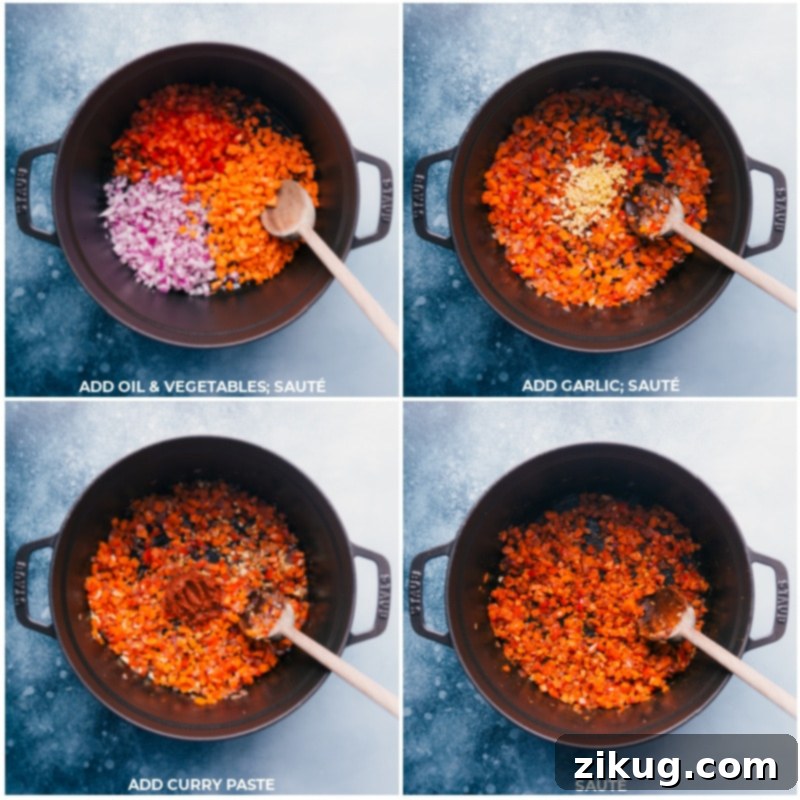
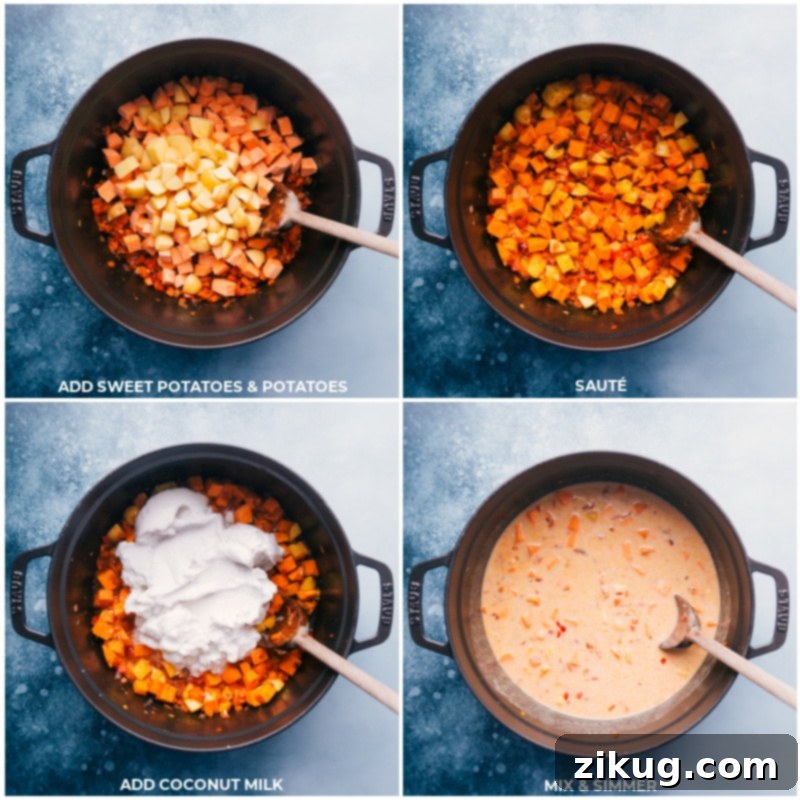
- Sauté Aromatics and Bloom Curry Paste: Heat 2 tablespoons of coconut oil (or olive oil) in a large, deep pot or a sturdy Dutch oven over medium-high heat. Once the oil is shimmering, add the diced onion, carrot, and bell pepper. Sauté these vegetables for 7–10 minutes, stirring occasionally, until the onions become translucent and begin to turn golden brown, indicating a flavorful base. Now, add the minced garlic and ginger, stirring well to coat all the vegetables and cook for about 1 minute until their fragrant aromas fill your kitchen. Season lightly with 1 teaspoon of salt (or to taste). Reduce the heat to medium, then add the Panang curry paste. Stir constantly for 2–3 minutes, allowing the paste to “bloom” in the hot oil. This crucial step toasts the spices in the paste, intensifying their complex flavors and aromas, which is vital for an authentic taste. Finally, add the diced sweet and golden potatoes and stir to thoroughly coat them with the aromatic curry mixture for 1 minute.
- Simmer the Curry Base to Perfection: Carefully pour in the two cans of full-fat coconut milk. Stir everything together gently, making sure to scrape the bottom of the pot periodically to prevent any sticking. Ensure that all the potato pieces are submerged beneath the liquid for even cooking. Bring the mixture to a gentle boil, then immediately reduce the heat to a rapid simmer – you want to see small, consistent bubbles around the edges, not a vigorous, rolling boil. Continue to simmer the curry for 18–25 minutes, stirring occasionally, until the potatoes are fork-tender and the curry sauce has visibly thickened and reduced to a rich, creamy consistency. For me, this typically takes around 20–22 minutes. If you notice the sauce reducing too quickly before the potatoes are fully tender, simply add a splash of water or vegetable broth/stock. Conversely, if the potatoes aren’t softening and the sauce isn’t thickening as desired, slightly increase the heat.
- Final Flavor Adjustments and Freshness: Once the potatoes are perfectly tender and the sauce has reached your desired rich consistency, turn off the heat. Stir in the 1 cup of frozen peas. The residual heat from the curry will gently cook them, ensuring they remain vibrant green and tender-crisp. If you used kaffir lime leaves during simmering, remove them now. It’s time for the final seasoning adjustments: add 1 tablespoon of soy sauce, 1 to 3 tablespoons of light brown sugar (start with 1 tablespoon and add more gradually to taste), and the juice of one fresh lime. Taste the curry and adjust these ingredients as needed. Add more soy sauce for a deeper umami profile and additional saltiness, more lime juice for an extra burst of freshness and tang, and more sugar if you prefer a sweeter curry or to balance any lingering heat. Curries often benefit from a good amount of salt, so don’t hesitate to add another ¼ to ½ teaspoon if the flavors aren’t quite vibrant enough. The goal is a harmonious balance of sweet, salty, sour, and spicy.
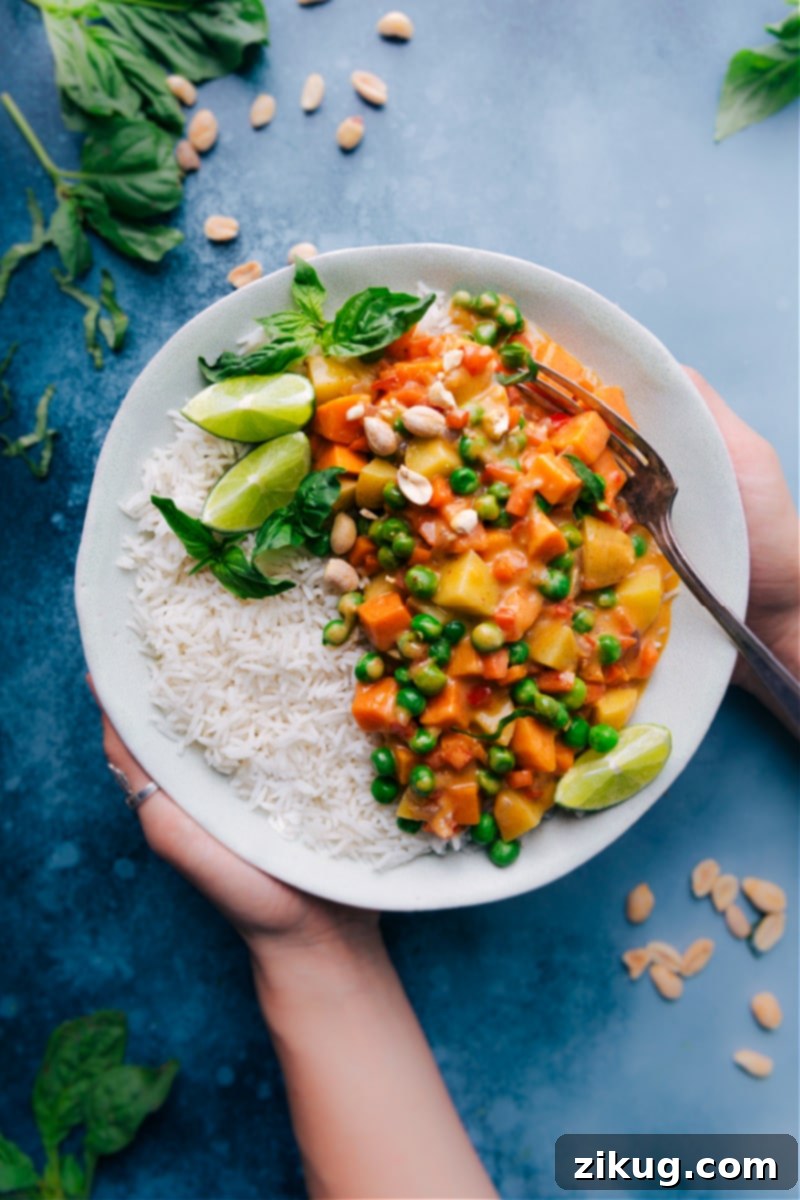
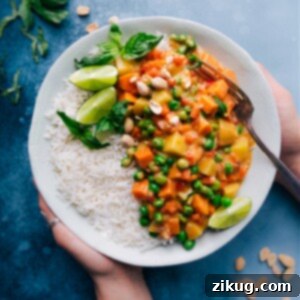
- Serve and Garnish for a Complete Meal: Remove the Panang Curry from the heat completely. If desired, spoon the rich and creamy curry generously over warm, fluffy cooked rice (jasmine rice is highly recommended for its fragrant aroma). Garnish each individual serving with a sprinkle of fresh basil leaves (Thai basil if available for that authentic touch) and a generous scattering of coarsely chopped roasted peanuts, which add a delightful crunch. For an extra layer of brightness, I always like to serve additional lime wedges on the side, allowing diners to add a fresh squeeze to their individual bowls. Serve immediately with warmed roti bread, if using, for an even more authentic experience. Enjoy this delightful homemade Thai meal!

Essential Tips for a Perfect Panang Curry Every Time
Achieving a truly outstanding, restaurant-quality Panang Curry at home is simpler than you might think when you keep these expert tips in mind:
- Always Bloom the Curry Paste First: This step is non-negotiable for an authentic and deeply flavorful Panang Curry. Sautéing the curry paste in a little hot oil before adding any liquids allows its aromatic spices to toast, releasing their full potential and significantly deepening the overall flavor profile of your dish. Do not rush this step; it’s a small effort with a huge impact on taste.
- Cut Vegetables Evenly and Consistently Small: To ensure that all your vegetables, especially the potatoes, cook through uniformly and become perfectly tender as the sauce reduces, it’s crucial to dice them into consistent ½-inch pieces. Smaller, even cuts also make each spoonful a more enjoyable and harmonious experience, where every ingredient is cooked to perfection.
- Master the Art of Final Seasoning: The final flavor adjustments are absolutely critical for a well-balanced curry. Small tweaks of soy sauce (to add umami depth and adjust saltiness), light brown sugar (to perfectly balance any heat and introduce sweetness), and fresh lime juice (for essential brightness and acidity) right before serving will bring all the complex flavors to life, creating a perfectly harmonious and vibrant dish. Always taste, adjust, and taste again until it’s just right for your palate.
- Prioritize Full-Fat Coconut Milk: For a truly rich, velvety, and creamy Panang curry, opting for full-fat coconut milk is paramount. It provides the luxurious texture and mouthfeel that is a hallmark of this exquisite curry. Using light coconut milk will result in a thinner, less satisfying sauce that lacks the characteristic body and richness.
- Integrate Peas Strategically: To preserve their vibrant green color and delicate, tender-crisp texture, add frozen peas only after you have turned off the heat. The residual warmth of the curry is sufficient to gently cook them through, preventing them from becoming mushy and dull, which can happen if they are overcooked.
- Adjust Spice Level to Your Preference: Panang curry is generally milder than some other Thai varieties, making it widely appealing. You can easily customize the heat by varying the amount of curry paste you use. For a milder curry, stick to the recommended 2 tablespoons; for more significant heat, feel free to add an extra tablespoon of paste. For an even spicier kick, a pinch of cayenne pepper or chili flakes can be added at the very end.
Creative Variations & Perfect Serving Suggestions
One of the many wonderful qualities of Panang Curry is its incredible versatility. While this recipe shines as a vegetarian delight, it also welcomes various additions and can be easily customized to suit different dietary preferences and tastes.
Customize Your Panang Curry: Make it Your Own
- Add Your Favorite Protein: For a heartier and more substantial meal, consider stirring in pre-cooked chicken slices, tender beef strips, or succulent shrimp during the last 5-10 minutes of simmering. If you prefer plant-based proteins, pan-fried tofu cubes or tempeh make excellent additions; ensure they are sautéed separately until golden before being incorporated into the curry.
- Experiment with More Vegetables: Don’t hesitate to get creative with other vegetables. Green beans, crisp broccoli florets, tender cauliflower, or even sliced bamboo shoots can be wonderful additions. Harder vegetables should be added earlier alongside the potatoes, while softer ones like spinach, bok choy, or sliced mushrooms can be stirred in during the final few minutes of cooking.
- Ensure it’s Vegan: This recipe is already vegetarian! To make it strictly vegan, simply ensure that your chosen Panang curry paste does not contain any shrimp paste (many popular brands like Maesri offer vegan-friendly options, but always double-check the label). If you opt to thin the sauce, make sure to use only vegetable stock.
- Boost the Nutty Flavor: If you particularly enjoy the subtle peanut notes often associated with Panang curry, and if you’re not planning to use crushed peanuts as a garnish, you can enhance this flavor by stirring in 1 tablespoon of smooth, creamy peanut butter during the final seasoning step. It adds an extra layer of richness and depth that is truly satisfying.
How to Serve Panang Curry: A Complete Meal Experience
Panang Curry is best enjoyed piping hot, allowing its rich aromas and complex flavors to fully envelop your senses. Here are the most traditional and delightful ways to serve this incredible dish:
- The Classic Pairing: Fluffy Rice: The quintessential accompaniment for Panang Curry is a generous portion of steamed jasmine rice. Its fragrant aroma and soft, slightly sticky texture are perfect for soaking up every drop of the creamy, flavorful sauce. Brown rice or basmati rice are also excellent, healthier alternatives.
- With Warm Flatbread: Roti or Naan: For a wonderfully comforting alternative or addition, serve your curry alongside warm, soft roti bread or fluffy naan. These delicious flatbreads are ideal for scooping up the luscious sauce, allowing you to savor every last bit.
- Fresh Garnishes are Key: Always finish your Panang Curry with fresh garnishes right before serving. Crushed roasted peanuts are a must-have, adding a crucial textural contrast and a pleasant nutty flavor that complements the curry beautifully. Fresh basil leaves (Thai basil if you can find it) provide a bright, herbaceous lift that cuts through the richness.
- Add a Citrusy Touch: I highly recommend serving extra lime wedges on the side. This allows diners to add an additional burst of fresh citrus to their individual bowls, enhancing the brightness and complexity of the curry to their personal taste.
- Make it a Thai Feast: For a more elaborate meal, consider pairing your Panang Curry with a simple side salad, some fresh spring rolls, or even a light cucumber salad to create a complete and unforgettable Thai-inspired feast.
Storage & Meal Prep: Savoring Your Panang Curry Longer
Enjoying Panang Curry Leftovers (They Get Even Better!)
One of the most rewarding aspects of cooking curry recipes is how incredibly well they store. In fact, many curries, including this Panang Curry, often become even more flavorful and deeply aromatic the next day as the ingredients have more time to meld together. To store any leftover curry, transfer it into an airtight container and keep it in the refrigerator for 3-5 days. When you’re ready to enjoy it again, gently reheat it over low heat on the stovetop. If the sauce has thickened significantly, add a splash of vegetable broth or stock (or chicken stock if you are not vegetarian) to achieve your desired consistency. Stir gently until heated through.
For longer-term meal planning, Panang Curry freezes exceptionally well. Allow the curry to cool completely before transferring it into an airtight, freezer-safe container, where it can be stored for up to 3 months. When you’re ready to indulge, simply defrost the curry fully in the refrigerator overnight. Once thawed, reheat it gently on the stovetop as described above. This makes it an excellent option for convenient, healthy, and delicious meal prepping, ensuring you always have a satisfying meal ready to go!
Explore More Delicious Curry Recipes:
Dinner
Curry Lentil Soup
Dinner
Sweet Potato Curry
Dinner
Easy Chicken Curry
Dinner
Butternut Squash Curry
Pin
Creamy Vegetable Panang Curry
Chelsea Lords
30 minutes
30 minutes
1 hour
4 servings
Video
Equipment
-
Large, deep pan or Dutch oven
Ingredients
- 2 tablespoons coconut oil or olive oil
- 1 cup finely diced red onion (1 large red onion)
- 1 cup finely diced red pepper (1 bell pepper)
- 1 cup finely diced carrot (3–4 large carrots)
- 1 tablespoon minced garlic (4 cloves)
- 2 teaspoons minced ginger
- 1 teaspoon salt
- 3 cups peeled and diced sweet potato
- 1 cup diced baby gold potatoes or more sweet potatoes
- 2 tablespoons Panang curry paste (see note 1)
- 2 (13.5-ounce) cans coconut milk (regular full-fat, see note 2)
- 1 cup frozen peas
- 1 tablespoon soy sauce (see note 3)
- 1 to 3 tablespoons light brown sugar (add to taste)
- 1 lime (see note 4)
- Roasted peanuts (optional topping, see note 5)
- Fresh basil (optional topping)
- Cooked rice (optional, for serving)
- Warmed roti bread (optional, for serving)
Instructions
-
1. Preparation: Begin by finely dicing the red onion, carrots, and bell pepper (a food processor can speed this up). Mince the fresh garlic and ginger (a spoon or vegetable peeler works well for peeling ginger). Peel and chop the sweet potatoes into bite-sized 1/2-inch cubes. For the golden potatoes, you can leave the skin on, but chop them into similar 1/2-inch pieces. Consistent sizing is crucial for even cooking.
-
2. Sauté Aromatics & Bloom Paste: Heat 2 tablespoons of coconut oil in a large, deep pan over medium-high heat. Add the onion, carrot, and red pepper and sauté for 7–10 minutes, until onions begin to turn golden. Add the garlic and ginger, stirring to coat everything with the oil and cook for about 1 minute until fragrant. Season with 1 teaspoon of salt (or to taste). Lower the heat to medium and add the Panang curry paste. Stir often for 2–3 minutes or until the paste becomes very fragrant. Add the sweet and golden potatoes and stir to coat for 1 minute.
-
3. Simmer to Perfection: Pour in the 2 cans of full-fat coconut milk. Stir and gently scrape the bottom of the pot periodically, ensuring all potatoes are submerged. Bring to a boil, then immediately reduce heat to a rapid simmer (it should be bubbling at the edges, not a rolling boil), and cook for 18–25 minutes, stirring occasionally. The potatoes should be fork-tender and the curry sauce visibly reduced and thickened. This usually takes me about 20–22 minutes. If the sauce reduces too quickly and potatoes aren’t tender, add a splash of water or vegetable stock. If potatoes aren’t softening and the sauce isn’t thickening, increase heat slightly.
-
4. Final Flavor Adjustments: Turn off the heat and stir in the 1 cup of frozen peas. Add 1 to 3 tablespoons light brown sugar (start with less and adjust to taste), 1 tablespoon soy sauce, and the juice of 1 lime. Adjust these ingredients to your preference: more soy sauce for umami, more lime for freshness, and more sugar if too spicy or for a sweeter profile. Taste and add more salt if needed (I typically add another 1/4 to 1/2 teaspoon). Flavors should be vibrant and well-balanced.
-
5. Serve & Enjoy: Remove the curry from the heat. Serve hot, spooned into bowls over cooked rice. Garnish individual bowls generously with fresh basil and coarsely chopped roasted peanuts. I also recommend serving with extra lime wedges on the side and warmed roti bread, if desired. Enjoy your delicious homemade Panang Curry!
Recipe Notes
Note 2: The Secret to Creaminess – Full-Fat Coconut Milk. To achieve the luxurious, thick, and rich texture reminiscent of authentic restaurant Panang Curry, this recipe calls for two 13.5-ounce cans of full-fat coconut milk. For a lighter consistency, you can substitute one can of coconut milk with 1 cup of vegetable or chicken stock. Ensure you use regular full-fat coconut milk, not “cream of coconut” (which is sweetened for cocktails) or “coconut cream” (which is too dense for this recipe). For best results, use a quality brand like Imperial Kitchen®.
Note 3: Umami Boost – Soy Sauce or Fish Sauce. Regular (not “lite”) soy sauce is used to add essential umami depth and saltiness to the curry. If you are not vegetarian, traditional Thai cooking often utilizes fish sauce instead of or in addition to soy sauce, which provides an even more authentic savory complexity. Feel free to use fish sauce if it suits your dietary preferences.
Note 4: Zesty Freshness – The Power of Lime. Fresh lime is indispensable for balancing the richness of this curry. Both the zest and juice contribute a bright, tangy, and aromatic finish. I personally love a generous amount of lime and often serve additional lime wedges on the side. For an extra layer of authentic citrusy flavor, if you have access to Kaffir lime leaves, gently crumple a few and simmer them with the coconut milk, removing them before serving.
Note 5: The Nutty Finish – Peanuts & Basil. Roasted peanuts are a fantastic optional topping, providing a delightful crunch and reinforcing any inherent nutty notes in the Panang curry paste. If peanuts aren’t available for topping or you desire a stronger peanut flavor, you can stir 1 tablespoon of creamy peanut butter directly into the curry at the end. For fresh herbs, Thai basil is ideal for its unique peppery-anise flavor; however, regular sweet basil makes a perfectly delicious and accessible substitute.
Storage: Leftover Panang Curry can be stored in an airtight container in the refrigerator for 3–5 days. It often tastes even better the next day! For longer storage, freeze cooled leftovers in an airtight container for up to 3 months. Always defrost completely in the refrigerator before reheating gently on the stovetop.
Nutrition Information
Nutrition information is automatically calculated, so should only be used as an approximation.