
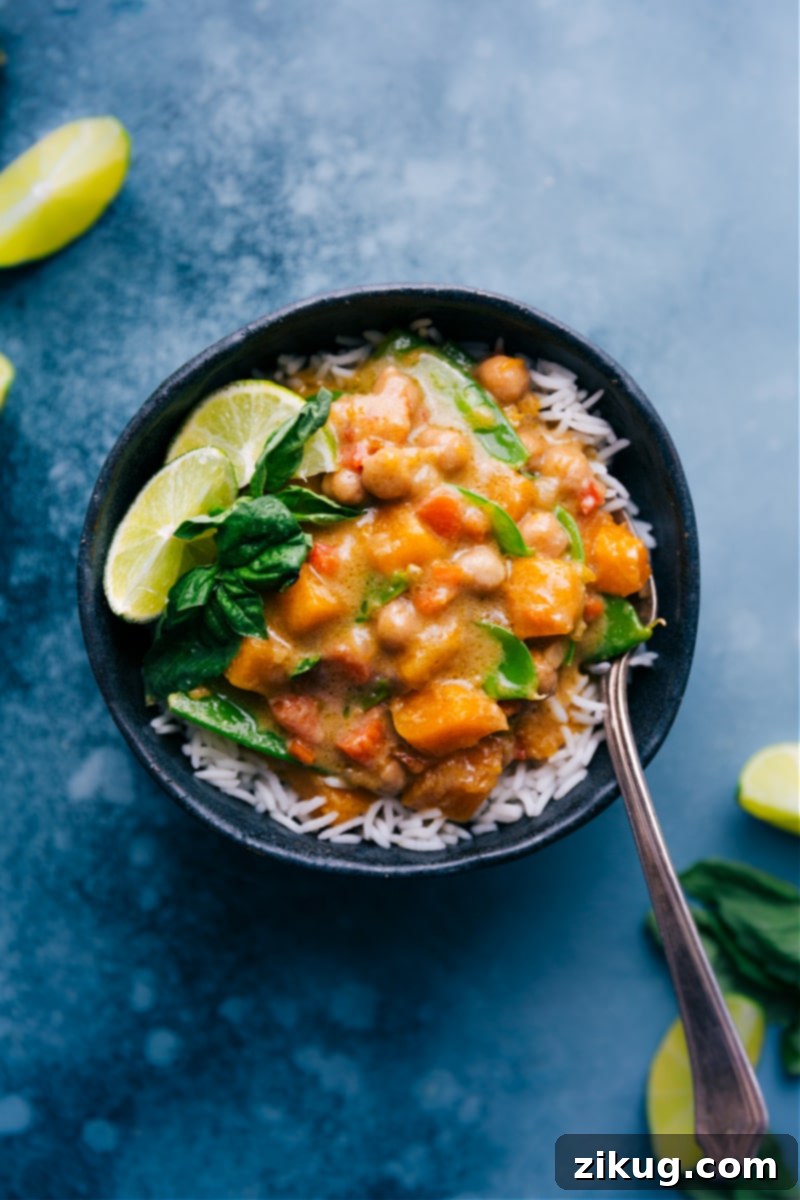
Vegetarian Thai Green Curry is a culinary delight, bursting with the freshest vegetables, potent green curry paste, and rich coconut milk. The addition of tender butternut squash and crisp snow peas transforms it into a comforting and utterly crave-worthy dish that’s perfect for any occasion.
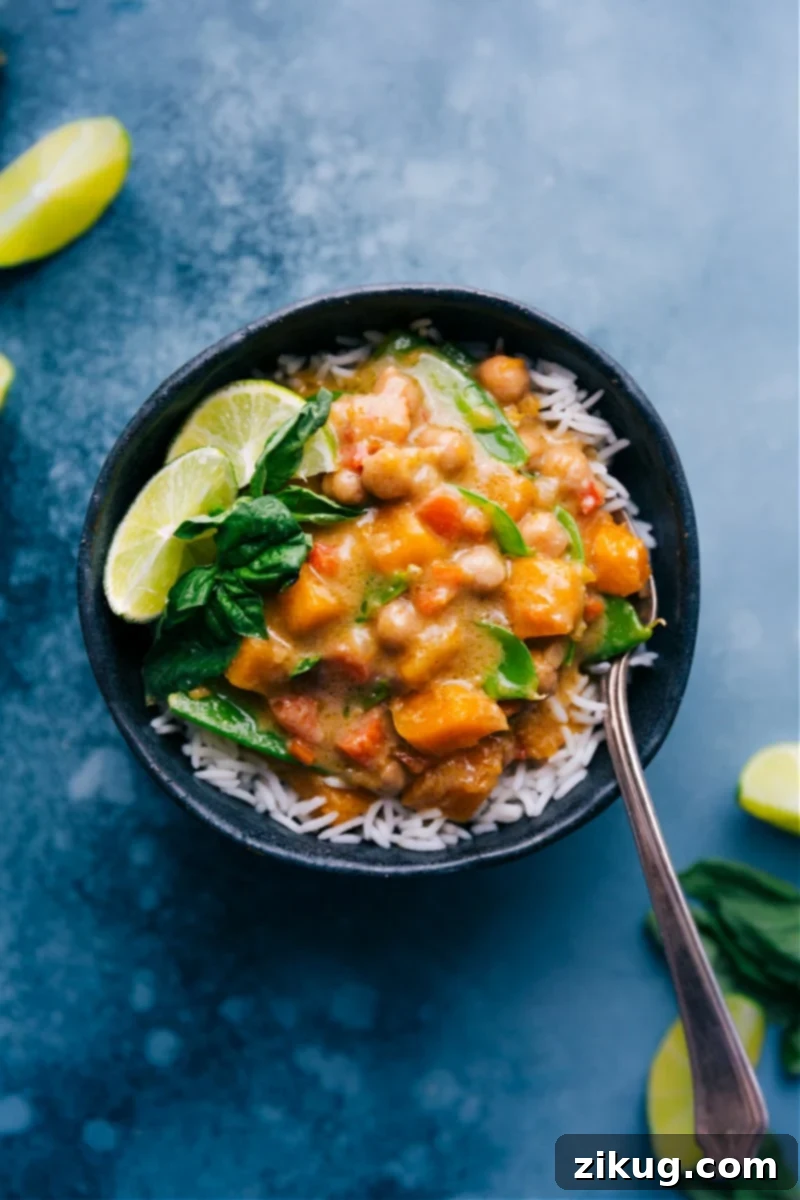

Author’s Note
Experience the Fresh and Flavorful Vegetarian Thai Green Curry!
A few weeks ago, my sister enthusiastically suggested I try a local Thai restaurant she had just discovered. Her specific recommendation? Their vegetarian Thai green curry. I admit, I was initially skeptical. My usual preference leans towards chicken or other meat-based Thai dishes, so a vegetarian option wasn’t typically on my radar.
Despite my reservations, I ordered a selection of dishes for my family, including the vegetarian green curry, not expecting it to be a standout. To my absolute surprise, it was nothing short of incredible! The depth of flavor, the creaminess, and the perfect balance of spice and sweetness captivated my taste buds. I was instantly hooked.
Convinced I needed to recreate this masterpiece at home, I chatted with the server about the key ingredients and techniques. Armed with this newfound knowledge, I embarked on a culinary adventure to replicate those amazing flavors in my own kitchen. The result? A homemade Vegetarian Thai Green Curry that has quickly become one of my absolute favorite dinners. It’s a dish I now enjoy regularly, bringing the vibrant taste of Thailand right to my dining table.
This recipe is not just a meal; it’s an experience. It’s comforting, hearty, and packed with nutrients, making it an ideal choice for a healthy and satisfying dinner. Whether you’re a long-time vegetarian or simply looking to incorporate more plant-based meals into your diet, this Thai Green Curry is guaranteed to impress.

Demystifying Green Curry Paste: The Heart of Thai Cuisine
Green curry paste is arguably the most crucial ingredient in this dish, lending its signature vibrant color and complex flavor profile. Thankfully, it’s now widely available in most well-stocked grocery stores, making authentic Thai cooking more accessible than ever.
- Where to Find It: You’ll typically find green curry paste in the international aisle of your local supermarket, often alongside other Asian ingredients. For an even wider selection and potentially more authentic brands, explore Asian markets in your area. Many brands are also readily available for online purchase.
- Choosing a Vegetarian/Vegan Friendly Brand: It’s essential to check the ingredient list, especially if you have dietary restrictions. Traditional Thai green curry paste often contains fish sauce or shrimp paste, which are not vegetarian or vegan. Look for brands that explicitly state “vegetarian” or “vegan” on the label. Maesri and Thai Kitchen are two popular and reliable brands; just be sure to double-check their specific green curry paste product for non-vegetarian ingredients, as formulations can vary.
- Achieving the Perfect Flavor Balance: The intensity of green curry paste can differ significantly between brands. For a bold and well-balanced flavor in this recipe, we recommend using about 4 tablespoons of Maesri® brand paste or approximately 6 tablespoons of Thai Kitchen® brand paste. The richness of the coconut milk beautifully mellows the spice, creating a harmonious blend. Always start with a slightly smaller amount and add more to taste, especially if you prefer a milder curry or are trying a new brand.
- Understanding the Flavor Profile: Green curry paste typically features a blend of green chilies, lemongrass, galangal, kaffir lime zest, cilantro roots, and spices. These ingredients combine to create a fragrant, spicy, and deeply aromatic foundation for your curry.
Essential Ingredients for Your Vegetarian Thai Green Curry
This recipe calls for a thoughtful selection of fresh ingredients and pantry staples. Here are a few key components worth highlighting, along with helpful suggestions and potential substitutes to ensure your curry is nothing short of spectacular:
- Kaffir Lime Leaves: These distinct leaves impart a uniquely vibrant citrusy and slightly floral aroma that is characteristic of authentic Thai cuisine. While they add an incredible depth of flavor, they can sometimes be challenging to find outside of Asian markets. If fresh kaffir lime leaves are unavailable, you can achieve a similar bright, citrusy note by using the zest and juice of one fresh lime, stirred in right before serving. This will provide a wonderful zesty finish to your curry.
- Fish Sauce Alternative: Traditional Thai curries often rely on fish sauce for its distinctive umami depth. For a vegetarian and vegan-friendly version, substitute with an equal amount of soy sauce (ensure it’s regular, not lite, for full flavor) or tamari (a gluten-free alternative). Both will provide that crucial savory, umami punch without any animal products.
- Thai Basil vs. Regular Basil: Thai basil offers a slightly spicier, more anise-like flavor compared to common sweet basil. It’s the preferred garnish for an authentic touch. However, if Thai basil is not readily available, fresh regular basil makes a perfectly delicious and aromatic substitute, adding a lovely freshness to the finished dish.
- Lemongrass Paste: This ingredient is a fantastic shortcut to infusing your curry with the bright, citrusy, and slightly gingery notes of fresh lemongrass without the hassle of finely mincing the fibrous stalks. Lemongrass paste is usually found in tubes in the produce section of well-stocked grocery stores or at Asian markets. It can also be purchased conveniently online.
- Premium Coconut Milk: The quality of your coconut milk significantly impacts the creaminess and richness of your curry. For the best results, always use full-fat canned coconut milk. Avoid “lite” versions, as they often result in a thinner, less luxurious sauce. I personally favor Imperial Kitchen brand for its rich texture and widespread availability, but any good quality full-fat coconut milk will do. For an extra rich and restaurant-quality curry, this recipe uses two cans. If you prefer a slightly lighter sauce, you can substitute one can of coconut milk with 1 cup of vegetable broth.
- Butternut Squash: This star vegetable adds a wonderful sweetness and creamy texture as it cooks down in the curry. When selecting, look for a squash that feels heavy for its size and has a uniform, unblemished skin. Ensure to cut it into bite-sized pieces (around 1/2 inch) for even cooking.
- Chickpeas: Canned chickpeas provide a fantastic source of plant-based protein and fiber, making this curry even more satisfying. Remember to drain and rinse them thoroughly before adding to the pot.

Smart Shortcuts for Faster Prep
For those busy weeknights when time is of the essence, here’s a fantastic shortcut: opt for a bag of pre-cut butternut squash from the produce section of your grocery store. This simple swap can significantly reduce your prep time. Just be sure to check the size of the pieces; if they are too large, give them a quick chop to ensure they cook evenly and become fork-tender within the recommended cooking time for this delightful Vegetarian Thai Green Curry.
Storage Tips for Leftovers
How to Store Your Vegetarian Thai Green Curry
One of the many wonderful aspects of curry recipes is how beautifully they store. In fact, leftovers often become even more flavorful as the ingredients meld together over time! To enjoy your Vegetarian Thai Green Curry later, simply transfer any remaining curry to an airtight container and store it in the refrigerator for 3-5 days.
When reheating, do so over low heat on the stovetop. You may find the sauce has thickened slightly; if so, add a splash of vegetable broth, vegetable stock, or even water to achieve your desired consistency. Avoid reheating at very high temperatures to prevent the coconut milk from separating.
For longer storage, this curry freezes exceptionally well. Portion the cooled curry into freezer-safe airtight containers or heavy-duty freezer bags and freeze for up to 3 months. When you’re ready to enjoy it, defrost the curry completely in the refrigerator overnight before reheating gently on the stovetop, again adding liquid as needed to thin the sauce.
More Delicious Vegetarian Recipes You’ll Love!
If you’ve fallen in love with this Vegetarian Thai Green Curry, explore more of our fantastic plant-based dishes that are packed with flavor and easy to make. Perfect for satisfying meals any day of the week!
Dinner
Vegetarian Chili Mac
Dinner
Chickpea Curry
Dinner
Vegetarian Gyros
Dinner
Vegetarian Enchiladas

Vegetarian Thai Green Curry
This Vegetarian Thai Green Curry is a delightful blend of aromatic vegetables, tender butternut squash, and crisp snow peas, all simmered in a rich, creamy coconut base. The vibrant green curry paste infuses every bite with authentic Thai flavors. Finish your bowl with fresh lime and basil for an unforgettable meal!
Print Recipe
Equipment
- Large pot
Ingredients
- 2 tablespoons coconut oil
- 1 cup finely diced red onion (from 1 large red onion)
- 1 cup finely diced red bell pepper (from 1 bell pepper)
- 1 cup finely diced carrots (from 3 to 4 large carrots)
- 1 tablespoon minced garlic (about 4 cloves)
- 2 teaspoons minced ginger
- 1 tablespoon lemongrass paste (see Note 1)
- 1 teaspoon salt
- 4 tablespoons green curry paste (up to 6 tablespoons, see Note 2)
- 1-1/2 teaspoons ground coriander
- 3 cups butternut squash, peeled and chopped into 1/2-inch pieces
- 1 (15.5-ounce) can chickpeas, drained and rinsed
- 2 (13.5-ounce) cans full-fat coconut milk (see Note 3)
- 8 Kaffir lime leaves, optional (see Note 4)
- 1-1/2 cups snow peas, trimmed and halved
- 1 to 3 tablespoons light brown sugar (start with less, adjust to taste; see Note 5)
- 1 tablespoon soy sauce (or tamari for gluten-free; see Note 6)
- 1 to 2 tablespoons lime juice, freshly squeezed, to taste
- Fresh Thai basil or regular basil, for garnish
- Cooked rice, optional, for serving
- Warmed roti bread, optional, for serving
Instructions
- Prepare Ingredients: Dice the red onion, carrot, and bell pepper finely (a food processor can speed this up). Mince the garlic and ginger (peel ginger with a spoon or peeler first). Peel and chop the butternut squash into bite-sized pieces (about 1/2-inch cubes) to ensure even cooking. Drain and thoroughly rinse the canned chickpeas.
- Sauté Aromatics and Spices: Heat the coconut oil in a large pot or Dutch oven over medium-high heat. Add the diced onion, carrot, and red bell pepper. Sauté for 7-9 minutes, stirring occasionally, until the onions begin to soften and turn golden. Stir in the minced garlic, minced ginger, and lemongrass paste, ensuring all vegetables are coated. Season with 1 teaspoon of salt. Reduce the heat to medium, then add the green curry paste and ground coriander. Stir frequently for 2-3 minutes until the mixture becomes very fragrant and the spices are well toasted.
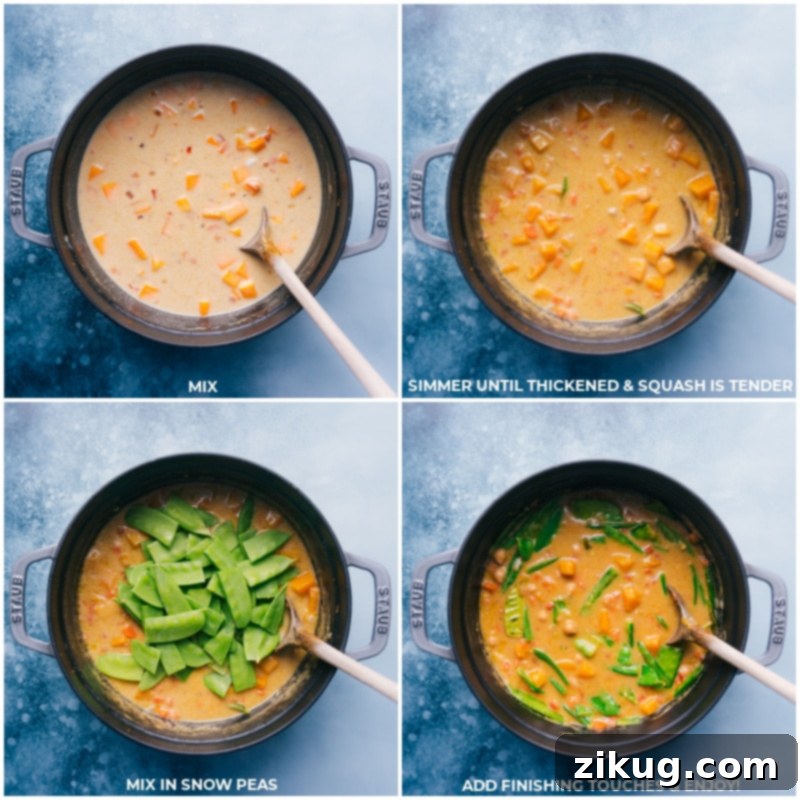
- Add Squash, Chickpeas, and Coconut Milk: Add the drained chickpeas and chopped butternut squash to the pot, stirring to coat them with the aromatic curry paste mixture for about 1 minute. Pour in both cans of full-fat coconut milk. Stir everything together, making sure to scrape the bottom of the pot to prevent sticking and press any squash pieces below the liquid. Bring the curry to a boil, then immediately reduce the heat to a rapid simmer (you should see gentle bubbling around the edges, but not a rolling boil).
- Simmer and Tenderize: Continue to simmer for 18-25 minutes, stirring occasionally. The butternut squash should become fork-tender, and the curry sauce will reduce and thicken. For me, this usually takes around 20-22 minutes. If the sauce is reducing too quickly before the squash is tender, add a splash of vegetable broth, vegetable stock, or water, and slightly lower the heat. Conversely, if the squash isn’t tenderizing and the sauce isn’t thickening, increase the heat slightly.
- Add Snow Peas and Final Seasonings: Once the butternut squash is tender and the sauce is perfectly rich, add the trimmed and halved snow peas. Cook for an additional 2-3 minutes, or until the snow peas are tender-crisp and bright green.
- Adjust Flavor: Stir in the light brown sugar (start with 1 tablespoon and add more to taste), soy sauce, and 1 to 2 tablespoons of fresh lime juice. This is your chance to adjust the flavors to your personal preference: add more soy sauce for extra umami, more lime for a brighter, fresher taste, or more sugar if you find it too spicy. Taste and add an additional 1/4 to 1/2 teaspoon of salt if needed. The flavors should be vibrant and well-balanced.
- Serve and Enjoy: Remove the curry from the heat. Ladle generous portions into individual bowls. Garnish each serving with fresh Thai basil or regular basil leaves. I also love to serve fresh lime wedges on the side for an extra burst of citrus. This curry pairs wonderfully over steamed cooked rice and with warm roti bread for dipping. Enjoy your homemade Vegetarian Thai Green Curry!
Recipe Notes
Note 1: Lemongrass Paste – Flavor Enhancer
While fresh lemongrass can be finicky to prepare, lemongrass paste offers a convenient way to infuse your curry with its characteristic bright, citrusy, and slightly gingery flavor. You can often find it in the refrigerated produce section of larger supermarkets, or at your local Asian market. For ultimate convenience, I frequently purchase lemongrass paste online.
Note 2: Green Curry Paste – Brand and Quantity Guide
Green curry paste is the foundational flavor of this entire dish. It’s usually located in the international foods aisle of your grocery store, or in Asian specialty stores. My personal favorite brand is Maesri, but I’ve also successfully tested this recipe with Thai Kitchen brand. Be aware that the intensity and spice level of curry pastes vary significantly by brand. For Maesri, about 4 tablespoons typically yields a robust flavor, while for Thai Kitchen, I use 5 or 6 tablespoons. These amounts ensure a bold flavor that is beautifully softened by the sweetness of the coconut milk, preventing excessive heat. Always start with a slightly smaller amount than recommended, especially if you’re unsure of the paste’s potency or prefer a milder curry, as you can always add more to taste.
Note 3: Choosing the Right Coconut Milk
This recipe is designed for an ultra-rich, thick, and creamy curry, reminiscent of those served in authentic Thai restaurants, which is why it calls for two cans of full-fat coconut milk. If you prefer a slightly lighter consistency or wish to reduce the richness, you can replace one can of coconut milk with 1 cup of vegetable broth (or chicken stock if you’re not strictly vegetarian). For best flavor and thickness, always opt for full-fat coconut milk. “Lite” coconut milk contains more water, resulting in a less creamy texture and diluted flavor that won’t achieve the desired consistency in this recipe. I find Imperial Kitchen® brand to be excellent and widely available.
Note 4: Kaffir Lime Leaves – Authentic Aroma
Kaffir lime leaves are a powerhouse of vibrant, intense citrus flavor that truly elevates a Thai curry. They can be elusive in standard grocery stores, typically found only in Asian markets. If you’re lucky enough to find them, simply crumple a few (8 leaves, as specified in the ingredient list) and add them to the pot when you pour in the coconut milk, removing them before serving. Their flavor infuses beautifully into the sauce. A great tip is to stock up when you find them, as they freeze wonderfully and retain their aroma. If kaffir lime leaves are unavailable, you can substitute by zesting and juicing a fresh lime, stirring it into the curry just before serving for a bright, citrusy finish.
Note 5: Adjusting Sweetness with Brown Sugar
Light brown sugar serves multiple purposes in this curry: it balances the spicy notes from the curry paste, enhances the overall flavor profile, and contributes to the authentic Thai taste. The quantity you use is entirely a matter of personal preference. I recommend starting with 1 tablespoon and tasting the curry before adding more. Some people might prefer a sweeter curry, while others might find none is necessary depending on the sweetness of the butternut squash and their spice tolerance.
Note 6: Soy Sauce for Umami Depth (Vegetarian Alternative to Fish Sauce)
Fish sauce is a traditional finishing touch in Thai curries, providing a crucial savory, umami flavor. For this vegetarian version, we use regular (not lite) soy sauce as an excellent plant-based substitute. If you’re not vegetarian, you can certainly use fish sauce instead of soy sauce to achieve that classic Thai taste. Soy sauce contributes a final layer of seasoning that truly ties all the complex flavors together.
Storage: Meal Prep Dream
As mentioned, this curry is a meal prep superstar! Leftovers are incredibly delicious and tend to deepen in flavor after a day or two. Store your cooled Vegetarian Thai Green Curry in an airtight container in the refrigerator for 3-5 days. To reheat, warm gently over low heat on the stovetop, adding a splash of vegetable broth/stock (or water) if the sauce has become too thick. For longer preservation, freeze leftovers in an airtight container for up to 3 months. Always defrost fully in the fridge before reheating on the stove to maintain quality.
Nutrition Information
Serving: 1 serving | Calories: 815kcal | Carbohydrates: 81g | Protein: 18g | Fat: 52g | Saturated Fat: 43g | Polyunsaturated Fat: 2g | Monounsaturated Fat: 3g | Sodium: 416mg | Potassium: 2024mg | Fiber: 18g | Sugar: 23g | Vitamin A: 51186IU | Vitamin C: 72mg | Calcium: 274mg | Iron: 12mg
Nutrition information is automatically calculated and should only be used as an approximation.
Enjoyed this recipe? Share your thoughts and questions!
Leave a comment below!