

Indulge in the bright, refreshing taste of this incredible **Iced Lemon Bread Recipe**! This loaf is an absolute triumph – supremely moist, bursting with vibrant citrus flavor, and boasting a delightfully soft texture akin to a classic pound cake. The secret to its irresistible richness and tenderness? A generous addition of creamy Greek yogurt to the batter!


Author’s Note
This Homemade Lemon Loaf Vanishes in a Day (Trust Me)!
There’s something truly magical about a slice of perfectly iced lemon bread. For years, the lemon loaf at Starbucks has been a treasured treat in our family, especially when the weather turns chilly and we gather for a special outing. My kiddos, without fail, always beg for a slice of that deliciously tangy and sweet loaf, and I honestly can’t blame them – it’s absolutely delicious.
However, frequent trips for a single slice can add up, and I longed for a way to enjoy that bright, citrusy goodness more often, right in the comfort of our home. So, I embarked on a mission to create my own version – one that captured the essence of their beloved Starbucks favorite, but with an even more pronounced homemade touch. I wanted it to be supremely moist, intensely lemony, and have that delightful pound-cake-like density.
After several attempts and tweaks, this recipe was born, and it quickly became an instant hit. The initial goal was just to satisfy a craving, but it turned into something much more. Now, a fresh loaf of this iced lemon bread barely lasts a couple of days before it completely vanishes, and the requests for “more lemon bread, please!” begin almost immediately. It’s a testament to how truly irresistible this recipe is, proving that homemade always tastes best. Prepare yourself – this loaf will disappear faster than you can say “lemon zest!”
Crafting the Perfect Iced Lemon Bread: Simple Steps for Success
This extraordinary lemon bread recipe is surprisingly simple to make, requiring no fancy equipment or a stand mixer. All you need are a couple of bowls, a whisk, and a handful of quality ingredients to achieve a quick bread that rivals any bakery offering. The secret to its intense lemon flavor and signature dense, yet tender, pound-cake-like texture lies in how we approach our key citrus components and our star moistening agent.
- Maximize Citrus Flavor with Fresh Lemon Zest: The true essence of a bright lemon bread comes directly from fresh lemon zest. The zest contains concentrated oils that deliver an unparalleled burst of natural, aromatic lemon flavor without adding any extra liquid that could potentially thin the batter or alter the bread’s perfect consistency. Always remember to zest your lemons *before* juicing them! For this recipe, we’ll reserve the fresh lemon juice specifically for crafting the tangy, sweet glaze that beautifully finishes our loaf. When zesting, use a microplane or fine grater and only remove the bright yellow outer layer, carefully avoiding the white pith underneath, as it can impart a bitter taste.
- Amplify Aroma with Pure Lemon Extract: To further enhance and deepen that irresistible lemon flavor, we incorporate pure lemon extract. This powerful ingredient is not to be confused with lemon juice; it’s a concentrated flavor enhancer, much like vanilla extract. Lemon extract delivers a potent punch of citrus without adding moisture to the batter, which is crucial for maintaining the bread’s ideal texture. This ensures every single bite is infused with a rich, aromatic lemon taste. For the best performance and authentic flavor, I highly recommend using high-quality, pure lemon extracts such as McCormick® or Watkins®. You’ll typically find lemon extract alongside other baking extracts and spices in your local grocery store.
- The Secret to Supreme Moisture: Greek Yogurt: One of the key factors contributing to this bread’s incredibly moist crumb and delightful pound-cake-like texture is the inclusion of Greek yogurt. Its rich, creamy consistency and subtle tang work wonders in quick breads. The acidity in the yogurt reacts with the baking powder, aiding in leavening and contributing to a tender, fine crumb. Additionally, the fat content in full-fat Greek yogurt adds a luxurious richness, ensuring the loaf remains moist and flavorful for days. This ingredient truly elevates the bread from good to extraordinary, providing an unparalleled softness and keeping it from drying out.
Baking Essentials: Choosing and Preparing Your Loaf Pan
The success of any quick bread often hinges on using the correct bakeware, and this Iced Lemon Bread is no exception. It is absolutely crucial to use a **9×5-inch (1-pound) loaf pan** for this recipe. Deviating from this size can significantly affect both the baking time and the final texture of your bread. A smaller pan might cause the batter to overflow or result in uneven baking, leading to a denser center and overbaked edges. Conversely, a larger pan could yield a flatter, potentially drier loaf that doesn’t rise as beautifully.
For optimal results and effortless removal, ensure your pan is properly prepared. Generously grease the interior with cooking spray or butter, then lightly dust it with all-purpose flour. This creates a non-stick barrier that prevents sticking. As an alternative, you can line the pan with parchment paper, allowing an overhang on the longer sides. This creates “handles” that make it incredibly easy to lift the baked loaf out of the pan once it’s cooled slightly. Here’s my favorite loaf pan, which I use regularly and highly recommend for perfect quick breads every time!
Essential Baking Tips for a Flawless Lemon Loaf
Achieving a perfectly moist and tender Iced Lemon Bread is simple when you follow a few key baking principles. These tips will help ensure your loaf turns out beautifully every single time, from the golden-brown crust to the zesty, delicate interior.
- Room Temperature Ingredients are Key: This is arguably one of the most important rules in baking, especially for quick breads. Ensure that your eggs and Greek yogurt are at room temperature before you begin mixing. Room temperature ingredients emulsify much more effectively, meaning they blend together smoothly and evenly with the oil and sugar. This creates a homogeneous batter that traps air more efficiently, resulting in a lighter, more uniform crumb structure in your finished bread. To achieve this, simply remove them from the refrigerator about 45 to 60 minutes before you plan to start your baking process.
- Master the Art of Mixing (Don’t Overmix!): Once you’ve combined your wet ingredients and then added the dry ingredients, mix just until no streaks of flour are visible. It’s perfectly fine if there are a few small lumps in the batter – this is far preferable to overmixing. Overworking the batter develops the gluten in the flour, which can lead to a tough, rubbery, and dry texture in your final lemon bread, rather than the tender, melt-in-your-mouth crumb we’re striving for. A gentle hand makes all the difference!
- The Reliable Toothpick Test: To confirm that your lemon bread is thoroughly baked without being dry, the toothpick test is your best friend. Insert a long wooden toothpick into the very center of the loaf. When you pull it out, it should come out clean, or with only a few moist crumbs clinging to it. If you see wet batter, continue baking in 5-minute increments until the test is successful. Remember, every oven is different, so baking times can vary slightly.
- Patience is a Virtue: Don’t Rush the Cooling: The cooling process is just as vital as the baking itself. Once removed from the oven, allow your lemon bread to cool in the pan for about 15 minutes. This allows the internal structure to set and the bread to continue cooking slightly from its residual heat, preventing it from collapsing. After this initial cooling, carefully invert the loaf onto a wire cooling rack to cool completely for at least an hour, or until it reaches room temperature. Cooling on a wire rack ensures air circulates around all sides, preventing a soggy bottom. Rushing this step and slicing the bread while it’s still warm can lead to a gummy texture and a loaf that crumbles easily. The bread is still “baking” during this phase, so let it rest for optimal results before adding the glaze and slicing.
Storing Your Delicious Iced Lemon Bread for Lasting Freshness
To ensure every slice of your homemade Iced Lemon Bread remains as delectable as the first, proper storage is essential. Here’s a comprehensive guide to keeping your loaf fresh and flavorful:
- Room Temperature Storage: This lemon bread is wonderfully moist and will maintain its fresh quality for approximately **2–3 days** when stored at room temperature. To prevent it from drying out, wrap the entire loaf tightly in plastic wrap, aluminum foil, or store individual slices in an airtight container. Beyond the three-day mark, the bread tends to become overly moist and may start to lose its ideal pound-cake-like texture.
- Refrigerated Storage: If you plan to savor your lemon bread for a longer duration, refrigeration is an excellent choice. Tightly wrap individual slices in plastic wrap or foil, then place them inside an airtight container. This method effectively preserves the bread’s quality for up to **1 week**. For the best eating experience, allow refrigerated slices to come to room temperature or gently warm them in the microwave or oven before serving to restore their softness and flavor.
-
Freezing for Long-Term Freshness: This lemon bread freezes exceptionally well, making it perfect for preparing ahead or enjoying at a later date. For optimal freezing results, it’s best to freeze the loaf unglazed and uncut. First, wrap the completely cooled loaf securely in several layers of plastic wrap, ensuring no air pockets. Follow this with a layer of heavy-duty aluminum foil, or place the wrapped loaf inside a freezer-safe bag. Label the package with the date of freezing. The bread can be stored in the freezer for up to **3 months**.
To thaw, transfer the frozen loaf to the refrigerator overnight, allowing it to defrost gradually. Alternatively, you can let it sit at room temperature for a few hours. Once thawed, you can then prepare the lemon glaze and apply it just before serving. Freezing individual slices is also a convenient option; simply wrap each slice thoroughly before freezing.
Delightful Variations & Serving Ideas for Your Homemade Lemon Loaf
While this Iced Lemon Bread is undeniably delicious on its own, its versatile base invites creative experimentation. Here are some fantastic ideas to customize your loaf and inspire delightful serving experiences, whether you’re hosting brunch or simply enjoying a quiet moment.
Creative Variations to Explore:
- Classic Lemon Poppy Seed Bread: For a timeless and textural twist, gently fold in 1 to 2 tablespoons of poppy seeds into your dry ingredients before combining with the wet. The tiny seeds add a subtle crunch and a beautiful visual appeal that complements the lemon flavor perfectly.
- Sweet Berry Lemon Loaf: Introduce a delightful tartness by gently folding in 1/2 to 1 cup of fresh blueberries or raspberries into the batter just before pouring it into the pan. To prevent the berries from sinking to the bottom, lightly toss them with a tablespoon of flour beforehand. The burst of fruit is a wonderful contrast to the citrus.
- Double Citrus Delight: Don’t limit yourself to just lemon! Experiment by substituting half of the lemon zest with orange or lime zest for a nuanced and intriguing flavor profile. A combination of lemon and orange is particularly harmonious and offers a slightly sweeter, brighter note.
- Add a Nutty Crunch: For an extra layer of texture and a rich undertone, fold in 1/2 cup of finely chopped pecans or walnuts into the batter. The nuts toast slightly during baking, enhancing their flavor.
Perfect Serving Suggestions:
- An Elegant Breakfast or Brunch Item: Serve generous slices of this Iced Lemon Bread alongside your morning coffee, a refreshing cup of tea, or a mimosa for a sophisticated start to your day. It’s also a truly stellar addition to any brunch spread, impressing guests with its vibrant flavor.
- The Ideal Afternoon Treat: A single slice of this moist and zesty lemon bread makes for a wonderfully refreshing and indulgent pick-me-up during the afternoon. Pair it with an iced tea or a simple glass of water with a lemon wedge.
- A Simple Yet Satisfying Dessert: While delightful on its own, you can elevate this bread into a simple yet elegant dessert. Serve slices with a dollop of freshly whipped cream, a scoop of vanilla ice cream, or a handful of fresh mixed berries for an extra special touch.
- Charming Garnishes: For a professional presentation, garnish each slice or the whole loaf with a sprinkle of extra fresh lemon zest, a very thin slice of fresh lemon, or a few delicate mint leaves. These small additions enhance both the visual appeal and the aromatic experience.
More Favorite Lemon Recipes You’ll Absolutely Adore:
Desserts
The BEST Lemon Bars Recipe
Desserts
Zesty Lemon Curd Cookies
Desserts
Classic Lemon Pie Recipe
Cookies
Irresistible Lemon Poppy Seed Cookies

Classic Iced Lemon Bread Recipe
By Chelsea Lords
This homemade Iced Lemon Bread is an absolute delight! It’s incredibly moist, bursting with bright citrus flavor, and perfectly sweet. Featuring a dense, pound-cake-like texture thanks to the addition of yogurt, this loaf is soft, rich, and utterly irresistible – truly a recipe worth making again and again.
Prep Time: 20 minutes
Cook Time: 1 hour
Cooling Time: 1 hour 15 minutes
Total Time: 2 hours 35 minutes
Servings: 10 slices (1 loaf)
Print Recipe
Equipment
- 9 x 5-inch bread pan (see note 1 in Recipe Notes)
Ingredients
Wet Ingredients
- 1/2 cup vegetable oil or canola oil
- 1 cup granulated sugar
- 1 cup Greek yogurt (honey-vanilla flavored recommended; or use full-fat sour cream, at room temperature)
- 2 large eggs (at room temperature)
- 2 large lemons (including lemon juice for glaze; see note 2)
- 2 tablespoons lemon extract (pure extract recommended; see note 3)
Dry Ingredients
- 1-3/4 cups all-purpose flour
- 2 teaspoons baking powder
- 1 teaspoon salt
Topping and Glaze
- 2 tablespoons granulated sugar (for topping)
- 1/2 cup powdered sugar
Instructions
- For optimal mixing and a smooth batter, it’s essential that all your wet ingredients are at room temperature. Take them out of the refrigerator approximately 45 minutes to an hour before you plan to start baking. During this time, prepare your 9×5-inch loaf pan by thoroughly greasing it and lightly dusting it with flour, or by lining it with parchment paper for easy removal. Preheat your oven to 350°F (175°C).
- In a large mixing bowl, combine the vegetable oil, 1 cup of granulated sugar, Greek yogurt, and the room temperature eggs. Zest both lemons directly into this bowl, ensuring you only get the vibrant yellow peel and avoid the bitter white pith. Whisk all these wet ingredients together vigorously until the mixture is completely smooth and well incorporated.
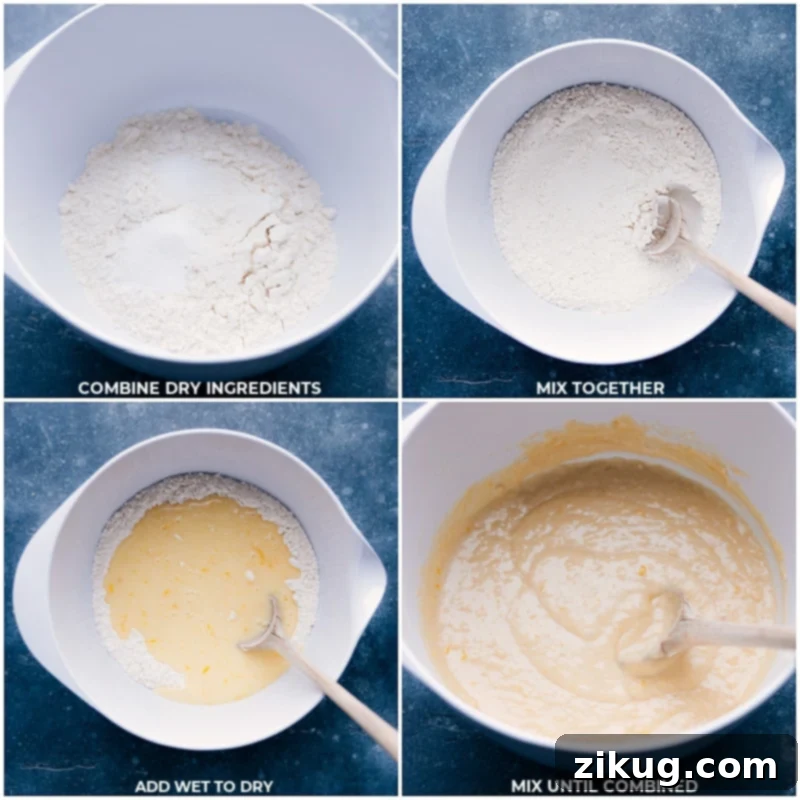
- In a separate large bowl, combine the all-purpose flour, baking powder, and salt. Whisk these dry ingredients together thoroughly to ensure even distribution of the leavening agents. Create a small well in the center of the dry mixture.
- Pour the whisked wet ingredients directly into the well of the dry ingredients. Using a whisk or a spatula, gently mix the ingredients together just until a smooth batter forms. Be careful not to overmix; overworking the batter can lead to a tough bread. A few small lumps are perfectly acceptable.
- Carefully pour the prepared batter into your greased and floured (or parchment-lined) loaf pan. Use a spatula to gently smooth the top of the batter. Evenly sprinkle the remaining 2 tablespoons of granulated sugar over the top of the batter (do not press it down). Bake for 60–75 minutes, or until a wooden toothpick inserted into the very center of the bread comes out clean or with only moist crumbs attached.
- Once baked, remove the loaf from the oven and allow it to cool in the pan for 15 minutes. This crucial resting period allows the bread to firm up and complete its internal cooking. After 15 minutes, carefully invert the loaf onto a wire cooling rack to cool completely for at least another hour. Resist the urge to slice early, as the bread is still setting and will be prone to crumbling if cut too soon.
- While the bread cools, prepare the lemon glaze. In a small bowl, combine the 1/2 cup of powdered sugar with a tiny pinch of salt. Slowly whisk in 1 tablespoon of fresh lemon juice, adding more lemon juice in very small increments (1/2 teaspoon at a time) if necessary, until a thick but pourable glaze consistency is achieved. For easy application, transfer the glaze to a small plastic bag, snip off one tiny corner, and pipe the glaze decoratively over the *completely cooled* lemon bread. Allow the glaze to set before serving.
Recipe Notes
- Note 1: The Importance of Pan Size: For guaranteed success, it is imperative to use a 9×5-inch (1-pound) loaf pan. If you use an 8×4-inch pan, you should only fill it approximately 75% full with batter and adjust the baking time accordingly, as it will be shorter. To prevent sticking, generously grease your bread pan with cooking spray or shortening, then lightly dust it with flour. Alternatively, for even easier removal, you can line the pan with parchment paper, leaving an overhang on the sides.
- Note 2: Lemon Zest vs. Lemon Juice: This recipe calls for a substantial amount of lemon zest, which is the primary source of the bread’s intense lemon flavor. The lemon juice, on the other hand, is specifically reserved for making the bright and tangy glaze. When zesting your lemons, be sure to use a microplane or fine grater and only remove the vibrant yellow outer layer, carefully avoiding the white pith underneath, as it contains bitter compounds that can negatively impact the taste of your bread.
- Note 3: The Role of Lemon Extract: It is crucial not to confuse lemon extract with lemon juice. Lemon extract acts as a powerful flavor enhancer, much like vanilla extract, designed to imbue your baked goods with a concentrated, intense lemon flavor. Its key advantage is that it adds significant flavor without altering the liquid balance or consistency of the bread batter, which would happen if too much lemon juice were used. For maximum lemon impact and a perfectly textured loaf, pure lemon extract is highly recommended. Brands like McCormick and Watkins have been tested and perform comparably well in this recipe. You can typically locate lemon extract in the baking aisle of most grocery stores, usually near other extracts and spices.
- Storage: This delicious Iced Lemon Bread is at its peak freshness and flavor within 1–3 days of being baked, provided it is stored at room temperature, tightly wrapped. After this period, the bread tends to become overly moist and may start to lose its ideal texture. For extended freshness, individual slices can be tightly wrapped and stored in an airtight container in the refrigerator for up to one week. For longer-term storage, the unglazed, uncut loaf freezes beautifully for up to 3 months when properly wrapped in plastic wrap and then foil. Thaw in the refrigerator overnight before glazing and serving.
Nutrition Information (Approximate per serving)
Serving: 1 slice | Calories: 251kcal | Carbohydrates: 34g | Protein: 4g | Fat: 12g | Saturated Fat: 2g | Polyunsaturated Fat: 6g | Monounsaturated Fat: 3g | Trans Fat: 0.1g | Cholesterol: 38mg | Sodium: 340mg | Potassium: 77mg | Fiber: 1g | Sugar: 30g | Vitamin A: 60IU | Vitamin C: 12mg | Calcium: 81mg | Iron: 1mg
Nutrition information is automatically calculated and should be used as an approximation.
Like this recipe? Leave a comment below or check out our FAQs!
Lemon Bread Recipe FAQs: Troubleshooting & Expert Tips
Encountering a sunken lemon bread can be frustrating, but several common factors might be the cause:
- Too Much Sugar: An excessive amount of sugar can make the batter too heavy and overly moist, hindering its ability to hold its structure as it bakes and cools.
- Insufficient or Expired Leavening Agent: Baking powder is crucial for giving the bread its lift. Ensure your baking powder is fresh and measured accurately. Expired leavening agents lose their potency and won’t provide the necessary rise, leading to a flat or sunken loaf.
- Underbaking: If the bread isn’t baked long enough, its internal structure won’t have fully set. When removed from the oven, it can collapse due to the lack of structural integrity. Always use the toothpick test to confirm doneness.
- Ingredients Not at Room Temperature: Cold ingredients, especially eggs and yogurt, do not emulsify as well with other ingredients. This can lead to a less cohesive batter that doesn’t rise properly or maintain its structure.
- Opening the Oven Door Too Early: A sudden drop in temperature, often caused by opening the oven door during the first two-thirds of the baking cycle, can cause delicate baked goods like quick breads to fall. Resist the urge to peek too often!
A dense lemon bread is a common baking challenge that can stem from a few specific issues:
- Expired Leavening Agents: As with sinking, old baking powder is a frequent culprit for density. Always check the expiration date and ensure your leavening is fresh for maximum lift.
- Incorrect Flour Measurement: Too much flour is a leading cause of dense baked goods. Flour should always be spooned lightly into a measuring cup and then leveled off with a straight edge, rather than scooped directly from the bag, which can pack it down and add excess flour.
- Overmixing the Batter: This is perhaps the most common reason for a dense, tough bread. Overworking the batter overdevelops the gluten in the flour, resulting in a chewy, heavy texture instead of the desired tender, soft crumb. Mix only until the dry ingredients are just incorporated into the wet, with no visible streaks of flour.
- Waiting Too Long to Bake the Batter: Once the wet and dry ingredients are combined, the leavening agents begin to react. If the batter sits for an extended period before going into the oven, these agents can lose their effectiveness, leading to a flatter, denser loaf. It’s best to bake the batter immediately after mixing.
- Cold Ingredients: Similar to causing the bread to fall, cold eggs and yogurt can prevent proper emulsification, leading to a less airy and thus denser crumb.
While lemon juice is wonderful for adding tartness, it is not a suitable direct substitute for lemon extract in this recipe, especially when it comes to flavor intensity and maintaining batter consistency. Lemon extract is a concentrated flavor agent that delivers a powerful lemon punch without adding significant liquid. If you were to use extra lemon juice in place of the extract, you would introduce too much moisture into the batter, which would likely throw off the delicate balance of the recipe. This could result in a soggy, overly dense, or even crumbly bread. For the best and most authentic lemon flavor and optimal texture, it is highly recommended to use lemon extract as specified. If you must omit it, understand that the bread will have a much milder lemon flavor.
Yes, you can generally adapt this recipe to be gluten-free with careful substitution. The most effective approach is to replace the all-purpose flour with a high-quality 1:1 gluten-free baking flour blend that is specifically designed for quick breads and usually contains xanthan gum. Ensure that the blend you choose is suitable for this type of baking. While the texture might have slight variations compared to the traditional version, it should still yield a delicious and moist lemon loaf. Follow the recipe instructions closely, but be mindful that gluten-free flours can sometimes require minor adjustments in baking time or liquid content depending on the specific blend.
Absolutely! Full-fat sour cream is an excellent and highly recommended substitute for Greek yogurt in this Iced Lemon Bread recipe. Both ingredients share similar properties that are beneficial for quick breads: they provide rich moisture, a lovely tang, and contribute significantly to a tender, pound-cake-like crumb. When making the substitution, just ensure that the sour cream, like the yogurt, is at room temperature. This will allow it to blend seamlessly and evenly with the other wet ingredients, ensuring a smooth and perfectly textured batter.