
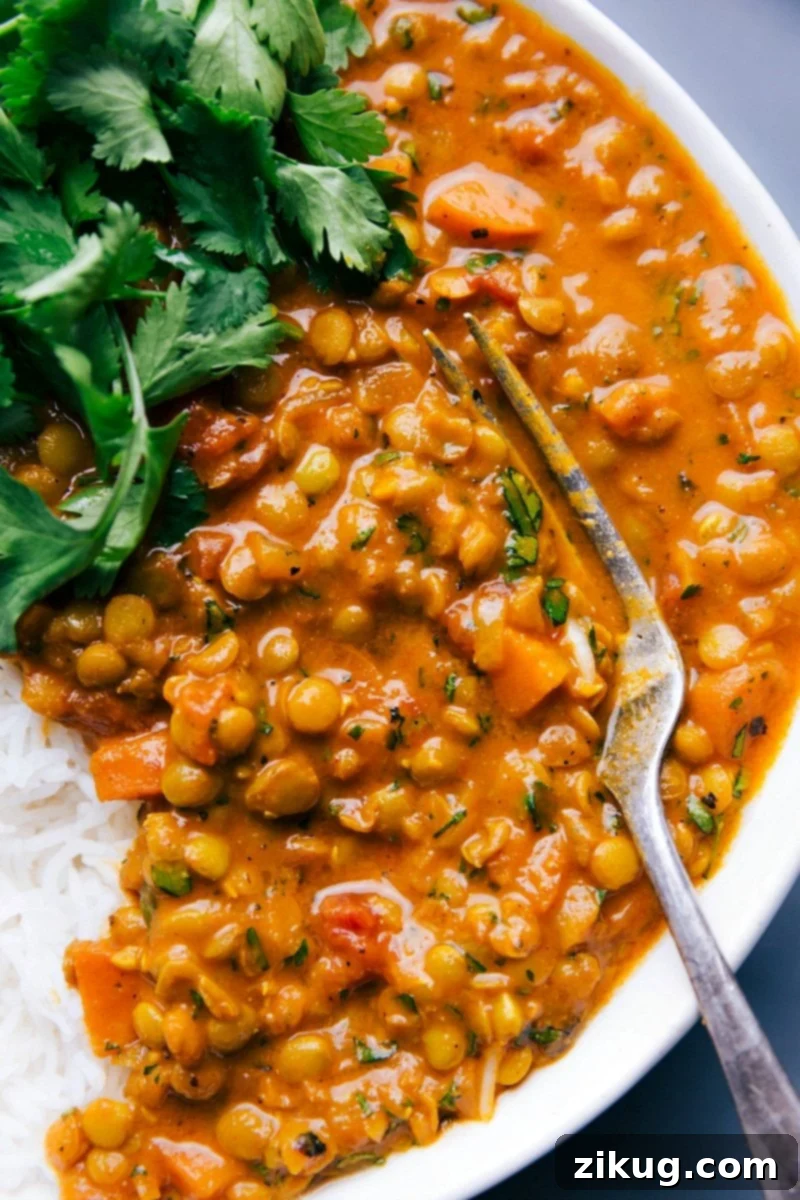
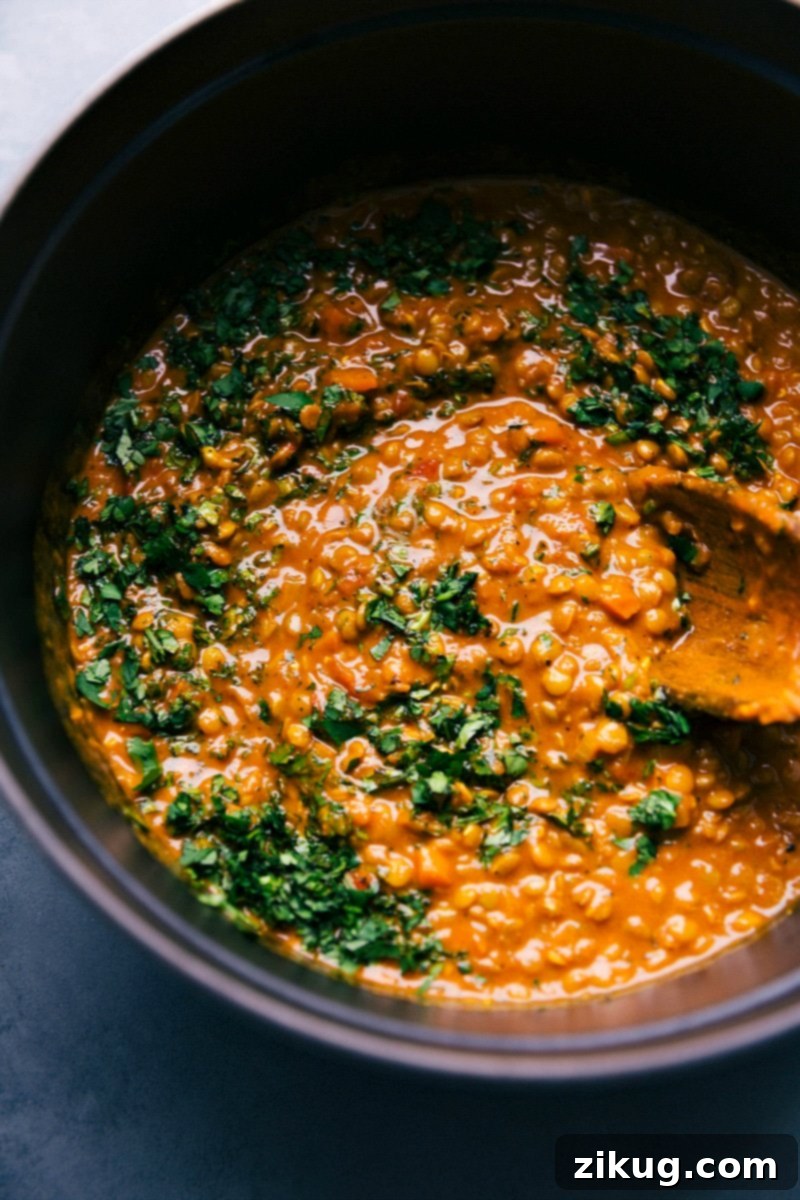
This **Lentil Curry Recipe** offers a delightful journey for your taste buds, featuring perfectly seasoned vegetables and tender lentils, all slow-simmered in a rich base of fire-roasted crushed tomatoes and luscious, creamy coconut milk. It’s a truly comforting and satisfying dish that perfectly blends warmth and vibrant flavors.
If you love wholesome, plant-based meals, be sure to explore our other cherished vegetarian curry creations like our irresistible Sweet Potato Curry or the versatile Vegetable Curry, both perfect for weeknight dinners or special occasions.
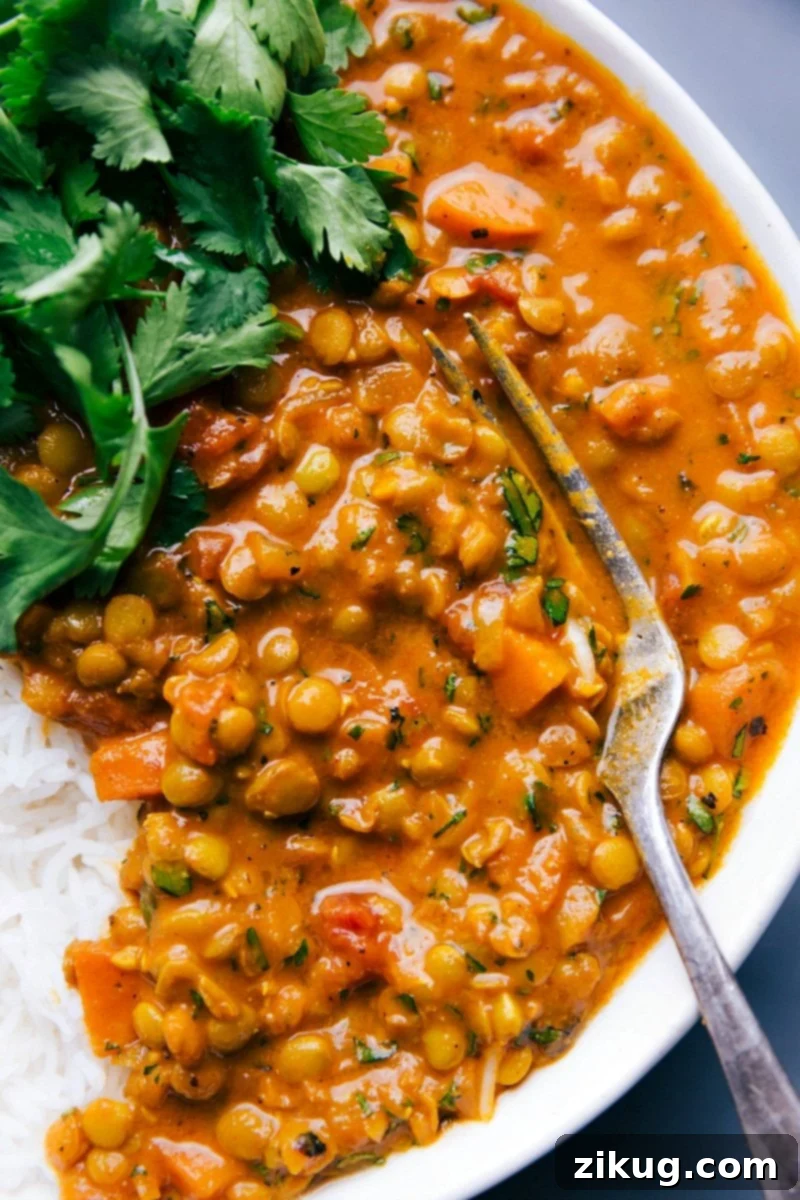
Discover the Best Lentil Curry Recipe: A Hearty & Flavorful Vegetarian Delight
Lentils have become a true favorite in my kitchen lately, especially after the rave reviews for my homemade Lentil Soup. My family simply can’t get enough of their hearty texture and nutritional benefits! With a pantry well-stocked with these versatile legumes, I was inspired to create something new and equally comforting: this incredible **Lentil Curry**. This recipe has quickly become a household staple, proving that simple ingredients can yield extraordinary flavor.
While this **easy lentil curry** might appear deceptively simple, don’t let its humble presentation fool you. Each spoonful is an explosion of aromatic spices, tender lentils, and a creamy, rich sauce that delivers ultimate comfort. The carefully selected blend of warm spices infuses the dish with depth, while the lentils provide a satisfying, hearty bite. The addition of coconut milk ensures a velvety, luxurious texture that perfectly balances the robust flavors. Beyond its delightful taste, this **vegetarian lentil curry** is incredibly budget-friendly, making it an ideal choice for healthy, economical meals any day of the week.
Essential Ingredients for a Perfect Lentil Curry
Crafting the perfect **creamy lentil curry** begins with fresh, high-quality ingredients. Each component plays a crucial role in building the layered flavors that make this dish so irresistible:
- Butter or Coconut Oil: The foundation of our flavor. Butter adds a rich, nutty taste, while coconut oil keeps the recipe vegan and enhances the curry’s tropical notes. Either option helps sauté the aromatics beautifully.
- Yellow Onion & Carrot: These vegetables form the aromatic base of the curry. Finely dicing them ensures they soften completely and blend seamlessly into the sauce, contributing a subtle sweetness and texture without being chunky.
- Garlic & Ginger: Freshly minced garlic and ginger are non-negotiable for an authentic and vibrant curry flavor. Their pungent, zesty notes elevate the entire dish, though pre-minced versions can be used for convenience.
- Red Curry Paste: This paste is a powerhouse of flavor, bringing a complex blend of chilies, herbs, and spices. Be mindful that spice levels vary significantly between brands. If you’re sensitive to heat, start with a smaller amount and adjust to your preference. (We often recommend brands like Thai Kitchen, which is typically mild and vegetarian-friendly.)
- Aromatic Spices: A blend of yellow curry powder, garam masala, paprika, ground coriander, cumin, and turmeric creates the signature warmth and depth of this **homemade lentil curry**. Toasting these spices briefly before adding liquids unlocks their full aromatic potential, making the curry truly fragrant.
- Fire-Roasted Crushed Tomatoes: Using fire-roasted tomatoes adds a smoky depth and sweetness that regular crushed tomatoes simply can’t match, significantly enhancing the overall flavor profile. However, conventional crushed tomatoes are a perfectly acceptable substitute.
- Granulated Sugar: A touch of sugar helps to balance the acidity of the tomatoes and round out the flavors. You might skip this if your tomatoes are naturally very sweet.
- Lentils (Green or Brown): The star of our **plant-based curry**! Green or brown lentils are ideal for this recipe as they hold their shape well during simmering. Soaking them for 15-20 minutes beforehand promotes more even cooking and reduces the overall cooking time, ensuring tender, not mushy, lentils.
- Coconut Milk: This is key to achieving that creamy, luscious texture. Full-fat coconut milk provides the richest consistency, but light coconut milk can be used for a lighter option. Always shake the can well before opening to ensure the fat and liquid are fully combined.
- Vegetable Broth or Stock: Used as the primary liquid base, broth adds more flavor than water. Opt for low-sodium vegetable broth to maintain control over the saltiness of your **healthy lentil recipe**, especially if serving to those with dietary restrictions.
- Fresh Cilantro & Lemon: These fresh additions provide a bright, herbaceous finish, lifting the rich flavors of the curry. Lemon juice adds a crucial zing that balances the creaminess.
Featured Comment
“By far the best lentil recipe I have made.
Lots of flavor and the aroma from the spices is divine!”– Sushî
Crafting Your Delicious Lentil Curry: Step-by-Step Guide
Follow these detailed steps to create a truly exceptional **Lentil Curry** that’s bursting with flavor:
- Prepare the Lentils: Begin by measuring your desired amount of green or brown lentils. Carefully pick through them to remove any small stones or debris, then rinse them thoroughly under cold running water in a fine-mesh sieve until the water runs clear. Transfer the rinsed lentils to a bowl and cover them generously with room-temperature water. Allow them to soak for 15-20 minutes. This crucial step helps the lentils cook faster and more uniformly, preventing them from becoming mushy.
- Chop the Veggies: Precision in chopping is key for a smooth, cohesive curry. Finely dice the yellow onion and carrot. Aim for pieces that are small and uniform so they break down easily into the sauce. A food processor can be a fantastic time-saver here, quickly achieving the desired finely minced texture for both vegetables, garlic, and ginger.
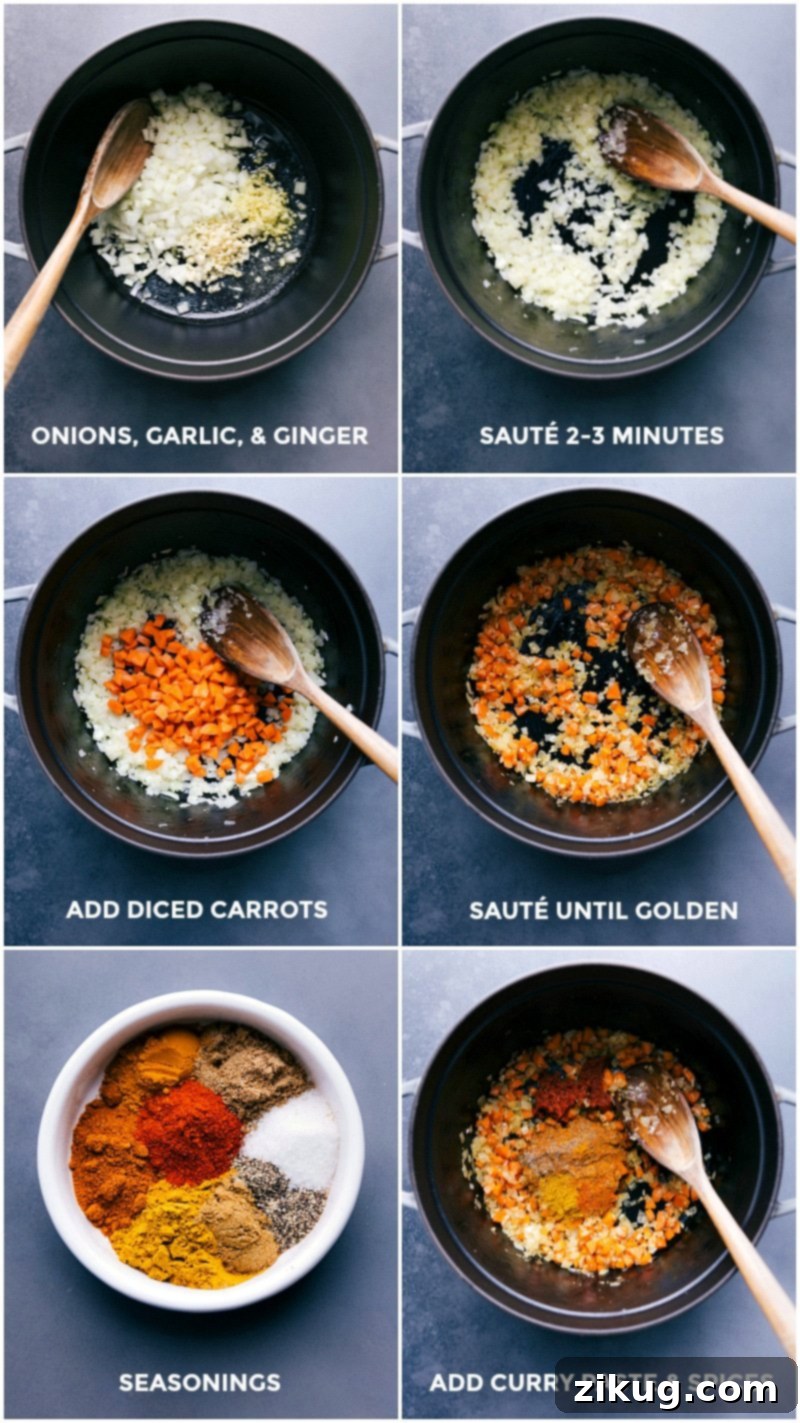
- Sauté the Aromatics: In a large, heavy-bottomed pot or Dutch oven, melt the butter or heat the coconut oil over medium heat until shimmering. Add the finely diced onion, garlic, and ginger. Cook, stirring frequently, for 3-4 minutes until they become fragrant and slightly softened. Next, add the finely diced carrot and continue to cook, stirring occasionally, for another 6-8 minutes, or until all vegetables are golden and tender. It’s important to cook them slowly to release their natural sweetness and develop a rich base, but avoid over-browning or burning, which can lead to a bitter taste. If necessary, reduce the heat.
- Toast the Spices: Once the aromatics are softened, add the red curry paste, yellow curry powder, garam masala, paprika, ground coriander, cumin, and turmeric to the pot. Season generously with salt and pepper (approximately 1 ¼ teaspoon salt and ½ teaspoon pepper, or to taste). Increase the heat to high and stir constantly for 1-2 minutes. This brief toasting process, before any liquid is added, awakens the essential oils in the spices, intensifying their aroma and flavor, which will deeply infuse your **homemade lentil curry**.
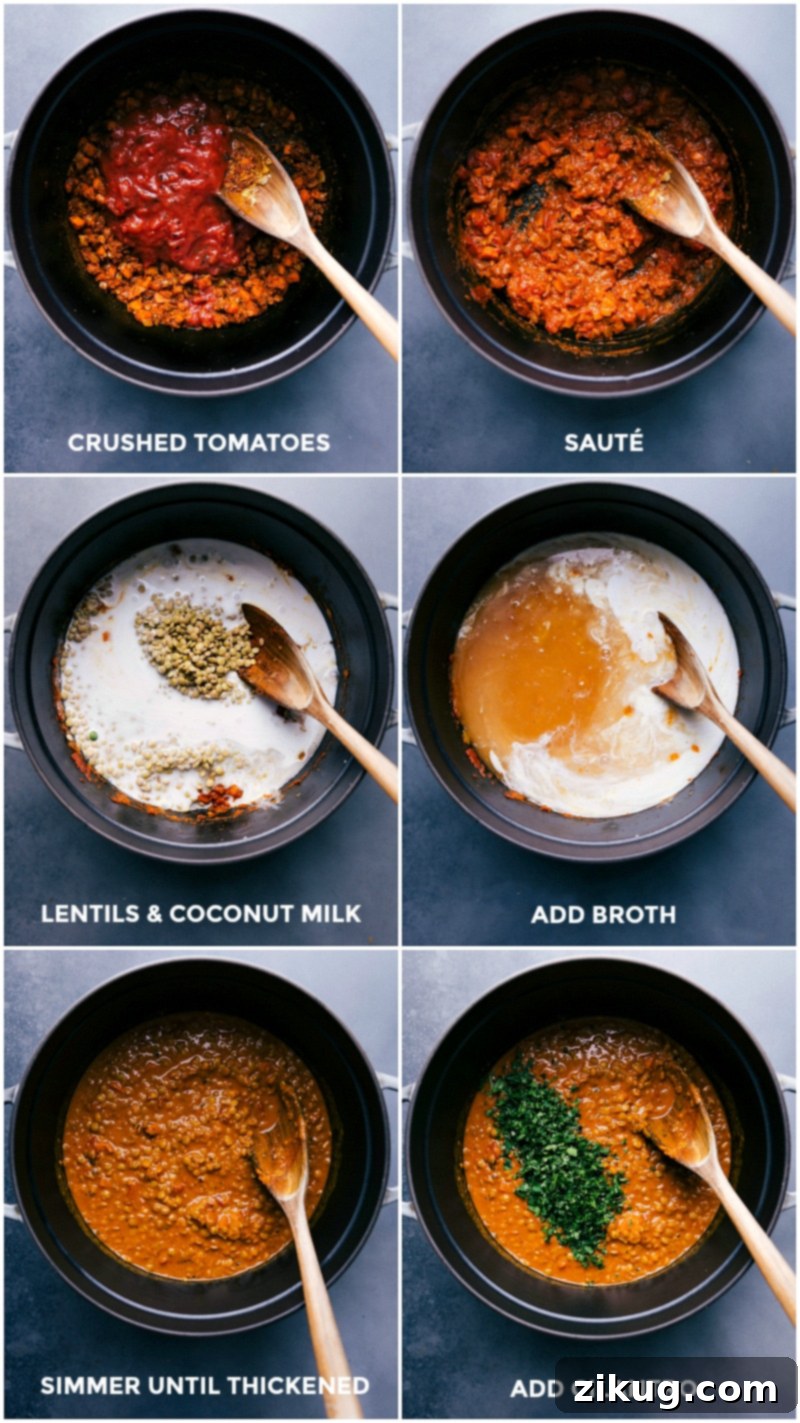
- Incorporate Tomatoes & Sugar: Pour in the can of fire-roasted crushed tomatoes. Reduce the heat to medium and stir well, making sure to scrape up any browned bits from the bottom of the pot. These bits, known as “fond,” are packed with flavor and will dissolve into the sauce, adding extra richness. Stir in the granulated sugar to balance the tomato’s acidity and enhance the overall sweetness of the curry. Continue to cook for 1 minute, allowing the flavors to meld.
- Add Lentils, Coconut Milk, & Broth: Thoroughly drain the soaked lentils and add them to the pot. Pour in the full-fat or light coconut milk and the vegetable broth or stock. Bring the mixture to a gentle boil, then immediately reduce the heat to a low simmer. Cover the pot with a lid and cook for 30 minutes, stirring every 8-10 minutes to prevent sticking and ensure even cooking. After 30 minutes, remove the lid and continue to simmer uncovered for another 5-8 minutes, or until the curry has thickened to your desired consistency and the lentils are completely tender. If the curry becomes too thick, you can add a splash more broth or water. If it’s too thin or the lentils need more time, simply simmer uncovered for a few extra minutes to allow it to reduce.
- Finish & Serve: Once the curry reaches its perfect consistency, remove it from the heat. Stir in the finely chopped fresh cilantro. For a bright, zesty finish, you can also stir in the zest and fresh juice of one lemon. Taste the curry and adjust the seasonings as needed. This is your chance to make the flavors sing – add more salt, pepper, or lemon juice to achieve your ideal balance. Allow the **creamy lentil curry** to rest for 5 minutes before serving; this short resting period allows the flavors to deepen and fully meld. Serve your comforting lentil curry hot, ideally over fluffy basmati rice, quinoa, or with warm naan bread.
Quick Tip: Choosing the Right Lentils for Your Curry
When preparing this **Lentil Curry Recipe**, the type of lentils you choose can impact the final texture. Brown lentils are an excellent choice, offering a mild, earthy flavor and retaining their shape well during cooking, preventing them from becoming overly mushy. Green lentils also perform similarly and are a great alternative. For the best possible texture and absorption of flavors, we highly recommend using dried lentils rather than canned ones. While canned lentils are convenient, dried varieties allow for better control over the cooking process, resulting in a superior consistency and a more deeply flavored dish. Avoid French (Puy) lentils as they tend to stay firmer and might not integrate as smoothly into the creamy curry sauce.
Creative Variations to Elevate Your Lentil Curry
Customize Your Lentil Curry Experience
This **Lentil Curry Recipe** is wonderfully adaptable, allowing you to easily adjust it to your taste preferences and dietary needs. Here are some popular variations:
- Make it Spicy: For those who crave extra heat, increase the red curry paste to 3 tablespoons, or even more, depending on your preferred spice level and the brand of paste you use. Alternatively, sprinkle in a generous pinch of red pepper flakes or a dash of cayenne pepper during the spice-toasting step. Freshly sliced green chilies or a spoonful of sambal oelek added at the end can also provide a fiery kick.
- Infuse Thai Flavors: To impart an authentic Thai touch, stir in a teaspoon or two of fish sauce at the very end of cooking. Fish sauce adds a unique umami depth that is characteristic of Thai cuisine. If you are preparing a **vegan lentil curry** or vegetarian version, omit this step or use a vegan fish sauce alternative.
- Keep it Vegan/Vegetarian: This recipe is inherently vegetarian. To ensure it’s fully vegan, make sure to use coconut oil instead of butter and verify that your red curry paste does not contain any shrimp paste (many Thai Kitchen brands are vegan-friendly). Always opt for vegetable broth or stock as specified.
- Opt for a Lighter Option: If you’re looking to reduce the fat content, simply use light coconut milk instead of full-fat coconut milk. While it will result in a slightly less creamy texture, the flavor will remain rich and satisfying, making this **healthy lentil recipe** even more diet-friendly.
- Boost the Protein: For an even heartier meal, consider adding extra plant-based protein. Stir in a can of drained and rinsed chickpeas along with the lentils, or add cubes of firm tofu (pressed and pan-fried until golden) or paneer during the final simmering stage.
- Add More Veggies: This curry welcomes additional vegetables! Fresh spinach or kale can be wilted into the curry during the last 5 minutes of cooking. Diced bell peppers, cauliflower florets, or green beans can be added along with the carrots and onions to cook until tender.
- Sweet & Tangy Twist: A spoonful of mango chutney served alongside or stirred into the curry can add a lovely sweet and tangy contrast. A small amount of tamarind paste can also be used to introduce a subtle sour note, typical in some South Asian curries.
Storage & Meal Prep Tips for Your Lentil Curry
Enjoying Leftover Lentil Curry
This **Lentil Curry Recipe** is perfect for meal prepping, as its flavors often deepen and improve overnight. Here’s how to store and reheat your delicious leftovers:
- Refrigerator Storage: Allow the lentil curry to cool completely to room temperature before transferring it to an airtight container. Store it in the refrigerator for up to 4 days. When you’re ready to enjoy it again, reheat gently on the stovetop over low to medium heat, stirring occasionally. If the curry has thickened too much in the fridge, add a splash of vegetable broth or water to achieve your desired consistency. Alternatively, you can reheat individual portions in the microwave, stirring halfway through.
- Freezer Storage: This **vegetarian curry** freezes beautifully, making it an excellent option for future quick meals. Once cooled, divide the curry into individual portions and place them in freezer-safe airtight containers or heavy-duty freezer bags. Ensure there’s minimal air in the containers to prevent freezer burn. It can be stored in the freezer for up to 3 months. To reheat, thaw the frozen curry overnight in the refrigerator. Then, reheat on the stovetop or in the microwave as described for refrigerated leftovers, adding a little liquid if needed to thin it out. Be aware that the texture of the lentils might be slightly softer after freezing and thawing, but the flavor will remain fantastic.
More Delightful Lentil-Filled Recipes to Explore:
Dinner
Lentil Bolognese Recipe
Dinner
Coconut Curry Lentils
Salads
Lentil Salad
Soups And Stews
Beef Lentil Soup

Pin
Lentil Curry Recipe
Equipment
-
Large pot
Ingredients
- 3 tablespoons unsalted butter or melted coconut oil
- 1-1/2 cups finely diced yellow onion 1 small onion; 1/2 large onion
- 1 cup finely diced carrot 1 large carrot
- 1 tablespoon finely minced garlic 3 cloves
- 1-1/2 tablespoon finely minced ginger 1-inch piece
- 2 tablespoons red curry paste I use Thai Kitchen, which is vegetarian and mild
- 1 tablespoon yellow curry powder see note 1
- 1-1/2 teaspoon garam masala
- 1-1/2 teaspoon paprika
- 1-1/2 teaspoon ground coriander
- 1 teaspoon ground cumin
- 3/4 teaspoon ground turmeric
- Salt and pepper
- 1 (14.5-ounce) can fire-roasted crushed tomatoes
- 1 teaspoon granulated sugar
- 1 cup uncooked lentils green or brown, see note 2
- 1 (14.5-ounce) can coconut milk lite or regular
- 3 cups vegetable broth or stock; use vegetarian broth or stock to keep this vegetarian/vegan
- 1/3 cup finely chopped cilantro
- 1 lemon optional
- Cooked basmati rice optional, see note 3
Instructions
-
Measure the lentils and carefully pick over them to remove any debris or shriveled lentils, then thoroughly rinse with cold water. Add them to a bowl, cover completely in room-temperature water, and let them soak for 15–20 minutes. While the lentils are soaking, prepare your vegetables: finely dice the yellow onion and carrot; finely mince the garlic cloves and fresh ginger.
-
Add the butter or coconut oil to a large, heavy-bottomed pot. Heat to medium, and once the butter is melted or oil is shimmering, add the finely diced onion, minced garlic, and minced ginger. Cook and stir frequently for 3–4 minutes until fragrant. Add the diced carrot. Continue to cook, stirring occasionally, for another 6–8 minutes, or until all vegetables are softened and lightly golden. Ensure nothing is overly browning or burning; if so, reduce the heat. While the vegetables are cooking, measure out all the spices.
-
Add the red curry paste, yellow curry powder, garam masala, paprika, ground coriander, cumin, and turmeric to the pot. Season with salt and pepper; we recommend starting with 1 ¼ teaspoon salt and ½ teaspoon pepper, adjusting to taste later. Increase the heat to high, stir constantly, and cook for 1–2 minutes, or until the spices are very fragrant. This step helps to bloom the spices and deepen their flavor. Add the fire-roasted crushed tomatoes and reduce the heat to medium. Stir well and cook for 1 minute, scraping the bottom of the pot to release any flavorful browned bits. Stir in the granulated sugar to balance the acidity.
-
Thoroughly drain the soaked lentils. Add the drained lentils to the pot along with the full can of coconut milk and the vegetable broth or stock. Bring the mixture to a boil, then immediately reduce the heat to a gentle simmer. Cover the pot with a lid and cook for 30 minutes, stirring every 8–10 minutes to ensure even cooking and prevent sticking. After 30 minutes, remove the lid and continue to simmer uncovered for another 5–8 minutes, or until the curry is thick and creamy and the lentils are completely tender. If the mixture thickens too much, add a splash of additional broth or stock. If it’s too thin (or lentils aren’t tender yet), slightly increase the heat and simmer uncovered for a few extra minutes to allow it to reduce.
-
Stir in the finely chopped fresh cilantro. If desired, add the zest and fresh juice of one lemon for a bright, tangy finish. Taste the curry and adjust any seasonings as needed; the flavors should be vibrant and well-balanced, so feel free to add extra salt, pepper, or lemon juice to your preference. Serve your delicious **Lentil Curry** hot, optionally over cooked basmati rice (see note 3) or with naan bread, and enjoy!
Recipe Notes
Note 2: This recipe primarily uses brown lentils, and green lentils will cook similarly with the same instructions. If using canned lentils, be sure to drain and rinse them thoroughly; they will require a shorter cooking time, about 20–25 minutes (uncovered for the entire duration) as they are pre-cooked. Red or orange lentils are also an option and will typically cook in about 20–25 minutes (also uncovered). However, French (Puy) lentils are not recommended for this curry, as their firm texture won’t break down sufficiently to create the desired creamy consistency.
Note 3: For perfectly cooked basmati rice to accompany your curry, here’s my preferred method:
- Measure your basmati rice (note: this method is specific to basmati and may not work for other rice varieties) and place it in a fine-mesh sieve. Rinse it under cold running water until the water runs completely clear, removing excess starch.
- Transfer the rinsed rice to a bowl and cover it with fresh water. Let it soak for about 5–10 minutes. This helps the grains elongate and cook more evenly.
- While the rice is soaking, fill a large pot with water and bring it to a rolling boil over high heat.
- Once the water is vigorously boiling, drain the soaked rice and add it to the pot.
- Cook the rice, without reducing the heat, for exactly 5 minutes. Then, immediately drain it using a fine-mesh sieve and gently fluff it with a fork. Serve immediately with your hot curry.
Storage: To store leftovers, ensure the lentil curry has cooled completely. Transfer it to an airtight container and refrigerate for up to 4 days. When reheating, gently warm on the stovetop or in the microwave. If the curry has thickened, add a splash of water or vegetable broth to reach your desired consistency.
Nutrition
Nutrition information is automatically calculated, so should only be used as an approximation.