
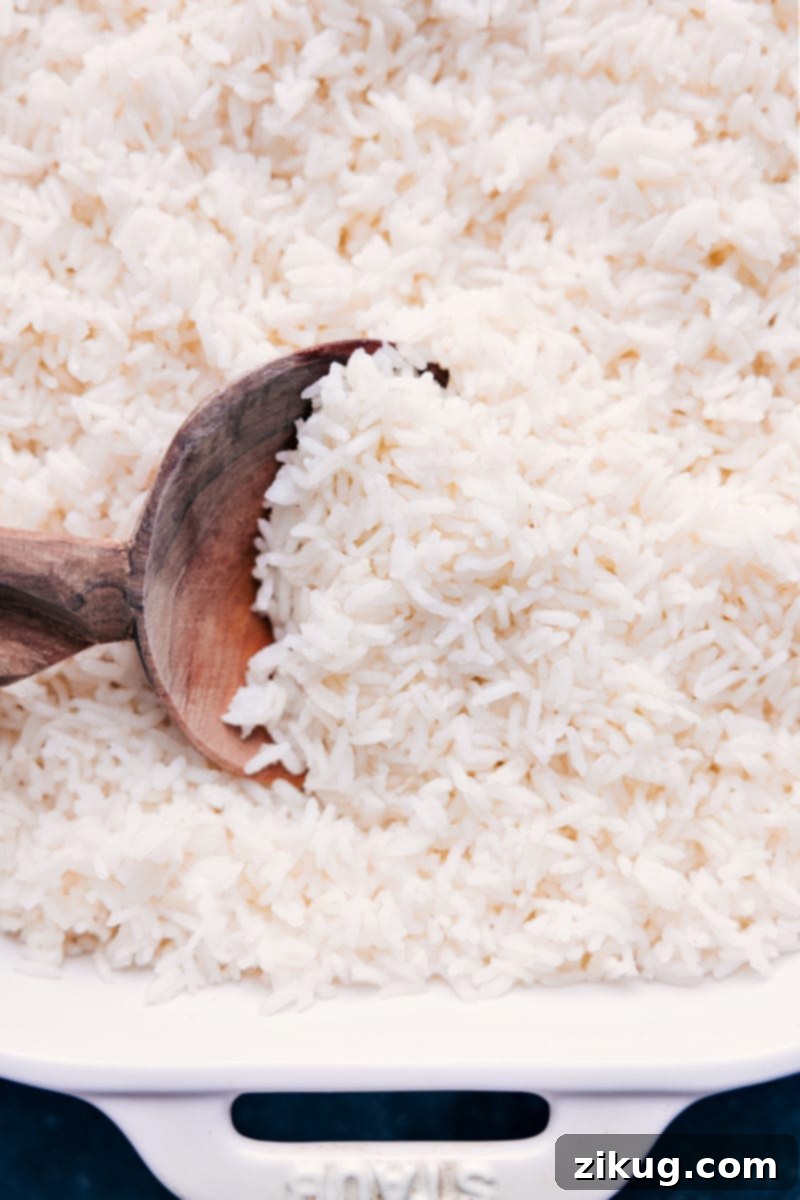
Elevate your culinary skills with perfectly cooked white rice, effortlessly achieved through oven-baking! This innovative and foolproof method guarantees consistently fluffy grains while liberating your stovetop.
For those who prefer a nuttier, chewier grain, explore our comprehensive guide on How To Cook Brown Rice.
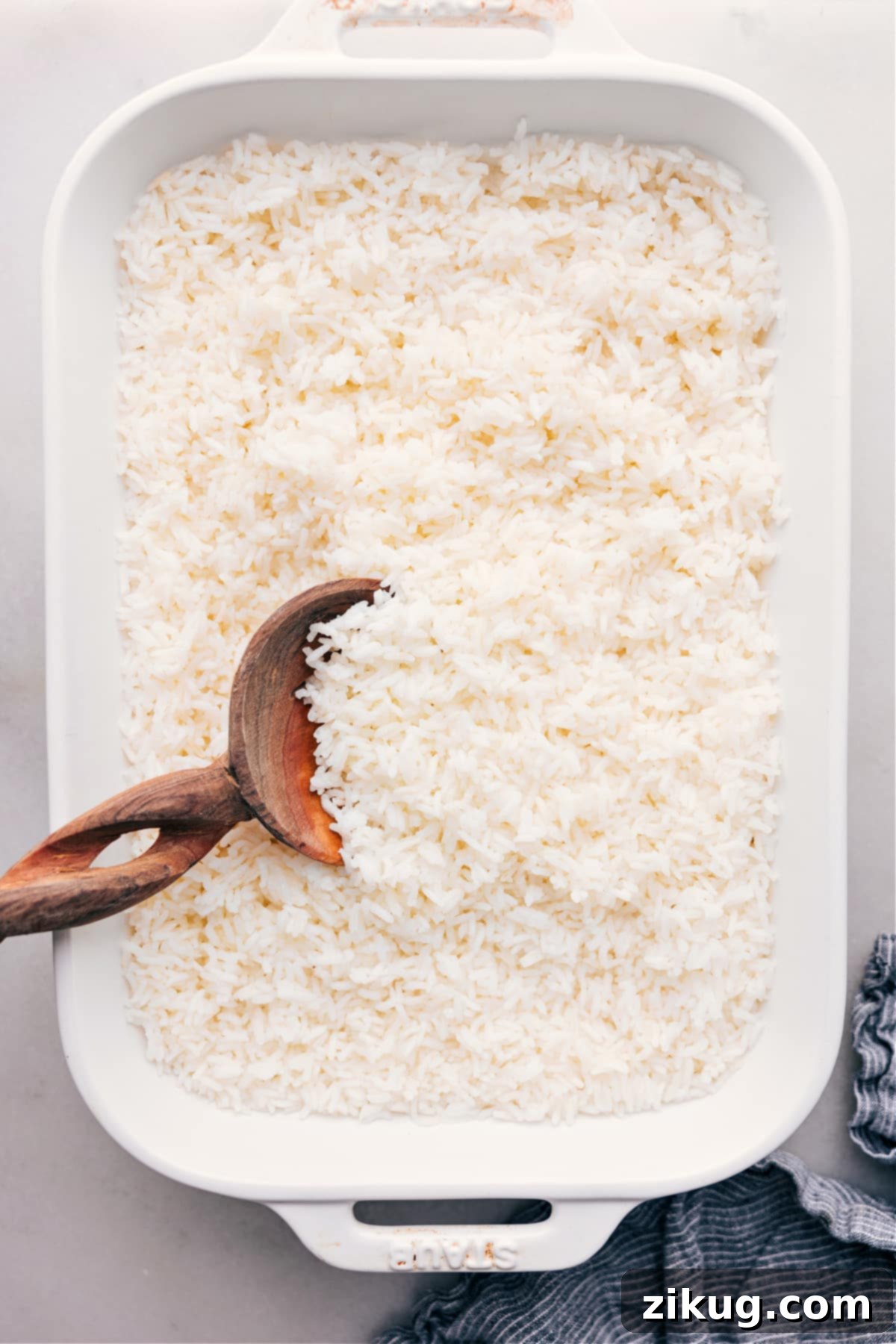
How to Make Perfect Fluffy White Rice in the Oven: Your New Go-To Method
Tired of scorched bottoms, mushy textures, or rice that’s still crunchy? It’s time to revolutionize your rice-making process. Switching to the oven is the ultimate hack for achieving consistently perfect, hassle-free, and delightfully fluffy white rice. This method isn’t just easy; it’s a game-changer for anyone who struggles with stovetop rice or simply wants to streamline their kitchen routine. Forget about constant stirring, monitoring, or the anxiety of rice sticking to the pot. The oven offers a gentle, even heat that transforms simple grains into a culinary masterpiece. Let’s explore why oven-baked rice is quickly becoming the preferred method for home cooks everywhere:
- Even Heating for Consistent Results: The primary advantage of oven-baked rice is the stable, all-encompassing heat within the oven cavity. Unlike stovetop cooking where direct heat can be uneven, leading to burnt spots on the bottom or undercooked grains on top, the oven ensures every single grain cooks uniformly. This results in a perfectly fluffy, distinct texture from edge to edge, eliminating the common frustrations of burnt or sticky messes.
- Frees Up Valuable Stovetop Space: In bustling kitchens, especially during holiday meal preparations or when cooking multiple dishes, stovetop burners are precious real estate. By baking your rice, you free up a burner that would otherwise be occupied, allowing you to simultaneously cook other components of your meal without juggling multiple pots. This efficiency makes dinner prep significantly less stressful and more organized.
- Set It and Forget It Convenience: The sheer convenience of oven-baked rice is unparalleled. Once you’ve combined the ingredients and securely covered the baking dish, your work is essentially done. You can confidently “set it and forget it” for the duration of the cooking time, without the need for constant monitoring, stirring, or worrying about boil-overs. This liberation allows you to focus your attention on other culinary tasks or simply enjoy some uninterrupted time.
- Ideal for Preparing Large Quantities: Whether you’re hosting a dinner party, catering to a large family, or engaging in weekly meal prep, the oven method is perfectly suited for scaling up recipes. A standard 9×13-inch baking dish can easily accommodate a generous amount of rice, making it simple to prepare enough for many servings without compromising on quality or texture.
- Enhances Flavor Absorption: The gentle, consistent heat of the oven, combined with the sealed environment, allows the rice to slowly and thoroughly absorb all the added liquids, butter, salt, and any other seasonings. This results in a more deeply flavorful and aromatic final product, ensuring that every spoonful is infused with delicious taste, rather than just coated on the surface.
- More Forgiving and Less Error-Prone: For many, cooking rice on the stovetop can feel like a delicate balancing act, prone to various mishaps. The oven method is remarkably more forgiving. The steady temperature and trapped steam create an optimal, controlled environment where rice can expand and tenderize beautifully, significantly reducing the chances of common rice-cooking errors like undercooking, overcooking, or burning.
Essential Tips for Flawless Oven-Baked White Rice
Achieving consistently perfect white rice in the oven is simpler than you might think, especially when you follow these fundamental guidelines. These tips ensure your rice turns out fluffy, flavorful, and never sticky, dry, or undercooked:
- Master the Correct Water Ratio: The precise ratio of rice to water is absolutely paramount for success. For white rice, particularly basmati or long-grain varieties, a ratio of approximately 1 part rice to 2.06 parts water (or 2-2/3 cups rice to 5-1/2 cups water as specified in our recipe) provides the ideal environment for optimal absorption and texture. Deviating too much can lead to either dry, undercooked grains or an undesirable overcooked, mushy consistency. Always adhere closely to the recommended quantities for the best results, and remember that different rice types may require slight adjustments. For other cooking measurements, check our handy kitchen conversion chart.
- Always Start with Boiling Water: This is a non-negotiable step that dramatically impacts the cooking process. Adding already boiling water to your rice in the hot baking dish creates an immediate steaming environment. This prevents the rice from sitting in cool water and slowly heating up, which can cause the grains to release excess starch prematurely and result in uneven cooking or a stickier, less desirable texture. An instant thermal shock ensures rapid and consistent cooking.
- Season Thoughtfully with Salt: Salt is much more than just a seasoning; it’s a critical flavor enhancer. Adding the correct amount of salt to your rice water before baking ensures that the grains are seasoned from within as they absorb the liquid. This process infuses a deep, balanced flavor throughout the rice, making it a more delicious and satisfying accompaniment to any meal. Without salt, even perfectly cooked rice can taste bland.
- Incorporate Butter (or Oil) for Superior Taste and Texture: A small amount of unsalted butter or a neutral oil serves multiple crucial purposes in this recipe. It adds a rich, subtle flavor that elevates the natural taste of the rice, prevents the grains from clumping and sticking together, and contributes to a beautiful, glossy finish. If you’re seeking a dairy-free alternative or simply a lighter touch, olive oil or another cooking oil works just as effectively to achieve similar textural benefits.
- Seal Tightly with Two Layers of Foil: This is arguably one of the most critical steps for achieving perfectly steamed, fluffy oven-baked rice. Tightly covering your baking dish with two layers of regular aluminum foil (or one layer of heavy-duty foil) creates a completely sealed environment. This crucial seal traps all the steam inside the dish, allowing the rice to cook evenly and absorb every drop of moisture without drying out. A good seal effectively mimics the ideal conditions of a dedicated rice cooker.
- Allow for Adequate Resting Time: Once your rice is removed from the oven, resist the urge to immediately uncover and serve it. The resting period, typically 15 minutes as specified in this recipe, is absolutely essential. During this vital time, the rice continues to steam and finish cooking in its own residual heat. This allows any remaining surface moisture to be fully absorbed, causing the grains to firm up and separate beautifully, preventing mushiness and resulting in perfectly distinct, fluffy individual grains. Do not rush or skip this step!
Creative Culinary Variations
How to Flavor Your White Rice and Transform Your Meals
White rice, in its simplicity, is a wonderfully versatile canvas, readily absorbing and enhancing the flavors you introduce. While plain white rice is a staple, consider these delicious and creative variations to elevate your meals and prevent monotony:
- Transform into Fried Rice: Give leftover cooked rice a new life! Stir-fry it with an assortment of your favorite finely diced vegetables such as peas, carrots, and onions. Add scrambled eggs and your choice of protein like chicken, shrimp, or tofu. A splash of soy sauce, a hint of sesame oil, and a dash of white pepper will bring out an authentic and satisfying flavor profile.
- Prepare a Savory Rice Pilaf: Drawing inspiration from our delightful Quinoa Pilaf, you can easily create a rich and aromatic rice pilaf. Sauté diced onions, minced garlic, and other aromatics in butter or oil before adding the rice and cooking liquid (chicken or vegetable broth instead of water works wonders here). You can also mix in fresh or dried herbs like parsley, thyme, or oregano, and even toasted nuts or dried fruits for added texture and sweetness.
- Infuse with Curry Flavor: For an aromatic and vibrant side dish that complements many cuisines, bake your rice with minced garlic, grated fresh ginger, and a tablespoon or two of your preferred curry powder. The oven’s even heat ensures the spices are beautifully distributed throughout the grains, creating a deeply fragrant and subtly spicy rice. A pinch of turmeric can also add a beautiful golden hue.
- Spice It Up with Mexican Rice: After baking, effortlessly transform your white rice into a zesty, Mexican-inspired dish. Simply stir in diced canned tomatoes, mild green chiles, a blend of cumin, chili powder, and a generous squeeze of fresh lime juice. This flavorful rice pairs wonderfully with tacos, burritos, enchiladas, or grilled chicken and fish.
- Brighten with Lemon Rice: For a refreshing and light side dish, add lemon zest to the rice before baking. Once cooked and fluffed, stir in fresh lemon juice and a generous amount of freshly chopped herbs such as parsley, dill, or mint. This light and tangy rice is an exquisite accompaniment to baked fish, roasted chicken, or Mediterranean-inspired meals.
- Zesty Cilantro Lime Rice: A beloved staple in many Tex-Mex and Latin American cuisines, this vibrant rice is incredibly easy to make. After your rice is baked and thoroughly fluffed, gently fold in a generous amount of freshly chopped cilantro, the bright zest of a lime, and a good squeeze of fresh lime juice. It’s an ideal complement to grilled chicken, fajitas, or seafood.
- Rich Pesto Rice: For an intriguing Italian-inspired twist, bake your rice with finely chopped sun-dried tomatoes (either dried or oil-packed). Once the rice is perfectly cooked, stir through a few spoonfuls of your favorite basil pesto. The warmth of the rice will gently release the aromatic oils of the pesto, creating a deeply flavorful and satisfying side dish that pairs well with poultry or vegetables.
- Elegant Saffron Rice: For a touch of luxury and exotic flavor, infuse your rice with delicate saffron. Simply steep a few threads of saffron in a tablespoon of warm water for a few minutes to release their color and aroma, then add this mixture to your boiling water before combining with the rice. The saffron will impart a beautiful golden color and a distinct, delicate aroma and flavor that’s perfect for special occasions.
Storage and Reheating Best Practices for White Rice
Proper storage and reheating are crucial not only to maintain the delicious quality of your cooked white rice but also to ensure its safety. Cooked rice, if not handled correctly, can harbor bacteria. Follow these guidelines to safely enjoy your perfectly cooked rice for days to come:
Storage:
- Rapid Cooling is Key: It is paramount to cool your cooked rice down to room temperature as quickly as possible, ideally within one hour of cooking. Spreading it out in a thin layer on a baking sheet can significantly accelerate the cooling process. This rapid cooling prevents harmful bacteria, like Bacillus cereus, from multiplying to dangerous levels.
- Airtight Container: Once completely cooled, transfer the rice to a clean, airtight container or a heavy-duty, sealable freezer bag. Removing as much air as possible helps to preserve its freshness and prevents it from drying out or absorbing other food odors.
- Refrigeration Guidelines: Stored correctly in an airtight container, cooked white rice can be safely kept in the refrigerator for 3 to 5 days. Beyond this timeframe, the quality and safety can diminish, so it’s best to consume it promptly.
- Freezing for Longer Storage: For extended storage, cool the rice completely, then portion it into freezer-safe airtight containers or freezer bags. It maintains its best quality for up to 6 months. When ready to use, thaw it overnight in the refrigerator before proceeding with reheating.
Reheating Methods:
When reheating cooked rice, a crucial tip is to always add a splash of liquid (water, broth, or even a small pat of melted butter) to help re-introduce moisture and restore that delightful fluffy texture, preventing it from becoming dry or hard.
- Stovetop Reheating: Place the desired amount of rice in a non-stick pan or skillet. Add a tablespoon or two of water or broth per cup of rice. Cover the pan tightly with a lid and heat over medium-low heat. Stir occasionally, gently breaking up any clumps, until the rice is thoroughly heated through and once again fluffy. This method is excellent for restoring both moisture and texture.
- Microwave Reheating: Transfer the portion of rice you wish to reheat to a microwave-safe dish. Add a splash of water or broth (about 1-2 tablespoons per cup of rice). Cover the dish with a microwave-safe lid or a damp paper towel to trap steam, then heat on high for 1-2 minutes, or until the rice is steaming hot throughout. Fluff with a fork before serving.
- Oven Reheating: This method is particularly effective for reheating larger quantities of rice and helps maintain a great texture. Preheat your oven to 350°F (175°C). Spread the rice evenly on a baking sheet or in an oven-safe dish. Drizzle with a bit of water or broth, cover tightly with aluminum foil to create a steaming environment, and bake for 15-20 minutes, or until thoroughly heated through.
Pro Tip for Safety: Always ensure that reheated rice is steaming hot throughout (reaching an internal temperature of at least 165°F / 74°C) to kill any potential bacteria. For safety reasons, never reheat rice more than once.
Versatile Ways to Enjoy Your Perfectly Cooked White Rice
White rice is more than just a simple side dish; it’s a foundational ingredient that can be incorporated into countless meals across various cuisines, adding substance, texture, and a neutral base for a multitude of flavors. Here are some popular and creative ways to utilize your perfectly cooked oven-baked white rice:
- As a Classic Side Dish: The most common and beloved use, white rice pairs beautifully with almost any main course. Serve it alongside grilled chicken, baked salmon, hearty beef stews, or a vibrant medley of roasted vegetables. Its neutral flavor and fluffy texture make it an excellent vehicle for soaking up sauces, gravies, and curries.
- A Hearty Addition to Soups & Stews: Incorporate cooked white rice into your favorite soups and stews to instantly add body, texture, and a comforting heartiness. It’s especially delicious in creamy chicken soups, robust vegetable broths, or spicy chili. Our absolute favorite for a warming and flavorful meal is this incredible Chicken Curry Rice Soup!
- Base for Refreshing Rice Salads: Cooled white rice is a fantastic and versatile base for light, refreshing, and satisfying salads. Combine it with finely chopped fresh vegetables like crisp cucumbers, colorful bell peppers, and juicy cherry tomatoes. Add fragrant fresh herbs such as mint, cilantro, or parsley, and toss everything with a tangy homemade vinaigrette dressing for a delightful summer lunch or side dish.
- Delicious Fillings for Wraps and Stuffed Dishes: Utilize white rice as a key component in various fillings, where it adds both substance and a pleasant texture. It’s perfect for hearty burritos, vibrant tacos, and creative dishes like savory taco-stuffed sweet peppers. Mix it with proteins, beans, cheese, and your favorite spices for a complete and satisfying meal.
- Foundation for International Specialties: White rice forms the essential base for countless beloved international dishes. Think perfectly seasoned sushi rice for homemade sushi rolls or deconstructed bowls, the creamy richness of authentic risotto (though arborio is traditionally used, white rice can be adapted for a similar experience), or the vibrant, saffron-infused flavors of Spanish paella.
- Quick and Savory Breakfast Snack: Get wonderfully creative with your leftover rice! Crisp up some cooked white rice in a pan with a little oil until it’s golden and slightly crunchy. Top it with a perfectly fried or poached egg, a drizzle of soy sauce or hot sauce, and a sprinkle of fresh green onions for a unique and incredibly satisfying breakfast inspired by global culinary traditions.
- Classic Fried Rice Creations: As highlighted in our variations section, fried rice is an absolutely fantastic and quick way to utilize cooked white rice, especially day-old rice. Whether you’re whipping up a speedy weeknight dinner or an elaborate weekend feast, fried rice is always a crowd-pleaser that allows for endless customization with your favorite meats and vegetables. We particularly adore this delicious and comforting Ham Fried Rice!
Delicious Recipes Featuring Cooked White Rice
Once you’ve mastered the art of oven-baked white rice, a world of culinary possibilities opens up! This versatile grain serves as the perfect foundation or accompaniment for a vast array of dishes. Here are some fantastic recipes from our collection that perfectly showcase and benefit from your expertly cooked white rice:
- Red Beans And Rice: A soulful, hearty, and iconic comfort food classic, where tender red beans and flavorful seasonings meld perfectly with fluffy white rice.
- Honey-Garlic Chicken Thighs: Juicy, tender chicken thighs coated in a sticky-sweet and savory honey-garlic glaze, finding its perfect pairing over a bed of absorbent white rice.
- Garam Masala Chicken: An aromatic and intensely flavorful Indian-inspired dish featuring tender chicken simmered in a rich, spiced sauce, beautifully balanced by the subtle notes of white rice.
- Pineapple Steak: A delightful fusion of sweet and savory, with succulent steak marinated and cooked alongside tangy pineapple, complemented exquisitely by plain white rice.
- Ground Turkey Bowls: A healthy, customizable, and lean meal prep option, where seasoned ground turkey, fresh vegetables, and flavorful sauces create satisfying bowls with white rice as the foundational grain.
Print Recipe
How To Make White Rice in the Oven
Chelsea Lords
10 minutes
20 minutes
15 minutes
45 minutes
8 cups cooked rice
Equipment
-
9 x 13-inch baking pan
-
Aluminum foil (2 sheets regular or 1 sheet heavy duty)
Ingredients
- Cooking spray
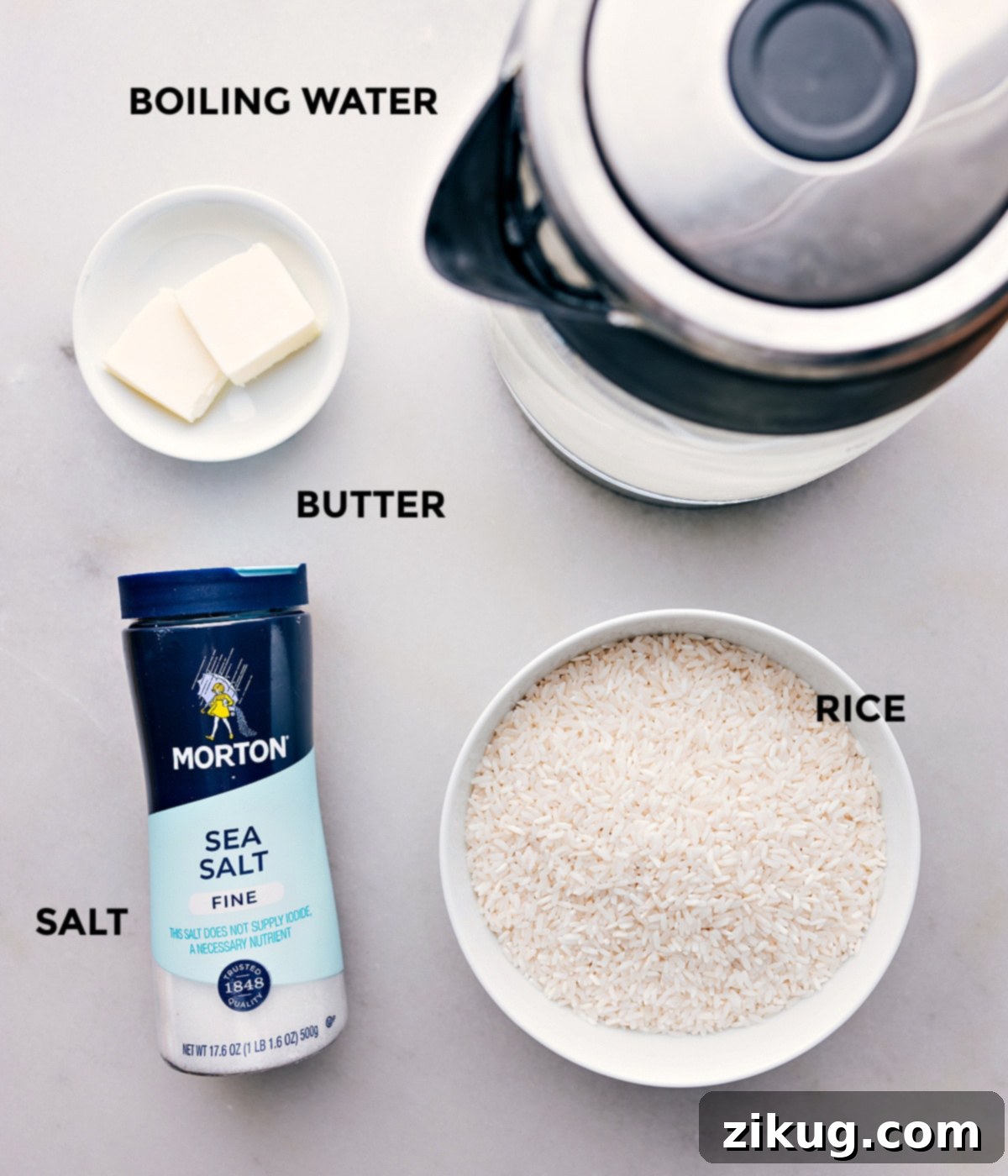
- 2-2/3 cups basmati rice (or long-grain white rice, see note 1)
- 1-1/4 teaspoons salt
- 2 tablespoons unsalted butter (cut into 2 pieces, or use oil, see note 2)
- 5-1/2 cups boiling water (see note 3)
Instructions
-
Preheat your oven to 450°F (232°C). Generously grease a 9×13-inch baking dish with cooking spray to prevent sticking. Simultaneously, bring more than 6 cups of water to a rolling boil; you’ll need precisely 5-1/2 cups of *boiling* water for the recipe.
-
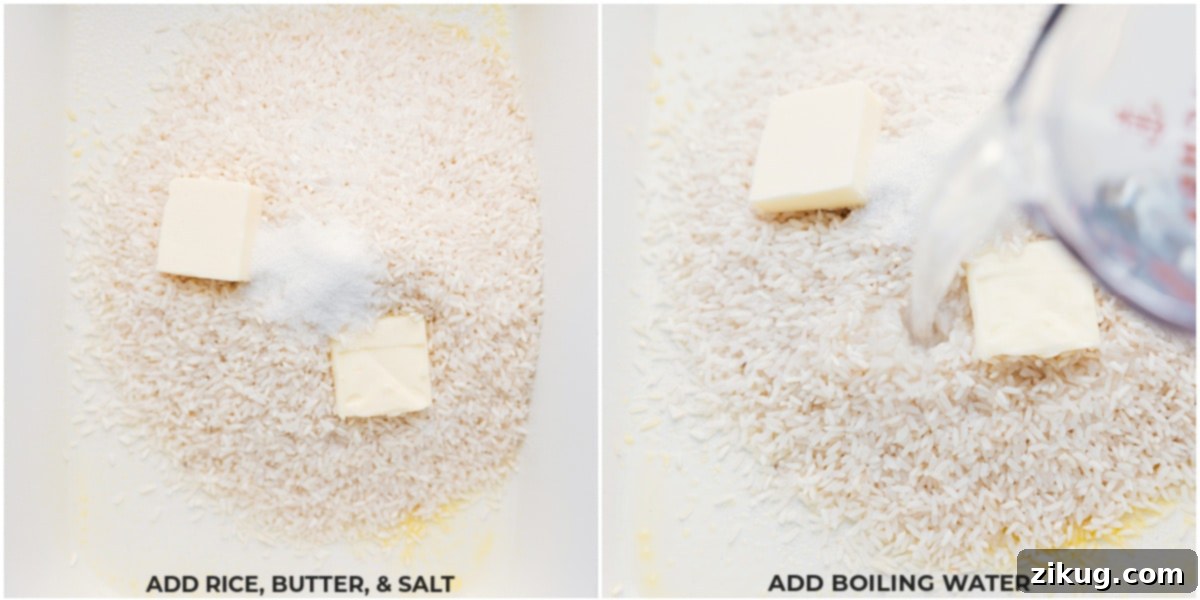
Carefully place the measured rice, salt, and butter pieces into the prepared baking dish. Pour in the 5-1/2 cups of boiling water, then stir gently to ensure all ingredients are well mixed and the rice is spread evenly across the bottom of the dish.
-
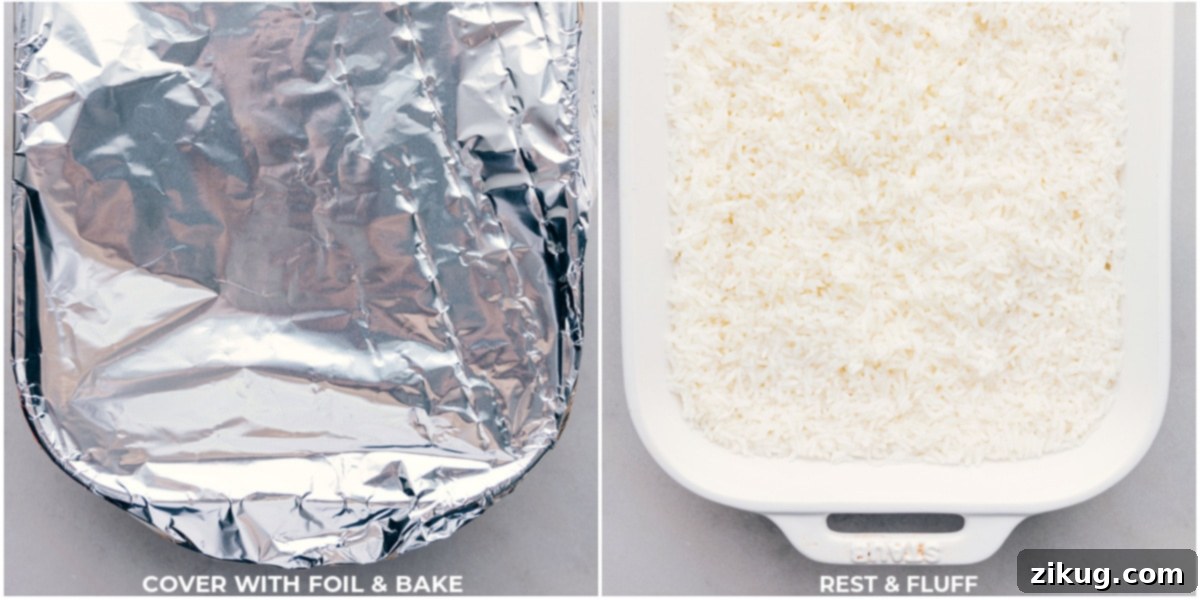
Cover the baking dish very tightly with two layers of regular aluminum foil, or one layer of heavy-duty foil. This tight seal is crucial for trapping steam and ensuring the rice cooks properly. Place the covered dish in the center rack of your preheated oven and bake for exactly 20 minutes.
-
After 20 minutes, carefully remove the dish from the oven. Keep it covered with the foil and let it rest undisturbed for 15 minutes (see note 4). This resting period is vital for the rice to fully absorb any remaining moisture and achieve its signature fluffy texture. Do not skip or shorten this step!
-
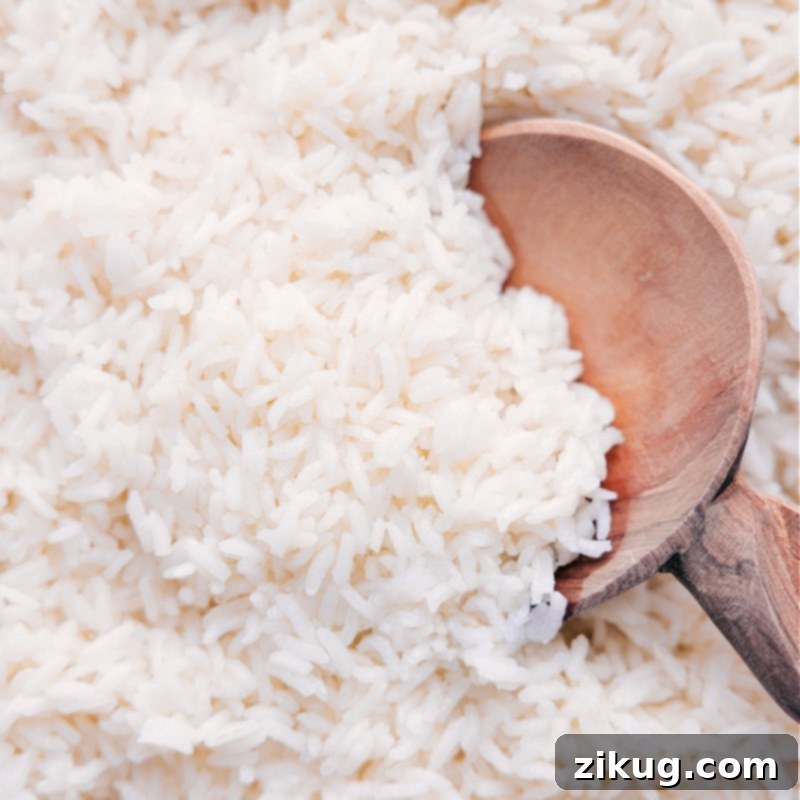
Finally, remove the foil. Using a fork, gently fluff the rice to separate the grains. Your perfect, fluffy white rice is now ready to be served and enjoyed immediately!
Recipe Notes
Note 2: Butter vs. Oil: Unsalted butter adds a wonderful depth of flavor and helps prevent the rice from sticking. If you prefer, or require a dairy-free option, an equal amount of olive oil or another neutral-flavored cooking oil can be used as a direct substitute without compromising the desired fluffy texture.
Note 3: Boiling Water Quantity: It’s always a good practice to boil slightly more water than the recipe calls for (e.g., boil 6+ cups for a 5.5 cup requirement), as some water will inevitably evaporate during the boiling process. This ensures you have precisely 5-1/2 cups of *boiling hot* water ready to add to the rice for the most consistent and optimal cooking outcome.
Note 4: The Importance of Resting: The resting period after baking is absolutely critical and should not be rushed or skipped. It allows the rice to continue cooking gently through residual steam and fully absorb any remaining moisture, leading to perfectly fluffy, separate grains rather than a mushy or watery texture. This step guarantees success in achieving ideal rice consistency.
Storage: For optimal freshness and food safety, allow your cooked white rice to cool down completely to room temperature (within one hour) before storing. Transfer it to an airtight container or a heavy-duty freezer bag. It can be safely stored in the refrigerator for 3-5 days, or frozen for up to 6 months for best quality and convenience.
Nutrition
Nutrition information is automatically calculated, so should only be used as an approximation.
Love this recipe? Share your thoughts in the comments below!
Frequently Asked Questions About Oven-Baked White Rice
For most types of white rice, particularly basmati or long-grain varieties, the optimal water-to-rice ratio when baking in the oven is approximately 2 to 2.1 parts water for every 1 part rice. Our recipe specifically calls for 2-2/3 cups of rice to 5-1/2 cups of boiling water. This precise measurement is crucial for achieving distinct, fluffy grains without any sogginess or dryness. Always measure carefully to ensure the best results, as even slight variations can impact the final texture.
While not strictly “necessary” for the rice to cook, adding butter or oil to your rice before baking is highly recommended and makes a significant difference. It serves several important functions: it significantly enhances the flavor of the cooked rice, giving it a richer and more appealing taste, and it acts as a lubricant, helping to prevent the rice grains from clumping together, resulting in a fluffier and more separate texture. If you’re avoiding dairy, olive oil or another neutral cooking oil is an excellent and equally effective substitute.
When using this oven-baking method at a temperature of 450°F (232°C), white rice generally requires a baking time of exactly 20 minutes. It’s important to note that this active baking period is followed by a crucial resting phase of 15 minutes, during which the rice continues to steam and fully absorb moisture, contributing significantly to its final fluffy texture. So, while active baking is 20 minutes, the total preparation time from start to fluffy finish is around 45 minutes, including prep and rest time.
Baking white rice in a tightly covered dish is absolutely essential for the success of this recipe. The foil covering creates a sealed environment, effectively trapping the steam within the dish, which is vital for ensuring the rice cooks evenly and becomes wonderfully fluffy. Cooking it uncovered would allow the moisture to escape prematurely, leading to dry, hard, and undercooked rice. This recipe fundamentally relies on the steam created within the covered dish, so ensure your dish is sealed effectively with two layers of regular foil or one layer of heavy-duty foil.
Unlike some stovetop methods where rinsing is common, it is generally advised *not* to rinse the rice when using this oven-baking technique. The slight starchiness on the surface of the rice grains plays a beneficial role in the cooking process, contributing to the desired texture and helping the grains cook evenly in the sealed environment of the oven. Rinsing could alter the moisture balance and negatively affect the final fluffiness, so for this specific recipe, skip the rinse step.
If your oven-baked rice is too wet, it usually indicates either an excess of liquid or that the foil cover wasn’t tight enough, allowing steam to escape and not fully absorb. For your next batch, double-check your water measurement meticulously and ensure a very tight, impenetrable seal on the baking dish. Conversely, if your rice turns out too dry, it could be due to insufficient water, a loose cover, or possibly an oven that runs a bit hot. Remember, the resting period is also crucial for complete moisture absorption; ensure you’re giving it the full 15 minutes. Small adjustments to the water ratio (e.g., reducing by a quarter cup for wet rice, increasing for dry rice) can help fine-tune the results to your specific oven and rice type over time.
Mastering oven-baked white rice means unlocking the secret to consistently perfect, fluffy grains with minimal effort. This foolproof method not only frees up your stovetop but also promises delicious results every single time, making it an indispensable technique for any home cook, from novice to expert. Embrace the ease, reliability, and superior flavor of perfectly cooked rice in your culinary repertoire!