
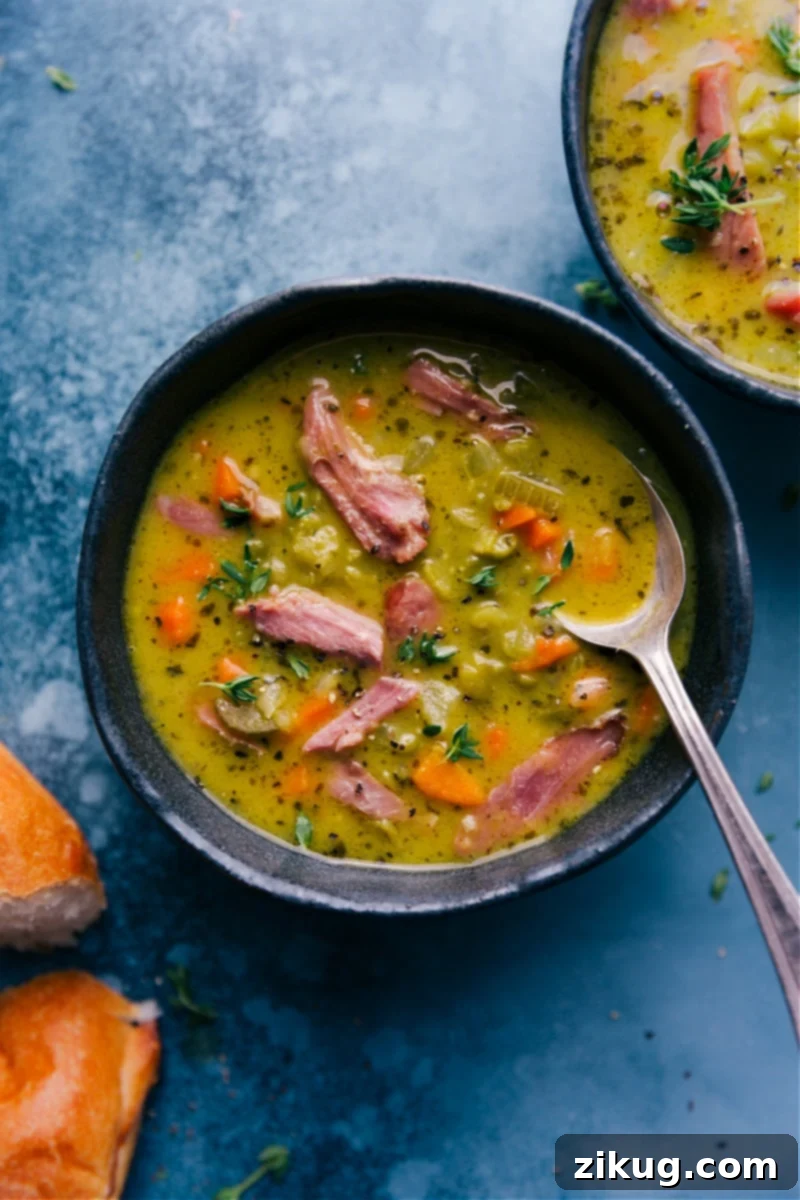
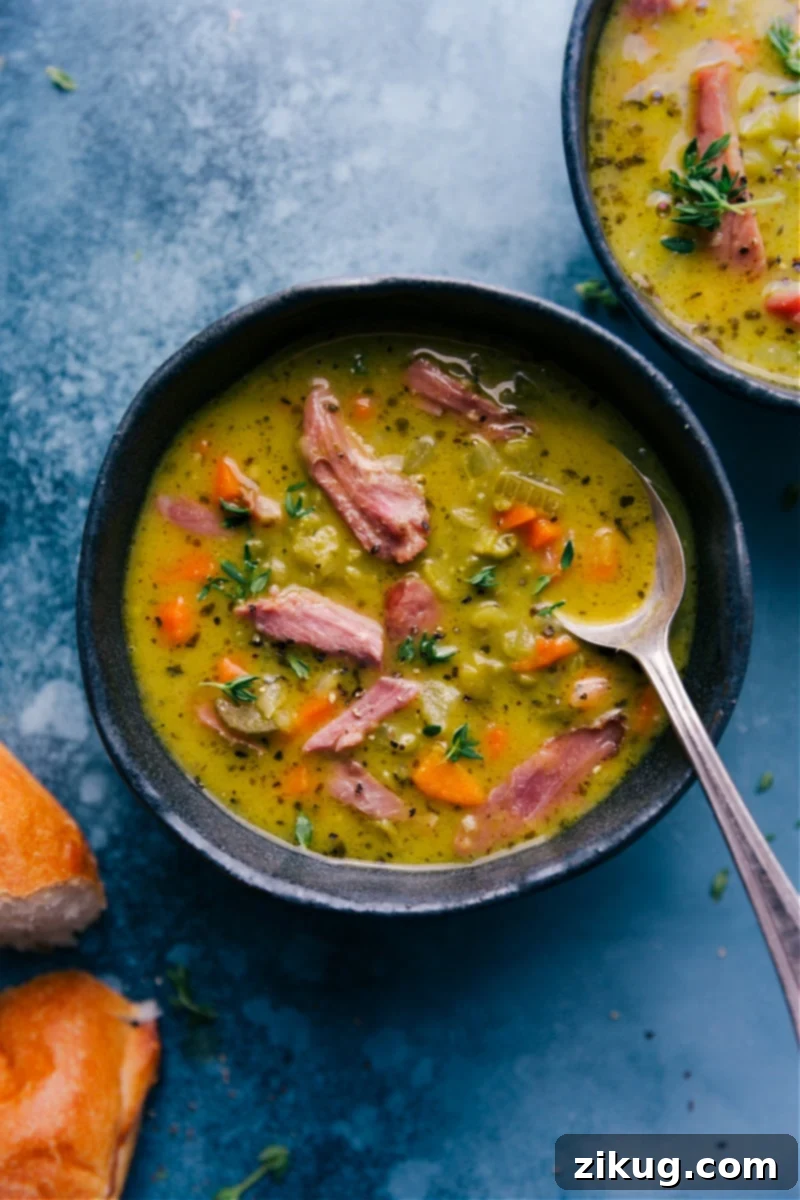
This **Split Pea Soup Recipe** is a true culinary marvel, renowned for its wonderfully thick, incredibly creamy texture, and deeply satisfying flavor. It’s packed with wholesome vegetables, tender split peas, and rich, shredded ham, creating a hearty meal that’s anything but humble despite its rustic appearance. Perfect for a cozy night in, this soup offers warmth, comfort, and an explosion of savory tastes that will make it an instant family favorite.
Seeking a plant-based option? Don’t miss our equally delightful Vegetarian Split Pea Soup Recipe, crafted for those who prefer to skip the meat without sacrificing flavor or richness.

author’s note
If You Make One Soup This Season, Make This!
There’s something truly magical about a well-made bowl of split pea soup. For me, it all started as a practical way to utilize a leftover holiday ham bone. Little did I know, this simple act would lead to a recipe I now crave throughout the entire year. The transformation of humble split peas into a luscious, creamy base, perfectly seasoned by the smoky richness of ham, feels like a warm hug in a bowl. It’s the ultimate comfort food, deeply satisfying and incredibly flavorful.
My kids absolutely adore this soup, especially when paired with big hunks of crusty bread for dunking. As a busy cook, I appreciate how easy and filling it is, making it a perfect weeknight dinner solution or a hearty lunch option.
Over the years, despite its deceptively simple appearance, I’ve meticulously tested numerous variations of this soup. I’ve made it with a robust ham bone, with just diced ham for quicker preparation, and even completely vegetarian. Each iteration taught me valuable lessons, confirming that this is one of those wonderfully flexible recipes that consistently delivers outstanding results. The depth of flavor, combined with the ease of preparation, makes this particular version stand out as a consistent winner in my kitchen, and I’m confident it will become one in yours too.
Why This Split Pea Soup Recipe Stands Out
Among the countless soup recipes, this Split Pea Soup with Ham distinguishes itself through several key elements that guarantee a superior culinary experience:
- Unmatched Depth of Flavor: The star of this recipe, a meaty ham bone (or quality ham hocks), imparts an incredible smoky, savory depth to the broth that simply cannot be replicated with diced ham alone. It slowly releases its essence, transforming simple ingredients into a complex symphony of taste.
- Luxuriously Creamy Texture: Through slow simmering, the split peas naturally break down, creating a velvety smooth and thick texture without the need for heavy cream or flour. This inherent creaminess is both comforting and satisfying.
- Wholesome and Hearty: Beyond the ham and peas, a generous medley of fresh carrots, celery, and onions forms an aromatic foundation, adding sweetness, freshness, and essential nutrients, making this soup a complete and balanced meal.
- Easy & Adaptable: While it benefits from a slow simmer, the active cooking time for this recipe is minimal. It’s largely a “set it and forget it” meal, perfect for busy schedules. Plus, it’s incredibly versatile, allowing for simple tweaks to suit dietary preferences or available ingredients.
- Ultimate Comfort Food: There’s a reason split pea soup has been a staple for generations. Its comforting warmth and rich flavor evoke a sense of nostalgia and coziness, making it the perfect antidote to a chilly day or a moment of craving.
Essential Ingredients for the Best Split Pea Soup
Creating an unforgettable bowl of split pea soup starts with understanding the role of each ingredient. Here’s a breakdown of what you’ll need and why:
| Ingredient | Swap or Tip |
|---|---|
| Split peas | You can use either green or yellow split peas. Green split peas are the classic choice, offering a slightly sweeter flavor profile, while yellow split peas tend to be a bit earthier. Ensure they are fresh for optimal softening. |
| Ham bone / ham hock | The backbone of this recipe’s incredible flavor! If you don’t have a leftover ham bone from a holiday meal, a meaty ham hock works wonderfully. For a vegetarian version, simply omit the ham and consider adding extra vegetable broth and a dash of smoked paprika for a similar savory depth. |
| Broth | Chicken broth adds a layer of richness that enhances the overall flavor. However, vegetable broth is an excellent alternative, especially for a vegetarian version. Always opt for low-sodium broth, as ham can be quite salty, allowing you to control the seasoning. |
| Veggies (carrots, celery, onion) | This aromatic trio forms the classic flavor base, known as a mirepoix. Dicing them finely ensures they melt into the soup, contributing flavor without overpowering the texture. Feel free to experiment by swapping in leeks for onion or parsnips for carrots for a unique twist. |
| Seasonings | A bay leaf is crucial for adding a subtle, herbaceous depth. Beyond that, a blend of Italian seasoning, cumin, and thyme provides warmth and complexity. A pinch of red pepper flakes offers a gentle heat, while smoked paprika can beautifully enhance the soup’s savory profile, particularly if you’re not using a ham bone. |
Quick Tip: Choosing Your Split Peas
While any quality split peas will work beautifully in this recipe, through my extensive testing, I’ve found that Bob’s Red Mill® Green Split Peas consistently yield a fantastic result. Their consistent quality helps ensure the peas soften properly and contribute perfectly to the soup’s creamy texture. (This isn’t a sponsored endorsement, just a genuine recommendation from my kitchen to yours!)
Step-by-Step Guide: Crafting Your Perfect Split Pea Soup
Making this hearty Split Pea Soup is a straightforward process, built on layers of flavor. Follow these detailed steps for a truly delicious result:
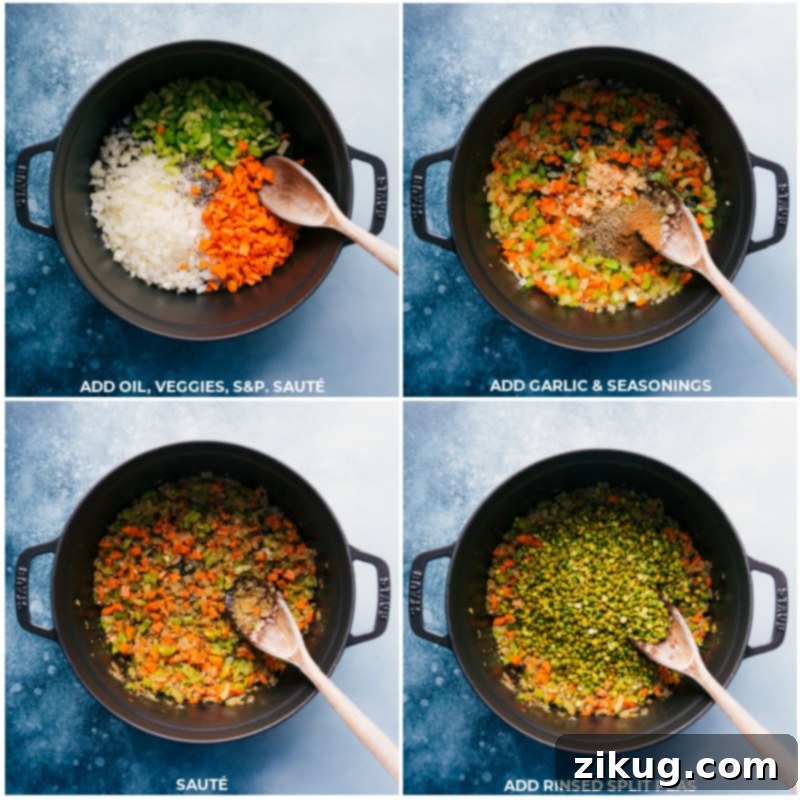
- Sauté the Aromatics: Begin by heating olive oil in a large, heavy-bottomed pot (5.5 quarts or larger is ideal to prevent scorching). Add your finely diced onion, carrot, and celery. Season with a initial sprinkle of salt and pepper. Cook these vegetables over medium heat, stirring occasionally, until they are softened and the onions start to turn a light golden color, typically 5-8 minutes. This step is crucial as it builds the foundational flavor of your soup.
- Infuse with Spices: Once the vegetables are tender, add the minced garlic, Italian seasoning, ground cumin, dried thyme, and red pepper flakes. Continue to cook, stirring constantly for just 1 minute. This brief sautéing period helps to bloom the spices, releasing their full aromatic potential without burning the garlic. Then, stir in the rinsed green split peas, ensuring they are well coated with the flavorful vegetable and spice mixture.
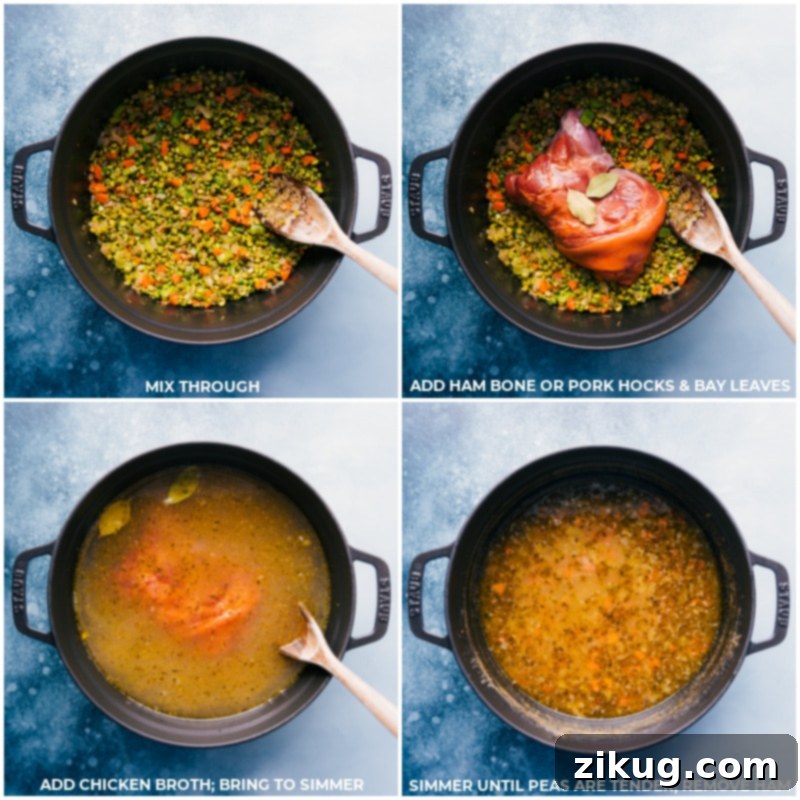
- Build the Broth Base & Simmer: Carefully place the meaty ham bone and bay leaves into the pot with the vegetables and peas. Pour in the reduced-sodium chicken broth. Bring the entire mixture to a rolling boil over medium-high heat. Once boiling, immediately reduce the heat to low, cover the pot loosely, and let it simmer.
- Low & Slow Simmer for Tenderness: Allow the soup to simmer gently, uncovered, for 60-90 minutes. The exact cooking time can vary based on the age of your peas and the size of your ham bone, so patience is key. Stir the soup occasionally, especially as it thickens, to prevent the peas from sticking to the bottom of the pot. Cook until the split peas are completely tender and have started to break down, and the ham meat easily shreds from the bone. If you prefer a thicker consistency, let it simmer a bit longer. Should the soup become too thick, a splash more broth or water will loosen it up. If adding additional diced ham (beyond what’s on the bone), incorporate it during the last 10 minutes of simmering to ensure it warms through without overcooking.
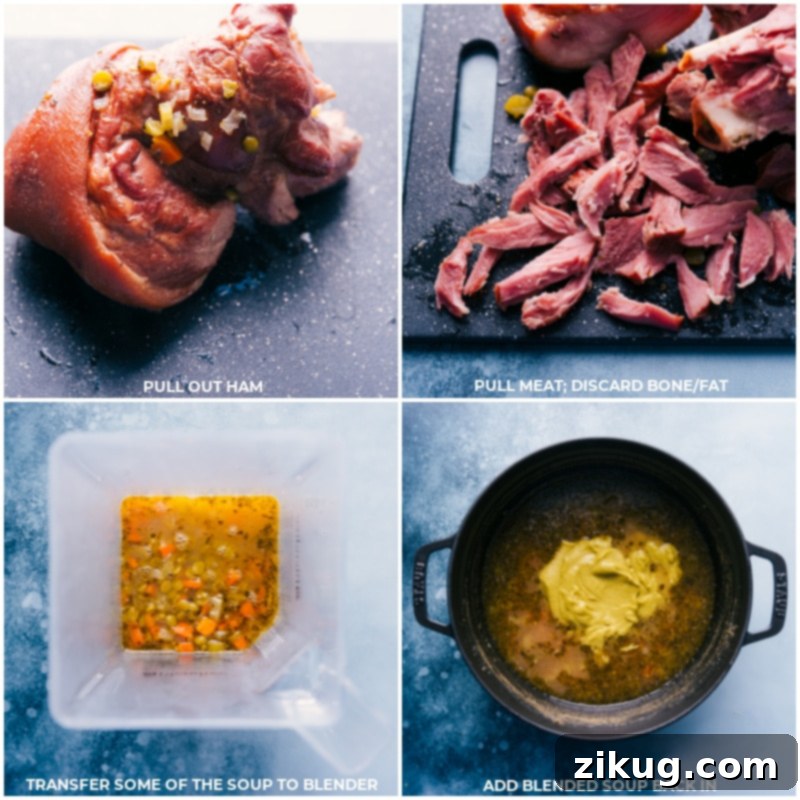
- Final Touches: Remove Ham, Shred & Blend: Carefully remove the ham bone and discard any excess fat. Shred all the tender meat from the bone and return it to the soup. I typically aim for about 2 cups of shredded ham in my soup; if your ham bone yielded less, feel free to add extra diced ham. Remember to remove and discard the bay leaves at this point.
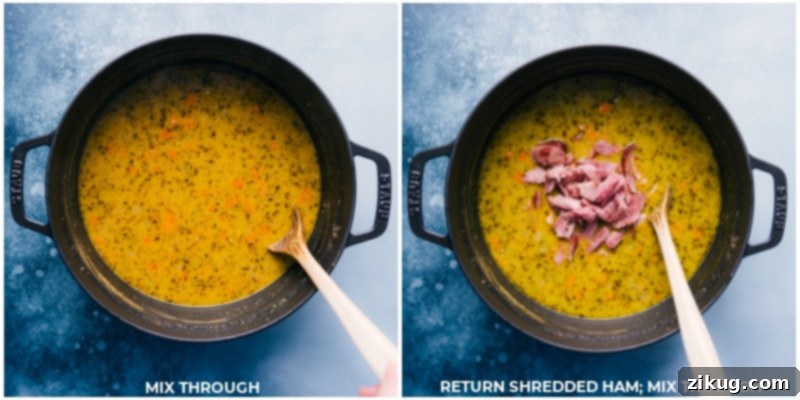
- Achieve Ultimate Creaminess: For that signature thick and creamy texture, remove about 2 cups of the soup mixture (peas and broth, a few veggies) from the pot. Carefully transfer it to a blender. Blend until it’s completely smooth and creamy. (Important Safety Note: When blending hot liquids, always remove the center knob from the blender lid and cover the opening with a clean kitchen towel to allow steam to escape and prevent splatters.) Return this blended puree to the main soup pot and stir it through. This step thickens the soup beautifully and creates a luxurious mouthfeel.
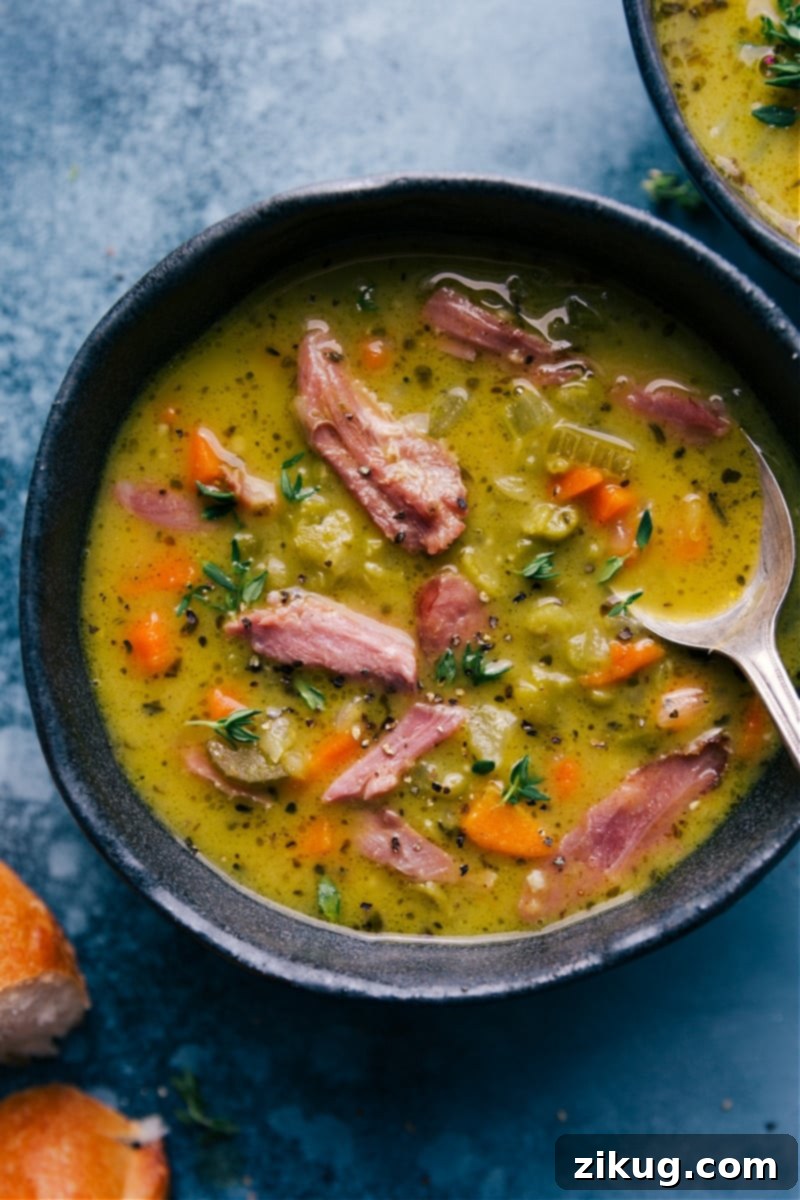
- Season & Serve: Taste the soup and adjust seasonings as needed, adding more salt and pepper to your preference. Ladle the hot soup into bowls. Serve immediately with generous slices of hearty, buttered bread, a fresh sprinkle of black pepper, and fresh thyme leaves if desired. Enjoy the comforting warmth and rich flavors of your homemade Split Pea Soup!
Expert Tips for Split Pea Soup Success
While the recipe is straightforward, a few key insights can elevate your Split Pea Soup from good to truly exceptional:
- Understanding Cooking Time Variability: The exact cooking time for split peas can vary significantly. Factors like the age of your peas (older peas take longer to soften), the type of pot used, and your stove’s heat distribution all play a role. Don’t rely solely on the clock. Instead, check for doneness by seeing if the ham shreds effortlessly from the bone and if the peas are tender and beginning to break down. You can always cook it longer if needed.
- Mastering Your Preferred Texture: For a soup that’s thicker and exceptionally creamy, simply allow it to simmer for a longer duration. The peas will continue to break down, naturally thickening the broth. If your soup becomes too thick for your liking, a simple stir-in of extra water or broth will thin it to your desired consistency. Remember, you have control over the final texture!
- The Importance of a Heavy-Bottomed Pot: Investing in a good quality, heavy-bottomed pot is crucial for this recipe. It helps distribute heat more evenly, which is vital for slow simmering and prevents the split peas from scorching or sticking to the bottom, a common pitfall in thinner pots.
- Strategic Salt Management: Ham, especially ham hocks, can be quite salty. It’s best to add salt slowly and taste frequently throughout the cooking process. If you’re using a particularly salty ham hock or are sensitive to salt, consider replacing 1-2 cups of chicken broth with water to mitigate the sodium content without compromising flavor.
- Maximizing Ham Flavor: The more meat on your ham bone or hock, the more flavor it will impart to your soup. If your ham bone is relatively bare or you’re using smaller ham hocks (less than 1.75 pounds), you might want to add extra shredded or diced ham during the last 10 minutes of cooking. This ensures a rich, meaty flavor and plenty of delicious ham in every spoonful. You can also boost flavor with a touch of chicken bouillon powder if you feel the broth needs more oomph.
Storage Solutions: Enjoying Leftovers
Split Pea Soup Recipe Leftovers? Absolutely!
This soup is often even better the next day as the flavors continue to meld and deepen. Here’s how to properly store and reheat your delicious leftovers:
- Refrigeration: Once cooled, transfer any leftover soup into an airtight container and store it in the refrigerator for up to 3 days. When reheating, you’ll notice the soup will have thickened considerably. Simply add a splash of chicken broth or water to thin it back to your desired consistency.
- How to Reheat: For stovetop reheating, place the soup in a small pot and warm it over low heat, stirring occasionally, until it reaches your preferred temperature. Alternatively, you can reheat individual portions in the microwave. Just be sure to cover the bowl to prevent any splatters!
- Freezing for Later: Split Pea Soup freezes exceptionally well, making it perfect for meal prepping. It can be stored in freezer-safe containers for up to 2 to 3 months. Ensure the soup is completely cool before freezing. For the best methods on thawing frozen soup safely and effectively, check out this comprehensive guide.
What to Serve with Your Hearty Split Pea Soup
This rich and flavorful Split Pea Soup with Ham is a meal in itself, but it pairs beautifully with a variety of sides to complete your dining experience. Here are some fantastic accompaniments:
Appetizers
Life-Changing No-Knead Dinner Rolls
Soft, buttery, and utterly irresistible, these no-knead dinner rolls are perfect for soaking up every last drop of your delicious soup. Their simple preparation makes them an ideal companion.
Green Salads
Light & Refreshing Garden Salad
A crisp, fresh garden salad provides a wonderful contrast to the richness of the soup. The vibrant greens and crunchy vegetables offer a refreshing balance to the meal.
Sandwiches
Delightful Mini Grilled Cheese
For a classic comfort food pairing, serve your split pea soup with mini grilled cheese sandwiches. The gooey, melted cheese and crispy bread are a match made in heaven with any creamy soup.
Salads
Refreshing Winter Fruit Salad
If you’re looking for something light and refreshing, a vibrant winter fruit salad with its sweet and tart notes can cut through the richness of the soup beautifully, offering a bright finish to your meal.
Frequently Asked Questions (FAQ)
Below are some common questions about making Split Pea Soup, along with helpful answers:
- Do I need to soak split peas before cooking?
No, typically split peas do not require soaking before cooking, unlike some other dried beans. They cook relatively quickly and soften beautifully during the simmering process, especially when fresh. Rinsing them thoroughly before use is generally sufficient. - Can I make this split pea soup vegetarian?
Absolutely! To make a vegetarian version, simply omit the ham bone and instead, use vegetable broth. To maintain a smoky, savory depth, I highly recommend adding 1-2 teaspoons of smoked paprika and a bit more salt/pepper to taste. You can also add some sautéed mushrooms for extra umami. For a complete recipe, check out our Vegetarian Split Pea Soup. - What if my soup isn’t thickening?
The primary thickener in split pea soup is the peas themselves. If your soup isn’t thickening, it often means the peas haven’t broken down enough. Continue simmering, stirring occasionally, until they reach your desired consistency. You can also remove a cup or two of the soup, blend it until smooth, and then return it to the pot, as detailed in step 6 of the instructions, to boost thickness. - Can I make this soup in a slow cooker or Instant Pot?
Yes! For a slow cooker, sauté your aromatics as usual, then add all ingredients (including ham bone) to the slow cooker. Cook on low for 6-8 hours or on high for 3-4 hours, until peas are tender and ham shreds easily. Finish by shredding ham and blending a portion for creaminess. For an Instant Pot, sauté aromatics, add remaining ingredients, and cook on high pressure for 15-20 minutes, followed by a natural release. Proceed with shredding and blending as instructed. - Is split pea soup healthy?
Yes, split pea soup is generally very healthy! Split peas are a fantastic source of plant-based protein, dietary fiber, and various vitamins and minerals like iron, potassium, and B vitamins. The inclusion of fresh vegetables further boosts its nutritional value. When made with lean ham or as a vegetarian option, it can be a wonderfully wholesome and satisfying meal.
Print Recipe
Split Pea Soup with Ham Recipe
Equipment
-
Large Pot (5.5 quart or larger, heavy-bottomed)
-
Blender
Ingredients
- 2 tablespoons olive oil
- 2 cups finely diced onion (2 medium onions)
- 1 cup finely diced carrot (2 to 3 large carrots)
- 1 cup finely diced celery (3 to 4 stalks)
- Salt and pepper (to taste, see note 1)
- 1 tablespoon minced garlic (4 cloves)
- 1 tablespoon Italian seasoning
- 1-1/2 teaspoons ground cumin
- 1 teaspoon dried thyme
- 1/8 teaspoon red pepper flakes
- 1-1/2 cups green split peas (rinsed; ensure they are fresh for best results)
- 2 small bay leaves (or 1 large)
- 1 meaty ham bone (or ham hocks, see recipe note 2; plus more ham if desired)
- 8 cups reduced-sodium chicken broth
- Fresh thyme leaves (optional, for garnish)
- Hearty buttered bread (for serving)
Instructions
-
In a large (5.5 quart or larger) heavy-bottomed pot, heat the olive oil over medium heat. Add finely diced onion, carrot, celery, and season with salt and pepper to taste (start with about 1/4 teaspoon salt and 1/2 teaspoon pepper). Cook, stirring occasionally, until the vegetables are softened and the onion is beginning to turn golden, about 5–8 minutes. Add minced garlic, Italian seasoning, ground cumin, dried thyme, and red pepper flakes. Cook, stirring constantly, for 1 minute until fragrant. Stir in the rinsed green split peas, ensuring they are well combined.
-
Add the meaty ham bone, bay leaves, and reduced-sodium chicken broth to the pot. Bring the mixture to a boil. Once boiling, reduce the heat to low, ensuring a gentle simmer. Cook, uncovered, for 60–90 minutes (see recipe note 3 for timing cues), stirring occasionally, especially as the soup begins to thicken, to prevent the peas from sticking to the bottom. Continue cooking until the split peas are very tender and have started to break down, and the ham meat easily shreds from the bone. If the soup becomes too thick for your preference, add a splash more broth or water to thin it. If you are adding additional diced ham (beyond what is on the bone), add it during the last 10 minutes of cooking.
-
When the soup is ready, carefully remove the ham bone from the pot. Shred off as much meat as you can from the bone. Discard the bone and any large pieces of fat. Return the shredded ham to the soup (aim for about 2 cups; if your ham bone yielded less, you may want to add additional chopped ham). Remove and discard the bay leaves. For an extra creamy texture, remove approximately 2 cups of the soup mixture and carefully blend it in a blender until completely smooth. (Important: When blending hot liquids, remove the center knob from the blender lid and cover the opening with a clean kitchen towel to allow steam to escape and prevent splatters.) Return the blended puree to the soup pot and mix it thoroughly. Taste the soup and season, adding additional salt and pepper as needed.
-
Ladle the hot soup into serving bowls. Serve immediately with hearty buttered bread, a sprinkle of fresh black pepper, and fresh thyme leaves, if using. Enjoy this wonderfully comforting and flavorful meal!
Recipe Notes
Note 2: Choosing Your Ham: There are a few options for the ham component. Whatever method you choose, aim for a ham bone with as much meat as possible – this will infuse the soup with maximum flavor and ensure you have plenty of tender ham in the final dish.
- Leftover Ham Bone: If you’ve baked a holiday ham (like for Thanksgiving or Christmas), save the bone (and leave a good amount of meat on it!) specifically for this soup. You can also ask a butcher at your local grocery store if they have any leftover ham bones available.
- Ham Hocks: Ham hocks are essentially a part of the ham bone, and they are typically already smoked and cooked. You’ll usually find them in the meat section of your grocery store or sometimes at the deli counter. They add fantastic flavor.
- Adding Extra Ham: If your leftover ham bone is fairly bare or your ham hock(s) weigh less than 1-3/4 pounds, you’ll likely want to add some extra ham. I personally enjoy having 2 to 2-1/2 cups of ham in this soup. Simply add some shredded or finely diced cooked ham about 10 minutes before the soup is done cooking.
- Boosting Broth Flavor: With a less meaty ham bone or smaller ham hocks, you might find the broth needs an extra boost of flavor. A small amount of chicken bouillon powder or additional salt (to taste) can help achieve the desired richness.
Note 3: Cooking Time Guidance: The overall cooking time for split pea soup can vary considerably due to factors like the age and freshness of your split peas, the type of pot you’re using, and your stove’s specific heat. Here are a few key cues to look for: The ham should shred off the bone very easily with a fork, and the split peas should be tender and creamy. If you prefer an even creamier, more melted texture, continue cooking until the peas soften further and begin to naturally fall apart into the broth. If at any point the soup seems too thick, simply stir in some additional water or broth. Remember, you can always cook more if you desire more tender peas or a thicker soup!
Note 4: Blender Safety: When blending hot soup, it’s crucial for safety to remove the center knob from your blender lid. Replace this opening with a clean kitchen towel. This allows steam to escape safely and prevents pressure from building up, which can cause the lid to blow off and hot soup to splatter.
Note 5: Storage & Freezing: This soup stores beautifully. Keep it in an airtight container in the fridge for up to 3 days. It will naturally thicken upon cooling, so when reheating, you’ll likely need to stir in a little extra chicken broth or water to achieve your preferred consistency. For longer storage, Split Pea Soup freezes exceptionally well for up to 2–3 months in freezer-safe containers. Here are some of the best methods for safely thawing frozen soup.
Nutrition Information
Calories: 218kcal |
Carbohydrates: 29g |
Protein: 13g |
Fat: 7g |
Saturated Fat: 1g |
Polyunsaturated Fat: 1g |
Monounsaturated Fat: 4g |
Sodium: 161mg |
Potassium: 829mg |
Fiber: 9g |
Sugar: 8g |
Vitamin A: 6833IU |
Vitamin C: 10mg |
Calcium: 91mg |
Iron: 3mg
Nutrition information is automatically calculated and should only be used as an approximation.
Like this? Leave a comment below!