
Unlocking the sweet, juicy potential of a ripe mango is easier than you think! This comprehensive visual guide will walk you through two foolproof methods on How to Cut a Mango into perfect cubes or elegant strips. Whether you prefer the classic scooping technique without a peeler or the clean precision of peeling first, we’ve got you covered. Beyond cutting, we’ll answer all your pressing questions about mangoes, from selecting the ideal fruit to clever storage tips, and provide a wealth of delicious ways to incorporate this tropical delight into your culinary creations.
How to Cut a Mango: Two Essential Methods for Perfect Results
Mangoes are a beloved tropical fruit, prized for their vibrant color, intoxicating aroma, and incredibly sweet, succulent flesh. Often called the “king of fruits,” mangoes are not only delicious but also packed with essential vitamins, minerals, and antioxidants, making them a fantastic addition to any diet. However, for many, the thought of cutting a mango can be intimidating due to its large, flat pit and slippery skin. Fear not! This guide will demystify the process, showing you how to confidently cut a mango using two popular, simple, and safe methods.
Choosing the Perfect Mango: The Foundation of a Great Cut
Step One: Choose a Ripe Mango
Before you even think about cutting, selecting a perfectly ripe mango is crucial. A ripe mango not only tastes better but is also significantly easier to cut. Knowing how to identify ripeness ensures a sweet, juicy experience every time.
How do you know if a mango is ripe?
- Forget the Color: While it’s tempting to focus on the color of the skin, it’s not the most reliable indicator of ripeness. Many varieties of mangoes remain green even when perfectly ripe, while others can be red or yellow even if they’re still firm. For example, Ataulfo mangoes turn a deep golden yellow when ripe, but Tommy Atkins mangoes often have a red blush that doesn’t necessarily mean ripeness.
- Always Judge by Feel: This is the golden rule! Gently squeeze the mango. A ripe mango will yield slightly to pressure, similar to a ripe avocado or peach. If it’s rock-hard, it needs more time. If it squishes down easily, it’s likely overripe and may have stringy or mushy flesh.
- Check the Aroma: A ripe mango will sometimes emit a sweet, fruity aroma near the stem end. This fragrant scent is a good sign of its internal sweetness.
- Avoid Imperfections: Look for mangoes that are free of large bruises or black spots. Small specks are generally fine, but significant discoloration can indicate damage or overripeness.
By following these tips, you’ll consistently pick mangoes that are a joy to eat and effortless to cut.
Method 1: The Scooping Method (No Peeler Needed!)
This popular technique, often called the “hedgehog” method, is fantastic for perfectly ripe mangoes and allows you to easily scoop out cubes without having to peel the entire fruit beforehand. It’s quick, efficient, and minimizes waste.
Step Two: Prepare the Mango for Cutting
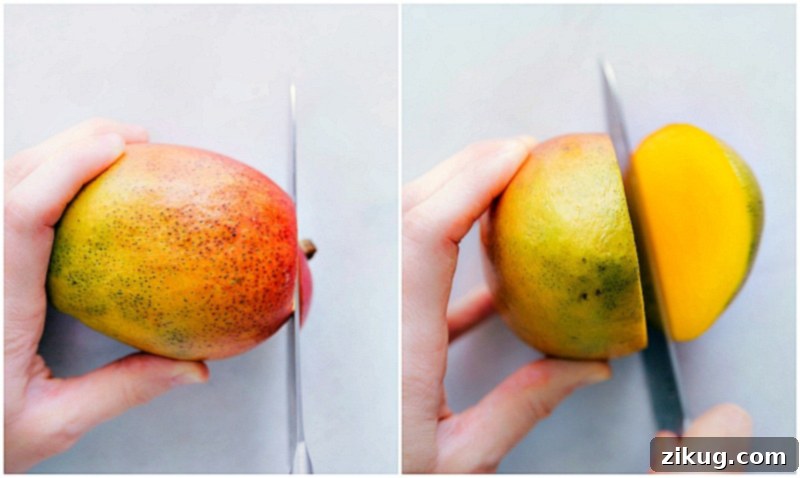
For safety and stability, lay the mango on its side on a clean, sturdy cutting board. Using a sharp chef’s knife, carefully cut off about a quarter to half-inch from the stem end. This creates a flat, stable base, preventing the mango from rolling or shifting while you make subsequent cuts. Stand the mango upright on this newly flattened end. Remember, mangoes contain a long, flat, oval-shaped pit in their center. Your primary objective will be to slice around this pit to yield two large, fleshy pieces (cheeks) and two smaller side pieces of fruit.
Step Three: Slice Off the Two Wider, Flat Sides (Cheeks)
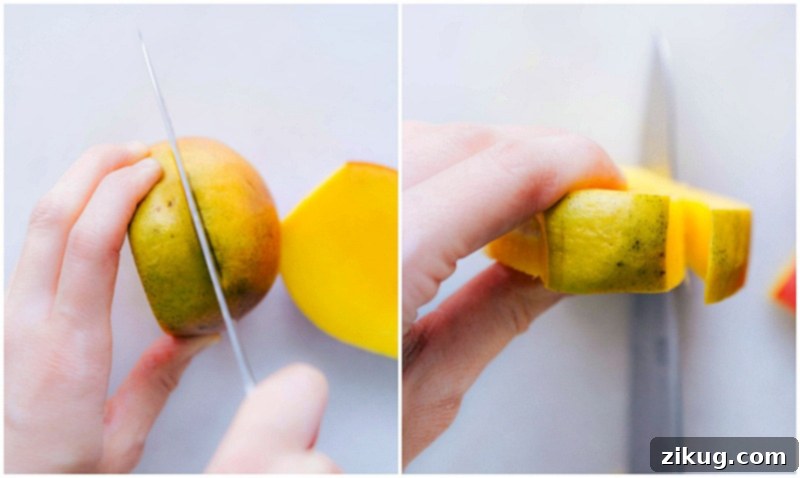
With the mango standing upright, visualize the flat, elongated pit running through its center. Position your knife about a quarter-inch from the center line, parallel to the pit. Carefully make a long, downward cut, slicing off one of the wide “cheeks” of the mango. Repeat this process on the opposite side to remove the second large piece. You should now have two substantial mango halves, each free of the pit.
Step Four: Remove the Remaining Fruit from the Pit (The Chef’s Treat!)
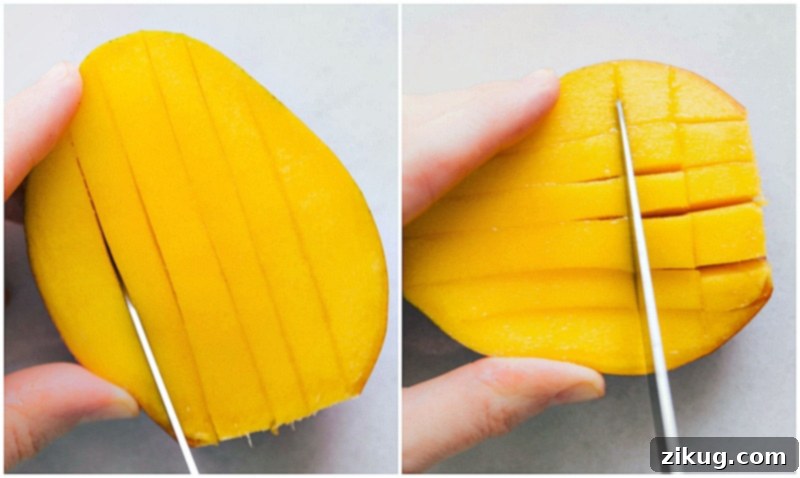
Now, with the two main cheeks removed, you’re left with the pit and two narrower strips of fruit on either side. Carefully stand the pit upright and slice off the remaining fruit from these two narrow sides. Sometimes you’ll get a fair amount, sometimes just a little. This fruit can be added to your recipe, or, as is often the tradition, it becomes the well-deserved snack for the diligent chef! Don’t forget to scrape any remaining bits directly off the pit itself if you’re feeling extra resourceful. 😉
Step Five: Create Vertical Slices in the Mango Cheeks
Take one of the large mango cheeks, skin-side down, and place it on your cutting board. Using your knife, gently make vertical cuts down the length of the mango flesh. Be careful to slice *through* the flesh but *not through the skin*. The skin acts as a natural bowl, holding the fruit together. The spacing of your cuts will determine the width of your mango strips or cubes. If your goal is primarily long mango strips, you can stop here after this step.
Step Six: Make Horizontal Cuts Across the Mango Cheeks (for Cubes)
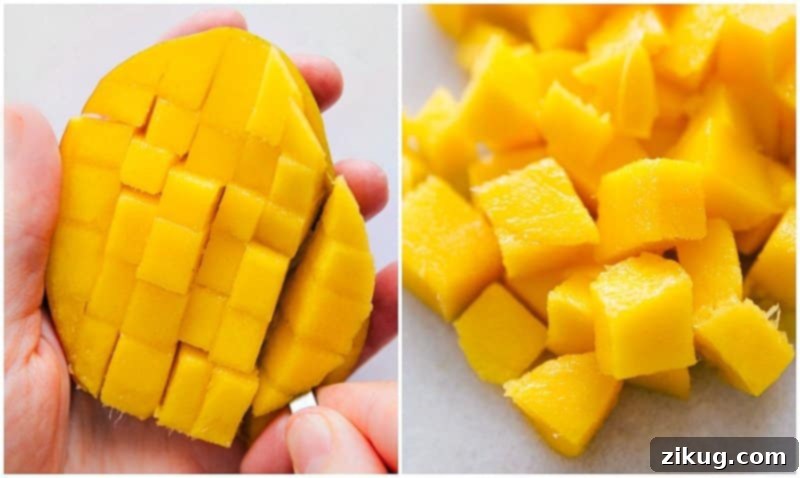
To create perfect mango cubes, rotate the mango cheek 90 degrees. Now, make horizontal cuts across the vertical slices you just made. Again, slice *through* the flesh but *not through the skin*. This will create a grid pattern, effectively dicing the mango flesh while it’s still attached to the skin. The closer your horizontal cuts, the smaller your mango cubes will be.
Step Seven: Scoop Out the Chunks
Once your mango cheek has been scored into a grid, it’s time to scoop! Take a sturdy spoon (the sharper edge of a metal spoon works best) and run it along the mango where the flesh meets the skin. Apply gentle but firm pressure to scoop out the perfectly formed mango chunks directly into a bowl. For very ripe, soft mangoes, this will be incredibly easy. If your mango is slightly less ripe or firmer, you might find it easier to use a knife to carefully separate the cubes from the skin.
Step Eight: Enjoy Your Delicious Mango!
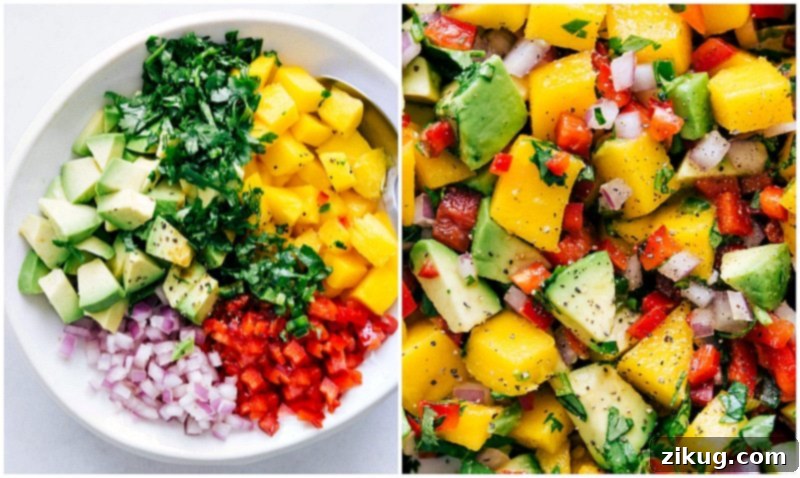
Your mango is now perfectly cut and ready to be enjoyed! Eat it as a refreshing snack on its own, or add it to one of the many delicious recipes we’ll suggest further down this post. The possibilities are endless!
Method 2: The Peeling Method (Ideal for Firmer Mangoes or Specific Recipes)
The peeling method is an excellent alternative, especially if you have a slightly less ripe mango, prefer to work with peeled fruit, or want longer, cleaner strips rather than cubes. This method gives you full control over the fruit’s shape once peeled.
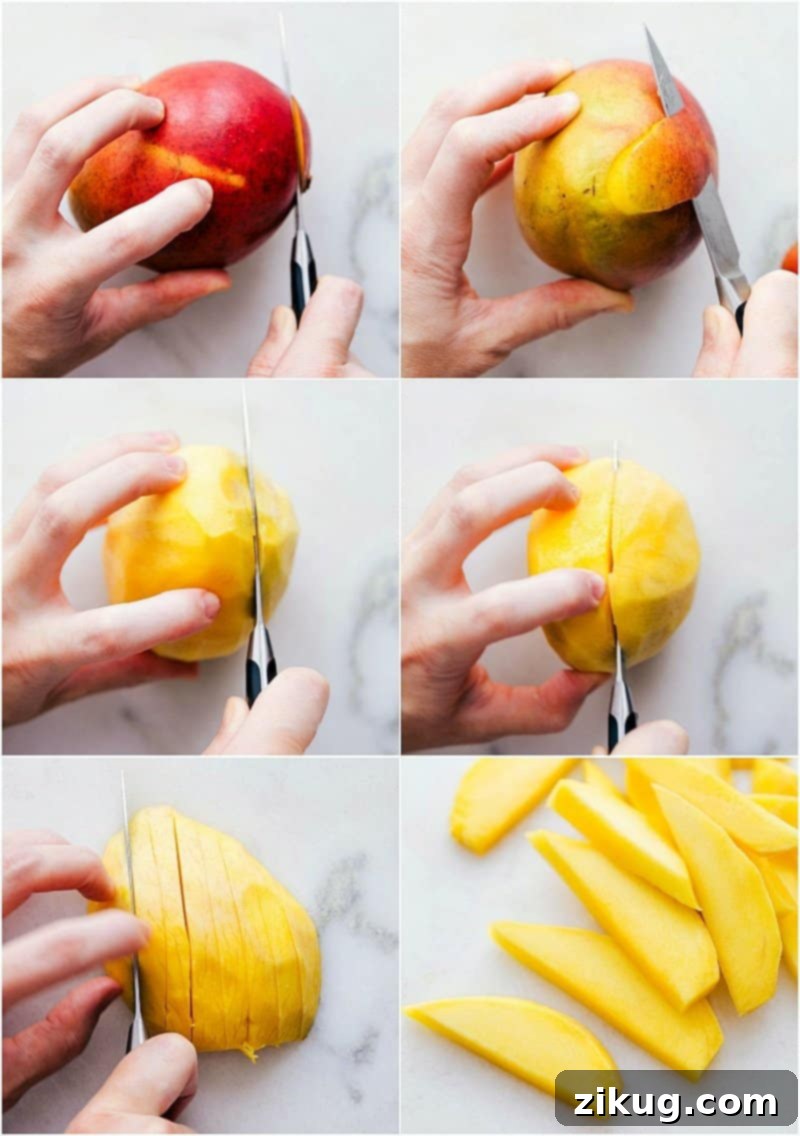
Step One: Prepare and Stabilize the Mango
Just like with the scooping method, begin by laying the mango on its side and carefully cutting off the stem end to create a flat, stable base. This ensures the mango won’t move around on your cutting board, making the peeling and slicing process much safer and easier. Stand the mango upright on this prepared end.
Step Two: Peel the Mango
Now, using either a sharp vegetable peeler or a small paring knife, carefully remove the skin from the entire mango. Work from top to bottom, following the natural curve of the fruit. Aim to remove only the thin skin, taking as little of the precious fruit flesh as possible. For best results, use firm, even strokes.
Step Three: Cut Off the Two Flat, Wider Sides
With the mango peeled and standing upright, visualize the central pit. Position your knife about a quarter-inch away from the center line, and make a clean, downward cut to remove one of the large, fleshy cheeks. Rotate the mango and repeat on the opposite side to remove the second cheek. You should now have two large, pit-free pieces of mango.
Step Four: Cut Off the Two Smaller Remaining Sides
The pit, with its remaining fruit, is still left. Carefully slice off the fruit from the two narrow sides around the pit. Again, this fruit is perfect for adding to your recipe or for a quick, sweet snack. Ensure you get as much fruit as possible from around the pit.
Step Five: Slice the Wide Sides Into Strips
Take one of the large, peeled mango cheeks and lay it flat on your cutting board. Using your knife, slice it into strips of your desired thickness. You can make them thin for salads or thicker for grilling or snacking. Repeat with the second large cheek. The stability of the flat side against the board makes this a very safe and precise cut.
Step Six: Cut Strips Into Chunks (Optional)
If your recipe calls for mango chunks rather than strips, simply gather your mango strips and cross-cut them into uniform cubes. The size of your cubes will depend on how wide you make these cross-cuts. This method provides perfectly consistent chunks of mango, ideal for dishes where presentation matters.
Common Mango Cutting Mistakes to Avoid
- Using a Dull Knife: A sharp knife is crucial for safety and efficiency. Dull knives require more pressure, increasing the risk of slips and accidents.
- Cutting on an Unstable Surface: Always ensure your cutting board is stable. Place a damp cloth or paper towel underneath it to prevent sliding.
- Not Visualizing the Pit: Guessing where the pit lies often leads to uneven cuts or wasted fruit. Take a moment to mentally map out the pit’s position.
- Wasting Fruit Around the Pit: The fruit clinging to the pit and narrow sides is perfectly edible. Don’t discard it! Scrape it off and enjoy it as a snack or add it to smoothies.
The Health Benefits of Mangoes
Beyond their delicious taste, mangoes are nutritional powerhouses. They are an excellent source of Vitamin C, crucial for immune health and skin vitality, and Vitamin A, essential for good vision. Mangoes also provide dietary fiber, aiding digestion, and a host of antioxidants that protect your cells from damage. Incorporating mangoes into your diet is a flavorful way to boost your overall health and well-being.
Storing & Ripening Mangoes: Maximize Freshness
Storing Unripe Mangoes:
Always keep unripe mangoes at room temperature. Placing them in the refrigerator before they are ripe will halt the ripening process and can negatively affect their flavor and texture. Mangoes will continue to ripen on your countertop over several days, becoming sweeter and softer. Keep a close eye on them, as they can transition from perfectly ripe to overripe quite quickly, especially in warmer environments.
Speeding Up Mango Ripening:
To accelerate the ripening process, place unripe mangoes in a brown paper bag. You can further speed things up by adding an apple or a banana to the bag. These fruits release ethylene gas, a natural plant hormone that promotes ripening. Store the bag at room temperature and check daily until the mangoes reach your desired ripeness.
Storing Ripe Mangoes (Whole):
Once a mango is perfectly ripe, you can transfer it to the refrigerator. Chilling will significantly slow down the ripening process, extending its freshness for about 3 to 5 days before use. This is ideal if you’ve bought several ripe mangoes and don’t plan to use them all immediately.
Storing Cut Mangoes:
A freshly cut mango is best enjoyed on the same day. However, if you have leftovers, peeled, sliced, or cubed mangoes can be stored in an airtight container in the refrigerator for 2 to 3 days. This prevents them from drying out or absorbing other flavors from your fridge.
Freezing Mangoes for Later:
Mangoes freeze beautifully, making them perfect for smoothies or desserts year-round. To freeze, spread mango cubes in a single layer on a baking sheet lined with parchment paper. Freeze for 2-3 hours until solid (this prevents them from sticking together). Then, transfer the frozen cubes to a freezer-safe bag or airtight container. Frozen mango can be stored for up to six months, ready for whenever a tropical craving strikes!
Five Delicious Ways to Use Perfectly Cut Mangoes
Once you’ve mastered the art of cutting mangoes, a world of culinary possibilities opens up. Here are some fantastic ways to enjoy your perfectly prepared fruit:
- Fresh Mango Salsa: A vibrant and zesty addition to any meal! Serve Mango Salsa with crispy tortilla chips, alongside grilled chicken, or as a fresh topping for shrimp tacos or chicken tacos. The sweet and tangy flavors are simply irresistible.
- Tropical Fruit Salad: Elevate your fruit salad with the luscious sweetness of mangoes. Combine them with other tropical fruits like pineapple, kiwi, and berries for a refreshing fruit salad or serve alongside a savory breakfast.
- Refreshing Frozen Treats: Mangoes are incredible in chilled preparations. Blend them into a creamy acai bowl, add them to your favorite smoothie for an instant tropical kick, or blend diced mangoes with orange juice and freeze them in ice cube trays for delightful, homemade fruit pops.
- Yogurt Parfait Perfection: Create a healthy and indulgent parfait by layering creamy vanilla yogurt with generous amounts of homemade granola and an abundance of fresh, sweet mango chunks. It’s a perfect breakfast or a light dessert.
- Grilled Chicken & Mango Kebabs: For a uniquely flavorful and healthy meal, thread mango cubes and chicken pieces onto skewers. Grill them until the chicken is cooked through and the mango is slightly caramelized for a delicious, sweet-and-savory combination.
Our Favorite Recipes Featuring Fresh Mango:

Discover more delightful ways to enjoy mangoes with these incredible recipes (from top left to lower right):
Chicken Veggie Kabobs: Perfectly grilled skewers featuring tender chicken and a colorful array of vegetables, often enhanced with a mango glaze or side.
Asian Chicken Tacos with Mango Slaw: A fusion of flavors with savory chicken tucked into tortillas, topped with a refreshing and crunchy mango slaw.
Cilantro-Lime Chicken with Mango Salsa: Zesty chicken infused with cilantro and lime, beautifully complemented by a vibrant, fresh mango salsa.
Pina Colada Fruit Salad: A tropical medley of fruits, featuring pineapple and coconut, with sweet mango adding to the exotic taste.
The BEST Mango Salsa: Our top-rated recipe for a sweet, spicy, and tangy salsa that pairs well with almost anything.
Frequently Asked Questions About Cutting Mangoes
- Can you cut a mango without peeling it first? Absolutely! Our first tutorial, the “scooping method,” guides you through precisely how to do this for perfectly diced or sliced mango.
- How do I cut a mango using a cup or glass? This popular hack involves using the rim of a sturdy glass to separate the flesh from the skin after slicing off the cheeks. While not covered in detail here, you can find a fun visual guide on this technique by Buzzfeed (scroll down past oranges and avocado hacks). It’s a clever trick for ripe mangoes!
- Can I cut a mango exactly in half? Due to the large, flat pit located centrally, a mango cannot be cut into two perfectly equal halves in the traditional sense. However, by carefully slicing off the two wide “cheeks” on either side of the pit, as demonstrated in both methods, you achieve two substantial and nearly equal-sized pieces of fruit.
- What tools do I need to cut a mango? All you really need is a sharp chef’s knife and a sturdy cutting board. For the scooping method, a spoon is also very helpful. If using the peeling method, a vegetable peeler can make the job even easier.
- Why is my mango stringy? Stringy mangoes are often a sign of an unripe fruit, a particular mango variety known for stringiness, or sometimes an overripe one. Ensuring you choose a perfectly ripe, quality mango will usually result in smooth, buttery flesh.
Mastering how to cut a mango opens up a world of delicious possibilities. With these step-by-step instructions and helpful tips, you’ll be confidently preparing this tropical gem in no time. Enjoy your perfectly cut mangoes in all your favorite dishes, or simply savor them fresh for a taste of pure sunshine!