
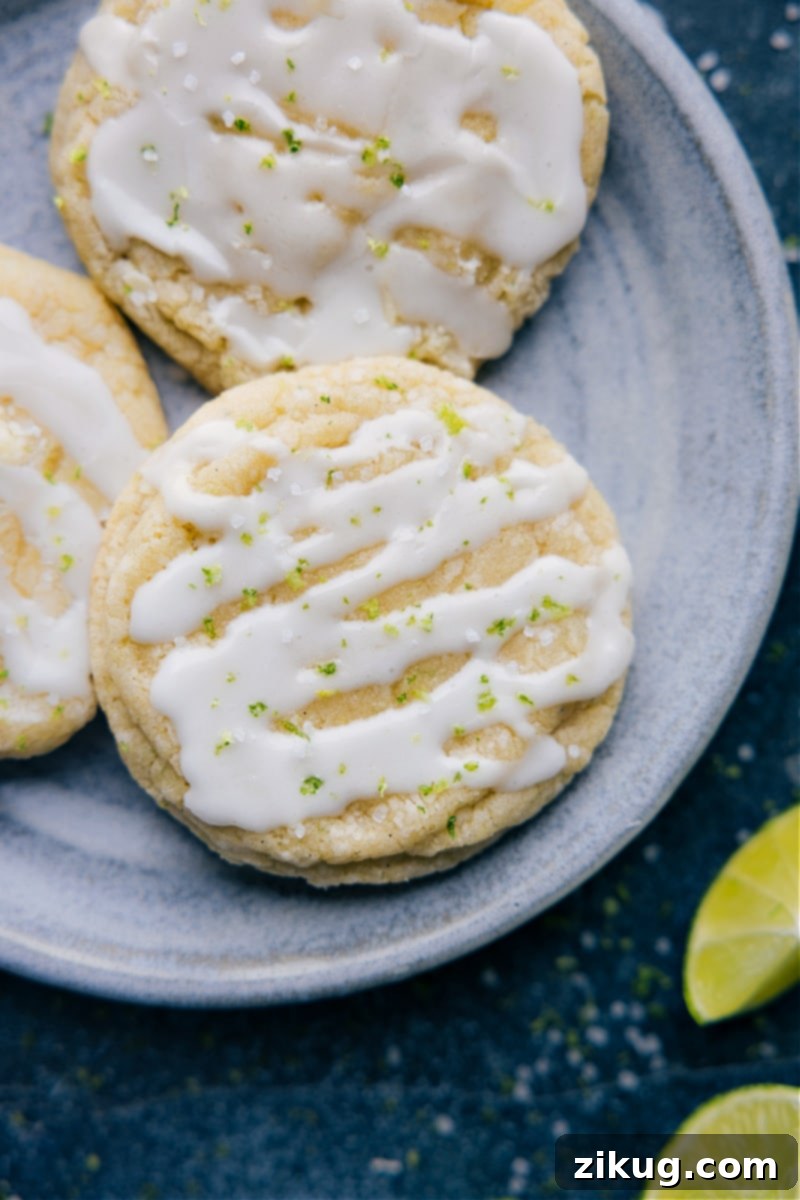
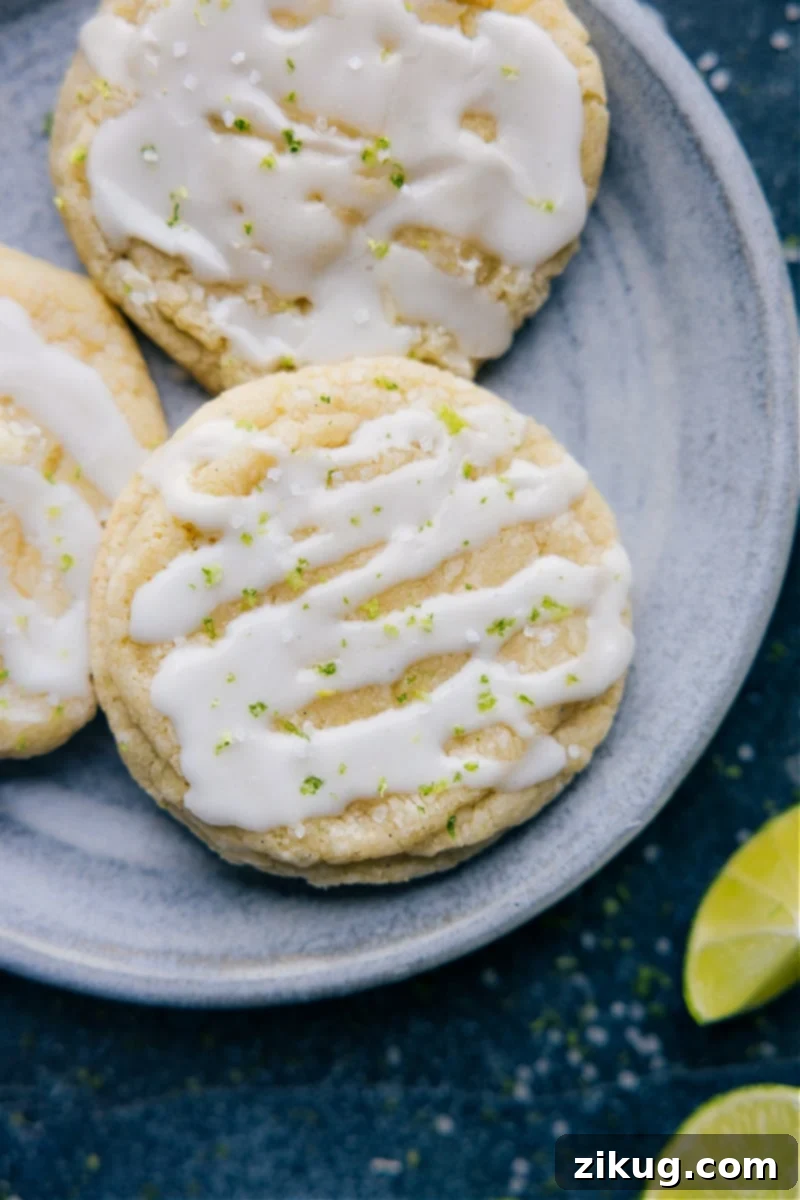
Prepare to fall in love with these irresistibly citrusy Lime Cookies! They are wonderfully thick, delightfully chewy, and bursting with vibrant flavor in every bite. Each cookie is crowned with a bright, zesty lime glaze and features a subtle hint of coconut, creating a soft, bakery-style texture that you’ll crave again and again. These aren’t just cookies; they’re a miniature celebration of sunshine and fresh flavor, perfect for any occasion.
Craving more citrus-infused delights? Explore these beloved recipes next: Classic Key Lime Pie or indulge in our decadent Lemon Cheesecake Cookies.

Author’s Note
Sweet, Tart, and Truly Irresistible: My Quest for the Perfect Lime Cookie!
I know, I know. Proclaiming these as the “best” might seem like a bold statement in the vast world of cookies. But please, hear me out on this culinary journey. Over the years, I’ve embarked on countless baking adventures, meticulously testing numerous lime cookie recipes. Many were either overwhelmingly tart, disappointingly dry, or simply lacked that special something to make them truly memorable. I was on a mission to create a lime cookie that hit all the right notes: thick, exceptionally soft, wonderfully chewy, and bursting with an authentic, bright lime flavor.
When I finally perfected this particular version, I knew I had stumbled upon something truly extraordinary. These cookies embody everything I adore in a citrusy treat. The dough itself boasts a delicate hint of coconut, an optional but highly recommended addition that beautifully complements the vibrant lime. This subtle tropical note elevates the flavor profile, adding an unexpected depth without overpowering the star citrus. And then there’s that sweet, tangy glaze cascading over the top – it’s the perfect finishing touch, harmonizing all the flavors and textures into a cohesive, delightful experience. Without a doubt, I wholeheartedly believe these are the finest lime-laced sugar cookies I have ever had the pleasure of baking and tasting!
Quick Tip for Flavor Perfection
While developing this recipe, I experimented with various forms of coconut in the dough. Interestingly, both I and my dedicated taste testers overwhelmingly preferred the version made with only coconut extract. The extract delivers a subtle, aromatic coconut note that enhances the lime without introducing a competing texture from shredded coconut. However, if coconut isn’t your preference, feel free to omit the extract entirely; these cookies will still be incredibly delicious!
Key Ingredients for Unforgettable Lime Cookies
While every ingredient plays a crucial role in these delightful cookies, a few deserve special attention to ensure you achieve the best possible results:
- Lime Zest: The Soul of the Cookie. This is where the magic happens! Always use only the bright green outer layer of the lime, meticulously avoiding the bitter white pith beneath. Lime zest provides an intense, aromatic burst of lime flavor without adding excess liquid that could alter the cookie’s texture. You truly need the full recommended amount for that vibrant citrus punch.
- Coconut Extract: The Secret Depth. This ingredient is entirely optional but highly recommended for an added layer of complexity. Much like vanilla extract enhances other flavors, coconut extract introduces a subtle, sweet, and nutty note that beautifully complements the tang of the lime. It gives the cookies a nuanced, slightly tropical character that is simply delightful.
- High-Quality Butter: The Foundation of Flavor and Texture. For any exceptional cookie, good butter is non-negotiable. Using premium unsalted butter ensures a superior flavor profile and contributes significantly to the desirable soft, chewy texture. Make sure it’s at room temperature (not melted) for proper creaming.
- Granulated Sugar: Not just for sweetness, sugar also aids in the creaming process and contributes to the cookie’s structure and spread.
- Large Eggs: Essential for binding ingredients, adding moisture, and helping with the rise and chewiness. Ensure they are at room temperature.
- All-Purpose Flour: The structural backbone of your cookies. Measure it accurately, preferably by weight, to avoid dry or dense cookies.
- Baking Powder & Sea Salt: Baking powder provides the necessary lift for fluffy cookies, while a touch of fine sea salt balances the sweetness and enhances all the flavors.
Creative Variations to Try
Feeling adventurous? Transform these into delightful Lemon-Lime Cookies by simply swapping the coconut extract for pure lemon extract! To achieve a noticeable lemon flavor, increase the amount to a full 2 teaspoons of lemon extract. This variation offers an equally bright and zesty experience with a wonderful lemon twist.
Decoding Cookie Texture: What Makes Cookies Soft or Hard?
Achieving the perfect cookie texture is an art and a science, with several key factors influencing whether your cookies turn out delightfully soft or disappointingly hard:
- The actual ingredients used, particularly the fat-to-sugar-to-flour ratio, and the moisture content.
- The size of the cookie dough balls: larger balls tend to stay softer in the center for longer.
- How long the dough is chilled: chilling helps the fat solidify and prevents excessive spreading, contributing to a chewier texture.
- The temperature of the oven and, crucially, how long the cookies are baked for.
For these exquisitely soft Lime Cookies, I rely on a moist dough and specifically recommend forming generously sized dough balls. However, the single most critical technique for guaranteeing soft cookies is simple: do not overbake them! Cookies continue to cook slightly on the baking sheet after being removed from the oven, so pull them out when the edges are just set and the centers still look a little soft and slightly underdone.
The Secret to Fluffy Cookies: Achieving That Perfect Rise
Beyond softness, many bakers aim for a lovely fluffy texture. Here’s what contributes to that desirable puff in your cookies:
- Fresh Baking Agents: Always ensure your baking powder is fresh and active. Expired leavening agents won’t provide the necessary lift.
- Creaming Room-Temperature Butter with Sugars: The foundation of fluffy cookies! Creaming (beating butter and sugar together) incorporates air into the mixture, which expands in the oven, giving your cookies a lighter texture. It’s essential to use room-temperature (not melted) butter for optimal air incorporation.
- Using Room-Temperature Eggs: Like butter, room-temperature eggs emulsify better with the other ingredients, trapping air more efficiently and dispersing evenly throughout the batter. This leads to a more consistent rise and a fluffier crumb.
- Chilling the Dough: This step isn’t just for preventing spread; it also allows the flour to fully hydrate and the gluten to relax. This results in cookies that are less prone to spreading excessively and instead bake up thicker and fluffier. Chilling also gives the sugar more time to absorb liquid, further helping to prevent over-spreading.
Mastering Homemade Lime Cookies: Pro Tips for Success
Crafting these delicious lime cookies from scratch is a rewarding experience. Follow these top tips to ensure your baking journey is smooth and your cookies turn out absolutely perfect every time:
- Precision with a Food Scale: For truly consistent and professional-looking cookies, I highly recommend using a food scale to measure your flour (aim for 400g) and to portion your dough balls (60g each). This method is significantly more accurate than using standard measuring cups, which can lead to varying flour amounts and inconsistent cookie sizes. Uniform dough balls not only bake more evenly but also yield a beautifully consistent final product.
- Cool Completely on a Wire Rack: Patience is key! Once baked, allow your cookies to cool fully on a wire rack. Transferring them too soon or letting them sit on a hot baking sheet for too long can lead to soggy bottoms, which detracts from that desired soft and chewy texture. A wire rack allows air to circulate, ensuring even cooling and preventing condensation.
- Bake on Parchment Paper or a Silicone Liner: For optimal baking results and effortless cleanup, always bake your cookies on a sheet pan lined with either parchment paper or a silicone baking mat. This prevents sticking, promotes even heat distribution, and makes transferring the cooled cookies a breeze.
- Don’t Overmix the Dough: Once you add the flour, mix until just combined. Overmixing develops the gluten in the flour, which can lead to tough, dry cookies. Stop mixing as soon as no dry streaks of flour remain.
- Mind the Baking Time: As mentioned, overbaking is the enemy of soft cookies. Keep a close eye on your oven. Cookies are ready when the edges are lightly set and very slightly golden, but the centers still look a bit soft and perhaps slightly underdone. They will continue to firm up as they cool.
Storage Tips for Soft Lime Cookies
Keeping Your Lime Cookies Fresh
- Freeze Dough, Not Baked Cookies: For the best texture and freshness, it’s always better to freeze the unbaked dough rather than the baked cookies. Form your dough into balls, place them on a baking sheet, and freeze until solid. Once frozen, transfer the dough balls to an airtight freezer-safe container or a heavy-duty freezer bag. They will keep beautifully for up to 3 months.
- Bake from Frozen: When you’re ready for a fresh batch, simply bake the dough balls directly from frozen. You may need to add a few extra minutes (typically 2-4 minutes) to the baking time. Bake until the edges are lightly golden and the centers are soft and just set. This method ensures warm, soft, and delicious cookies whenever a craving strikes!
- Make Glaze Fresh: The vibrant lime glaze is best when prepared just before serving. It does not freeze well and its texture can become grainy or separate upon thawing. Prepare a fresh batch of glaze right before drizzling over your completely cooled, freshly baked (or baked-from-frozen) cookies.
- Store Baked Cookies: If you have leftover baked and glazed cookies, store them in an airtight container at room temperature for up to 3-4 days. For optimal softness, you can place a slice of bread in the container with the cookies; the cookies will absorb moisture from the bread, keeping them soft.
More Delightful Dessert Recipes:
Desserts
Cream Cheese Fruit Dip
Beverages
Creamy Orange Julius
Desserts
Healthy Blueberry Ice Cream
Desserts
Easy Cheesecake Bars Recipe

Print Recipe
Zesty Lime Cookies
Chelsea Lords
30
15
40
1
25
16
cookies
Recipe Video
Equipment
-
Stand mixer
-
Large sheet pan (15″ x 21″)
-
Parchment paper or silicone baking mat
Ingredients
- 16 tablespoons unsalted butter (1 cup, room temperature; do not melt!)
- 1-1/2 cups granulated sugar
- 3 large limes (for zest, see note 1 below)
- 2 large eggs
- 1-1/2 teaspoons coconut extract (optional, see note 2 below)
- 1-1/2 teaspoons vanilla extract (see note 3 below)
- 2 teaspoons baking powder
- 1 teaspoon fine sea salt
- 3 cups all-purpose flour (see note 4 below)
- 1/2 cup powdered sugar (for rolling)
- 1 lime (for lime juice; use 1 of the limes from the cookie dough ingredients)
- 1-1/2 cups powdered sugar
- 1 tablespoon heavy cream
- 1/16 teaspoon salt
Instructions
-
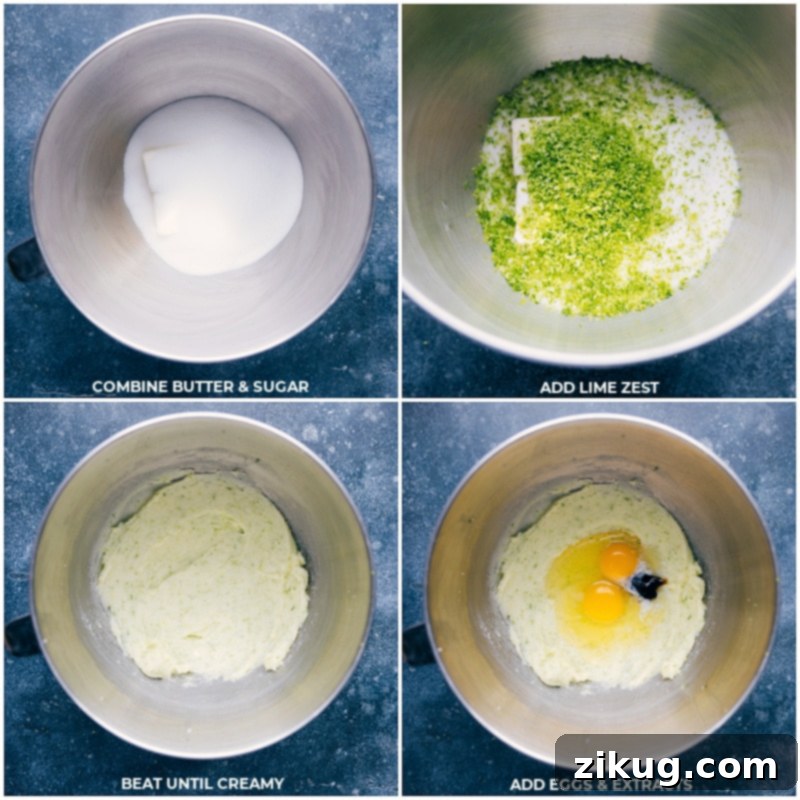
In the bowl of a stand mixer fitted with the paddle attachment, add the softened, room-temperature butter. Add the granulated sugar and 3 tablespoons of finely grated lime zest. Beat on medium-high speed for 2–3 minutes, until the mixture is light, fluffy, and pale in color. Scrape down the sides of the bowl with a spatula, then add the large eggs, vanilla extract, and optional coconut extract. Beat again until all ingredients are just combined and smooth.
-
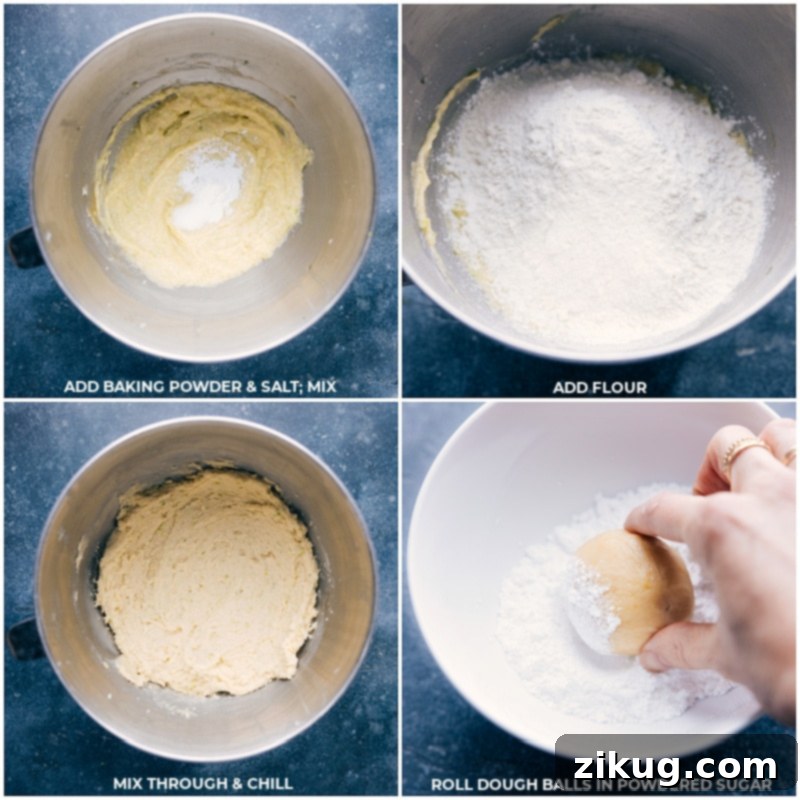
Scrape down the sides of the bowl once more to ensure everything is well-mixed. Add the baking powder and fine sea salt, then mix briefly to incorporate. Gradually add the all-purpose flour, beating on low speed until just combined. Be careful not to overmix; stop as soon as no dry streaks of flour remain visible in the dough.
-
Cover the cookie dough tightly with plastic wrap and refrigerate for a minimum of 20 minutes. While the dough chills, line a large plate or baking sheet with parchment paper. This will be used to hold your portioned dough balls.
-
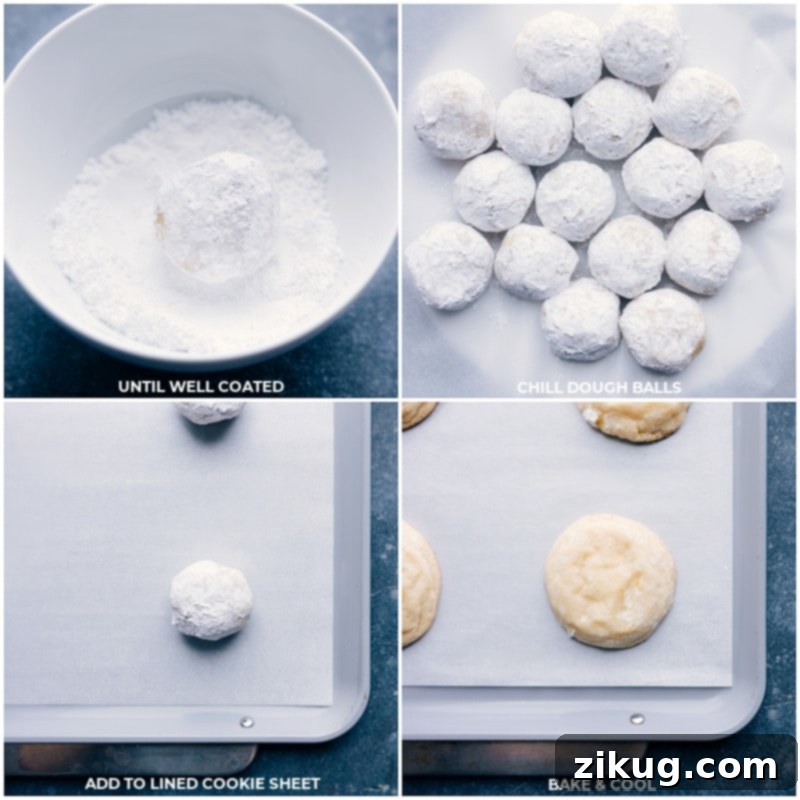
Portion the chilled dough into individual balls, aiming for approximately 1/4 cup or 60 grams each. This size yields the best texture for these cookies (see note 5 below). You should get around 16–18 cookies from this batch. Roll each dough ball thoroughly in the 1/2 cup of powdered sugar until it’s completely coated, then place it on the parchment-lined plate.
-
Return the sugared dough balls to the refrigerator for another 20 minutes to chill further, or place them in the freezer for 10 minutes for a quicker chill. Meanwhile, preheat your oven to 325°F (162°C). Line a large baking sheet with parchment paper or a silicone baking mat.
-
Place no more than 6 cookies at a time on the prepared baking sheet, ensuring adequate spacing as they will spread during baking. Bake for 10–15 minutes, or until the cookies are puffed up, the tops no longer look wet or gooey, and the edges are very lightly browned. It is crucial to avoid overbaking to preserve their soft, chewy texture and vibrant lime flavor. Let the baked cookies stand on the hot pan for 5 minutes before carefully transferring them to a wire rack to cool completely. Only apply the glaze once the cookies are entirely cool. Repeat this process for any remaining dough, or save the unbaked dough balls for later (refer to storage tips).
-
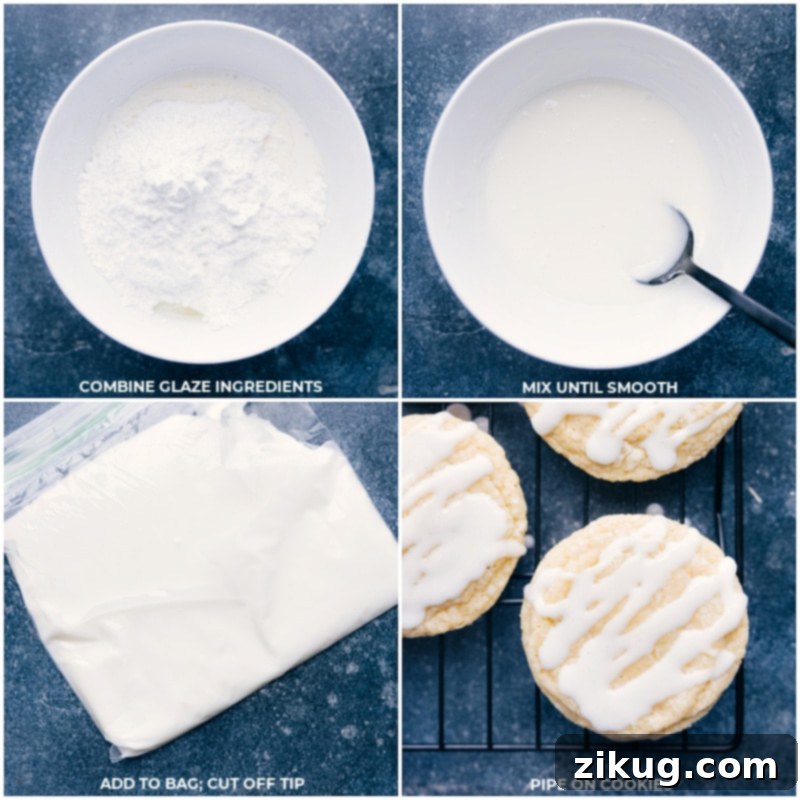
To make the Glaze: In a medium-sized bowl, whisk together 2 tablespoons of freshly squeezed lime juice, the remaining 1-1/2 cups of powdered sugar, the heavy cream, and a tiny pinch of salt. Continue whisking until the glaze is completely smooth and free of lumps. For easy application, transfer the glaze to a resealable plastic bag, seal it, then snip a small tip off one corner. Drizzle the glaze decoratively over the cooled cookies. For an extra touch of freshness and visual appeal, optionally sprinkle with a tiny bit of fresh lime zest. Enjoy these delicious cookies at room temperature or slightly chilled.
Recipe Notes for Best Results
Note 2: The Role of Coconut Extract – While optional, the coconut extract contributes a lovely, nuanced flavor that beautifully complements the tart lime. It provides a subtle, sweet undertone without the textural addition of shredded coconut. You can typically find coconut extract in the baking aisle alongside other extracts and spices at most grocery stores.
Note 3: Vanilla Extract vs. Vanilla Bean Paste – For an even richer, more complex vanilla flavor, I often opt for vanilla bean paste (using 1 teaspoon) instead of liquid vanilla extract. Both work wonderfully, so use whichever you have on hand or prefer for its specific flavor nuances.
Note 4: Precision Flour Measurement – For consistently perfect cookies every time, accuracy is crucial. I strongly recommend using a food scale to measure your all-purpose flour, aiming for precisely 400 grams. This method eliminates the variability often associated with cup measurements and helps ensure uniform cookie dough balls, which leads to even baking and a professional, consistent look.
Note 5: Optimal Cookie Dough Ball Size – These cookies are designed to be substantial! For the best texture – specifically that desired thick, soft, and chewy interior – the dough balls truly work best at approximately 1/4 cup (or 60 grams) each. While you might be tempted to make smaller cookies, be aware that doing so can significantly alter the final texture. Yes, they are big, but believe me, they are perfectly sized for maximum enjoyment!
Storage Instructions: To best preserve the quality of these cookies, always freeze the unbaked dough rather than the baked cookies. Begin by forming your dough into individual balls, then place them on a sheet pan and freeze until they are completely solid. Once frozen, transfer the solid dough balls to an airtight freezer-safe container or a heavy-duty freezer bag, where they can be stored for up to 3 months. When you’re ready to bake, you can cook them directly from frozen; simply add a few extra minutes to the bake time (typically 2-4 minutes) until the edges are lightly browned and the centers remain soft. It is important to make the glaze fresh each time you serve, as it does not freeze well and can separate or become grainy upon thawing.
Nutrition Information (Approximate)
Serving:
1
cookie
|
Calories:
295
kcal
|
Carbohydrates:
46.8
g
|
Protein:
3
g
|
Fat:
11.1
g
|
Cholesterol:
48.2
mg
|
Sodium:
140.6
mg
|
Fiber:
0.7
g
|
Sugar:
29.9
g
Nutrition information is automatically calculated and should be considered an approximation.
Love this recipe? Leave a comment below!
Your feedback helps other bakers!