
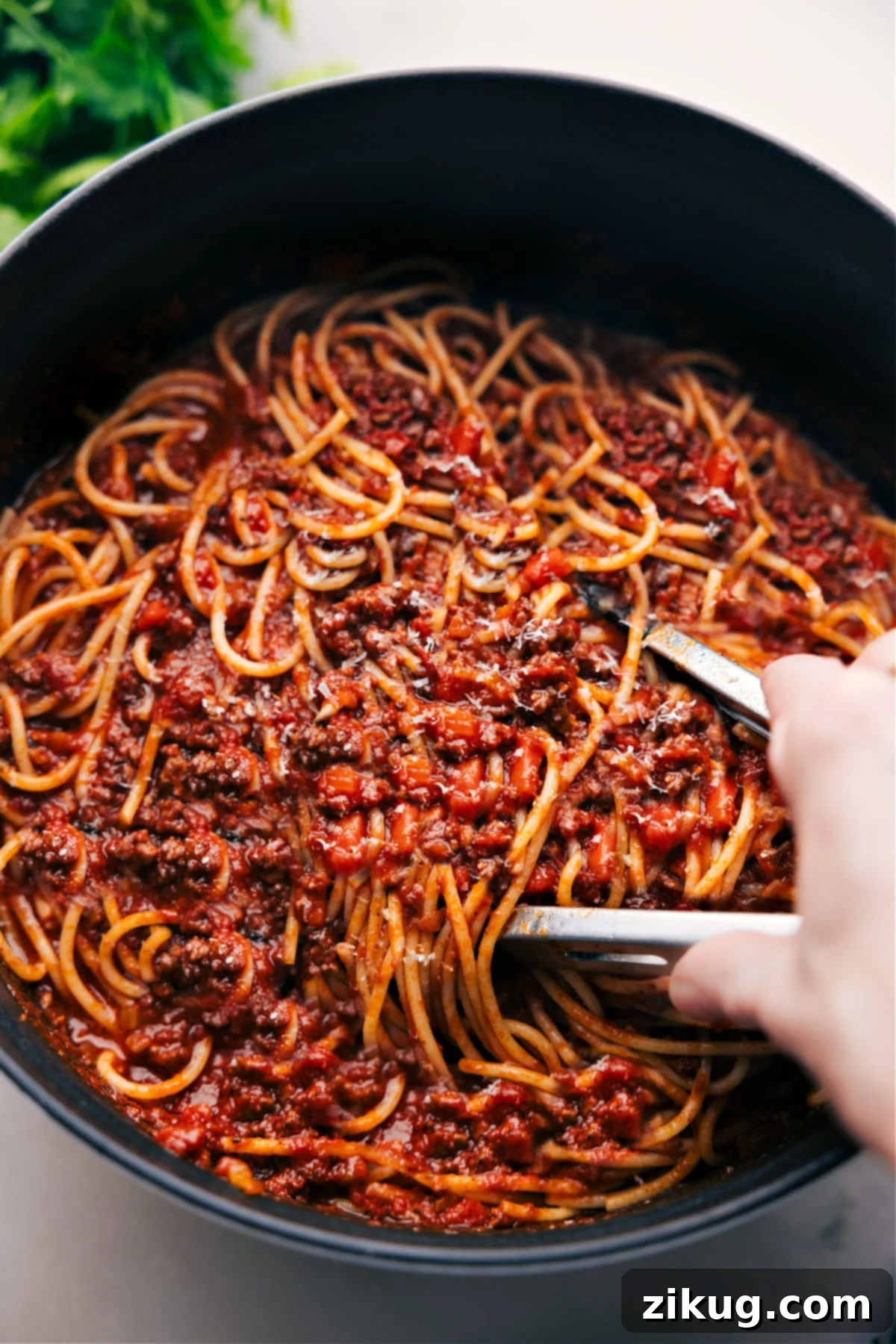
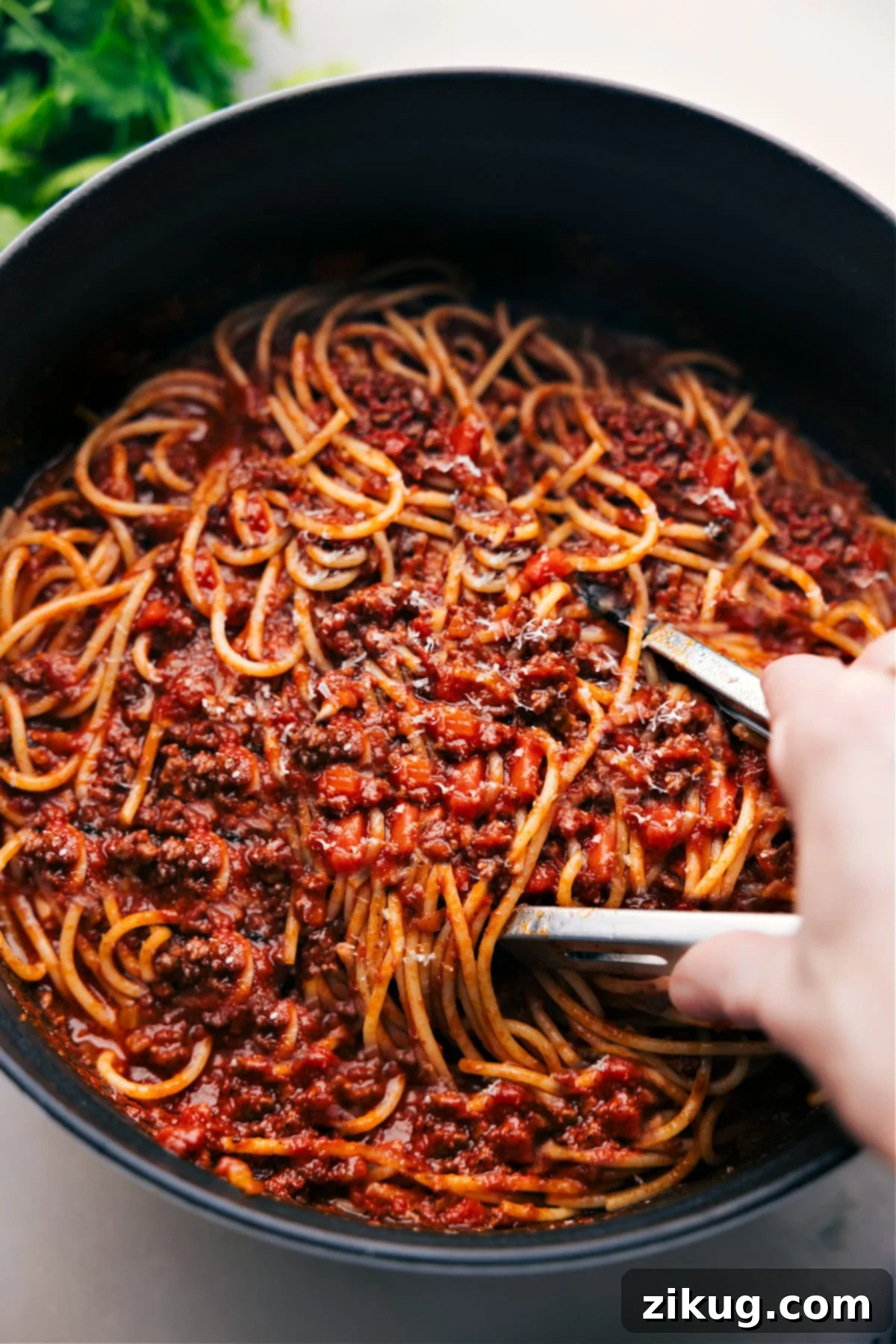
Indulge in the unparalleled richness of this **Spaghetti Bolognese Recipe**, a truly heartwarming and robust dish that only gets better with time. Whether you’re aiming for a quick and satisfying dinner in just 30 minutes or you prefer to let the flavors deepen with hours of slow simmering, this recipe is designed to deliver an unforgettable taste experience. It’s the perfect comfort food for any occasion, promising a deeply savory and satisfying meal.
For those seeking plant-based alternatives, my Lentil Bolognese offers a delicious and equally satisfying option. And if you lean towards lighter meats, be sure to explore my flavorful Turkey Bolognese recipe.

author’s note
My Favorite Bolognese: A Culinary Journey Inspired by a Nonna in Italy!
This beloved Bolognese recipe holds a special place in my heart, deeply rooted in an unforgettable culinary adventure I had in Siena, Italy. I still vividly recall the all-day cooking class led by the wonderful Nonna Ciana and her dedicated translators. It was more than just a class; it was an immersion into the soul of Italian cooking, where we learned to prepare a complete four-course Italian meal. That experience truly became the highlight of my entire trip!
Following the class, one of the translators generously shared a collection of authentic recipes via email. Since then, I’ve been delighting in adapting and sharing these culinary treasures with my own unique twist. Today, I’m thrilled to present my interpretation of the classic Bolognese sauce, infused with those cherished memories and my personal touch.
In Italy, traditional Bolognese is typically served with wider, heartier pasta shapes like pappardelle or tagliatelle. These larger noodles are perfectly designed to cradle the rich, thick sauce, ensuring every bite is enveloped in flavor. However, at my home, spaghetti reigns supreme, especially with my children. Their love for spaghetti means it’s the pasta of choice for most of our family meals. So, while I deeply appreciate the traditional pairings, today’s recipe is all about serving this magnificent Bolognese with classic spaghetti, making it a guaranteed family favorite.
Understanding the Nuances: Bolognese Sauce, Meat Sauce, and Spaghetti Sauce
While often used interchangeably, these three pasta sauces have distinct characteristics that define their flavor, texture, and preparation:
Bolognese Sauce: Originating from Bologna, Italy, this is a sophisticated and rich ragù. It’s characterized by its thick, slow-simmered base of ground meat (often beef, sometimes mixed with pork), aromatic vegetables like carrots, celery, and onions (known as soffritto), a touch of tomato, and often a creamy element like milk or heavy cream. Authentic Bolognese is renowned for its complex, deep savory flavor and is traditionally served with broad, flat pasta shapes that can hold the hearty sauce.
Meat Sauce: A more general term, meat sauce simply refers to any tomato-based sauce that incorporates ground meat. Its ingredients and preparation can vary widely depending on regional preferences and family recipes. It might be thinner or chunkier than Bolognese, contain different vegetables or seasonings, and can be served with various pasta types. It’s a broad category that Bolognese technically falls under, but without the specific conventions and richness of a true Bolognese.
Spaghetti Sauce (Marinara): In the U.S., “spaghetti sauce” often refers to a simpler tomato-based sauce, frequently interchangeable with marinara sauce. This light, vibrant sauce typically features tomatoes, garlic, and herbs, simmered relatively quickly. It’s traditionally served with spaghetti and, while it can sometimes include ground meat, its primary focus remains on the bright, fresh taste of tomatoes and herbs, making it distinct from the meat-centric nature of Bolognese.
Unlocking the Deep Flavors: The “Secrets” to the Best Bolognese
This Spaghetti Bolognese stands out as the absolute best I’ve ever tasted, boasting an incredible richness and a profound, savory depth of flavor. These carefully selected ingredients are the cornerstones of its remarkable taste:
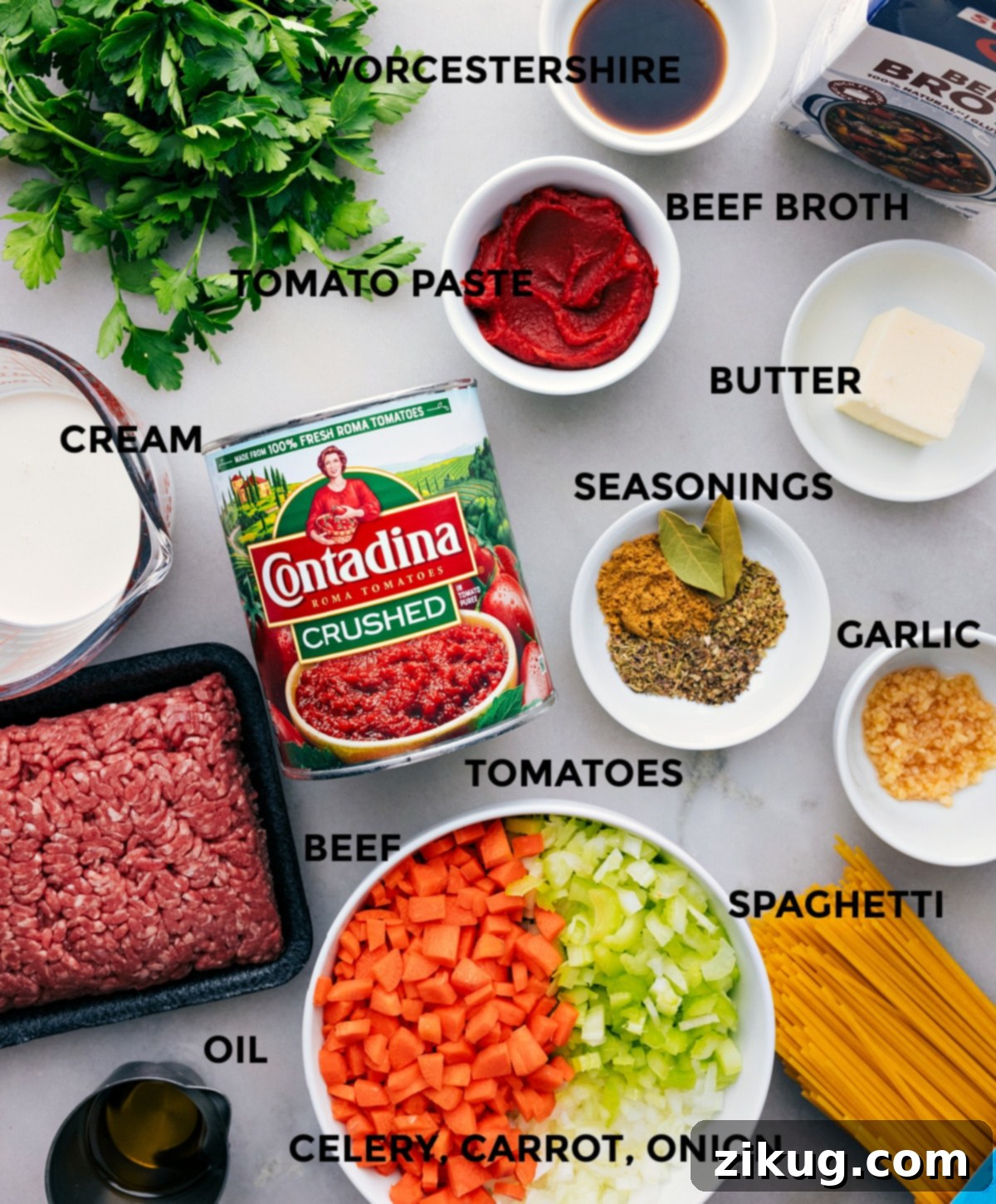
- Soffritto (Veggies): The foundation of countless Italian sauces, soffritto—a finely diced mixture of celery, onion, and carrot—is essential. Slowly sautéing these vegetables in olive oil creates a sweet, aromatic base that builds an incredible depth of flavor. This also serves as a fantastic way to subtly incorporate extra vegetables, making it a win for even the pickiest eaters.
- Ground Beef & Beef Bouillon: High-quality ground beef provides the hearty texture and rich flavor central to Bolognese. Instead of relying solely on salt and pepper, I incorporate beef bouillon powder. This simple addition intensifies the meaty notes, elevating the overall savory profile of the sauce to a whole new level.
- Crushed Tomatoes: The quality of your tomatoes truly makes a difference here, as they form the main flavor profile of the sauce. Opt for the best crushed tomatoes you can find. Their natural sweetness and acidity provide the perfect backbone for this classic dish, ensuring a vibrant and authentic taste.
- Heavy Cream: Many traditional Bolognese recipes include cream or milk, adding a luxurious texture and mellowing the acidity of the tomatoes. I specifically choose heavy cream for its extra richness, which contributes to the sauce’s incredibly smooth, velvety mouthfeel and indulgent flavor.
- Worcestershire Sauce: This might seem like an unconventional addition to an Italian sauce, but just a tablespoon of Worcestershire sauce provides a powerful punch of umami. It acts much like soy sauce in fried rice, enhancing the savory depth and complexity without overpowering the traditional flavors.
- Sugar: A small pinch of sugar is a crucial balancing act. It subtly counteracts the natural acidity of the tomatoes, harmonizing the flavors and preventing the sauce from tasting too sharp. This touch of sweetness rounds out the sauce beautifully, making it perfectly balanced.
Crafting Your Perfect Spaghetti Bolognese: A Step-by-Step Guide
This Spaghetti Bolognese recipe is remarkably versatile, making it suitable for both a bustling weeknight dinner and a leisurely weekend cooking project. If you’re short on time, you can achieve a delicious sauce with a shorter simmer, getting dinner on the table efficiently.
However, for the most profound and delicious results, I highly recommend allowing the sauce to simmer for an extended period, ideally between 2 to 3 hours. This slow cooking process is where the true magic happens; it allows all the intricate flavors to meld and deepen, transforming simple ingredients into a complex, rich, and incredibly satisfying sauce. For added convenience, you can easily start this recipe on the stovetop and then transfer it to a slow cooker to continue simmering, making it a flexible option for busy schedules.
If you’re in search of an even quicker and simpler pasta solution, my One Pot Spaghetti recipe is an excellent choice for minimal cleanup and maximum flavor.
Creative Ways to Utilize Leftover Bolognese Sauce
One of my favorite cooking strategies is to prepare a generous batch of Bolognese sauce. It stores beautifully in the fridge and freezer, making it an invaluable base for creating a variety of delicious meals throughout the week. This recipe scales up effortlessly, so I often double it to ensure I have plenty of extra. While sometimes we simply freeze the surplus for future quick meals, other times we get creative with these delightful ideas for leftover sauce:
- Stuffed Shells: Elevate your classic Stuffed Shells by replacing the traditional marinara with this rich Bolognese sauce. The hearty meat sauce adds an incredible depth of flavor and makes the dish even more satisfying.
- Spaghetti Squash: For a nutrient-dense, veggie-packed meal, roast a spaghetti squash until tender, then top it generously with several spoonfuls of warm Bolognese sauce. It’s a lighter alternative to pasta that doesn’t skimp on flavor.
- Lasagna or Lasagna Roll-ups: This robust sauce is absolutely perfect for layering in a classic lasagna. Its thick consistency and rich flavor hold up wonderfully during baking, ensuring a show-stopping dish. For an easier weeknight option, use it in lasagna roll-ups.
- Stuffed Peppers: Combine cooked white rice with your leftover Bolognese sauce. Spoon this mixture into bell pepper halves, bake until the peppers are tender, then top with a generous amount of mozzarella cheese and broil until golden and bubbly.
- Italian Sloppy Joes: Transform your Bolognese into an Italian-inspired sloppy joe. Heap the warm sauce onto toasted, crusty rolls, top with a slice of provolone or mozzarella cheese, and broil briefly until the cheese is melted and slightly golden. A fun and easy twist on a classic!
Expert Tips for Crafting the Perfect Bolognese:
- Mind the Salt Levels: Given that this recipe includes salted pasta water, beef bouillon, and Parmesan cheese – all significant sources of sodium – you might find that very little, if any, additional salt is needed. Always taste and adjust seasoning at the very end to avoid over-salting your delicious sauce.
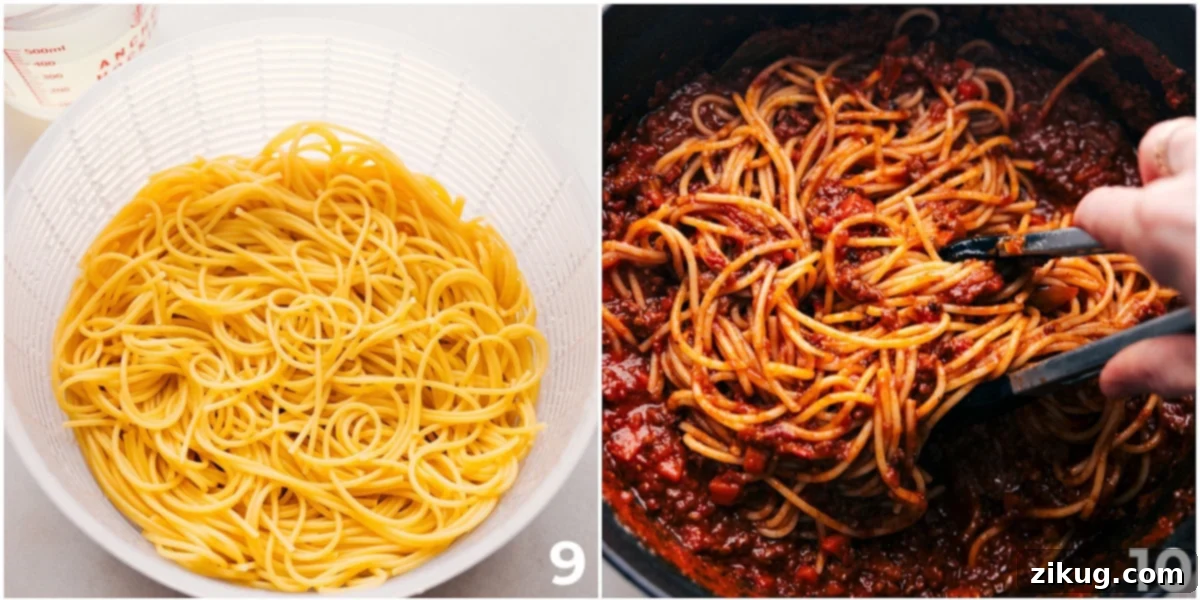
- Toss Sauce with the Pasta: This is a crucial Italian technique that elevates your pasta dish! After cooking, add the drained spaghetti directly into the Bolognese sauce. Then, add a splash of the reserved pasta water and toss vigorously with tongs. This process, known as emulsification, creates a silky, creamy sauce that perfectly coats every strand of pasta, ensuring maximum flavor in every bite. While optional for busy nights, it’s highly recommended for the best texture.
- Utilize a Food Processor for Speed: To significantly cut down on prep time, especially during a busy week, use a food processor to finely chop your onions, carrots, and celery for the soffritto. This ensures a consistent dice and speeds up the initial sautéing process without compromising flavor.
- Combine Meats for Enhanced Flavor: For an even richer, more complex flavor profile, consider using a combination of meats. If you have ground pork or Italian sausage (mild or hot, depending on your preference) available, try using half pork and half beef in your sauce. The different fat contents and seasonings add another layer of deliciousness to the Bolognese.
What to Serve Alongside Your Hearty Spaghetti Bolognese
- Bruschetta: Lightly toasted bread rubbed with garlic, drizzled with olive oil, and topped with fresh, ripe tomatoes and basil makes for an exquisite and classic Italian appetizer that perfectly complements the rich main course.
- Artisan Bread: A crusty, buttery slice of focaccia or warm dinner rolls are essential for soaking up every last drop of that delectable sauce left on your plate – a true mark of a well-enjoyed meal.
- Caesar Salad: A crisp and refreshing Caesar salad, with its vibrant dressing and crunchy croutons, offers a delightful contrast to the rich, hearty Bolognese, balancing the meal beautifully.
- Caprese Salad: This simple yet elegant salad featuring fresh slices of mozzarella, ripe tomatoes, and fragrant basil, drizzled with balsamic glaze, provides a light and refreshing counterpoint to the robust main dish.
- Roasted Vegetables: A medley of beautifully roasted vegetables like broccoli florets, sweet bell peppers, tender onions, or earthy sweet potatoes makes for a wholesome and flavorful side that pairs wonderfully with the meaty sauce.
- Dessert: No Italian feast is complete without a classic Italian dessert. Be sure to save a little room for a heavenly slice of Tiramisu, a light and creamy coffee-flavored delight.
Storage & Make Ahead Tips for Your Bolognese
Bolognese sauce is one of those magical dishes that often tastes even better the next day, making it perfect for meal prepping. It stores and reheats exceptionally well, but for the best quality, it’s crucial to store the sauce separately from any pasta that has already been mixed with it. Pasta tends to absorb the sauce and can become overly soft, dry, or bloated when stored together.
- Storage: The cooked Bolognese sauce will keep beautifully in an airtight container in the fridge for 3-4 days. For longer storage, it can be frozen for up to 3 months. Thaw frozen sauce in the refrigerator overnight before reheating.
- Reheating:
- Microwave: For a quick reheat, portions can be warmed in the microwave, stirring occasionally until heated through.
- Stovetop: For optimal flavor and texture, reheat the sauce in a large saucepan over medium heat, stirring occasionally. If the sauce has thickened too much during storage, add a splash of water, broth, or even milk/cream to achieve your desired consistency.
- Make Ahead: The sauce truly benefits from resting overnight, allowing the flavors to deepen and meld. Prepare the sauce completely, cool it to room temperature, and then refrigerate. When ready to serve, gently warm on low heat before tossing with freshly cooked pasta.
Explore More Italian-Inspired Recipes:
Salads
Healthy Italian Salad Recipe
Dinner
Italian Sausage Pasta Soup
Dinner
Authentic Ragu Recipe
Dinner
One-Skillet Baked Tortellini with Sausage
Authentic & Hearty Spaghetti Bolognese Recipe
Chelsea Lords
20 minutes
10 minutes
1 hour 30 minutes
2 hours
4 servings
Equipment
-
Large pot or 6-quart Dutch oven, ideal for simmering.
Ingredients
- 2 tablespoons olive oil
- 2 tablespoons unsalted butter or another 2 tablespoons olive oil for sautéing
- 3 cups finely diced mirepoix (a blend of carrot, celery, and onion; see note 1 for proportions)
- 1 pound lean ground beef (preferably 93/7 for less fat, or a mix of beef and pork)
- 1/2 cup dry red wine (e.g., Merlot, Cabernet Sauvignon), or beef broth or water
- 1/4 cup tomato paste
- 1 tablespoon minced garlic
- 28 ounces high-quality crushed tomatoes
- 1 tablespoon Worcestershire sauce
- 2 dried bay leaves or fresh bay leaves
- 2 teaspoons beef bouillon powder
- 1/2 teaspoon dried thyme
- 1/2 teaspoon dried basil
- 1/2 teaspoon dried oregano
- 1/2 teaspoon freshly ground black pepper
- 1/2 cup heavy cream
- Salt to taste, adjust at the end
- 13 to 16 ounces spaghetti (use 13 ounces for a saucier pasta-to-sauce ratio)
- Optional additions (see note 2 for balancing flavors)
- Serving suggestions (optional, see note 3 for garnishes)
Instructions
-
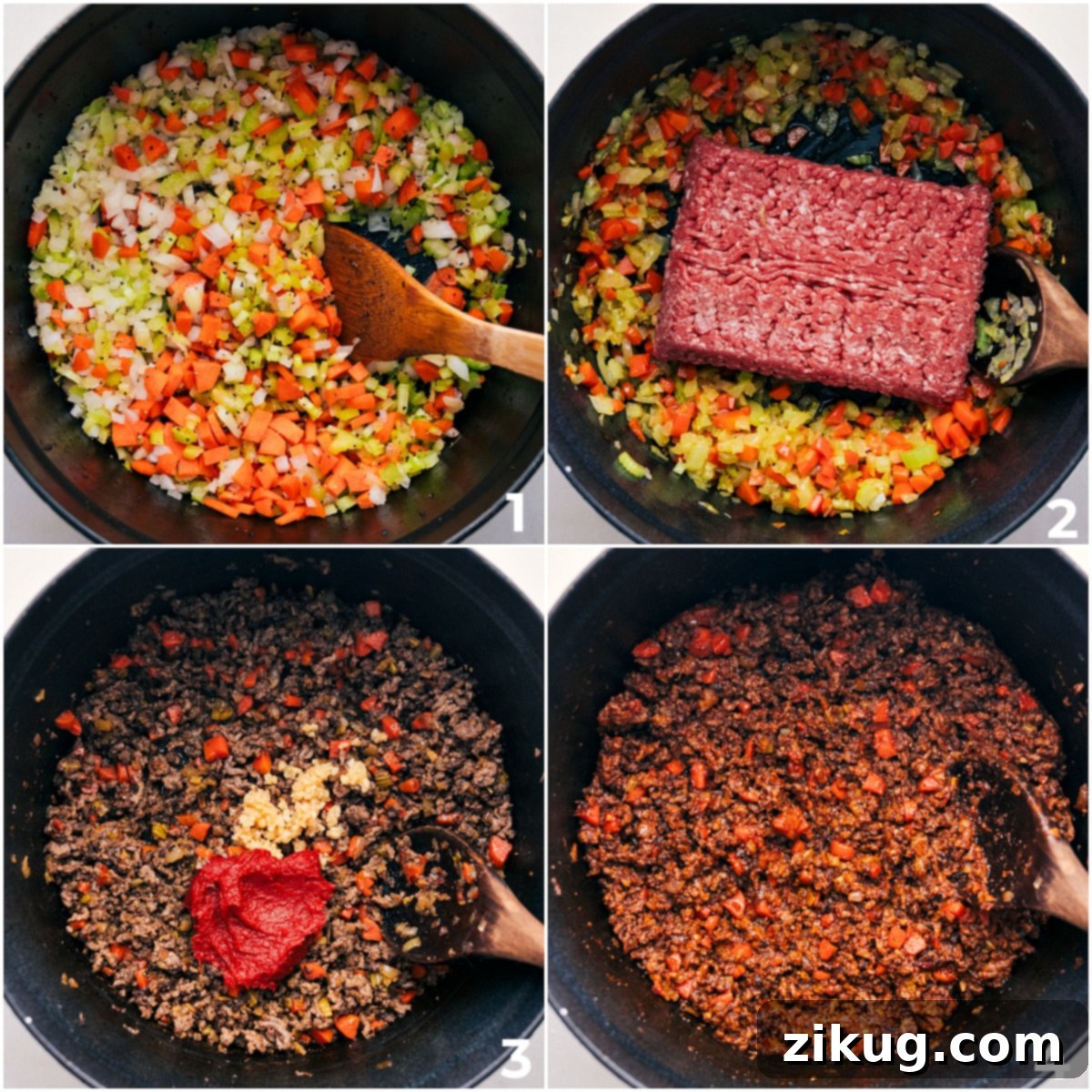
In a large, heavy-bottomed pot or a 6-quart Dutch oven, heat the olive oil and butter over medium heat until the butter is melted and shimmering. Add the finely diced mirepoix (carrots, celery, and onions) and cook gently, stirring occasionally, until the vegetables have softened and become translucent, which typically takes about 8–10 minutes. Once softened, push the vegetables to the edges of the pot, creating a clear space in the center.
-
Increase the heat to high. Add the ground beef to the center of the pot. Allow it to sear undisturbed for a couple of minutes to develop a nice brown crust, then break it up with a spoon and continue cooking until the beef is thoroughly browned and no pink remains, about 5 minutes. This browning step is crucial for deep flavor.
-
Pour in the red wine (or beef broth/water) into the pot. Use a wooden spoon to scrape up any browned bits from the bottom of the pot, deglazing it thoroughly. Continue to cook, stirring occasionally, until most of the liquid has evaporated, leaving behind a concentrated flavor.
-
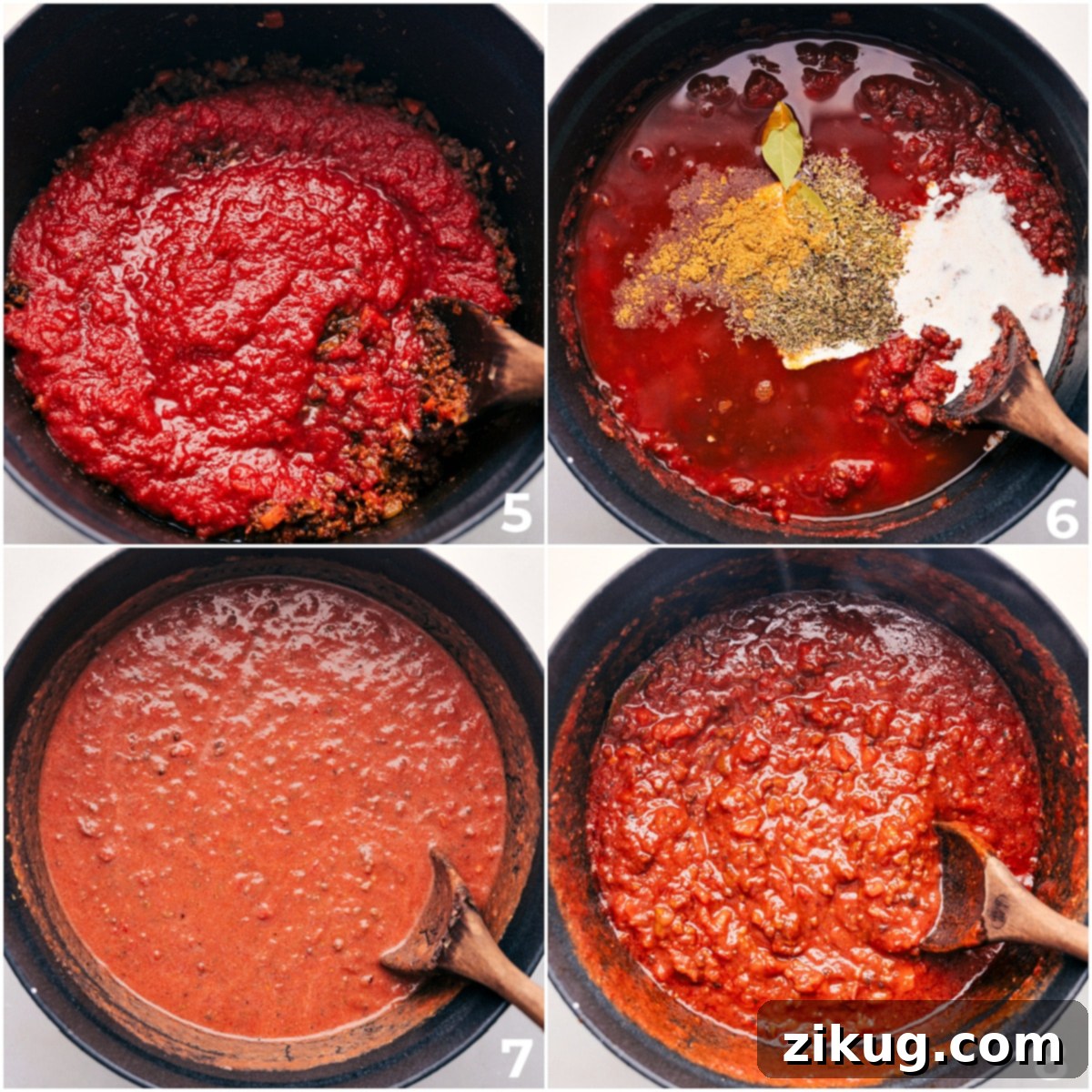
Stir in the tomato paste and minced garlic. Sauté for an additional 2 minutes, allowing the tomato paste to deepen in color and the garlic to become fragrant. Next, add the crushed tomatoes and cook for another 1 minute, stirring constantly to prevent sticking and to combine all ingredients well.
-
Stir in the Worcestershire sauce, bay leaves, beef bouillon powder, dried thyme, basil, oregano, and black pepper. Finally, stir in the heavy cream. At this point, if you are short on time and planning to serve immediately, you can proceed to the next step. If you intend to simmer for a longer period, add 1-1/2 cups of hot water to ensure there’s enough liquid for the extended cooking time.
-
If simmering on the stovetop, transfer the pot to the smallest burner. Cover the pot and reduce the heat to the lowest setting. Let it cook for at least 1-1/2 hours, and ideally up to 3 hours, for maximum flavor development. Stir occasionally to prevent the sauce from sticking to the bottom, and add more water (about 1/2 cup at a time) if the sauce becomes too thick or starts to stick.
Alternatively, for a hands-off approach, transfer the entire contents of the pot to a slow cooker and cook on low for 5–6 hours, or on high for 2-3 hours.
-
The Bolognese sauce is ready when it has thickened to a rich, hearty consistency, similar to sloppy joes. Taste the sauce and adjust seasonings as needed; I often find adding about 1/2 teaspoon of salt at this stage enhances the flavors. If the sauce tastes a bit too acidic, a pinch of sugar or a splash of balsamic vinegar (as detailed in Note 2) can help balance the flavors beautifully.
-
While the sauce simmers, cook the spaghetti according to the package directions. It’s crucial to liberally salt your pasta water; I recommend adding about 1 tablespoon of salt to every 12 cups of water. Before draining the cooked pasta, remember to reserve about 1-1/2 cups of the starchy pasta water. This liquid is invaluable for achieving a perfectly emulsified sauce.
-
Optional, but highly recommended for an authentic finish: Add the freshly cooked and drained pasta directly into the pot with the Bolognese sauce. Using tongs, toss the pasta vigorously until every strand is beautifully coated with the rich sauce. Gradually add a small amount of the reserved pasta water as needed to loosen the sauce and create a luscious, emulsified texture that clings perfectly to the spaghetti.
-
Serve immediately, garnished generously with freshly grated Parmesan cheese and a sprinkle of fresh parsley for a burst of color and herbaceous flavor. Enjoy your truly delicious homemade Spaghetti Bolognese!
Recipe Notes
Note 2 – Finishing Additions for Flavor Balance: After simmering, taste your Bolognese. If you find the tomatoes’ acidity is a bit sharp, adding 2 teaspoons of white granulated sugar can help mellow and balance the flavors. Similarly, for an added layer of depth and a slight tang, 2 teaspoons of balsamic vinegar can work wonders in rounding out the sauce’s profile. Adjust these to your personal preference.
Note 3 – Optional Serving Suggestions: To elevate your Spaghetti Bolognese presentation and taste, consider garnishing with a generous sprinkle of freshly grated Parmesan cheese and a scattering of finely chopped fresh parsley. The sharpness of the Parmesan and the freshness of the parsley provide a wonderful contrast to the rich, savory sauce.
Make Ahead for Enhanced Flavor: This Bolognese sauce genuinely improves overnight as the ingredients have more time to marry and deepen in flavor. After cooking, allow the sauce to cool completely before transferring it to an airtight container and refrigerating. When you’re ready to enjoy, simply warm it gently over low heat on the stovetop before tossing with freshly cooked pasta.
Storage: For optimal freshness and texture, always store cooked pasta and sauce separately if possible. The Bolognese sauce keeps well in an airtight container in the fridge for 3–4 days. For longer preservation, it can be frozen for up to 3 months. Thaw completely in the refrigerator before reheating.
Nutrition
Nutrition information is automatically calculated, so should only be used as an approximation.