
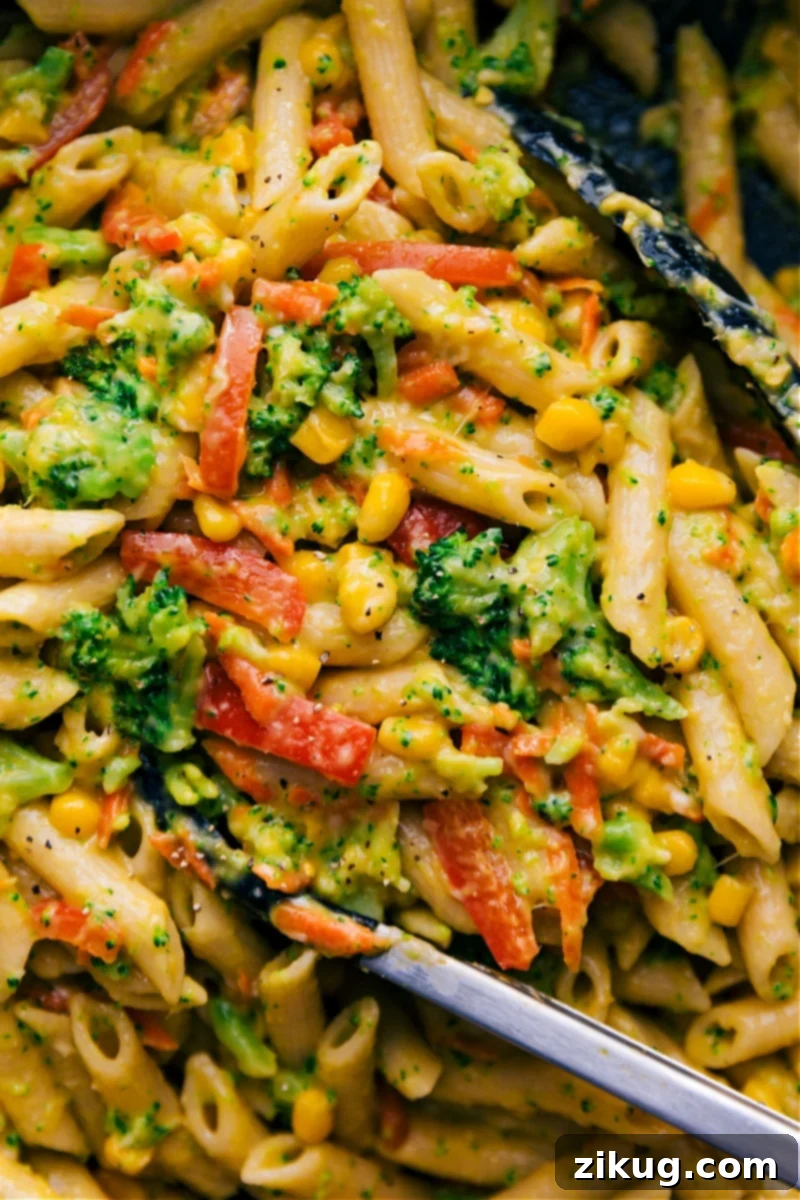
Welcome to your new go-to recipe for a satisfying and incredibly **creamy vegetable pasta**! This delightful dish artfully combines your favorite garden-fresh veggies with perfectly cooked pasta, all enrobed in a rich, velvety sauce. The best part? It achieves this luxurious creaminess without a drop of heavy cream, milk, flour, or any specialty ingredients. It’s a secretly healthy, family-friendly meal that’s both quick to prepare and utterly delicious, making it perfect for weeknight dinners or a leisurely weekend lunch.
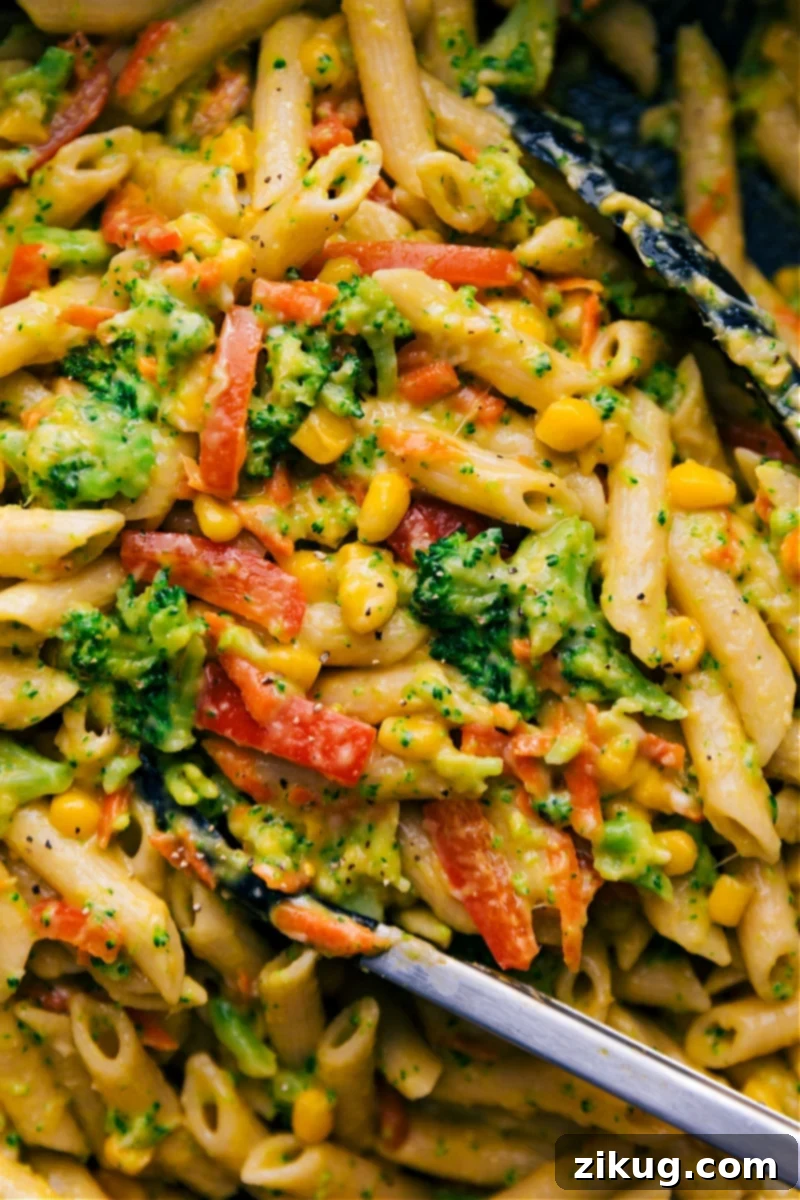

author’s note
The Creamiest Pasta Without Any Cream! My Kitchen Secret Revealed
For years, I dreamt of creating a truly creamy pasta dish that felt rich and indulgent, yet was light enough to enjoy regularly, without the guilt or the heavy ingredients often associated with such comfort food. I experimented tirelessly in my kitchen, blending various vegetables and liquids, trying to achieve that perfect silky texture that coats pasta beautifully. After numerous rounds of testing, a genuine “aha!” moment arrived: the secret lay in harnessing the natural creaminess of cooked vegetables, particularly corn, blended into a smooth sauce base. It’s truly transformative!
This method not only delivers an unparalleled creamy texture but also sneaks in extra nutrients, making it a win-win for both taste and health. Every ingredient is simple, accessible, and likely already in your pantry or easily found at any grocery store. Traditional creamy pastas, like my Chicken Pasta, Creamy Beef and Shells, and Creamy Sausage Pasta, are undeniably comforting and remain favorites in our home, but we typically reserve them for special occasions. This **Creamy Vegetable Pasta** has completely revolutionized our meal rotation. It’s been on repeat for days, and much to my delight, my kids are happily devouring loads of vegetables with absolutely zero complaints. It’s a testament to how delicious and satisfying healthy eating can be!
Why This Vegetable Pasta Recipe is a Must-Try
In a world full of complex recipes, this Creamy Vegetable Pasta stands out for its simplicity and incredible results. Here’s why you’ll absolutely love adding it to your weekly menu:
- **Effortlessly Creamy:** Forget heavy creams, butter-laden roux, or expensive specialty ingredients. Our secret lies in blending simple, wholesome vegetables, primarily cream-style corn, to create a sauce that’s unbelievably smooth, rich, and utterly satisfying.
- **Packed with Nutrients:** This recipe is a fantastic way to sneak more vegetables into your diet, and into your family’s, too! The vibrant mix of broccoli, corn, carrots, and red peppers ensures every bite is bursting with flavor and essential vitamins.
- **Quick & Easy Weeknight Meal:** From start to finish, this dish comes together in just about 30 minutes. It’s perfect for those busy evenings when you need a delicious, homemade meal on the table fast.
- **Family-Friendly & Kid-Approved:** The naturally sweet and savory flavors, combined with the smooth, appealing sauce, make this pasta a hit with even the pickiest eaters. Say goodbye to battles over eating greens!
- **Versatile & Adaptable:** This recipe is incredibly forgiving and easy to customize. Swap in your favorite seasonal vegetables, add a protein, or adjust the spice level to suit your preferences. It’s a perfect canvas for culinary creativity.
- **Budget-Friendly Ingredients:** Using common pantry staples and affordable fresh or frozen vegetables, this pasta dish is kind to your wallet without compromising on taste or quality.
Key Ingredients for This Creamy Vegetable Pasta
Crafting this incredible creamy vegetable pasta relies on a handful of straightforward ingredients. Each one plays a crucial role in building the layers of flavor and achieving that coveted silky texture. Here’s a closer look at what you’ll need and some helpful tips for each:
| Ingredient | Tip & Why It Works |
|---|---|
| Penne Pasta | Penne is fantastic for holding onto the creamy sauce, thanks to its tubular shape and ridged surface. However, any short pasta works beautifully—think rotini, rigatoni, fusilli, or even macaroni. For a healthier twist or added protein, consider whole-grain or chickpea-based pasta varieties. |
| Cream-Style Sweet Corn | This is our secret weapon for natural creaminess! Canned cream-style corn provides a wonderfully sweet base and a thick, smooth texture without any dairy. Can’t find it? No problem! Simply blend thawed frozen corn kernels with a splash of vegetable broth until smooth. |
| Broccoli Florets | Broccoli adds a lovely bite, vibrant color, and a boost of nutrients. Fresh or frozen florets work equally well. A great time-saving trick: add frozen florets directly to the pot with the pasta during the last few minutes of cooking. This eliminates the need for an extra pan and streamlines your process. |
| Unsalted Butter | Butter provides a rich, foundational flavor to sauté our aromatics. If you’re aiming for a dairy-free or vegan version, olive oil or your favorite plant-based butter substitute will work perfectly without compromising on taste. |
| Aromatic Veg Mix: Shallots & Garlic | These two are the backbone of flavor in almost any great sauce. Shallots offer a milder, sweeter onion flavor than traditional onions, while fresh minced garlic provides that essential aromatic kick. They build a fragrant base for our creamy sauce. |
| Fresh & Frozen Corn, Grated Carrot, Red Pepper | This colorful medley adds texture, sweetness, and a burst of fresh flavor. Using both fresh/frozen corn and cream-style corn doubles down on that sweet, creamy corn goodness. The grated carrot almost disappears into the sauce, adding sweetness and nutrition, while thinly sliced red pepper provides a subtle crunch and beautiful hue. Feel free to ‘clean out the crisper’ – peas, spinach, zucchini, or leftover roasted vegetables (like cauliflower or sweet potatoes) would all fit right in and enhance this versatile dish. |
| Parmesan Cheese | A sprinkle of grated Parmesan adds a salty, umami depth that elevates the entire dish. For the best flavor and melt, grate fresh Parmesan from a block. Pre-grated cheese often contains anti-caking agents that prevent it from melting smoothly. Keeping it vegan? Nutritional yeast is an excellent substitute, offering a cheesy, savory kick. |
| Fresh Basil | Fresh herbs are non-negotiable for bright, uplifting flavor. Basil brings a wonderfully aromatic, slightly peppery note that beautifully complements the other ingredients. If basil isn’t available or you prefer a different herb, flat-leaf parsley or even a spoonful of pesto can add similar fresh herb characteristics. Don’t skip fresh herbs for the best results! |
| Salt and Pepper | Essential for seasoning every layer of the dish. Remember to generously salt your pasta water, as this is the first step in flavoring your pasta from the inside out. |
| Red Pepper Flakes (Optional) | For those who appreciate a gentle warmth or a subtle kick, a pinch of red pepper flakes adds a fantastic layer of complexity without overpowering the dish. Adjust to your heat preference. |
Quick Tip: Explore More Kid-Friendly Pasta!
If you’re looking for another fantastic kid-friendly pasta option that isn’t cream-based, be sure to try our delightful Corn Pasta next! It’s another simple, flavorful dish that will win over even the pickiest eaters.
How To Make The Best Creamy Vegetable Pasta Recipe
Creating this rich and healthy creamy vegetable pasta is surprisingly straightforward. Follow these simple steps for a delicious meal that comes together in under 30 minutes:
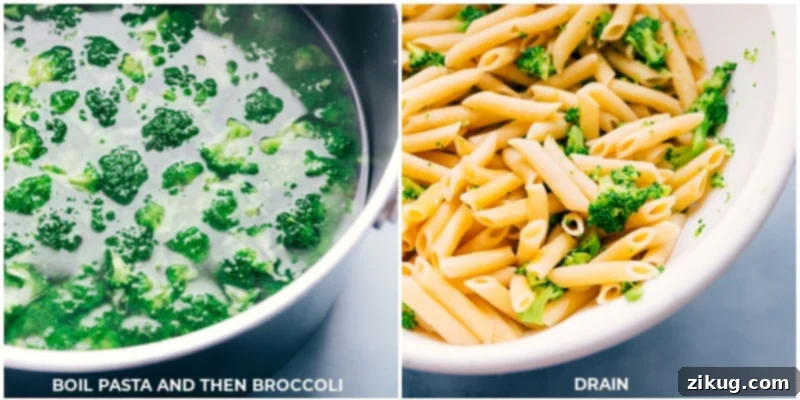
- Prepare Pasta & Broccoli: Begin by cooking your chosen pasta according to package directions, but remember to subtract one minute from the cooking time to ensure it remains al dente. For extra efficiency, add the chopped broccoli florets to the boiling pasta water during the last two minutes of cooking. Before draining, reserve about 1 cup of the starchy pasta water – it’s crucial for achieving the perfect sauce consistency! Then, drain the pasta and broccoli together; do not rinse.
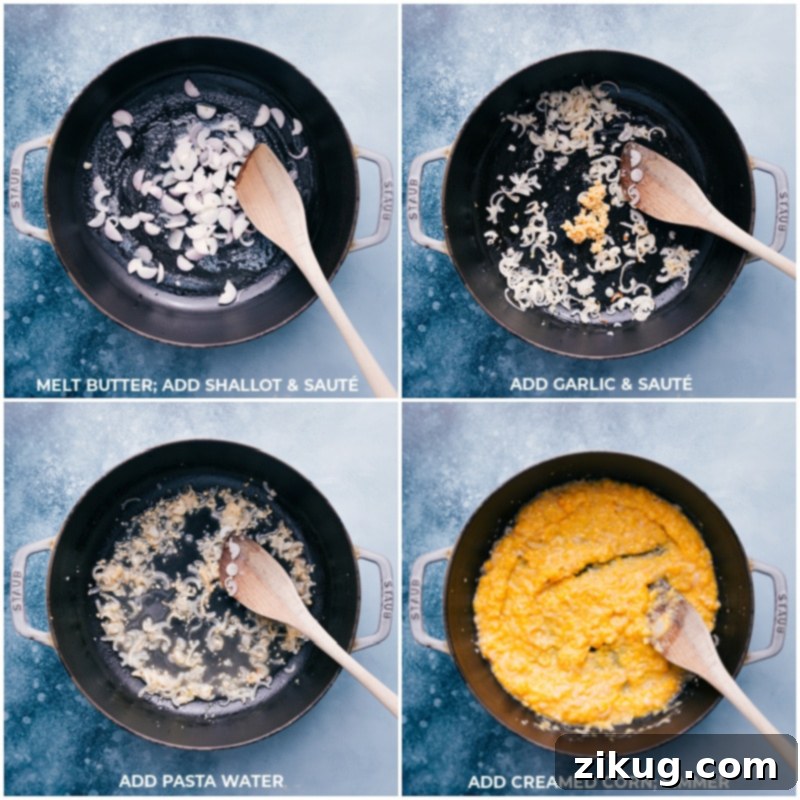
- Build the Creamy Base: While the pasta cooks, thinly slice your shallots and mince the garlic. In a large pot or sauté pan (one big enough to eventually hold all the pasta and vegetables), melt 1 tablespoon of butter over medium heat. Add the shallots, a pinch of salt and pepper, and sauté, stirring frequently, for about 3 minutes until softened. Stir in the minced garlic and cook for another 30 seconds until fragrant. Deglaze the pan with 1/4 cup of the reserved pasta water, then add the can of cream-style corn. Stir well and let it simmer for 3-5 minutes, stirring often.
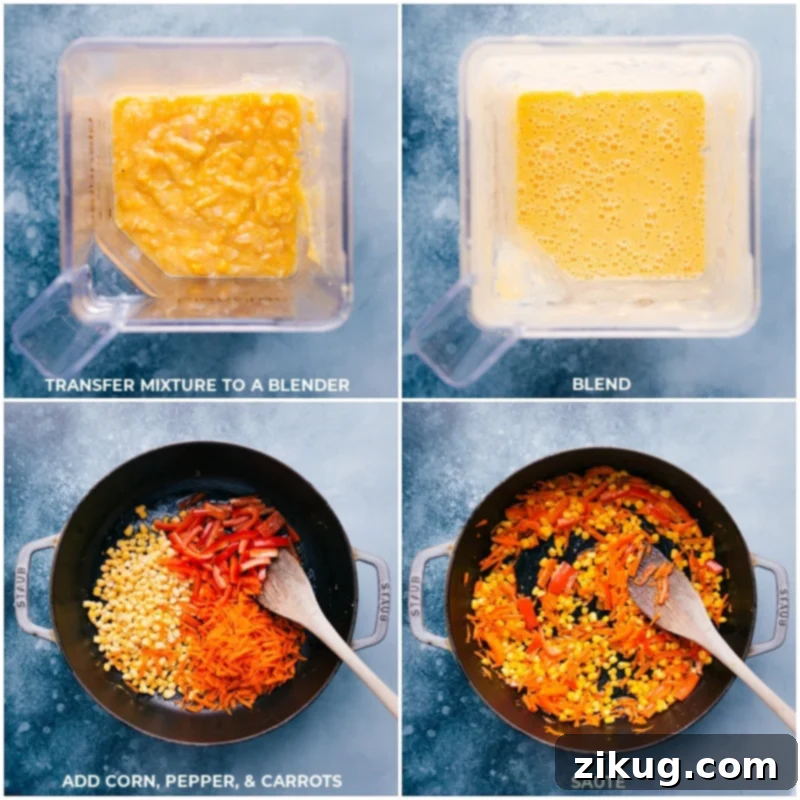
- Blend for Ultimate Creaminess: Carefully transfer this corn mixture from the pan to a blender. Blend on high for 1-2 minutes until it’s exceptionally smooth and velvety. This step is key to getting that luxurious, dairy-free creamy texture.
- Sauté Remaining Veggies & Combine: While the sauce is blending, return the same pot or pan to medium-high heat. Add the remaining 3 tablespoons of butter and melt. Once melted, add the frozen corn, grated carrots, and thinly sliced red pepper strips. Cook for 3-4 minutes, stirring, until the vegetables are crisp-tender. Scrape the beautifully blended corn mixture back into the pan with the sautéed vegetables and mix well. Reduce the heat to medium and let the sauce gently simmer, allowing the flavors to meld while your pasta finishes cooking.
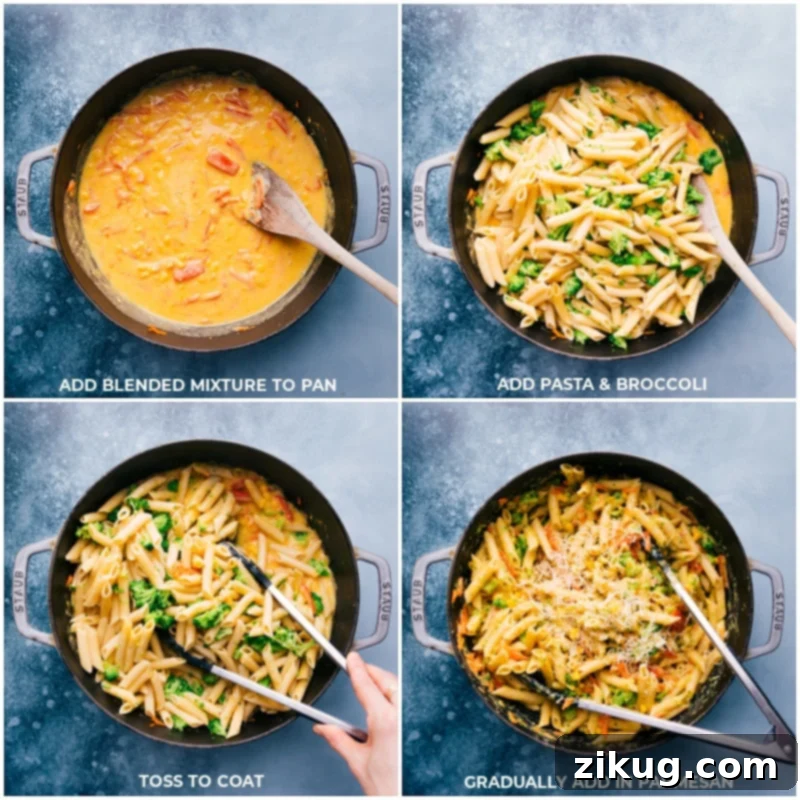
- Toss, Season & Serve: Add the drained pasta and broccoli to the simmering sauce along with 1/4 cup of the reserved pasta water. Toss vigorously to thoroughly coat everything. Cook for 1-2 minutes, adding a little more pasta water if the sauce appears too thick. Gradually add the grated Parmesan cheese, about 2 tablespoons at a time, continuing to toss until the cheese is melted and the sauce is thick enough to beautifully coat the pasta. Taste and adjust seasoning with additional salt and pepper as needed (I often add another 1/2 to 1 teaspoon of pepper and a pinch of salt). Finally, stir in the fresh basil.
- Enjoy Immediately: Serve generous plates of your creamy vegetable pasta, garnished with extra fresh basil and Parmesan, if desired. For a subtle kick, sprinkle with red pepper flakes. This dish is best enjoyed fresh off the stove!
Quick Tip: The Magic of Pasta Water
Many classic pasta recipes, including this one, leverage the humble yet powerful ingredient of reserved pasta water. This starchy, salty liquid isn’t just waste; it’s culinary gold! The starch released from the pasta during cooking helps to emulsify the sauce, binding it beautifully to the noodles and creating a smooth, cohesive, and flavorful consistency. It’s a classic Italian technique that adds body and depth, ensuring your sauce isn’t watery but rather clings perfectly to every strand of pasta. Always remember to save a cup!
Creative Variations for Your Vegetable Pasta
Switch Things Up and Customize Your Creamy Vegetable Pasta!
This creamy vegetable pasta recipe is wonderfully versatile, allowing for endless customization to suit your taste, what’s in season, or what you have on hand. Don’t be afraid to get creative!
- Roasted Veg Remix: Elevate the flavor profile by folding in leftover roasted vegetables at the end. Roasted cauliflower, sweet potatoes, asparagus, or even bell peppers add a smoky depth and tender texture. Simply add them in during the final tossing stage to warm through.
- Protein Power-Up: For a heartier meal, easily add a protein. Sautéed chicken breast, shrimp, crumbled Italian sausage (chicken or pork), or even chickpeas or white beans can be stirred in during the final steps.
- Veggie Noodle Swaps: Looking for alternative pasta options? Use chickpea, lentil, or brown rice pasta for an extra boost of protein and fiber, or to make the dish gluten-free. Zucchini noodles or spaghetti squash could also be lightly tossed with the sauce for a low-carb alternative.
- Spice Kick: If you love a bit of heat, increase the amount of red pepper flakes. For a different kind of warmth, a dash of smoked paprika or a spoonful of your favorite pesto (red or green) can introduce new layers of flavor.
- Herb Garden Freshness: While basil is fantastic, feel free to experiment with other fresh herbs. Fresh dill, chives, or a mix of Italian herbs can offer delightful variations.
- Cheese Please! Beyond Parmesan, consider stirring in a touch of grated mozzarella for extra stretchiness, or a sprinkle of crumbled feta for a tangy counterpoint. A dollop of cream cheese or mascarpone (if you don’t mind adding dairy) can also enhance the richness.
- Seasonal Produce: Adapt the vegetables to what’s fresh and available. In spring, try asparagus and peas. In summer, cherry tomatoes and zucchini would be excellent additions. Fall might call for butternut squash or mushrooms.
The beauty of this recipe is its flexibility, allowing you to create a personalized, delicious, and healthy meal every time.
Storage and Reheating Tips
Vegetable Pasta Recipe Leftovers? Absolutely!
This creamy vegetable pasta is so delicious, you might not have many leftovers! But if you do, it reheats beautifully, making it perfect for meal prep or quick lunches. Here’s how to ensure your leftovers stay just as tasty:
- Fridge Storage: To maintain freshness and flavor, store any leftover creamy vegetable pasta in an airtight container. Place it in the refrigerator promptly after cooling. It will keep well for 3–4 days.
- Reheating: When you’re ready to enjoy your pasta again, you have a couple of great options. For stovetop reheating, place the pasta in a skillet over low to medium-low heat. Add a splash of water or vegetable broth (about 1-2 tablespoons per serving) to help loosen the sauce and restore its creamy consistency as it warms. Stir gently until heated through. Alternatively, you can reheat it in the microwave. Place a single serving in a microwave-safe bowl, add a tablespoon of water or broth, cover loosely, and microwave in 30-second intervals, stirring in between, until hot. Avoid overheating, as this can cause the sauce to separate or become dry.
- Freezing (Not Recommended): While technically possible, freezing this pasta dish is generally not recommended. The creamy vegetable sauce, especially with the blended corn, can sometimes change in texture after freezing and thawing, becoming grainy or separating. The pasta itself might also become overly soft. For the best quality and enjoyment, it’s ideal to consume this dish within the refrigerated storage period.
With these tips, your leftover creamy vegetable pasta will be just as comforting and delicious as when it was first made!
Frequently Asked Questions About Creamy Vegetable Pasta
Here are some common questions you might have about making this delicious and healthy creamy vegetable pasta:
Can I make this recipe gluten-free?
Absolutely! This recipe is incredibly easy to adapt for a gluten-free diet. Simply substitute the regular penne pasta with your favorite gluten-free pasta variety. Chickpea, lentil, or brown rice pasta work wonderfully and also add an extra boost of protein and fiber. Ensure all other ingredients (like any pre-packaged broth if you’re substituting creamed corn) are certified gluten-free.
What if I don’t have cream-style corn?
No problem at all! You can easily make your own cream-style corn. Thaw about 1 to 1.5 cups of frozen corn kernels. Blend them with a splash of vegetable broth (start with 1/4 cup and add more as needed) until smooth and creamy. This homemade version works just as well and provides the same foundational creaminess for the sauce.
Can I add other vegetables to this pasta?
Definitely! This recipe is very flexible. Feel free to add any vegetables you love or have on hand. Great additions include sautéed mushrooms, spinach (stir in at the very end until wilted), zucchini, peas, bell peppers of different colors, or even kale. Just ensure they are chopped to a similar size to cook evenly and blend well with the pasta. Roasting tougher vegetables beforehand can also add another layer of flavor.
Can I make this dairy-free or vegan?
Yes! To make this recipe completely dairy-free and vegan, simply make a few substitutions. Replace the unsalted butter with olive oil or a plant-based butter alternative. For the Parmesan cheese, use nutritional yeast for a cheesy, umami flavor, or a high-quality vegan Parmesan substitute. The sauce base itself is naturally dairy-free thanks to the blended corn.
What kind of blender is best for the sauce?
A high-speed blender will give you the smoothest, most velvety sauce, but any standard blender should work effectively. Just ensure you blend for a full 1-2 minutes on high to achieve that ultra-creamy consistency. If your blender struggles, you might need to stop and scrape down the sides a few times.
How important is the reserved pasta water?
The reserved pasta water is very important! It’s rich in starch, which acts as a natural emulsifier, helping the sauce to thicken and cling beautifully to the pasta. It also helps to loosen the sauce if it becomes too thick during cooking or reheating, ensuring a silky, cohesive texture. Don’t skip this step!
Can I use fresh corn instead of frozen?
Yes, absolutely! If fresh corn is in season, feel free to use it. You’ll need to cut the kernels off the cob. For the cream-style corn base, you’d cook the fresh kernels briefly before blending. For the sautéed corn, fresh kernels would be a delightful addition.
More Recipes with Extra Veggies Snuck In:
Dinner
Ground Turkey Sloppy Joes
Tacos
Asian Pork Tacos
Soups And Stews
Vegetable Noodle Soup
Dinner
Spaghetti Bolognese Recipe

Pin
Creamy Vegetable Pasta Recipe
Video
Equipment
-
Large pot 5.5-quart or bigger, essential for boiling pasta and later combining all ingredients.
-
Large pan or sauté pan Alternatively, use the large pot from pasta.
-
Blender Crucial for achieving the smooth, creamy texture of the sauce.
Ingredients
- 3 cups broccoli finely chopped, fresh or frozen.
- 4 cups penne pasta uncooked (any short pasta works).
- Salt and pepper
- 4 tablespoons unsalted butter divided (or olive oil/vegan butter for dairy-free).
- 1/2 cup thinly sliced shallots or thinly sliced green onions for a milder flavor.
- 2 teaspoons minced garlic
- 1 (14.75-ounce) can cream style sweet corn
- 1 cup frozen corn
- 3/4 cup grated carrot finely grated (see note 1 below).
- 1 large red pepper thinly sliced.
- 1/2 cup grated Parmesan cheese freshly grated for best melting (see note 2 below).
- 1/2 cup fresh basil chopped (see note 3 below for alternatives).
- Red pepper flakes for a touch of heat, optional.
Instructions
-
Prepare Broccoli: If using fresh broccoli, chop it into small, bite-sized florets. If you’re using frozen broccoli, allow it to stand at room temperature for a few minutes to slightly thaw, then give it a quick coarse chop. Measure out 3 cups and set aside, ready to be added to the pasta.
-
Cook Pasta & Broccoli: Place a large colander in your sink and put a glass mug or liquid measuring cup in the center as a visual reminder to save pasta water. Bring a large pot (at least 5.5-quart) of water to a rolling boil. Once boiling, generously season the water with salt (I recommend about 1 tablespoon to properly season the pasta). Return the water to a boil, then add the penne pasta. Cook according to package directions, but reduce the cooking time by one minute to ensure the pasta remains al dente. Two minutes before the pasta is done, add the chopped broccoli to the pot to cook alongside the pasta. Just before draining, carefully remove and reserve 1 cup of the starchy pasta water. Then, drain the pasta and broccoli together in the colander. Do not rinse the pasta.
-
Start the Creamy Sauce Base: While the pasta is cooking, thinly slice the shallots. In the same large pot or a spacious sauté pan (ensure it’s large enough to hold all the pasta and vegetables later), melt 1 tablespoon of unsalted butter over medium heat. Once the butter is melted and shimmering, add the sliced shallots along with a pinch of salt and pepper. Cook, stirring frequently, for about 3 minutes until the shallots soften and become translucent. Add the minced garlic and stir for another 30 seconds until it becomes fragrant. Pour in 1/4 cup of the reserved pasta water (if the pasta is still boiling, simply dip a measuring cup into the pot). Stir well. Add the can of cream-style corn and mix thoroughly. Let the mixture simmer gently for 3–5 minutes, stirring frequently, to combine flavors. Use a spatula to scrape the entire corn mixture into a blender. Blend on high until it is very smooth and velvety, typically 1–2 minutes. (See note 4 for blending hot liquids.)
-
Sauté Remaining Vegetables: While the corn mixture is blending, return the pot or pan to medium-high heat. Add the remaining 3 tablespoons of butter and allow it to melt. Once melted, add the frozen corn, grated carrots, and thinly sliced red pepper strips. Cook, stirring occasionally, for 3–4 minutes, or until the vegetables are crisp-tender. Scrape all the beautifully blended corn mixture back into the pan with the sautéed vegetables and stir to combine. Reduce the heat to medium and let it simmer gently while the pasta finishes cooking, allowing the flavors to marry.
-
Combine & Finish the Pasta: Add the drained pasta and broccoli to the sauce in the pan, along with another 1/4 cup of the reserved pasta water. Toss everything vigorously to ensure the pasta and broccoli are thoroughly coated in the creamy sauce. Continue to toss and cook for 1–2 minutes. If the mixture appears too thick, add a little more pasta water, one tablespoon at a time, until the desired consistency is reached. While tossing, gradually add the grated Parmesan cheese, 2 tablespoons at a time. Continue to toss until the cheese is completely melted and the sauce is thick and beautifully coats every piece of pasta. Taste the pasta and adjust seasoning with additional salt and pepper as needed (I typically add 1/2 to 1 teaspoon more pepper and another pinch of salt). Finally, stir in the fresh chopped basil.
-
Serve & Enjoy: Divide the creamy vegetable pasta among serving plates. If desired, garnish with additional fresh basil and a sprinkle of Parmesan cheese. For those who enjoy a little heat, a dusting of red pepper flakes adds a lovely kick. Serve and enjoy immediately while warm!
Recipe Notes
Note 2 – Parmesan Cheese: The quality of your Parmesan makes a big difference here! Grate a block of high-quality Parmesan on the small holes of a grater for superior flavor and melting capabilities. Alternatively, you can use finely shredded Parmesan cheese. Avoid using canned, pre-grated Parmesan, as it tends to be too salty and often contains anti-caking agents that prevent it from melting smoothly into the sauce, potentially resulting in a gritty texture.
Note 3 – Fresh Basil: Fresh basil is a star in this recipe, lending a bright, aromatic, and slightly peppery flavor that truly elevates the dish. I highly recommend not leaving it out. However, if fresh basil isn’t your preference or is unavailable, flat-leaf Italian parsley or even a teaspoon of high-quality pesto can be used as a fresh herb alternative to add a similar vibrant herbaceousness.
Note 4 – Blending Hot Liquids: When blending hot liquids like our corn sauce, safety is paramount. Always ensure the blender lid is secured tightly. If your blender has a “soup” or “hot” cycle, select it. Otherwise, start on a low speed and gradually increase it. Keep an eye on the blender and avoid filling it to the very top, as steam can build pressure and cause the lid to burst off. A useful trick if your blender lacks a special hot setting is to remove the small cap from the lid (the one used to add ingredients while blending) and replace it with a folded kitchen towel, holding it firmly in place with your hand. This allows steam to escape while preventing splatters. Remove the lid carefully after blending, as it will likely release a burst of steam.
Storage: Store any leftover creamy vegetable pasta in an airtight container in the fridge for up to 3-4 days.
Reheat: To reheat, gently warm on the stovetop over low heat or in the microwave. Add a splash of water or vegetable broth (1-2 tablespoons per serving) to help loosen the sauce and restore its original creamy consistency. Stir frequently until heated through.
Nutrition
Nutrition information is automatically calculated, so should only be used as an approximation.