
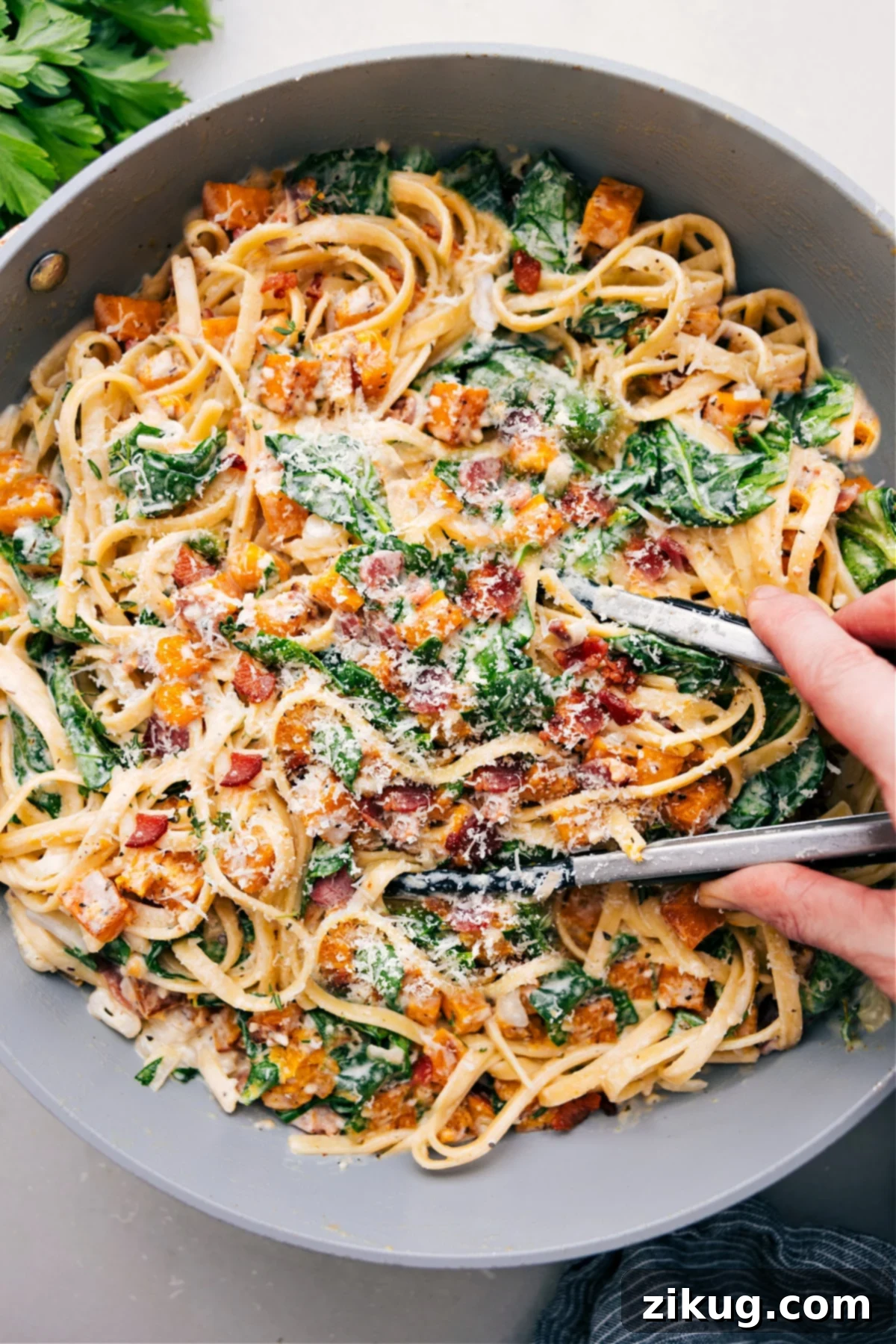
Butternut Squash Pasta with tender, caramelized squash, savory crispy bacon, and aromatic fresh thyme is the epitome of autumn comfort food – pure pasta perfection!
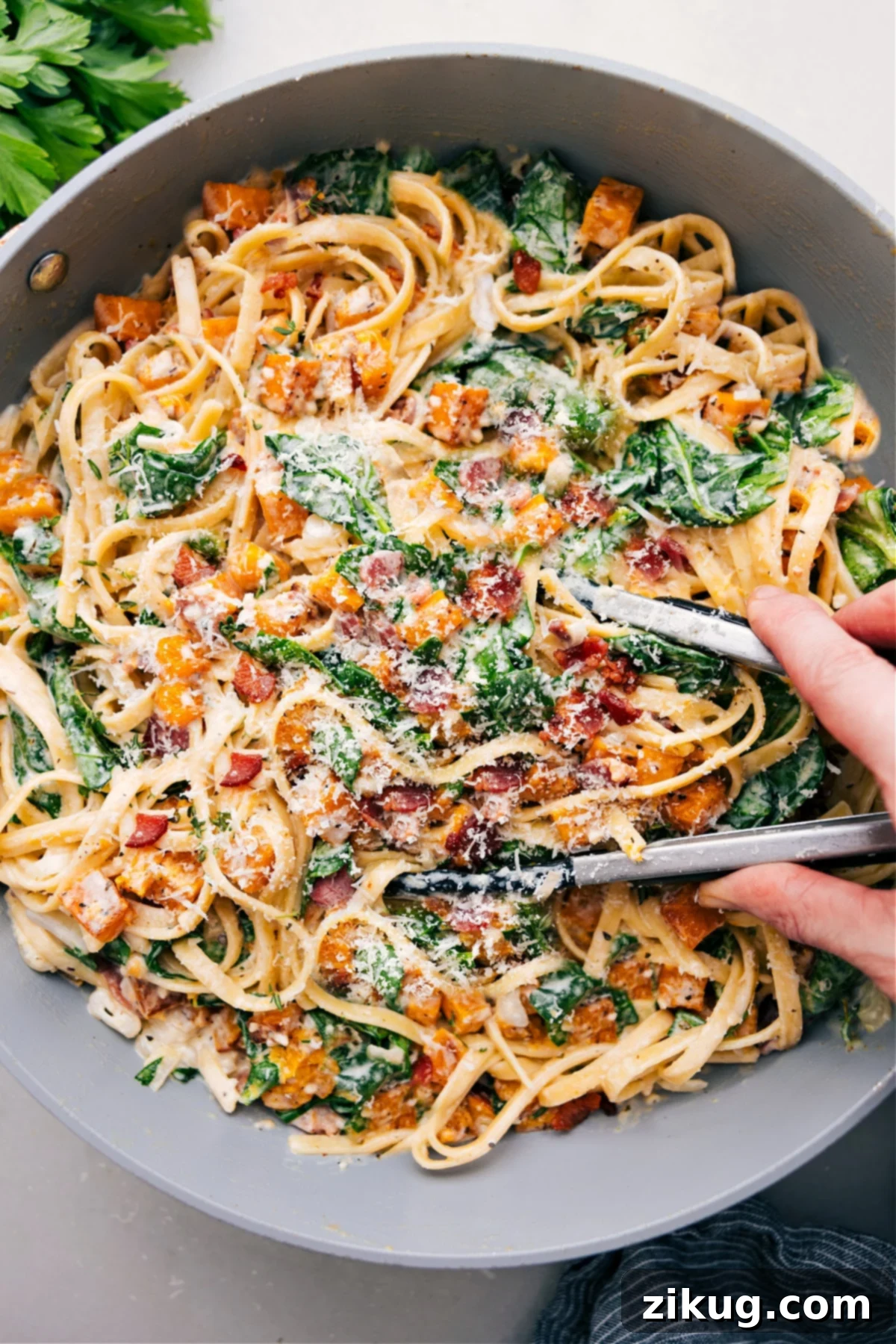
Creamy Butternut Squash Pasta: A Taste of Autumn Comfort
There’s a certain magic that happens when seasonal ingredients are transformed into a truly unforgettable dish. For me, that magic often comes alive in a bowl of creamy pasta, especially one starring the humble yet versatile butternut squash. This Butternut Squash Pasta recipe isn’t just any dish; it’s a heartfelt recreation of a seasonal favorite from a restaurant where I once worked. It was renowned for its rich, velvety sauce, infused with the subtle hint of thyme and studded with perfectly roasted butternut squash. It quickly became one of our most popular fall offerings, and for good reason.
My version captures all the essence and irresistible flavor of that beloved original, making it accessible for you to enjoy in your own home. Imagine perfectly cooked fettuccine coated in a decadent, creamy sauce, complemented by the sweet, earthy notes of roasted butternut squash and the irresistible crunch of crispy bacon. It’s a symphony of textures and flavors – simple, yet utterly delicious and deeply satisfying. This dish is more than just a meal; it’s an experience, bringing warmth and joy to your table, especially as the days grow shorter and cooler. It’s the ideal choice for a cozy weeknight dinner or an impressive dish for entertaining guests during the autumn season.
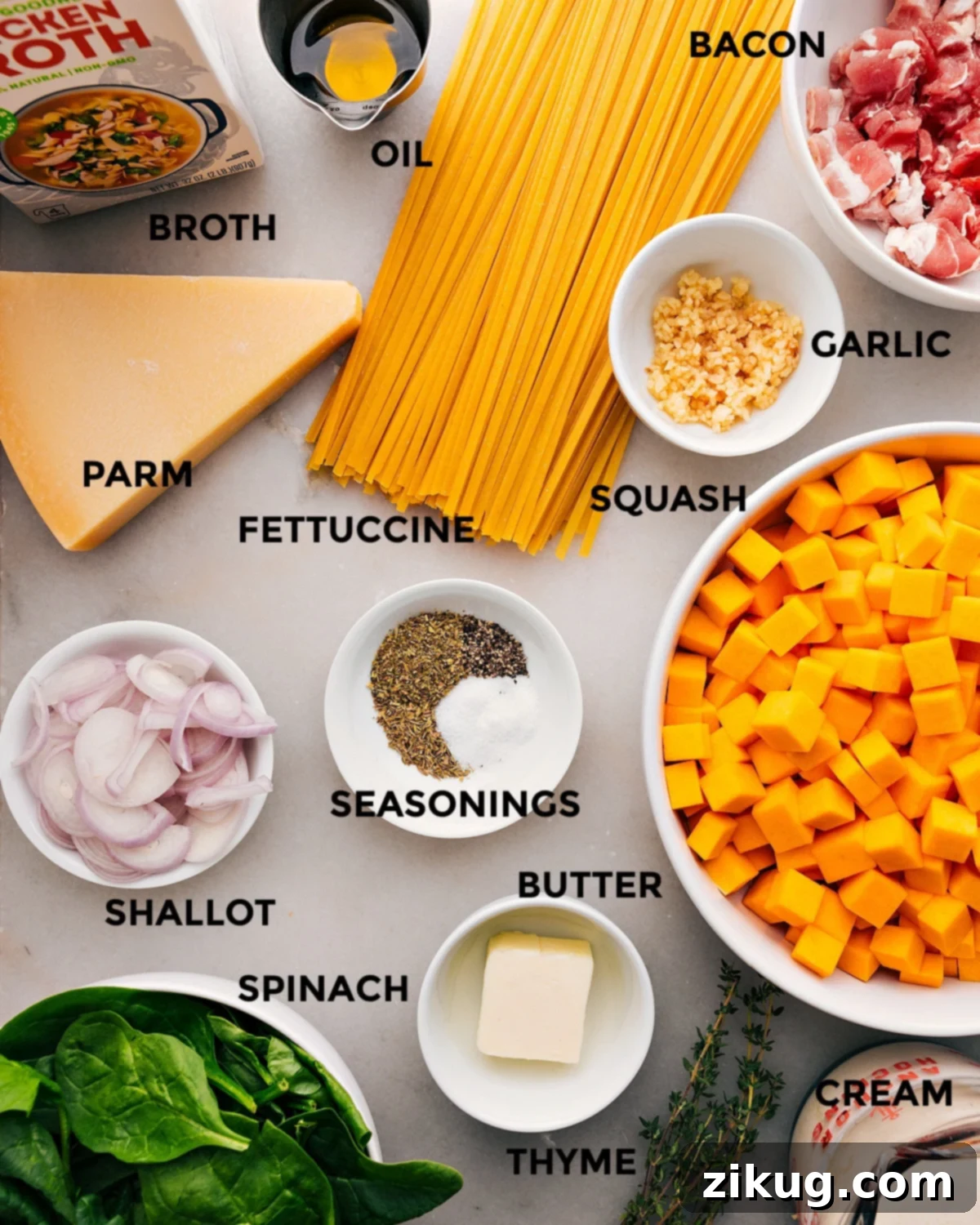
Key Ingredients for Your Perfect Butternut Squash Pasta
Crafting this incredible Butternut Squash Pasta relies on a selection of fresh, high-quality ingredients that harmonize to create its distinctive flavor profile. Here’s a detailed look at what you’ll need to gather:
- Butternut Squash: The star of our show! When selecting, look for a squash with smooth, unblemished, and uniformly beige skin. It should feel notably heavy for its size, indicating a dense, flavorful flesh. Roasting the squash brings out its natural sweetness and creates a delightful caramelization that’s crucial to this dish.
- Olive Oil: Essential for roasting the butternut squash, imparting a lovely flavor and helping it achieve that desirable tender-crisp texture. A good quality extra virgin olive oil can also add a subtle richness to the overall dish.
- Thyme & Italian Seasoning: These herbs are key to infusing the butternut squash with aromatic, earthy notes as it roasts. Dried thyme complements the sweetness of the squash beautifully, while Italian seasoning adds a robust, savory depth. Don’t underestimate the power of these simple seasonings to elevate the squash’s flavor.
- Bacon: The crispy, salty counterpoint that elevates this pasta from good to extraordinary. Thick-cut bacon is highly recommended as it renders enough fat (or “grease”) to cook the aromatics for the sauce, providing an additional layer of smoky flavor. For easier dicing, a quick trick is to freeze the bacon for about 15-20 minutes before cutting. This firms it up, making it much simpler to get uniform pieces.
- Unsalted Butter: Used to sauté the shallots and garlic, building the foundational flavor of the creamy sauce. Opt for unsalted butter so you can precisely control the seasoning of your dish, adjusting salt levels to your preference.
- Shallots & Garlic: These aromatics form the heart of the sauce’s savory base. Shallots offer a milder, sweeter onion flavor than regular onions, adding a sophisticated nuance. While optional, they are highly recommended for their delicate taste. Freshly minced garlic provides that indispensable pungent kick and aromatic depth.
- Chicken Broth: This liquid gold is vital for creating the sauce, deglazing the pan, and adding savory body. Using low-sodium chicken broth is a smart choice, as it allows you to control the overall saltiness of the dish, preventing it from becoming overpowering.
- Heavy Cream: Non-negotiable for achieving that luscious, thick, and truly creamy sauce. Lighter cream options or milk won’t provide the same richness or consistency, as this dish truly relies on the high fat content of heavy cream to thicken and bind the sauce beautifully.
- Parmesan Cheese: The final touch of savory, umami richness. Always choose freshly grated Parmesan cheese over pre-shredded varieties. Freshly grated cheese melts much more smoothly into the sauce, creating a silky texture, whereas pre-shredded versions often contain anti-caking agents that can make them clumpy.
- Fresh Baby Spinach: A vibrant addition that not only boosts the nutritional value but also adds a touch of freshness and color. Baby spinach wilts quickly into the warm sauce, becoming tender and barely noticeable in texture, making it an easy way to incorporate greens.
- Fresh Thyme (for garnish): A few sprigs of fresh thyme, stripped from their stems, provide a beautiful visual appeal and a burst of fresh, herbaceous aroma just before serving. To easily remove the leaves, hold the top of the stem with one hand and slide your fingers down the stem with the other, stripping the leaves off.
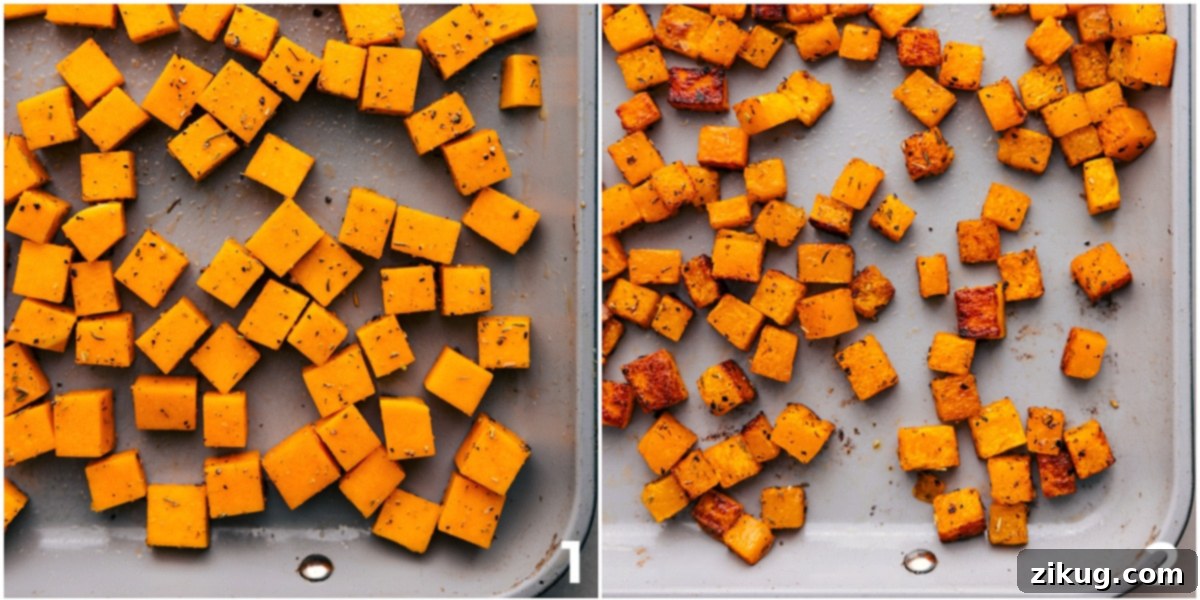
Mastering Butternut Squash Prep and Roasting
The success of this Butternut Squash Pasta hinges significantly on how you prepare and roast the squash. Choosing the right squash is the first step: look for one with smooth, unblemished, and uniformly beige skin, feeling heavy for its size. Store whole butternut squash in a cool, dark spot at room temperature, where it can last for several weeks. Once peeled and chopped, store it in an airtight container in the fridge for up to 3-4 days.
Here’s a step-by-step guide to preparing the squash for maximum flavor and ease:
- Rinse and Peel: Start by thoroughly rinsing the butternut squash under cold water. Using a sturdy vegetable peeler, carefully remove the tough outer skin. This step can sometimes be tricky, so be patient and work slowly to avoid accidents.
- Trim Ends: Once peeled, use a sharp chef’s knife to carefully slice off both the top (stem end) and bottom (blossom end) of the squash. This creates flat surfaces, making it much more stable and safer to handle.
- Halve and Quarter: Slice the squash in half horizontally, typically where the slender neck meets the bulbous base. Then, halve each of these two pieces lengthwise. You should now have four manageable sections.
- Scoop Seeds: Using a spoon or an ice cream scoop, neatly remove the fibrous strands and seeds from the cavity of the bulbous sections. The seeds can be saved and roasted later for a tasty snack, or simply discarded.
- Cube Uniformly: The key to even cooking and roasting is uniform pieces. Cut the halves into approximately 1/2-inch cubes. Smaller cubes will roast faster and caramelize better, ensuring tender sweetness in every bite of your pasta.
Time-Saving Shortcuts
For those busy weeknights or when you’re looking to shave off some prep time, don’t hesitate to grab a bag of pre-cut butternut squash from your local grocery store. While convenient, these pieces can sometimes be a bit large, which might lead to uneven roasting. If they appear too big, simply cut them down to smaller, more uniform 1/2-inch cubes. This ensures they cook evenly and caramelize beautifully, just like freshly cut squash. Another great option is using frozen cubed butternut squash; just be sure to thaw it first and pat it dry to remove excess moisture before roasting to encourage browning.
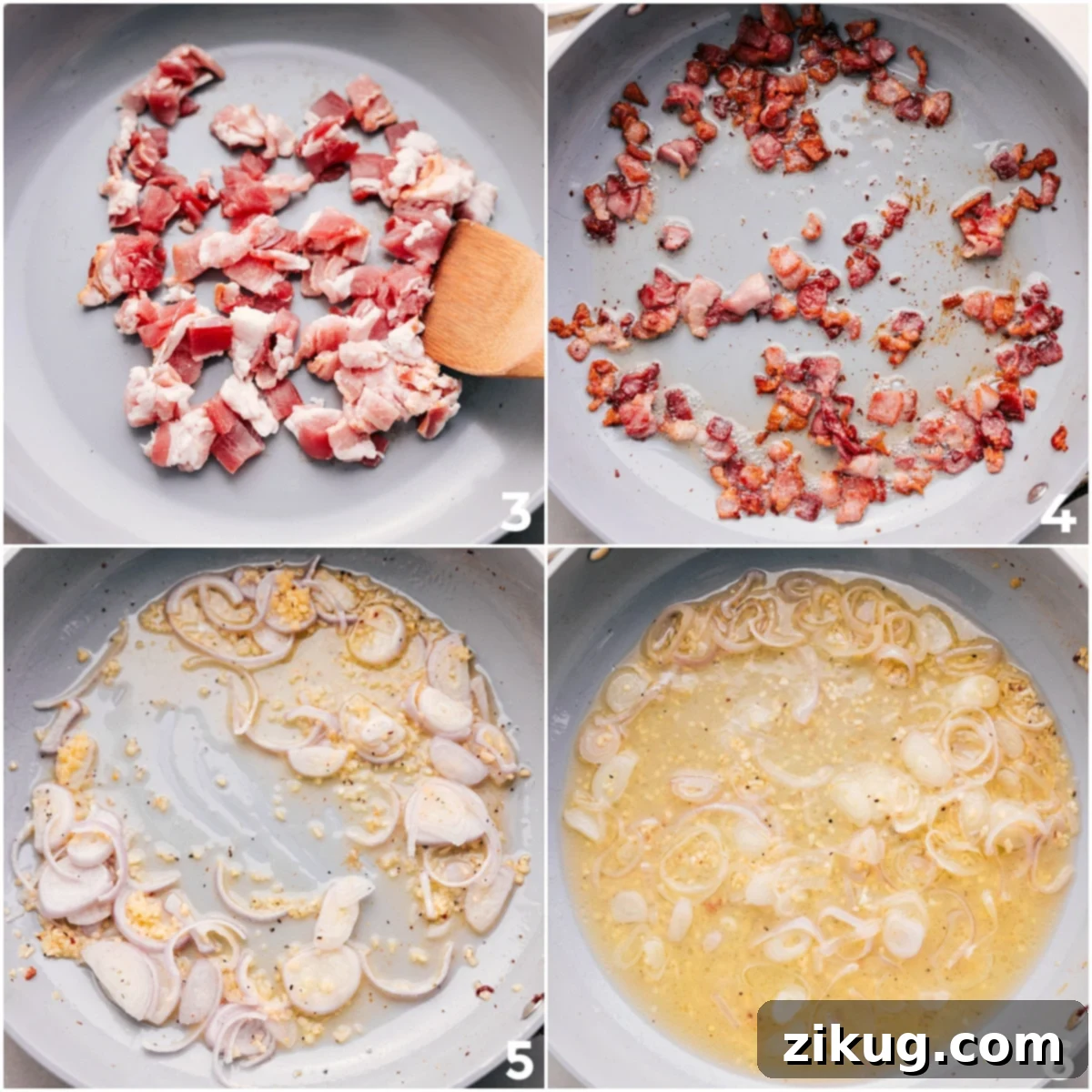
How to Craft Your Delicious Butternut Squash Pasta: Step-by-Step
Creating this creamy Butternut Squash Pasta is a rewarding experience, with each step building layers of flavor. Follow these detailed instructions for a truly spectacular dish:
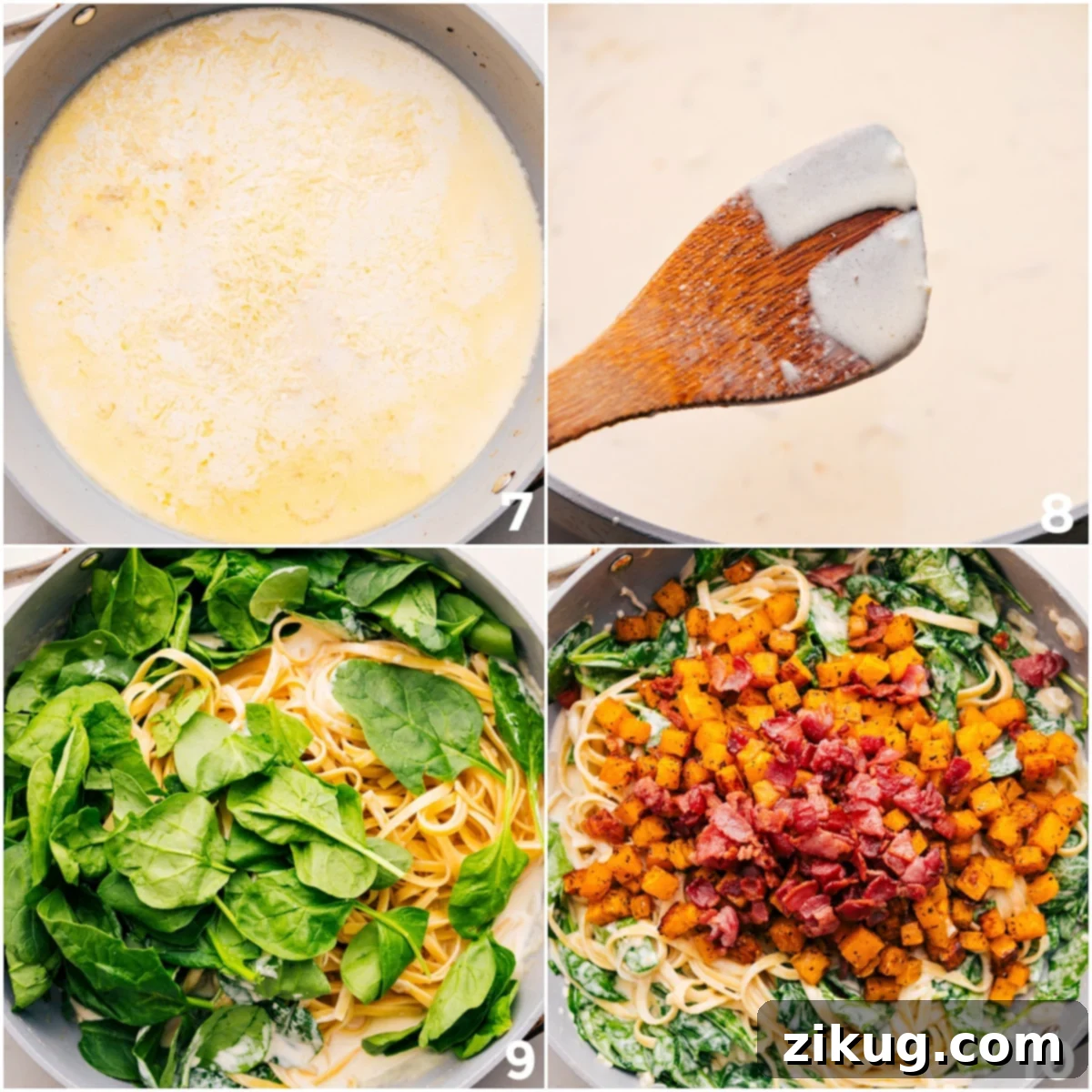
- Roast the Butternut Squash to Perfection: Begin by preheating your oven to 425°F (220°C). In a large bowl, combine your 1/2-inch cubed butternut squash with olive oil, dried thyme, Italian seasoning, salt, and pepper. Toss everything thoroughly until the squash is evenly coated. Spread the seasoned squash in a single layer on a large sheet pan, ensuring pieces aren’t overcrowded – this allows them to roast rather than steam. Roast for 30-35 minutes, flipping the squash halfway through (every 10 minutes) to ensure even browning and crisp-tender texture. If your squash cubes are larger or the pan is too full, it might take an additional 5-10 minutes. Once golden and fork-tender, remove from the oven and set aside, reserving a few pieces for garnish if desired.
- Cook the Fettuccine: While the squash roasts, bring a large pot of heavily salted water (about 12 cups with 2 teaspoons of salt) to a rolling boil. Add 10 ounces of fettuccine (not the entire 16-ounce package, unless you’re scaling up). Cook the pasta according to package directions, but shave off about 1.5 to 2 minutes from the suggested cooking time. The goal is perfectly al dente pasta that will finish cooking in the sauce. Before draining, make sure to reserve at least 1 cup of starchy pasta water. A great tip to remember this crucial step is to place a measuring cup directly into the colander before you drain the pasta – you won’t forget it then! Drain the pasta and set it aside.
- Crisp the Bacon: In a large, heavy-bottomed pan or Dutch oven, cook the diced thick-cut bacon over medium-high heat until it is beautifully crispy and golden brown. This usually takes about 5-8 minutes, depending on your bacon. Using a slotted spoon, transfer the crispy bacon pieces to a plate lined with paper towels to drain excess fat. Critically, leave about 1-2 tablespoons of the flavorful bacon drippings in the pan – this fat will be the base for our incredible sauce.
- Build the Creamy Sauce Base: Reduce the heat in your pan to medium. Add the unsalted butter to the bacon drippings. Once the butter has melted and is sizzling gently, add the thinly sliced shallots (if using) and minced garlic, along with a tiny pinch of salt and pepper. Sauté for about 1-2 minutes until the shallots are softened and golden, and the garlic is fragrant (be careful not to burn it). Pour in 1/2 cup of the chicken broth; it should sizzle vigorously. Use a wooden spoon to scrape up any browned bits (fond) from the bottom of the pan – these are packed with flavor! Let this broth reduce and mostly evaporate, then stir in the remaining 1/2 cup of chicken broth and continue to simmer briefly.
- Create the Velvety Sauce: Now, pour in the heavy cream and add the freshly grated Parmesan cheese. Stir continuously as the sauce begins to warm and the cheese melts. Let it simmer gently over medium heat, stirring occasionally, for 3-5 minutes, or until the sauce noticeably thickens and slightly reduces. It should be rich and coating. This is where the magic truly happens, transforming simple ingredients into a luxurious sauce.
- Combine and Finish: Add the cooked, al dente fettuccine and the fresh baby spinach to the creamy sauce in the pan. Using tongs, toss everything together vigorously until the spinach wilts down completely and the pasta is beautifully coated in the thick, luscious sauce. If at any point the sauce appears too thick, slowly add in small splashes of the reserved pasta water, stirring until you achieve your desired consistency – smooth, glossy, and clinging to the pasta. Finally, gently fold in the roasted butternut squash and about three-quarters of the crispy bacon. Taste the pasta and adjust seasoning with additional salt and pepper if needed.
- Serve Immediately: This Butternut Squash Pasta is best enjoyed the moment it’s finished cooking and tossed. Serve individual portions immediately, garnishing each plate with the remaining crispy bacon pieces, a sprinkle of fresh Parmesan cheese, and a few fresh thyme leaves for an aromatic finish. Each bite is a warm embrace of fall flavors!
The Art of Emulsification in Pasta Sauces
One of the “secret ingredients” to a truly creamy, restaurant-quality pasta sauce is something you might otherwise pour down the drain: starchy pasta water. When you toss the pasta, sauce, and a splash of this reserved pasta water together, you’re performing a culinary trick called emulsification. The starches released from the pasta into the cooking water act as a natural emulsifier, binding the fat from the cream and bacon drippings with the liquid. This process creates a stable, cohesive, and incredibly smooth sauce that clings perfectly to every strand of pasta, making it rich, velvety, and deeply flavorful. It’s what transforms a simple sauce into a luxurious coating.
Remembering Pasta Water: A Quick Tip
It’s easy to forget to save some pasta water in the rush of cooking! Here’s a simple trick to ensure you never miss this crucial step: Before you even start draining your cooked pasta, place a heat-proof measuring cup directly into your colander. This way, as you pour the pasta and water into the colander, the cup will catch and hold the precious starchy water you need. You’ll see it there and remember to scoop out what you need!
Expert Tips for the Best Butternut Squash Pasta
To ensure your Butternut Squash Pasta turns out absolutely perfect every time, keep these essential tips in mind:
- Generously Salt the Pasta Water: This is your only opportunity to season the pasta itself from the inside out. Don’t be shy with the salt; aim for water that tastes like the ocean. This foundational seasoning makes a huge difference in the overall flavor of your dish.
- Master the Sauce Consistency with Pasta Water: The reserved starchy pasta water is your best friend for adjusting the sauce. If, after adding the pasta, the sauce appears too thick or absorbs too quickly, gradually add small amounts of the reserved pasta water (a tablespoon at a time) while tossing, until you achieve a silky, smooth consistency that beautifully coats the pasta without being watery.
- Measure Your Pasta Precisely: While a standard box of pasta is often 16 ounces, this recipe calls for 10 ounces of fettuccine. Using the correct amount ensures the perfect pasta-to-sauce ratio. Save the rest of the package for another delicious meal!
- Freshly Grated Parmesan is Key: As mentioned, pre-shredded Parmesan often contains anti-caking agents that can make your sauce gritty or oily. Grate fresh Parmesan from a block for the best flavor, melt, and smooth, creamy texture.
- Don’t Overcrowd the Squash Pan: When roasting butternut squash, ensure there’s ample space between each cube on the sheet pan. An overcrowded pan will steam the squash rather than roast it, preventing that coveted caramelization and crisp-tender texture. Use two sheet pans if necessary.
- Enhance with Additional Spices: For an extra layer of warmth, consider adding a pinch of nutmeg or a touch of dried sage to the sauce along with the cream. These spices beautifully complement the flavors of butternut squash and thyme.
- Add a Hint of Heat: If you enjoy a little kick, a pinch of red pepper flakes added to the sauce with the garlic can provide a wonderful contrast to the sweetness of the squash and creaminess of the sauce.
- Taste and Adjust Seasoning at Every Stage: Seasoning is a continuous process. Taste your squash after roasting, taste your sauce before adding pasta, and taste the final dish. Adjust salt, pepper, and herbs as needed to balance the flavors.
Storage and Reheating
This Butternut Squash Pasta, like most pasta dishes, is truly at its peak when enjoyed fresh, immediately after being tossed and emulsified. The sauce will be perfectly clinging to the pasta, and the bacon will be crisp. While you can certainly store leftovers, be aware that the pasta will continue to absorb the sauce, potentially making it thicker. For any leftovers, store them in an airtight container in the refrigerator for up to 2-3 days. When reheating, it’s best to do so gently on the stovetop over low heat, adding a splash of extra chicken broth or heavy cream to loosen the sauce and restore its creamy consistency. Stir frequently until heated through. Freezing this dish is not recommended, as the dairy in the sauce tends to separate and can result in a grainy, unpleasant texture upon thawing.
Explore More Delicious Butternut Squash Recipes:
Butternut squash is an incredibly versatile ingredient, perfect for a wide range of dishes beyond just pasta. If you find yourself with extra squash or simply can’t get enough of its sweet, earthy flavor, explore these other fantastic recipes that celebrate this seasonal delight:
Soups And Stews
Butternut Squash Chili
Dinner
Butternut Squash Tacos
Salads
Butternut Squash Salad
Soups And Stews
Butternut Squash Soup
Butternut Squash Pasta Recipe
Video
Equipment
-
Large sheet pan (15″ x 21″)
-
Large pan
Ingredients
- 6 cups cubed butternut squash
- 1-1/2 tablespoons olive oil
- 1/4 teaspoon dried thyme
- 1 teaspoon Italian seasoning
- 1/2 teaspoon salt
- 1/4 teaspoon pepper
- 10 ounces fettuccine not the whole box, plus reserved pasta water
- 6 ounces thick-sliced bacon see note 1
- 2 tablespoons unsalted butter
- 1/2 cup thinly sliced shallots optional
- 1 tablespoon minced garlic
- 1 cup reduced-sodium chicken broth
- 1-1/4 cups heavy cream
- 3/4 cup Parmesan cheese freshly grated, see note 2
- 4 cups baby spinach lightly packed, see note 3
- fresh thyme optional, for garnish, see note 4
Instructions
-
Preheat oven to 425°F (220°C). In a large bowl, combine the 1/2-inch cubed butternut squash, olive oil, dried thyme, Italian seasoning, salt, and pepper. Toss well until evenly coated. Spread the squash in a single layer on a large sheet pan, ensuring pieces are spaced out. Roast for 30–35 minutes, or until crisp-tender and lightly caramelized, flipping every 10 minutes. If the squash is overcrowded or cut too large, it may take 5–10 minutes longer. Remove from oven and set aside.
-
Bring 12 cups of water to a rolling boil in a large pot. Add 2 teaspoons of salt, then add the fettuccine. Cook according to package instructions, subtracting 1-1/2 minutes from the suggested cooking time to ensure al dente pasta. Before draining, use a mug or heat-proof measuring cup to remove and reserve at least 1 cup of starchy pasta water. Drain the pasta and set aside.
-
Dice the thick-sliced bacon and cook it over medium-high heat in a large, heavy-bottomed pan or Dutch oven until it is crispy and golden. Using a slotted spoon, remove the crispy bacon onto a plate lined with paper towels to drain. Leave approximately 1-2 tablespoons of the rendered bacon drippings in the pan.
-
Reduce the heat to medium. Add the unsalted butter to the pan. Once melted, add the thinly sliced shallots (if using) and minced garlic, along with a tiny pinch of salt and pepper. Cook for 1–2 minutes, or until the shallots are softened and fragrant. Pour in 1/2 cup of the reduced-sodium chicken broth; it should sizzle and boil. Use a wooden spoon to scrape up any browned bits from the bottom of the pan to deglaze. Once this 1/2 cup is mostly evaporated, add in the remaining 1/2 cup of chicken broth and stir.
-
Stir in the heavy cream and freshly grated Parmesan cheese. Simmer the sauce over medium heat, stirring occasionally, for 3–5 minutes, or until it thickens and slightly reduces to a velvety consistency.
-
Add the cooked pasta and baby spinach to the creamy sauce in the pan. Use tongs to toss everything together until the spinach wilts down completely and the sauce thickens and beautifully coats the pasta. If the sauce becomes too thick, slowly add in small splashes of the reserved pasta water, stirring until the desired consistency is achieved. Once sufficiently tossed, gently fold in the roasted butternut squash and three-quarters of the crispy bacon. Taste and add more salt or pepper if needed.
-
Serve immediately. Top individual plates with the remaining crispy bacon pieces, a touch more freshly grated Parmesan, and fresh thyme leaves for garnish. Enjoy this comforting pasta dish right away, as it is best enjoyed immediately after being tossed!
Recipe Notes
Note 2: Freshly Grated Parmesan: For the best flavor and a smooth, perfectly melted sauce, it’s crucial to grab a block of high-quality Parmesan cheese and grate it yourself. Use the small holes of a box grater or a microplane to get a fine texture. Pre-shredded cheeses often contain anti-caking agents that can prevent them from melting properly, leading to a clumpy or grainy sauce.
Note 3: Chopping Baby Spinach: While baby spinach wilts down significantly when added to the hot sauce, it integrates even better into the dish if you give it a quick chop. Simply gather a big pile of spinach and run a chef’s knife through it a few times. This isn’t strictly necessary but creates a more uniform texture.
Note 4: Fresh Thyme Garnish: We use fresh thyme as an optional garnish to add a beautiful visual touch and a burst of vibrant, autumnal flavor. While dried thyme is used for roasting the squash, a sprinkle of fresh thyme at the end brightens the entire dish with its aromatic essence.
Storage: As with most pasta dishes, this recipe is best enjoyed the minute the sauce is perfectly emulsified and coats the pasta. While you can store leftovers in an airtight container in the refrigerator for up to 2-3 days, the pasta will continue to absorb the sauce. When reheating, you will likely need to add a splash of extra heavy cream or chicken broth to loosen the sauce and restore its desired creamy consistency. This dish is not suitable for freezing and thawing due to the dairy content, which tends to separate and can result in a grainy texture.
Nutrition
Calories: 843kcal |
Carbohydrates: 100g |
Protein: 34g |
Fat: 37g |
Saturated Fat: 18g |
Polyunsaturated Fat: 3g |
Monounsaturated Fat: 12g |
Trans Fat: 1g |
Cholesterol: 140mg |
Sodium: 1113mg |
Potassium: 1686mg |
Fiber: 11g |
Sugar: 12g |
Vitamin A: 38622IU |
Vitamin C: 82mg |
Calcium: 761mg |
Iron: 5mg
Nutrition information is automatically calculated, so should only be used as an approximation.